Am I too old to get a tooth implant? Age Limits Explained
Did you know there’s no upper age limit for dental implants? Seniors in their 70s, 80s, and even 90s have gotten implants successfully. This fact shows age isn’t a big deal for dental procedures.
When thinking if age limits dental implants, the answer is no. What really counts are your health and bone density. Thanks to modern dentistry, age is less of a worry.
This article will give you a detailed look at dental implant evaluations. We’ll see how new techniques make implants possible for older adults. We’ll also talk about the changes needed during the procedure and the big benefits implants offer.
Key Takeaways
- Age is not a strict barrier for dental implants.
- Health status and bone density are more critical factors.
- Seniors in their 70s, 80s, and 90s can successfully receive implants.
- Modern techniques make implants safer and more effective.
- Dental implants can significantly improve quality of life for older adults.
Understanding Dental Implants and Their Benefits
Dental implants are a big step forward in fixing missing teeth. They look and work like real teeth, making them great for people of all ages. Knowing how implants work and their benefits can help you choose the best for your teeth.
What is a Tooth Implant?
A tooth implant is a fake root made of titanium. It’s put into the jawbone. This root holds up fake teeth, called crowns. The process has three parts:
- Implant Fixture: The titanium screw that integrates with the jawbone.
- Abutment: A connector that supports the crown and is placed on top of the implant.
- Prosthetic Crown: The visible part of the tooth that resembles natural teeth.
Advantages of Getting Dental Implants
Getting dental implants has many benefits, including:
- Enhanced Aesthetics: Implants look and feel like natural teeth.
- Improved Functionality: They restore chewing and speaking abilities.
- Bone Preservation: Implants help maintain jawbone density, preventing deterioration.
- Durability: With proper care, implants can last a lifetime.
Also, implants stop other teeth from moving. This is key when thinking about dental implant age requirements. The main thing is a healthy jawbone, not age.
Basic Procedure Overview
The dental implant process has several steps:
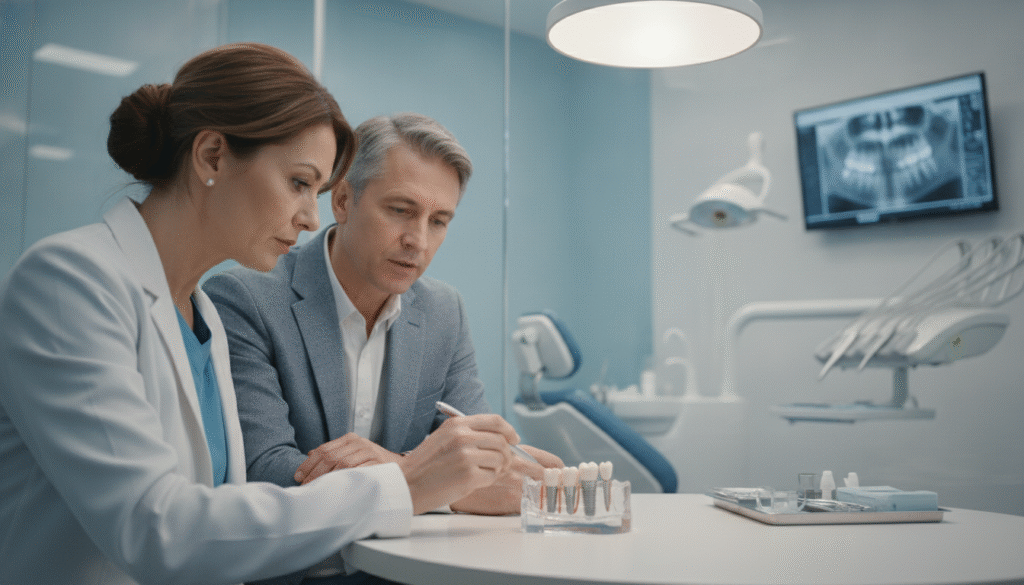
- Consultation: A thorough examination and imaging to assess jawbone health.
- Implant Placement: The titanium implant is surgically inserted into the jawbone.
- Osseointegration: The process where the bone heals and integrates with the implant.
- Abutment Placement: After healing, an abutment is attached to the implant.
- Final Restoration: The custom-made crown is placed on the abutment.
Age Considerations in Dental Health
When thinking about dental implants, age is key. There’s no strict upper age limit for implants. What matters most is your health and bone density.
Is There an Age Limit for Implants?
The minimum age for dental implants is about 18 years old. This is because the jawbone needs to fully develop. For girls, this happens earlier than for boys. Doctors check if the bones are fully grown before approving implants for younger patients.
How Age Affects Bone Density
As we get older, our bone density often goes down. This can make it harder for implants to succeed. Here are some important points about age and bone health:
- Bone Resorption: Older people might not have enough bone for implants.
- Post-Menopausal Women: Women might lose bone faster after menopause, which can affect implants.
- Bone Grafting: If there’s not enough bone, grafting can help make it possible for implants.
Other Health Issues to Consider
Age isn’t the only thing that matters for dental implants. Other health issues are also important. Older adults often face:
- Controlled Diabetes: If diabetes is well-managed, implants can work well.
- Cardiovascular Disease: This might need extra care during the implant process.
- Autoimmune Conditions: These can slow healing and should be talked about with the dentist.
These health issues don’t mean you can’t get implants. They just need careful management for a safe and successful procedure.

Factors Influencing Implant Success
Getting dental implants is more than just about age. Age is a factor, but bone health, overall health, and lifestyle are key. Knowing these can greatly affect the success of the implants.
Bone Health and Density
Bone health is key for dental implants to work well. The bone’s quality and amount are vital for the implant to stay in place and heal well. Doctors use special scans to check the bone’s health. Healthy bone is needed for the implant to work right with the jaw.
Overall Health Status
Health can affect how well implants heal. Some health issues, like diabetes or certain medicines, can stop implants from working. It’s important for patients to share their health history. This helps doctors decide if implants are right for them.
Lifestyle Habits Impacting Healing
How you live can also affect implant success. Smoking and drinking too much alcohol can hurt healing. Smoking can make it harder for the bone and soft tissue around the implant to heal. Changing these habits can help implants work better.
Dental Implants and Seniors: A Perfect Match?
As we get older, dental implants become more important for our oral health. They have a high success rate among seniors. In fact, studies show that dental implants work well even for those in their 70s and 80s, with a success rate over 95%.
But, seniors face some challenges. Bone loss and gum recession are common, making implants harder. Also, older adults often have health issues or take medicines that can slow healing.
Despite these challenges, there are special care options for seniors. Techniques like flapless surgery reduce trauma. Zygomatic implants help when the jawbone is severely lost. The All-on-4 treatment is another great option, allowing for full-arch rehabilitation with fewer implants.
| Challenge | Customized Solution | Benefits |
|---|---|---|
| Bone Loss | Zygomatic Implants | Stability in cases of severe resorption |
| Gum Recession | Gum Grafting | Improved aesthetics and health |
| Healing Capacity | Flapless Surgery | Reduced recovery time and discomfort |
| Full Arch Replacement | All-on-4 Treatment | Less invasive with fewer implants |
In conclusion, age should not stop seniors from getting dental implants. With special care and new techniques, implants can greatly improve their lives and smiles.
Preparing for Dental Implants at an Older Age
The journey to dental implants for seniors starts with careful preparation. This is key to make sure older adults are good candidates. A detailed health check is the first step in this journey.
Health Evaluations and Screenings
Seniors must go through health evaluations before dental implants. These checks include looking at medical history, current meds, and any diseases that might affect healing. A full blood test might also be needed in some cases. These steps help manage risks and make sure the patient is healthy enough for surgery.
Necessary X-Rays and Imaging
Imaging is very important for dental implant prep. Cone Beam Computed Tomography (CBCT) gives a 3D view of the jaw, nerves, and sinuses. This helps plan the surgery accurately, leading to better results.
Choosing the Right Dentist
Finding the right dentist is key for dental implants in older adults. Look for a dentist who is certified in implants and has experience with seniors. Working with a team that includes the patient’s doctor can also improve safety and success.
Post-Procedure Care and Maintenance
Recovering well after dental implants is key to their success. Knowing how to heal and keep your mouth clean is vital. This ensures your implants work well for many years.
Healing Process Overview
Right after the implant surgery, your body starts a healing journey. First, there’s an inflammatory phase where your body reacts to the surgery. Then, soft tissue closure happens in a few days.
The most important part is osseointegration. This is when the implant bonds with the bone at a tiny level. It takes months for this to happen, making the implant strong and stable.
Importance of Oral Hygiene
Keeping your mouth clean is not just good for you; it’s necessary after implants. Here’s how to do it right:
- Use a soft-bristled toothbrush to avoid damaging the implant site.
- Opt for low-abrasive toothpaste to prevent irritation.
- Incorporate interdental brushes to clean hard-to-reach areas.
- Consider using a water flosser to effectively remove debris.
These steps help avoid problems like peri-implant mucositis and peri-implantitis. These issues can harm your implants.
Regular Check-Ups Post-Implant
Seeing your dentist regularly is vital for implant health. You should visit every six months for cleanings and checks. Your dentist will:
- Perform professional debridement using non-metallic scalers.
- Conduct annual radiographic assessments to monitor crestal bone levels.
- Address any concerns or issues that may arise.
As dental experts say, “Good dental hygiene and regular dentist visits can help your implants last longer.”
Alternative Solutions for Missing Teeth
Looking for ways to replace missing teeth? There are many options, each with its own benefits and drawbacks. For seniors, dentures and dental bridges are common choices. They aim to restore both function and appearance.
Dentures vs. Implants
Dentures are a traditional fix for missing teeth. They’re removable and can make eating and smiling easier. But, they can cause bone loss over time. This can change how they fit and might need to be adjusted or replaced.
Dental implants, on the other hand, are a more permanent fix. They help keep the jawbone strong, preventing bone loss. This is great for seniors who want to keep their teeth healthy for years to come.
Dental Bridges as an Option
Dental bridges are another way to replace missing teeth. They attach artificial teeth to healthy ones nearby. While they can close gaps, they might harm the teeth they’re attached to over time.
Also, bridges may need to be replaced after a few years, adding to their cost. Implants, though more expensive upfront, can last a lifetime. This makes them a better value in the long run.
Comparing Costs and Longevity
When choosing dental options, think about cost and how long they last. Implants are pricier at first but last longer. The money saved on future repairs or replacements can make implants a better deal.
In short, while dentures and bridges are good options, implants are best for seniors. They offer lasting benefits, keep teeth healthy, and are a reliable fix for tooth loss.
Personal Testimonials: Seniors’ Experiences
Many seniors have shared their amazing journeys after getting dental implants. Their stories show the great benefits of tooth implants for older adults. They talk about how these implants have changed their lives for the better.
Real-Life Success Stories
Mary, a 72-year-old grandmother, had trouble with dentures for years. She felt embarrassed and avoided her favorite foods. But after dental implants, she felt confident again. “I can eat what I want now,” she said. “It’s like I have my life back!”
John, an 80-year-old retired teacher, couldn’t chew well before. This made him miss out on food and social events. But after implants, he loved cooking and eating with friends. “The implants changed everything for me,” John said. “I feel healthier and more engaged in life.” These stories show how dental implants can change lives.
Overcoming Initial Fears
Many seniors worry about pain and surgery with dental implants. But thanks to modern sedation and caring doctors, these fears are gone. “I was terrified at first,” said Linda, a 75-year-old. “But the team made me feel safe and cared for throughout the process.” This reassurance helps seniors feel more at ease.
Some think implants are only for the young. But Frank, a 79-year-old, proved that’s not true. “I was 78 when I got my implants, and I wish I had done it sooner,” he said. “It’s never too late to improve your quality of life.”
Transformation and Quality of Life Improvements
Dental implants do more than just fix teeth. They boost self-esteem, encourage socializing, and improve nutrition. Seniors feel younger and more active, leading to better health.
Health experts say dental implants can greatly improve older people’s lives. They lead to better physical health and more confidence. The health benefits from better chewing and eating are also key reasons for implants in older adults.
The Cost of Dental Implants by Age Group
For older adults, knowing the costs of dental implants is key. It helps them make smart choices about their dental health.
The average costs for seniors can vary a lot. A single implant can cost between $3,000 and $4,500. This includes the implant, the abutment, and the crown. But, seniors might need extra procedures like sinus lifts or ridge augmentation, which can raise the price.
Average Costs for Seniors
Even though dental implants seem pricey at first, they’re a smart investment. They last longer than dentures or bridges, which need to be replaced. This can save money in the long run.
Insurance Coverage and Financing Options
Insurance for dental implants can be tricky. Many plans cover part of the cost, but it’s important to check your policy. Some might not cover implants because they see them as cosmetic.
There are ways to pay for implants. Dental offices often have payment plans or work with financing companies. Health Savings Accounts (HSAs) can also help, letting seniors use pre-tax dollars for dental care.
Budgeting for Your Procedure
Seniors should plan their budget for dental implants carefully. Getting a detailed treatment plan from the dentist is a good first step. This plan helps avoid surprises and makes sure you’re ready financially.
Understanding dental implant costs helps seniors make better choices. It improves their dental health and overall life quality.
Common Misconceptions About Age and Implants
Many people think age means you can’t get dental implants. But this is a myth. Getting implants is more about your health than how old you are.
Myths Addressed: “Too Old for Implants”
Some believe older adults can’t get dental implants. They think aging means bad bone health or slower healing. But, studies show implants work well for people of any age, based on their health and bone density.
Realities You Should Know
Healing might take longer for older adults. But, with the right care, implants can work well. Also, choosing implants is a choice, not a must for aging.
Encouraging Open Conversations with Your Dentist
Talking openly with your dentist is key. Don’t rule out implants based on old beliefs. Your dentist can give you the right advice for your dental health.
Importance of Choosing the Right Dental Specialist
Finding the right dental specialist is key for a successful implant procedure. Their skill can greatly impact the success and life of your implants. Knowing the roles of different specialists helps you choose wisely.
Types of Specialists in Implant Dentistry
There are three main types of dental specialists in implant dentistry:
- Oral and Maxillofacial Surgeons: They handle the surgery, like placing dental implants. They’re trained for complex cases, like bone grafting.
- Periodontists: They focus on gum and tooth support health. They make sure the tissue around the implant is healthy.
- Prosthodontists: They work on tooth restoration and replacement. They design and fit the prosthetic parts for the implants, making sure they look and function well.
What to Look for in an Implant Dentist
When picking an implant dentist, look for these things:
- Credentials: Check their education, training, and certifications in implant dentistry.
- Experience: Ask about their experience with implants, focusing on patients like you.
- Continuing Education: Look for a commitment to staying updated with new techniques and technology.
- Fellowship Status: Membership in professional groups shows a high level of skill and dedication.
Questions to Ask During Your Consultation
Ask these questions during your consultation:
- What is your success rate with patients like me?
- Do you use guided surgery for better accuracy?
- What’s the expected recovery time for someone my age?
- How do you handle problems during the procedure?
These questions help you understand the dentist’s approach. Making a smart choice is vital for the best implant results.
Navigating Implant Procedures for Seniors
Seniors going through dental implant procedures have special needs. As people get older, what works for dental implants changes. It’s key to know these changes for the best results.
There are certain implants that work well for older adults:
- Shorter, Wider Implants: These implants are great for those with less bone, as they offer more stability.
- Zygomatic Implants: For those with very little bone in the upper jaw, these implants use the zygomatic bone.
- All-on-4 or All-on-6 Concepts: These methods need fewer surgeries and are good for replacing many teeth at once.
When thinking about surgery, there are important things to consider:
- Anticoagulant Therapy Management: Keeping an eye on blood thinners is important to avoid problems during and after surgery.
- Minimally Invasive Techniques: Using less invasive surgery can make recovery easier and faster.
- Modified Anesthesia Protocols: Customizing anesthesia can make the process safer and more comfortable.
Aftercare is also very important for older patients. A recovery plan should include:
- Nutritional Support: Eating well is important for healing and getting better.
- Gentle Oral Hygiene Regimen: Taking good care of your mouth helps your implants last longer.
- Regular Follow-Ups: Seeing your dentist regularly is important to check on healing and solve any issues quickly.
Research on Aging and Oral Health
Research is growing on how aging affects dental health and implant success. It has made big strides, giving us insights into dental implants for older people. Many studies, like systematic reviews and meta-analyses, have looked at how well implants work for the elderly.
Studies on Implants and Aging Populations
Recent studies show that with good health management, older adults do well with dental implants. This means age shouldn’t stop people from getting implants. For example, a systematic review found that the elderly are often very happy with their implants.
Findings on Long-term Effects of Implants in Seniors
Long-term research has found key details about bone loss and soft tissue health around implants. It shows that while some bone loss happens, it usually stops over time. Also, seniors with implants often report being very happy and seeing their quality of life improve.
Future Trends in Implant Dentistry
Future trends in implant dentistry are exciting. New smart implants with biosensors can spot problems early, like peri-implantitis. Advances in materials and regenerative medicine, like stem cells, could help with bone loss. These changes aim to improve dental care for older people.
Conclusion: Embracing Dental Implants at Any Age
Dental health is key to our overall well-being, more so as we get older. The path to understanding dental implants shows that age is not a limit. In fact, getting dental implants can greatly improve life for seniors. This summary will look at how good dental health affects us for life and the empowering choices seniors can make about implants.
The Lifelong Impact of Dental Health
Good dental health is important for our teeth and overall health. Bad dental health can lead to serious health problems like heart disease and diabetes. On the other hand, implants can help us eat better, feel better about ourselves, and connect with others more.
Making Informed Decisions about Implants
Before choosing dental implants, consider a few things:
- Get a full check-up from a skilled dentist.
- Know your health and any risks.
- Think about the long-term benefits and cost.
These steps help make sure your choice is informed and fits your needs.
Encouragement for Seniors Considering Implants
Seniors thinking about dental implants should know that modern dentistry has great options. No age is too old for implants, thanks to new dental technology. This technology makes implants safer and more reliable. It’s a chance to improve your life through better dental health.
| Key Benefits of Dental Implants | Impact on Quality of Life | Long-Term Considerations |
|---|---|---|
| Improved Functionality | Enhanced ability to chew and speak | Durability and longevity |
| Boosted Self-Esteem | Increased confidence in social situations | Lower maintenance costs compared to dentures |
| Better Oral Health | Preservation of jawbone and facial structure | Potential for fewer dental visits over time |
In conclusion, the journey to better dental health through implants is not just possible but a way to live better. Seniors are encouraged to learn more, talk to dental experts, and see the positive changes implants can make in their lives.
Resources for Further Information on Dental Implants
If you’re looking into dental implants, there’s a lot to learn. It’s important for seniors to know as much as they can about any medical procedure. Having the right information helps you make smart choices.
Recommended Websites and Organizations
Professional groups are great places to start. The American Academy of Implant Dentistry (AAID) has lots of patient guides. The American College of Prosthodontists (ACP) also has a “Find a Doctor” tool to help you find experts.
Books and Articles for Deeper Understanding
Reading journals can really help you understand dental implants better. The Journal of Prosthetic Dentistry talks about how implants work with your body. Books on dental health can also give you a bigger picture of tooth loss and how to deal with it.
Finding Local Support Groups for Seniors
Meeting others who’ve gone through similar things can be really helpful. Look for local groups that focus on dental health or senior wellness. They share their stories and offer support as you go through this.
Using these resources can make you feel more sure and knowledgeable about dental implants. Talking to communities and experts can create a supportive space for you as you explore your options.