Are Composite (White) Fillings as Strong as Silver Amalgam Fillings?
Every year, millions choose between white and silver fillings for cavities. Surprisingly, dental amalgams, or silver fillings, are used for a big chunk of the 122 million cavities treated in the US annually. With newer dental tech, people wonder if white fillings have gotten as strong as the trusted silver ones. This comparison shines a light on how dental materials have evolved. It also looks at what matters more in dental care: lasting strength or looks.
In today’s dental world, there’s a balance between old-school durability of silver and the new look of white fillings. The debate over silver amalgam and composite fillings’ strength goes on. But, white fillings have come a long way in matching the durability of metal ones. This discussion opens up a deeper understanding of whether white fillings can hold up under daily use, in both front and back teeth.
Key Takeaways
- White fillings look more natural but used to fall short in lasting strength compared to amalgam.
- Silver fillings are known for their toughness and resistance to chewing forces, especially in back teeth.
- The long-standing safety and performance of amalgam fillings are well-recognized, even with the debate on mercury and the environment.
- Latest white filling materials have greatly improved in strength, now rivaling traditional amalgam.
- Each filling type plays a crucial part in dental restoration, offering benefits suited to different needs and tastes.
Introduction to Dental Fillings
Dental fillings are key to fixing teeth with cavities or decay. They help keep our oral health in check by keeping as much of the tooth as possible. This process combines functionality, beauty, and long-lasting care.
What are Dental Fillings?
Dental fillings are a major part of fixing teeth. This process cleans out the decay and fills the hole with materials like gold, silver, or ceramics. Different fillings serve different needs, making the tooth strong again and stopping further decay.
Importance of Dental Fillings
Dental fillings do more than just fix cavities. They stop decay from getting worse, which can save a tooth from being lost. Fillings are crucial for keeping our bite right and helping with eating and talking. Also, the material chosen for the filling can make a smile look better.
Overview of Composite Fillings
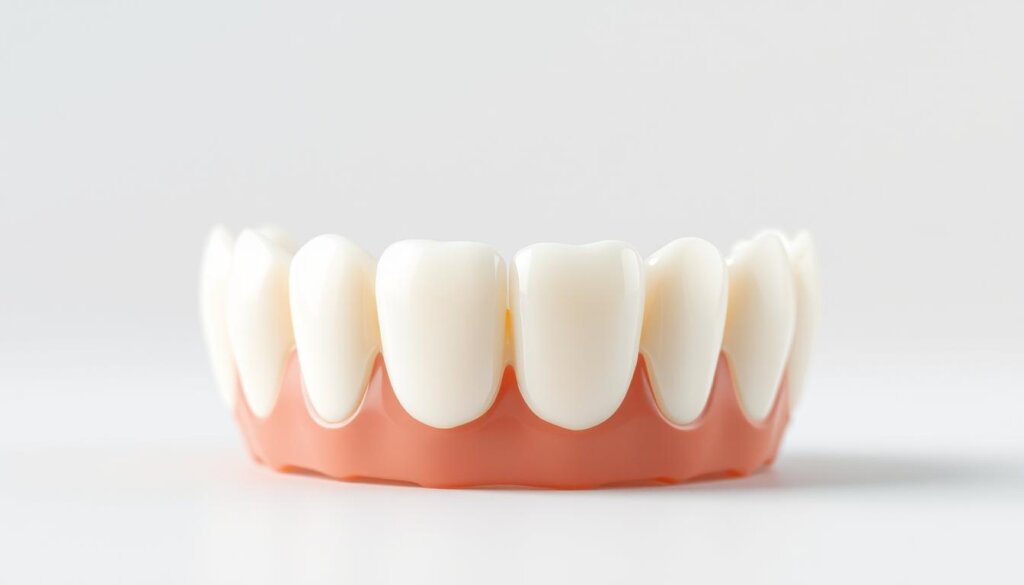
Composite fillings brought a big change in how we fix teeth. They blend in because they’re tooth-colored, unlike metal fillings. Made of plastic and glass, they look good and work well.
Composition of Composite Fillings
These fillings have a resin mix and tiny filler particles. This mix makes them strong and able to match your tooth’s color well. Dentists can make them look just like your natural teeth.
Advantages of Composite Fillings
White fillings vs silver fillings: white ones aren’t just strong for small cavities; they also look natural. They’re easy to shape and bond with your tooth, saving more of it. This helps your tooth last longer and stay useful.
Disadvantages of Composite Fillings
But, these fillings don’t last as long as gold or porcelain in big fillings. They can stain and might need changing more often, especially if not looked after well. They also take longer to put in, which could cost more.
| Property | Composite Fillings |
|---|---|
| Durability | Adequate for small to medium restorations, less so for large cavities |
| Aesthetic Integration | Excellent, with a color match almost identical to natural teeth |
| Strength | Good, suitable for teeth with a normal bite force but not optimal for high load-bearing areas |
| Longevity | 5-10 years on average, potentially less with poor maintenance |
Choosing composite fillings means you value how your teeth look and aim to keep them safe. However, be ready for possible downsides like less durability and more care needs.
Overview of Amalgam Fillings
Amalgam fillings have been a reliable choice for a long time. They’re made of metals like silver, tin, copper, and mercury. They work great for the back teeth which do a lot of chewing. People often wonder if white fillings are as strong as these silver ones.
Composition of Amalgam Fillings
These fillings are strong because they mix several metals. Mercury is included to make the mixture hard and durable. This mix is especially good for biting and chewing.
Advantages of Amalgam Fillings
- Cost-effectiveness: Amalgam fillings usually cost less than their composite counterparts.
- Longevity: Properly cared-for amalgam fillings have a lifespan that can exceed 15 years.
- Strength: Ideal for rear teeth restoration, they efficiently resist wear and tear from chewing.
Disadvantages of Amalgam Fillings
- Aesthetic Concerns: The metallic color can be visually distinct from natural tooth enamel.
- Tooth Structure: Placement of these fillings might require the removal of more tooth structure compared to composite fillings.
- Mercury Content: Despite reduced mercury levels in newer amalgams, the presence of mercury remains a concern for some patients and professionals.
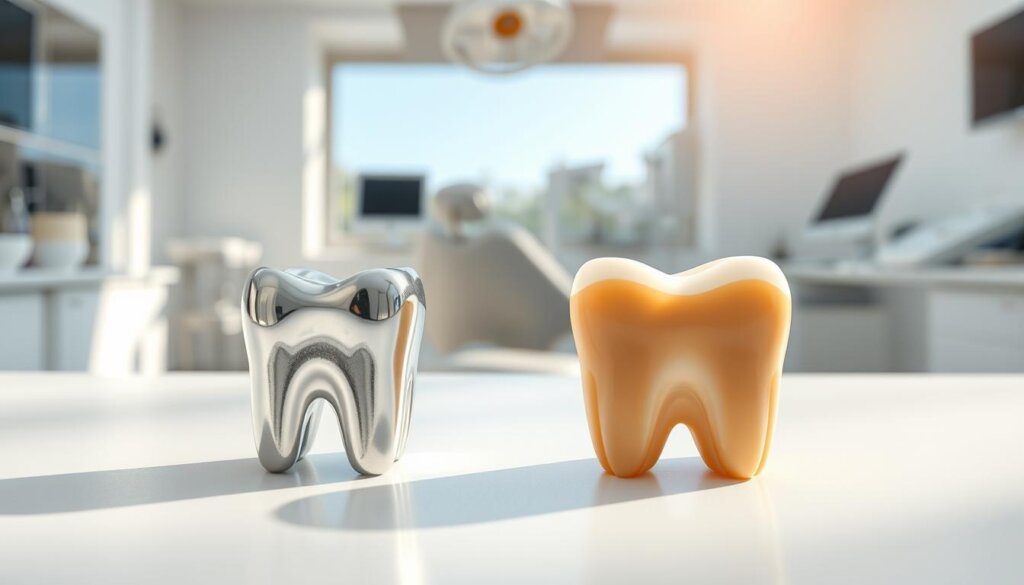
When thinking about if white fillings are as strong as silver ones, remember how tough amalgam fillings are. The metal in them makes them really strong. They’re good at handling the force of chewing.
Strength Comparison: Composite vs. Amalgam
When looking at how long dental fillings last, it’s key to see how they stand up to everyday use. People often debate the strength of composite versus silver amalgam fillings. They think about which one is better for chewing and staying healthy over time. Factors like how well they resist breaking and handle chewing matter a lot.
How Strength is Measured in Dental Fillings
To know the strength of dental fillings, we look at how well they resist wear and handle biting. This matters most for fillings in back teeth, which deal with a lot of chewing. People wonder if white fillings are as strong as silver ones for these teeth.
Understanding Durability
How long fillings last against things like biting, chewing, and reactions from food and drink is called durability. It’s also about fighting off tooth decay around the filling. Both composite and silver amalgam have their benefits. The dentist decides the best one based on what each patient needs.
| Property | Composite Fillings | Silver Amalgam Fillings |
|---|---|---|
| Material Composition | Resin-based composites | Mixture of silver, mercury, and other metals |
| Strength | High, but lower than amalgam | Very high, best suited for back teeth |
| Durability | Good, with potential degradation over time | Excellent, less prone to wear |
| Resistance to Fracture | Reasonable, yet might chip under heavy pressure | Extremely resistant to breaking |
As dental material science gets better, both types of fillings improve. Yet, each kind keeps its special qualities. These qualities might make one better for a patient’s specific situation.
Factors Influencing Filling Strength
The success and lasting power of dental fillings hinge on several key elements. By understanding these factors, both patients and dentists can choose wisely when it comes to tooth colored fillings durability and composite fillings longevity.
Location of the Filling
The spot where the filling is placed matters a lot. For example, back teeth fillings need tougher materials because of the heavy chewing they endure. For the front teeth, where looks are crucial, tooth-colored fillings are preferred. Even if they are not as tough, they blend in better.
Size of the Cavity
Big cavities weaken teeth more and require stronger, bigger fillings. Choosing between amalgam and composite fillings often depends on how much support the tooth needs.
Patient’s Bite Force
How strong a person bites can greatly impact how long fillings last. Those with a strong bite or who grind their teeth may see their fillings wear out faster. They may need tougher materials like amalgam to cope with the extra pressure.
Aesthetic Considerations
When picking dental fillings, looks are key, especially today. Both composite and amalgam fillings have their own look, affecting what people choose. We discuss the looks of these materials and the difference between white fillings vs silver fillings strength in keeping a nice look.
Visual Appeal of Composite Fillings
Composite fillings match your natural teeth well. They offer a strong and good-looking solution. The composite fillings strength allows dentists to make them look just like the rest of your teeth. This is great for fillings in front teeth or where they can be seen.
Aesthetic Limitations of Amalgam Fillings
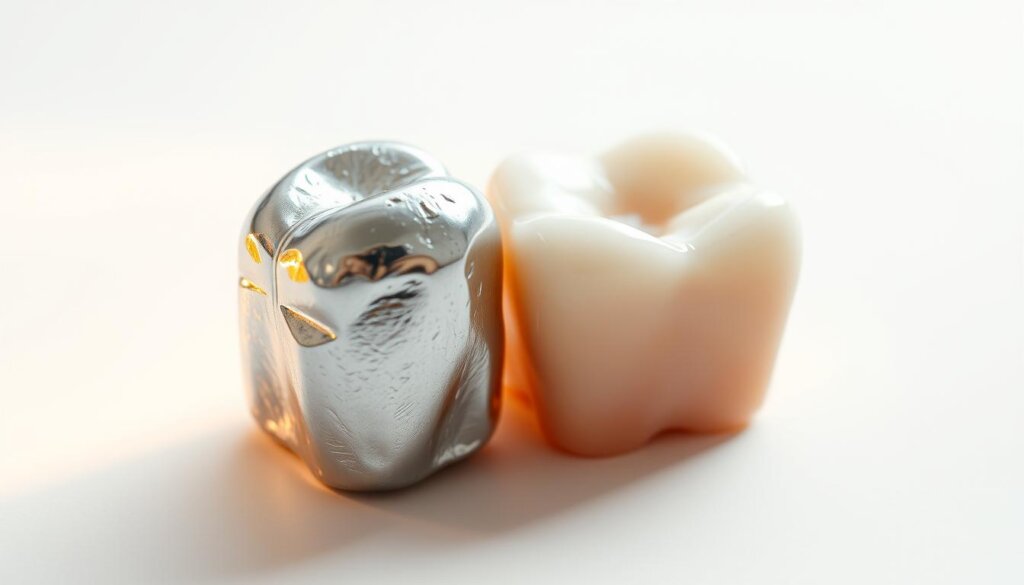
Silver amalgam fillings are strong but not as pretty because of their metal look. This is not ideal for fillings in the front. Even though white fillings vs silver fillings strength might be similar in lasting, the silver color does not help in keeping a white smile. This makes people prefer composite fillings for their looks.
New improvements in dental materials are making composite fillings even better. This makes them a top choice for those who care about looks and function. Knowing these facts helps people and dentists choose the right filling based on looks and use.
Longevity of Fillings
The lifespan of dental fillings is crucial for both patients and dentists. Knowing about composite and amalgam fillings helps in choosing the right dental care.
Average Lifespan of Composite Fillings
Composite fillings look good and last 5 to 10 years. Their life can be affected by where they are in your mouth, how much you chew, and how well you clean your teeth.
Average Lifespan of Amalgam Fillings
Amalgam fillings are stronger and can last 10 to 15 years or more. They wear out less because they are made of tough materials.
Both kinds of fillings need good care and regular dentist visits to last longer. Here is a quick look at how long each filling type usually lasts and what to think about for each one:
| Type of Filling | Average Lifespan | Key Considerations |
|---|---|---|
| Composite | 5-10 years | More susceptible to wear; aesthetic choices for front teeth. |
| Amalgam | 10-15 years | Highly durable; better suited for molars and hidden areas. |
Sensitivity and Comfort
Dental fillings are key to keeping your mouth healthy after decay strikes. Yet, the type of material matters a lot for comfort. We will look into how composite and amalgam fillings can cause different sensitivities. This helps us get a full picture of dental fillings sensitivity.
Patient Sensitivity with Composite Fillings
For those who get composite fillings, one plus is they don’t react much to hot or cold. This means less discomfort when you drink something hot or eat ice cream. These fillings are strong enough for everyday use, which lowers the chance of them breaking. But, some people might feel a brief sensitivity to sweets or cold things right after getting one.
Patient Sensitivity with Amalgam Fillings
Amalgam fillings last long but might make your teeth more sensitive to temperature. This happens because the metal in these fillings expands and shrinks with hot and cold much more than composite ones do. Such changes can cause small cracks in the tooth near the filling. This might make your tooth feel sensitive or uncomfortable.
Understanding dental fillings sensitivity is very important. It helps patients and doctors make the best choices for tooth health and comfort.
Cost Consideration
Choosing the right dental filling is important, especially when it comes to cost. Different fillings have different prices because of the materials they’re made from and how complex the procedure is. Let’s dive into the costs of composite and silver amalgam fillings. This will help you know what to expect.
Initial Cost of Composite Fillings
Composite fillings usually cost more. This is because they take more time and skills to place in the tooth. They need to be layered and cured correctly. However, they look more natural, which is a big plus for teeth that are easy to see.
Initial Cost of Amalgam Fillings
On the other hand, silver amalgam fillings are less expensive. They are quicker to place since they don’t need careful layering. Silver amalgam is tough, making it great for back teeth that do a lot of chewing.
| Filling Type | Material Used | Procedure Complexity | Cost |
|---|---|---|---|
| Composite | Resin-based composite | High | $135 – $240 |
| Amalgam | Silver, mercury, and other metals | Low | $50 – $150 |
Maintenance and Care
Keeping dental fillings in good shape is key to oral health. Proper care helps make composite and silver amalgam fillings last longer. It’s important to know how to take care of each type to keep them working well.
Caring for Composite Fillings
For dental fillings maintenance of composite materials, good oral hygiene is a must. These fillings can get stained, so it’s important to brush and floss regularly. This keeps their look and stops surface stains.
Avoiding foods and drinks that can stain, along with regular dentist visits, keeps composite fillings looking good. Also, checking for signs of wear or damage helps. This is because they can break down from too much bite pressure. They might need fixing or replacing to stay healthy.
Caring for Amalgam Fillings
Silver amalgam fillings are strong, but they still need care. They don’t stain easily, but can change or corrode over time. It’s vital to see the dentist often. This is to make sure the fillings are in good shape and not cracking or growing.
Amalgam fillings also need good oral hygiene and careful chewing to last. This helps avoid damage from too much pressure.
Knowing how composite vs silver amalgam fillings durability compares shows why care methods need to vary. Each requires careful attention. But how you look after them depends on their material and how they react to the mouth’s conditions.
Environmental Impact
The world of dentistry is always changing. This includes how dental fillings affect the environment. This area draws a lot of attention because it touches on both health care and caring for our planet. The use of dental materials, specifically, raises questions about recycling and durability. This shows the dental field’s commitment to being kind to the environment.
Recyclability of Amalgam Fillings
Amalgam fillings are made of metals like mercury. They offer both challenges and solutions for recycling. Despite the dangers of mercury, there are now safe ways to reclaim and reuse this material. This helps lessen the harm caused by throwing away dental amalgam. Efforts such as these, including the global Minamata Convention on Mercury, aim to reduce harm to the environment from dentistry.
Environmental Factors of Composite Fillings
Composite fillings don’t contain mercury, but they still have an environmental impact. They’re made from oil-based parts. Making and getting rid of them releases CO2 and other harmful substances. This affects the air we breathe and adds to the overall environmental challenges of dental fillings. There’s ongoing work to make these materials safer for the planet while ensuring they’re strong, look good, and work well.
Expert Opinions and Recommendations
Expert opinions are key when asking if composite (white) fillings are as strong as silver amalgam fillings?. Dentists use clinical evidence, dental material technology advances, and patient health to advise on filling material. Dentists’ recommendations also consider patients’ specific needs and wants.
Dentists’ Preferences
Dental pros’ preferences differ depending on the situation and what they see. For front teeth that need to look natural, composite fillings are the go-to. They look good.
But for back teeth, where there’s a lot of chewing, silver amalgam is the choice. It’s strong and lasts a long time.
Patient Experiences
Patients pick fillings based on how they feel and look. Many like how composite fillings match their teeth. It makes them feel good when talking to people.
Yet, some choose amalgam fillings for being tough and cost-effective. When patients and dentists make decisions together, they think about dental history, oral health, how fillings look, and money.
| Dental Filling Type | Key Advantages | Common Patient Feedback |
|---|---|---|
| Composite (White) Fillings | Aesthetic, minimally invasive | High satisfaction with appearance, slight sensitivity post-procedure |
| Silver Amalgam Fillings | Long-lasting, cost-effective | Confidence in strength, concerns about mercury content |
Conclusion
In wrapping up our talk on dental fillings, choosing between composite or silver amalgam gets easier. Composite fillings look natural and are strong, perfect for those who care about looks. Yet, silver amalgam fillings offer unmatched strength and value, great for lasting wear and saving money.
The longer-lasting quality of silver amalgam is clear, especially for big cavities or back teeth. This shows why choosing the right filling needs a personalized plan. Each patient’s needs and likes must be considered closely.
To pick the best filling, talking deeply with your dentist is key. This chat should cover what you want to see, what you need function-wise, how much you can spend, and eco-friendly options. Making the right choice boosts not just your oral health but also your confidence. Remember, lasting success with any filling relies on regular dentist visits and taking good care of your teeth.