Are there any disadvantages or limitations to Invisalign Treatment
Did you know that about 1 in 5 people face challenges with clear aligners like Invisalign? This fact shows why it’s key to know all about this popular orthodontic option. Invisalign is known for being discreet and comfortable, but it’s important to think about its downsides too.
Before you decide, think about your lifestyle, oral health, and budget. This article will explore the clinical and practical challenges of clear aligners. We’ll look at the need for strict following of treatment, the cost, and how well it works for different needs.
It’s vital for doctors and patients to understand these points. We want to help you make a smart choice about your orthodontic care, not scare you away.
Key Takeaways
- Invisalign needs strict following of treatment for it to work.
- The cost can be a big issue for many.
- Not all dental problems can be fixed with clear aligners.
- Seeing an orthodontist regularly is key for the best results.
- Knowing your own dental health needs is important before starting treatment.
Overview of Invisalign Treatment
Invisalign is changing orthodontic treatment with a new approach. It uses clear, removable aligners to move teeth into place. Advanced 3D imaging technology helps plan your smile before treatment starts.
Each aligner is made from BPA-free plastic and fits your teeth perfectly. This ensures comfort and effective tooth movement. The process starts with a scan, then uses ClinCheck software to plan your treatment.
Choosing Invisalign means your teeth can be straightened without being seen. The aligners are almost invisible. They also make it easy to keep your teeth clean and eat your favorite foods.
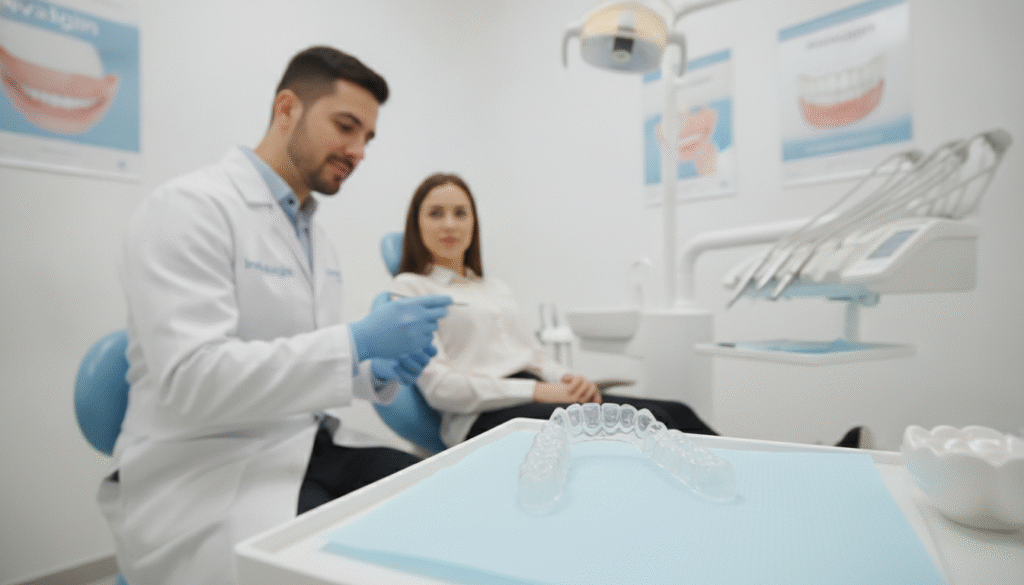
In summary, Invisalign is a modern fix for orthodontic problems. It combines technology, comfort, and looks. Knowing how it works is key to understanding the Invisalign drawbacks you might face.
Common Disadvantages of Invisalign
Invisalign has many benefits, but it also has some downsides. Knowing these can help people decide if it’s right for them.
Cost Compared to Traditional Braces
The cost of Invisalign is a big worry for many. It can cost between $3,500 to $5,000. This is often more than traditional braces. Many insurance plans don’t cover much of this cost, making it harder to afford.
Potential for Incomplete Treatment
One big thing about Invisalign is that you can take it out. But, this can make it hard to stick to treatment. You need to wear it for 20 to 22 hours a day. If you can’t do this, your treatment might not work as well.
Impact on Eating and Drinking
Using Invisalign can also change how you eat and drink. You don’t have to avoid certain foods, but you can’t drink hot or colored drinks without it. This can be a hassle, like when you’re out or at parties. Also, not cleaning your aligners right can make them look bad, which is a big drawback.
| Disadvantage | Description | Impact |
|---|---|---|
| Cost | Higher than traditional braces | May limit accessibility |
| Compliance | Requires 20-22 hours of wear | Risk of incomplete treatment |
| Eating/Drinking | Aligners must be removed | Inconvenience and possible discoloration |
Treatment Limitations of Invisalign
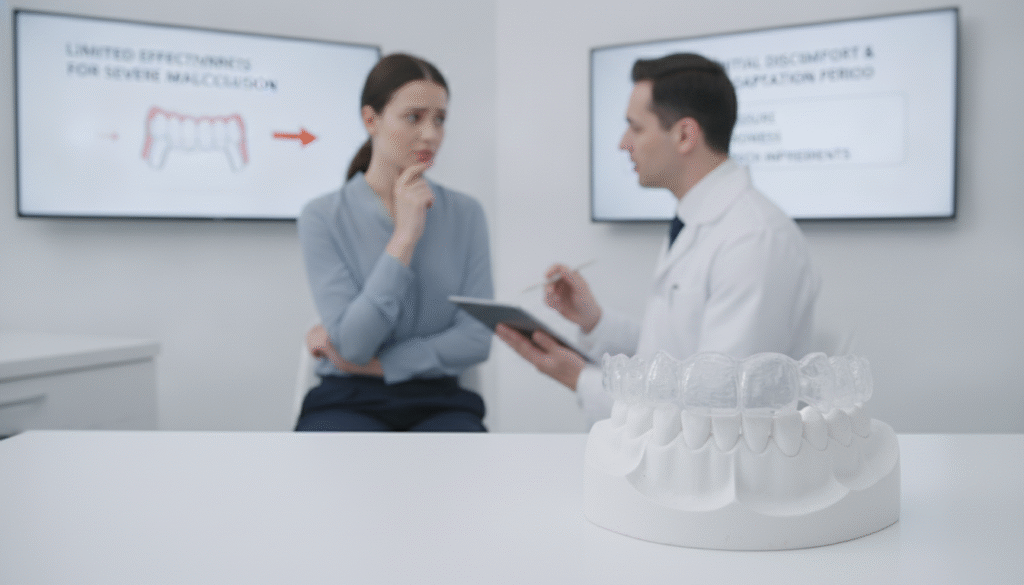
Invisalign works well for many, but it has its limits. It’s important to know these limits before choosing orthodontic treatment. This part talks about dental problems that might make Invisalign less effective.
Complexity of Dental Issues
Invisalign isn’t for everyone. It’s great for mild to moderate problems but can’t handle severe cases. Issues like severe crowding or jaw problems often need traditional braces or more.
This is because Invisalign might not have enough force for some tooth movements.
Effectiveness for Severe Misalignment
For serious misalignment, Invisalign might not be enough. It’s good for small fixes but can’t do big changes. Those with severe tooth issues might need braces instead.
This shows why seeing an experienced orthodontist is key.
Not Suitable for All Cases
Invisalign isn’t right for everyone. Age, dental health, and how complex the case is matter a lot. Sometimes, other treatments like surgery are needed for the best results.
Getting a detailed check-up is vital to find the best treatment.
| Criteria | Invisalign | Traditional Braces |
|---|---|---|
| Complexity of Treatment | Limited for severe cases | Effective for all complexities |
| Patient Compliance | Requires strict adherence | Fixed appliance, no compliance needed |
| Visibility | Clear and discreet | Visible metal brackets |
| Comfort | Generally more comfortable | Can cause irritation |
Compliance Challenges with Invisalign
For Invisalign to work, patients must wear the aligners a lot. They need to wear them at least 22 hours a day. This can be hard for some people to do every day.
Many find it tough to stick to the treatment plan. It’s easy to take out the aligners for meals and snacks. But doing this too often can make the treatment less effective.
Importance of Patient Commitment
Being committed is key to getting good results with Invisalign. Unlike braces, Invisalign needs the patient to wear them regularly. This makes the patient’s effort very important.
Difficulty in Maintaining Usage
Keeping up with the recommended use of Invisalign can be hard. Lifestyle and social life can make it hard to wear them as much as needed. It’s easy to get out of the habit of wearing them all the time.
Impact of Non-Compliance on Results
Not wearing Invisalign enough can really hurt the results. It can cause:
- Lag in tooth movement
- Poor aligner tracking
- Need for mid-course corrections or refinement scans
- Prolonged treatment duration
- Compromised final occlusion that fails to meet the initial treatment plan’s objectives
In short, being disciplined is the most important thing for Invisalign to work. As one orthodontist said,
“Success with Invisalign is a partnership between the patient and the treatment plan.”
Duration of Invisalign Treatment
The time it takes for Invisalign treatment varies a lot. On average, it lasts between 12 to 18 months. This is shorter than traditional metal braces, which can take 18 to 24 months or more.
While the shorter time is attractive, it’s important to remember that everyone is different. The complexity of dental issues affects how long treatment takes. For example, severe misalignment might need more time.
Average Treatment Time
For patients with moderate dental problems, treatment usually lasts 12 to 18 months. But, this time can vary a lot. Each person’s body reacts differently to the treatment.
Factors Affecting Treatment Duration
Several things can change how long Invisalign treatment lasts:
- Complexity of the Case: More complex dental issues might need more aligners and adjustments.
- Patient Compliance: Wearing the aligners as directed is key. Not following the schedule can make treatment longer.
- Biological Response: How well your body responds to the aligners can affect how fast teeth move.
Comparisons with Other Orthodontic Options
Invisalign might be faster than traditional braces. But, not wearing the aligners as directed or needing more adjustments can make it longer.
The “refinement” phase, where more aligners are needed, can also add time. It’s good to talk about this with your orthodontist to know what to expect.
Maintenance and Care of Aligners
Keeping Invisalign aligners clean is key for your mouth’s health and treatment success. Proper care makes the aligners clear and prevents mouth problems. This part will cover how to clean them, the challenges of keeping your mouth clean, and the dangers of wearing them too long.
Cleaning Instructions for Invisalign
To keep Invisalign aligners working well, follow certain cleaning steps. Gently brush them with a soft toothbrush and rinse with lukewarm water. Soaking them in cleaning crystals or solutions can stop plaque and keep them clear. Cleaning them often is important to avoid bad smells and stains.
Challenges of Oral Hygiene
Invisalign aligners are easy to remove but can make oral hygiene hard. They block your teeth, so you must brush and floss well. Not doing this can lead to tooth decay, cavities, and gum problems. Make sure to clean your teeth before putting the aligners back on.
Risks of Wearing Aligners Too Long
Wearing aligners for too long is risky. They are made for short-term use. Wearing them too long can make them weak and not fit right. Instead of moving your teeth, they might just hold them in place. Always follow your orthodontist’s advice on how long to wear them.
Aesthetic Considerations
When thinking about Invisalign, many patients consider how it looks. It’s seen as a discreet option, which is great for adults. But, it’s important to know how it affects how you feel and look.
How well Invisalign hides is a big deal. Even though they’re made to be almost invisible, they’re not perfect. Small attachments on your teeth can make them stand out. Also, the edges of the aligners can catch light, making them more noticeable.
Wearing aligners can also affect your mood. Some adults feel more confident with Invisalign than with metal braces. But, others might feel self-conscious, like they have a slight lisp. The attachments can make you feel uneasy in public.
Most people think Invisalign is classy and shows you care about yourself. This can boost your confidence. Yet, wanting to look perfect can cause stress. It’s key to see both sides of Invisalign’s look before starting treatment.
Cost Considerations and Financial Implications
It’s important to know the costs of Invisalign before getting it. The price usually falls between $3,500 to $5,000. This can change based on where you live, how complex your dental issues are, and the dentist’s experience.
Many insurance plans don’t cover Invisalign because it’s seen as cosmetic. But, some private insurance might help pay for it. Always check what your insurance covers.
Price Range for Invisalign Treatment
The first price you hear might not be the final one. Here’s what can affect the cost:
| Factor | Impact on Cost | Example Cost |
|---|---|---|
| Geographic Location | Costs can differ a lot by area. | $3,500 – $5,000 |
| Provider Expertise | More experienced dentists might charge more. | $4,000 – $5,500 |
| Case Complexity | More complex cases need more aligners. | $4,500 – $6,000 |
Insurance Coverage and Financing Options
To make it easier, many look into financing. Some offices let you pay in small monthly payments. You can also use Flexible Spending Accounts (FSAs) or Health Savings Accounts (HSAs) for dental costs.
Hidden Costs of Treatment
There are costs you might not think of at first. These include:
- Diagnostic records fee
- Replacement aligners if lost or damaged
- Post-treatment retainers, which may not be included in the initial fee
- Additional laboratory fees for mid-course corrections or refinements
In conclusion, understanding the costs of Invisalign is key. Knowing the price range, insurance options, and hidden costs helps you make the best choice for your teeth.
Comparing Invisalign to Traditional Braces
Looking at Invisalign and traditional braces shows us what each offers. Each has its own benefits and drawbacks. These can really affect a person’s choice.
Pros and Cons of Each Method
Invisalign aligners are loved for their comfort and ease. They don’t rub against the cheeks or gums like metal braces do. Plus, you can take them out for meals, brushing, and flossing. But, traditional braces can move teeth more precisely, which is key for some cases.
Patient Preference and Satisfaction
Many people like Invisalign more because it’s pretty and comfy. They say it’s easier to keep their teeth clean. But, some might prefer braces for big changes.
Long-Term Results and Retention
Both Invisalign and braces can work well if done right. After treatment, Invisalign users get Vivera retainers. Braces users get bonded or Hawley retainers. Both need regular use to keep teeth straight.
Choosing between Invisalign and braces is more than just what looks good. It’s about what’s best for you and your teeth.
Limitations for Children and Adolescents
Invisalign is popular, but it has limits for kids and teens. It’s not just about the teeth problem. It also depends on the child’s age and how ready they are for treatment.
Young patients face behavioral challenges. They need to wear Invisalign almost all day. But, kids and teens might lose, break, or forget to wear them. This can make treatment take longer.
Growth and development are also key. Invisalign works differently for growing teeth than fixed braces. Braces can adjust to changes in the mouth better, which is important during growth spurts.
| Criteria | Invisalign | Traditional Braces |
|---|---|---|
| Age Suitability | Teens with mild to moderate issues | All ages, including complex cases |
| Compliance Requirement | High (20-22 hours/day) | Low (fixed, no removal) |
| Impact on Growth | Limited adaptability | Continuous adjustment possible |
| Risk of Damage | Higher (removable aligners) | Lower (fixed brackets) |
In conclusion, Invisalign is a good choice for some teens. But, it’s not right for everyone. Doctors must think about each patient’s needs before choosing Invisalign. This helps parents make the best choice for their child’s teeth.
Alternatives to Invisalign
Today, many options exist for fixing teeth that don’t line up right. Invisalign is popular, but it’s not for everyone. Knowing the other choices is key to picking what’s best for you.
There are many ways to straighten teeth, each with its own benefits. These options vary in cost, look, and what they can fix. Let’s look at some of these alternatives.
Other Clear Aligners on the Market
There are clear aligners like Spark and 3M Clarity Aligners, aside from Invisalign. They work in a similar way but might be different in materials and how they treat teeth. It’s important to talk to an orthodontist to see if they’re right for you.
Traditional Metal Braces
Traditional metal braces are a mainstay in orthodontics. They’re great for fixing serious teeth problems because they work well and are strong. They’re not as invisible as clear aligners, but they’re very good at fixing tough cases.
Lingual Braces
Lingual braces are hidden from view because they’re on the back of teeth. But, they can be less comfortable and harder to get used to. Think about how they look and feel before deciding.
| Type of Treatment | Visibility | Effectiveness for Complex Cases | Comfort Level | Compliance Required |
|---|---|---|---|---|
| Invisalign | Clear | Moderate | High | High |
| Metal Braces | Visible | High | Moderate | None |
| Lingual Braces | Hidden | High | Low | None |
| Other Clear Aligners | Clear | Variable | High | High |
Choosing the right option depends on how bad your teeth problem is, what you want to look like, and how you feel about the downsides of each. Always talk to an orthodontist to find the best way to fix your teeth.
Potential Side Effects of Treatment
It’s important to know about the side effects of Invisalign treatment. Many people find it more comfortable than traditional braces. But, some might experience side effects that need to be talked about.
Discomfort and pain are common concerns. When you switch to new aligners, you might feel pressure or tightness. This feeling usually goes away in 48 hours as your teeth adjust. It’s because of the force applied and how your teeth and gums react.
Speech issues are another side effect. Some people might have trouble speaking clearly or sound different. This usually gets better in one to two weeks. But, it can be a worry for those in jobs that require clear speech.
There are other side effects that are less common but important to know about:
- Allergic reactions: Some people might be allergic to the material in the aligners.
- TMJ discomfort: Changes in how your teeth fit together can cause jaw pain.
- Posterior open bites: Rarely, the aligners might cause your teeth to bite too far back.
In conclusion, Invisalign is a modern way to straighten teeth. But, knowing about these side effects is key for a good experience. Talk to your orthodontist about any worries to fully understand your treatment.
Personalization of Treatment
Personalizing Invisalign treatment is key to great results. At JUST KFO, we use the latest digital tools to make your aligner treatment precise. Advanced 3D scans and computer simulations let you see your future smile before treatment starts.
This detailed plan keeps you in the loop and motivates you. It makes the journey more exciting.
We create your treatment plan with ClinCheck software. It helps orthodontists plan tooth movements and more with high accuracy. But, it’s important to remember that this software uses averages, not your unique body.
Things like bone density and how well you follow the treatment plan can’t be fully predicted. Sometimes, a tooth might not move as expected. This might mean making changes to your treatment plan.
The skill of orthodontics is in adjusting the digital plan based on real-life observations. It’s about mixing technology with the body’s unique responses to get the best results.
Monitoring Progress During Treatment
Keeping an eye on your progress with Invisalign is key to getting the best results. Regular visits to your orthodontist are important. They check how your teeth are moving and make sure everything is on track.
These visits are also a chance for your orthodontist to:
- Make sure the aligners fit right.
- Check your teeth and gums for any problems.
- Do adjustments if needed to help your teeth move.
- See if your body is reacting as expected.
Challenges of Remote Monitoring
Technology helps us keep an eye on treatment from afar. But, it’s not perfect. Apps and AI scans can miss small details that a doctor’s eye can catch.
Things like gum problems or aligners not fitting right might not show up on a screen. So, while tech is helpful, it’s not a full replacement for a doctor’s visit.
Use of Technology in Treatment Tracking
Technology has changed how we track Invisalign treatment. Tools like Dental Monitoring can cut down on visits but also alert us to any issues. This mix of tech and doctor’s care is the best way to manage treatment.
Even with new tech, regular check-ups are essential. They keep you on track and excited about your smile. We look at what’s best for you in our practice.
Conclusion: Are the Disadvantages Worth It?
Choosing the right orthodontic treatment is a big decision. Many people consider the Invisalign treatment decision carefully. They weigh the good points against the bad ones.
Invisalign is known for its looks and comfort, which are big pluses for adults with mild to moderate teeth issues. But, there are downsides like how well you stick to it, the cost, and what it can’t fix. It’s important to think these over to see if it’s worth it.
Getting informed and talking to your orthodontist is key. Ask them about their experience, how many times you might need to adjust, and the total cost. This talk helps you know what to expect during your treatment.
The real value of orthodontic treatment isn’t just a perfect smile. It’s about feeling safe, knowing what to expect, and being happy with the process. Whether Invisalign is right for you or not, getting expert advice is important. It helps you find your way to a healthier, brighter smile.