Can I Chew Gum or Smoke While Wearing Invisalign?
Did you know nearly 50% of Invisalign users worry about their daily habits during treatment? This shows a big concern among those with clear aligners. It’s important to know how chewing gum and smoking affect treatment.
Invisalign lets you remove aligners when needed. But, this freedom comes with big responsibilities. Habits like chewing gum or smoking can risk treatment success. So, it’s key to understand these actions well.
This article will look into the science behind these habits. We’ll talk about the risks and the best ways to use Invisalign. By looking at proven facts, you’ll learn how to handle your treatment better.
Key Takeaways
- Invisalign users often question the impact of daily habits on treatment.
- Chewing gum and smoking can compromise aligner effectiveness.
- Understanding the risks associated with these habits is vital.
- Clear aligners offer flexibility, but responsibilities come with it.
- Evidence-based insights can guide users in making informed choices.
Understanding Invisalign Aligners
Invisalign aligners are a new way to fix teeth. They are custom-made trays that gently move teeth into place. Unlike old braces, Invisalign is clear and comfy.
Patients wear each aligner for 20 to 22 hours a day. This is key to getting a straight smile on time.
What are Invisalign Aligners?
Invisalign aligners are clear trays that fit over your teeth. They’re made of a strong, flexible material. This makes them almost invisible, which is why many people choose them over metal braces.
How Do They Work?
Invisalign works by moving teeth slowly. Each aligner applies pressure to move teeth a little bit. Over time, teeth move into the right spot.
Benefits of Using Invisalign
There are many good things about Invisalign:
- Aesthetics: They’re clear, so they’re less noticeable than metal braces.
- Removability: You can take them out to eat, brush, and floss. This helps keep your mouth clean.
- Comfort: They’re soft and don’t hurt your gums or cheeks.
These benefits explain why many people choose Invisalign. Knowing these points helps you use Invisalign well and get the best results.
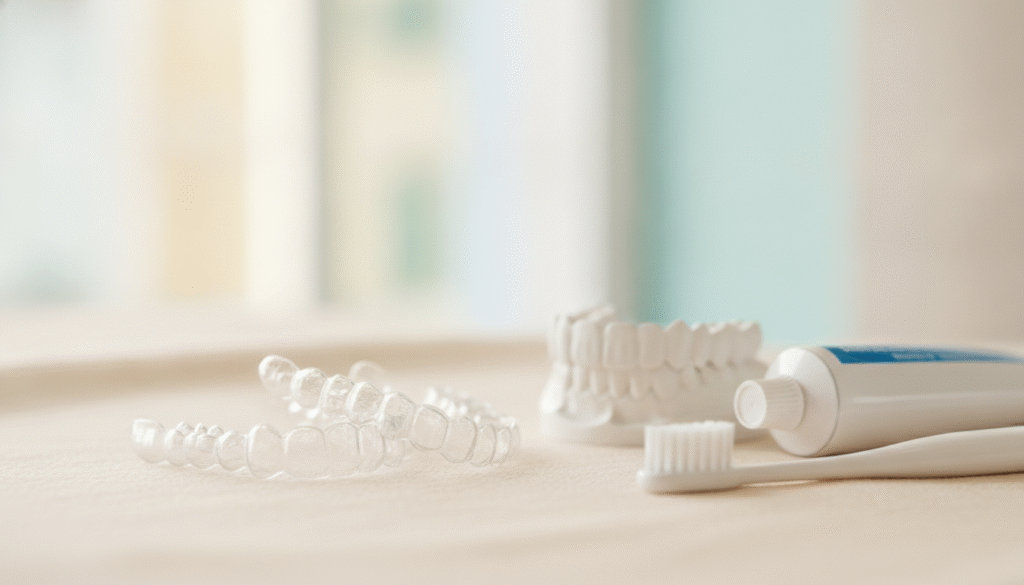
Chewing Gum and Invisalign
Many people wonder if they can chew gum while wearing Invisalign. The answer is not a simple yes or no. It depends on how you handle your aligners while chewing.
Can You Chew Gum With Invisalign?
It’s important to take out your Invisalign aligners before chewing gum. Gum can stick to the aligners and damage them. It can also stain your teeth and aligners with extra saliva.
Types of Gum to Avoid
Choosing the right gum is key. Some gums are better than others:
| Type of Gum | Characteristics | Recommendation |
|---|---|---|
| Healthy Gum | Made with natural bases like chicle; sweetened with xylitol or erythritol | Safe to use if aligners are removed |
| Unhealthy Gum | Contains sugar or artificial sweeteners like aspartame | Avoid completely |
| Sugar-Free Options | Free from sugar; often uses natural sweeteners | Preferable if aligners are removed |
Tips for Chewing Gum Safely
To chew gum without harming your Invisalign, follow these tips:
- Always remove aligners: This prevents gum from getting stuck and maintains aligner integrity.
- Limit chewing time: Prolonged exposure can lead to misalignment and delays in treatment.
- Consider alternatives: Instead of gum, opt for sugar-free mints that are less likely to cause issues with your aligners.
“Taking care of your aligners is as important as the treatment itself.”

Effects of Chewing Gum on Tooth Alignment
Chewing gum during Invisalign treatment can harm your teeth. It might seem like a small thing, but it can really mess up your aligners. We’ll look at how gum chewing slows down your treatment, the dangers of gum residue, and why keeping your mouth clean is key.
Impact on Treatment Progress
Invisalign aligners move your teeth bit by bit. But, chewing gum often means you don’t wear them as much. This can make your treatment take longer and might mean you need more trays.
Risks of Gum Residue
Gum residue can stick to your teeth and aligners. Even after you take out your aligners, gum bits can stay. This can cause plaque and bacteria to build up, leading to cavities and affecting your teeth’s movement.
Maintaining Oral Hygiene
To avoid these problems, keeping your mouth clean is essential. Brush and floss after chewing gum to remove any residue. This helps keep your teeth and aligners clean. Also, don’t forget to see your dentist regularly to check on your oral health.
| Aspect | Impact | Recommendations |
|---|---|---|
| Treatment Progress | Slower alignment | Limit gum chewing |
| Gum Residue | Increased plaque | Brush after chewing |
| Oral Hygiene | Risk of cavities | Regular dental visits |
Smoking and Invisalign
Smoking is a big problem for people with Invisalign. It’s important to know the risks. Always take out your aligners before smoking. But, even then, smoking can slow down your treatment.
Can You Smoke While Wearing Invisalign?
No, you shouldn’t smoke with Invisalign. Smoking can damage the aligners. It can also stain them, making them look bad.
Health Risks Associated with Smoking
Smoking is bad for your health, not just your teeth. Here are five reasons why:
- Staining of the Aligners: Tobacco can stain them, making them look bad.
- Increased Risk of Gum Disease: Smoking can make gum disease worse.
- Bad Breath: Smoking can cause bad breath that’s hard to get rid of.
- Poor Oral Hygiene: Smokers often have trouble keeping their mouth clean.
- Prolonged Treatment Time: Smoking can make your treatment take longer.
Alternatives to Smoking
There are ways to quit smoking. Nicotine patches or gum can help. Behavioral counseling can also help you stay on track. Quitting smoking is the best choice for your health and treatment.
Effects of Smoking on Invisalign Treatment
Smoking can really mess up your Invisalign treatment. It’s important to know how it affects your teeth and mouth. It’s not just about how your teeth look, but also about your overall health.
Impact on Aligners Material
Invisalign is made of a material that can soak up smoke. This leads to stains and bad smells. Even cleaning them a lot can’t always get rid of these problems.
Staining Risks
Smoking can cause ugly stains on your teeth and Invisalign. Tar and nicotine in tobacco are to blame. These stains are not just about looks; they can also weaken your aligners.
Overall Health Concerns
Smoking can also harm your health while you’re getting your teeth straightened. It can make your mouth dry, which is bad for your teeth. This makes it harder to keep your Invisalign clean.
Smoking also slows down how your mouth heals. This can make your treatment take longer. It’s bad for your gums, too. So, if you’re using Invisalign, you should really think about quitting smoking.
Practical Care for Your Aligners
Proper care for your Invisalign aligners is key for a successful treatment. By following a few simple steps, you can keep your aligners clear and fit well. This also helps protect your oral health.
Cleaning Invisalign
Cleaning your aligners every day is important. Use a soft toothbrush and clear, fragrance-free soap or special cleaning crystals. This removes plaque and bacteria, keeping your aligners fresh and effective.
Rinse your aligners well after cleaning to get rid of any soap left behind.
Storing Aligners When Eating or Smoking
Always store your aligners in their case when you remove them for eating or smoking. Never wrap them in a napkin, as this can cause damage or loss. It’s also key to rinse your aligners right after taking them out and before putting them back in.
This is very important after eating sugary gum or smoking.
Importance of Proper Maintenance
Keeping your aligners in good condition is important. It helps them stay clear and fit well. It also lowers the risk of cavities and gingivitis, which can slow down your treatment.
By following these Invisalign care tips, your orthodontic journey will be smoother.
Alternatives to Chewing Gum and Smoking
Patients with Invisalign can find better ways to replace chewing gum and smoking. Keeping your mouth clean is key during orthodontic treatment. There are many options to keep your breath fresh and help you stop smoking.
Other Options for Freshening Breath
Try sugar-free mints with xylitol instead of gum. These mints clean your breath and help make saliva without sticking to your aligners. Other good choices include:
- Alcohol-free mouth rinses
- Drinking plenty of water
- Eating crunchy fruits and veggies, like apples or carrots
These options fit the Invisalign do’s and don’ts and keep your mouth clean and fresh.
Smoking Cessation Tips
Stopping smoking is very important with Invisalign. It keeps your aligners safe and improves your mouth health. Here are some tips to help you quit:
- Try nicotine replacement therapies, like patches or lozenges.
- Talk to your doctor about medicines to help you quit.
- Join a support group or get counseling for motivation.
These steps can really help you quit smoking.
Healthy Lifestyle Changes
Living a healthier lifestyle can make your Invisalign treatment better. Focus on:
- Eating a balanced diet full of vitamins and minerals
- Exercising often to stay healthy
- Brushing and flossing well to keep your mouth clean
Consulting Your Orthodontist
Talking to your orthodontist about your habits can make your Invisalign treatment better. This conversation helps keep your treatment on track and meets your health goals. It’s important to share any worries about gum chewing or smoking during your visits.
When to Discuss Gum Chewing or Smoking
See your orthodontist if you notice:
- Aligners getting stained or discolored.
- More tooth sensitivity or discomfort.
- Having trouble wearing aligners as long as you should because of these habits.
Talking about these issues is important. They can affect how well your treatment works and your oral health.
Importance of Professional Guidance
Getting advice from a professional is key. Your orthodontist can give you advice that fits your needs. They might suggest:
- Using toothpaste with more fluoride to prevent cavities.
- Changing your treatment plan if you’re not following it well.
This personalized help keeps your treatment on track and helps with any problems you face.
What to Expect in Your Consult
Your consultation will be a place where you can talk openly. Your orthodontist is there to listen and help. Here’s what usually happens:
- Talking about your habits and how they affect your treatment.
- Checking your aligners and teeth.
- Creating a plan that’s just right for you.
Talking openly is important for getting the best results from your Invisalign. Remember, your orthodontist is there to help you every step of the way.
| Concern | Possible Solution | Expected Outcome |
|---|---|---|
| Stained Aligners | Use of higher-fluoride toothpaste | Improved aesthetics and reduced caries risk |
| Increased Sensitivity | Adjusting treatment duration | Enhanced comfort during wear |
| Non-compliance | Customized reminders and support | Better adherence to treatment plan |
Managing Discomfort with Aligners
Wearing Invisalign aligners can feel uncomfortable at first. This feeling often happens when you switch to a new tray. Some pressure is okay, but if it hurts a lot, it might mean your aligners don’t fit right or you have inflammation from smoking.
To handle discomfort, try these tips:
- Use orthodontic wax: Wax on rough spots helps by acting as a shield between your aligners and gums.
- Over-the-counter analgesics: Taking pain meds as told can ease the pain.
- Cold compresses: A cold pack on your mouth can help with swelling and numbness.
It’s key to tell normal pressure from pain that might mean a problem. If pain lasts more than a few days or comes with swelling or bleeding, get help from a dentist.
When to Seek Advice
Talk to your orthodontist if you’re in a lot of pain. They can check if your aligners fit right and fix any issues. Getting help early can stop bigger problems later.
Remedies for Aligner Issues
For ongoing discomfort, try these solutions:
- Switch to a previous tray: Using an older aligner might help you adjust while you figure things out.
- Use chewies: Chewies can help your aligners fit better by making sure they sit right.
Always check with your orthodontist before changing your treatment. They can help you manage discomfort and keep your treatment on track.
Adjusting to Wearing Aligners
Starting with Invisalign can be a big change. It’s tough, mainly for those used to traditional braces or no orthodontic devices. Knowing how to adjust is key for the best results.
Here are some tips to help you get used to wearing aligners. It’s important to have a routine for wearing and taking care of them. This routine should include:
- Start by wearing them a little longer each day to get comfortable.
- Do speech exercises to avoid lisping at first.
- Always take out your aligners before eating or smoking.
Tips for New Users
Be ready for some common changes. You might feel more saliva as your mouth gets used to the aligners. Drinking water and practicing swallowing can help. Also, try not to take out your aligners too often. Staying consistent is important for your treatment.
Common Adjustments
Here are some changes you might notice:
| Adjustment | Description | Management Strategies |
|---|---|---|
| Increased Salivation | More saliva production as the mouth adjusts to aligners. | Stay hydrated; practice swallowing. |
| Discomfort | Initial discomfort as teeth begin to shift. | Use over-the-counter pain relief if necessary. |
| Speech Changes | Temporary lisping or changes in speech. | Practice speaking out loud; read aloud daily. |
Staying Committed to Treatment
Sticking to your treatment plan is essential. Wearing your aligners for 20–22 hours a day is critical for quick results. To stay on track, you can:
- Set reminders on your phone for aligner wear time.
- Use apps to track how long you wear them.
- Get support from friends or family.
The first few weeks might be hard, but it gets easier. Avoiding bad habits early on helps you succeed.
Duration of Invisalign Treatment
How long Invisalign treatment lasts varies. It depends on several things. On average, it takes 12 to 18 months. But, it can change based on how complex your dental issues are.
Average Treatment Timeline
The time needed for Invisalign treatment can differ a lot. Some might finish in 6 months, while others could take up to 24 months. Here’s a table showing typical times for different levels of treatment:
| Treatment Complexity | Average Duration | Typical Cases |
|---|---|---|
| Minor Adjustments | 6-12 months | Simple crowding or spacing |
| Moderate Adjustments | 12-18 months | Moderate crowding or misalignment |
| Severe Adjustments | 18-24 months | Complex cases requiring extensive correction |
Factors Affecting Duration
Several things can change how long Invisalign treatment takes:
- Case Complexity: More complex cases take longer.
- Age: Younger patients often move teeth faster.
- Bone Density: Higher bone density can slow tooth movement.
- Compliance: Wearing aligners for 20-22 hours daily is key.
Importance of Compliance
Wearing aligners as directed is very important. Taking them out for too long can slow down treatment. Even small breaks, like for gum chewing or smoking, can add weeks or months.
“Success with Invisalign hinges on patient compliance; the more consistently you wear your aligners, the quicker your results.”
Knowing what affects treatment time can help patients make better choices. It’s all about taking care of your teeth.
Success Stories with Invisalign
People’s experiences with Invisalign show big changes when they follow the treatment plan. Many have shared their stories, showing how sticking to orthodontic care led to amazing results. These stories inspire those thinking about or going through treatment.
Patient Testimonials
Real-life stories show how Invisalign can change lives. One patient said,
“I was amazed at how quickly my teeth started to shift into place. The process was comfortable, and I loved that I could remove the aligners when eating.”
These stories highlight how well the aligners work when users follow their treatment plan.
Before and After Transformations
Before-and-after photos show the big impact Invisalign can have. Many patients say they not only have straighter teeth but also feel more confident and have better oral health. These changes come from better hygiene and consistent care, thanks to professional help during treatment.
The Role of Professional Care
Regular visits to orthodontists are key to Invisalign success. These visits let professionals check on progress and spot early problems like stains or gum issues. By talking openly with their orthodontist, patients can stay on track to get the results they want.
In conclusion, Invisalign success stories show the value of commitment and professional help. With the right approach, even those with tough habits can get great results and enjoy a beautiful smile.
Frequently Asked Questions
Patients often have many questions about Invisalign. We aim to provide clear answers. This section covers common questions, clears up misconceptions, and addresses concerns about Invisalign aligners.
Common Questions About Invisalign
Many patients are curious about Invisalign’s effectiveness and safety. Here are some of the most asked questions:
- Does Invisalign hurt? Most patients feel a bit of discomfort as their teeth move. But this usually goes away.
- Can Invisalign fix an overbite? Yes, Invisalign can treat overbites and other alignment problems.
- Is Invisalign worth it? Many users think the benefits of better alignment and looks are worth the cost.
- Can you eat with Invisalign? No, you should take out your aligners when eating to avoid damage and keep things clean.
Clarifying Misconceptions
There are many myths about Invisalign. One big one is that “Invisalign ruins teeth.” This is not true. Problems usually come from not following treatment instructions, like not cleaning your aligners well.
Addressing Concerns from Users
Some users worry about smoking with Invisalign. It’s important to remove your aligners when smoking to avoid stains and gum disease. Taking good care of your aligners is key for a successful treatment.
| Question | Answer | Additional Notes |
|---|---|---|
| Does Invisalign hurt? | Minor discomfort is normal. | Discomfort typically lessens over time. |
| Can Invisalign fix an overbite? | Yes, it is effective for overbites. | Consult your orthodontist for specific cases. |
| Is Invisalign worth it? | Many users believe so. | Consider both costs and benefits. |
| Can you eat with Invisalign? | No, aligners must be removed. | This prevents damage and maintains hygiene. |
Final Thoughts on Gum Chewing and Smoking
It’s important to know how chewing gum and smoking affect Invisalign treatment. This article has covered the main points. It gives a clear summary for those using Invisalign.
Summary of Key Points
- Remove aligners when chewing gum: This is key to avoid damage and get the best results.
- Avoid smoking: Smoking can harm your aligners and your mouth’s health.
- Prioritize oral hygiene: Keeping your mouth clean is essential for treatment success.
Recommendations for Invisalign Users
If you want fresh breath without hurting your treatment, try these:
- Use xylitol mints to fight cavities and keep your mouth healthy.
- Get help to quit smoking, as it can greatly improve your treatment.
- Talk to your orthodontist about any worries or questions you have.
Encouragement for Treatment Compliance
Remember, the small sacrifices you make now will lead to a lifetime of better dental health and confidence. Your dedication to following the treatment is the most important thing. As you move forward, know that each step brings you closer to your dream smile.
Additional Resources
To enhance your journey with Invisalign, many resources are available. Getting the right information helps you make smart choices about your oral health and aligner care.
Links to Invisalign Support
The official Invisalign website is a great place to start. It has detailed care instructions, FAQs, and tips for your treatment. This resource is key to staying up-to-date on your aligners.
Articles on Oral Hygiene
Keeping your mouth clean is vital during Invisalign treatment. Look for articles from reputable dental groups on brushing and flossing. These resources help keep your teeth and gums healthy during your aligner journey.
Contacting Your Orthodontist for More Help
Getting advice from your orthodontist is priceless. If you have questions or concerns, don’t hesitate to ask. They can offer personalized guidance based on your needs and treatment plan. A strong relationship with your orthodontic team is essential for the best results.
In conclusion, using these resources will help your Invisalign journey. Being well-informed increases your chances of getting the best results and keeping a healthy smile.