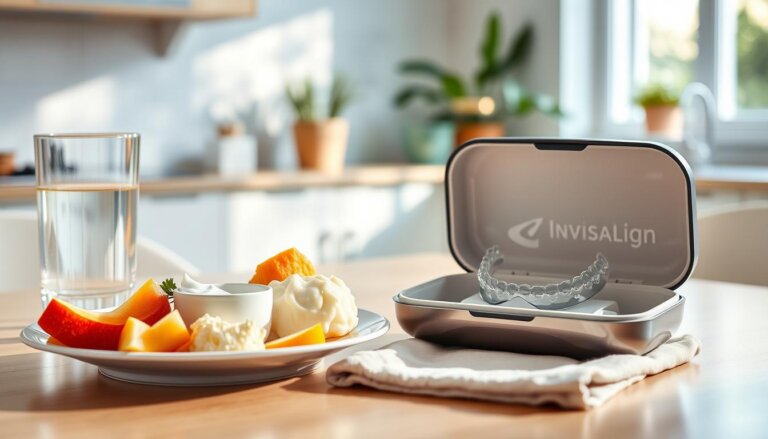
Can I Eat and Drink Normally with Invisalign?
Will choosing clear aligner treatment mean saying goodbye to your favorite foods and beverages? This question is on the minds of many who want a beautiful smile and don’t want to give up their favorite foods. The answer shows a big plus of modern aligners over old braces.
Unlike metal braces that limit what you can eat, removable aligners give you a lot of freedom. You can eat almost anything you want without worrying about breaking your braces. This makes it easier for adults to get their smiles fixed without giving up their favorite foods.
But, there are rules to follow. You must take out your aligners before eating anything except water. This keeps your aligners in good shape and your mouth healthy during treatment.
You need to wear your aligners for 22 hours a day. This leaves about 2 hours for meals and taking care of your teeth. Knowing how to balance dietary freedom and following the rules is key for a successful treatment. Sticking to the removal rules helps avoid problems like stained or warped aligners and tooth decay.
Key Takeaways
- Removable aligners permit unrestricted food choices when properly removed before eating
- Water remains the only safe beverage to consume while wearing aligners
- Treatment requires 22 hours of daily wear, leaving approximately 2 hours for eating and hygiene
- Removal protocols protect both aligner integrity and oral health throughout treatment
- Clear aligner treatment eliminates traditional bracket-related dietary restrictions
- Proper compliance with removal guidelines ensures optimal treatment outcomes and prevents complications
Understanding Invisalign Treatment
Before we dive into Invisalign eating rules, let’s get the basics. Clear aligners have changed dental care by being both effective and easy on the eyes. Knowing this helps us see why we need to be careful with food and drinks during treatment.
Success in orthodontic treatment depends on following the rules and taking good care of the appliances. Knowing how these appliances work helps us make smart choices about eating and drinking.
What is Invisalign?
Invisalign is a new way to straighten teeth without metal braces. It uses clear, custom-made aligners that are easy to wear. These aligners are made from special materials that are safe for your mouth.
The material of these aligners is special because it lets teeth move slowly but safely. It’s clear so you can’t see it, but strong enough to work on your teeth.
Each set of aligners is made from detailed 3D scans of your teeth. This lets orthodontists plan out how to move your teeth step by step.
“Invisalign has changed orthodontics by making it look good and work well. It fits into today’s life easily.”
How Does Invisalign Work?
Invisalign works by changing the aligners often. Each change helps move your teeth a little bit. This is done by making small changes to the shape of the aligners.
This process helps your teeth move by changing the bone around them. It’s a natural way to move teeth without pain.
You wear each set of aligners for a week or two before moving to the next one. The plan is made using computers to make sure it works well. You need to wear them for 20 to 22 hours a day.
This method is different from traditional braces because it uses short, controlled forces. This is better for your teeth and makes treatment more comfortable.
Benefits of Using Invisalign
Invisalign has many benefits that make it better than traditional braces. Knowing these helps us understand why we need to follow certain rules about eating.
Aesthetic superiority is one big advantage. Invisalign is almost invisible, which is great for adults and teens. It makes it easier to feel confident while getting your teeth straightened.
Enhanced oral hygiene accessibility is another big plus. You can brush and floss like normal because the aligners come out. This helps keep your teeth and gums healthy during treatment.
Having no food-related dietary restrictions is a big plus. Unlike braces, you don’t have to avoid certain foods. Just take out the aligners before you eat.
| Treatment Aspect | Invisalign Clear Aligners | Traditional Metal Braces | Clinical Significance |
|---|---|---|---|
| Aesthetic Appearance | Nearly invisible thermoplastic | Visible metal brackets and wires | Improved patient confidence and treatment acceptance |
| Dietary Flexibility | No food restrictions when removed | Multiple prohibited foods | Enhanced nutritional freedom and compliance |
| Oral Hygiene | Removable for normal brushing | Requires specialized cleaning tools | Reduced risk of cavities and gum disease |
| Soft Tissue Comfort | Smooth plastic edges | Potential for cuts and irritation | Decreased emergency visits for appliance issues |
Invisalign offers many benefits, not just convenience. Studies show that people using Invisalign are happier and take better care of their teeth than those with braces.
But, to get these benefits, you need to follow the rules. This means removing the aligners before eating, wearing them as directed, and cleaning them and your teeth well. Following these guidelines is key to getting the most out of Invisalign.
Understanding how Invisalign works helps us know how to eat and drink during treatment. The design of Invisalign makes it easy to eat what you want, but you need to take care of the aligners to make sure they work well.
Eating with Invisalign
Invisalign therapy makes eating easier because you can remove the clear aligners. This is different from metal braces that stick to your teeth and limit what you can eat. Removing Invisalign for meals is key to success and keeping your mouth healthy.
Wearing removable aligners makes eating easier. But, you must remove them for meals and store them safely. This is important for your treatment and oral health.

The Critical Rule: Always Remove Aligners Before Eating
Never eat with Invisalign aligners on. This is a must, not just a suggestion. The material of the aligners can’t handle the force of chewing.
Adults can chew with up to 700 Newtons of force. Eating with aligners on can damage them. This could slow down your treatment and cost you more money.
Eating with aligners can also harm your teeth. Food gets stuck and bacteria grow. This can lead to cavities and gum disease.
To manage your Invisalign treatment, follow these steps:
- Remove aligners completely before eating
- Store them in their case right away
- Don’t put them in napkins or pockets
- Eat freely once they’re stored
- Clean your teeth well before putting them back
Storing your aligners properly helps prevent losing them. Napkins and pockets can cause damage or loss.
Dietary Freedom During Treatment
When you remove your aligners, you can eat anything you want. This is a big plus compared to metal braces. Here’s a table showing the difference:
| Food Category | Traditional Braces | Invisalign (Aligners Removed) |
|---|---|---|
| Hard Foods | Must avoid nuts, hard candy, ice | No restrictions |
| Sticky Foods | Cannot eat caramel, gum, taffy | Fully permitted |
| Crunchy Foods | Popcorn and chips prohibited | Completely allowed |
| Whole Fruits/Vegetables | Must cut into small pieces | Bite normally without modification |
After changing your aligners, your teeth might feel tender. Eating soft foods can help. But, you don’t have to avoid any foods once you remove your aligners.
Good choices for when your teeth are tender include:
- Smoothies and protein shakes for nutrition
- Yogurt and soft cheeses for calcium
- Cooked veggies instead of raw
- Pasta and soft grains
- Fish and tender meats
These foods are optional, based on what you prefer. Most people go back to their usual diet within a few days after each change.
Understanding What to Avoid: The Protocol Matters
It’s important to know what to avoid with Invisalign. You should never eat with your aligners on. This is key for your treatment to work well.
Here’s how to eat with clear aligners:
- Remove aligners carefully from the back molars
- Store them right away in their case
- Eat what you want without limits
- Brush your teeth well for two minutes
- Floss between all teeth to remove food
- Rinse aligners with cool water before putting them back
- Put clean aligners back in your mouth
This way, you get the most out of your treatment and keep your teeth healthy. Cleaning your teeth before putting your aligners back helps prevent bacteria and food from getting trapped.
Removing Invisalign for meals might add steps to your eating routine. But, it’s worth it for the benefits. You can eat normally and take care of your teeth better than with metal braces.
Drinking with Invisalign
Drinking with Invisalign aligners requires following certain rules. It’s important to know which drinks are safe and which are not. Drinking often means you need to protect your aligners and teeth.
The material of Invisalign reacts differently to various drinks. Drinks with high temperature, acidity, or color can harm your aligners. Choosing the right drinks helps keep your aligners and teeth safe.
What Liquids Are Safe with Aligners?
Water is the only drink recommended with Invisalign. It has a neutral pH and doesn’t stain or harm teeth. Drinking water all day is good for your aligners.
But, water temperature matters too. Hot water can change the shape of your aligners. It’s best to drink cold or room temperature water to keep your aligners working right.
Sparkling water seems safe but can harm your teeth. Its acidity can weaken tooth enamel. Always remove your aligners before drinking any carbonated beverages.
Which Beverages Require Aligner Removal?
Except for water, you should remove your aligners before drinking anything else. This rule applies to drinks that might seem safe. There are many reasons why you should remove your aligners before drinking.
Coffee and tea can stain your aligners. The stains are hard to clean off. This makes your aligners look yellow or brown.
Drinks like red wine stain and are acidic. This can harm your teeth and change the color of your aligners. Even clear drinks can damage your aligners over time.
Here are some drinks you should avoid with Invisalign:
- Caffeinated drinks: Coffee, tea, energy drinks containing chromogenic compounds
- Acidic beverages: Citrus juices, sports drinks with pH below 5.5
- Carbonated options: Soda, sparkling water, tonic water with carbonic acid
- Alcoholic drinks: Wine, beer, cocktails with staining or acidic properties
- Sweetened liquids: Fruit juices, sweetened teas, flavored milk products
Understanding High-Risk Drink Categories
Drinks like soda and fruit juices are bad for your aligners. They are acidic, sweet, and can stain. These drinks can harm your teeth and cause cavities.
Using straws doesn’t help. Straws don’t stop drinks from touching your teeth. Drinks can reach your teeth and cause harm even with straws.
Energy drinks are very bad. They are acidic, sweet, and can stain. They can weaken your teeth a lot.
| Beverage Category | pH Level | Primary Risk Factor | Aligner Removal Required |
|---|---|---|---|
| Plain Water (Cold/Room Temp) | 7.0 | None – Safe with aligners | No |
| Coffee and Tea | 4.5-5.5 | Staining, mild acidity | Yes |
| Carbonated Soft Drinks | 2.5-3.5 | Severe acidity, sugar, staining | Yes |
| Fruit Juices | 3.0-4.0 | High acidity, natural sugars | Yes |
| Alcoholic Beverages | 3.0-6.0 | Staining, acidity, material degradation | Yes |
Drinking harmful drinks can damage your teeth over time. Always remove your aligners before drinking anything except water.
Develop a routine for drinking with your aligners. Remove them, drink, rinse, and put them back. This keeps your treatment on track and your teeth healthy.
Be careful with cold drinks too. Even though they don’t warp your aligners, they can be acidic or sweet. Drinks like smoothies need your aligners removed, even if they’re cold.
Hygiene and Care with Invisalign
Keeping clear aligners clean is key to a successful treatment. Invisalign is better than traditional braces because you can remove them. But, you need to clean them well to keep your teeth healthy.
It’s important to take care of both the aligners and your teeth. When you wear aligners, they can help keep your mouth clean. But, if you don’t clean them right, they can harm your teeth.
Proper Cleaning Techniques for Clear Aligners
Cleaning your aligners right is different from brushing your teeth. The material of the aligners needs gentle care to stay clear.
Use a soft-bristled toothbrush and lukewarm water to clean your aligners. This method removes dirt and bacteria without damaging the aligners. It keeps them looking good and feeling comfortable.
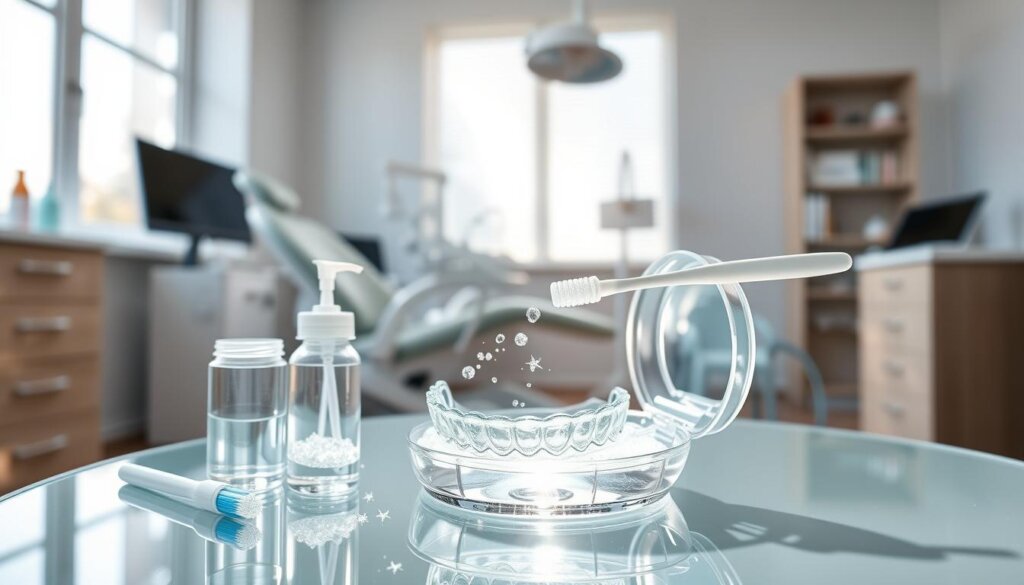
Don’t use regular toothpaste on your aligners. Toothpaste can scratch the aligners and make them cloudy. This makes it easier for bacteria to stick to them.
Instead, use:
- Specialized clear aligner cleaning systems made for polyurethane
- Mild antibacterial soaps that won’t stain the aligners
- Plain lukewarm water with brushing for cleaning each set of aligners
- White vinegar solutions diluted with water for deep cleaning
“The key to preventing staining Invisalign while eating lies not in the cleaning products used, but in the consistency of the cleaning routine established by the patient.”
Clean your aligners morning and night. Also, rinse them with water when you take them out to stop bacteria buildup.
Essential Oral Hygiene Practices During Treatment
Good oral hygiene is very important with Invisalign. The way aligners fit over your teeth can affect your health. Keeping your teeth and aligners clean is essential.
Brush and floss your teeth after every meal before putting in your aligners. This stops food and bacteria from getting trapped. If you don’t clean your teeth, the aligners can trap bacteria and cause problems.
Not cleaning your teeth well can lead to:
- More cavities from acid in the aligner
- Gum disease from bacteria buildup
- Aligner stains from food and bacteria
- Bad breath from bacteria
If you can’t brush and floss, at least rinse your mouth with water. But, this is not a good substitute for regular cleaning.
Even with Invisalign, you should see your dentist every six months. They can clean areas you can’t and check for problems.
Strategies for Maintaining Fresh Breath
Bad breath with Invisalign comes from dirty aligners or poor oral hygiene. To keep your breath fresh, you need to clean your aligners and teeth well.
Sticking to a cleaning routine is key to fresh breath. When you clean your aligners and teeth well, you control the bacteria that cause bad breath.
Other ways to keep your breath fresh include:
- Drinking enough water to help your saliva fight bacteria
- Using alcohol-free mouthwashes that won’t dry out your mouth or damage the aligners
- Trying special products like Movemints that are safe for aligners
- Cleaning your tongue to remove bacteria
Avoid using regular breath mints or gum with aligners. They can stick to the aligners and need a long time to come off. Also, many breath fresheners have sugar that can harm your teeth.
If you have bad breath even with good hygiene, see a dentist. They can find and treat the cause. Fresh breath is important for your health and how well your Invisalign works.
Lifestyle Adjustments During Treatment
Patients getting aligners find that managing treatment fits easily into their daily lives. At first, it might seem hard, but most get used to it in about two weeks. The trick is to make habits that work with the aligners in different situations.
Going out and about requires some planning. Knowing how to handle aligners in restaurants, while traveling, and at social events helps keep treatment on track. With a little planning and the right tools, patients can keep up with their busy lives and their orthodontic treatment.
Managing Meals at Restaurants
Eating out with clear aligners needs a careful plan to keep them safe and on schedule. Before eating, go somewhere private to take out your aligners. This keeps your dining friends unaware and your aligners safe.
Always put your aligners in a case right after eating. Don’t leave them on your plate or in napkins. Invisalign trays look like paper, so they can get thrown away by mistake.

After eating, you might want to brush your teeth. You can either go home or use a travel dental kit. This keeps your teeth clean and follows the 22-hour wear rule.
It’s smart to have extra cases for your aligners. Keep one in your bag or car and another at work. This way, you always have a safe place for them, reducing the chance of losing them.
Maintaining Treatment While Traveling
Traveling with orthodontic treatment means more than just packing. You need to keep your treatment going and be ready for emergencies. Pack your current aligners, the last set as a backup, cases, cleaning stuff, and your orthodontist’s contact info. This way, you can handle your treatment anywhere, anytime.
Traveling by air has its own challenges. Keep your aligners in during flights to meet the wear time. But, the dry air can make them feel dry. Drinking more water helps with this and keeps your mouth healthy.
Changing time zones means adjusting your meal times. This helps keep your treatment on schedule. Plan your meals before you leave to avoid messing up your treatment schedule.
The American Association of Orthodontists says that good treatment needs both skilled orthodontists and patient cooperation in all parts of life.
Navigating Social Interactions
Aligner therapy has both practical and emotional sides. While Invisalign is less noticeable than braces, taking out your aligners can make you feel self-conscious at first. Knowing this helps you find ways to deal with it.
Some wonder if they should tell friends about their treatment. Many orthodontists say it’s best to be open with close friends. This makes handling your aligners less awkward when you’re out.
Getting used to wearing aligners takes about one to two weeks. Soon, taking them out and putting them back in becomes second nature. You can then enjoy social events without worrying about your treatment.
Being open about your treatment can also inspire others. When you talk about your Invisalign confidently, you show your commitment to health. This can lead to others asking about it and maybe even getting treatment themselves.
Here are some tips for handling social situations:
- Have a simple explanation for your treatment that feels natural.
- Practice taking out and putting in your aligners at home to feel more comfortable.
- Focus on talking to your friends instead of your treatment.
- Remember, most people notice aligners less than you think.
- See your treatment as an investment in your future looks.
As you get more used to wearing aligners, they become a part of your life. The initial adjustments turn into easy habits. This lets you keep up with your social life and travel without any problems.
Common Concerns About Invisalign
Many people using Invisalign face issues like taste changes, forgetting to remove aligners, and eating discomfort. These Invisalign treatment concerns are normal and not usually serious. Knowing what to expect can help patients feel more confident and prepared.
Most issues get better as people get used to wearing aligners. It usually takes a few weeks for the mouth to adjust to the appliance.
Can Aligners Affect Taste?
Some new patients wonder if aligners change how things taste. Taste receptors are mainly on the tongue, soft palate, and throat, not teeth. Yet, some people notice taste changes when they first start treatment.
There are a few reasons why taste might seem different. New aligners might have tiny amounts of chemicals that can affect taste or smell. These effects usually go away after a few hours as saliva washes them out.
Aligners can also change how saliva moves around in the mouth. This can make flavors seem different, at least for a while. It takes some time for the mouth to get used to the appliance and adjust its saliva flow.
Not cleaning aligners or teeth well can lead to bad tastes. Keeping everything clean is very important.
These taste issues usually get better as people get into a cleaning routine and adjust to treatment. Keeping aligners and teeth clean helps avoid bacteria that can affect taste.
What Happens if You Forget to Remove Aligners?
Not taking out aligners when you should can affect treatment. There are two main problems: forgetting to remove them before eating and forgetting to remove them after eating.
Forgetting to remove them after eating is a bigger problem. Invisalign needs to be worn for at least 22 hours a day. This lets you eat and clean your teeth for a couple of hours each day.
Not wearing aligners enough can slow down tooth movement. This might make treatment take longer than expected. It can also cause teeth to move back to where they were before.
Wearing aligners unevenly can also make them not fit right. This reduces how well they work and can make treatment less effective.
It’s okay to miss the 22-hour rule sometimes. But if you do it a lot, talk to your orthodontist. They can help you find ways to stay on track.
Addressing Discomfort or Difficulty Eating
Getting used to Invisalign can be a bit uncomfortable. This is because your teeth are moving and your gums might feel a bit sore. This usually happens when you first get a new set of aligners.
Managing orthodontic discomfort means knowing it will get better. It usually takes a day or two for your mouth to get used to the new aligners. This happens with each new set you get.
When you’re feeling sore, you might want to eat softer foods. Things like yogurt, soup, and scrambled eggs are good choices. They’re easy to chew and can help your teeth feel better.
| Discomfort Management Strategy | Implementation Method | Expected Benefit | Typical Duration |
|---|---|---|---|
| Dietary Modification | Choose soft, easy-to-chew foods during peak sensitivity periods | Reduces mechanical stress on tender teeth | 2-4 days per aligner change |
| Over-the-Counter Analgesics | Ibuprofen or acetaminophen as directed by healthcare provider | Provides symptomatic pain relief | As needed, typically 1-3 days |
| Cold Compress Application | Apply ice pack to external jaw area for 15-minute intervals | Reduces inflammation and numbs discomfort | First 48 hours after aligner change |
| Gradual Aligner Introduction | Insert new aligners before bedtime to sleep through initial adjustment | Allows adaptation during sleep when eating is not required | First night of each new aligner |
Over-the-counter pain relievers like ibuprofen or acetaminophen can help with pain. Always talk to a doctor before taking any medicine, though.
Orthodontic attachments can sometimes cause a bit of irritation. These small bumps on your teeth help the aligners fit better. But they need a little time for your mouth to get used to them. The irritation usually goes away in a day or two.
Try not to keep touching the attachments with your tongue. This can make irritation worse. If the discomfort doesn’t go away or gets worse, it’s best to talk to your orthodontist.
Long-Term Care
Invisalign treatment works best when you follow a long-term care plan and see your dentist regularly. The clear aligners are easy to use but need careful handling. Keeping up with your treatment means tracking your progress and following your dentist’s advice.
Good long-term care makes sure your treatment ends well. Knowing how to care for your aligners helps you stay on track. This way, you can get the smile you want.
Keeping Track of Your Progress
Tracking your progress is key to a successful Invisalign treatment. You’ll change your aligners every one to two weeks, as your dentist tells you. This helps your teeth move as planned.
It’s up to you to keep track of your aligners. Knowing which one you’re wearing and how many you have left helps you stay on schedule. This avoids confusion and keeps your treatment moving forward.
- Calendar marking systems: Mark your aligner change dates on a calendar to see your treatment timeline.
- Smartphone applications: Use apps to remind you when to change aligners and track your progress.
- Visual documentation: Take selfies regularly to see how your teeth are moving.
- Treatment journals: Write down any changes or concerns you have about your aligners.
- Aligner storage organization: Keep your used aligners in order to have a backup if needed.
Many dentists use special software to help you see your treatment plan online. This lets you talk to your dentist anytime you have questions.
Knowing your treatment goals and how long it will take helps you stay motivated. Staying on track with your treatment means you’ll get the best results.
Following Your Orthodontist’s Instructions
Invisalign gives you more freedom than traditional braces, but you must follow your dentist’s advice closely. Orthodontic treatment is complex and needs a dentist’s expertise.
Your dentist gives you specific instructions for wearing your aligners. Following these instructions is important for your treatment to work well. Changing your aligners too early or too late can mess up your treatment.
Here are some important things to remember:
- Daily wear duration: Wear your aligners for at least 22 hours a day to move your teeth properly.
- Aligner change timing: Change your aligners only when your dentist tells you to. This keeps your treatment on track.
- Auxiliary appliance use: Use any extra appliances your dentist gives you exactly as instructed. This helps your treatment work better.
- Activity restrictions: Avoid activities that could damage your aligners. This keeps your treatment going smoothly.
- Prompt communication: Talk to your dentist right away if you have any problems. Don’t try to fix things on your own.
Not following your dentist’s instructions can make your treatment take longer. It might also not work as well as you hope. Your dentist has planned your treatment carefully. Following their advice is important for the best results.
Importance of Regular Check-Ups
Regular visits to your dentist and orthodontist are key to a successful Invisalign treatment. They work together to make sure your teeth move as planned and your mouth stays healthy.
Orthodontic check-ups happen every 6 to 12 weeks. These visits let your dentist check how your teeth are moving and give you new aligners. If your treatment isn’t going as planned, your dentist can make changes to get you back on track.
These visits are also a chance to catch any problems early. Your dentist can remind you to keep up with your treatment and fix any bad habits. This helps you stay on track and get the best results.
Don’t forget to see your general dentist every six months. This is important because orthodontic treatment can make your teeth more prone to cavities and gum disease. Regular cleanings and check-ups help keep your teeth and gums healthy.
Going to the dentist regularly helps prevent problems. Aligners can trap bacteria, leading to cavities and gum disease if not cleaned properly. Regular dental visits help catch these issues early and prevent bigger problems.
Working with your dentist and orthodontist is a team effort for your oral health:
| Care Provider | Appointment Frequency | Primary Functions | Key Benefits |
|---|---|---|---|
| Orthodontist | Every 6-12 weeks | Monitor tooth movement, assess aligner fit, deliver new sets, modify treatment plans | Ensures treatment progresses as planned, addresses orthodontic concerns promptly |
| General Dentist | Every 6 months | Professional cleaning, cavity detection, gum health evaluation, oral cancer screening | Prevents dental disease, maintains oral health during orthodontic treatment |
| Patient Self-Care | Daily | Aligner wear compliance, oral hygiene, progress tracking, proper aligner care | Provides foundation for successful treatment through consistent daily practices |
Your success with Invisalign depends on teamwork. Your efforts, your dentist’s expertise, and regular dental care all play a part. Together, they help you achieve your smile goals and keep your teeth healthy throughout the process.
Conclusion: Living Life with Invisalign
Invisalign offers a balanced way to fix teeth that focuses on both health and lifestyle. Most people get used to wearing them in just two weeks. As time goes on, it becomes second nature.
Embracing Your Treatment Journey
Success with Invisalign comes from keeping a positive outlook. Treatment usually lasts six to twelve months. This short time makes the changes feel temporary.
Many find benefits they didn’t expect. Not eating while wearing aligners helps control snacking. Drinking more water is also a plus. These good habits often stick after treatment ends.
Final Thoughts on Eating and Drinking with Invisalign
The key to Invisalign success is to take out aligners before eating or drinking hot liquids. This rule helps avoid damage and keeps teeth clean.
Compared to traditional braces, Invisalign offers more freedom. You can eat anything you want when your aligners are off. This makes Invisalign a great choice for those who want a beautiful smile without big lifestyle changes.