Can I Get a Dental Implant if I Have Multiple Missing Teeth in a Row?
Did you know nearly 178 million Americans are missing at least one tooth? This number shows how common tooth loss is. Many people wonder about the best ways to replace missing teeth.
Dental implants have changed how we deal with tooth loss. They offer strong and good-looking options. For those missing several teeth in a row, there’s a surprising solution. Strategically placed implants can support a bridge, making it a smart choice.
This article answers the big question: Can dental implants help if you have many missing teeth? The answer is yes. Modern implant dentistry uses advanced methods. We’ll look at how to choose the right option for you.
Key Takeaways
- Over 178 million Americans face tooth loss, stressing the need for good solutions.
- Multiple adjacent missing teeth can be replaced with fewer implants than you might think.
- Implant-supported bridges are a smart way to fix both function and looks.
- Modern implant dentistry makes restorative procedures more successful.
- Knowing who can get implants and how to plan treatment is key for the best results.
Understanding Dental Implants
Dental implants are a big step forward in tooth replacement. They give a lasting base for fake teeth, making them both useful and good-looking. Knowing how dental implants work is key for those thinking about getting them.
What Are Dental Implants?
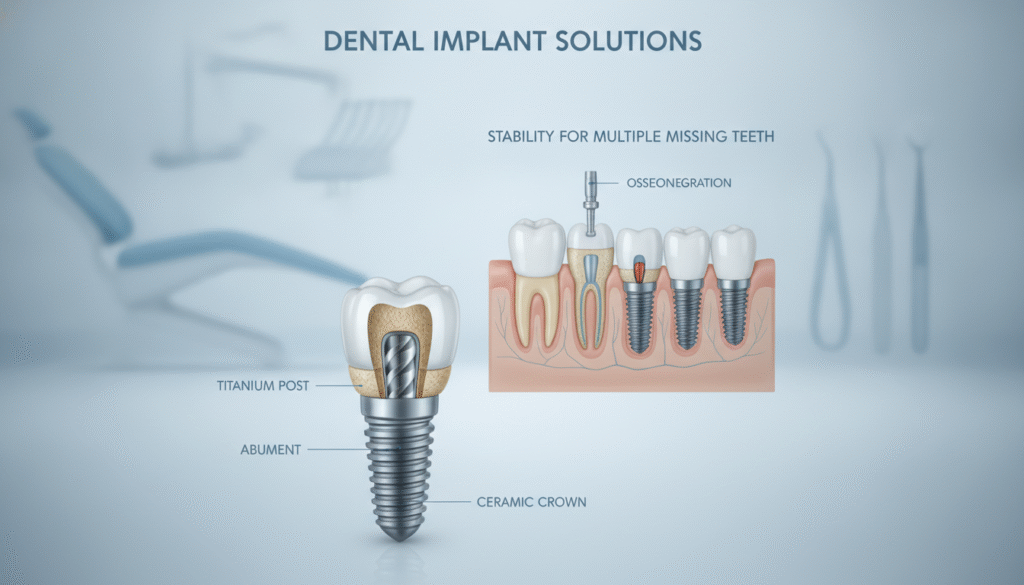
A dental implant is a small titanium post put into the jawbone to mimic a tooth root. It’s made of medical-grade titanium, which is strong and safe for the body. This means it fits well with the body without causing an immune reaction.
These implants serve as a stable base for different dental restorations, like crowns, bridges, or dentures. The bone and implant bond through a process called osseointegration. This bonding takes 3 to 6 months, making a strong base for new teeth.
How Do Dental Implants Work?
The success of dental implants comes from osseointegration. During this, bone cells grow onto the implant, creating a strong bond. This bond is key for the implant to handle chewing and biting forces.
Wolff’s Law says bones adapt to the forces on them. This means implants help keep jawbone density, preventing bone loss. So, implants not only fill in missing teeth but also help keep the jawbone healthy.
| Feature | Dental Implants | Other Tooth Replacement Options |
|---|---|---|
| Longevity | Permanent solution | Temporary solutions |
| Bone Preservation | Supports jawbone health | May lead to bone loss |
| Functionality | Natural chewing function | Limited functionality |
| Aesthetics | Looks and feels like natural teeth | May not match natural appearance |
Reasons for Tooth Loss
Tooth loss can happen for many reasons. Each reason affects the health of our mouths. Knowing these reasons helps find the right multiple missing teeth treatment. Losing teeth impacts more than just looks; it affects how we eat, our health, and our happiness.
Common Causes of Tooth Loss
Several factors can cause tooth loss, including:
- Advanced Periodontal Disease: This disease harms the gums and teeth’s support structures.
- Traumatic Injury: Accidents can knock out teeth, needing quick fixes.
- Severe Caries: Untreated cavities can cause infections that weaken teeth.
- Congenital Absence: Some are born without certain teeth, affecting their dental health early on.
- Systemic Conditions: Diseases like diabetes or autoimmune disorders can harm dental health, raising tooth loss risk.
These causes show why regular dental visits and good oral care are key. Studies show that nearly half of adults over 30 in the U.S. have periodontal disease. This highlights the need to tackle these issues early.
Impact of Multiple Missing Teeth
Losing multiple teeth has big effects. First, it can lead to:
- Alveolar Ridge Resorption: The jawbone shrinks without teeth, changing facial structure.
- Supraeruption of Opposing Teeth: Teeth on the other side may grow into the gaps, causing misalignment.
- Mesial Drift of Adjacent Teeth: Nearby teeth may move into gaps, causing bite issues.
- Altered Occlusal Forces: This can cause uneven wear on remaining teeth and chewing discomfort.
- Phonetic Difficulties: Missing teeth can make speech unclear, affecting communication.
- Psychosocial Impact: The look of missing teeth can lower self-esteem and make people withdraw socially.
Studies show that about 25% of jawbone width is lost in the first year after tooth loss. This loss grows to 40-60% over three years. This bone loss shows why missing teeth restoration is vital. Dental implants help keep bone volume and support dental health.

Benefits of Dental Implants
Dental implants can greatly improve how you look and how well you chew. They are a great choice for people with many missing teeth. Knowing the benefits can help you decide what’s best for your teeth.
Improved Functionality
Dental implants make eating easier. They work better than dentures, allowing you to chew up to 90% like natural teeth. This means you can eat more foods without worrying about your teeth moving.
Implants spread out the force of chewing, keeping your jawbone strong. They also give you the feeling of biting, making eating feel natural. This boosts your confidence when eating, speaking, and smiling.
Enhanced Aesthetics
Today’s dental implants look and feel like your own teeth. Thanks to new technology and materials, they can match your teeth’s color and shape. This makes them blend in perfectly with your smile.
Implants also keep your face looking natural. They prevent the sunken look that happens when you lose teeth. You can be proud of your smile, knowing it looks and works great.
Long-term Solutions
Dental implants are a long-term choice for your teeth. They last much longer than bridges or dentures, often up to 20 years. With the right care, they can last your whole life, saving you money in the long run.
In short, dental implants are a top choice for those missing many teeth. They improve chewing, look great, and last a long time. They are a smart investment for your teeth.
Determining Eligibility for Implants
Starting your journey to dental implant success means first checking if you’re eligible. A qualified dentist will do a detailed check during your dental implant consultation. They’ll look at your dental health, medical history, and use imaging tests.
Tools like X-rays and cone-beam computed tomography (CBCT) are key. They help see if your bones are strong enough for implants. If not, you might need a bone graft first.
The dentist will also check your gums and teeth. It’s important to fix any gum or tooth problems before implants. They’ll look for any health issues that could stop the process.
Initial Consultation and Exam
At your first visit, the dentist will do a detailed check. This includes:
- Looking at your medical and dental history
- Doing a full mouth exam
- Checking your gums and teeth
- Looking at how your teeth fit together
This helps the dentist understand your dental health. They can then plan the best treatment for you.
Bone Density Assessment
Checking your bone density is very important. The dentist will use special systems to see how strong your bones are. This helps decide if implants can work for you.
If your bones aren’t strong enough, there are ways to fix it. You might need a bone graft. There are different types of grafts available.
In some cases, you might not need a graft. Short implants or zygomatic implants could be options. Knowing these can help your missing teeth restoration plan.
Single vs. Multiple Implants
Choosing between single implants and bridges is a big decision. It depends on why you lost your teeth. Each choice has its own good points and things to think about.
When to Consider Single Implants
A single implant is best for one missing tooth. It has a post and a crown. You might choose single implants if:
- Teeth are not next to each other, so you can replace them one by one.
- You want to keep the look of your teeth, including the soft tissue between them.
- You might need to change your teeth in the future, like for orthodontics.
Single implants also make it easier to clean between your teeth.
Benefits of Implant Bridges
If you have several teeth missing in a row, a bridge is a good choice. It uses implants to hold a bridge in place. This has many benefits:
- Cost-Effectiveness: It’s cheaper to use fewer implants for a bridge than for each tooth.
- Stability: Bridges are much more stable than old-style dentures.
- Reduced Surgical Morbidity: With fewer implants, there’s less risk and quicker healing.
For example, two implants can support a bridge for three or four teeth. This makes it a strong and reliable choice for missing teeth in a row.
| Feature | Single Implants | Implant Bridges |
|---|---|---|
| Number of Implants | 1 per tooth | 2 for multiple teeth |
| Cost | Higher per tooth | Lower overall |
| Stability | High | Very High |
| Maintenance | Individual care | Bridge care |
“The choice between single implants and bridges should be guided by clinical needs and patient preferences.”
Talking to a dental implant specialist is key. They can give you advice based on your specific needs. This ensures you get the best care for your teeth.
The Procedure for Dental Implants
Thinking about getting dental implants for multiple teeth? It’s key to understand the steps involved. This process aims to bring back your smile’s beauty and function, boosting your confidence.
The process has several important phases:
Step-by-Step Overview
It starts with a dental implant consultation. Here, scans and images check your bone health and plan where to place the implants. Then, titanium posts are surgically placed in your jawbone, a vital step for stability.
After surgery, a healing time of 3-6 months is needed. This is when the implants bond with your bone, a process called osseointegration. You might get temporary teeth to help with eating and speaking.
Once healed, the next step is abutment placement. Small connectors are attached to the implants. Then, custom-made prosthetics are fitted, matching your natural teeth.
For those missing all teeth, All-on-4 or All-on-6 implants are used. These methods support an entire arch of teeth with four to six implants. It’s a stable and efficient solution for those with many missing teeth.
Recovery and Aftercare
Recovery after dental implants is important. You might feel some swelling and discomfort, which can be managed with pain meds. You’ll also need to change your diet to help heal.
Keeping your mouth clean is critical during healing. Avoid putting pressure on the implants until they’re fully integrated. This ensures they bond well with your bone.
Managing temporary prosthetics is also key. It’s about balancing looks and function while your implants heal. Knowing this can greatly affect the success of your implants.
| Phase | Description | Duration |
|---|---|---|
| Consultation | Initial assessment and planning | 1 appointment |
| Surgery | Placement of titanium posts | 1 day |
| Healing | Osseointegration period | 3-6 months |
| Abutment Placement | Attachment of connectors | 1 appointment |
| Final Restoration | Fitting of custom prosthetics | 1-2 appointments |
Risks and Considerations
Dental implants can greatly improve your oral health. But, they also come with risks that you should know about. It’s important to understand these risks if you’re thinking about getting implants for missing teeth. Complications can happen during or after the surgery, and your lifestyle can affect how well the implants work.
Potential Complications
There are different types of complications that can happen with dental implants:
- Surgical Complications: These include bleeding, nerve damage, and harm to nearby teeth.
- Biological Complications: Issues like implant failure, gum problems, and bone infections can occur.
- Prosthetic Complications: Problems like loose screws, broken parts, and chipped surfaces are also possible.
Each complication has its own chance of happening. For example, nerve injuries might happen in 1-2% of cases. Biological problems can cause implant failure in 5-10% of patients.
Lifestyle Factors Impacting Success
What you do in your daily life can affect how well dental implants work. Smoking, for instance, can make implants more likely to fail. Studies show smokers might be two to three times more likely to have implant failure than non-smokers.
- Smoking can reduce blood flow to healing areas.
- It can also affect the growth of new blood vessels.
- Smokers may be more prone to infections due to their immune system.
Diabetes that’s not well-controlled can also slow down healing. Bruxism, or grinding your teeth, can put too much stress on implants. It’s also important to talk about any medications you’re taking, like bisphosphonates, which can cause jaw problems.
By choosing the right patients, using skilled techniques, and taking good care after surgery, you can improve the chances of success with dental implants.
| Complication Type | Incidence Rate | Potential Impact |
|---|---|---|
| Surgical Complications | 1-2% | Nerve injury, hemorrhage |
| Biological Complications | 5-10% | Early implant failure |
| Prosthetic Complications | 3-5% | Screw loosening, chipping |
Alternative Solutions
When you have multiple missing teeth, you might look for good tooth replacement options. Dental implants are popular, but there are other choices too. Dentures and dental bridges are options to consider, each with their own pros and cons.
Dentures as an Option
Dentures are a good fix for missing teeth. They come in two types: complete and partial. Complete dentures replace all teeth in the upper or lower jaw. Partial dentures fill gaps from missing teeth.
To make dentures, dentists take impressions of your mouth. This ensures they fit well. But, traditional dentures might not work as well as implants. They can be uncomfortable because they attach to teeth with clips or clasps.
Wearing dentures can also cause your jawbone to shrink faster. This is because dentures don’t stimulate the jaw like real teeth do. You’ll need to get them adjusted or replaced often, which can be expensive.
Implant-supported dentures are a better choice. They use implants to stay in place, which is more stable. This method also helps keep your jawbone strong, making it a good option for those with many missing teeth.
Dental Bridges Explained
Dental bridges are another way to replace missing teeth. They attach to healthy teeth on either side of the gap. But, this method can harm the teeth it attaches to.
These teeth might get cavities or need root canals later. Bridges usually last 10 to 15 years before needing to be replaced.
Compared to bridges, implant-supported solutions last longer. They are better for your teeth and gums, following the latest in dental care.
| Tooth Replacement Option | Longevity | Bone Preservation | Maintenance | Initial Cost |
|---|---|---|---|---|
| Conventional Dentures | 5-10 years | Minimal | Regular relines and replacements | Lower |
| Implant-Supported Dentures | 10-20 years | High | Occasional adjustments | Higher |
| Dental Bridges | 10-15 years | Minimal | Replacement needed | Moderate |
In summary, while dentures and bridges are options, they have their downsides. It’s important to know the good and bad of each before choosing. Talking to a dentist can help you pick the best option for you.
Costs Associated with Dental Implants
It’s important to know the costs of dental implants if you’re thinking about getting them. The price can change based on how many implants you need, what kind of restoration you choose, and if you need extra procedures. Here’s a look at the typical costs for dental implant treatment.
Average Costs of Dental Implants
The cost of dental implants includes several parts:
- Diagnostic procedures (e.g., CBCT imaging)
- Surgical fees for implant placement
- Costs of implant components (fixture, abutment, and restoration)
- Adjunctive procedures (e.g., bone grafting or sinus augmentation)
- Laboratory fees for prosthetic fabrication
Getting multiple implants at once can save money. You’ll have:
- One surgery setup
- One round of anesthesia
- Fewer separate dental visits
This approach can cut down on costs for X-rays, sedation, and operating room fees. These costs add up if you do implants one at a time. Here’s a table showing average costs in the United States:
| Procedure | Average Cost |
|---|---|
| Single Dental Implant | $3,000 – $4,500 |
| Implant Bridge (3 Implants) | $10,000 – $15,000 |
| Bone Grafting | $300 – $3,000 |
| Sinus Lift | $1,500 – $2,500 |
Insurance and Financing Options
Understanding dental insurance for implants is key. Policies can vary a lot. They might have:
- Annual maximums
- Missing tooth clauses
- Classification of implants as a “cosmetic” or “alternative” benefit
These can mean lower payments for you. But, there are ways to make payments easier, like:
- Healthcare credit cards
- In-house payment plans
- Medical financing companies
In some cases, medical insurance might cover implants if tooth loss is due to trauma or illness.
“Dental implants are an investment in your oral health that can yield significant long-term benefits.”
In summary, while dental implants might seem expensive, they’re worth it. They can save you money in the long run compared to other options.
Maintaining Oral Health Post-Implant
Maintaining oral health after dental implants is key for long-term success. Patients who focus on oral hygiene and follow advice are more likely to enjoy their implants for years. Good care not only makes implants last longer but also improves overall oral health.
After getting dental implants, a strict daily care routine is needed. This routine should include:
- Using a soft-bristled or electric toothbrush with non-abrasive toothpaste to avoid scratching the implant surfaces.
- Employing implant-specific floss, which features a nylon mesh portion, to effectively clean around the implants.
- Utilizing interdental brushes that are appropriately sized for the spaces between teeth.
- Incorporating water flossers with non-metal tips to prevent damage to the implant surfaces.
- Rinsing with antimicrobial mouthwash containing chlorhexidine or essential oils to reduce bacteria around the implants.
Dental implants can’t get cavities but can get peri-implant diseases. These diseases can cause bone loss and implant failure if not treated quickly. So, it’s important to know how to care for implants differently than natural teeth.
Regular check-ups with a dental implant specialist are also critical. It’s best to see them every 3 to 6 months, based on your risk factors. At these visits, they should check:
- Evaluation of peri-implant soft tissue health through probing and bleeding indices.
- Assessment of occlusion to identify any premature contacts or signs of wear.
- Radiographic examinations to monitor crestal bone levels.
- Professional debridement using specialized instruments designed for implant surfaces.
- Verification of prosthesis integrity, including checking abutment screw torque.
The success of dental implants depends on surgery and patient care. By sticking to a good oral health routine and regular check-ups, patients can keep their missing teeth restoration successful and lasting.
Finding the Right Dental Professional
Choosing the right dental professional for your implant procedure is key. A skilled implant dentist can greatly affect your treatment’s success. Look for specialists with training in implant dentistry, like periodontists or oral surgeons. Knowing what to look for and what to ask can help you during your dental implant consultation.
What to Look for in a Specialist
When searching for a dental implant specialist, consider these factors:
- Specialization: Find dentists who specialize in implant dentistry. Periodontists, oral and maxillofacial surgeons, and prosthodontists have extensive training.
- Board Certification: Check if the specialist is board-certified. Certifications from groups like the American Academy of Implant Dentistry show dedication to excellence.
- Experience: Ask about the dentist’s annual implant cases. More cases often mean better results.
- Technology: Look for advanced tools like Cone Beam Computed Tomography (CBCT) and computer-guided surgery. These improve precision.
- In-house Lab: A lab on site can make prosthetics faster, ensuring quality.
Questions to Ask Before the Procedure
During your dental implant consultation, ask your specialist important questions. Here are some key ones:
- What is your experience with multiple-implant cases?
- What types of implant systems do you use?
- What is the expected timeline for treatment completion?
- What are the sedation options available?
- Do you offer any warranties or guarantees on implant components and restorations?
- How do you manage possible complications?
Asking these questions can help you understand the specialist’s approach. It ensures you’re making an informed choice. Remember, the consultation is your chance to be involved in your treatment planning.
| Criteria | Importance | What to Look For |
|---|---|---|
| Specialization | High | Periodontist or Oral Surgeon |
| Board Certification | High | Accredited by recognized organizations |
| Experience | Medium | Annual case volume |
| Technology | Medium | CBCT and computer-guided systems |
| In-house Lab | Low | Availability of lab services |
By considering these factors and having a thoughtful conversation during your consultation, you can find a dental implant specialist who meets your needs. This ensures a successful treatment experience.
FAQs About Dental Implants
Many people have questions about dental implants. This section aims to clear up common concerns. It’s for those thinking about getting implants for missing teeth.
Common Questions Answered
Patients often wonder about dental implants. Here are some common questions:
- Can I get multiple dental implants if I have bone loss? Yes, bone grafting or angled implants can make use of existing bone.
- Do I need to replace every missing tooth with an implant? No, one implant can support a bridge for multiple teeth. Sometimes, just four implants can hold a full set of teeth.
- What is the success rate of dental implants? The success rate is about 90-95%, making them a good choice for tooth replacement.
- Is it cheaper to get multiple implants at once? Yes, doing it all at once can save money.
- Can implants support partial dentures? Yes, implants can be strong anchors for partial dentures.
Myths vs. Facts
There are many myths about dental implants:
- Myth: Implant surgery is very painful. Fact: Most people find it similar to a simple extraction, manageable with local anesthesia and care after.
- Myth: Implants need special care beyond regular teeth. Fact: While there are specific cleaning tips, basic oral hygiene is enough.
- Myth: Age stops you from getting implants. Fact: It’s about bone health and medical status, not age.
- Myth: Implants are too expensive for many teeth. Fact: Over time, implants can be more cost-effective than other options that need frequent replacement.
| Aspect | Dental Implants | Traditional Dentures | Dental Bridges |
|---|---|---|---|
| Longevity | 10-15 years or more | 5-10 years | 5-15 years |
| Maintenance | Regular dental hygiene | Daily removal and cleaning | Similar to natural teeth |
| Cost | Higher initial cost | Lower initial cost | Moderate cost |
Conclusion: Making an Informed Decision
Choosing the right dental implant options is a big deal for your health and happiness. It’s important to weigh the good and bad sides. Dental implants can make your teeth work better, look better, and last a long time. This can really change your life for the better.
But, there are downsides too. The cost is high, and the surgery is involved. The healing time is long because of how implants bond with your bone. Keeping them clean and healthy for life is key. Every person’s needs are different, so getting a custom plan is essential.
Before you meet with a dentist, get ready by collecting your health records and thinking of questions. This will help you talk openly with your dentist. You’ll also need to have tests done to see if implants are right for you. Your dentist will work with you to find the best plan for your situation.
Deciding on dental implants is a personal choice that should be made with a dentist you trust. Today’s dental implants can even help with big tooth loss problems. Getting implants is more than just fixing your smile. It’s about feeling better about yourself and your health.