
Can I Take the Aligners Out for a Special Occasion or Sports?
How do you balance important life moments with your orthodontic treatment schedule? This is a common question for those using clear aligners. The removable nature of these systems is a big plus over traditional braces. But, there are specific rules to follow for the best results.
Orthodontic data from 2021 shows that patients need to wear their aligners for 20-22 hours a day. This is because constant pressure is needed to move teeth. When aligners are worn as directed, they slowly move teeth into place.
Temporary aligner removal for special events or sports is okay. But, it’s important to plan it carefully. This way, you can enjoy your activities without messing up your treatment plan.
Modern aligner systems are designed to fit into your life while keeping treatment effective. Talking to a dentist before removing aligners for a long time can help. This way, you can enjoy your life while also getting a healthier smile.
Key Takeaways
- Clear aligners require 20-22 hours of daily wear to maintain treatment effectiveness and achieve optimal tooth movement results
- Temporary removal for special occasions or sports activities is acceptable when properly planned and does not exceed recommended time limits
- Aligner removal flexibility distinguishes modern orthodontic systems from traditional fixed braces, providing lifestyle benefits with medical guidelines
- Consultation with dental professionals before extended removal periods helps maintain treatment timelines and prevents setbacks
- Brief interruptions in wear time should be compensated by immediate reinsertion to minimize impact on overall treatment duration
- Understanding the biological process of tooth movement helps patients make informed decisions about when removal is appropriate
Understanding Aligners and Their Purpose
Before we dive into when and how to remove aligners, it’s key to understand what they are and how they work. Clear aligners are a modern alternative to metal braces. They are designed to be discreet and removable. This makes them a popular choice for those looking for a less noticeable orthodontic option.
Aligners work by applying gentle pressure to move teeth into place. This process is based on materials science and digital technology. It helps in achieving predictable results in orthodontic treatment.
Knowing how aligners function at a cellular level is important. It helps patients understand why wearing them consistently is vital. This knowledge empowers them to make smart choices about wearing aligners during activities without risking their treatment progress.
What Are Aligners?
Aligners are removable orthodontic appliances made from medical-grade materials. They are custom-made using advanced digital scanning and 3D printing. Unlike metal braces, aligners use precision-engineered geometry to apply controlled pressure.
The process starts with taking digital impressions or physical molds of the teeth. Orthodontic software then creates a treatment plan. This plan shows how teeth will move from their current position to the desired final alignment. Each aligner in the series represents a specific stage in this progression, typically worn for one to two weeks before advancing to the next set.
Several aligner systems are available in the market. While brand names differ, the underlying biomechanical principles of clear aligner function remain the same. The materials used provide optimal force delivery while being transparent and biocompatible.
| Aligner Component | Material Properties | Clinical Function | Patient Impact |
|---|---|---|---|
| Thermoplastic Polymer | Flexible yet resilient; medical-grade plastic | Applies continuous gentle pressure | Comfortable wear with minimal irritation |
| Precision Attachments | Tooth-colored composite bonding | Enhances rotational control | Nearly invisible during treatment |
| Digital Design | Computer-aided manufacturing precision | Ensures accurate force distribution | Predictable treatment outcomes |
| Removable Design | Snap-fit mechanism for placement | Allows temporary removal for eating | Maintains oral hygiene easily |
How Do They Work?
Tooth movement involves complex biological responses to mechanical forces. Aligners generate controlled orthodontic forces through their design. This intentional mismatch creates the forces needed for tooth movement.
The periodontal ligament responds to this sustained pressure. On the compression side, osteoclasts break down bone tissue. On the tension side, osteoblasts deposit new bone material.
Orthodontic tooth movement is a biological process that requires continuous light forces. This triggers the cascade of cellular responses necessary for bone remodeling and periodontal adaptation.
Consistent wear time is critical for treatment success. The bone remodeling process needs sustained pressure. Removing aligners for extended periods can slow or reverse this process, potentially extending treatment duration.
Each aligner moves teeth incrementally, typically between 0.25 to 0.33 millimeters per stage. The sequential progression through multiple aligner stages achieves complete tooth repositioning over the treatment timeline. Modern treatment planning software calculates the optimal force vectors and movement sequences for complex corrections.
Benefits of Using Aligners
Clear aligners offer several advantages beyond aesthetics. Orthodontic aligner benefits include clinical, practical, and lifestyle factors. These benefits appeal to a wide range of patients.
One of the most valued benefits is aesthetic discretion. The transparent material makes aligners nearly invisible. This appeals to adults and teenagers who prefer a less noticeable option than metal braces.
Removability for oral hygiene maintenance is another significant advantage. Patients can remove aligners to brush and floss normally. This contrasts with fixed appliances, which require specialized cleaning techniques.
The practical benefits of wearing aligners during activities include:
- Dietary freedom: No permanent restrictions on food types
- Reduced emergency visits: No broken brackets or protruding wires
- Predictable scheduling: Fewer office visits compared to traditional braces
- Athletic compatibility: Can be removed for contact sports
- Professional appearance: Minimal impact on speech and facial aesthetics
Clinical effectiveness is another significant advantage. Research shows aligners can address a wide range of orthodontic conditions. The digital treatment planning allows for precise control over tooth movements.
Comfort levels with aligners are generally higher than with traditional braces. The smooth surfaces eliminate irritation caused by metal brackets and wires. While some pressure and mild discomfort occur when transitioning to each new aligner set, this sensation generally subsides within 24-48 hours as teeth begin moving.
Treatment flexibility is a key benefit for active individuals. The removable nature of aligners provides options that fixed appliances cannot offer. This flexibility must be balanced against the biological requirements for consistent wear to maintain treatment effectiveness and avoid extending the overall timeline.
Special Occasions: Aligners and Social Events
Orthodontic treatment and special events can be tricky. Patients want to look good and feel confident at big moments like weddings and graduations. Knowing when to take out aligners is key to enjoying these events without hurting treatment progress.
Aligners like Invisalign make it easier to go out. But, wearing them all the time is important for the best results. It’s about finding the right balance between enjoying life and keeping treatment on track.
Reasons to Temporarily Remove Aligners
There are good reasons to take out Invisalign for events. For example, weddings and formal photos are times when people might want to show off their natural smile. Some just want to look their best for special pictures.
Public speaking and presentations are also good reasons. Some people might feel a bit different when wearing aligners. Taking them out for big speeches can help them feel more confident and clear.
Long dinners at special events are another reason. It’s easier to take out aligners for a few hours than to keep putting them back in. This way, you can enjoy your meal without any hassle.
Drinking and toasting at events also need careful thought. Drinks like alcohol or colored beverages can stain or harm aligners. Taking them out for these moments is a good idea.
Feeling comfortable and confident at big events is very important. But, taking out aligners should be rare, not something you do all the time.
Some people worry about how visible aligners are. Modern aligners are pretty clear, but some might want to be completely free of them for photos or videos. This is more common at events where there will be a lot of pictures or videos taken.
Tips for Managing Your Smile on the Big Day
Having a good plan for special event aligner protocol is key. Remove aligners right before the event starts. This way, you get to enjoy the celebration without worrying about them.
Storing aligners properly is important. Always carry a case, not a napkin or tissue. This way, you avoid losing them. You might also want to set a reminder to put them back in.
Plan how long you’ll have aligners out carefully. For a four-hour event, you might only take them out for two or three hours. This keeps your treatment on track while you enjoy the event.
Talking to your orthodontist about big events can help. They can adjust your treatment plan to make you more comfortable. This is important, as new aligners can be a bit uncomfortable at first.
Telling your orthodontist about events shows you’re responsible with your treatment. They can give you advice based on your treatment stage. This helps you make the best choices.
Putting aligners back in as soon as you can is very important. The longer they’re out, the more likely you are to lose progress. Try to put them back in as soon as it’s okay to do so.
Remember, taking out aligners too often can make treatment take longer. Try to only do it for really special occasions. This way, you can enjoy life’s big moments without worrying about your treatment.
Participating in Sports While Aligned
Orthodontic treatment and sports need careful planning. It’s important to balance treatment progress with athletic performance and keeping the mouth safe. People getting aligners often wonder if it will affect their sports or if they need to change their lifestyle a lot.
Aligners work differently with different sports. The main things that matter are if you might hit your face, how hard the sport is, and how long you play. Following Invisalign sports guidelines helps athletes keep their treatment on track while staying safe during sports.
Most sports can be played without stopping your aligner treatment if you take the right precautions. The key is to know the risks of your sport and take steps to protect yourself.
Safe Activities with Aligners
Non-contact sports are usually safe for aligner wearers. These sports don’t involve hitting your face and let you wear your aligners all day without problems.
Low-risk sports that are okay to play with aligners include:
- Running and jogging: No facial contact risk, aligners stay in place
- Cycling: Little impact worry unless you fall, wear a helmet
- Swimming: Aligners can handle water and stay in place in the water
- Yoga and pilates: Gentle moves don’t harm aligners
- Weightlifting: Safe if you don’t clench your jaw too much
- Golf and tennis: Sports where face injuries are rare
For these sports, taking out clear aligners temporarily is not needed. You can play without removing your aligners and keep your treatment on track without extra gear.
Moderate-contact sports like basketball and soccer need a closer look. Players at risk of face injuries might need to take out their aligners and wear mouthguards during games. But, they can keep wearing them during practice when there’s less chance of hitting.
Risks During High-Impact Activities
Contact sports are tough for aligner wearers because of the risk of face injuries. High-impact sports like hockey and wrestling can damage aligners or hurt your mouth.
Aligners can get damaged in sports. A hit can crack them, making them sharp and hurting your mouth. They’re made to move teeth but can also send shock to your teeth and jaw.
Aligners can also bend out of shape. This happens when they’re squeezed too hard or stored wrong. Once bent, they can’t move teeth right anymore and might need to be replaced.
Contact sports aligner removal is key when you’re worried about losing them. Sports can knock aligners out, and they might get lost. It’s better to take them out to avoid losing them and to keep your treatment going.
A 2019 study in the National Library of Medicine shows mouthguards help a lot in sports. They protect your teeth from getting hurt. This means aligners aren’t enough to keep your mouth safe in sports.
Aligners don’t protect your mouth well and can even make injuries worse. They’re not made to absorb shocks like mouthguards are. So, it’s best to take them out in sports to stay safe.
Protective Solutions for Athletes
Athletes with orthodontic treatment and sports need special gear. Custom mouthguards are the best for keeping your mouth safe during sports. They can be made to fit with your aligners.
Good mouthguards have a few important features:
- Adequate thickness: At least 4mm to absorb impacts well
- Custom fabrication: Made just for you for a better fit
- Impact-resistant materials: Safe, medical-grade materials
- Proper fit design: Made to fit your teeth without aligners
Studies show custom mouthguards are better than others. They fit better and protect your teeth more. They also don’t get in the way of breathing or talking.
To follow athletic aligner protocols, athletes need to have a routine. They should take out their aligners before sports and put them in a safe place. This way, they can avoid losing them.
The right steps for sports include:
- Remove aligners 5-10 minutes before playing
- Rinse them and put them in a case
- Keep the case safe in your locker or bag
- Put in a custom mouthguard before playing
- Rinse your mouth well after playing
- Put your aligners back in as soon as you can after playing
Some athletes might need to plan their treatment around sports seasons. Talking to your orthodontist about your schedule helps make a plan that works for both your sports and your treatment.
Standard mouthguards don’t work with aligners. They don’t fit right and can mess up your treatment. Trying to wear both can hurt your mouth and make your treatment less effective.
Following Invisalign sports guidelines lets athletes play sports safely while keeping their treatment going. The right removal timing, protective gear, and putting aligners back in the right way help you do well in sports and get a straight smile.
Time Frames for Keeping Aligners Out
Wearing removable aligners requires careful time management. They offer the advantage of being easy to remove, unlike traditional braces. Yet, sticking to aligner wear time requirements is key for the best results. Knowing when to take them out helps patients enjoy life without slowing down their treatment.
Aligners work by applying constant pressure to move teeth. This pressure triggers changes in the bone and ligaments around the teeth. If the aligners are off for too long, this process is disrupted, slowing down tooth movement.
Maximum Time Without Aligners
Studies show that aligners should be worn for 20 to 22 hours a day to work well. This leaves about two to four hours for eating and cleaning. The minimum aligner wear duration ensures teeth get enough force to move properly.
Patients can plan their aligner-free time for meals and cleaning. This usually takes two to three hours. They can use the extra hour for special activities or more cleaning.
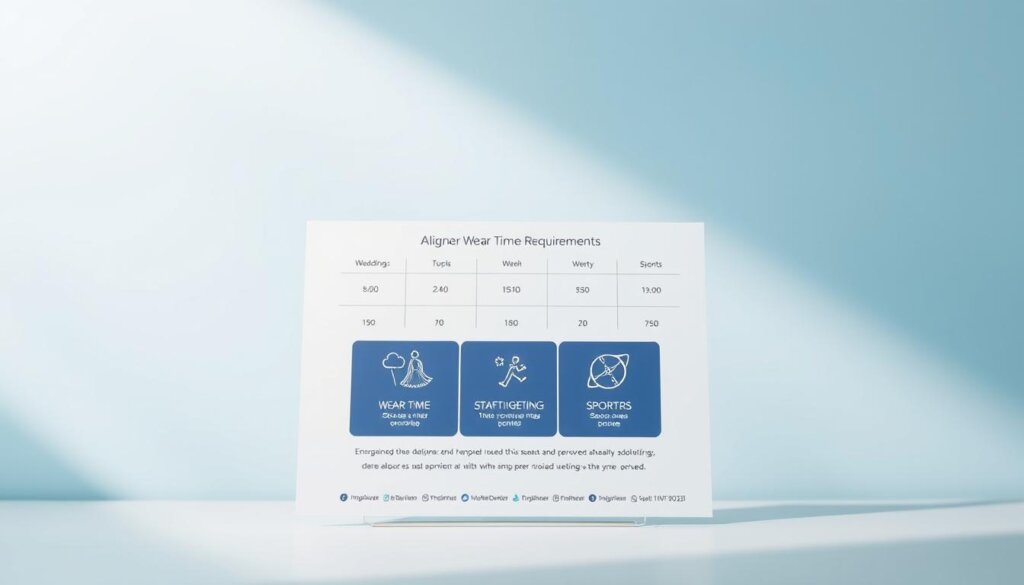
Knowing when to remove aligners is all about planning. Using apps or logs to track time helps patients stay on track. This way, they can manage their aligner-free time wisely.
The 22-hour rule is based on how teeth move. Orthodontic force needs to be constant to avoid teeth moving back. Brief breaks in wear can reduce treatment success, which is most critical in the first hours after putting in the aligners.
Removing aligners for too long can harm treatment success. Events that keep aligners out for six hours or more can cause teeth to move back. The tissues around the teeth start to go back to their original state, needing a “restart” when the aligners are put back on.
Impact on Treatment if Aligners Are Removed
Not wearing aligners enough can harm treatment results. Studies show that consistent wear leads to better outcomes. Those who don’t wear them enough often see less success.
Removing aligners for too long can cause teeth to move back within 24 to 48 hours. This makes it harder to fit the aligners back on and can cause discomfort. The teeth may not move as well as they should.
Not wearing aligners enough can also make it harder to move to the next set. Each set is designed for a specific stage of tooth movement. If teeth move back, they need to spend more time in the current set to catch up.
| Compliance Level | Daily Wear Time | Treatment Success Rate | Average Timeline Extension |
|---|---|---|---|
| Excellent | 22+ hours | 95% | None |
| Good | 20-22 hours | 85% | 1-2 months |
| Fair | 18-20 hours | 65% | 3-5 months |
| Poor | Below 18 hours | 40% | 6+ months or refinement needed |
Not wearing aligners enough can make treatment take longer. Teeth may not move as planned, and more time or adjustments may be needed. This can add to the overall cost of treatment.
Missing just one hour a day can add up over time. For a typical 12 to 18 month treatment, this is like losing 15 to 23 full days. This shows how small daily changes can add up to big delays in treatment.
Longer treatment times can also mean more money spent. More aligners, extra visits, and possible refinements can increase costs. Insurance might not cover these extra expenses, making it a financial burden as well as a health concern.
The biggest risk of not wearing aligners enough is not getting the best results. Teeth may not move as planned, leading to aesthetic or functional issues. While aligners are convenient, they require discipline and commitment for success.
How Often Can I Remove My Aligners?
Knowing when to take out your aligners is key. It’s about following doctor’s orders and fitting it into your life. Most doctors say to wear them 20 to 22 hours a day. This means you need a plan for when to take them out.
It’s important to find a balance between wearing your aligners and doing daily things like eating and brushing your teeth. People who stick to a routine tend to do better. Knowing when and how often to take out your aligners helps you stay on track with your treatment.
Daily Guidelines for Safe Removal
It’s best to take out your aligners three to four times a day. This way, you’re not out of them for too long but you can eat and clean your teeth. Getting into a routine helps make it easier over time.
Start by taking them out in the morning for breakfast and brushing your teeth. Try to do this right after waking up. Having breakfast ready can help you get back into your aligners faster.
For lunch, take them out again for about 30 to 45 minutes. If you work or go to school, find a good spot to store them and clean your teeth. Having a special case and travel-sized dental stuff makes it easier.
When you take them out in the evening, it’s for longer, about 45 to 60 minutes. This gives you time for dinner and cleaning your teeth well. Setting reminders can help you stay on track.
Being consistent with when you take out your aligners helps you stick to your treatment plan and get used to wearing them.
Occasionally, you might need to take them out for snacks or special reasons. But try not to make this a daily habit. It can make your treatment take longer and you might lose them. It’s better to take them out less often.
Drinking water is okay with your aligners in, but other drinks need careful thought. Coffee and tea can stain your teeth and have acids. Juices and sodas have a lot of sugar that can harm your teeth. Alcohol can stain and has sugars or acids. Hot liquids can damage your aligners. Sports drinks have sugar, acids, and colors that are bad for your teeth and aligners.
Having a plan to keep your aligners in can help you stay on track. Keep dental supplies in different places like your bathroom, work, and car. Use apps or timers to track how long you’ve had them out.
Don’t take out your aligners just because you’re worried about what others think. This can make you take them out too much. Plan your meals so you don’t have to take them out all the time.
Recognizing If You’re Removing Aligners Too Often
It’s important to know if you’re taking out your aligners too much. There are signs that can tell you this. Catching these signs early can help fix the problem before it gets worse.
If you can’t keep track of how long you’ve had your aligners in, you might be taking them out too much. Not knowing this can slow down your treatment. It’s a big risk.
If your aligners feel tight when you put them back in, it means your teeth have moved. This makes your treatment take longer. You need to wear them more to keep your teeth moving right.
| Warning Sign | Implication | Recommended Action |
|---|---|---|
| Aligners feel tight after reinsertion | Teeth have moved away from intended position | Reduce removal frequency and duration immediately |
| Visible gaps between aligners and teeth | Insufficient wear time preventing proper tracking | Contact orthodontist for assessment before progressing |
| Difficulty tracking daily wear hours | Removal pattern too fragmented or frequent | Implement tracking app and consolidate removal episodes |
| Regular reliance on chewies for seating | Aligners not maintaining passive fit | Schedule professional evaluation of treatment progress |
If you’re not moving on to the next set of aligners because the current ones aren’t fitting right, you might be taking them out too much. Orthodontists might make you wear them longer if they’re not working as planned. This makes your treatment longer.
If you see gaps between your aligners and teeth, it means they’re not working right. This could be because you’re not wearing them enough. Fixing this problem quickly is important to avoid bigger problems later.
Sometimes, taking out your aligners too much is because of how you feel. You might be worried about what others think or you might not like the taste or feel of them. Finding ways to deal with these feelings can help you wear them more.
Talking to your orthodontist about problems can help. They can give you advice that fits your situation. Catching problems early can prevent them from getting worse.
Tools like apps can help you stay on track with wearing your aligners. They remind you and track how long you’ve had them out. Some cases even have timers to help you stay on schedule.
Having someone to support you can also help. Share your goals and progress with friends or family. This can give you the motivation you need. Making wearing your aligners a part of your daily routine can make it easier.
Keeping track of how often you take out your aligners can show you if you’re doing it too much. This self-awareness is key to finishing your treatment successfully.
Best Practices for Cleaning Aligners
Keeping your aligners clean is key to a successful orthodontic treatment. The state of your aligners affects both how well they work and your oral health. By following proper cleaning routines, your aligners will stay clear, clean, and effective from start to finish.
Clear aligners trap bacteria and food particles quickly without regular cleaning. So, regular cleaning protocols are a must. Starting with good hygiene habits from the beginning can lead to better results and fewer problems.
Quick Cleaning Techniques for Daily Care
Start with a simple rinse in lukewarm water as soon as you take out your aligners. This step helps prevent food and saliva from drying on the aligners, making cleaning easier later.
Do a thorough clean twice a day, matching your tooth brushing times. Use a separate soft-bristled toothbrush just for your aligners to avoid toothpaste residue. Brush all surfaces gently, focusing on where they touch your teeth.
Be gentle when brushing to avoid scratches. These scratches can trap bacteria and make your aligners cloudy. Cloudy aligners lose their clear look and purpose.

Deep cleaning once a week adds extra hygiene. Soak your aligners in cleaning solutions for about 15 minutes. Use Invisalign cleaning crystals or denture tablets to keep them clean and fresh.
Some common mistakes can harm your aligners or make them less effective:
- Never use toothpaste on aligners, as abrasive particles create surface scratches that trap bacteria and reduce clarity
- Avoid hot water or boiling water, which can warp the precisely calibrated aligner geometry and render them ineffective
- Skip colored or scented soaps that may discolor aligners or impart unpleasant flavors
- Reject harsh chemical cleaners not specially designed for oral appliances
- Avoid abrasive brushes or scouring pads that damage the thermoplastic surface
For those on the go, portable cleaning solutions keep your aligners clean anywhere. Travel kits with a small brush, cleaning tablets, and a case make it easy to care for your aligners no matter where you are.
Why Hygiene Maintenance Matters for Treatment Success
Clean aligners are not just about looks; they’re essential for your oral health. Aligners that touch your teeth for 20-22 hours a day can harbor bacteria and debris. Without regular cleaning, these spaces become breeding grounds for harmful germs.
Studies show that dirty aligners can harbor bacteria that cause cavities and gum disease. This is because bacteria like Streptococcus mutans thrive in these environments. Without proper care, your aligners can lead to serious dental problems.
Ignoring aligner hygiene can lead to cavities and gum disease. Bacteria trapped against your teeth can cause cavities. Gingivitis, with its swollen and bleeding gums, is another risk.
Ignoring these risks can lead to more serious problems like periodontitis. This can damage your teeth’s supporting structures. Bad breath and white spots on your teeth are also possible.
Poor aligner care can make them look dirty and affect your self-esteem. This can lead to taking them out more often. This can extend your treatment time.
| Cleaning Method | Frequency | Duration | Primary Benefits |
|---|---|---|---|
| Lukewarm water rinse | Each removal | 30 seconds | Prevents debris from drying and hardening on surfaces |
| Soft-bristle brushing | Twice daily | 2-3 minutes | Removes biofilm and food particles without scratching |
| Cleaning crystal soak | Once daily | 15 minutes | Eliminates bacteria and eliminates odors thoroughly |
| Deep cleaning inspection | Weekly | 5 minutes | Identifies buildup areas requiring extra attention |
Before putting your aligners back in, make sure your teeth are clean. Brushing and flossing your teeth well before putting in your aligners helps prevent bacteria and food from getting trapped. This reduces the risk of cavities.
Clean aligners and teeth are key to a healthy mouth. This balance helps beneficial bacteria grow while keeping harmful ones in check. Patients who understand this tend to follow their orthodontic care better.
Keeping your aligners clean is more than just about looks. It’s about your health. Poor hygiene can lead to serious dental problems. Success in orthodontic treatment depends on both wearing your aligners as directed and keeping them clean.
What to Do After Removing Aligners
When you take out your aligners, it’s important to follow a specific care routine. This period is key to keeping your treatment on track. Knowing how to care for your aligners after removal helps your orthodontic treatment succeed.
Removing aligners for meals or special events needs careful planning. This ensures you don’t miss out on treatment time. By following these steps, you can keep your treatment moving smoothly.
How Long Should You Keep Them Out?
Aligners should be in your mouth most of the day. Each time you remove them, plan carefully to keep treatment on track. This helps you manage different situations without losing progress.
For meal-related removals, eat, clean your teeth, and clean your aligners in 30-45 minutes. This way, you get to eat well and take care of your teeth without losing too much treatment time. Try not to be out of your aligners for too long.
When you need to remove aligners for special occasion events, plan ahead. Wear them during non-eating and non-photographed parts of the event. This way, you minimize time out of your aligners while enjoying the event.
For sports-related removals, put your aligners back on right after playing. If you can’t brush right away, rinse your mouth and aligners. Clean them fully when you can next.
It’s okay to put your aligners back in without brushing right away. Rinsing your mouth and aligners is a good temporary fix. Brush and floss as soon as you can to keep your mouth clean.
Keep track of how long you’re out of your aligners. It’s easy to lose count. Use reminders, apps, or a log to stay on track.
- Note removal and reinsertion times using smartphone reminders or calendar entries
- Use dedicated aligner compliance applications that track wear duration automatically
- Maintain a simple written log in a pocket notebook or planner
- Set timer alerts when aligners are removed to prompt timely reinsertion
Tracking your wear helps you see how you’re doing. This information helps you make changes to do better.
Ensuring the Best Fit After Replacing
When you put your aligners back in, make sure they fit right. Even a little time out can make them feel tighter. This is normal and means they’re working.
Follow a step-by-step reinsertion protocol for the best fit. This ensures your aligners work well and your treatment goes smoothly.
- Rinse or brush aligners before insertion to remove any debris or cleaning solution residue that could irritate oral tissues
- Start insertion at the front teeth, positioning the aligner over the anterior dental segment first
- Progressively seat the aligner posteriorly using gentle finger pressure, working from front to back on both sides
- Avoid biting aligners into place initially, as this can distort the appliance or cause uneven seating across tooth surfaces
- Use aligner “chewies” if recommended by your orthodontist to ensure complete seating along all tooth surfaces
Chewie devices help aligners fit right. Use them gently to cover all your teeth. Spend about 5-10 seconds on each side to get it right.
Check if your aligners fit right after putting them back in. Look for signs like even contact and no gaps. This means they’re working well.
Know the difference between normal tightness and a bad fit. Normal tightness goes away in a few hours. But if it doesn’t, or if you have pain, see your orthodontist.
If your aligners don’t fit right, don’t force them. This can hurt and mess up your treatment. Your orthodontist can fix the problem.
By following these steps, you can keep your treatment on track. This is key to getting the best results from your orthodontic treatment.
Fitting Aligners Back In
When you take out your aligners for a special event or sports, putting them back on right is key. It’s not just about putting them on your teeth. You need to do it right to avoid damage and keep your treatment on track.
Knowing how to put your aligners back on is important for good results. It affects how comfortable you are and how well your teeth move. Doing it the right way helps you feel better and get the most out of your treatment.
Steps to Ensure Comfort
Start by getting your teeth and aligners clean before putting them back on. This stops bacteria and makes sure they fit right. Also, wash your hands to keep everything clean and safe.
It’s important to know which aligner goes where. Upper and lower aligners are different, and the front part is different from the back. Many systems have marks to help you put them on correctly.
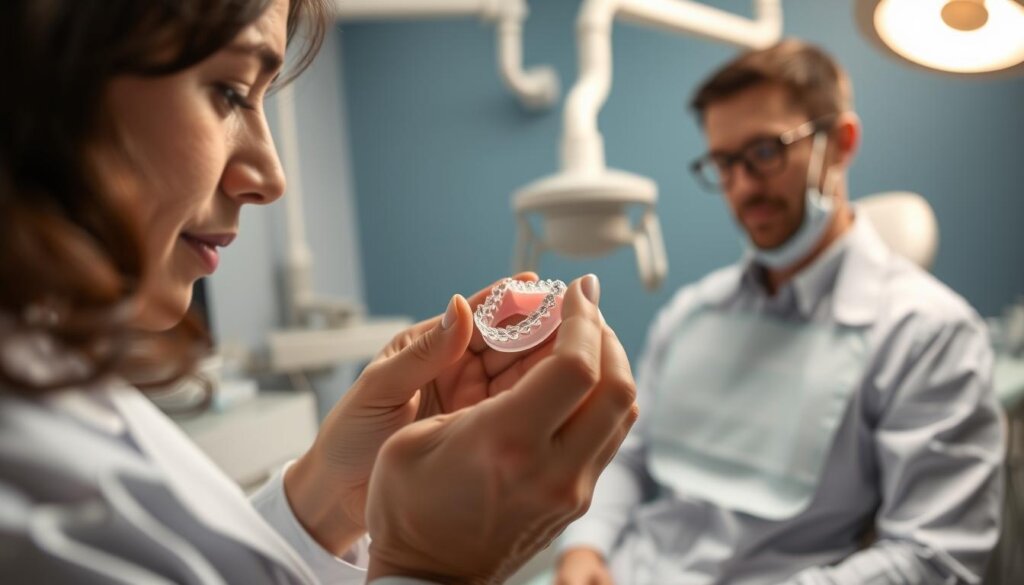
When you put your aligners back on, do it in a certain order. This makes them fit better and feel more comfortable. It also helps avoid putting too much pressure on any one spot.
- Start with the front teeth, making sure the aligner fits right.
- Use your fingers to gently push the aligner onto your teeth.
- Move back to the premolars and molars, using light pressure.
- Make sure it fits evenly on both sides of your mouth.
- Check if it’s on right by running your tongue along the edges.
Using chewies can help you get your aligners on without too much force. These tools spread out the pressure so your teeth move properly.
Use the chewies in a special way to get your aligners on right. Put them between your teeth and bite down gently for a few seconds. Do this for each part of your mouth, moving from front to back and side to side.
It’s important to know when to put your aligners back on. They might feel tight at first, but that’s okay. It means your teeth are moving.
There are ways to make the first few days easier. You can take pain relievers, put them on at night, or use cold packs. Eating soft foods helps too.
Don’t push too hard when you put your aligners on. This can damage them. They need to be put on gently but firmly.
Signs That Aligners Are Not Fitting Properly
Knowing when your aligners fit right is important. Look for signs that they might not be fitting well. This way, you can get help if you need to.
Look for gaps between your teeth and the aligners. This means they’re not on right. The aligners should fit snugly against your teeth.
Uneven aligners are another sign of a problem. If one side fits better than the other, it’s not right. This could mean your teeth are not in the right place.
Other signs include:
- Can’t get the aligners on no matter how hard you try
- Aligner edges don’t match up with your teeth
- Pain in one tooth that doesn’t go away
- Clicking or popping sounds when you bite
- Aligners move too much when you talk or swallow
Knowing why your aligners might not fit is helpful. Sometimes, moving to the next set too soon can cause problems. It’s important to follow your treatment plan carefully.
Damage to your aligners can also cause issues. Cracks or warping can make them not fit right. Always check your aligners before using them to make sure they’re in good shape.
Teeth might go back to their old position if the aligners don’t fit right. This is because they didn’t get enough force from the previous aligners. This means you need to get your aligners adjusted to fit your teeth properly.
Even with modern technology, sometimes aligners might not fit perfectly. But this is rare. It’s good to know that problems can happen, but they’re not common.
There are ways to figure out what to do if your aligners don’t fit. Small gaps might fix themselves with time. But if you have big problems, you need to see a dentist.
Some signs mean you need to see a dentist right away. Severe pain or damage to your aligners are serious. You should get help quickly to avoid more problems.
Knowing how to put your aligners on and when to get help is important. It helps you take care of your teeth and get the best results from your treatment.
Consulting with Your Orthodontist
Working closely with your orthodontist is key to handling special situations well. It’s not just about wearing aligners consistently. It’s also about keeping in touch with your orthodontic team. When unexpected events happen, like sports games or special events, your orthodontist can offer professional aligner guidance just for you.
Today’s orthodontic consultation protocols focus on you, the patient. They adjust treatment plans to fit your life, not the other way around. This approach means your treatment can be flexible, even when life gets busy. By talking openly with your orthodontist early on, you can handle life’s ups and downs while keeping your smile goals in sight.
Recognizing When Professional Guidance Becomes Necessary
Knowing when to call your orthodontist is important. Some situations need quick action to avoid problems. Urgent circumstances require you to reach out to your team right away.
Damage to your aligners is a common urgent issue. Cracks or breaks can hurt your teeth and gums. If your aligners get damaged during sports, call your orthodontist fast. They might tell you to use the last set or move to the next one until new ones arrive.

Lost aligners also need quick action. Whether to go back to the last set or move forward depends on several things. These include how long you wore the lost aligner, your place in treatment, and how your teeth are moving.
Fit problems that don’t get better in a day or two might mean something’s off. Pain that’s more than usual when starting a new aligner could be a sign of a problem. While some discomfort is normal, sharp or ongoing pain might mean you need a change.
Ulcers or cuts from the aligner edges need attention to avoid infection. Rarely, some people might have an allergic reaction to the aligner materials. Tell your orthodontist right away if this happens to you.
Non-urgent situations can usually wait until your regular check-ups. These include fit changes that suggest treatment isn’t going as planned, lifestyle issues like work or travel, or questions about big events.
Talking about upcoming events early helps your orthodontist plan ahead. They might schedule changes to avoid starting new trays during important times or plan around your busy schedule. This shows the value of talking openly with your care team.
Effective Strategies for Requesting Specialized Advice
When you need to ask for changes, give your orthodontist all the details. This helps them give you advice that fits your situation perfectly.
Here’s what to include:
- Event specifics: What’s the event, how long will it last, and when is it?
- Treatment concerns: Ask if it’s okay to take off your aligners and for how long.
- Scheduling flexibility: Can you change your treatment schedule to fit your plans?
- Openness to alternatives: Are you okay with trying different solutions that work for you and your treatment?
Modern orthodontics offers many ways to talk to your team. You can schedule appointments for detailed talks, call for urgent advice, or use patient portals for written messages. This makes it easier to communicate and get the help you need.
Planning ahead is key for known events. Tell your orthodontist about big events like weddings or graduations weeks or months in advance. This lets them adjust your treatment plan to fit your needs without hurting your progress.
Being open with your orthodontist about challenges or special situations helps them create a treatment plan that really works for you. They appreciate it when you’re honest because it lets them tailor your care to your life, not just an ideal scenario.
Seeing your orthodontist as a partner, not just a doctor, helps you communicate better. This partnership approach means you work together to make sure your treatment is successful.
Here are some tips for talking to your orthodontist:
- Write down your concerns before calling your provider, including when they started and any patterns you’ve noticed.
- Be honest about how well you’re following your treatment plan, even if it’s not perfect.
- Ask questions if you don’t understand something about your treatment. Knowing more helps you take better care of your aligners.
- Follow your orthodontist’s advice and let them know how things go.
- Keep your scheduled appointments, even if everything seems fine. This helps catch any problems early.
The shift towards patient-centered care shows that treatment plans need to fit your life, not the other way around. This approach recognizes that the best treatment is one you can actually follow, given your life and commitments.
By setting clear rules for when and how to talk to your orthodontist, you can navigate your treatment better. This teamwork leads to better results, happier patients, and a more positive experience with orthodontic care.
Managing Expectations
Setting realistic goals for your orthodontic treatment timeline is key. It helps keep you motivated and ensures success. The journey with aligners changes your smile and how you see yourself.
Knowing what to expect at each stage helps you stay on track. This is true even when you need to remove your aligners for special events or sports.
Clear expectations prevent frustration and help you stay committed. Patients who start with the right information tend to be happier and more compliant.
Adjusting to the Changes in Your Smile
The journey of orthodontic treatment brings emotional ups and downs. You’ll start to see changes in your teeth within a few weeks. This excitement can keep you motivated.
But, the pace of change varies from person to person. It depends on how severe your teeth were before treatment and how well you wear your aligners.
Most people go through four distinct psychological milestones during their treatment. The first phase is getting used to wearing aligners all the time. This can take one to two weeks.
The “honeymoon phase” comes after the initial adjustment. You’ll see progress and feel more committed. This positive feeling usually lasts for the first quarter of your treatment.
Mid-treatment can be tough. Progress may slow down, and you might feel like giving up. But, these small changes are important for your final results.
The final stages focus on the small details. These details are important for your smile and how well your teeth function. Remember, these details need the same effort as the earlier stages.
Maintaining motivation is a big challenge. But, there are ways to stay committed throughout your treatment:
- Progress documentation: Take regular photos to see how far you’ve come. This can help during tough times.
- Milestone celebrations: Celebrate your achievements. This can be as simple as reaching the halfway point.
- Community connection: Join online groups or forums. Sharing experiences can help you stay motivated.
- Long-term focus: Keep your eyes on the prize. Remember why you started treatment in the first place.
Body image and self-perception change during treatment. Some people feel more self-conscious at first. Others feel more confident as they see their smile improving.
These feelings are normal and temporary. They usually settle down within a month. Remember, these feelings are just part of the journey.
Possible Delays in Treatment Timeline
Initial treatment timelines are based on ideal conditions. But, real-world scenarios can differ. Factors like daily wear time and how well your teeth respond to treatment can affect the timeline.
Compliance is a big factor in treatment delays. Even small reductions in wear time can add up over time. Missing just two to four hours a day can extend treatment by 15 to 30 percent.
This means a 12-month treatment could take 14 to 16 months if you don’t wear your aligners as recommended. More serious compliance issues can even stop treatment progress altogether.
| Daily Wear Time | Compliance Level | Timeline Impact | 12-Month Treatment Becomes |
|---|---|---|---|
| 22 hours | Optimal (100%) | No delay | 12 months |
| 20 hours | Reduced (91%) | 15-20% extension | 14-15 months |
| 18 hours | Minimal (82%) | 25-30% extension | 15-16 months |
| 16 hours or less | Inadequate (73%) | Significant delays or stall | 18+ months or restart |
Other factors, like how fast your teeth move, can also affect treatment. These factors can’t be predicted exactly before treatment starts.
When your teeth don’t move as expected, you might need more aligners. This is a common part of treatment, not a failure.
Technical issues can also cause delays. Losing or damaging aligners means you’ll need to wait for new ones. This can slow down your progress.
Remember, the initial timeline is a best-case scenario. It assumes you’ll wear your aligners as recommended and your teeth will respond well. Small changes in your treatment date are normal.
Aligner treatment is often faster than traditional braces. But, it’s important to wear your aligners as directed. This ensures you get the best results.
It’s okay to remove your aligners for special events or sports. But, try to wear them as much as possible. This helps you stay on track and get the best results.
Staying committed to your treatment is key. With the right mindset and a bit of patience, you can achieve great results. Remember, every hour you wear your aligners brings you closer to a beautiful smile.
The Psychological Aspect of Wearing Aligners
Orthodontic treatment is not just about teeth alignment. It’s also about how patients feel and adapt to wearing aligners. This emotional journey is key to success. It affects how well patients stick to their treatment plans and how happy they are with the results.
Studies show that positive thinking helps patients manage their aligner treatment better. Those who are more positive tend to wear their aligners more consistently. This leads to higher satisfaction and better treatment outcomes.
Aligners offer a unique advantage over traditional braces. They are removable, allowing patients to enjoy important life moments while continuing their treatment. This flexibility is a big plus for many people.
Building Self-Assurance at Important Life Events
Special occasions can make us feel self-conscious about our appearance. Events like weddings, graduations, and formal photos make us worry about how we look. For aligner wearers, these moments can make them feel anxious about their appliance being seen.
Modern clear aligners are almost invisible. People usually don’t notice them unless they’re looking closely. Patients often worry more about their aligners than others do.
Effective aligner confidence management strategies include:
- Practicing smiling and speaking with aligners before important events to reduce self-consciousness
- Having professional photographs taken with aligners both in and out to provide selection options
- Communicating with photographers about preferred angles that minimize any appliance visibility
- Focusing on the temporary nature of treatment and permanent confidence benefits
- Reframing aligner presence as a positive statement about self-investment and personal improvement
Many patients worry more about their aligners than they actually are. Aligners are mostly invisible in everyday situations. It’s only in close-up photos that they might be noticeable.
Being prepared for comments about aligners can help reduce anxiety. Simple, confident answers can make the experience more normal. Most people respond positively when learning about someone’s commitment to improving their smile.
Removing aligners for special photos or moments can be a good strategy. It helps capture memories without the appliance. The key is to plan these removals carefully to avoid disrupting treatment.
Addressing appearance concerns during important events helps patients make informed decisions. Orthodontists understand that emotional well-being is as important as physical health. Open communication about special occasions helps align treatment with life’s demands.
Mental Preparation for Athletic Performance
Competitive athletes face unique challenges with orthodontic treatment. Their athletic identity and performance concerns require special attention. The mental and practical aspects of aligner treatment must be addressed.
Common athlete concerns about aligner treatment include:
- Fear that aligners will affect breathing efficiency during high-intensity exercise
- Anxiety about alignment visibility during competitions or media coverage
- Worry about communication difficulties with coaches and teammates
- Concern that appliance management will disrupt pre-competition routines
- Frustration about choosing between athletic mouthguards and orthodontic aligners during contact sports
These concerns are understandable but often exaggerated. Many professional and Olympic athletes have successfully completed orthodontic treatment while competing. With proper planning, athletic performance and orthodontic treatment can go hand in hand.
Viewing aligners as part of overall health optimization helps athletes integrate treatment into their performance strategy. Like nutrition or strength training, orthodontic treatment is an investment in long-term well-being. This perspective shift helps athletes see aligners as part of their holistic self-care.
| Athletic Challenge | Psychological Strategy | Practical Outcome |
|---|---|---|
| Breathing concerns during exercise | Recognize that aligners do not obstruct airways; anxiety often exceeds reality | Confidence through experience and gradual adaptation |
| Visibility during competition | Focus on performance, not appearance; competitors notice skills, not appliances | Reduced self-consciousness and improved mental focus |
| Communication with team | Practice speaking with aligners during training to build comfort | Clear communication without appliance removal |
| Pre-competition routine disruption | Integrate aligner management into existing preparation protocols | Seamless incorporation into established routines |
Developing efficient aligner management routines that fit with training schedules helps minimize treatment interference. Athletes who establish consistent protocols report less stress and better compliance. The discipline needed for aligner adherence is similar to the commitment required for athletic success.
Using treatment compliance as a mental discipline exercise offers psychological benefits beyond orthodontics. Athletes who master consistent aligner wear often report improved self-discipline in other areas. The mental fortitude developed through consistent appliance wear transfers to competitive situations requiring sustained focus and commitment.
Connecting with other athletes undergoing orthodontic treatment normalizes the experience. It provides practical strategy sharing. Many sports medicine facilities and training centers now recognize orthodontic treatment as a common aspect of athlete health management. This normalization reduces isolation and validates treatment decisions.
The psychological benefits of treatment completion for athletes extend beyond improved dental alignment. Enhanced confidence during media interactions and public appearances is a significant advantage in modern athletic careers. Improved oral health also reduces the risk of dental emergencies during critical competition periods.
Alignment improvements may enhance bite function and potentially reduce temporomandibular joint stress during athletic clenching. While research continues in this area, many athletes report subjective improvements in jaw comfort following orthodontic correction. These benefits accumulate beyond the treatment period, supporting long-term athletic career health.
A growth mindset toward treatment transforms temporary inconveniences into investments in long-term benefits. Athletes who view aligner treatment as performance enhancement experience less psychological resistance. This perspective shift supports both compliance and mental well-being throughout the treatment process.
Orthodontic treatment encompasses emotional well-being alongside biomechanical outcomes. Patients benefit from strategies supporting both physical treatment compliance and psychological comfort. By addressing mental and emotional dimensions, healthcare providers enhance overall treatment success and patient satisfaction across diverse life circumstances and athletic pursuits.
Conclusion: Finding Balance with Aligners
Clear aligners are a big plus in orthodontic care because they’re removable. This lets you enjoy special events and sports without hurting your treatment. The secret to success is knowing when to take them out and wearing them consistently.
Essential Principles for Treatment Progress
Wearing aligners for 20-22 hours a day is key to success. This rule lets you eat, brush your teeth, and take breaks for special times. Sticking to this schedule helps you reach your smile goals faster.
Planning ahead makes wearing aligners easy. Taking them out for weddings or sports doesn’t ruin your treatment if it’s rare. Knowing when to take them out and when to keep them on is important.
Moving Forward with Confidence
Every day you wear them, you get closer to your goal. The small changes during treatment are worth it for a healthier smile and more confidence. Talking to your orthodontist helps you manage your treatment based on your life.
People who finish their treatment are happy with the journey and results. The removable design and daily commitment make it possible to get a new smile that fits your busy life.

