
Can I Use Invisalign If I’ve Had Braces Before?
What if your perfectly aligned smile starts to shift back? This is called orthodontic relapse. It happens to many who had braces years ago. Seeing your teeth move out of place can be really upsetting.
But, there’s good news. Invisalign after relapse is now a common choice. It’s a clear, comfortable option instead of metal brackets.
It’s true that post-braces orthodontic treatment is becoming more common. Teeth can move over time, even if you wear retainers. This doesn’t mean your first treatment didn’t work. It just shows how our teeth can change as we age.
Key Takeaways
- Clear aligners can effectively address tooth movement that occurs after traditional orthodontic treatment, regardless of how long ago you completed your original therapy
- There are no specific age restrictions for retreatment—both teenagers and adults qualify as long as their oral structures remain healthy
- The technology works well for mild to moderate misalignment issues, common in relapse cases
- Treatment duration and complexity depend on the extent of shifting that has occurred
- Wearing retainers consistently is key to keeping your teeth in place long-term
Understanding Invisalign
Invisalign is a new way to fix teeth without the usual metal brackets and wires. It uses special plastic that moves teeth gently. This method is great for those who want invisible orthodontic treatment after braces.
It’s made from advanced materials that work well with teeth. This makes it a good choice for people who need more help after braces.

What Is Invisalign?
Invisalign uses custom-made aligners made from a special plastic called SmartTrack. This plastic is strong and can apply gentle pressure to teeth. Each aligner is made with 3D printing from a detailed scan of your teeth.
The aligners are clear, so you can’t see them. They don’t hurt your mouth like metal braces do. You can take them out to eat and brush your teeth.
You’ll change your aligners every week or two, as your orthodontist tells you. Each new aligner moves your teeth a little bit closer to where they should be.
How Does Invisalign Work?
Invisalign works by applying gentle pressure to your teeth. This pressure makes your teeth move slowly. It’s done by a special material that fits over your teeth.
This material pushes your teeth in the right direction. It does this by making your teeth move through your jawbone. This is how your teeth get straighter.
First, you’ll see an orthodontist who will check your teeth. They’ll use special scans to see how your teeth are and how they should be. Then, they’ll plan out how to move your teeth with Invisalign.
Each set of custom-made aligners is made to fit your teeth perfectly. They apply the right amount of pressure to move your teeth. You’ll wear each set for 20-22 hours a day.
Benefits of Choosing Invisalign
Invisalign has many benefits. It’s not just about how it looks. It’s also good for your teeth and how you feel about them.
It looks good because it’s clear. This makes it perfect for adults and teens who don’t want to be seen with metal braces. You can wear it anywhere without feeling self-conscious.
It’s also very comfortable. The smooth plastic doesn’t hurt your mouth like metal braces do. You’ll have fewer visits to the dentist because of it.
It’s easy to keep your teeth clean with Invisalign. You can brush and floss like normal. This helps prevent cavities and gum disease. Studies show it’s better for your teeth than metal braces.
It also makes you feel better about yourself. Adults who were too shy to get braces before will try Invisalign. Feeling good about yourself makes treatment easier.
Other benefits include:
- Dietary freedom: You can eat anything you want without worrying about your braces.
- Predictable treatment visualization: You’ll know exactly how your teeth will look before you start.
- Reduced appointment frequency: You’ll only need to see your orthodontist every 6-8 weeks.
- Athletic compatibility: You can take out your aligners during sports to avoid injuries.
- Professional flexibility: You can remove your aligners for important events or presentations.
| Feature Category | Clinical Advantage | Patient Benefit | Long-term Impact |
|---|---|---|---|
| Material Composition | Medical-grade thermoplastic with controlled force delivery | Reduced discomfort and soft tissue irritation | Higher compliance rates and treatment completion |
| Visibility | Transparent design maintains aesthetic appearance | Increased confidence during social and professional interactions | Improved psychological well-being throughout treatment |
| Oral Hygiene | Removable design permits normal brushing and flossing | Easier maintenance of dental health routines | Lower incidence of cavities and periodontal disease |
| Treatment Monitoring | Digital tracking and predictive modeling capabilities | Clear understanding of progress and expected outcomes | Enhanced patient satisfaction with results |
Invisalign is a top choice for fixing teeth after braces. It’s precise, uses new materials, and focuses on the patient. It helps fix teeth and makes you feel better about yourself.
The Journey of Traditional Braces
For generations, metal brackets and archwires have been the main fix for crooked teeth. But, the story doesn’t end when braces come off. Traditional orthodontic treatment takes a big time and effort investment, lasting one to three years. Knowing the whole journey of fixed appliances is key for those thinking about alternative treatments.
Overview of Braces Treatment
Traditional fixed appliance therapy uses a system of brackets, archwires, and elastics. These tools apply forces to move teeth through the bone. Orthodontists attach small metal or ceramic brackets to each tooth and thread archwires through them.
The movement of teeth involves bone resorption and deposition. This process allows teeth to move while keeping the jaw stable. Treatment time varies based on how crooked the teeth are, from 12 months for small changes to 36 months or more for big ones.
Patients must follow their orthodontist’s instructions closely. Regular check-ups every four to eight weeks are needed. Wearing rubber bands and keeping teeth clean are also key for good results.
Common Issues Post-Braces
After braces come off, some patients face unexpected problems. Post-braces relapse is common, where teeth move back. This can cause crowding or spacing between teeth.
Bite problems may also arise, like teeth not fitting right anymore. These issues can happen months or years after treatment ends. They can surprise many patients.
Some patients worry about their smile if teeth shift. A small change can affect how confident they feel. About 50 percent of patients experience some relapse within ten years, showing the need for long-term care.
Why Teeth Shift After Braces
Teeth shifting after braces is due to many factors. Periodontal fibers, which connect teeth to bone, remember the original tooth position. These fibers can pull teeth back over time.
Not using retainers long enough is a big reason for tooth movement. The retention phase is critical for bone and tissue to adjust to new tooth positions. Without consistent retainer use, teeth can easily move back.
As people get older, their jaw bone and periodontal support weaken. Daily activities like chewing and tongue position can slowly change tooth alignment.
Orthodontic stability factors go beyond treatment mechanics to include biological responses and patient adherence to retention protocols.
Other issues like tooth loss or gum disease can make teeth shift faster. Missing teeth allow others to move, and gum disease weakens support. Grinding or clenching teeth can also push teeth out of place.
Seeing tooth movement after braces as a natural response helps patients understand. This view stresses the need for proper retention and, if needed, advanced treatments to fix relapse.
Can You Use Invisalign After Braces?
Wondering if Invisalign for relapsed teeth works after braces is a common question. Many people who had braces years ago see their teeth move again. Luckily, wearing metal braces before doesn’t stop you from trying clear aligners again.
Clear aligners have gotten much better in the last decade. New technology lets orthodontists fix more problems than before. So, most people who had braces can use Invisalign to fix their teeth again.
Eligibility for Invisalign
To see if you can get second orthodontic treatment with Invisalign, your dentist will check your teeth. Having had braces before doesn’t mean you can’t use clear aligners. Most people with mild to moderate problems can be helped by Invisalign.
Clear aligners can fix many issues that happen after braces. These include:
- Crowded teeth from not wearing retainers
- Gaps between teeth that come back
- Overbites and underbites that get worse
- Crossbites on one or more teeth
- Rotated teeth that move back
But, some big problems might need other treatments. Severe jaw issues, big changes in how teeth fit together, or teeth that need to move a lot might not be fixed by clear aligners. These cases might need other treatments.

When to start Invisalign for relapsed teeth is important. Doctors usually wait a bit after braces come off before starting treatment again. This lets teeth settle and helps doctors see how much needs to be fixed.
Factors Affecting Your Decision
Choosing second orthodontic treatment with Invisalign is a big decision. It’s not just about if you can get it. It’s also about what you want, your lifestyle, and what you can afford.
How bad the problem is and what kind of problem it is matters a lot. Small issues like gaps or a little crowding can be fixed quickly with clear aligners. But bigger problems might take longer or need more than just clear aligners.
What you think about how you look also plays a big part. Clear aligners are almost invisible, which is great for people who don’t want to be seen wearing braces. They’re also easy to take out for special occasions or eating.
How your life is now is also important. Clear aligners need to be worn a lot, usually 20-22 hours a day. If you travel a lot or have a busy schedule, you might find it hard to wear them as much as you need to.
How much it will cost is another thing to think about. The price of eligibility for clear aligners after braces depends on how bad the problem is and where you live. Some places offer payment plans, and some insurance might help pay for it.
How fast you need the treatment to work is also important. If you’re in pain or your teeth are moving too fast, you might want to start treatment right away. But if you just want to look better, you might not mind taking your time.
Importance of Consultation with an Orthodontist
Getting a check-up with an orthodontist is key to deciding if clear aligners are right for you. You can’t just guess or look up things online. You need a real expert to look at your teeth and decide what’s best.
During your visit, the orthodontist will do a lot of tests. They’ll use pictures and 3D models to see how your teeth will move. This helps them figure out if clear aligners will work for you.
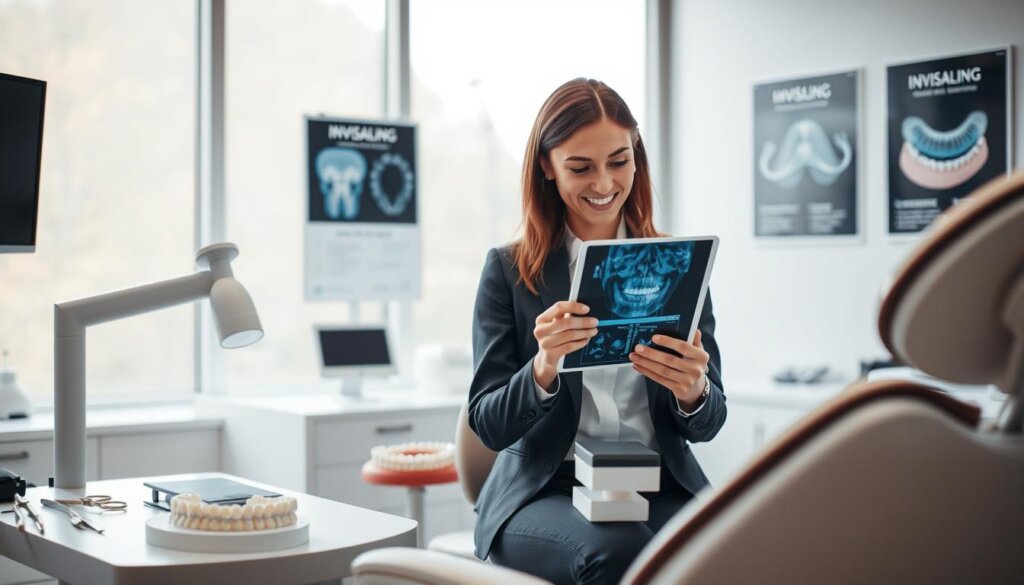
X-rays are also important. They show things that you can’t see, like how the roots of your teeth are. Sometimes, problems like roots that are too short or gum disease can only be seen on X-rays. These problems might change what treatment you need.
Choosing the right treatment is all about using what you know about your teeth and what you want. A good orthodontist will help you figure out the best plan for you. They’ll tell you how long it will take, what it will look like, and if there are other options.
Going to the orthodontist also helps you learn about what to expect. They’ll tell you about taking care of your teeth, any discomfort you might feel, and how often you’ll need to come back. Knowing this helps you get ready for your treatment.
For really tough cases, an orthodontist is even more important. They can spot problems that might not be obvious and come up with a plan that’s safe and works well. Trying Invisalign for relapsed teeth without a doctor’s help can lead to problems or not work as well.
Comparing Invisalign and Traditional Braces
When looking at orthodontic correction after previous braces, it’s key to compare clear aligners to braces. This comparison helps figure out which option fits best with your lifestyle and needs. There are many factors to consider when choosing between these two treatments.
Each treatment has its own benefits and things to think about. The choice between clear aligners and traditional braces depends on several things. These include how complex the treatment is, how well you follow instructions, and what you value most in terms of comfort and looks.
How Long Does Each Treatment Take?
How long treatment takes is a big factor to consider. For those who have had braces before, Invisalign might be faster. This is because the alignment issues might not be as severe.
Invisalign retreatment usually lasts from six to eighteen months. Traditional braces can take twelve to twenty-four months for more complex cases. But, the exact time depends on how complex the treatment is and how your body responds.
How well you follow the treatment plan affects Invisalign’s duration. Wearing Invisalign aligners for 20 to 22 hours a day is key. Traditional braces work all the time, so there’s no worry about wearing time.
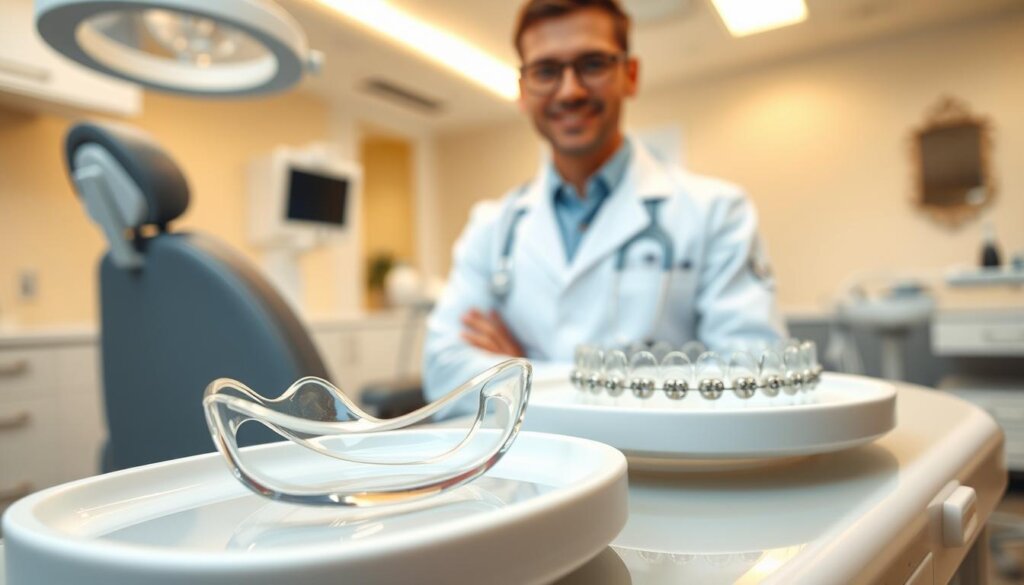
Which Option Feels Better and Looks More Natural?
Comfort and how natural the treatment looks are important. Invisalign aligners are made of smooth, comfortable plastic. This makes them more comfortable than traditional braces, which can be uncomfortable.
Clear aligners are virtually invisible, which is great for those who want to straighten their teeth without being seen. This is very appealing to adults and people who value their appearance. Traditional braces, even with smaller designs, are always visible.
Being able to remove aligners for special events or work presentations is a big plus. It gives you flexibility that fixed appliances can’t offer. This can boost your confidence during treatment.
| Feature | Invisalign | Traditional Braces |
|---|---|---|
| Visibility | Nearly invisible clear plastic | Visible metal or ceramic brackets |
| Comfort Level | Smooth plastic, no sharp edges | Wires and brackets may irritate |
| Removability | Completely removable by patient | Fixed until orthodontist removes |
| Speech Impact | Minimal adjustment period | May affect speech initially |
Daily Care and Hygiene Requirements
Knowing how to care for each treatment is important. Invisalign aligners are completely removable. This makes it easy to brush and floss without any issues. This reduces the risk of problems like tooth decay and gum disease.
There are no food restrictions with Invisalign because you can remove them before eating. But, traditional braces need special care to avoid damage from sticky or hard foods. You’ll need to use special tools to clean around the braces.
Cleaning Invisalign aligners is simple with lukewarm water and gentle soap. Regular brushing helps prevent stains and bacteria. Traditional braces need careful cleaning to avoid plaque and white spots.
Aligners are better for your gums and teeth during treatment. You can keep up with your usual dental routine without extra steps. This makes it easier to follow good hygiene practices.
Benefits of Using Invisalign After Braces
Discovering that teeth have shifted after braces can be upsetting. Invisalign offers a sophisticated approach to retreatment. It addresses both looks and function, fitting the needs of adults and teens.
Clear aligners have many benefits. They help fix teeth that shifted after braces. This technology is not just about moving teeth. It also makes treatment comfortable, easy, and boosts your mood.
Addressing Relapse of Teeth
Orthodontic relapse happens when teeth move back after braces are removed. Invisalign stops and fixes this by moving teeth slowly and carefully.
Clear aligners work as both a fixer and a holder. They push teeth into place during treatment. Then, they keep them there.
Clear aligners are great for many orthodontic issues. They help with crowded teeth and bite problems. Custom plans make sure teeth are in the right spot.
| Relapse Type | How Invisalign Addresses It | Treatment Duration | Success Rate |
|---|---|---|---|
| Minor Crowding Recurrence | Gradual pressure redistribution to create spacing | 6-12 months | 92-95% |
| Rotational Discrepancies | Controlled rotational movements with attachments | 8-14 months | 88-93% |
| Spacing Development | Consistent closure through aligner progression | 5-10 months | 94-97% |
| Bite Misalignment | Vertical and horizontal adjustments with elastics | 10-18 months | 85-90% |
Clear aligners are a evidence-based solution for many relapse issues. Studies show they work well for crowding, spacing, and rotation problems.
Non-Invasive Correction Options
Invisalign is removable, making it a non-invasive option. It’s different from traditional braces that need to be glued on. You can take out clear aligners for special events.
This minimally disruptive approach is great for adults. It’s less noticeable than traditional braces. This makes it easier to fit into your daily life.
“The ability to remove aligners for professional presentations and social events made retreatment possible for me when traditional braces would have been a non-starter for my career.”
Invisalign has many practical benefits. It’s almost invisible, comfortable, and easy to clean. You can eat your favorite foods without worrying about your braces. It also means fewer emergency visits.
- Minimized visibility: Clear plastic is almost invisible, letting you smile freely
- Comfortable smooth plastic: It’s soft and doesn’t irritate your mouth like metal braces
- Easier oral hygiene maintenance: You can brush and floss normally without worrying about brackets
- Unrestricted diet: Enjoy your favorite foods without worrying about damaging your braces
- Reduced emergency visits: There’s less chance of broken wires or loose brackets
Invisalign makes fixing teeth that shifted after braces easier. It fits into your life without hassle. This is a big plus for busy people.
Improved Confidence and Self-Esteem
Orthodontic relapse can affect how you feel about yourself. It can make you feel disappointed and frustrated with your smile.
Invisalign helps fix these feelings by making your teeth straight again. The clear aligners are discreet, so you can get treatment without feeling self-conscious.
Studies show that a good smile boosts your confidence. People who are self-conscious about their teeth might not smile as much. They might even hide their mouth when laughing.
Clear aligners can really improve your life. They make you feel more comfortable smiling and more confident in your appearance.
This is really important for adults who had braces as teens. They can get their smile back without the hassle of metal braces. This gives them the chance to fix their teeth without feeling embarrassed.
Invisalign offers a comprehensive solution. It fixes teeth, is comfortable, and is easy to use. It helps both your teeth and your mood during treatment.
The Role of Orthodontists in Treatment
Getting the best results with clear aligners after braces needs more than just the technology. It requires expert clinical guidance. Orthodontists have the training, skills, and knowledge to make clear aligners work well.
Why is professional evaluation key in the retreatment process? It’s because dental structures are complex, and tooth movement needs precision.
The Critical Importance of Professional Assessment
A thorough orthodontic assessment for retreatment looks at more than just tooth position. Orthodontists check the whole mouth to see if treatment is right. They find problems before starting treatment to keep patients safe.
Places like Belle Smile and Baltimore Dental Arts make sure patients are healthy before Invisalign. They check for serious oral health issues that might need to be fixed first.
- Periodontal health status: Gum and bone health that hold teeth in place
- Temporomandibular joint function: How well the jaw joint moves and works
- Occlusal relationships: How upper and lower teeth fit together when biting
- Root angulation and positioning: How tooth roots are positioned for movement
- Bone density assessment: The strength of bone that supports teeth
Good diagnosis is the start of successful treatment. Without it, treatment might not work well or could even cause more problems.
Personalized Treatment Planning for Your Unique Smile
After checking if treatment is right, orthodontists use advanced tech to make customized clear aligner plans. This is where skill meets technology to create plans just for you.
Orthodontists take impressions and use tech to make clear aligners for your unique smile. These aligners move teeth slowly to the right spots. The plan considers your unique needs for success.
Modern plans include advanced elements:
- Digital imaging systems: Three-dimensional scans for detailed tooth and jaw anatomy
- Treatment simulation software: Virtual models to predict tooth movement
- Biomechanical principles: Physics to figure out force and movement
- Tooth morphology considerations: How tooth shape affects aligner grip and movement
Every treatment plan is unique at orthodontic practices. Specialists take time to understand you before suggesting treatment. This ensures Invisalign is tailored to you, not a one-size-fits-all solution.
Customization makes treatment more efficient and predictable. Orthodontists consider tooth shape, root position, bone density, and final tooth positions. This way, aligners work with your body, not against it.
Expert guidance turns possible problems into manageable parts of treatment. This advice encourages seeking professional help instead of trying treatments on your own. Professional guidance is safer and more effective.
Cost Considerations for Invisalign
Understanding the costs of orthodontic retreatment is key. It involves knowing about coverage and payment options. When thinking about getting Invisalign again, there are many financial factors to consider. This knowledge helps patients make smart choices based on all the facts.
The cost of getting treatment again is different from the first time. Often, fixing small issues costs less than a full realignment. This section looks at the money side of treatment, helping you decide if it’s right for you.
Average Cost of Invisalign Treatment
The Invisalign treatment cost after braces changes based on several things. How complex the treatment is, where you live, and how much correction is needed all play a part. Treatments for small to medium issues usually need fewer aligners and last less time than big fixes.
Prices vary based on your situation. Simple fixes cost less than more complex ones. Places with higher costs of living often charge more for the same services.
Investing in Invisalign offers long-term benefits. It improves your smile and helps keep your teeth healthy for years. When thinking about costs, remember the benefits you’ll get in the long run.
| Treatment Complexity | Typical Duration | Estimated Cost Range | Number of Aligners |
|---|---|---|---|
| Minor Relapse Correction | 3-6 months | $1,500 – $3,000 | 10-15 sets |
| Moderate Realignment | 6-12 months | $3,000 – $5,000 | 15-25 sets |
| Comprehensive Retreatment | 12-18 months | $5,000 – $8,000 | 25-40 sets |
| Complex Correction | 18-24 months | $6,000 – $9,500 | 40+ sets |
Prices can vary a lot depending on where you live. Places with higher costs of living charge more. Always ask for a detailed cost estimate when you first visit.
Insurance Coverage for Clear Aligners
Understanding insurance coverage for clear aligners is important. Dental insurance plans differ a lot in what they cover. Some plans cover Invisalign fully, while others have limits or don’t cover it at all.
Most plans have a lifetime maximum for orthodontic benefits. This means you get a certain amount of coverage for your whole life. Plans might treat initial and retreatment differently, affecting what you can get covered.
Always check with your insurance directly to know what you’re covered for before starting treatment.
Insurance decides based on if the treatment is needed or just for looks. They usually cover treatments that are medically necessary. Having a letter from your orthodontist explaining why you need treatment can help your claim.
Some plans have age limits or waiting periods. Adults might face different rules than kids. Reading your policy carefully and talking to your insurance can help you understand what you’ll have to pay out of pocket.
Financing Options Available
There are many ways to finance orthodontic treatment. This makes it easier for people with different budgets to get the care they need. Orthodontists offer plans that let you pay over time, making it more affordable.
Many offices have their own payment plans. These let you pay a bit each month directly to them. The interest rates and how long you can pay vary, so it’s good to shop around.
Other ways to make treatment more affordable include:
- Third-party healthcare financing companies that offer payment plans with good rates and terms
- Health Savings Accounts (HSAs) that let you use pre-tax dollars for medical expenses like orthodontics
- Flexible Spending Accounts (FSAs) through work that save you money on healthcare costs
- Credit card promotional offers with no interest for a while, which can save you money if managed right
- Multi-family payment plans where families can split the cost of treatment
Healthcare credit cards are another option for financing. They often have special offers with no interest if you pay off the balance in a certain time.
Always ask about all financing options when you first visit. Clear talks about money help you make a choice without worry. Some offices even offer discounts for paying upfront or for families getting treatment together.
Getting advice from a professional helps you see that treatment is possible without breaking the bank. Knowing all about costs, coverage, and payment options makes planning your treatment easier.
The Process of Getting Started with Invisalign
Starting Invisalign after braces involves a clear plan from the first check-up to treatment. This process ensures your teeth move as needed. Each step builds on the last, aiming for a perfect smile.
Getting started with Invisalign follows strict steps to keep you safe and effective. Knowing what happens at each step helps you feel more at ease. This careful approach means you get care that fits your unique dental needs.
Initial Consultation Steps
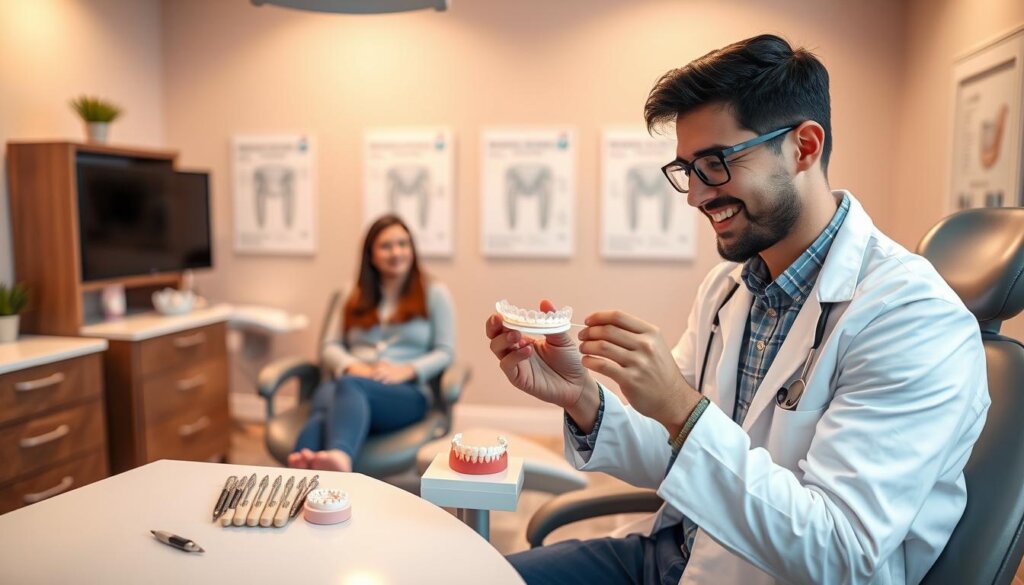
The first step is a meeting with an orthodontist who specializes in Invisalign. They do a full check-up to see how your teeth are doing. This helps plan your treatment.
During the consultation, you talk about what you want and what’s possible. Clear communication helps set realistic goals and builds trust.
Key parts of the initial meeting include:
- A full check-up to see how your teeth are aligned
- Talking about your goals and past orthodontic work
- Looking at your dental and medical history
- Photos to capture your current dental state
- First ideas for treatment and how long it might take
- How Invisalign can fix issues after braces
The orthodontist will decide if Invisalign is right for you. Not all cases fit Invisalign, and some might need other treatments. This honest talk makes sure you get the best treatment for you.
Impressions and Custom Aligners
After deciding to go ahead, the orthodontist makes a detailed plan. This plan shows how your teeth will move. Advanced tech makes this precision possible.
The orthodontist takes detailed impressions of your teeth. Digital scanning is more accurate and comfortable than old methods. These impressions create a 3D model of your mouth.
Special software then shows how your teeth will move. This digital plan shows the step-by-step change in your teeth. It also figures out the right force to move your teeth safely.
This plan is turned into physical aligners made with advanced techniques. Each aligner moves your teeth a little bit at a time. The number of aligners needed depends on how complex your treatment is.
| Treatment Phase | Technology Used | Purpose | Timeline |
|---|---|---|---|
| Digital Scanning | Intraoral scanner or impression materials | Capture precise dental anatomy | 15-30 minutes |
| 3D Treatment Simulation | Specialized orthodontic software | Project tooth movement sequences | 1-2 weeks processing |
| Aligner Manufacturing | Thermoforming technology | Create custom aligner series | 2-3 weeks production |
| Delivery Appointment | First aligner set and attachments | Begin active treatment | 60-90 minutes |
Understanding the tech behind your treatment shows how precise your aligners are. This knowledge helps you see why wearing them as directed is key to success.
Regular Check-ups and Progress Monitoring
During treatment, you’ll have regular check-ups with your orthodontist. These visits make sure your teeth are moving right. Even though Invisalign needs fewer visits than braces, regular checks are vital. These usually happen every six to eight weeks, but can vary.
At these visits, the orthodontist checks on your progress and your gums. They make sure your teeth are moving as planned. If there are any issues, they can fix them early on.
The orthodontist might make changes during treatment if needed. This ensures your treatment stays on track and you get the best results. Being flexible in treatment planning means you get care that really works for you.
Important parts of ongoing monitoring include:
- Looking at how your teeth are moving and how well the aligners fit
- Checking if you’re wearing the aligners as directed
- Looking at how well the attachments are holding
- Talking about any discomfort or worries
- Getting the next set of aligners
By following the treatment plan and attending all appointments, you help make sure your treatment is successful. The orthodontist will guide you on how to care for your aligners and answer any questions. This teamwork leads to great results.
Regular visits give you peace of mind that your treatment is going well. Talking with your orthodontist keeps you motivated and helps solve any problems quickly.
Maintaining Results After Treatment
Keeping teeth straight after orthodontic treatment is just as important as the treatment itself. People who had their teeth move after braces need to work harder to keep them straight. They must understand how their body works, follow proven plans, and take care of their teeth well.
For those who have seen their teeth move before, keeping them straight is even more challenging. Prevention is key to avoid spending money on dental alignment again. This section will share ways to keep Invisalign results by using retainers, taking good care of your teeth, and living a healthy lifestyle.
The Critical Role of Retention Devices
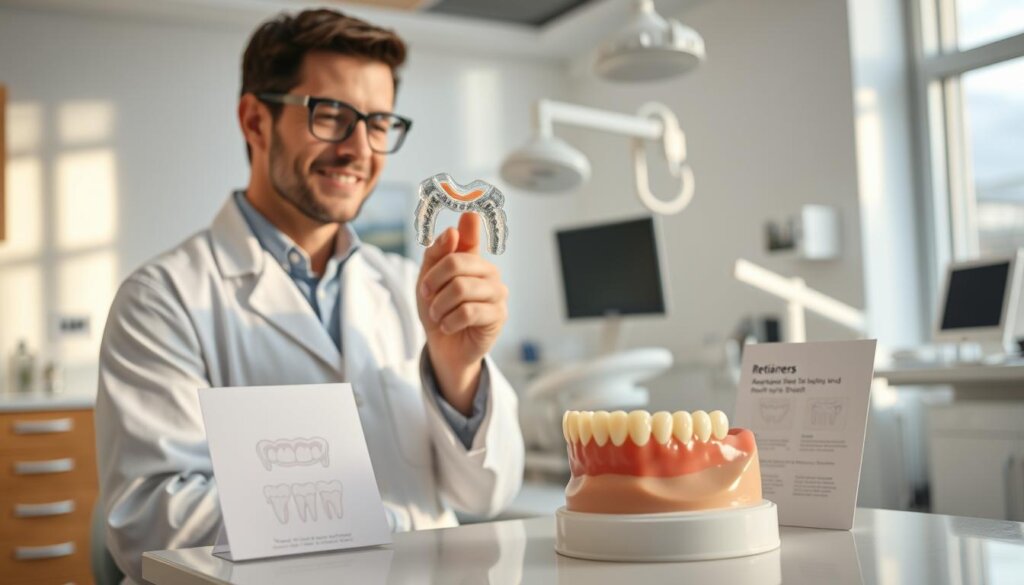
Retainers are essential to stop teeth from moving back after Invisalign. When teeth move, the bones and tissues around them need time to settle. Without retainers, teeth can move back to their old spots.
There are two main types of retainers or a mix of both. Fixed lingual retainers are thin wires on the back of teeth. They keep teeth in place without needing to be taken out. They are great for those who have moved before.
Removable retainers are easy to clean but need to be worn as directed. They can be clear like Invisalign or traditional wire-and-acrylic retainers. At first, they should be worn all the time, then less often at night.
Retention is not optional but a key part of orthodontic treatment. Patients must commit to retention to keep their teeth straight for years, not just months.
For those who have moved teeth before, wearing retainers is even more important. Teeth can move again at any time, so wearing retainers is a lifelong task. Studies show that not wearing retainers is the main reason for teeth moving back.
Optimal Oral Hygiene During and After Treatment
Good dental care is vital for keeping teeth straight. Healthy gums and bones help keep teeth in place. Invisalign makes it easier to clean teeth than traditional braces.
Good dental care includes:
- Thorough brushing technique: Brush with fluoride toothpaste twice a day, focusing on gums and all tooth surfaces
- Interdental cleaning: Floss or use interdental brushes daily to clean between teeth
- Aligner hygiene: Clean retainers with the right solution to avoid bacteria and damage
- Professional maintenance: Get dental cleanings every six months to remove plaque and check gums
Good gum health is linked to stable teeth. Gum disease can cause teeth to move. Keeping teeth and gums healthy protects both your smile and your orthodontic investment.
Sustainable Habits for Lifelong Dental Health
Keeping teeth straight long-term requires more than just retainers and daily cleaning. Lifestyle choices also play a big role. Knowing and changing bad habits helps keep teeth straight.
What you eat affects your teeth. Eating foods rich in calcium and vitamin D helps bones and teeth. Avoiding too much sugar or acidic drinks is also important.
Bad habits like biting nails or chewing pens can move teeth. Recognizing and stopping these habits is key. Orthodontists can help with strategies to change these habits.
Bruxism, or grinding teeth, is another problem. It can move teeth and damage retainers. If you grind your teeth, talk to your orthodontist about a nightguard.
Regular dental check-ups are important. They help catch problems early, like cavities or gum disease. This proactive approach is essential for lifelong dental health.
Combining proper retainers, good oral hygiene, and a healthy lifestyle is the best way to keep Invisalign results forever. By doing this, patients can make their orthodontic treatment a lasting improvement to their smile.
Common Misconceptions About Invisalign
Many people who had braces before think Invisalign is not for them. But, there’s a lot of research and success stories that show it works well. Some old ideas or misunderstandings about Invisalign can stop people from trying it.
Knowing the truth about these myths can help people make better choices. Many think Invisalign can’t fix their problems because of what they’ve heard. But, the facts are different.
Separating Reality from Fiction
There are many myths about Invisalign that keep people from getting the help they need. One big myth is that Invisalign only fixes small problems. But, it can do much more than that.
Invisalign can fix many issues, like crowded teeth, gaps, and even problems that come back after braces. It’s not just for simple fixes.
Here are some common myths and the truth:
- Myth: Invisalign only works for minor cosmetic adjustments. Fact: It can fix more serious problems, like complex bites and crowding.
- Myth: If you’ve had braces before, you can’t use Invisalign. Fact: People who’ve had braces can use Invisalign if their teeth have moved again.
- Myth: Clear aligners are easy to see. Fact: They are almost invisible, so you can wear them without anyone noticing.
- Myth: Braces always work better than Invisalign. Fact: How well it works depends on the problem and how well you follow the treatment plan.
- Myth: Invisalign takes a lot longer than braces. Fact: For many cases, it takes about the same amount of time, 6-18 months.
Some people think Invisalign is only for young people. But, it can work for anyone who needs it, as long as their teeth and gums are healthy.
Many worry that wearing Invisalign will make them feel self-conscious. But, most people won’t even notice you’re wearing them unless they really look.
The clear material blends well with your teeth, making Invisalign a good choice for those who want a discreet fix.
Evidence-Based Treatment Outcomes
Studies show Invisalign works well for many people who had braces before. It can fix problems that come back, just as well as traditional treatments.
The technology behind Invisalign has gotten better over time. It now includes things like special attachments and better materials. These help it work for more types of problems.
What problems does Invisalign work best for? It’s great for fixing things like:
- Rotational corrections: It can fix individual tooth rotations well.
- Space closure: It can close gaps between teeth by moving them slowly.
- Minor crowding resolution: It can make teeth fit better by expanding or moving them closer together.
- Bite refinement: It can adjust bites by moving teeth up or down and side to side.
How well Invisalign works also depends on how well you follow the treatment plan. You need to wear the trays for 20-22 hours a day. This is both an advantage and a challenge of using Invisalign.
Does Invisalign fix every orthodontic problem? No, it’s not perfect for every case. But, most people who had braces before don’t have the most serious problems.
Choosing the right treatment plan is key. Orthodontists look at each case carefully to decide if Invisalign is the best choice. They consider things like tooth position, bone health, and how well you can follow the treatment plan.
Thanks to new technology, you can see what your teeth might look like after treatment. This helps set realistic goals and find any problems early on.
For people who had braces before and now have problems again, Invisalign is often a great solution. It can move teeth just enough to fix alignment problems. Success rates are very high if you wear the trays as directed.
Knowing the facts about Invisalign can help clear up myths. Instead of believing old rumors, you can make a choice based on what science says and what you need.
Success Stories with Invisalign
Real-life stories from Invisalign patients show its effectiveness. These stories share personal experiences and visual results. They prove how well clear aligners work after braces.
Real-Life Testimonials
People from all walks of life share their Invisalign journeys. Their stories help others understand what to expect. They talk about their reasons for choosing Invisalign and how it changed their lives.
Sarah, a 28-year-old marketing pro, had crowding five years after her braces. She chose Invisalign success after braces for her career. She wore her aligners for 14 months, balancing work and life.
Clear aligners helped Sarah keep her job on track. She used reminders and a travel case for meals. She fixed her crowding without losing her professional image.
Michael, a 45-year-old teacher, fixed spacing issues 20 years after braces. He found Invisalign more comfortable than traditional braces. It let him keep playing wind instruments.
Michael’s 11-month treatment changed his smile and confidence. His colleagues noticed his new confidence before seeing his teeth.
Emma, a 22-year-old college grad, fixed a midline shift. She chose Invisalign for job interviews. Her 9-month treatment improved her smile and confidence.
Emma shared her progress with monthly photos. She had her roommate help her stay on track. Her success boosted her confidence in the workforce.
Before and After Results
Photos show how well Invisalign works for different problems. They prove clear aligners can fix many issues. These images back up what doctors promise.
Crowding cases show big improvements in teeth alignment. Patients fixed their crowding in 10 to 16 months. The photos show teeth moving into place step by step.
Spacing issues also get fixed with Invisalign. Photos show gaps closing in 6 to 12 months. The treatment time depends on how big the gaps are.
| Relapse Pattern | Average Treatment Duration | Patient Satisfaction Rate | Compliance Requirements |
|---|---|---|---|
| Crowding Recurrence | 10-16 months | 94% highly satisfied | 22 hours daily wear |
| Spacing Development | 6-12 months | 96% highly satisfied | 22 hours daily wear |
| Midline Discrepancies | 8-14 months | 92% highly satisfied | 22 hours daily wear |
| Bite Irregularities | 12-18 months | 90% highly satisfied | 22 hours daily wear |
Midline corrections show Invisalign’s precision. Before photos show uneven smiles. After photos show balanced, confident smiles.
Bite issues also get fixed with Invisalign. Photos show better function and look. These results prove Invisalign works for complex problems.
Stories and photos make a strong case for Invisalign. They show it’s possible to get a great smile again. With commitment and the right help, anyone can achieve a new smile.
Choosing the Right Orthodontist
Finding the right orthodontist is key for successful Invisalign treatment after braces. The orthodontist you choose affects your treatment results and overall experience. Selecting orthodontist for Invisalign retreatment means looking at several important factors.
At Belle Smile, each treatment plan is made just for you. Baltimore Dental Arts also makes sure plans fit each patient’s needs. This shows the care you should expect from an orthodontist.
To find the best orthodontist for your needs, ask the right questions. Look at their credentials to see if they are experienced and committed to excellence.
Questions to Ask During Consultation
The consultation is your chance to learn about the orthodontist’s approach and experience. Consultation questions for retreatment should focus on their experience with cases like yours. What questions will help you choose the right provider?
Important questions show if the orthodontist knows a lot about Invisalign and how they plan treatments. These questions help you see if they have the right knowledge for your case.
- Experience with Invisalign retreatment: How many cases like yours has the orthodontist done? This shows their skill with post-braces alignment.
- Annual case volume: How many Invisalign cases does the practice do each year? More cases mean they’re good at planning and solving problems.
- Treatment planning approach: What technology does the orthodontist use for planning? Using advanced tools shows they’re up-to-date and precise.
- Anticipated treatment duration: How long will your treatment take, and how many aligners will you need? This gives you a clear idea of what to expect.
- Monitoring frequency: How often will you have check-ups, and how easy is it to ask questions? Regular checks help make sure treatment is on track.
- Contingency planning: What if treatment doesn’t go as planned? Knowing how they handle problems shows they’re ready for anything.
These consultation questions for retreatment help you compare different providers. The quality of their answers will show if they’re a good fit for you.
Credentials and Experience
Professional qualifications show an orthodontist’s training and expertise. Orthodontic provider qualifications go beyond basic licenses. They include special certifications that show a provider is top-notch. What qualifications should you look for when choosing a provider?
The orthodontist will create a treatment plan just for you. But their education and experience greatly affect the quality of that plan.
Look for an orthodontist with specialty training in orthodontics. This means they’ve studied tooth movement and facial development for extra years. Board certification shows they’ve passed tough exams to prove their skills.
Invisalign provider tiers show how much experience a provider has with clear aligners. The tiers range from Preferred to Diamond Plus, based on case volume. Higher tiers mean more experience with different cases.
| Qualification Type | What It Indicates | How to Verify | Importance Level |
|---|---|---|---|
| Orthodontic Specialty Certificate | Completed advanced training beyond dental school in tooth alignment and facial development | State dental board website or American Board of Orthodontics directory | Essential – distinguishes specialists from general dentists |
| Invisalign Provider Tier Status | Volume of Invisalign cases completed annually (Diamond tier requires 150+ cases per year) | Ask provider directly or check Invisalign provider locator | High – indicates specific clear aligner expertise |
| Continuing Education Participation | Commitment to staying current with evolving techniques and technologies | Request information about recent courses or certifications obtained | Moderate – demonstrates dedication to professional growth |
| Professional Organization Memberships | Active engagement with orthodontic community and adherence to ethical standards | American Association of Orthodontists website or state orthodontic society | Moderate – reflects professional standing and networking |
Reading patient reviews can give you insight into the provider’s communication and treatment results. Patterns in feedback can reveal strengths and weaknesses not seen in initial consultations.
Looking at before-and-after photos shows the orthodontist’s skill in making corrections. Focus on cases similar to yours for the best insight.
Combining formal orthodontic provider qualifications with practical experience is key for great results. Choosing the right provider affects your treatment’s success, efficiency, and comfort.
By using a structured approach when selecting orthodontist for Invisalign treatment, you set yourself up for success. Investing time in finding the right provider leads to personalized care, expert guidance, and a beautiful smile.
When to Consider Alternative Treatments
Not every orthodontic case is a good fit for clear aligner therapy. This makes looking into other treatments important. Invisalign works well for many cases after braces, but some situations are not ideal for it. Knowing when clear aligners won’t work helps both patients and orthodontists choose the best treatment.
The field of orthodontics offers many treatment options beyond clear aligners. Each option has its own uses and benefits. Choosing the right treatment after braces means getting care that fits your dental needs, not just a one-size-fits-all solution.
Getting a professional opinion is key to finding the right treatment. Orthodontists look at many things like tooth position and bite alignment. They consider these factors to recommend the best treatment, not just what the patient wants.
Available Orthodontic Treatment Alternatives
There are many options other than Invisalign for certain cases. Traditional fixed appliances are often the best choice for complex cases. They give orthodontists the control needed to move teeth in three dimensions.
Lingual braces offer the benefits of fixed appliances but are less visible. They are attached to the back of teeth, making them almost invisible. This makes them a good choice for complex cases where appearance matters.
Ceramic brackets are another option. They are tooth-colored and blend in with natural teeth. They work like metal braces but are less noticeable. This makes them a good choice for those who want a discreet treatment.
Limited fixed appliances are used for specific teeth. They are a good choice when only certain teeth need correction. This approach can save time and money by focusing on specific areas.
Surgical orthodontics is needed for severe skeletal problems. It combines orthodontic treatment with surgery to fix jaw and facial issues. This approach corrects both dental and skeletal problems.
| Treatment Option | Best Suited For | Visibility | Treatment Complexity |
|---|---|---|---|
| Traditional Metal Braces | Severe misalignment, complex rotations, precise root control | Highly visible | Handles most complex cases |
| Lingual Braces | Complex cases requiring discretion, professional appearance needs | Virtually invisible | Complex cases with aesthetic priority |
| Ceramic Brackets | Moderate to complex cases, aesthetic concerns, thorough correction | Low visibility | Similar to metal braces |
| Limited Fixed Appliances | Localized alignment issues, specific tooth movement, targeted correction | Varies by location | Simple to moderate cases |
| Surgical Orthodontics | Severe skeletal discrepancies, jaw position problems, facial imbalance | Not applicable | Most complex cases |
Clinical Scenarios Requiring Different Approaches
Some dental conditions make clear aligners not the best choice. Severe skeletal discrepancies need surgery, not just tooth movement. Patients with big jaw problems need a mix of orthodontics and surgery.
Complex tooth rotations are hard for clear aligners to handle. Teeth with round roots resist the forces of aligners. Traditional braces with special attachments work better for these cases.
Big vertical movements are beyond what aligners can do. Teeth need precise forces for intrusion and extrusion. Fixed appliances are better for these big changes.
Pre-prosthetic orthodontics need precise root positioning. This is needed for dental implants or bridges. Fixed appliances give the control needed for these precise movements.
Some patients can’t wear aligners as directed. This includes teens or those who can’t wear them 22 hours a day. Fixed appliances don’t have this problem because they stay in place.
Active gum disease needs treatment before orthodontics. Patients with gum problems need to fix these issues first. Moving teeth in bad gum health can cause more damage.
Severe bruxism can damage aligners. People who grind their teeth a lot may break or wear through aligners. They might need a different treatment approach.
Some TMJ problems need to be fixed before orthodontics. TMJ issues can get worse with tooth movement. Orthodontists check the TMJ and might recommend treatment before starting alignment.
Talking openly about these limitations shows honesty and integrity. There are many options beyond Invisalign for dental health. Orthodontists choose the best treatment for each case, not just what’s convenient.
Preparing for Your First Invisalign Fitting
Getting ready for your first Invisalign visit means understanding the process and setting up habits for success. Starting orthodontic treatment is a big step. Knowing what to expect makes you feel more at ease and confident.
The fitting marks the start of your journey to a better smile. Orthodontists make sure you have everything you need for a successful treatment. Being prepared helps you begin your Invisalign journey with hope and clarity.
What to Expect During the Appointment
Your first Invisalign visit is all about getting your aligners and learning how to use them. The orthodontist checks if the aligners fit right and apply the right pressure. This ensures they match your treatment plan perfectly.
They also teach you how to put in and take out the aligners without hurting your gums. It might take some practice at first, but you’ll get used to it quickly. You’ll get detailed instructions on how to clean and take care of your aligners.
You’ll learn to wear your aligners for 20 to 22 hours a day for the best results. You’ll switch to a new set every one to two weeks as your teeth move. This follows your personalized treatment plan.
Some people might need small attachments to help the aligners work better. These tiny attachments are placed during your visit if needed. They help the aligners move your teeth as planned.
Wearing your aligners for the first time might feel a bit strange. But any discomfort should be mild and go away in a few days. Remember, it’s a sign that your aligners are doing their job.
Tips for Getting Comfortable with Aligners
Getting used to aligners means finding ways to make them comfortable and easy to use. Learning how to put them in and take them out right can prevent gum irritation. Start by cleaning your hands and using a mirror to practice the gentle rocking motion.
Speaking might feel different at first because of the aligners. But this usually gets better in two to three days. Reading out loud or talking can help you get used to it faster and feel more confident.
Switching to a new set of aligners at night can help you adjust better. This way, you can get used to the new pressure while you sleep. It makes you less aware of it during the day.
Staying on track with your treatment means having good habits and reminders. Use your phone to remind you to put in your aligners after meals. Having a special place for your aligner case helps keep it clean and prevents loss.
Keeping your aligners clean and fresh is easy. Just rinse them with warm water and use a soft toothbrush to remove any food particles. Don’t use hot water, as it can damage the plastic and affect how well they work.
When you need to take out your aligners, like for meals or presentations, having a case is essential. It keeps them safe and clean. Invisalign lets you eat, drink, brush, and floss without the hassle of fixed braces.
Conclusion: A Path to a Perfect Smile
Even if you’ve had braces before, you can get a perfect smile again with today’s clear aligner technology. Many people face the challenge of teeth shifting after traditional orthodontic care.
Reclaiming Your Dental Confidence
Invisalign is a great option for those who need a second chance at a straight smile. These almost invisible aligners are perfect for adults who want a discreet fix. They’re easy to wear and don’t get in the way of eating or brushing your teeth.
Getting your teeth aligned again can boost your confidence. You’ll feel more comfortable in social and work situations with a smile that shows off your orthodontic work.
Moving Forward with Treatment
Starting your orthodontic journey again begins with a visit to an experienced orthodontist. They’ll check if you’re a good candidate and create a plan just for you. Catching problems early makes treatment easier and faster.
At Belle Smile, we’re all about helping you achieve your best smile. If you’ve had braces before, we have solutions that work for you today. Your journey to a beautiful smile begins with a simple consultation.

