
Can Invisalign Fix an Overbite or Underbite?
Ever thought about using clear aligners to correct your bite misalignment without metal braces? This idea draws many to orthodontic offices each year. They look for new ways to fix dental problems.
Bite issues are more than just looks. An overbite happens when upper teeth cover lower teeth too much. An underbite is when lower teeth stick out past upper teeth.
These problems are part of a bigger issue called malocclusion. It can hurt your oral health and jaw function over time. For years, metal braces have been the go-to fix. But now, clear aligners offer a new way to fix these problems.
Invisalign for bite correction uses clear, removable trays. These trays slowly move teeth into the right place. Studies show it works well for many mild to moderate malocclusions. It’s a less obvious choice than metal braces.
To see if Invisalign is right for you, you need to look at a few things. You must consider how teeth move, how bad your problem is, and what today’s clear aligners can do.
Key Takeaways
- Clear aligner technology has evolved to treat various types of bite misalignment beyond simple cosmetic concerns
- Overbites and underbites represent functional dental issues that impact long-term oral health, not merely aesthetic problems
- Treatment effectiveness depends on the severity of malocclusion, with mild to moderate cases showing excellent outcomes
- Modern orthodontic approaches offer removable, transparent alternatives to traditional metal brackets and wires
- Professional assessment remains essential to determine appropriate treatment pathways for individual dental conditions
- Technological advancements in teeth alignment systems continue expanding treatment possibilities for complex cases
Understanding Overbites and Underbites
Malocclusion is a dental issue that includes overbites and underbites. These problems affect millions of Americans. They go beyond looks and impact daily life.
These conditions happen when teeth and jaws don’t line up right. The severity varies. Some cases are mild, while others are severe and affect eating and speaking.
What Constitutes an Overbite
An overbite happens when upper teeth cover lower teeth too much. Doctors measure this overlap to see how bad it is. A normal overlap is 2-4mm.
When the overlap is more than 4mm, it’s a problem. In severe cases, the upper teeth can even touch the lower gum. This can cause uneven wear on teeth.
This uneven wear can lead to enamel loss. Early treatment is key to prevent this damage.
What Constitutes an Underbite
An underbite is when lower teeth stick out past upper teeth. This is called Class III malocclusion. The lower jaw is too far forward.
This makes the chin look bigger and the lower lip stick out. It also makes chewing food hard.
Chewing is tough because teeth don’t meet right. It can also mess with speech, making sounds like “s” and “f” hard to say.
Root Causes of Bite Misalignment
Many things can cause overbites and underbites. Knowing what causes them helps doctors plan better treatments. Genetics play a big role.
Family history can mean a higher chance of getting these conditions. Jaw and dental patterns often run in families.
Other factors include:
- Childhood habits: Sucking thumbs or pacifiers can change jaw and tooth shape
- Pacifier use: Using pacifiers too long can also affect dental growth
- Tongue thrusting: Pushing tongue forward can push teeth out
- Mouth breathing: Breathing through the mouth can change facial growth
- Early tooth loss: Losing teeth too soon can cause teeth to shift
Childhood dental development shapes adult teeth alignment. The switch from baby to permanent teeth is key. Any timing issues can lead to crowding or gaps.
Clinical Consequences of Untreated Misalignment
Not fixing overbites and underbites can lead to many problems. TMJ issues are common. The TMJ connects the jaw to the skull and helps with jaw movements.
When teeth don’t fit right, the TMJ works harder. This can cause pain, clicking, and even jaw locking.
Teeth wear down faster because of bad contact. This exposes dentin and raises the risk of cavities.
Teeth under too much pressure can lose bone support. This can make teeth loose or even fall out.
Other problems include:
- Compromised chewing efficiency: Teeth that don’t fit right can’t chew food well
- Speech articulation difficulties: Some sounds need teeth to be in a certain position
- Increased injury risk: Teeth that stick out are more likely to get hurt
- Chronic headaches: Jaw problems can cause tension headaches
- Psychological impacts: Being self-conscious about your smile can hurt your confidence
These problems show why fixing overbites and underbites is important. Modern treatments like clear aligners for malocclusion fix both looks and function. Early treatment is key to avoid more damage and keep teeth healthy.
How Invisalign Works
Clear aligners change dental alignment through advanced technology and biology. Invisalign treatment for jaw alignment uses digital tools, precision, and orthodontic science to fix bites. The journey starts with detailed checks and plans made for each person’s teeth.
This careful planning controls tooth movement. It combines science and biology to fix complex bite issues.
Custom Treatment Plans
Fixing bites starts with detailed checks. Orthodontists use intraoral scanners for 3D teeth and jaw scans. These scanners are more accurate than traditional molds.
They also use digital X-rays and photos for a full view. This data helps plan the treatment virtually.
Software like ClinCheck lets orthodontists see how teeth will move. They can see the whole treatment plan. This helps:
- Find and fix problems before starting
- Plan tooth movements for looks and function
- Guess how long treatment will take
- Show patients what they’ll look like after treatment
- Change plans based on dental details
Each plan is made for each person’s specific bite issues. It considers tooth roots, bone, and movement complexity. This makes treatment safe and effective.
Material and Design
Invisalign aligners are made from special plastics. These plastics are strong but also soft on teeth. They’re clear, making them popular.
The plastics keep their shape and force over time. This is important for the treatment’s success.
The making process is precise. It creates aligners that fit perfectly at each stage. This includes:
- 3D printing of dental models
- Forming plastic over these models
- Trimming for comfort
- Checking for accuracy
The aligners fit teeth well, moving them slowly. This process continues until teeth are aligned.
How Aligners Move Teeth
Tooth movement is based on biology. The periodontal ligament, around tooth roots, moves teeth. Aligners apply pressure, causing bone to change.
This process moves teeth slowly. It’s safe and doesn’t harm teeth or bones.
For jaw alignment, special features help. These include:
- Attachments: Small buttons on teeth for extra force
- Precision cuts: Openings for elastic bands
- Power ridges: Features for focused forces
- Bite ramps: Raised areas for jaw movement
These features help aligners fix complex issues. Each aligner moves teeth a little bit. This ensures teeth move safely and effectively.
Regular checks help orthodontists make sure teeth are moving right. If not, they can adjust the plan. This ensures the best results for everyone.
Effectiveness of Invisalign for Overbites
Understanding the science behind clear aligner therapy is key to knowing when Invisalign for bite correction is right for overbites. Over the last decade, research has shown how well it works. The technology keeps getting better, giving patients with overbites better results.
Invisalign can fix mild to moderate overbites by gently moving teeth. It shifts the upper teeth back and the lower teeth forward. This reduces the gap between the upper and lower teeth. For more serious cases, dentists might add attachments or elastics to help move the teeth more.
Clinical Studies and Evidence
Orthodontic studies have shown clear aligners are getting better at treating overbites. They use special tools to measure how much the teeth move. The American Journal of Orthodontics and Dentofacial Orthopedics found success rates of 65% to 85% for mild to moderate overbites.
New tools help orthodontists track how well treatment is working. These tools measure how much the teeth move, usually 0.25mm to 0.33mm per stage. This helps ensure the teeth move as planned if patients wear the aligners as directed.
Research shows that clear aligners work best for overbites of 2-4mm. But, some cases might need longer treatment times than traditional braces. The studies show clear aligners are effective but also highlight their limitations.
Clear aligner systems have shown to significantly improve overjet reduction. This is true when used with the right features and when patients follow their treatment plan.
Specific Cases of Overbite Correction
If a patient has a mild overbite due to tooth position, Invisalign is a good choice. It’s important to know if the overbite is caused by teeth or jaw position. Dental overbites are about tooth position, while skeletal overbites involve jaw alignment.
The treatment plan depends on how severe the overbite is. Mild cases need 20-30 aligners over 10-15 months. Moderate cases might need 35-50 aligners for 18-24 months, sometimes with special attachments.
Adding extra steps to treatment can make it more effective. Aligners can track how well patients wear them. About 60% of cases need a second set of aligners to get the best results.
| Overbite Severity | Overjet Measurement | Treatment Duration | Success Rate |
|---|---|---|---|
| Mild | 2-4mm | 10-15 months | 80-90% |
| Moderate | 4-6mm | 18-24 months | 65-75% |
| Severe | 6mm+ | 24+ months | 40-55% |
| Skeletal Component | Variable | Combined therapy | 30-45% (aligner alone) |
Limitations of Treatment
Some overbites are too complex for clear aligners alone. Severe skeletal issues might need surgery and braces. Invisalign can help but can’t fix the jaw itself.
Deep bites are hard to fix with clear aligners. They need to move teeth up or down a lot. This is hard for removable aligners to do.
Clear aligners are good at moving teeth but not as good at moving roots. They’re not as good as fixed braces for this. Cases needing a lot of root movement might need other treatments.
It’s important to have realistic expectations when starting treatment. Orthodontists should be honest about what clear aligners can do. This helps patients understand what to expect from their treatment.
Effectiveness of Invisalign for Underbites
Clear aligners can fix underbites, but it depends on the cause. They work best when the problem is tooth position, not jaw structure. Studies show they can improve underbite when it’s mainly about tooth alignment.
Fixing an underbite is different from fixing an overbite. It involves moving lower teeth back and upper teeth forward. This makes the bite more balanced and improves looks, if done right.
Clinical Studies and Evidence
Research on Invisalign for underbites has grown a lot in ten years. Studies use X-rays to check how well the treatment works. They look at things like tooth alignment and how teeth fit together.
A big study in orthodontic journals looked at 87 patients with underbite. It found that 68% got better when their jaw was normal but teeth were off. On average, their teeth moved 2.8mm forward, and 73% got rid of crossbite.
Fixing an underbite means moving teeth in a special way. This needs careful planning and precise tools. How well it works depends on how bad the underbite is, the patient’s age, and if their jaw is growing.
Whether a patient is growing or not affects how well Invisalign works for underbite.
Teenagers might get better results because their jaw is growing. Adults have to rely on moving teeth alone. Doctors need to look at many things to know if Invisalign will work.
Specific Cases of Underbite Correction
Some cases of underbite can be fixed with Invisalign without surgery. This includes fixing crossbite and making teeth look better. It’s all about moving teeth in the right way.
Doctors use special bands called Class III elastics to help move teeth. These bands connect the lower teeth to the upper teeth. They help push lower teeth back and upper teeth forward.
It’s also important to make the upper jaw wider. This helps teeth move better and makes the bite better. This way, the treatment works on many problems at once.
The following table shows how well Invisalign works for different levels of underbite:
| Underbite Severity | Overjet Measurement | Success Rate with Aligners | Average Treatment Duration |
|---|---|---|---|
| Mild Anterior Crossbite | 0mm to -2mm | 85-92% | 12-18 months |
| Moderate Dental Underbite | -2mm to -4mm | 65-75% | 18-24 months |
| Severe Skeletal Underbite | Below -4mm | 20-35% | 24+ months with adjuncts |
| Edge-to-Edge Bite | 0mm with minimal overlap | 90-95% | 10-15 months |
Success depends on many things like bone health and how well the teeth fit. Clear aligners work best for those with mostly dental problems. New technology lets doctors see if it will work before starting treatment.
Limitations of Treatment
Clear aligners have limits when it comes to underbite. They can’t fix very bad cases that need jaw surgery. These cases need a combination of surgery and orthodontics.
The biggest problem is how much teeth can move without hurting the gums. Moving teeth too much can hurt the bone and cause gum problems. It’s also risky for the roots of the teeth.
Looking good is also important. Even if teeth fit better, aligners can’t fix jaw position problems. These problems need surgery to fix.
Other limits include:
- Skeletal maturity status: Adults can’t grow their jaw like kids can
- Compliance requirements: You have to wear the aligners and use elastics all the time
- Anchorage challenges: Moving teeth is hard and sometimes aligners can’t do it
- Occlusal interference patterns: Sometimes, the teeth get in the way of the aligners working
Doctors do a lot of tests to see if Invisalign will work. They make sure it’s safe and will work as expected. If it won’t work, they talk about other treatments that might.
Advantages of Invisalign Over Traditional Braces
Invisalign for bite correction stands out because of its practical benefits. It addresses common concerns about orthodontic treatment. The clear aligner system offers improvements in appearance and daily use. This makes it a good choice for those looking to straighten their teeth.
These benefits go beyond just being easy to use. They show a different approach to treatment that puts the patient first. Let’s look at why clear aligners are often preferred for correcting bites.
Aesthetics and Comfort
The nearly invisible appearance of clear aligners is a big plus. It’s made from a material that blends well with teeth. This is great for people who need to look professional, like in work or school.
People like clear aligners more because they look better. Studies show that feeling less self-conscious about their teeth makes them happier. This happiness helps them stick to their treatment plan.
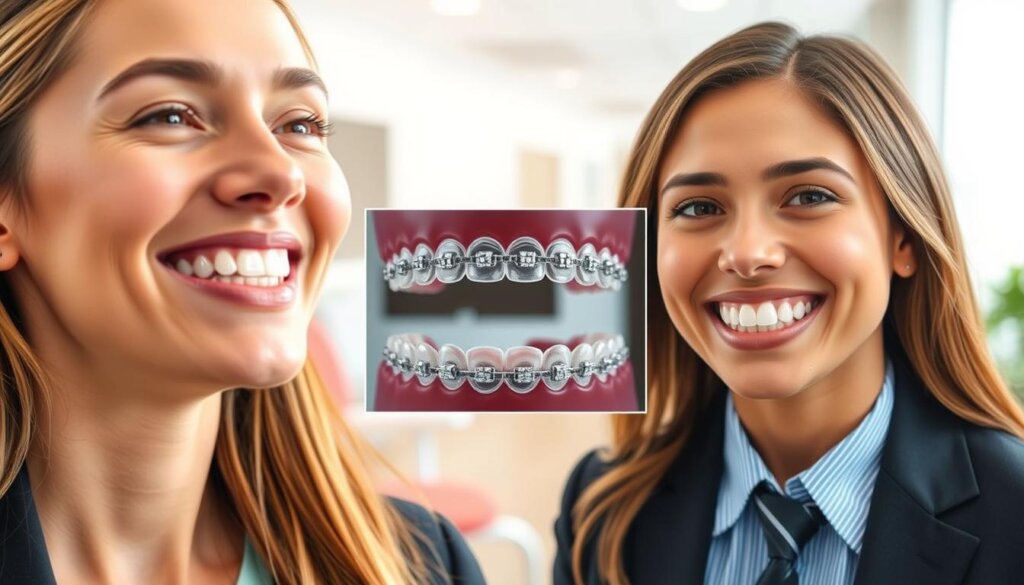
Clear aligners are also more comfortable. Traditional braces can hurt because of sharp parts. But clear aligners don’t have these sharp edges.
Getting used to new aligners is easy. It takes just a few days. This is different from traditional braces, which can hurt for longer after each visit.
Clear aligners also mean fewer trips to the dentist for emergencies. There’s less chance of problems like wires poking out. This makes treatment smoother.
Ease of Maintenance
Clear aligners are easy to take out for cleaning. This makes keeping teeth clean during treatment simple. It also lowers the risk of cavities around braces.
Research shows that clear aligners are better for gums and teeth. They make it easier to clean around teeth. This leads to healthier gums and teeth.
People with clear aligners don’t need to go to the dentist as often. This is because they can clean their teeth easily at home. It’s a big difference from traditional braces.
Cleaning aligners is easy. Just brush and floss as usual, then clean the aligners. This keeps teeth and aligners clean without mixing up the two.
Removability and Lifestyle Flexibility
Clear aligners can be taken out for sports or eating. This is great for athletes and musicians. It helps avoid injuries and keeps music playing smooth.
Speakers and performers like clear aligners because they don’t affect speech. It takes a little time to get used to new aligners, but speech gets back to normal fast. This makes it easy to perform without worry.
Clear aligners also mean you can eat anything you want. No more worrying about food getting stuck in braces. This makes treatment easier to handle.
But, wearing aligners as directed is key. Success depends on wearing them for 20-22 hours a day. This freedom can be a challenge, but it’s worth it for the benefits.
| Feature Category | Clear Aligner System | Traditional Metal Braces | Clinical Significance |
|---|---|---|---|
| Visual Appearance | Nearly invisible thermoplastic | Visible metal brackets and wires | Higher patient acceptance, improved social confidence |
| Comfort Level | Smooth plastic, no sharp edges | Metal components causing tissue irritation | Reduced soft tissue trauma, fewer emergency visits |
| Oral Hygiene Access | Complete removal for brushing and flossing | Fixed attachments requiring specialized cleaning | Lower caries risk, improved periodontal health |
| Lifestyle Adaptability | Removable for sports, eating, special events | Permanent fixture with dietary restrictions | Greater flexibility, requires compliance discipline |
| Maintenance Requirements | Standard home care, routine dental visits | Specialized cleaning tools, frequent professional prophylaxis | Simplified care protocols, reduced appointment frequency |
Invisalign is a great choice for many people. It’s easy to use, comfortable, and fits well with daily life. Knowing these benefits helps patients make the right choice for their teeth.
Ideal Candidates for Invisalign
Invisalign is great for fixing orthodontic solutions for overbite issues. But, not everyone with misaligned teeth can use clear aligners. It’s important to know who will get the best results.
Can Invisalign fix an overbite or underbite? It depends on the problem’s type and how bad it is. Invisalign works best for problems with teeth position, not the jaw itself. A detailed check-up by an orthodontist is needed to see if it’s right for you.
Choosing the right patient is key. Factors like how bad the misalignment is, age, and overall health matter. Knowing these helps both doctors and patients know what to expect.
Severity Assessment and Treatment Boundaries
Invisalign is best for mild to moderate bite problems. Doctors use special tests to see if it’s a good fit. For overbites, it works best if the teeth overlap by 2-6mm.
Underbites do well with Invisalign if the teeth don’t stick out too much. It also works for some crossbite cases. These rules help doctors decide if Invisalign is right for you.
It’s important to know if the problem is with the teeth or the jaw. Dental malocclusions are about tooth position and can be fixed with Invisalign. But, jaw problems need different solutions.
Jaw issues are harder to fix with Invisalign alone. Sometimes, surgery is needed. Doctors use special tests to figure out the cause of the problem.
Getting a full check-up is the first step. This helps doctors know if Invisalign is the right choice. Some cases might need other treatments or a mix of methods.
Patient Age and Developmental Factors
Age plays a big role in treatment. Kids and teens have growing bones that can change during treatment. Adults, on the other hand, have fully grown bones and need different treatment.
Invisalign Teen has special features for teens. These include tabs for growing teeth and dots that show if the aligners are being worn right. Adults usually follow the treatment plan better.
Teens need to wear the aligners for 20-22 hours a day. Adults tend to stick to the plan more. But, older adults have to think about their gums and any dental work they have.
Oral Health Prerequisites for Treatment
Good dental health is key for Invisalign to work. Patients need to meet certain health standards before starting treatment. This helps avoid problems and ensures the treatment works well.
Periodontal health is the most important thing. Teeth with gum disease can’t move safely. Patients with gum problems need to get them treated first.
All cavities must be fixed before starting treatment. Cavities can get worse during treatment and affect the aligners. Dental work should be done before starting Invisalign.
Before starting, make sure any dental work is done. This includes crowns, bridges, root canals, and tooth removal. Healthy teeth and gums are important for the treatment to work.
Keeping teeth clean during treatment is also important. Patients should brush and floss well while wearing aligners. Regular dental visits are needed to check on the treatment and dental health.
Meeting the right criteria is important for success with Invisalign. This includes the right severity, age, and dental health. Choosing the right candidates is the first step to a successful treatment.
Consultation Process for Invisalign
Before starting Invisalign, patients go through a detailed consultation. This checks their dental health and what they want to achieve. It decides if clear aligners can fix their bite issues and sets the stage for success.
This first meeting helps patients know what to expect. It’s key to understanding the process and setting realistic goals.
Comprehensive Initial Assessment
The first step in Invisalign treatment for jaw alignment is a thorough check-up. Orthodontists look at how teeth fit together and the jaw’s structure. They find out why teeth are not aligned right.
Dentists also check the jaw and gums to see if they’re healthy enough for treatment. Healthy gums and bones are vital for moving teeth.
Advanced tools like digital X-rays and 3D scans help in this process. These tools show tooth roots, bone, and jaw details. They help plan the treatment.
For complex cases, like underbite correction with Invisalign, more detailed scans might be needed. These scans show the inside of the mouth and airways, helping plan the treatment better.
Scanners take detailed pictures of teeth without the usual discomfort. These pictures help make custom aligners that fit each patient’s teeth perfectly.
Photos are taken to show how teeth look before and during treatment. They help track progress and show how teeth will move.
Collaborative Treatment Development
Planning treatment is a team effort between the dentist and patient. They use special software to show how teeth will move. This helps patients see their smile change.
During planning, several important points are discussed:
- How long treatment will take, based on how complex the case is
- How often to wear aligners, usually 20-22 hours a day
- If extra tools like elastics or attachments are needed
- Whether more aligners will be needed for fine-tuning
- How to keep teeth straight after treatment ends
Patients are told about the benefits and limits of treatment. They learn that most cases see big improvements. But some complex issues might need more than one treatment.
Patients learn how important it is to wear aligners as directed. Wearing them consistently and taking care of them is key to success. They also know what to expect during treatment, like some discomfort when changing aligners.
Doctors compare Invisalign to traditional braces to help patients decide. This comparison helps avoid misunderstandings and sets clear expectations.
Financial Investment Considerations
Cost is a big part of the consultation. The price of Invisalign depends on several things. More complex cases need longer treatment and more aligners.
How long treatment lasts affects the cost. Longer treatments need more aligners. Where you live and the dentist’s experience also play a role in the price.
Most dentists talk openly about costs during the consultation. They explain the total cost, payment plans, and financing options. Many offer flexible plans to make treatment more affordable.
Invisalign costs range from $3,000 to $8,000, depending on the case. Simple cases cost less, while more complex ones cost more. Treatment can last from 18 to 24 months.
Insurance coverage for Invisalign varies. Some plans cover it, but it’s important to check during the consultation. This helps understand what you’ll have to pay out of pocket.
Comparing Invisalign to traditional braces helps patients make informed choices. While Invisalign might be more expensive, many find the benefits worth it. The consultation helps weigh costs against personal goals.
Duration of Treatment
Many people wonder how long clear aligner therapy takes to fix bite problems. The time needed varies based on how bad the problem is, how much teeth need to move, and the patient’s health. Knowing this helps patients understand what to expect and stay hopeful during treatment.
Clear aligners work by moving teeth in small steps. Patients go through many sets of aligners, changing every one to two weeks. This way, they can see their progress and stay motivated to reach their smile goals.
Average Timeframes for Different Cases
The time it takes to straighten teeth depends on the problem’s severity. For small issues, like a one to two millimeter bite problem, treatment lasts six to ten months. These cases need only a little tooth movement.
For bigger problems, like a three to four millimeter bite issue, treatment takes twelve to eighteen months. These cases need more tooth movement and careful planning to align the upper and lower teeth properly.
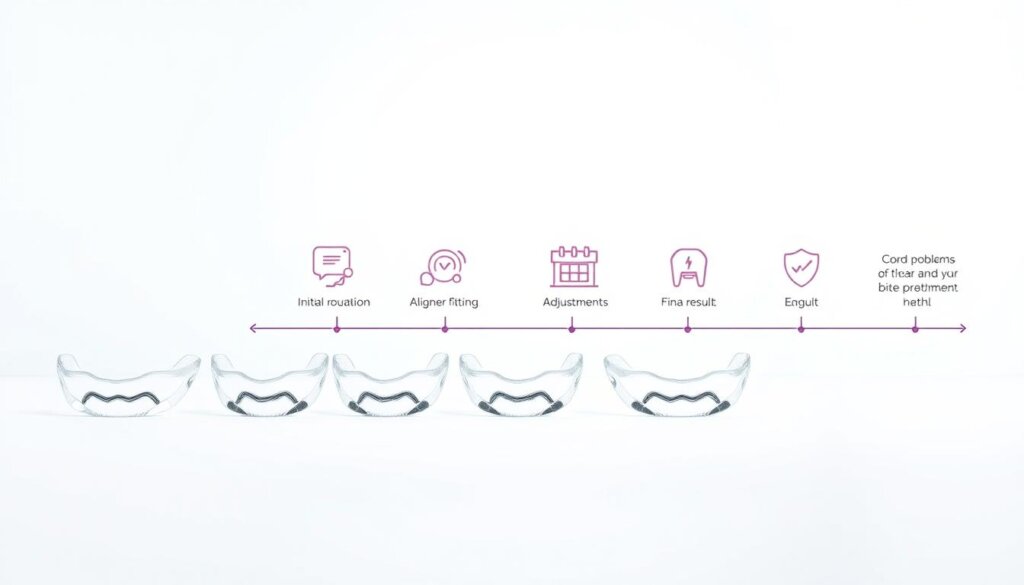
More complex cases, like those needing jaw changes or big tooth movements, can take twenty to thirty months. Some severe cases might need two to three years of treatment, including other orthodontic methods.
For small issues, like fixing a few teeth, treatment can be as short as six months. Clear aligners are great for these small fixes. But, even small cases need careful planning and consistent wear to get the best results.
Factors Influencing Treatment Duration
Many things can affect how long treatment takes. These include the patient’s age, bone health, and how well they follow the treatment plan. Knowing these factors helps explain why treatment times vary.
Biological factors like bone health and age play a big role. Younger patients and those with healthy gums tend to move teeth faster. This is because their bones and gums are more active.
The complexity of tooth movements also matters. Cases needing big changes or root movements take longer. Adding arch expansion or moving teeth forward also adds time.
Patient compliance is key. Wearing aligners for 20 to 22 hours a day is essential. This ensures teeth keep moving as planned. Not wearing them enough can slow down treatment or affect results.
Studies show that wearing aligners as directed is linked to better treatment outcomes. Not wearing them enough can lead to longer treatment times or less-than-ideal results.
Other factors include mid-treatment changes and overcorrection plans. About thirty to forty percent of cases need these adjustments. These can add time to treatment.
What to Expect During Treatment
The journey with clear aligners has different phases. Knowing what to expect helps patients stay motivated and understand normal treatment responses.
Adapting to aligners takes about three to five days. Patients might notice slight speech changes and more saliva at first. But, most people get used to it quickly and find aligners almost invisible.
Each time you switch aligners, you’ll feel a pressure. This is normal and means your teeth are moving. The feeling usually peaks in the first day or two and then goes away. It shows that the aligners are working.
Check-ups happen every six to eight weeks. Orthodontists check on progress and make any needed changes. These visits keep treatment on track and address any issues quickly.
Patients see their smile improve over time. Seeing your progress helps keep you excited and committed to treatment. Digital simulations also help you see how far you’ve come.
Some patients might need small attachments on their teeth. These help the aligners work better. Adjustments or additions might happen at different times based on how teeth are moving.
It’s important to keep up with dental check-ups during treatment. Patients can get cleanings and exams while wearing aligners. This makes it easy to keep teeth clean and healthy.
Aftercare and Maintenance
After Invisalign corrects your bite, the retention phase starts. This phase is just as important as the treatment itself. Teeth naturally try to go back to their original positions. Without proper care, the corrected bite can shift back, wasting the treatment’s investment.
Understanding the retention phase is key. Orthodontic results stay vulnerable even after the final aligner is removed. Good maintenance strategies are needed to keep the results stable.
Retainers Post-Treatment
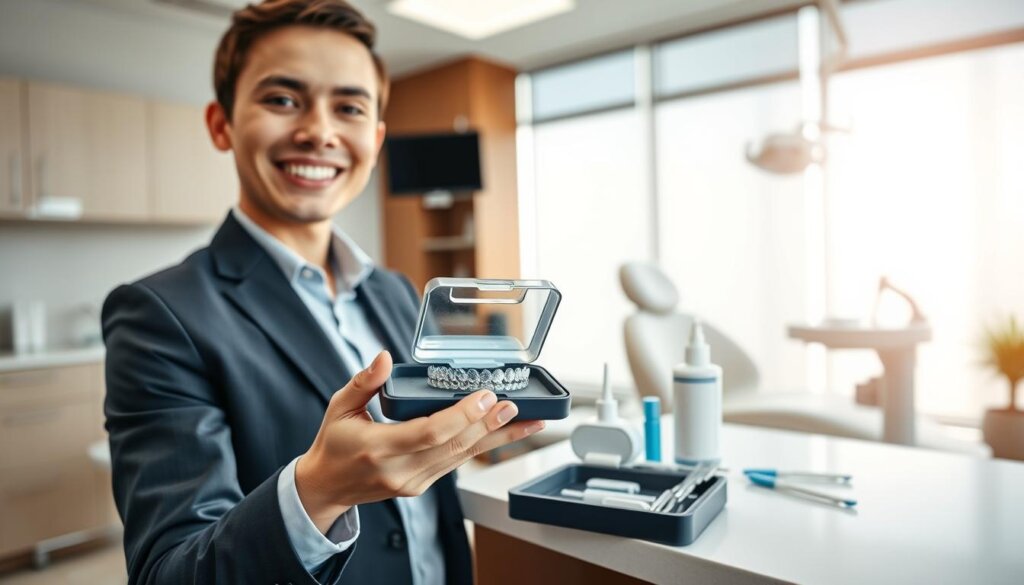
Wearing retainers after clear aligners is critical to keep the results. Teeth can move back due to bone and tissue changes, and their natural tendency. This is why retainers are so important.
Right after treatment, you should wear your retainers 22 hours a day for three to six months. This helps the bone and soft tissues around your teeth settle. Later, most people only wear them at night.
There are three main types of retainers:
- Fixed lingual retainers are wires bonded to the back of your teeth. They provide constant support without needing you to remember to wear them.
- Removable clear retainers look like aligners but are made to last longer. They’re easy to clean and wear.
- Traditional Hawley retainers use acrylic and wire. They can be adjusted and are very effective over time.
Many orthodontists suggest using both fixed and removable retainers. This helps keep your teeth stable. Some even recommend wearing retainers at night forever to keep your teeth straight.
| Retainer Type | Primary Advantage | Maintenance Requirement | Ideal Application |
|---|---|---|---|
| Fixed Lingual | No compliance needed | Professional cleaning at dental visits | Lower anterior teeth stability |
| Clear Removable | Aesthetic and comfortable | Daily cleaning with gentle brush | Full arch retention |
| Hawley | Adjustable and durable | Weekly deep cleaning | Growing patients or bite adjustments |
Regular Dental Check-ups
Going to the dentist regularly is important after treatment. It helps make sure your retainers are working right and your bite is stable. This also helps catch any problems early.
You should see your dentist three months, six months, and annually after treatment. They will check how well your retainers fit and if your teeth are staying in place.
Dentists play a big role in keeping your teeth straight. They watch for any signs of teeth moving and check if your retainers are okay. Working together with your orthodontist helps keep your teeth straight for good.
If you notice any changes in your bite or have trouble with your retainers, see your dentist right away. Catching small problems early can prevent bigger issues later.
Maintaining Results Long-term
Keeping your teeth straight for life means understanding what can change them. Several things can move your teeth, even years after treatment.
Getting wisdom teeth used to be a worry for crowding, but now it’s not as big of a concern. Bigger threats include gum disease and habits like grinding your teeth. These can slowly move your teeth.
As you get older, your teeth and mouth change. Bone remodeling and changes in bite forces can affect your teeth. This is why lifelong retention commitment is the best way to keep your teeth straight.
Orthodontic treatment is a big investment that needs ongoing care. Seeing it as a long-term commitment, not just a temporary phase, leads to the best results. Wearing retainers at night and regular dental visits are key to keeping your teeth straight for decades.
Potential Risks and Side Effects
Clear aligner therapy comes with some challenges. Invisalign is safe and effective for fixing bite problems. But, there are risks and side effects to consider. These usually stay mild and can be managed.
Most people feel some discomfort and need time to adjust. The aligners are removable, which means you need to take extra care with your teeth. How well you follow the treatment plan and your body’s response to it also play a big role.
Temporary Discomfort and Adjustment
Invisalign is not usually painful, but you might feel some pressure or soreness when you switch to a new set. This is because the aligners are working to move your teeth. The feeling should go away in a few days as your mouth gets used to the new aligner.
The discomfort comes from the aligners applying pressure to your teeth and gums. This pressure causes your bone to change, which can make your teeth feel sensitive. But this is a normal part of the process.
It’s important to know the difference between normal discomfort and something that might be a problem. Normal discomfort includes:
- Mild pressure when your teeth are moving in the first 48-72 hours with new aligners
- Temporary speech adaptation as your tongue gets used to the aligner
- Minor soft tissue irritation from the aligner touching your gums or cheeks
- Tooth tenderness when you bite down during active movement phases
But, if you have severe pain, persistent ulcers, or jaw pain, you need to talk to your orthodontist right away. These could be signs of a bigger issue.
There are ways to make Invisalign treatment more comfortable. Over-the-counter pain relievers like ibuprofen can help with inflammation. You can also use orthodontic wax to protect your gums from the aligners.
Try to change your aligners when you’re not busy, like in the evening. Cold water or ice can help with any soreness. Most people find that the discomfort gets better after the first few changes.
Treatment Effectiveness Limitations
Clear aligner therapy works well for most people. But, some cases might need more help. Knowing what can affect treatment success helps you understand what to expect.
Some cases might not work as well with clear aligners, like severe skeletal issues. If you can’t wear the aligners as much as you should, braces might be a better option. They stay in place all the time.
Not wearing the aligners enough is the main reason treatment doesn’t work. You need to wear them 20-22 hours a day to get the best results. If you don’t, it can take longer or not work as well.
Everyone’s body responds differently to treatment. Some people might move their teeth slower than others. In rare cases, teeth can’t move at all because of a condition called ankylosis.
There are also technical issues that can affect treatment:
- Poor aligner fit from bad impressions or unusual tooth shapes
- Inadequate attachment design not providing enough force for movement
- Material degradation from too much heat or harsh cleaners
- Sequential tracking errors where teeth don’t move as planned
If the first set of aligners doesn’t work, you might need to get new ones. This process involves getting new impressions or scans and making more aligners. Many people need to do this part of the treatment more than once.
It’s important to have realistic expectations about treatment. While most people get good results, some might need more time or a different approach. Talking to your orthodontist regularly helps them catch any problems early.
Daily Hygiene Considerations
Clear aligners make it easier to keep your teeth clean than traditional braces. But, they also need special care. The way aligners fit against your teeth can be good or bad for your teeth.
Not cleaning your aligners after eating can trap bacteria and food. This can lead to bad breath and tooth decay. Drinking sugary drinks with your aligners in can make things worse.
To keep your teeth clean with aligners, you need to brush after every meal. This stops food from getting stuck on your teeth for too long. Cleaning your aligners properly is also important to avoid bad smells and bacteria buildup.
Here are some tips for keeping your teeth and aligners clean:
- Tooth brushing with fluoride toothpaste after every meal before putting in your aligners
- Flossing daily to get rid of plaque between your teeth
- Aligner rinsing with cool water each time you take them out
- Regular aligner cleaning using soft brushes and mild antibacterial soap or special solutions
- Professional prophylaxis continuing at recommended intervals throughout treatment
Keeping up with these routines can be hard, but it’s important. If you have trouble sticking to it, you might face problems like plaque buildup or gum inflammation. It’s key to be honest with yourself about whether you can handle the daily care of aligners.
Regular dental check-ups are important during treatment. They help your dentist keep an eye on your teeth and give advice on how to improve. Catching hygiene problems early can prevent serious dental issues. We’re here to help you learn how to take care of your teeth during orthodontic treatment.
Comparing Costs: Invisalign vs. Other Treatments
When looking at orthodontic solutions, knowing the costs is key. The price varies based on how complex the case is, where you live, and who you see. Knowing this helps patients make choices that fit their needs and budget.
Being open about costs is important during consultations. Patients should talk about the total cost, payment plans, and any help available before starting treatment.
Investment Ranges for Clear Aligner Treatment
The cost for clear aligners can vary a lot. For simple cases, it’s between $3,000 and $5,000. These cases need fewer aligners and take less time, which lowers the cost.
For more complex cases, like underbite correction, the cost is $4,000 to $7,000. This price reflects the detailed planning, longer treatment time, and sometimes extra aligners needed for the best results.
For the most complex cases, the cost can go up to $9,000 or more. These cases need a lot of expertise, more time, and sometimes extra tools to fix the bite.
Several things add to the total cost:
- Diagnostic records and imaging: Digital scans, photos, and X-rays are the start of treatment
- Treatment planning: Using advanced tech and expert analysis to plan the treatment
- Aligner fabrication: Making custom aligners from advanced materials
- Clinical monitoring: Regular check-ups to adjust the treatment as needed
- Refinement aligners: Extra aligners if the first plan needs changes
- Retention appliances: Retainers to keep the teeth in place after treatment
Clear aligners offer more than just the appliances. They also give patients the benefit of expert care, modern tech, and long-lasting health and beauty improvements.
Financial Comparison with Traditional Fixed Appliances
Clear aligners and traditional braces often cost about the same for similar cases. The price can vary by $500 to $1,500, depending on the case and where you are.
Braces for moderate cases cost between $3,500 and $6,500. Ceramic braces add $500 to $1,000 to the cost. Lingual braces, placed on the tongue side, are the most expensive, often over $8,000.
| Treatment Option | Mild Cases | Moderate Cases | Complex Cases |
|---|---|---|---|
| Clear Aligners | $3,000 – $5,000 | $4,000 – $7,000 | $7,000 – $9,000+ |
| Metal Braces | $3,000 – $4,500 | $3,500 – $6,500 | $6,000 – $8,500 |
| Ceramic Braces | $4,000 – $5,500 | $4,500 – $7,500 | $7,000 – $9,500 |
| Lingual Braces | $5,000 – $7,000 | $6,000 – $9,000 | $8,000 – $12,000+ |
Many things affect whether braces cost more or less than clear aligners. How long treatment takes and the type of braces used can change the price. Where you live also plays a big role, with city areas often costing more than rural areas.
Cost alone should not determine treatment selection. What’s best for your bite is more important. Some cases do better with braces, while others are better suited for clear aligners. Your personal preferences and the doctor’s advice based on your case are also key.
Insurance Coverage and Payment Arrangements
Many dental plans cover orthodontic treatments. The amount covered for kids can range from $1,000 to $2,000, but adult coverage varies a lot. Some plans don’t cover adults at all, while others treat them the same as kids.
Insurance usually treats clear aligners and braces the same when it comes to coverage. But, some plans might have rules for underbite correction with Invisalign or need extra paperwork. It’s important to check your plan during the consultation to know what you’ll have to pay out of pocket.
There are many ways to make orthodontic treatment more affordable. Options include:
- In-house payment plans: Many orthodontists offer interest-free monthly payments over the treatment time, with a down payment at the start
- Third-party healthcare financing: Companies like CareCredit and LendingClub Patient Solutions offer longer payment terms, sometimes with no interest for a while
- Health savings accounts (HSA): You can use pre-tax dollars for qualified medical expenses, including orthodontic treatment
- Flexible spending accounts (FSA): Employer-sponsored accounts let you pay for healthcare with tax benefits
Talking about the costs before starting treatment is important. It helps patients understand the total cost, payment schedule, and their financial responsibilities. Being open about costs builds trust and avoids surprises that might stop treatment.
Choosing to fix your bite is an investment in your health, looks, and quality of life. While cost is important, it’s just one part of the decision-making process.
Success Stories and Testimonials
Invisalign’s success goes beyond numbers to the real-life stories of those who’ve fixed their bites. These stories show how clear aligners can change lives. They help others know what to expect from this treatment.
Studies show most people are happy with Invisalign for fixing bites. They like how it looks, works, and fits into their lives. These stories make the science behind it more relatable and show it works for many.
Transformative Overbite Corrections
Sarah, a 28-year-old, had a big overbite. She used 32 aligners for 14 months. Her teeth moved just right, thanks to special attachments.
She felt a bit of discomfort at first but got used to it. She loved how it looked for work and video calls. Her teeth moved just enough to fix her bite.
Michael, 16, had a deep overbite. His orthodontist used special cuts and elastics for his treatment. In 18 months, his teeth moved a lot.
His treatment fixed his teeth and jaw. He had to get used to wearing elastics but got the hang of it. His case shows Invisalign can work even for tough cases.
- Treatment duration: Most overbite cases resolve within 12-18 months depending on severity
- Compliance requirements: Consistent 20-22 hour daily wear proves essential for predicted outcomes
- Attachment usage: Strategic placement on anterior teeth facilitates controlled tooth movement
- Elastic protocols: Moderate to severe cases often require supplementary elastics for optimal correction
- Refinement needs: Approximately 30% of cases benefit from additional aligners to perfect final positioning
Jennifer, 42, was hesitant to get braces because of her job. Her overbite caused jaw pain and affected her speech. Invisalign’s discreet nature convinced her to try it.
Her treatment lasted 16 months with 34 aligners and 8 refinements. She noticed her jaw felt better in six months. Being able to remove her aligners helped her at work.
Successful Underbite Management
David, 32, had a mild underbite. His orthodontist planned to move his teeth to fix it without surgery. This involved moving his upper teeth forward and his lower teeth back.
He wore 28 aligners for 13 months. He felt some sensitivity but managed it with over-the-counter pain relievers. His teeth and jaw worked better after treatment.
Rebecca, 24, had an underbite that made her jaw shift forward. Her treatment aimed to stop this. She wore 32 aligners for 15 months to fix her bite.
Her treatment improved her bite and allowed her to live her life as usual. She followed her treatment plan closely, which helped her achieve great results.
But not all underbites can be fixed with Invisalign. Marcus, 19, had a big underbite. His orthodontist said traditional braces and surgery were needed for his case.
This honest advice helped Marcus avoid a long, unsuccessful treatment. It shows the importance of choosing the right treatment for each case.
Patient Experiences and Quality of Life Improvements
People who’ve had Invisalign talk about more than just their teeth. They say it boosted their confidence and quality of life. These changes are as important as the physical fixes.
Adults love how Invisalign is almost invisible. They say it’s easy to wear and doesn’t get in the way of their work or social life. Many people didn’t even notice they were wearing it.
Compared to metal braces, Invisalign is more comfortable. It doesn’t irritate the mouth like brackets and wires can. But, it can be a bit sore when you first put in a new set.
Key satisfaction factors identified in patient surveys include:
- Enhanced self-confidence in social and professional interactions
- Improved masticatory function and reduced jaw discomfort
- Convenience of removability for meals and special occasions
- Minimal interference with speech after brief adjustment period
- Positive relationships with orthodontic providers and staff
Being able to take out your aligners for special events is a big plus. It lets you enjoy life without worrying about your teeth. This flexibility is a big advantage over traditional braces.
Fixing your bite can also make everyday life better. People say it helps with headaches, sleep, and eating. These benefits are often more important than just looking good.
But, there are downsides. Some find it hard to wear the aligners all day. It takes discipline and can be a big change in your routine.
Also, treatment might take longer than expected. This can be frustrating if you’re not prepared. But, knowing this ahead of time can make you happier with the process.
Despite these challenges, most people are very happy with Invisalign. They like how it looks, works, and improves their life. These stories show that Invisalign can really make a difference.
Good relationships with your orthodontist also matter a lot. People appreciate clear communication and regular check-ins. This trust is key to a successful treatment.
Final Thoughts on Invisalign’s Role in Correcting Bite Issues
Modern orthodontic technology has made bite correction easier and more comfortable. Invisalign is a big step forward in fixing dental problems without the look of metal braces.
Summary of Key Points
Clear aligners are great for fixing mild to moderate overbites and underbites. They work best when the problem is with the teeth, not the jaw. Success depends on the right choice by orthodontists and the patient following the treatment plan.
Choosing Invisalign means thinking about if it’s right for you, your lifestyle, and the cost. But, for more serious jaw problems, old-school braces or surgery might be needed.
Future of Clear Aligners
New tech is making clear aligners even better. They can now handle more complex tooth movements. Artificial intelligence helps plan treatments better and predict results.
Research is also looking into ways to make treatments shorter. This could change how we fix teeth in the future.
Encouragement to Seek Professional Advice
While this info is helpful, seeing an orthodontist is key. They can assess your bite and give advice tailored to you. This is important for your health and how well you can eat and speak.
Modern treatments like Invisalign make fixing bites easier and less noticeable. This means you can get a better smile and better oral health with professional help.

