Chipped Tooth? Here’s What to Do Right Away
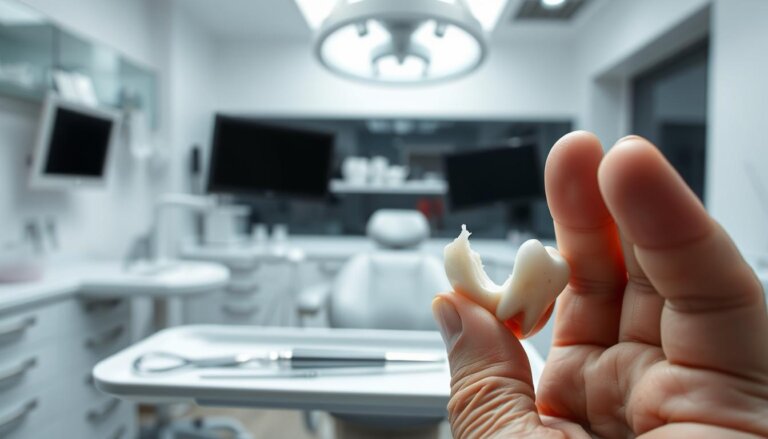
Every year, over 5 million teeth are knocked out in the U.S. However, not all tooth damage is this severe. Many of these cases are chipped teeth, which are both common and worrying dental emergencies. Although tooth enamel is the hardest and most mineral-rich tissue in our bodies, it can still chip. If you chip a tooth, knowing what to do immediately is key. It helps prevent further damage, avoids infection, and keeps your smile looking great.
Chipped teeth can happen for many reasons. It might be an accident, a hit to the face, using teeth to open things, or biting hard food. If you chip a tooth, acting fast is very important. Depending on how badly the tooth is damaged, you might need different treatments. These could include bonding or adding crowns to fix the tooth and bring back its look and use.
Key Takeaways
- Recognize a chipped tooth as a significant dental emergency requiring prompt attention.
- Understand that even the strongest tooth enamel is susceptible to damage.
- Take immediate action after chipping a tooth to prevent further issues and potential infection.
- Professional dental care is necessary to assess the damage and provide the best treatment.
- A range of repair options exists, from bonding to crowns, based on injury severity.
Understanding Tooth Damage
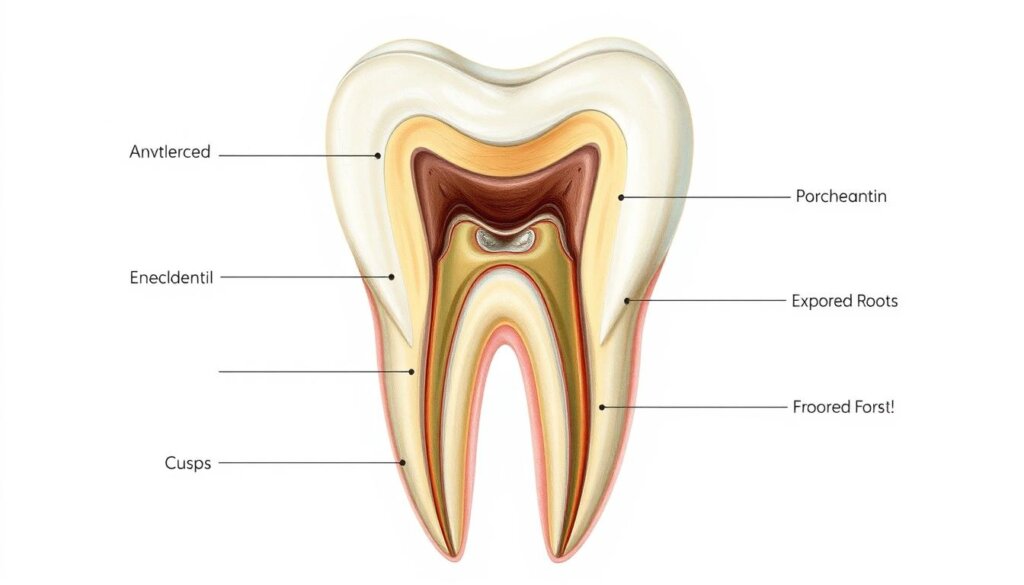
To understand how bad tooth damage can get, we need to look at its different forms. Things like minor chips or big fractures can happen from physical hits to the teeth. Experts in dental health split these injuries into categories based on how severe they are. Also, daily habits and outside forces can really break down tooth enamel, leading to damage.
Types of Tooth Injuries
It’s useful to know how tooth injuries are classified. The most common type is a broken tooth, which can show up as little chips or big cracks. These affect how your tooth looks and works. Sometimes, teeth can fracture deeply or even get knocked out, needing quick help to fix the damage and heal.
Common Causes of Tooth Chips
| Activity | Risk Level | Description |
|---|---|---|
| Sports | High | Playing in contact sports without a good mouthguard puts you at a big risk for tooth injuries. |
| Using Teeth as Tools | High | Using your teeth to open stuff or tear things apart can hurt your teeth, leading to chips. |
| Diet Choices | Moderate | Eating very hard, acidic, or extreme temperature foods can slowly harm your tooth enamel, causing damage. |
| Ageing | Moderate | As you get older or after certain dental treatments, your enamel can wear down, making chips more likely. |
The reasons mentioned above all add to tooth trauma. They expose teeth to strong forces or harsh conditions that weaken or hit the tooth hard. Knowing these helps in preventing damage and keeping your teeth healthy.
Initial Steps to Take
When you hurt your tooth, acting fast is key. It’s really important to do things right away to stop more problems. To start off, cleaning the injured spot and easing the pain are your main goals.
First off, make sure to rinse your mouth with warm water. This helps clean the area and lowers the chance of getting an infection. Right after that, try to find any broken pieces of the tooth. If you find them and take them to the dentist quickly, they might be able to fix your tooth.
Next, putting a cold pack on your face near the injury is a smart move. It helps with reducing swelling and makes the pain a bit easier to handle. If there are sharp parts that got left behind, using wax or sugarless gum on them can keep your mouth safe from cuts.
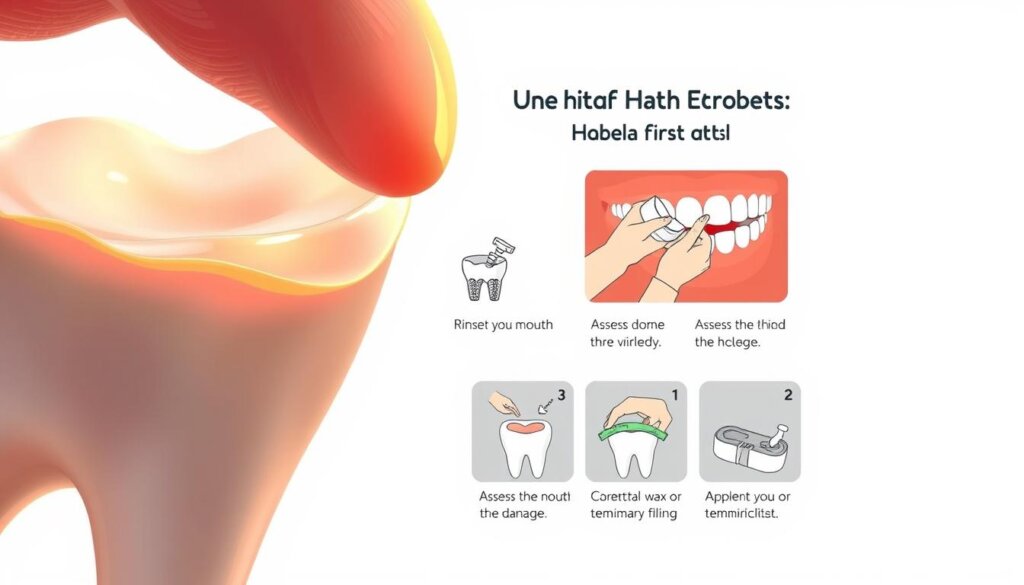
Using painkillers from the store can also help with the pain until you get to see a dentist. Saltwater rinses are good too for making the sore place feel better. Remember, all these steps are helpful, but if you want to get better fully, seeing a dentist is a must. They are the ones who can make sure your dental health stays good.
- Rinse mouth with warm water.
- Locate and preserve any tooth fragments.
- Apply cold compress to reduce swelling.
- Cover sharp edges with wax paraffin or sugarless gum.
- Use over-the-counter pain relievers and perform saltwater rinses.
When to See a Dentist
Knowing when to get help for a broken tooth or starting chipped tooth repair is key. It stops more harm and gets you help fast. If you see certain signs, it’s time to see your dentist right away.
If you’re in a lot of pain or can’t do your daily stuff, you need a dentist fast. Waiting can make things worse, leading to harder and costlier fixes.
- Sharp or jagged edges that can hurt your tongue or inside of your cheek.
- Pain that doesn’t go away, especially with hot or cold foods, might mean nerve damage.
- Visible cracks or missing pieces from the tooth, which may cause more breaks or infections.
Knowing when to get help is really important. Here’s a quick guide:
| Type of Dental Injury | Recommended Timing for Dental Visit |
|---|---|
| Minor Chip | Within 3-5 Days |
| Severe Break | Immediately (within 24 hours) |
| Tooth Knocked Out | Immediately (within 1 hour) |
| Loose Tooth | As soon as possible (within 24 hours) |
Quickly seeking a dentist’s advice can help save your tooth and avoid bigger problems like infections or big dental work. In serious cases of pain or harm, the need for emergency dental care is clear. This shows why knowing and fast action in dental emergencies is crucial.
Home Remedies for Temporary Relief
Right after a tooth injury, before seeing a dentist, some home actions can really help. These steps ease pain and prevent more damage. We will look into quick fixes and food tips that can make a big difference.
Taking over-the-counter pain relievers like ibuprofen can lessen pain from a chipped tooth. They relieve discomfort and lower swelling around the tooth.
Changing what you eat right after a tooth injury is key. Stay away from hard or sticky foods to avoid more damage. Choosing softer foods and liquids helps heal without adding irritation.
Here are more dental first aid tips to keep in mind:
- Put dental wax or sugar-free gum on the chipped tooth’s sharp edges to protect your mouth.
- A tea bag can help stop minor bleeding or soreness when pressed against the tooth.
- For a numbing effect, dab clove oil on the sore spot with a clean cotton swab.
While these steps help for a while, seeing a dentist quickly is key. Early first aid lessens pain and helps the dentist fix the tooth, avoiding worse problems.
Preventing Further Damage
Right after you chip a tooth, acting fast is key. This quick action is not just about easing pain but also stopping more harm. Knowing how to safeguard the tooth post-injury and handling your mouth care smartly really matters.
First steps in protecting a chipped tooth involve using special products to cover the damage for a short time. These are quick fixes, not lasting ones, but they stop the situation from getting worse. This step is super important for a broken tooth, as it can prevent infection and more damage.
- Shielding the Tooth: Put dental wax or a temporary bonding agent on the tooth’s sharp parts. This keeps it from hurting your tongue or mouth.
- Maintenance of Oral Hygiene: Gently brush and floss, being extra careful near the hurt area to not make it worse.
- Adjusting Eating Habits: Before seeing a dentist, don’t chew with the hurt tooth. Choose foods that are soft and easy to eat.
- Wearing Protective Gear: Wear a mouthguard during activities or sports to keep your teeth safe from hits.
Keeping up with these steps helps ease pain and keeps the tooth safe until you can get it fixed by a dentist.
| Protection Method | Description | Importance |
|---|---|---|
| Temporary Sealing | Covers and protects the chipped area | Stops sharp edges from hurting your mouth more |
| Maintaining Hygiene | Brush and floss gently around the hurt tooth | Lowers the chance of infection and more damage |
| Adjusting Diet | Choose soft foods, avoid biting with the hurt tooth | Puts less pressure on the hurt tooth |
| Using Mouthguards | Wear them during risky activities | Keeps your teeth safe from new damages |
Treatment Options for Chipped Teeth
The treatment for a chipped tooth depends on how bad the damage is. It’s vital to know the benefits and steps of options like dental bonding and crowns. This knowledge helps fix the look and function of the tooth.
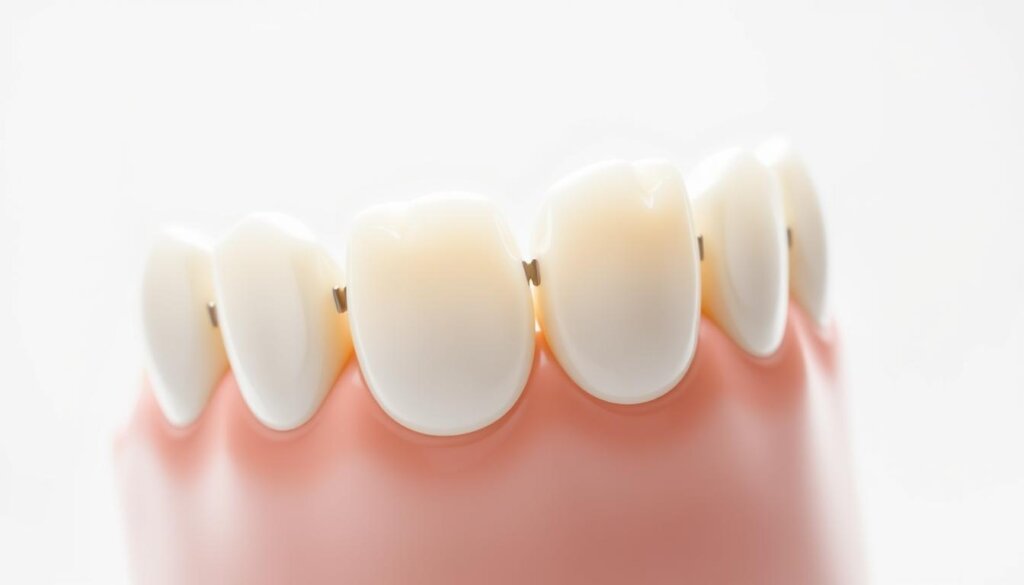
Dental bonding is good for small chips. This easy method uses a special material and keeps most of the tooth safe. The material is shaped and colored to look just like your other teeth, making it look natural again.
For bigger damage, dental crowns are a strong choice. They cover the whole tooth, making it strong and stopping more harm. Crowns can be made of porcelain, ceramic, or metal, offering both strength and a good look. They work well for fixing cracked teeth.
| Treatment | Description | Duration |
|---|---|---|
| Dental Bonding | Application of resin to the chip, cured with UV light | 30-60 minutes |
| Dental Crowns | Custom-fitted cap to cover the entire tooth | Usually 2 visits |
Both dental bonding and crowns effectively fix and protect chipped teeth. They also help keep your mouth healthy for a long time. Talking to a dentist is key to choosing the best method for fixing a cracked tooth.
Factors Influencing Treatment Choices
When it comes to fixing a chipped tooth, the decision on how to do it is very important. This decision is influenced by how bad the damage is, where the chip is, and the patient’s dental history. These factors help dentists choose the best treatment option.
Severity and Location of the Chip: How bad and where the chip is matters a lot. Simple chips on front teeth might just need veneers or bonding to look right again. But chips on back teeth, which handle more chewing, may need stronger fixes like fillings or crowns.
Patient’s Dental History: What dental work someone has had before, their overall mouth health, and past teeth problems play a big role in what treatment is chosen. This helps make sure the fix not only solves the current problem but also helps the person’s long-term tooth health. A patient with many past dental issues might need more complex care than someone with healthier teeth.
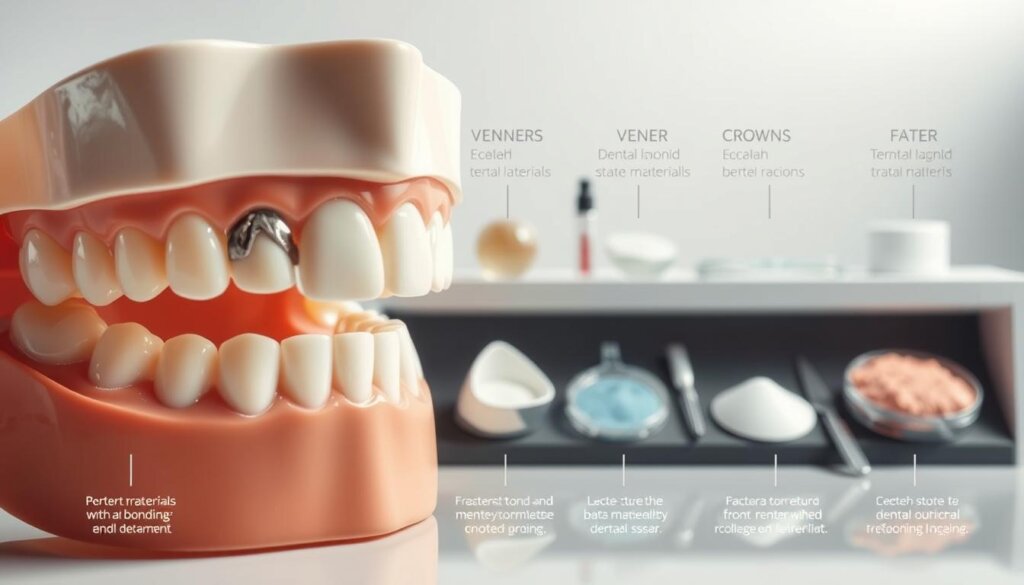
Let’s look at a table that shows what treatments are best for different kinds of chipped teeth:
| Chip Location | Severity | Recommended Treatment |
|---|---|---|
| Front Tooth | Minor Chip | Dental Bonding |
| Molar | Medium Chip | Dental Crown |
| Front Tooth | Large Fracture | Veneers |
| Molar | Extensive Damage | Root Canal and Crown |
This way of showing treatment choices makes it easier to understand how decisions are made. It helps everyone involved know more about how to fix chipped teeth and take care of their dental health.
The Importance of Follow-Up Care
After fixing a chipped tooth, the quest for lasting dental health is just starting. Proper follow-up care is key. It helps ensure dental work lasts long and prevents new problems.
Dental checkups are essential. They check how treatments like bonding or crowns are holding up and keep your mouth healthy. Regular visits help dentists catch issues early. This keeps your smile looking good and working well.
Staying healthy means keeping up with checkups. During these visits, patients can expect certain things:
- Examination of the treated area for stability and decay resistance
- Assessment of overall oral hygiene and gum health
- Updates on oral care practices to prevent further dental injuries
Regular dental checkups are a way to prevent problems. They keep your dental work in good shape and improve your overall oral health.
Here’s a detailed list of what happens during follow-up care at a dental checkup:
| Check-Up Component | Purpose |
|---|---|
| Visual Examination | To check for visible signs of tooth wear or gum disease |
| X-Rays (if required) | To spot hidden problems |
| Cleaning | To remove plaque and tartar, fighting decay and gum disease |
| Consultation | To talk about any dental health changes and update care habits |
Scheduled follow-up care and checkups are crucial for long-term dental health. They’re a big part of preventing dental issues.
Myths About Chipped Teeth
It’s essential to correct false beliefs about chipped teeth to prompt immediate care. Waiting could lead to major dental problems. People often think minor chips are not a big deal. Yet, this thinking can steer them wrong in handling tooth injuries.
Some think a small chip won’t hurt the tooth’s strength. But even tiny cracks can cause big issues later, like decay, infections, or more breakage. So, treating even minor chips fast is key to avoiding a dental crisis.
- Myth: “A chipped tooth will always be obvious.”
- Truth: Sometimes chips are so small they are not immediately noticeable. Regular dental check-ups are essential for catching such injuries.
- Myth: “Chipped teeth are purely a cosmetic issue.”
- Truth: Beyond aesthetics, chipped teeth can affect oral health and function, potentially leading to tooth sensitivity or biting problems.
- Myth: “If the chipped tooth doesn’t hurt, it doesn’t need a dentist.”
- Truth: Pain is not the only indicator of the severity of a tooth injury. All chips should be examined by a professional to prevent complications.
Neglecting a chipped tooth might turn a small problem into a big emergency. It’s vital to fix even tiny chips quickly. This lowers the chance of future issues and shows why it’s important to clear up these myths.
A seemingly small chip can threaten the tooth’s health and life. That’s why seeing a dentist right away to check the damage is critical.
Psychological Effects of a Chipped Tooth
A person’s dental health affects more than just their body. It also touches on how they feel inside. A chipped tooth might make someone feel less confident, especially if seen when they smile or talk. It’s important to recognize how big an effect this can have on someone’s feelings.
Having a chipped tooth can make a person feel worried or have low self-esteem, especially around others. They might not want to join in conversations or go to events. They’re scared of what people might think.
- Timely Dental Care: Getting quick help for a chipped tooth is crucial. It fixes the tooth and helps a person feel better inside. Things like bonding, veneers, or crowns can make the tooth look good again. This helps a lot with self-confidence.
- Supportive Networks: Having friends who understand and support you is very helpful. Talking about what you’re going through can make things seem more normal. It helps to know that you can get through dental issues with some help.
Dentists need to talk to their patients about the emotional impact of dental problems like a chipped tooth. They should offer not just ways to fix the tooth but also help with the emotional side. They might suggest talking to a counselor. With the right support and advice, feeling good about oneself and having healthy teeth are both possible.
Financial Considerations in Treatment
Understanding the costs of fixing a chipped tooth is key. Prices differ greatly depending on how bad the damage is and the treatment needed. For many, figuring out costs with or without insurance is a big worry.
Fixing a chipped tooth can get expensive, especially for bigger fixes like crowns or veneers. Dental insurance can really help reduce some costs. Yet, patients need to know their insurance coverage well, including any costs they must pay.
Talking about payment and insurance with your dental provider is smart. This talk makes things clearer and can make care more affordable, easing financial pressure.
Having comprehensive dental insurance can substantially alleviate the financial stress associated with dental treatments.
| Treatment | Average Cost Without Insurance | Average Cost With Insurance |
|---|---|---|
| Dental Bonding | $300 – $600 | $150 – $350 |
| Dental Crowns | $1,000 – $3,500 | $500 – $1,750 |
| Veneers | $500 – $2,000 | $250 – $1,000 |
Looking into other ways to pay, like payment plans or medical credit, is good too. This is especially true if you find the cost of fixing a chipped tooth too high.
Lifestyle Adjustments Post-Injury
After a tooth injury, changing your lifestyle helps speed up recovery and prevents more dental problems. Changing your diet and limiting activities help keep your dental work safe.

Diet modification is key in recovery after a tooth injury. Changing what and how you eat aids in fixing the damaged tooth. It also reduces stress on the area, leading to faster healing. Eating soft foods and avoiding hard, crunchy, or sticky ones are advised.
- Choose blended soups and smoothies that are gentle on your teeth.
- Don’t eat nuts, seeds, and hard candies to avoid extra damage.
- Avoid chewy foods like caramel and taffy to protect the repair site.
It’s also vital to make lifestyle adjustments to heal and prevent new tooth injuries. Don’t use your teeth as tools for opening things or biting nails. Wearing a mouthguard during sports significantly lowers the risk of injury.
- Always wear protective gear in sports.
- Use your teeth only for eating, nothing else.
- Be careful in activities that might hit your face.
Diet changes and careful lifestyle habits are important for healing from a tooth injury. By making these changes, you can heal faster and better protect your teeth in the future.
Understanding Tooth Sensitivity
When a tooth gets damaged, many people start to feel a sharp pain. This pain comes from the tooth being sensitive to hot, cold, or sweet things. It’s important for those with tooth pain and the people taking care of them to know about these changes. Understanding them helps in taking care of the tooth after it’s hurt.
Tooth sensitivity can be very upsetting, especially if the tooth is chipped or cracked. These injuries can expose parts of the tooth that are usually protected. When these parts get exposed, eating or drinking something hot, cold, or sweet can hurt. At first, we might just react to the pain. But finding ways to manage this pain over time is key.
- Use toothpaste for sensitive teeth to ease the pain.
- Avoid very hot or cold foods and drinks to keep from triggering tooth sensitivity.
- Always follow what your dentist says to heal your tooth and stop more damage.
Handling tooth pain isn’t just about quick fixes. It also means taking steps to not let the sensitivity come back. Caring for sensitive teeth properly can make a big difference in your life. Taking care of tooth sensitivity well is an important part of treating dental injuries.
Oral Hygiene Tips After a Chipped Tooth
After you chip a tooth, keeping up with oral hygiene becomes more important than ever. It’s not just about helping the tooth heal. It’s also key to stop other dental problems from popping up. We’ll look at important dental care tips, from proper brushing techniques to picking the best products for sensitive teeth. These tips ensure you’re comfortable and well-cared for.
Taking care of a chipped tooth means brushing the right way. You should use a soft-bristled brush because it’s easier on your gums and the hurt tooth. Choosing a non-abrasive toothpaste also helps to not irritate the tooth’s surface more. Let’s check out what products are good for someone with a chipped tooth and sensitive teeth:
| Product Type | Brand | Key Benefit |
|---|---|---|
| Soft-bristled Toothbrush | Oral-B Sensitive | Gentle on damaged areas |
| Non-abrasive Toothpaste | Sensodyne ProNamel | Minimizes enamel wear |
| Mouthwash for Sensitive Teeth | Listerine Gentle Care | Alcohol-free with fluoride |
Sticking to a dental care routine after you chip a tooth is crucial. It not only helps heal the chipped tooth. It also makes your teeth stronger and protects them from future harm. Always follow your dental care professional’s advice. This ensures top-notch oral hygiene and keeps your teeth healthy for years.
Resources for Finding a Dentist
When you suddenly need emergency dental care because of a chipped tooth, it’s important to know where to go. This guide will help you find a dentist who is not only qualified but also close to you.
Finding the right dental care provider means considering a few key things. You want a dentist who can handle emergencies. They should also meet your health care needs and preferences.

How to Choose the Right Dental Care Provider
- Look for dentists with high ratings and positive patient reviews to gauge satisfaction and quality of care.
- Verify the dentist’s credentials, as well as his or her experience with your specific dental issue, ensuring they are capable of providing the required treatment effectively.
- Consult with your primary care doctor for a referral, which can lead to trusted professionals within your current healthcare network.
Online Tools for Dentist Searches
The internet has made finding a dentist much easier today.
- Use online directories that provide detailed profiles of dental clinics, sorted by location, specialization, and service ratings.
- Bookmark websites specializing in healthcare provider listings, which often include patient reviews and available services to help in making an informed choice.
- Use filters to find a dental care provider who offers emergency dental care, ensuring that sudden dental issues can be addressed promptly.
Summary: Quick Actions for A Chipped Tooth
If you chip a tooth, quick and proper actions are key to heal fast and keep your teeth healthy. This advice covers the urgent steps to take if you chip a tooth. It helps avoid more trouble. First, rinse your mouth with warm water to clean the area. Then, use wax or sugar-free gum to cover sharp parts to keep your mouth safe. A cold compress on the cheek can lessen swelling and pain.
After chipping a tooth, making a plan is a must. Getting to a dentist quickly stops problems like infection, which can get worse if ignored. Waiting too long to get help can harm your tooth and your overall mouth health. A timely visit to the dentist makes sure you get the right treatment. This could include bonding or getting a crown to make your tooth look and work right again.
In short, acting fast and seeing a dentist quickly helps a lot after a tooth injury. Following these steps keeps bigger tooth troubles away and keeps your teeth healthy. Our goal is to push medical science and education forward. So, we highlight how important it is to use this info right away, making smart choices for healthy living.