
Do I Need to Remove the Aligners When I Eat or Drink?
Ever wondered what happens to your orthodontic treatment if you eat a sandwich with your aligners on? This is a key part of clear aligner therapy. Knowing how to remove your aligners properly can make a big difference. It can help you get your dream smile on time or cause delays or damage.
Clear aligners are special thermoplastic devices that gently move your teeth. They need careful handling, like when you eat. The material of aligners can be damaged by certain things that happen when you eat.
Orthodontic experts say you should take out your aligners before eating. The only time you can drink is plain, cool water. Sticking to clear aligner mealtime guidelines helps keep your treatment on track and your aligners in good shape. Most treatments need you to wear them for at least 22 hours a day. This leaves about two hours for eating and cleaning your teeth.
Food bits, temperature changes, and chewing forces can harm your aligners and your treatment. Managing your meals right is key to your orthodontic success.
Key Takeaways
- Always remove orthodontic aligners before eating any solid food to prevent damage and staining
- Plain, cool water is the only beverage safe to consume while wearing aligners
- Clear aligner systems require 22 hours of daily wear, allowing 2 hours for meals and cleaning
- Biting into food with trays in place can crack, warp, or permanently stain the thermoplastic material
- Temperature variations from hot foods and drinks can distort aligner shape and reduce treatment effectiveness
- Proper removal protocols directly impact treatment timeline and final orthodontic outcomes
Understanding Aligners and Their Purpose
Clear aligners are made from special materials and work in a unique way. They are a new way to straighten teeth without the look of metal braces. These devices use advanced materials and science to move teeth safely and effectively.
Clear aligners are a big step forward in orthodontics. They treat many dental problems while being easy on the patient. This makes treatment more comfortable and convenient.
What Are Aligners?
Aligners are custom-made removable orthodontic appliances made from safe materials. They fit over teeth and gently push them into place. They are made to fit each person’s teeth perfectly.
Today’s aligners are made with special materials. These materials are strong and flexible. They help the aligners work well and last a long time.
Aligners are different from older orthodontic devices. They have many advantages:
- Optical clarity: They are almost invisible when worn
- Biocompatibility: They are safe for most people’s skin and mouths
- Structural integrity: They keep their shape and apply the right amount of pressure
- Removability: You can take them out for meals and cleaning
How Do Aligners Work?
Aligners work by applying pressure to teeth. This pressure makes the bone around the teeth change. This helps the teeth move.
When aligners push on teeth, the bone responds. It gets smaller in some places and grows in others. This movement helps teeth move into place.
Aligners are changed every week or two. Each change moves the teeth a little bit. This slow movement helps avoid pain and discomfort.
Wearing aligners for 20 to 22 hours a day is key. This ensures they work well. Taking them out for meals and cleaning is important.
Benefits of Using Aligners
Aligners have many benefits. They are as good as traditional braces for many problems. They are also easy to care for.
Aligners are easy to clean. This helps prevent cavities and gum disease. They also let you eat anything you want, unlike traditional braces.
Aligners have other benefits too:
- Reduced chair time: Fewer visits to the dentist
- Enhanced comfort: They are smooth and don’t irritate the mouth
- Predictable outcomes: You can see how your teeth will look before starting
- Professional appearance: They are discreet, making them great for adults
- Improved bite alignment: They fix problems that affect how you chew and your jaw
Aligners combine science, materials, and orthodontics. They offer a way to fix teeth that looks good and works well. Taking care of them properly is important for success.
Aligners have changed orthodontic care. They let you move your teeth without changing how you eat or brush your teeth. This is a big step forward in dental medicine.
Eating with Aligners: Do’s and Don’ts
Eating with aligners is different from traditional orthodontic rules. It offers more freedom in what you can eat. The main rule is to always remove aligners before eating. This keeps the aligners in good shape and ensures the treatment works well.
Knowing the rules for eating with aligners helps avoid problems. Eating with aligners can damage them and lead to bacterial growth. It’s important to protect your investment in aligner therapy.
Foods to Avoid with Aligners
It’s important to avoid eating solid foods with aligners in. This is because food can get stuck and cause bacteria to grow. This can lead to tooth decay and gum problems.
Removing aligners for meals is necessary for a few reasons. Chewing can damage the aligners, and food can get trapped. This can also make the teeth more prone to decay.
Even foods that seem safe can be a problem with aligners. Foods like bread or sugary items can get stuck. Hot foods can also change the shape of the aligners.
Clear braces have different rules than metal braces. The main rule is to not wear aligners while eating. This makes it easier to eat what you want during treatment.
Recommended Foods to Enjoy
Once you remove your aligners, you can eat anything you want. This is different from traditional braces that limit certain foods. It makes treatment easier to follow and improves your quality of life.
You can eat foods that traditional braces can’t:
- Crunchy vegetables: Raw carrots, celery, and bell peppers are safe
- Hard fruits: Apples, pears, and other firm fruits are okay
- Nuts and seeds: Almonds, cashews, and sunflower seeds are safe
- Sticky foods: Caramel, taffy, and chewing gum are now options
- Popcorn: You can eat it again
- Corn on the cob: You can eat it without cutting it
With Invisalign, you focus on removing your aligners before eating. This keeps your diet balanced and makes you happy. People like not having to worry about what they can eat.
Not having to limit food helps kids get the nutrients they need. Adults like being able to eat out without worrying. Removing your aligners before eating means you can eat anything you want.
Tips for Eating Safely
Having a plan for eating helps keep your treatment on track. The first thing is to store your aligners in their case. This prevents them from getting lost or damaged.
Brushing your teeth after eating is also important. It removes food and bacteria before putting your aligners back in. This keeps your teeth and aligners clean and healthy.
Here are some tips for eating with aligners:
- Carry the protective case everywhere: It’s always ready to store your aligners
- Brush after every meal: If you can’t brush, rinse with water first
- Plan efficient meal timing: Eating at set times helps keep your aligners in place
- Keep emergency supplies: Have a toothbrush, floss, and case with you
- Avoid extended meal durations: Short meals help keep your aligners on longer
Here’s what to do at every meal:
- Remove your aligners and put them in the case
- Eat your meal without rushing
- Brush and floss your teeth
- Put your clean aligners back on your teeth
Managing your time is key to success. Aligners need to be worn for 20-22 hours a day. Plan your meals and snacks to make sure you wear them enough.
Have a plan for emergencies. If you can’t clean your teeth right away, rinse with water. But always try to clean your teeth properly. Good hygiene after meals keeps your teeth and treatment on track.
| Eating Protocol Step | Correct Practice | Common Mistake | Potential Consequence |
|---|---|---|---|
| Aligner Removal | Remove from back teeth first using proper technique | Pulling from front causing stress points | Cracking or warping aligner material |
| Storage During Meals | Immediately place in protective case | Wrapping in napkin or tissue | Accidental disposal requiring replacement |
| Post-Meal Hygiene | Brush and floss before reinsertion | Rinsing mouth only without brushing | Bacterial proliferation and possible decay |
| Reinsertion Timing | Within 30 minutes after completing meal | Extended removal exceeding 4 hours daily | Compromised treatment timeline and effectiveness |
Following these rules helps you enjoy your food without hurting your treatment. People who do this well have better experiences and get the results they want. It’s all about making these habits automatic.
Drinking with Aligners: What You Need to Know
What you drink can affect your aligners’ life, look, and how well they work. Different drinks can react with the materials in your aligners. Knowing this helps keep your aligners and teeth healthy during treatment.
Following clear aligners drinking guidelines helps avoid problems. Our study shows why certain drinks are better than others. This is based on research in materials science and oral health during orthodontic treatment.
Types of Beverages to Avoid
Some drinks can harm your aligners and treatment success. Coffee, tea, red wine, and dark sodas can stain your aligners. These stains can’t be removed easily.
Stains happen because certain substances bond with the aligner material. This makes the aligners look different and can’t be cleaned off.
Acidic drinks also pose risks. Here are some drinks to avoid:
- Citrus juices – can harm tooth enamel
- Carbonated sodas – acidic and can damage teeth
- Sports drinks – high in sugar and acidity
- Energy drinks – very acidic and can damage teeth and aligners
- Flavored waters – may contain staining agents
Hot beverages require particular caution. They can change the shape of your aligners. This can make them less effective.
Safe Drinking Options
Plain water at room temperature is the best choice. It’s safe because it doesn’t harm your aligners or teeth. It also doesn’t feed bacteria.
Water is safe because it doesn’t react with your aligners. It keeps your mouth hydrated without causing harm. It’s cool or room temperature, so it doesn’t stress your aligners.
If you need to drink something else, use a straw. Immediately rinsing after drinking helps remove any harmful substances. But, it’s best to avoid drinking anything except water while wearing aligners.
Drinking water is the best way to protect your aligners. It keeps them looking good and working well. This is important for your orthodontic treatment.
Impact of Drinks on Aligners
Drinks can affect your aligners in many ways. Hot or boiling water can melt or permanently alter aligner shape. This can happen quickly.
Drinks trapped against your teeth can be harmful. They can cause white spots or cavities. This is because they stay in contact with your teeth for a long time.
The way drinks interact with your aligners includes:
- Polymer degradation – acidic substances break down thermoplastic bonds over time
- Surface roughening – chemical erosion creates microscopic irregularities that harbor bacteria
- Clarity reduction – even clear beverages with additives can diminish optical transparency
- Attachment staining – composite attachments absorb pigments differently than aligner material
Drinks can affect your teeth and gums. Drinks trapped against your teeth can stay there for a long time. This can cause harm.
| Beverage Category | Primary Risk Factor | Aligner Impact | Oral Health Concern |
|---|---|---|---|
| Hot Coffee/Tea | Thermal warping | Dimensional changes | Reduced treatment efficacy |
| Dark Sodas/Wine | Chromogenic staining | Permanent discoloration | Aesthetic compromise |
| Acidic Juices | pH below 5.5 | Polymer degradation | Enamel demineralization |
| Plain Cool Water | None identified | No adverse effects | Maintains oral health |
Knowing how drinks affect your aligners is important. It helps you make better choices. This is not just about looks. It’s about keeping your aligners and teeth healthy during treatment.
Managing what you drink is key to successful aligner treatment. Following clear aligners drinking guidelines leads to better results. It protects your investment in your orthodontic care.
The Science Behind Aligners and Food/Diet
Orthodontic aligners change how our mouth works. They trap food and bacteria, making it hard to keep teeth clean. This trapped food and bacteria can harm our teeth.
Knowing how aligners work helps us take better care of them. Food, bacteria, and aligners all play a part in keeping our teeth healthy.
Biological Impact of Food Debris on Aligner Surfaces
Food bits get stuck in our teeth and gums after eating. Saliva usually helps clean them out. But, if we put aligners back on before cleaning, these bits get trapped.
Trapped food feeds bacteria in our mouth. These bacteria make acids that harm our teeth. This can weaken our tooth enamel.
When our mouth gets too acidic, our teeth start to lose minerals. Saliva helps fix this by making our teeth stronger again. But, aligners block saliva from doing its job.
Aligners prevent saliva from reaching our teeth. Without saliva, acids can damage our teeth more easily. This makes our teeth weaker over time.
Bacteria also stick to our teeth and aligners. This creates a perfect place for them to grow and make more acid. This can lead to cavities and gum problems.
Studies show that not cleaning aligners well can lead to more bacteria. This warm, moist space is perfect for bacteria to grow. This can cause cavities and gum problems.
The following table shows how not cleaning aligners can affect our mouth:
| Oral Condition Factor | Proper Cleaning Before Reinsertion | No Cleaning Before Reinsertion | Clinical Significance |
|---|---|---|---|
| Bacterial Population Density | Baseline to moderate increase | Exponential multiplication within 2-4 hours | Higher decay risk with trapped bacteria |
| Salivary Buffering Access | Minimal interference after cleaning | Complete blockage of protective saliva | Loss of natural acid neutralization |
| Local pH Environment | Maintained near neutral (6.5-7.5) | Acidic conditions (pH 4.5-5.5) | Demineralization occurs below pH 5.5 |
| Biofilm Formation Rate | Controlled through regular disruption | Accelerated development on all surfaces | Mature biofilms resist removal |
Critical Role of Hygiene Protocols During Treatment
Why is keeping our mouth clean so important during orthodontic treatment? Studies show that not cleaning well can lead to worse health outcomes.
Not brushing and flossing after meals can lead to more plaque. Plaque is visible bacterial biofilm that harms our teeth. This plaque can cause inflammation and gum problems.
Gum inflammation can get worse if not treated. Research shows that poor hygiene can lead to inflammation two to three times more often. This can cause serious gum problems.
Tooth decay is also more common without good hygiene. Decay happens when our teeth lose minerals faster than they can repair. Trapped food, bacteria, and blocked saliva make cavities more likely.
Experts recommend specific cleaning habits:
- Brush teeth thoroughly with fluoride toothpaste after every meal before reinserting aligners
- Floss daily to remove interproximal food debris that brushing cannot reach
- Rinse mouth with water when brushing is temporarily unavailable
- Clean aligners with appropriate solutions to prevent biofilm accumulation on appliance surfaces
- Schedule regular professional cleanings to manage areas patients cannot adequately access
These cleaning habits work together to keep our mouth healthy during treatment. Brushing and flossing remove food and bacteria. Fluoride helps strengthen our teeth. Regular dental check-ups catch problems early.
Our mouth’s bacteria change based on how we take care of it. Sticking to cleaning routines keeps bacteria in check. This balance helps our treatment succeed and keeps our teeth healthy long-term.
Understanding how aligners work makes caring for them more meaningful. When we know why we’re doing things, we’re more likely to do them. This helps us keep our teeth healthy during treatment.
Aligners and Temperature: Safe Choices
Many people don’t know that eating or drinking hot foods can harm their aligners. The materials in aligners can change shape if they get too hot. Knowing what temperatures are safe helps keep your treatment on track.
Why is managing temperature so important for aligners? It’s because of how the materials in aligners react to heat and cold.
Extreme temperatures can be bad for aligners. Heat is the biggest risk, but sudden changes in temperature can also cause problems.
The Science of Heat and Your Aligners
Hot foods and drinks are the biggest threat to aligners. When they get too hot, the materials in the aligners can change shape.
Most aligners start to change shape between 60°C and 80°C (140°F to 176°F). Even a cup of coffee can be too hot for them.
Tea is even worse. Black tea is often too hot for aligners, with temperatures above 80-90°C (176-194°F).
“Thermoplastic orthodontic materials undergo irreversible deformation when exposed to temperatures exceeding their glass transition point, resulting in loss of the precise biomechanical forces required for predictable tooth movement.”
What happens when aligners get hot? The materials in the aligners start to move. This makes them change shape, even with a little pressure.
Here are some tips to keep your aligners safe:
- Never consume hot beverages while wearing aligners—coffee, tea, hot chocolate, and similar drinks all pose warping risks
- Remove aligners before eating hot soups or foods that produce steam, as heat transfer occurs rapidly
- Avoid hot water when cleaning your aligners, as cleaning temperatures often exceed safe thresholds
- Allow hot foods to cool to room temperature before reinserting aligners after meals
- Never leave aligners near heat sources such as radiators, windowsills in direct sunlight, or car dashboards
Even temperatures below the glass transition point can cause problems. This is called stress relaxation. When aligners get too warm, the forces that move teeth get weaker.
The only safe drink to have with aligners is cold or room temperature water. This keeps your treatment on track.
Cold Temperatures and Material Stability
Cold foods and drinks are different for aligners. Cold doesn’t change their shape like heat does.
Is it okay to drink cold water with aligners? Yes, it’s safe and good for staying hydrated. Cold water makes aligners a bit more rigid but keeps them in shape.
Ice-cold drinks are usually safe for aligners. They don’t get damaged by cold temperatures. The materials in aligners get stiffer when they cool down.
But, be careful with big temperature changes. Going from hot to cold too fast can cause stress in the materials. This stress can lead to tiny cracks over time.
| Temperature Range | Safety Level | Aligner Response | Recommended Action |
|---|---|---|---|
| Below 0°C (32°F) | Moderate Caution | Increased brittleness | Avoid extreme cold exposure |
| 0-25°C (32-77°F) | Safe | Optimal material stability | Ideal wearing conditions |
| 25-40°C (77-104°F) | Moderate Risk | Beginning stress relaxation | Remove for warm beverages |
| Above 60°C (140°F) | High Risk | Rapid deformation begins | Never expose aligners |
It’s best to remove aligners for cold foods like ice cream. The sugar and food particles can harm your teeth.
Knowing about heat and cold helps you make better choices. The main rule is to remove aligners for all food and drink, except cold or room temperature water. This keeps your aligners working right and your teeth healthy during treatment.
The Role of Alignment in Dental Health
Proper dental alignment is key to long-term oral health. It goes beyond just a pretty smile. It helps with better gum health, balanced chewing, and less chance of oral diseases.
How does tooth positioning affect dental health during treatment and beyond? Studies show aligners work as well as braces for many issues. This leads to real health benefits for patients during treatment.
Alignment and oral wellness are closely linked. Properly placed teeth make cleaning easier, spread chewing pressure evenly, and reduce where bacteria can hide. These actions protect teeth and gums.
How Aligners Influence Oral Health
What makes aligners good for oral health? They start by improving gum health. Malocclusion makes it hard to clean some areas, leading to plaque and gum disease.
Aligners fix this by moving teeth into better positions. Studies show better gum health after treatment, with less gum disease and bleeding.
Mastication, or chewing, is also improved. Bad bites can cause jaw pain, tooth wear, and more. Aligners help fix these issues.
- Temporomandibular joint dysfunction and chronic jaw pain
- Excessive wear patterns on specific teeth
- Increased risk of tooth fracture under normal use
- Compromised chewing efficiency affecting nutrition
Crowded or rotated teeth trap food and make cleaning hard. Even the most careful brushers struggle with these areas. Aligners open these spaces for better cleaning.
Research shows fewer cavities after treatment. Teeth work better together during chewing. This improves digestion and nutrient absorption.
Orthodontic treatment does more than fix smiles. It improves oral health and function, affecting life quality for years.
Importance of Following Care Instructions
What makes orthodontic treatment successful? Studies say following instructions is key. Wearing aligners for 22 hours a day is important.
This ensures teeth move as planned. Longer breaks in wear time can slow down results. Orthodontic aligner maintenance is vital for success.
Why is oral hygiene so important with aligners? Not brushing and flossing before wearing aligners can lead to cavities. The aligner holds sugars and acids against teeth.
This can cause tooth decay. Regular dentist visits are also important. They help catch problems early and clean teeth thoroughly.
These visits are key for treatment compliance outcomes. Research shows how to stay on track:
- Setting smartphone reminders for aligner insertion
- Keeping cleaning supplies readily accessible
- Tracking wear time through dedicated applications
- Building oral hygiene routines around existing habits
Good care practices lead to better results. Aligners improve bite and health when used as directed. This effort pays off long after treatment ends.
Properly aligned teeth are easier to clean, saving teeth and money in the long run. Success in orthodontics comes from both doctor skill and patient effort.
Maintaining Your Aligners: Cleaning Tips
Aligners collect bacteria and debris daily. Cleaning them properly is key to treatment success. Unlike natural teeth, aligners trap bacteria in their surface details. Keeping them clean prevents bacterial growth, keeps them clear, and protects the appliance.
Keeping your aligners clean is more than just brushing your teeth. Even if you brush your teeth before putting in your aligners, you need to clean the aligners themselves. Bacteria can grow in the aligner’s details, affecting your health and treatment.
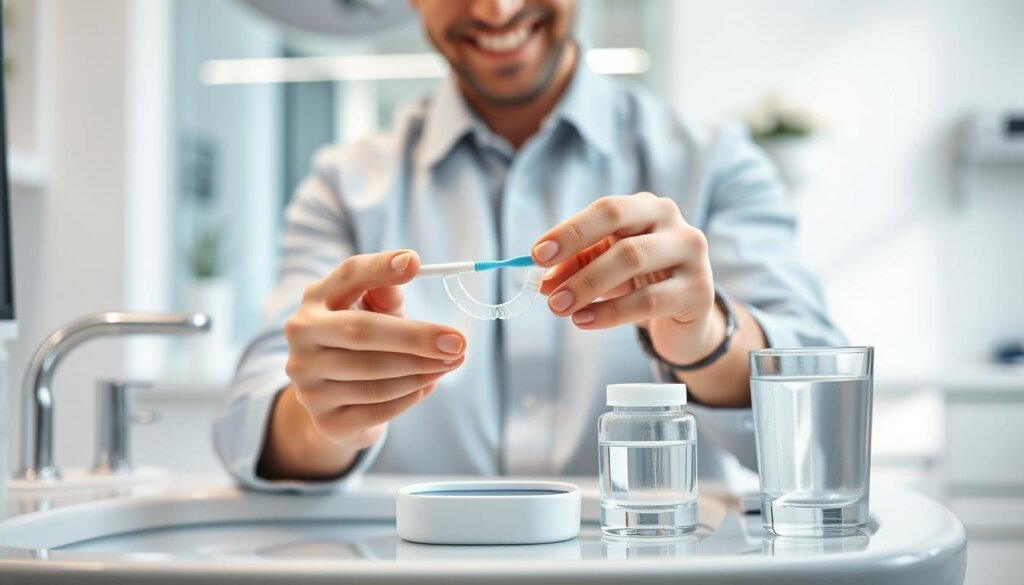
Recommended Cleaning Methods
Choosing the right cleaning materials is important for aligner care. Why can’t you use toothpaste on aligners? It’s because of the materials and how they interact with the aligners.
Toothpaste has abrasive particles that clean teeth but can scratch aligners. These scratches can make the aligners cloudy, attract more bacteria, and weaken them.
The scratches on aligners cause three big problems. They make the aligners less clear, attract more bacteria, and weaken the material. This can affect how well the aligners work.
Instead, use gentler materials for cleaning:
- Rinse immediately upon removal using cool water to remove loose debris and saliva
- Brush gently with a soft-bristled toothbrush using mild hand soap instead of toothpaste
- Apply specialized cleaning solutions such as Invisalign Cleaning Crystals or similar products designed for thermoplastic dental appliances
- Avoid hot water completely as elevated temperatures can warp the thermoplastic material and compromise the precision fit
- Handle with clean hands to prevent transferring additional bacteria to the freshly cleaned surface
What makes cleaning crystals effective? They contain sodium sulfate and other compounds that kill bacteria without scratching the aligners. These crystals dissolve in water and reach into the aligner’s details to kill bacteria and remove deposits.
Even after treatment, cleaning your retainers the same way is important. Use soft bristles, mild soap, cool water, and specialized cleaning solutions to keep them clean.
Frequency of Cleaning
Knowing how often to clean your aligners is important. Bacteria can start growing on them quickly. Research shows bacteria can start sticking to aligners in minutes and form biofilms in hours.
Here’s a cleaning plan:
| Cleaning Type | Frequency | Method | Purpose |
|---|---|---|---|
| Quick Rinse | Each removal | Cool water flush | Remove loose debris and saliva |
| Thorough Cleaning | Twice daily (morning and evening) | Soft brush with mild soap | Mechanical biofilm disruption |
| Deep Sanitizing | Daily or every other day | Cleaning Crystals solution | Antimicrobial treatment and deposit removal |
| Inspection | During each cleaning | Visual examination | Identify damage or excessive buildup |
Clean your aligners at least as often as you eat. This means rinsing them after each meal. This helps prevent bacteria buildup.
Clean them more thoroughly in the morning and evening. This helps remove bacteria and keeps them clean. It also helps you stay consistent with your oral hygiene routine.
Use deep cleaning solutions to kill bacteria that brushing can’t. Some bacteria are hard to remove with just brushing. Cleaning solutions can reach into the aligner’s details to kill these bacteria.
If your aligners get dirty or smell bad, clean them more often. This helps prevent problems that could affect your treatment.
Keeping your aligners clean is key to success. If you don’t clean them well, bacteria can grow and cause problems. By cleaning them regularly, you protect your health and your investment in orthodontic treatment.
When to Remove Your Aligners
Knowing when to take out aligners is more than just about eating. It’s about keeping your orthodontic work in top shape and moving forward with your treatment. It’s all about finding the right balance between following the rules and living your life.
Why is timing so important? Removing aligners at the right time stops them from getting damaged. It also keeps your mouth healthy and the attachments working right. Here are some tips to help you remove your aligners correctly at different times during your treatment.
Managing Aligner Removal During Meals
Always remove aligners before eating, no matter what you’re having. This rule is for any food, big or small. Even soft foods can harm your aligners, making them less effective.
So, how do you remove your aligners the right way during meals? First, wash your hands well with soap and water for 20 seconds. This step stops germs from getting on your aligners.
Then, follow a specific way to take out your aligners:
- Start at the back teeth on one side, using your fingers to gently pull the aligner off
- Move to the other side to release the aligner evenly
- Remove it from the front carefully, avoiding the teeth with attachments
- Put it in the case right away, not in napkins or tissues
Why is the storage case so important? It keeps your aligners safe from getting lost or dirty. Aligners are easy to lose, so always keep them in the case.
Pets can also be a problem. They might chew on your aligners because of the bacteria. Keep your case away from pets to avoid losing your aligners and to save on replacements.
Additional Scenarios for Aligner Removal
There are other times when you might need to take out your aligners. For example, during sports. Aligners don’t protect your mouth as well as mouthguards do. Mouthguards are made to protect your face and mouth from injury.
Should you remove your aligners for big presentations or photos? This choice depends on how important it is to you. The key is to keep your aligners in for at least 22 hours a day to move your teeth properly.
Remember, taking out your aligners for a long time can slow down your treatment. Plan ahead to make sure you don’t lose too much time. This way, you can stay on track and get the best results.
Aligner Wear Time and Eating
Wearing aligners correctly is key to successful treatment. It’s important to keep them in place most of the day. This helps the treatment work better and faster.
Managing meal times is more than just following rules. It’s about planning and being mindful. This way, patients get the best results and finish treatment sooner.
The Science Behind Continuous Wear
Orthodontic tooth movement needs constant force. Aligners apply this force, helping teeth move slowly but surely. This is how they work.
Aligners need to be worn for a long time because of how our bones work. If they’re not, the teeth can move back. This means all the hard work could be undone.
Studies show that wearing aligners almost all the time works best. This is because it keeps the teeth moving in a steady way. Wearing them for at least 22 hours a day is key.

Structuring Your Aligner Wear Schedule
Creating a good schedule for wearing aligners is important. It should fit around meals and cleaning teeth. This way, you don’t take them out for too long.
Not following the 22-hour rule can slow down treatment. It might even make it take longer. This can lead to teeth not moving as well as they should.
Here are some tips to stay on track:
- Consolidated eating periods – Eat meals all at once to reduce time without aligners
- Timer reminders – Use alarms to remember to put aligners back on
- Meal planning – Prepare food ahead of time to eat faster
- Immediate reinsertion – Get into the habit of putting aligners back on right after cleaning teeth
- Tracking systems – Use apps or journals to keep track of wear time
It’s very important to put aligners back in right after eating. Forgetting or waiting too long can slow down treatment a lot.
Optimizing Your Wear Duration
While 22 hours is the minimum, wearing them for 22-23 hours is often better. This extra time helps keep treatment on track, even if things don’t go exactly as planned.
Wearing them for more than 22 hours can help too. It makes treatment more predictable and consistent. This means patients can finish treatment on time, without needing extra steps.
It’s also important to think about how wearing aligners affects your mind. Setting a goal to wear them for 23 hours helps you stay on track, even when you’re not perfect.
It’s all about finding a balance between treatment and your daily life. We focus on making habits that work for you, not just for treatment. This way, patients do better and feel more in control of their treatment.
Remember, wearing aligners for 22-23 hours a day is key to success. It’s a small price to pay for the amazing results you’ll see.
Consulting Your Orthodontist
Getting the most out of aligner therapy needs regular check-ins with your orthodontist. Clear aligners are easy to use but need expert watch to work right. Knowing when to ask for help and what questions to ask helps you take part in your treatment.
Talking often with your orthodontist can spot problems early. This teamwork uses your dentist’s skills and your own observations for the best results.
When to Seek Professional Advice
Some situations need you to call your orthodontist right away, not wait for your next visit. Knowing these signs helps avoid delays and keeps you on track for your smile goals.
Call your orthodontist if you notice any of these:
- Fit issues: If your aligners don’t fit right, it might mean you’re not wearing them enough or there’s a problem with them.
- Material degradation: If your aligners crack, warp, or stain, they’re not good for your teeth anymore.
- Attachment problems: If attachments come loose or fall off, it messes up how your teeth move.
- Lost or damaged aligners: Without your aligners, your treatment stops and you might need new ones.
- Persistent discomfort: If you’re in pain, it’s not just from getting used to them.
Also, see your orthodontist every six to eight weeks. They’ll check how your teeth are moving, add or remove attachments, and scan for changes if needed.
Don’t forget to visit your regular dentist every six months. This keeps your teeth clean and healthy, even with your orthodontic visits.
Questions to Ask Your Orthodontist
Good communication starts with asking the right questions. Your orthodontist will teach you the best ways to care for your aligners, but ask if you’re unsure about anything.
Here are some questions to consider:
- Dietary guidelines: “What foods should I avoid with my aligners?”
- Emergency protocols: “What if I lose or damage an aligner while traveling?”
- Compliance strategies: “How can I stick to my wear schedule when I’m busy?”
- Progress indicators: “What should I watch for to know if my treatment is on track?”
- Refinement possibilities: “If my teeth aren’t moving as planned, what can we do?”
Talking about these things helps make sure your treatment works well. Your orthodontist knows your case best and can give you specific advice.
Remember, getting help isn’t just about the technical stuff. It’s also about how to handle your treatment in your daily life and how to feel confident. Talking openly with your provider means you get all the support you need.
Common Misconceptions About Aligners
Many patients start aligner therapy with wrong ideas. These aligner treatment myths come from old information or mixing up removable aligners with fixed braces. Fixing these wrong ideas helps patients make better choices and do better in treatment.
The orthodontic misconceptions stop people from trying clear aligners. Our experience shows that knowing the real deal about aligners makes patients more likely to stick with it and be happy with the results.
Separating Fiction from Reality
Knowing the truth helps patients feel more confident about aligners. The biggest aligner myths are about food, how long treatment takes, and how to take care of them every day.
Myth: Aligners need the same diet rules as braces. Fact: Unlike braces, aligners don’t stop you from eating foods like apples or raw carrots. You can eat normally without worrying.
The main thing is to take out the trays before eating and brush your teeth before putting them back in. This simple step means you don’t have to avoid lots of foods like with braces.
Myth: It’s okay to snack with aligners in. Fact: Eating anything, big or small, means you need to take out your aligners. This keeps them from getting damaged, stained, or full of bacteria. Even things like breath mints or gum can hurt your aligners.
Myth: Drinking coffee quickly won’t stain your aligners. Fact: Even a little coffee can stain your aligners and make them look ugly. Hot drinks can also bend or warp your aligners, which can mess up your treatment.
It’s best to only drink clear water while wearing your aligners. Any other drink needs you to take out your trays to keep your treatment on track.
Myth: Aligners take longer than braces to work. Fact: Studies show aligners can work just as well or even better than braces for many problems. Treatment usually lasts 12 to 18 months, which is about the same as braces.
| Common Misconception | Clinical Reality | Impact on Treatment |
|---|---|---|
| Clear braces food restrictions match traditional braces | No dietary limitations once trays are removed | Increased patient satisfaction and compliance |
| Eating small snacks with aligners is harmless | Any food requires complete removal of trays | Prevents material damage and bacterial growth |
| Quick coffee consumption won’t affect aligners | All colored beverages cause staining and distortion | Maintains aligner clarity and structural integrity |
| Treatment takes significantly longer than braces | Comparable duration with average 12-18 months | Sets realistic expectations for treatment timeline |
Some people find that aligners do more than just fix their teeth. They can also whiten your teeth when used with special products. This is a nice bonus during your treatment.
Easing First-Time Patient Anxieties
New users of aligners often worry about eating and social situations. They might think it’s hard to follow the rules about food or worry about what others will think. They might also worry about using them when they’re traveling or at special events.
These worries are normal and not really about the treatment itself. It usually takes a week or two to get used to wearing aligners. After that, it becomes second nature.
Going to professional dinners can be a bit tricky, but it’s not hard. You can just excuse yourself to take out your aligners, eat, and then brush your teeth before putting them back in. It gets easier with practice.
People often worry about how others will see them wearing aligners. But, aligners are way more flexible than braces. You can take them out for photos, presentations, or special occasions. This gives you more control than braces.
Traveling with aligners is easy if you’re prepared. You should pack:
- A protective case for your aligners during meals
- A travel-sized toothbrush and toothpaste for cleaning after eating
- Extra aligners in case you lose or damage one
- Your orthodontist’s contact info for emergencies
The misconceptions about clear aligners are often worse than the actual rules. Knowing the facts helps patients feel more confident and prepared for treatment.
Studies show that patients who know what to expect do better than those who don’t. This knowledge gap affects how well they stick to the treatment plan. Sticking to the plan is key to success.
By fixing both the wrong ideas and the emotional worries, we can make aligner therapy work better. Teaching patients is a big part of our orthodontic care. When patients are informed, they make better choices and stick with the treatment longer.
Experiences from Aligners Users
Patient testimonials show the real-life side of aligner treatment. They bridge the gap between what’s taught and what’s done. Real-life use of aligners shows how people make orthodontic treatment part of their daily lives. These stories offer tips for new users to face common challenges with confidence.
Seeing the human side of treatment makes abstract advice more real. Experienced users prove that starting out is tough but doable. They share insights that go beyond what doctors can say.
Learning from Patient Journeys
Anonymous stories show how people adjust in the first weeks. Many find it hard to stick to routines, not just the feeling of wearing aligners. Getting into new habits takes effort but becomes second nature over time.
What do seasoned users wish they knew at the start? They all agree on one thing: good oral hygiene after meals is key. Starting good habits early makes a big difference in treatment success.
Carrying oral care items when you’re out is a common tip. One user learned to always have a travel kit ready. This lesson came from a stressful experience during a business lunch.
Going out to eat without feeling self-conscious is a big worry. But, most users say it gets easier after a few times. They find that quick trips to the restroom are enough to take care of their aligners.
Remembering to put aligners back in after meals is a big challenge. It’s easy to forget, but eating quickly and putting them back in right away helps. This is a key strategy for staying on track.
Practical Strategies from Veteran Users
Experienced patients suggest keeping multiple cases to avoid losing or damaging aligners. They place cases in strategic spots for easy access. Here are some good places to keep them:
- Home base: Primary storage location near dining area
- Workplace: Desk drawer or personal locker for lunch breaks
- Vehicle: Console or glove compartment for unexpected stops
- Personal bag: Purse, briefcase, or backpack for daily carry
- Pet-safe location: Always place the Invisalign in their case while eating and ideally keep it out of reach of any pets
Always carry a travel toothbrush, toothpaste, and case for good oral care on the go. These kits help keep your mouth clean, no matter where you are. Brush or rinse after meals to keep your aligners clear and clean.
Setting reminders on your phone helps with remembering to put your aligners back in. These reminders help until putting them back in becomes a habit. Technology helps with aligner use by reminding you when you forget.
What do users do when they face unexpected problems? They share how to handle common issues. If you forget your oral care items, rinsing with water is a temporary fix. It shows that you don’t have to be perfect all the time.
For broken or lost aligners, contacting your orthodontist right away is key. Some doctors let you use your old aligner until the new one is ready. Knowing what to do in emergencies makes you feel more at ease.
Planning your meals can help you wear your aligners more. Eating at natural breaks in your day helps you wear them for 20-22 hours. This shows how to stay on track with your treatment.
Some users suggest taking photos of themselves with aligners at the start. These pictures motivate you when things get tough. Keeping your long-term goals in mind helps you stay focused on your progress.
Experienced users know that success in orthodontic treatment needs both clinical advice and practical strategies. Their stories and tips add a personal touch to professional advice. They help new patients start their journey with the right mindset and methods.
The Future of Aligner Technology
Aligner technology is on the verge of big changes. New materials are being developed, making clear orthodontic treatments better. Researchers are combining new materials with digital planning systems. This could solve old problems and help fix more complex dental issues.
Today’s aligner systems are much better than before. Studies show they work well for many people. They use advanced materials that are stronger and more comfortable than older versions.
Material Science Advances
Modern aligner materials are a big step up from the old ones. They use new polymers in different layers. This makes them stronger and more effective.
These new materials have three main benefits:
- Enhanced elastic memory: Keeps the force applied consistently
- Superior optical properties: Is clearer and less likely to stain
- Improved mechanical strength: Is more durable during daily use
These materials are better than others on the market. They work well because of their multi-layer design. This design helps them fit comfortably and work effectively.
Emerging Technological Innovations
What’s next in aligner technology? Scientists are exploring new technologies that could change orthodontic care.
Antimicrobial integration is one exciting area. It aims to fight bacteria in aligners, improving oral health. This could help patients stick to their treatment plans better.
Thermoresponsive polymers are another innovation. They adjust their strength based on mouth temperature. This could make treatments more precise.
Micro-sensors could also change how we monitor treatment. They track how often aligners are worn. This could help doctors get more accurate data.
Expanding Clinical Applications
Clear aligner therapy is getting better and can now fix more complex problems. Research shows they work for issues that used to need traditional braces.
- Severe crowding requiring significant tooth movement
- Substantial anteroposterior discrepancies affecting bite alignment
- Vertical dimension problems involving tooth eruption patterns
- Complex rotational corrections in posterior teeth
Artificial intelligence is helping plan treatments better. It predicts how teeth will move, making treatment plans more effective. This uses data from many past cases.
Digital planning systems work well with making aligners. This makes treatments faster and more predictable. Doctors can see the whole plan before starting, making it more efficient.
Future Protocols for Eating and Drinking
Will we be able to drink with aligners soon? New materials might make it possible, but we need more research.
Scientists are working on materials that won’t stain from drinks like coffee or wine. They need to stay strong in different temperatures. The goal is to let patients drink more without needing to remove their aligners.
Until we have these new materials, we should stick to the old rules. Remove aligners before drinking anything except water. This keeps them safe and ensures the treatment works well.
Our field is always looking for new, proven ways to improve. Every new technology is tested carefully before we use it. This makes sure it really helps patients and makes treatments better.
Conclusion: Aligners and Your Diet
Understanding how to eat with aligners is key to good oral health during orthodontic treatment. Invisalign and similar systems give you more freedom to eat than traditional braces. But, you must follow certain rules to keep your teeth and aligners healthy.
Essential Practices for Treatment Results
Success with aligners depends on a few important steps. Always take out your aligners before eating. Then, put them in a case to keep them safe. Brush your teeth well after eating before putting your aligners back in.
It’s also important to clean your aligners often and wear them for at least 22 hours a day. This helps your teeth move as planned.
What makes some patients do well and others not? Sticking to the rules for removing aligners is key. This keeps them in good shape and working right. It helps your teeth move as they should.
Long-Term Care Principles
After treatment, keep up the good habits. See your dentist every six months for check-ups. Wear your retainers as told to keep your smile looking great.
When you remove your aligners, you can eat anything you want. Just remember to keep up with good oral hygiene to avoid problems. This way, you can enjoy your food and a healthy smile at the same time.

