
Do I Need to Wear a Retainer After Invisalign Treatment?
Have you spent months getting your smile just right with clear aligners? Then you might wonder if it’s all over when you stop wearing them. The truth might surprise you, as many think their orthodontic work is done.
Retention is key after clear aligner therapy, no matter the method. Invisalign is cutting-edge, but teeth can move on their own. They need support to stay in place.
Orthodontic experts agree that keeping Invisalign results means sticking to retention plans. Dr. Michael Rouhi says retention after treatment is not just a choice—it’s a must. Teeth, gums, and bone need time to settle in their new spots.
Getting straight teeth is just the start of your dental journey. To keep your smile, follow the science-backed retention rules. This will protect your investment in your smile’s alignment.
Key Takeaways
- All patients must wear retainers after Invisalign to keep their smile
- Teeth can move on their own, even with orthodontic treatment
- Retention is a vital part of dental care, not just an extra step
- Biological processes need retention to keep teeth stable
- Retention helps keep the investment in your smile safe
- Orthodontists worldwide say retention is essential for lasting results
Understanding Invisalign Treatment
Invisalign treatment works by changing how teeth move, unlike old methods. It uses clear trays to move teeth slowly. This method is based on how teeth have moved for years but in a new way.
To understand how teeth move, we need to know how they react to forces. This is key for keeping teeth straight after treatment.
What is Invisalign?
Invisalign uses special trays to move teeth. These trays are clear and fit over your teeth. Each tray moves your teeth a little bit.
Orthodontists use computers to plan your treatment. They look at your teeth in 3D to predict how they will move. This helps them plan your treatment carefully.
Studies show that Invisalign can straighten teeth in 12 to 18 months. How long it takes depends on how crooked your teeth are and how your body responds.
How Does Invisalign Work?
Invisalign works by changing trays every week or two. Each tray applies pressure to move your teeth. This changes the bone and ligaments around your teeth.
When pressure is applied, certain cells in your bone start to break down and rebuild. This lets your teeth move slowly through the bone.
One big advantage of Invisalign is that you can take out the trays to brush and floss. But, you need to wear them for 20 to 22 hours a day to keep the teeth moving.
After 6-18 months, you’ll switch to retainers. This is a critical time to keep your teeth straight.
Benefits of Choosing Invisalign
Invisalign is not just about looks, but it’s also about being discreet. The clear trays are almost invisible. This is great for adults who don’t want to show off their braces.
Being able to remove the trays helps keep your teeth clean. You can brush and floss like normal. This reduces the risk of problems like cavities and gum disease.
Other benefits include:
- Less irritation to your gums and cheeks
- Clear plans of how your teeth will move
- Fewer emergency visits because there’s no hardware to break
- More comfort from the smooth trays
- Eating freely when you take out the trays
Even with all these benefits, keeping your teeth straight after treatment is key. Teeth can move back on their own. This is why keeping them straight is important for everyone, not just Invisalign users.
Our understanding of how to straighten teeth is getting better. But, the basic science of keeping teeth in place is the same. This is why keeping your teeth straight after treatment is not just a good idea, it’s necessary.
The Importance of Retainers
Wearing retainers after Invisalign is key to keeping your teeth straight. When you finish your aligners, your mouth is not done changing. This is why you need to keep wearing retainers to keep your teeth in place.
Many people think their teeth will stay straight once the treatment is done. But, your body keeps changing even after the aligners are gone. Knowing how your body works helps you take care of your teeth for the long run.
Why Are Retainers Necessary?
Your teeth are held by the jawbone. During Invisalign, this bone changes shape. It gets smaller on one side and bigger on the other.
This change lets your teeth move to their new spots. But, when you stop wearing aligners, your teeth are not yet stable. They can move again.
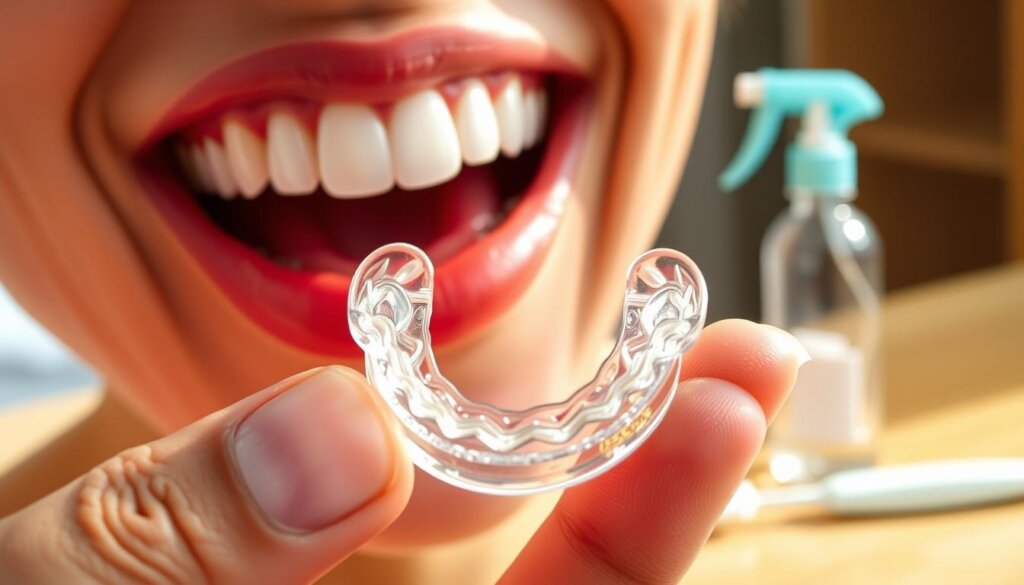
It takes about nine to twelve months for your teeth to settle in their new spots. Without retainers, several things can make your teeth move back:
- Residual periodontal fiber tension – Elastic fibers around your teeth remember their old spots
- Muscular forces – Your lips, tongue, and cheeks push on your teeth
- Occlusal forces – Chewing and biting can also move your teeth
- Natural migration tendencies – Your teeth want to go back to where they were before
Orthodontic relapse happens when these forces are too strong. Preventing teeth shifting after Invisalign needs retainers to hold your teeth in place. This can’t be done just by wanting it to happen.
How Retainers Help Maintain Your Smile
Retention appliances help keep your teeth from moving back. They act as a support system for your teeth while your bone and soft tissues adjust. This support is needed because your body is weak right after treatment.
Retainers do more than just keep your teeth in line. They spread out the pressure from chewing so no tooth bears too much. They also stop your muscles from pushing your teeth back to their old spots.
Seeing retainers as a key part of your treatment is important. It’s an investment in your smile. Without them, your teeth can slowly move back to where they were before.
How long you need to wear retainers depends on how stable your teeth are. At first, you need to wear them all the time. As your bone gets stronger, you can wear them less often, but you’ll never stop completely.
| Treatment Phase | Bone Condition | Tooth Stability | Retention Need |
|---|---|---|---|
| Active Invisalign Treatment | Active resorption and deposition occurring | Teeth moving as planned | Aligners provide constant force |
| 0-3 Months Post-Treatment | Minimal ossification, soft bone tissue | Highly vulnerable to movement | Full-time retainer wear essential |
| 3-12 Months Post-Treatment | Progressive ossification developing | Increasing stability | Transition to night-time wear |
| 12+ Months Post-Treatment | Substantial bone density achieved | Significantly improved stability | Continued periodic retention recommended |
Retention is based on science. Your orthodontist will tell you how long to wear retainers based on your treatment. This plan helps your teeth stay in place and keeps them from moving back.
Retainers are not just extras. They are a key part of your treatment. Wearing them consistently helps your teeth stay straight for good. This takes time, patience, and understanding of how your body works.
Retainers vs. Traditional Braces
The journey to straight teeth has two main parts: moving teeth and keeping them in place. Each part needs different tools. Knowing the difference helps patients understand why they need retainers after Invisalign.
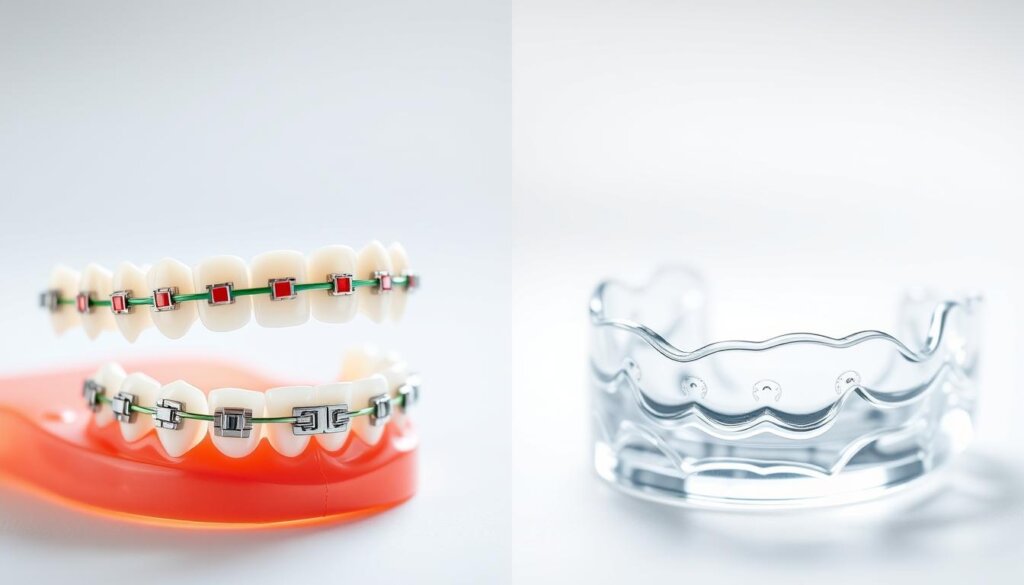
Key Differences Between Retainers and Braces
Braces and Invisalign aligners work in the same way to move teeth. They use forces to push teeth through bone. This process changes the bone around the teeth.
Retainers work differently. They hold teeth in place with gentle pressure. This is to keep teeth from moving back.
There are many differences between these tools:
- Treatment objective: Braces move teeth, while retainers keep them in place
- Force application: Braces use strong pressure; retainers use gentle pressure
- Adjustment schedule: Braces need frequent changes; retainers rarely need adjustments
- Wear duration: Braces are worn for months to years; retainers are worn forever
- Design philosophy: Braces aim to move teeth; retainers aim to keep them in place
Switching from braces to retainers is a big change. Teeth need time to settle into their new positions. This is why retainers are so important.
Effectiveness of Both Methods
Studies show that retainers are just as important after any teeth straightening. It doesn’t matter if you used braces or Invisalign. You’ll always need to wear retainers.
This is because teeth need time to settle after they’re moved. The same process happens with all orthodontic treatments. This is why retainers are needed to keep teeth in place.
Research shows that both parts of orthodontic treatment are important. Getting your teeth straightened is pointless without wearing retainers. The type of appliance used doesn’t affect how well it stays straight.
| Characteristic | Active Appliances (Braces/Invisalign) | Passive Retention Devices |
|---|---|---|
| Primary Function | Generate controlled forces to move teeth through bone tissue | Apply minimal holding pressure to prevent unwanted movement |
| Biological Response | Trigger bone resorption and deposition cycles for repositioning | Allow stabilization while bone consolidates around new positions |
| Treatment Duration | Typically 12-24 months depending on case complexity | Initial full-time wear followed by indefinite nighttime maintenance |
| Adjustment Frequency | Regular appointments every 4-8 weeks for activation | Periodic monitoring with occasional replacement as needed |
Choosing Invisalign doesn’t mean you won’t need retainers. The time it takes for teeth to stay straight is the same for everyone. Patients must stick to their retention plan to keep their smile perfect for years.
Types of Retainers Available
Knowing about the different types of retainers helps patients choose the right one for keeping their teeth straight. After Invisalign, orthodontists offer several options. Each has its own design and use. The choice depends on the teeth’s original shape, how well the patient follows instructions, lifestyle, and the orthodontist’s advice.
There are three main types of retainers. They differ in how they’re made, how they’re put in, and how they’re cared for. Each type has its own benefits and things to think about. Patients should talk to their orthodontist to decide which one is best for them.
Bonded Lingual Retention Systems
Fixed retainers are a permanent solution that doesn’t need the patient to remember to wear them. They are a thin wire that is glued to the back of the front teeth. This wire is usually made of stainless steel or gold-plated.
The most common fixed retainer goes from one canine to the other in the lower jaw. This helps keep the lower front teeth from moving back, which they often do after orthodontic treatment.
The main benefits of fixed retainers include:
- Continuous stabilization without needing the patient to remember to wear them
- They are very good at stopping the lower front teeth from rotating back
- They are not visible from the outside, so they don’t affect how you look
- They can last for many years if taken care of properly
But, there are things to consider before getting a permanent retainer after Invisalign. The wire can collect plaque, so you need to clean between your teeth well. Sometimes, the wire can come loose or break. If this happens, you need to see your orthodontist right away.

Traditional Removable Retention Appliances
Hawley retainers are the traditional removable type that orthodontists have used for a long time. They have a plastic base that fits in your mouth and metal clasps that hold them in place. They also have a wire that goes across the front of your teeth.
Hawley retainers can be made to fit your mouth perfectly. They can even have springs or other parts that can help move your teeth a little bit. They can be made in different colors or patterns, which kids might like.
Hawley retainers are very durable and can last for a long time. They can be adjusted by your orthodontist if you need to make small changes. They also let you swallow and talk normally, which some people find more comfortable than other types of retainers.
But, there are some things to think about. Hawley retainers have metal parts that show, so they might not be as pretty as other options. They also take up a lot of space in your mouth, which can make talking a bit harder at first.
Thermoplastic Clear Retention Options
Clear retainers made from thermoplastic materials are the most invisible option for people who have had aligner therapy. This includes both generic and special systems made just for after Invisalign.
Essix retainers are the most common clear retainer. They look and fit a lot like Invisalign aligners. They are made from thin, clear plastic that fits your teeth perfectly. Essix retainers cover all your teeth, which can help keep them straight better than some other types.
The Invisalign company offers Vivera retainers for Invisalign as a high-end option. These are made from a special plastic that is 30% stronger than regular clear retainers. They come in sets of four, which means you can wear a new one every few days without having to wait for a new one to be made.
Vivera retainers for Invisalign are great because they are almost invisible. They cover all your teeth, which helps keep them straight. But, they can’t be adjusted once they’re made, so if you need to make any changes, you’ll need a new one.
Clear retainers can’t be changed once they’re made, so if you need to make any changes, you’ll need a new one. They can get worn out over time, so you might need to get new ones every year or two, depending on how well you take care of them.
| Retainer Type | Design Characteristics | Primary Advantages | Important Considerations |
|---|---|---|---|
| Fixed/Bonded Retainers | Braided wire bonded to lingual tooth surfaces, typically canine-to-canine placement | No compliance required, continuous retention, invisible externally, excellent for lower anterior stability | Requires specialized cleaning techniques, potentially for debonding or breakage, professional removal necessary |
| Hawley Retainers | Acrylic base plate with metal clasps and labial bow wire, customizable design | Highly durable, adjustable by orthodontist, allows palatal contact, long functional lifespan | Visible metal components, bulkier design may affect speech initially, less aesthetic appearance |
| Essix Retainers | Clear thermoplastic material vacuum-formed to dental anatomy, full-arch coverage | Virtually invisible, comfortable fit similar to aligners, complete tooth coverage, affordable replacement | Cannot be adjusted, requires periodic replacement due to wear, may discolor with certain beverages |
| Vivera Retainers | Enhanced thermoplastic formulation proprietary to Invisalign, provided in sets of four | 30% stronger than standard clear retainers, multiple replacements included, optimized for post-Invisalign anatomy | Higher initial cost, same non-adjustable limitation, replacement is needed despite enhanced durability |
Choosing the right retainer often means using more than one type. For example, you might use a fixed retainer for the lower teeth and a removable one for the upper teeth. This way, you get the best of both worlds. Your orthodontist will look at your teeth, how well you follow instructions, and your lifestyle to decide the best plan for you.
When to Start Wearing Retainers After Invisalign
Starting retention after Invisalign is key. The post-treatment transition is when teeth are most at risk of moving. Knowing when to start wearing retainers is vital to keep your teeth straight.
Many ask, “Do I need to wear a retainer after Invisalign treatment?” Yes, you do. Starting retention right away is important.
Retention starts the moment your last aligner is done. There should be no break between treatment and retention. This keeps your teeth stable and your investment safe.
Timing: Immediately vs. Delayed
Teeth are most unstable right after treatment. Bone and ligaments need time to adjust. This is why immediate retention is best.
Even a short time without retainers can cause teeth to move. This makes immediate retention a must in orthodontics.
There’s no wait time after treatment to start wearing retainers. Your retainer should be ready at your last appointment. This smooth transition is key.
Right after treatment, wear your retainer all the time for a few months. Your orthodontist will tell you how long. This helps your teeth settle in their new places.
Waiting too long to wear retainers can lead to problems. Teeth might move back, needing more treatment. This risk is higher with each hour without a retainer.
| Timing Approach | Biological Factors | Recommended Duration | Risk Level |
|---|---|---|---|
| Immediate Retention | Prevents bone remodeling regression, maintains ligament adaptation | 22 hours daily for 3-6 months | Minimal risk of tooth movement |
| Same-Day Start | Stabilizes teeth during peak vulnerability period | Full-time wear immediately after final aligner | Low risk with proper compliance |
| Delayed (24-48 hours) | Allows initial shifting, ligament destabilization begins | May require longer stabilization phase | Moderate risk of minor relapse |
| Delayed (1 week or more) | Significant bone remodeling without support, measurable movement | Potentially requires refinement treatment | High risk of treatment compromise |
First Steps After Invisalign Treatment
The last appointment is a big deal. Your orthodontist checks if your teeth are in the right place. This is before starting retention.
They’ll take impressions or digital scans for your retainer. This is more comfortable and accurate than old methods. Your retainer will fit perfectly and keep your teeth in place.
Knowing when you’ll get your retainer helps you plan. Some get theirs right away, others might wait a few days. It depends on the type of retainer.
If there’s a delay, your orthodontist will have a plan. You might wear your last aligner longer or get a temporary retainer. They’ll make sure you’re taken care of.
Some people need more aligners before starting retention. Your orthodontist will decide if this is needed. This shows how important their advice is during the post-treatment transition.
At the end of treatment, you’ll learn about retainer care. Your orthodontist will tell you how long to wear it at first. They’ll also explain how to gradually reduce the time.
Getting ready for this milestone means understanding the importance of retention. It’s not just an afterthought. It’s a key part of keeping your teeth straight for years.
How Long Should You Wear a Retainer?
After Invisalign, how long to wear a retainer is key to keeping your smile straight. The time needed varies based on how well your teeth and gums adjust. Orthodontists use research on bone and gum changes to guide this.
The answer to how long to wear a retainer after Invisalign isn’t simple. The plan starts with wearing it all the time, then gradually lessens. Knowing this helps patients stay on track and keep their teeth straight.
Recommended Duration for Initial Phase
Right after Invisalign, you’ll need to wear your retainer a lot. Aim for 20 to 22 hours daily, just like during treatment. This can last from six to twelve months, depending on your case.
This early stage is critical. Your bones and teeth are adjusting, and your teeth are at risk of moving back. It takes time for new bone to form and hold your teeth in place.
The periodontal ligament also needs time to adjust. These fibers remember where your teeth used to be and try to move them back. Wearing your retainer consistently helps these fibers adjust without undoing your treatment.
During this time, only take out your retainer for important things. You can remove it for:
- Eating meals and drinks other than water
- Brushing and flossing your teeth
- Playing sports that require mouthguards
- Dental cleanings as advised by your dentist
Removing your retainer too often can cause your teeth to move back. Even short breaks can lead to movement. Wearing it a lot during these months is key to keeping your teeth straight.
Long-Term Retainer Guidelines
After a year, you can start wearing your retainer less. By then, your teeth should be more stable. You might only need to wear it at night, or even just a few nights a week.
But, some experts say you should wear a retainer forever. Teeth can always move, even as you get older. This is because of bone changes and muscle forces.
Changing from wearing it all the time to just at night should be done slowly. Sudden changes can cause your teeth to move again. Most orthodontists suggest a gradual approach:
- Wear it 20-22 hours a day for the first 6-12 months
- Then, wear it only at night for a year
- Reduce to 3-5 nights a week after that
- Keep wearing it a few nights a week to keep your teeth straight
This way, you can always check if your teeth are staying in place. If they start moving, you can go back to wearing it more often.
| Retention Phase | Timeframe After Treatment | Daily Wearing Duration | Primary Biological Purpose |
|---|---|---|---|
| Intensive Initial Phase | 0-6 months | 20-22 hours (full-time) | Bone remodeling and periodontal ligament reorganization |
| Transitional Phase | 6-12 months | 20-22 hours (full-time) | Continued bone mineralization and tissue adaptation |
| Stabilization Phase | 12-24 months | 8-10 hours (nighttime only) | Maintaining established bone architecture and preventing relapse |
| Long-Term Maintenance | 24+ months (indefinite) | 8-10 hours, 3-5 nights weekly | Counteracting natural aging processes and muscular forces |
The difference between full-time versus part-time retention is important. Wearing it all the time helps during the early months when teeth are most likely to move. Later, wearing it less often is enough to keep your teeth straight without needing to wear it all the time.
Wearing a retainer long-term is not just a temporary thing. It’s a part of taking care of your teeth for life. Just like brushing and flossing, wearing a retainer at night helps keep your teeth straight. This is because teeth can always move, even as you get older.
Common Questions About Retainers
Starting retention after Invisalign raises many questions. People wonder about daily wear, comfort, and care. Knowing the answers helps make wearing retainers a part of everyday life.
Retention is more than knowing you need retainers. It’s about what to expect, how to keep them clean, and when to worry. Our detailed answers help patients feel confident in the retention phase.
Do Retainers Hurt?
Retainers shouldn’t hurt, but you might feel mild pressure. This pressure means the retainer is working right. It’s similar to the feeling when you first get a new Invisalign tray.
Discomfort is usually a tight feeling, not sharp pain. New users might feel this pressure most at first. But, it gets better as your mouth gets used to the retainer.
Wearing your retainer less often can make it feel tight. This shows how fast teeth can move without retention. So, it’s key to wear your retainer as directed.
It’s important to know the difference between normal and bad pain. Normal feelings are tightness, mild soreness that gets better, and even pressure on teeth. But, sharp pain, worsening discomfort, gum irritation, or trouble putting in the retainer are red flags.
If your retainer hurts a lot or suddenly feels off, see your orthodontist. This could mean the retainer doesn’t fit anymore or is damaged.
Can You Eat with a Retainer On?
Always take out your retainer before eating or drinking anything but water. This keeps your retainer and teeth healthy. Food can get stuck under the retainer and cause problems.
Retainers can get damaged by chewing or extreme temperatures. Hot drinks can warp them, making them useless. Even cold foods can crack or break them.
Guidelines for eating with retainers vary. Removable retainers should be removed before meals. But, bonded retainers need good oral hygiene to avoid plaque and gum problems.
Fixed retainers should avoid hard or sticky foods. This includes hard candy, ice, and tough bread. These foods can damage the wire or adhesive.
Make removing your retainer a habit. Store it in a case right away to avoid losing it. Clean your teeth well before putting the retainer back in.
How to Clean Your Retainer Properly
Cleaning your retainer right is key to keeping it working and your mouth healthy. Daily cleaning stops bacteria and keeps your retainer smelling fresh. Good hygiene is as important as wearing the retainer.
The basic cleaning steps are:
- Rinse the retainer with cool water to remove saliva and debris before it dries
- Brush gently with a soft toothbrush and mild soap, avoiding regular toothpaste that can scratch the retainer
- Soak in cleaning solutions like denture cleaners or retainer cleaners as directed, usually once a day or a few times a week
- Store in a protective case when not in use to prevent damage and keep it clean
Be careful with temperature when cleaning your retainer. Never use hot water because it can warp the material. Even warm water can distort the retainer.
Always use cool or room-temperature water for cleaning. This is true for cleaning solutions too. Some cleaning tablets can get hot, so check the water temperature first.
Good oral hygiene with retainers means more than just cleaning the retainer. Brush and floss your teeth well before putting the retainer back in. This stops food and bacteria from getting trapped under the retainer.
Knowing when to replace your retainer is important. Signs you need a new one include cracks, wear, bad smell, fit issues, or discoloration. Regular check-ups with your orthodontist can help determine when a replacement is needed, usually every one to two years.
By following these care tips, wearing retainers becomes a natural part of your life. Proper care keeps your retainer working well and your mouth healthy for years to come.
Adjusting to a Retainer
After Invisalign treatment, adjusting to a retainer takes time and effort. It’s important to be patient and consistent to keep your teeth straight. Most people feel some discomfort and adjustment when first wearing a retainer.
Getting used to wearing a retainer is a process. Knowing what to expect helps you deal with any discomfort. It also helps you keep your smile looking great for years to come.
Practical Guidance for New Retainer Users
Starting good habits with your retainer is key. Using patient compliance strategies makes wearing a retainer easier. It becomes a natural part of your routine.
Putting your retainer in right after brushing your teeth helps. It makes the habit easier to stick to. This way, you don’t forget to wear it.
Technology can also help during this time. Reminders on your phone can help you remember to wear your retainer. Over time, you won’t need these reminders as much.
Essential strategies for first-time wearers include:
- Always carry your retainer case to avoid losing it
- Keep your retainer in the same place at home
- Have a backup retainer for when you’re away
- Talk to your orthodontist if you have any issues
- Keep track of when you wear your retainer
Some people worry about how wearing a retainer affects their speech. But most get used to it in a few days. Your tongue will learn to move around the retainer easily.
It’s normal to have more saliva when you first start wearing a retainer. This is because your body is getting used to it. It usually goes back to normal in a couple of days.
“Think of it like brushing your teeth. Wearing a retainer at night is a small habit that protects years of work.”
Seeing retention as a health habit can make it easier to stick with. This mindset can help you keep your teeth straight for a long time.
Managing Initial Challenges
Even with preparation, some people face challenges when starting to wear a retainer. It’s important to address these issues quickly to keep your teeth straight.
Feeling pressure when you first start wearing a retainer is normal. It means the retainer is working. It takes some time for your teeth and mouth to get used to it. Taking pain relievers can help with the discomfort.
If you have sore spots, you need to see your orthodontist. They can make adjustments to make it more comfortable. These changes usually only take a few minutes.
It can be hard to get used to wearing a retainer after wearing aligners. It’s normal to feel frustrated. But, by changing how you think about it, you can overcome this feeling.
Seeing retention as a way to protect your teeth, not just continue treatment, helps. It makes the small inconvenience of wearing it at night worth it. It prevents your teeth from moving back.
The time it takes to get used to wearing a retainer is short and predictable. Most people adjust in a few days to a couple of weeks. After that, wearing a retainer becomes easy and automatic.
By being prepared and using the right strategies, you can keep your teeth straight for a long time. The small effort of adjusting to a retainer is worth it for a beautiful smile.
The Cost of Retainers
Thinking about the cost of retainers is important when planning for orthodontic success. The price of retainers depends on several things like the type, how they’re made, and if you’ll need new ones later. This helps patients get ready and keep the good results from Invisalign.
Talking openly about the cost of retainers helps patients make smart choices. They can choose what’s best for their health and budget. Many orthodontists give clear prices before treatment starts.
Planning Your Retention Budget
Retainers are a big part of keeping your teeth straight. They come in different types, each with its own price. The cost depends on the material, how it’s made, and how long it lasts.
Clear thermoplastic retainers, also known as Essix-style, are the cheapest. They cost between $100 and $300 for one arch. They’re made easily and are affordable for most people.
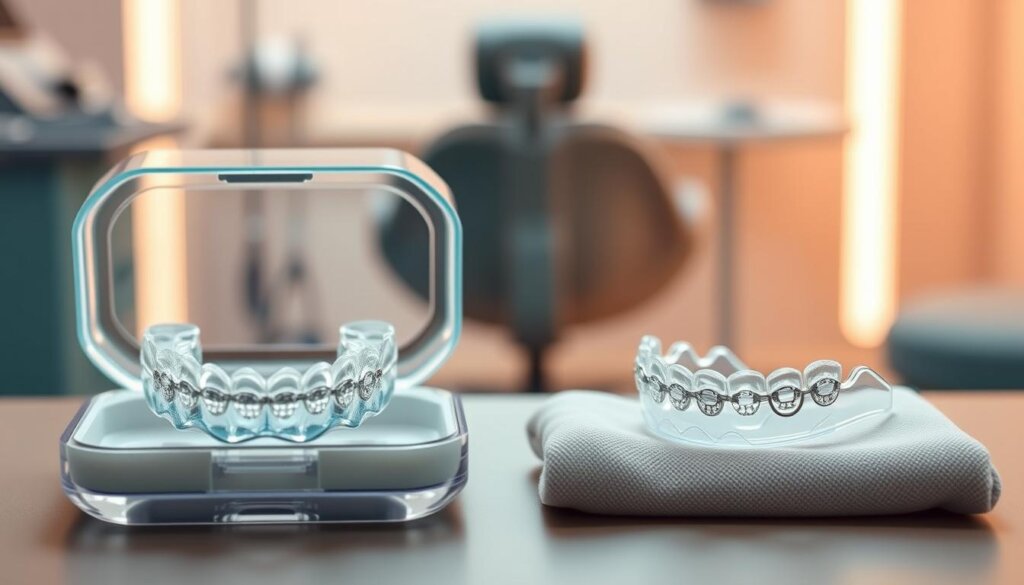
Vivera retainers for Invisalign are more expensive. They cost between $400 and $800 for a set of four. They are made by Align Technology and are very strong, lasting longer than other types.
Hawley retainers cost between $150 and $400 for one arch. They need more work to make, but they can last a long time with good care.
Fixed bonded retainers cost $250 to $500 for one arch. They are a one-time cost, but you might need to fix them if they break.
Costs vary based on the type of retainer and if you need a new one. At Woodbridge Dental Centre, we offer different retainer options after Invisalign with clear prices.
It’s important to think about retainer replacement costs. Clear retainers need to be replaced every one to two years. This is because they wear out, get dirty, or change shape. Planning for this cost is key to keeping your teeth straight.
Some orthodontists offer package deals for retainers. These can save you 20% to 30% if you need to replace them. This is a good deal for people who know they’ll need new retainers.
| Retainer Type | Initial Cost Range | Expected Lifespan | Replacement Frequency |
|---|---|---|---|
| Clear Thermoplastic | $100-$300 per arch | 1-2 years | Annual to biennial |
| Vivera (Set of 4) | $400-$800 complete | 2-3 years per set | Every 2-3 years |
| Hawley Retainer | $150-$400 per arch | 5-10 years | Infrequent with care |
| Fixed Bonded | $250-$500 per arch | Indefinite with maintenance | Repair as needed |
Understanding Insurance Coverage Options
Insurance for retainers can be tricky. It varies a lot, so it’s best to check your plan. This way, you won’t be surprised by costs later.
Some dental insurance covers retainers as part of orthodontic care. They might pay 50% after you meet your deductible. But, this usually only covers the first set of retainers after treatment.
Other plans offer separate coverage for retainers. This coverage might be lower, sometimes up to $500. Knowing this helps you plan for any extra costs.
Some plans don’t cover retainers at all. They might see them as a separate treatment or a maintenance item. This means you’ll have to pay for them yourself, even if you had insurance for Invisalign.
It’s important to read your insurance plan carefully. Look for terms like “orthodontic retention” and “maintenance appliances.” Talking to your insurance company can also help avoid surprises.
Talking about costs with your orthodontist before treatment helps. They can check your insurance and explain the costs clearly. Many orthodontists help with insurance claims to get you the most coverage.
While retainers cost more, they’re a small part of the overall cost. They help keep your teeth straight and are worth the investment. If you don’t use retainers, you might need to pay for more treatment later.
Maintaining Your Dental Health
Keeping your teeth healthy after Invisalign is key to a lasting smile. The retention phase is more than just wearing your retainer. It’s about keeping up with dental care to protect your investment and health.
For long-term success, you need to follow retention rules and regular dental care. Skipping either can ruin the look and function of your teeth.
Oral Hygiene with Retainers
Cleaning your teeth and retainers well is important. Always brush your teeth before putting in your retainer.
Food or plaque trapped under a retainer can lead to cavities and gum problems. This trapped area makes it hard for saliva to clean and can harbor bacteria.
- Brush and floss after meals and before wearing your retainer
- Use floss threaders for fixed retainers
- Try water flossers if regular flossing is hard
- Use fluoride mouthwash for extra protection
- Clean your retainer to stop bacteria buildup
Your retainer needs cleaning just like your teeth. Bacteria can grow on the retainer, causing problems when you wear it.
To clean your retainer, use a soft brush and mild soap. Avoid hot water, as it can damage the plastic.
Signs of bad oral hygiene include bad breath, white spots on teeth, or gum inflammation. If your retainer smells or looks dirty, it’s not clean. Fixing these issues early can prevent bigger problems.
People with fixed retainers have special cleaning needs. Use floss threaders or stiff orthodontic floss to clean around the wire.
Regular Dental Check-ups
Even with retainers, you can’t skip dental check-ups. Keep up with regular cleanings and exams to stay healthy.
Your dentist checks for tooth movement and retainer fit during these visits. They also check your gums and teeth for problems. These visits help keep your teeth straight and healthy.
Your general dentist plays a big role during retention:
- They check for tooth movement or relapse
- They check if your retainer fits right
- They check your gums and teeth
- They find and clean plaque or cavities
Tell your dentist about your orthodontic treatment and retainers. They can adjust your care plan to fit your needs.
Working together with your dentist and orthodontist is key. They schedule check-ups to make sure your teeth stay in place. This helps keep your teeth and mouth healthy.
Good oral health is a lifelong commitment. By taking care of your teeth and mouth, you protect your investment and keep your smile bright for years to come.
Potential Issues with Not Wearing a Retainer
Not wearing a retainer after Invisalign can harm your smile and oral health. It’s not just about looks. It can also affect how your teeth function and the stability of your orthodontic work.
Teeth keep moving even after orthodontic treatment ends. This movement is lifelong. Wearing a retainer is key to keeping your teeth straight.
Risks of Tooth Movement
Teeth can move back if you don’t wear a retainer. This is because of forces that push teeth back to their original spots. These forces can last for years.
Younger people’s jaws keep growing, pushing teeth. Tongue and swallowing habits also push teeth. And habits like grinding teeth can move teeth too.
Teeth can move quickly after you stop wearing a retainer. This can happen in hours or days. But, the movement slows down as your teeth settle.
Teeth will move a bit after Invisalign is removed. This is because of daily activities like eating and talking. The retainer helps keep your smile straight despite these movements.
Some teeth movements are more likely to happen than others. This means some teeth need more help staying in place. This is why wearing a retainer is very important for some people.
- Derotation of previously rotated teeth, which have strong fiber memory
- Expansion of narrow arches, where teeth naturally tend to collapse back inward
- Closure of extraction spaces, which periodontal fibers may attempt to reopen
- Correction of severely crowded anterior teeth, where space limitations create pressure
- Vertical repositioning of extruded or intruded teeth, which face gravitational and occlusal forces
Consequences for Long-Term Results
Not wearing a retainer can lead to many problems. Your teeth might move back, affecting your health and the success of your Invisalign treatment. This can also cost you more money and time.
Teeth moving back can cause problems with chewing and increase the risk of tooth damage. It can also lead to jaw pain and make it harder to clean your teeth. This can lead to cavities and gum disease.
Not wearing a retainer can mean you’ll have to go through orthodontic treatment again. This can be expensive and frustrating. It’s a big decision to make, but it might be necessary to get your teeth back in line.
Not wearing a retainer can cause your teeth to move back. This might not be as bad as it sounds, but it can affect how straight your teeth are. This can make you less happy with your smile.
Wearing a retainer at night is a small price to pay for keeping your teeth straight. It’s easy to do and doesn’t affect your daily life. It’s worth it to keep your smile looking good and your teeth healthy.
Keeping your teeth straight with a retainer is important. It’s a small effort for big results. People who wear their retainers regularly are happy with their smiles. Those who don’t might be disappointed with how their teeth look.
Alternatives to Traditional Retainers
There are many ways to keep teeth straight after orthodontic treatment, not just traditional retainers. Clear removable retainers are often recommended after Invisalign. But, some people might need other options based on their situation or personal preference.
Exploring these alternatives helps patients make informed choices with their orthodontists. This ensures the best approach for their unique needs.
Other Methods of Maintaining Alignment
Fixed bonded retainers are a key alternative to removable ones. They are thin wires bonded to the back of teeth, often the lower front ones. This is because these teeth are most prone to moving back to their original position.
A permanent retainer after Invisalign is great for those who struggle to remember to wear their retainers. It stays in place all the time, providing constant support to keep teeth straight.
Fixed retainers work differently than removable ones. They don’t need to be put in or taken out. This means teeth get constant support, which is very important for keeping the lower front teeth straight.
Studies show that fixed lingual retention is very good at stopping lower incisors from becoming irregular. This is because it provides constant support, unlike removable retainers that can be forgotten.
Choosing the right retention method should be a team effort. It depends on the patient’s needs, the risk of teeth moving back, and what the patient prefers.
Using a combination of retention methods is another option. This means using fixed retainers where needed and removable ones for other teeth. It’s a way to balance stability and flexibility.
For example, a patient might have a fixed retainer on the lower teeth and a removable one for the upper teeth. This way, the lower teeth get the most support, but the upper teeth can be removed for special occasions.
New technologies in orthodontic retention are also being explored. Some retainers have sensors that track how often they are worn. This information can be sent to a smartphone app. These devices help patients stay on track with their retention.
But, these high-tech options are not yet common. Most patients do well with traditional methods. These methods are often enough to keep teeth straight, making new technologies optional.
Pros and Cons of Alternatives
Fixed bonded retainers have some big advantages. They are very good at keeping teeth straight, and they can’t be removed by the patient. This means they provide constant support.
- Excellent compliance guarantee – Removal is impossible without professional intervention, ensuring continuous retention
- 24-hour retention coverage – Provides maximum stability with no gaps in retention pressure
- Particular effectiveness – Demonstrates superior results for preventing lower incisor irregularity and rotational relapse
- Patient convenience – Eliminates the need to remember daily insertion and removal routines
But, fixed lingual retention also has some downsides. Cleaning between teeth can be harder with a wire in place. Special tools like floss threaders or water flossers are needed to keep teeth clean.
There’s also a risk of the wire breaking or coming loose. This can happen without the patient noticing, allowing teeth to move. Regular dental check-ups are important to catch any problems early.
Not cleaning well enough can lead to plaque and tartar building up around fixed retainers. This can cause gum disease if teeth are not cleaned properly.
| Retention Method | Primary Advantage | Main Limitation | Best Suited For |
|---|---|---|---|
| Fixed Bonded Retainer | Guaranteed compliance with 24-hour retention | Challenging interdental cleaning requirements | Lower anterior teeth with high relapse risk |
| Removable Clear Retainer | Easy cleaning and complete removability | Requires consistent patient compliance | Patients with good adherence history |
| Combination Approach | Balances security with flexibility | Requires managing two retention systems | Patients needing targeted stabilization |
| Smart Retainers | Objective wear-time tracking via app | Higher cost and limited availability | Tech-oriented patients seeking data feedback |
Some people think about using their last Invisalign aligner as a long-term retainer to save money. But, this is not a good idea. Aligners are not made to be worn for a long time and will not provide the needed support.
There’s also the idea that no retainer is needed after orthodontic treatment. But, research shows that teeth will move without retention. This can lead to needing more orthodontic treatment to fix the problem.
Teeth need to be kept straight for life to maintain the results of orthodontic treatment. Whether it’s a permanent retainer after Invisalign, removable appliances, or a combination, retention is key. It helps keep the investment in orthodontic treatment worthwhile and the smile looking great for years.
Real Patient Experiences
Patient stories show what life is like after Invisalign. They highlight how sticking to the retention plan is key to keeping results. These real-life accounts give a deeper look into what daily retention feels like.
Understanding what others have gone through helps set realistic expectations for the retention phase. Many ask questions after treatment, wanting to know how to keep their smile perfect. These questions often focus on what happens next and how to protect their results.
Thousands of patients share their wisdom on keeping Invisalign results. Their stories, both good and bad, teach valuable lessons. Learning from others helps new patients avoid common mistakes.
Testimonials from Invisalign Users
Patients share a wide range of experiences with retention. Some find it easy, while others face challenges. Many feel free after treatment but might not wear retainers as often as they should.
Those who don’t wear retainers regularly might feel their teeth moving. This discomfort often motivates them to wear their retainers more consistently. It’s a clear sign that their teeth are shifting.
Dr. Michael Rouhi, an experienced orthodontist, has seen these patterns a lot:
We’ve seen cases where patients didn’t follow through, and within months their teeth shifted significantly.
This shows how important it is to wear retainers consistently. Even a short break can cause noticeable changes. The orthodontic community stresses that protecting your teeth doesn’t stop when treatment ends.
Dr. Sandra Farber also emphasizes the importance of ongoing care:
We always stress that clear aligner maintenance doesn’t stop when the trays come off.
Patients have different experiences with retainers. Some like fixed retainers because they work all the time. Others prefer removable retainers but need to remember to wear them every night.
Wearing retainers becomes a habit over time. Most people don’t even think about it after a while. It becomes as natural as brushing your teeth.
Success Stories with Retainers
Sticking to the retention plan keeps your teeth straight for years. Patients who do this well are very happy with their results. Their stories show that keeping your teeth straight long-term is definitely possible.
Successful patients often talk about how good it feels to keep their teeth straight. They also mention how easy it becomes to wear retainers once it’s a habit. This shows that the effort is worth it.
Many patients say that wearing retainers helps prevent their teeth from moving as they age. Even people who never had orthodontic treatment experience their teeth shifting over time. Retainers act as a shield against these changes.
Keeping your teeth straight with retainers is also cost-effective. It saves you from having to go through orthodontic treatment again. This makes the effort to wear retainers every day worthwhile.
Orthodontists who have treated many patients agree with these outcomes. They see clear patterns in their work. Patients who stick to the retention plan keep their teeth straight, while those who don’t might need more treatment.
Learning to wear retainers consistently takes time. At first, it might feel like a big deal. But, the first time you feel your teeth moving after missing a few nights, it motivates you to keep up with your retainer routine.
This cycle of learning helps patients understand why their orthodontist stresses the importance of wearing retainers. The advice is based on how teeth naturally move. Without retainers, teeth tend to go back to their original positions.
| Compliance Level | Typical Outcome | Timeline for Changes | Long-Term Stability |
|---|---|---|---|
| Excellent Compliance | Maintained alignment with no shifting | Stable indefinitely with continued wear | Results preserved for decades |
| Moderate Compliance | Minor shifting may occur | Subtle changes within 6-12 months | May require periodic adjustments |
| Poor Compliance | Significant tooth movement | Noticeable changes within 1-3 months | Often requires retreatment |
| No Retention | Substantial relapse toward original position | Rapid changes begin within weeks | Treatment investment largely lost |
This table shows how different retention habits lead to different outcomes. It reflects what many orthodontists have seen. But, results can vary based on individual factors and treatment specifics.
It’s best to start learning about retention before treatment ends. This helps set realistic expectations. Moving from active treatment to maintenance requires a mental shift.
Many successful patients compare wearing retainers to other health habits. Just as regular exercise keeps you fit, wearing retainers keeps your teeth straight. The effort is small compared to the benefits.
Real-life experiences confirm that keeping teeth straight with retainers is not just possible but achievable. Those who stick to the plan get lasting results. Their stories inspire and guide others starting their retention journey.
The Role of Your Orthodontist
Finishing Invisalign treatment is just the start of your journey. Many people think their work with their orthodontist ends when they remove their last aligner. But, the retention phase is a key part of ongoing care.
Your orthodontist is a vital partner during this time. They help ensure your teeth stay straight. Their expertise is unmatched by self-care methods.
Knowing how your orthodontist helps during retention is key. They guide you from the start to the end of your care. This keeps your smile looking great.
Importance of Professional Guidance
Orthodontists play a big role in keeping your teeth straight. They start by creating a Invisalign retention protocol just for you. This plan is based on how your teeth moved during treatment.
Many things affect your retention plan. Your orthodontist looks at how likely you are to need more treatment. They check your gums and bone health too. Age and growth also play a part, mainly for kids.
Your orthodontist makes a plan that fits you perfectly. They consider your lifestyle and what you prefer. This makes your plan more effective.
After treatment, you’ll see your orthodontist for check-ups. These visits usually happen at three, six, and twelve months. They help keep your teeth straight.
At these visits, your orthodontist checks how your teeth are doing. They compare your teeth to how they were before. This helps catch any small changes.
Your orthodontist also checks your retainer’s condition. Retainers can wear out over time. They make sure your retainer is working right.
These visits are also a chance to learn more. Your orthodontist can answer any questions you have. They help you stay on track with your care.
Orthodontists decide when it’s time to change your retainer use. They might say you only need to wear it at night. This decision is based on their professional judgment.
Consultations for Retainer Fitting
Getting your retainer is a big step. Your orthodontist checks a few things to make sure it fits right. This helps you wear it correctly.
Your orthodontist checks if your retainer fits well. They make sure it holds your teeth in place. They also check the shape and how it covers your teeth.
They also look at how it feels. Your orthodontist makes sure it doesn’t hurt your mouth. They might make some adjustments before you take it home.
You’ll get lots of instructions on how to care for your retainer. This includes how to wear it, clean it, and store it. They also tell you what to do if you have any problems.
Talking to your orthodontist is important. They can answer any questions you have. This helps you understand how to take care of your retainer.
Dr. Farber says it’s important to see your orthodontist regularly. Don’t wait until you notice a problem. Regular visits help prevent issues.
If you lose or damage your retainer, call your orthodontist right away. They can make a new one quickly. This helps keep your teeth straight.
If you need a new retainer, your orthodontist will fit you for one. They take new impressions of your teeth. This ensures the new retainer fits perfectly.
Storing your retainer properly is key. Always use a case when you’re not wearing it. Don’t wrap it in napkins, as this can lead to losing it.
| Appointment Type | Timing After Treatment | Primary Assessment Areas | Expected Duration |
|---|---|---|---|
| Initial Retainer Delivery | Same day as final aligner removal | Retainer fit, wear instructions, initial comfort evaluation | 30-45 minutes |
| First Retention Check | 3 months post-treatment | Tooth position stability, retainer condition, compliance assessment | 15-20 minutes |
| Second Retention Check | 6 months post-treatment | Continued stability verification, wear schedule adjustment consideration | 15-20 minutes |
| Annual Retention Review | 12 months and yearly thereafter | Long-term stability evaluation, retainer replacement assessment, protocol updates | 20-30 minutes |
Working with your orthodontist during retention is important. Studies show that regular visits lead to better results. Patients who follow their orthodontist’s advice have fewer problems.
Your orthodontist has the knowledge and experience to help you. They can spot problems early and make a plan just for you. Seeing them as a long-term partner helps keep your teeth straight for life.
Conclusion: Your Next Steps
After your Invisalign treatment, keeping your smile straight is key. You must wear a retainer to keep your teeth in place. But, you get to choose the type of retainer that fits your life best.
This article has given you all the info you need for your retainer journey. The choices you make right after your treatment will affect how long your smile stays straight. By understanding your options and planning for long-term care, you can enjoy a straight smile for years.
Making the Right Choice for Your Smile
Wearing a retainer is a must, but you should talk to your orthodontist about which one is right for you. There are many types of retainers, each with its own benefits. Clear retainers are great because they’re easy to wear and don’t show.
Hawley retainers are strong and can be adjusted, perfect for small changes. Fixed retainers are good for those who can’t remember to wear their aligners. Using both types can help keep your teeth straight, even if you had a big problem before.
Choosing the right retainer depends on a few things. If you wore your aligners well, a clear retainer might work for you. But, if you’re an athlete or work in a job where you’re always in the public eye, you might prefer a different type.
It’s important to pick a retainer that you can stick to. Even the best retainer won’t work if you don’t wear it. So, think about what you need and what you can handle.
Preparing for a Lifetime of Smile Maintenance
Keeping your teeth straight is a big deal, and it’s not just about the retainer. It’s about making it a part of your daily routine. This way, it becomes second nature.
Here are some tips to help you stick to your retainer routine:
- Environmental cues: Keep your retainer case in a place you see every day, like next to your toothbrush.
- Digital reminders: Set reminders on your phone to help you remember to wear your retainer.
- Family education: Tell your family about the importance of your retainer to avoid losing it.
- Financial planning: Set aside money for new retainers as part of your dental care budget.
- Provider accessibility: Keep your orthodontist’s contact info handy in case you need a new retainer.
Looking at retention as part of your overall health can help. Just like going to the dentist or taking medicine, wearing a retainer is a small price to pay for a beautiful smile.
Think of wearing a retainer as a way to protect your investment in your smile. It’s a small effort for a big reward. By seeing it this way, you can make wearing a retainer a positive part of your life.
Your journey to keep your smile straight starts right after your Invisalign treatment. With the right plan and mindset, you can enjoy a straight smile for life. Remember, wearing a retainer is a must, and with the right approach, you can do it easily for years to come.
Frequently Asked Questions
Many patients wonder about keeping their teeth straight after orthodontic treatment. Knowing about orthodontic retention facts helps them make smart choices for their dental health. These answers clear up the main concerns about the need for retainers.
Common Concerns About Retainers
One big question is how long to wear a retainer after Invisalign. Orthodontists say to wear it full-time for a few months, then at night forever. Without retainers, teeth can move in just a day or two, so it’s key to wear them all the time.
If you lose your retainer, tell your orthodontist right away. Waiting too long can cause your teeth to move more, which might need more treatment. You should only take out your retainer for water to keep it clean and prevent damage.
Retainer Myths Debunked
Some think Invisalign patients need less retention than those with traditional braces. But, teeth stability works the same for everyone, no matter the treatment. All orthodontic patients need to keep wearing retainers for life to keep their teeth straight.
Another myth is that wearing the last Invisalign aligner is enough. But, aligners get worn out fast and can’t keep teeth stable for long. Professional retainers are made for long-term wear and protect teeth better.
Some believe teeth stay put once the bone around the roots hardens. But, the periodontal ligament keeps teeth moving, even after the bone hardens. So, you need to keep wearing retainers to keep your teeth straight.

