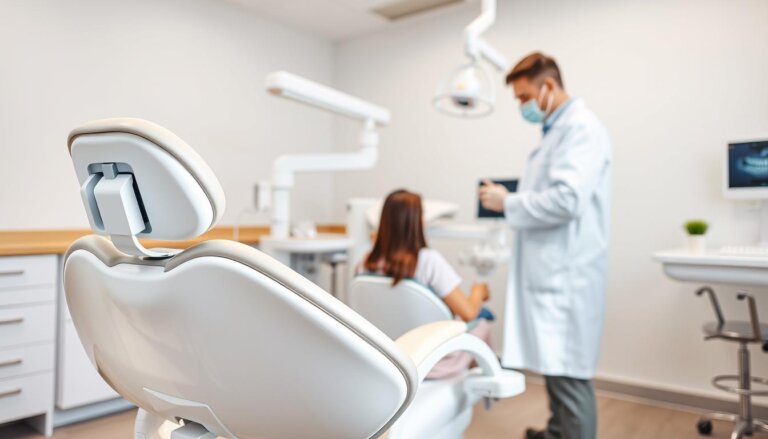
Does Missing a Tooth Impact My Speech or Chewing?
Research shows losing one molar can cut chewing efficiency by 10 to 30 percent. This is a big issue that many ignore. Tooth loss affects more than just looks.
Tooth loss impacts chewing and speech clarity. Teeth help the tongue form sounds and control air flow. Losing a tooth can harm oral health, jaw strength, and bite alignment.
Bone resorption starts soon after a tooth is pulled. Up to 25 percent of jawbone width can be lost in a year. This raises a key question: What happens beneath the surface when a tooth is lost?
This article will dive into how tooth loss affects speech and chewing. We’ll also look at ways to fix these problems. Knowing this is key to keeping your mouth healthy for a long time.
Key Takeaways
- Losing a molar can significantly reduce chewing efficiency.
- Tooth loss affects speech clarity and articulation.
- Bone resorption begins soon after tooth extraction.
- Up to 25% of jawbone width can be lost in the first year.
- Timely intervention can prevent long-term complications.
Understanding the Importance of Teeth
Teeth do more than help us eat. They play a key role in our daily lives. Each tooth helps us bite, tear, and grind food. This teamwork keeps our mouths healthy and helps us talk clearly.
Knowing how important teeth are helps us see the big deal about losing one. It’s not just about eating; it’s about how we communicate and feel about ourselves.
The Role of Teeth in Speech
Teeth are key for clear speech. They help the tongue make sounds. For example, sounds like “s” and “f” need teeth to be right.
Without teeth, the tongue can’t make sounds well. This makes talking hard and can hurt how we feel about ourselves. So, keeping our teeth healthy is key for talking well.
How Teeth Affect Chewing Function
Chewing also depends on teeth. Incisors cut, canines tear, and molars grind food. This teamwork makes sure food is ready to swallow.
When a tooth is gone, chewing gets harder. Teeth may move, making it tough to chew. This can hurt our digestion too. So, fixing tooth loss quickly is important.
The Psychological Impact of Missing Teeth
Missing teeth affect us more than just physically. They can change how we see ourselves and feel about our smiles. This can make us shy away from social situations.
Our smiles are tied to our dental health. A missing tooth can alter our smile, affecting our confidence. Understanding these emotional effects is key to dealing with tooth loss.

Common Speech Issues Related to Missing Teeth
Missing teeth can cause many speech problems. These issues make talking harder. Knowing about these problems helps find ways to fix them.
This section talks about the speech issues tooth loss can cause. It also looks at how tooth location affects speech. And it offers solutions to help with these problems.
Types of Speech Problems
Tooth loss can lead to several speech issues. These problems come from changes in how air moves and the tongue’s position. Here are some common ones:
- Sibilant Distortions: Missing front teeth can make “s” and “z” sounds unclear or whistled.
- Fricative Difficulties: Sounds like “f” and “v” can be hard to say, making talking tough.
- Affricate Challenges: Sounds like “ch” and “j” can get distorted, making speech less smooth.
- Vowel Modifications: Gaps can change vowel sounds, making speech less clear.
The Influence of Tooth Location on Speech
The place of missing teeth affects speech changes. Here’s how different areas of the mouth impact speech:
- Anterior Teeth: Losing front teeth, like maxillary incisors, can cause the biggest speech changes. It can make speaking less clear and less confident.
- Posterior Teeth: Missing back teeth can also affect speech. The tongue might move differently, changing how words are said.
Some people get used to these changes quickly. But others might feel self-conscious about their speech, even if the changes are small. The emotional impact of these changes can be big, affecting both personal and work life.
Remedies for Speech Difficulties
There are many ways to help with speech problems from tooth loss. Here are some good options:
- Speech Therapy: Working with a speech therapist can help improve how words are said and boost confidence.
- Dental Prosthetics: Dentures or partials can help restore function and improve speech.
- Dental Implants: These offer a permanent fix that closely mimics real teeth, making speech clearer.
In conclusion, knowing how tooth loss and speech difficulties are connected is key. With the right help, people can feel more confident and talk better.
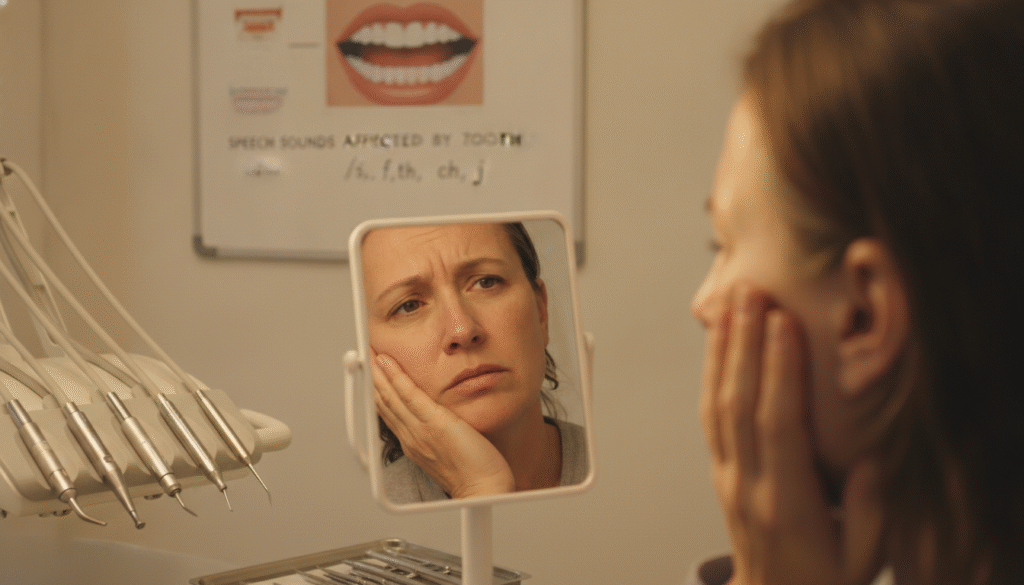
Chewing Challenges from Missing Teeth
Missing teeth make it hard to chew food well. Losing just one molar can cut chewing power by 10 to 30 percent. This makes it tough to eat hard foods, which can strain your digestive system.
People with missing teeth often struggle with eating fruits, raw veggies, and lean proteins. They might choose softer, processed foods instead. This change can affect their nutrition and health.
Back teeth are key for grinding food. Without them, eating tough foods is harder. Crunchy foods feel awkward, leading to longer chewing times and frustration. Also, food can get stuck in the gap, causing gum irritation. The tongue may also explore the empty space, showing the discomfort of tooth loss.
Immediate Effects on Chewing Ability
Studies show tooth loss has immediate effects on chewing. Chewing forces change, and nearby teeth work harder. This can lead to more dental problems, making it key to fix tooth loss quickly.
Long-Term Consequences on Digestion
Bad chewing can harm digestion over time. Big food pieces are hard for the stomach to digest, leading to nutritional gaps. Good chewing breaks down food, helping digestion.
Solutions for Improved Chewing
There are ways to fix chewing problems from missing teeth. Dental implants, bridges, and dentures can help. Each option has its benefits, helping people chew better and eat a balanced diet.
The Connection Between Teeth and Oral Health
Missing teeth do more than just change how we look. They can also affect our health in big ways. It’s important to understand this to keep our mouths healthy.
How Missing Teeth Impact Overall Health
When a tooth is lost, it can cause big changes. Teeth next to the gap may start to move. This can lead to teeth not fitting right together, or even jaw pain.
Also, the tooth on the other side might grow too long. This makes fixing teeth later harder. Gaps can also trap food, leading to cavities and gum disease.
Another big issue is jawbone loss. This starts soon after a tooth is pulled out. Without the tooth’s root, the jawbone can shrink a lot. This can change how our face looks.
Preventing Further Tooth Loss
It’s key to stop more teeth from falling out. Getting teeth replaced quickly can help a lot. Dental implants are a good choice because they look and feel like real teeth.
Going to the dentist regularly and brushing well are also important. They help catch problems early. Knowing how important dental health is can help us take better care of our teeth.
Dental Solutions for Missing Teeth
When a tooth is lost, it can cause missing tooth and chewing problems. Luckily, there are many dental solutions to fix these issues. We will look at dental implants, dentures and bridges, and orthodontic treatments.
Dental Implants
Dental implants are the top choice for replacing teeth. A titanium post is placed in the jawbone, acting as a tooth root. Over time, the bone and implant fuse, giving stability and support.
Implants look and feel like real teeth. They don’t harm nearby teeth, keeping them healthy. With the right care, implants can last a lifetime, making them a great long-term fix.
Dentures and Bridges
Dentures and bridges are good for those missing several teeth. A bridge uses nearby teeth as anchors to fill gaps. It helps with chewing and speaking.
Dentures can be partial or full, depending on tooth loss. Today’s dentures are more comfortable and natural-looking. Implant-supported dentures offer a secure fit, combining implants with denture coverage.
Orthodontic Treatments
Tooth loss can cause teeth to shift or not fit right. Orthodontic treatments like braces can fix this. They help teeth align, making future tooth replacements work better.
Choosing the right tooth replacement is key for good oral health and quality of life. A dental professional can help pick the best option for you.
Exploring Temporary Solutions
When people lose teeth, they look for quick fixes to fix their mouth’s look and function. Options like partial dentures and dental adhesives help a lot. They make eating and talking easier until they can get permanent fixes.
Partial Dentures
Partial dentures are removable and fill in gaps where teeth are missing. They come in different materials, each with its own benefits:
- Acrylic Partial Dentures: They’re light and cheap, great for a short time.
- Cast Metal Partial Dentures: They’re strong and comfy, giving good support.
- Flexible Partial Dentures: They’re made of a soft material that fits well, feeling more natural.
To make them, dentists take molds of your mouth. Once in, they help you chew better and speak clearer. But, they don’t stop your jawbone from shrinking.
Dental Adhesives
Dental adhesives help keep dentures in place. New adhesives stick better and feel more comfortable. They help:
- Keep dentures steady while you talk or eat.
- Stop food from getting stuck under dentures.
- Make you feel more confident while getting used to dentures.
Adhesives can really help people with dentures. They make it easier to do everyday things without worrying about dentures moving.
| Type of Partial Denture | Material | Benefits | Considerations |
|---|---|---|---|
| Acrylic | Acrylic resin | Lightweight, cost-effective | Less durable than metal options |
| Cast Metal | Metal alloy | Durable, stable fit | Higher cost, may require more adjustments |
| Flexible | Flexible thermoplastic | Comfortable, natural appearance | May not be suitable for all cases |
In summary, options like partial dentures and adhesives are great for people with missing teeth. They improve eating and talking and help keep life going smoothly until they can get permanent fixes.
The Role of Speech Therapy
Speech therapy is key in dealing with speech issues from missing teeth. Losing teeth can change how we speak, even after trying to adjust. This can lead to problems like lisps or whistles.
Compensatory tongue movements might help, but they don’t always make speech clear. It’s important to know when to see a speech therapist to improve speaking.
Signs you might need a speech therapist include:
- Articulation errors that don’t get better with time.
- Compensatory patterns that make speech unclear.
- Speech changes that affect work or social life.
Speech therapy uses proven methods to fix these problems. These include:
- Articulatory placement training: This helps place the tongue and lips right for sounds.
- Oral motor exercises: These strengthen speech muscles for clearer speech.
- Auditory feedback methods: These let people hear and correct their speech.
Getting dental work and speech therapy together can help a lot. Dental treatments might need some time to settle, but they can make speaking easier.
Dentists and speech therapists work together for the best results. They know speech is a skill we learn. Changes in our mouth need our brain and muscles to adapt. Therapy helps with this adaptation.
Diet and Nutrition Considerations
Choosing what to eat is key when you’re missing teeth. Losing teeth can change how you eat. You might start eating softer, processed foods that aren’t as healthy. Knowing which foods to pick and which to avoid can help a lot with oral care and chewing.
Foods to Avoid
Some foods are hard to eat with missing teeth. Here are some to avoid:
- Hard Foods: Nuts, hard candies, and raw veggies need a lot of bite force. They’re hard to chew.
- Sticky Foods: Caramels or taffies can knock out dental work. This can be painful and cause problems.
- Fibrous Foods: Some meats or veggies are tough to chew. They need a lot of chewing.
Eating these foods can be uncomfortable. It might also make oral health problems worse. It’s important to know this to eat well.
Recommended Foods for Easier Chewing
But, there are many foods that are easy to chew and full of nutrients:
- Soft Fruits: Bananas, applesauce, and ripe peaches are good. They’re full of vitamins and easy to eat.
- Cooked Vegetables: Steamed or roasted veggies are soft. They keep their nutrients well.
- Lean Proteins: Soft-cooked fish, ground meats, and eggs are easy on the jaw. They give you protein.
Eating these foods can help you stay healthy while you adjust to new dental solutions. Good nutrition is very important, even more so when you’re dealing with tooth loss.
Psychological Effects of Missing Teeth
Missing teeth can affect how we see ourselves and how we interact with others. It can make us feel embarrassed and self-conscious. People might start to avoid social events, fearing what others will think.
Impact on Self-Esteem
Our self-worth is closely tied to our teeth. If we feel our smile is incomplete, it can lower our self-esteem. This can make us hesitant to smile or laugh in front of others.
Studies also show that people with missing teeth feel more anxious in social situations. They might avoid eye contact or speak less in conversations. This can make them feel isolated and lower their self-esteem even more.
Social Interactions and Relationships
Our dental health affects our social lives and relationships. Missing teeth can make us shy away from eating out or joining group activities. This can strain our relationships and make us feel disconnected from others.
Even in our work lives, missing teeth can hold us back. We might feel less confident during meetings or presentations. This can affect our career advancement. Getting our teeth fixed can help us regain our confidence and fully participate in life.
Preventive Measures
Preventive dental care is key to keeping your mouth healthy and avoiding future problems. Losing a tooth makes it even more important to take care of your teeth. This part talks about two main things: regular dental visits and keeping your mouth clean.
Going to the dentist regularly is very important, even more so after losing a tooth. Dentists can check your bone health, see if other teeth are moving, and spot any changes in how your teeth fit together. Catching problems early can stop them from getting worse.
Regular Dental Check-ups
- Monitor bone health and density
- Evaluate tooth migration and alignment
- Detect early signs of occlusal changes
Seeing the dentist often is a smart move for your teeth. It helps keep your teeth in good shape and helps plan for any future dental work.
Maintaining Good Oral Hygiene
Keeping your mouth clean is very important after losing a tooth. Gaps can catch food and plaque, making it harder to clean. Here are some tips to keep your mouth clean:
- Brush around gaps and existing restorations carefully.
- Use interdental brushes or floss to clean hard-to-reach areas.
- Rinse with an antibacterial mouthwash to reduce plaque buildup.
Following these steps can help avoid problems with gaps in your teeth. Preventive thinking is just as important for replacing teeth as it is for preventing cavities. By focusing on cleaning your mouth after losing a tooth, you can keep your mouth healthier.
“The longer a gap goes unfilled, the more the surrounding tissue adapts to its absence — and the more complex and costly restoration becomes.”
In short, taking preventive steps is vital for your oral health after losing a tooth. Regular dental visits and good oral hygiene can prevent more problems and help you have a healthier future.
Expert Opinions and Research Studies
Many studies have looked into how tooth loss affects speech and chewing. It’s key to know this to help patients better.
Dentists share a lot of knowledge on tooth loss effects. Losing a back tooth can make chewing 10 to 30 percent harder. The jaw can lose up to 25 percent of its bone width in a year after tooth loss. This can cause more problems if not treated quickly.
Dental implants are a top choice for replacing teeth. They work like real roots, keeping the jawbone strong. Studies show they work well for a long time.
New research on speech and chewing is also important. It shows tooth loss can change how we speak and chew. People with missing teeth might have trouble eating and getting enough nutrients.
Experts and studies highlight the need to tackle tooth loss early. Knowing how dental health affects speech and chewing helps patients choose the right treatment. This knowledge improves patient care and shows why keeping teeth healthy is so important.
The Cost of Dental Solutions
Finding out how much tooth replacement costs can be tough. It’s key to know the financial side of dental options. The price depends on the treatment, materials, and where you go for care.
Thinking about dental implants or dentures means looking at your budget. Dental implants might cost more at first but last longer. Dentures could be cheaper but might need updates or changes later.
Budgeting for Implants or Dentures
Setting a budget for dental care means looking at your money and the costs. Here’s a quick look at what different dental options cost:
| Dental Solution | Average Cost | Longevity |
|---|---|---|
| Dental Implants | $3,000 – $4,500 per implant | 10-15 years |
| Bridges | $2,000 – $5,000 | 5-15 years |
| Dentures | $1,000 – $3,000 | 5-10 years |
Prices can change based on how complex the treatment is and the materials used. It’s smart to talk to your dentist to get a good idea of what you’ll pay.
Insurance Considerations
Dental insurance can really affect how much you pay for dental work. Many plans help with crowns and bridges but not implants as much. But, more plans are starting to cover implants now.
It’s important to check your insurance before any dental work. Knowing what’s covered and what’s not can prevent surprises. Dentists often help patients use their insurance and find ways to pay if it’s not enough.
Seeking the Right Dental Care
Finding a qualified dentist is key when you lose a tooth. A good dentist can help you understand your options in restorative dentistry. Look for a dentist with experience in implantology and prosthodontics. This means they have the right training for your care.
At your first visit, the dentist will review your medical history. They will also do a clinical exam and might use X-rays to check your teeth and gums. This step is vital for creating a treatment plan that fits your needs.
The dentist will talk about different treatments like implants, bridges, or dentures. They will explain what each option involves and how long it might take to recover. Knowing this helps you make the best choice for your dental health.
It’s never too late to find a solution for missing teeth. Modern dentistry has many effective options. By scheduling a consultation, you’re taking the first step to a better smile and life. With the right care, you can regain your confidence and function.