How Do Costs Compare Between Implant vs. Bridge vs. Denture
Did you know that about 69 percent of adults aged 35 to 44 in the United States have lost at least one tooth? This shows a big problem many face. By 74, nearly 25 percent of American adults have lost all their teeth. It’s key to know the options for tooth replacement.
Many patients wonder how different treatments compare. Dental implants, bridges, and dentures each have their benefits and costs. It’s not just about the initial price. Think about long-term health, jawbone health, and your overall life quality.
This article will look at the financial side of these options. We’ll also consider how long they last and what maintenance they need. Understanding all this helps make better choices. Whether you’re dealing with tooth loss or planning ahead, knowing your options can improve your health.
Key Takeaways
- 69% of adults aged 35 to 44 have lost at least one tooth.
- By age 74, nearly 25% of adults have lost all their teeth.
- Dental implants range from $3,000 to $5,500 for a single tooth.
- Bridges can cost between $1,500 and $5,000.
- Denture prices vary widely based on type and materials.
- Long-term oral health outcomes are critical when choosing a solution.
Understanding Dental Implants
Dental implants are a modern way to replace missing teeth. They are strong and long-lasting, helping people smile again. Knowing about dental implants helps patients make smart choices for their teeth.
What is a Dental Implant?
A dental implant is a metal post, usually titanium, that goes into the jawbone. It’s chosen because it’s safe for the body. The jawbone and the implant bond, making a solid base for a new tooth.
How Are Dental Implants Placed?
Getting dental implants involves several steps:
- Initial Consultation: First, a detailed check and scans are done to see if the jawbone is ready.
- Surgical Placement: Then, the titanium post is put into the jawbone during surgery.
- Healing Period: Next, the implant and bone bond over three to six months.
- Abutment Attachment: After healing, an abutment is attached to the implant.
- Crown Placement: Last, a custom crown is put on the abutment, finishing the tooth.
Advantages of Dental Implants
Dental implants have many benefits, making them a top choice:
- Preservation of Jawbone Density: They help keep the jawbone strong by stimulating it.
- Independence from Adjacent Teeth: Unlike bridges, they don’t harm nearby teeth.
- Restoration of Chewing Function: They can make chewing almost as good as with natural teeth.
- Ease of Maintenance: Caring for implants is easy, just like natural teeth.
- High Success Rate: With a success rate of about 97 percent, they are a reliable choice.
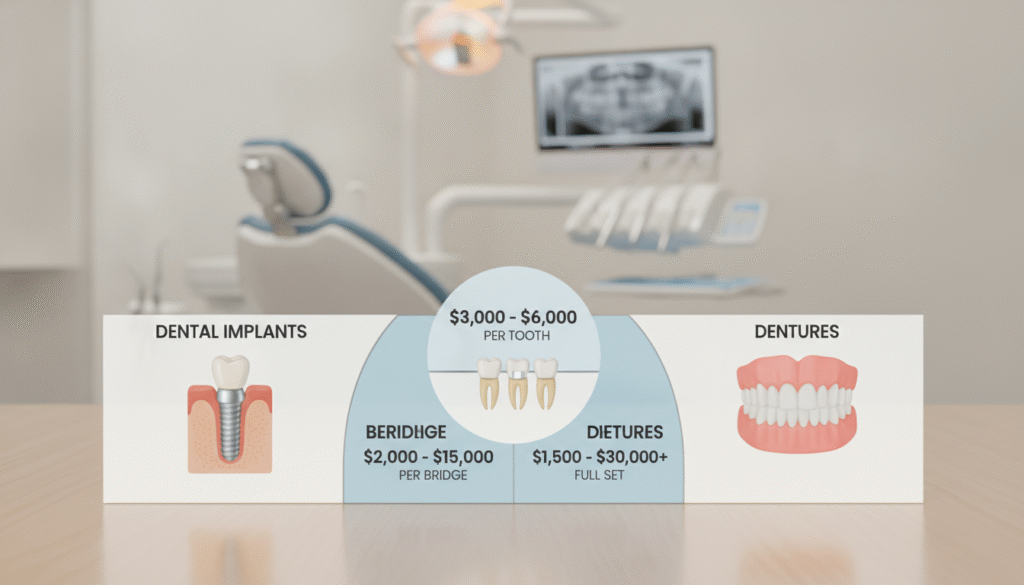
Though dental implants cost a lot at first, their long life and health benefits make them worth it. They are a key part of the dental prosthetics cost breakdown.
Costs of Dental Implants
Dental implant costs can be broken down to understand the financial commitment. Knowing what each part costs is key for those considering implants. We’ll look at average costs, insurance, and financing options for dental implants.
Average Cost Breakdown
A single dental implant usually costs between $3,000 to $5,500. This includes:
- Surgical placement of the titanium post
- Abutment connector that attaches the crown
- Custom-fabricated crown designed to match your natural teeth
- Preparatory procedures, such as extractions or bone grafting, if necessary
Location and the dentist’s expertise can affect these costs. Urban areas often have higher prices than rural areas.
Insurance Coverage for Implants
Insurance for implants is often limited. Many plans see implants as cosmetic, leading to lower payments. Yet, some insurance is starting to cover more, as implants are proven to last longer. It’s wise to review your policy and talk to your dentist about options.
Financing Options Available
Dealing with the cost of dental implants can be tough. But, there are ways to make it easier:
- Third-party healthcare financing companies that offer payment plans
- In-house payment plans provided by dental practices
- Health Savings Accounts (HSAs) that allow pre-tax savings for medical expenses
- Flexible Spending Accounts (FSAs) that can also be used for dental care costs
Looking into these options can help make implants more affordable. This way, patients can focus on their oral health without worrying about money.
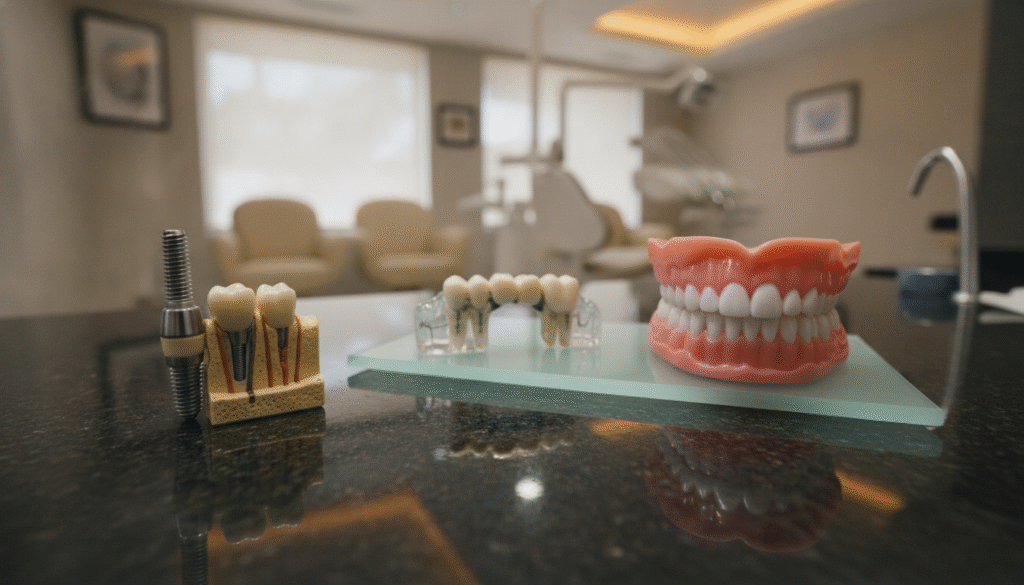
Exploring Dental Bridges
Dental bridges are a key option for tooth replacement. They fill gaps left by missing teeth, improving both looks and function. A bridge has artificial teeth, called pontics, held in place by natural teeth on either side.
What is a Dental Bridge?
A dental bridge is a fixed solution for missing teeth. It’s made from materials like porcelain or strong plastic. This ensures it lasts long and looks natural.
The process takes a few weeks and two visits. First, the dentist prepares the teeth by removing a bit of enamel. This makes room for crowns that hold the bridge in place.
Types of Dental Bridges
There are different types of dental bridges, each for specific needs:
| Type of Bridge | Description | Clinical Indication |
|---|---|---|
| Traditional Bridge | Uses crowns on adjacent teeth for support. | Most common type, ideal for single or multiple missing teeth. |
| Cantilever Bridge | Supported on one side only. | Used when there are adjacent teeth on only one side. |
| Maryland Bonded Bridge | Uses a metal framework bonded to the back of adjacent teeth. | Ideal for front teeth replacements. |
| Implant-Supported Bridge | Anchored by dental implants instead of natural teeth. | Best for patients with multiple missing teeth and good bone density. |
Benefits of Choosing a Bridge
Choosing a dental bridge has many benefits:
- Shorter Treatment Timeline: The whole process takes about two to three weeks.
- No Surgical Intervention Required: Unlike implants, bridges don’t need surgery.
- Lower Initial Cost: Bridges are more affordable than dental implants.
- Broader Insurance Coverage: Many insurance plans cover bridges better than implants.
While bridges are cheaper upfront, consider the long-term costs. They usually need to be replaced every 5 to 7 years. So, when looking at affordable dental options, think about both the initial and future costs.
Costs of Dental Bridges
Understanding the costs of dental bridges is key to making smart choices. These bridges cost between $1,500 to $5,000. This depends on the materials, how many units you need, and where you live. This section will dive into the financial side of dental bridges.
Average Cost Analysis
The price of a dental bridge can change a lot. A simple three-unit bridge is cheaper than a complex one. Here’s what affects the price:
- Materials: The choice of materials like porcelain or metal affects the cost.
- Number of Units: More units mean higher costs. A three-unit bridge is cheaper than a five-unit one.
- Laboratory Fees: The cost of making the bridge at a dental lab also adds to the total.
Replacing a bridge costs $1,500 to $3,000. People in their 40s might need two to three replacements, costing $4,500 to $9,000 over time.
Insurance and Financial Assistance
Dental insurance often covers a big part of bridge costs, from 50% to 80%. This makes bridges more affordable than implants, which get less coverage. Knowing your insurance plan can help lower your costs.
Many dental offices also offer financing or payment plans. Talking to your dentist about these options can help you find a plan that works for you.
Long-term Investment Considerations
When thinking about dental bridges, consider the long-term costs. A bridge at age 40 might need to be replaced every 8 to 12 years. Each replacement costs not just the new bridge but also tooth prep and lab fees.
So, while a bridge might seem affordable at first, the total cost over time can be high. Patients should think about both the initial cost and the future expenses. They should also consider any problems with the teeth supporting the bridge.
Overview of Dentures
Dentures are a common choice for those dealing with tooth loss. They provide both function and aesthetics. These removable prosthetic devices replace multiple missing teeth or complete arches. They are made from acrylic resin, sometimes with metal for strength.
Unlike dental implants, dentures don’t stimulate the jawbone. This can lead to bone loss over time.
It’s important to understand the different types of dentures. This helps in making an informed decision. There are several categories available:
- Complete Dentures: These are used when all teeth are missing in an arch.
- Partial Dentures: These are designed for individuals who have some natural teeth remaining.
- Immediate Dentures: These are placed immediately after tooth extraction, allowing for a seamless transition.
- Overdentures: These are supported by existing teeth or dental implants, providing greater stability.
Each type of denture has its own advantages and disadvantages. Here’s a balanced assessment:
Pros of Dentures
- Cost-Effective: Dentures generally have the lowest initial cost compared to implants and bridges.
- Non-Invasive: The fabrication process is less invasive, requiring no surgical procedures.
- Multiple Teeth Replacement: Dentures can replace numerous teeth simultaneously, restoring function and appearance.
Cons of Dentures
- Reduced Chewing Efficiency: Dentures may not restore full chewing power compared to natural teeth.
- Potential for Slippage: They can shift during speech or eating, requiring the use of adhesives.
- Bone Loss: Without stimulation, the jawbone may deteriorate over time, affecting facial structure.
In summary, while dentures offer a practical solution for many, they come with considerations. For those on a budget, budgeting for dental care options is key. Dentures may provide the most accessible means of restoring dental function.
Costs of Dentures
Looking into the costs of dentures helps those seeking dental solutions. It’s important to understand the financial side to make good choices. This section will cover average costs, insurance options, and denture lifespan. All these are key for comparing dental treatment costs.
Average Cost Estimates
Denture costs vary a lot, depending on type and quality. Here are some average price ranges:
- Economy Complete Dentures: $1,000 – $1,500 per arch
- Premium Custom Dentures: $1,500 – $3,000 per arch
- Cast Metal Partial Dentures: $1,000 – $2,500
- Flexible Partial Dentures: $700 – $1,800
- Implant-retained Overdentures: $3,000 – $30,000 (depending on implants)
Costs are influenced by material quality, lab work, and dentist skill. It’s key to think about these when planning for denture costs.
Coverage and Payment Plans
Most dental insurance covers dentures, often paying 50% to 80% of costs. Patients can also look into:
- Dental Discount Plans: These can cut down costs a lot.
- Payment Plans: Many dentists offer financing to help with costs.
- Dental School Clinics: These offer services at lower prices, done by students under supervision.
Knowing these options can help reduce the financial stress of dentures.
Lifespan and Replacement Costs
Dentures may seem affordable at first, but they’re not permanent. They usually need to be replaced or relined every 5 to 8 years because of:
- Changes in the mouth as bone resorbs.
- Wear and tear on the teeth and base material.
These replacements can increase costs over time. While dentures may start cheap, the total cost over years is important to consider.
Comparing Initial Costs
It’s important to compare the initial costs of dental implants, bridges, and dentures. This helps patients make informed choices about their dental health. We’ll look at the financial aspects of each option in detail.
Implants vs. Bridges vs. Dentures
When looking at dental restoration options, the initial costs are key. Here’s a table showing typical price ranges for each:
| Dental Option | Price Range |
|---|---|
| Single Tooth Implant | $3,000 – $5,500 |
| Three-Unit Bridge | $1,500 – $5,000 |
| Partial Denture | $1,000 – $3,000 |
| Complete Denture | $1,000 – $3,000 |
This table shows the cost difference between implant bridge denture options. It helps patients see their investment.
Cost Factors for Each Option
Several factors affect the costs of dental implants, bridges, and dentures:
- Dental Implants: Procedures like bone grafting or sinus lifts can raise costs.
- Bridges: The number of units and material choice impact the price.
- Dentures: Material quality and whether they’re held in place by implants affect costs.
Geographic Variations in Pricing
Dental fees vary across the United States. Cities like New York and San Francisco charge more than rural areas. This is due to different costs, lab fees, and market conditions. Knowing these variations is key for budgeting dental care.
In conclusion, while initial costs are important, they’re just part of the decision. Patients should also think about long-term care, maintenance, and personal needs.
Evaluating Long-term Costs
It’s important to think about the long-term costs of dental solutions. Each choice—dental implants, bridges, and dentures—has different needs and risks. These can affect how much you spend over time.
Maintenance and Follow-up Care
Dental implants need regular brushing and flossing, just like natural teeth. It’s also key to go to regular check-ups to keep the implant healthy. The crown might need to be replaced every 15 to 20 years, costing between $1,000 to $2,000.
Bridges need special cleaning tools like floss threaders and interdental brushes. They usually need to be replaced every 7 to 15 years, depending on how well you take care of them.
Dentures must be taken out and cleaned every day. They also need to be soaked overnight. You might need to get them relined every few years. And, you’ll likely need a new set every 5 to 8 years as your jawbone changes.
Potential Complications and Costs
Complications can also add to the cost over time. For example, peri-implantitis can harm dental implants, leading to extra treatments. Bridges might fail if the teeth they’re attached to decay, which can be expensive.
Issues with dentures, like stomatitis or bone loss, can also increase costs. Knowing about these problems is key to understanding the total cost.
Overall Cost-effectiveness Analysis
Looking at the big picture, dental implants are the most expensive upfront. But, they can last over 25 years and require little upkeep. This makes them the most cost-effective choice in the long run.
In contrast, the costs of replacing bridges and dealing with denture-related bone loss can add up over time. A detailed dental implant bridge denture cost comparison shows implants are often the best value for your lifetime.
| Dental Option | Initial Cost | Replacement Frequency | Average Lifespan | Maintenance Needs |
|---|---|---|---|---|
| Dental Implants | $3,000 – $4,500 | 15 – 20 years (crown) | 25+ years | Routine care and check-ups |
| Bridges | $2,000 – $5,000 | 7 – 15 years | 10 – 15 years | Special cleaning tools |
| Dentures | $1,000 – $3,000 | 5 – 8 years | 5 – 10 years | Daily cleaning and relining |
Factors Influencing Dental Costs
Knowing what affects dental costs helps patients make better choices. Several important factors influence the price of dental treatments. These include where you live, the dentist’s experience and reputation, and the materials and quality used.
Geographic Location Impact
The place where a dentist practices greatly affects costs. Prices change a lot depending on the area. For example, cities usually cost more because of higher living costs and real estate prices.
Dental cost calculators often use ZIP codes to estimate prices. This shows how much prices can vary across the country. It’s clear that where you live matters a lot when it comes to dental costs.
Dentist Experience and Reputation
A dentist’s experience and reputation also affect costs. Dentists with special training, like prosthodontists, charge more. They have the skills for better results.
When looking at costs, check the dentist’s credentials. More experienced dentists might charge more but offer better care and results.
Material Choices and Quality
The materials used in dental work greatly impact cost and durability. For example, titanium and zirconia implants have different prices and lifespans.
Bridges can be made from different materials, affecting both looks and price. Dentures also vary in quality, from basic to advanced materials.
Ask about the materials in your treatment to compare prices. Knowing this helps you understand the implant vs bridge vs denture pricing better. It helps you make a more informed choice.
Making an Informed Decision
To understand dental restoration options, patients need to weigh their choices and get expert advice. This part helps readers make smart decisions about their dental health. It combines looking at costs with what’s best for your teeth.
Questions to Ask Your Dentist
When you talk to a dentist, ask the right questions. This will help you understand the treatment better. Here are some important questions to ask:
- What is the total cost, including all steps before the main treatment?
- How long will this restoration last?
- Is there a warranty or guarantee for the work?
- What are the risks for my teeth and jaw?
- How will this choice affect my other teeth and jawbone in the future?
Personal Budget Considerations
Knowing how much you can spend is key when choosing dental care. Start by figuring out if you can handle a big upfront cost or if you need something more affordable. Think about these points:
- Look at your current savings and income.
- Check if you can use Health Savings Accounts (HSAs) or Flexible Spending Accounts (FSAs).
- See if there are healthcare credit options that can help with costs.
Importance of Consultations
No online tool can replace a detailed check-up with a dentist. During a visit, a dentist looks at your bone and teeth health. They also talk about how your lifestyle affects your treatment. A full check-up is key to finding the best option for you.
Choosing the right dental care is more than just looking at prices. It’s about finding the best value, lasting results, and what’s best for your health.
Patient Experiences and Case Studies
Looking at real-life case studies helps us understand dental prosthetics costs better. We learn from patients who picked different treatments. This way, we see how they felt about their choices.
Real-life Cost Comparisons
Dental treatment costs can be tricky to grasp. Here are some stories that show the financial side of each option:
| Patient Age | Treatment Type | Initial Cost | Additional Costs | Total Cost Over Time |
|---|---|---|---|---|
| 45 | Single Implant | $4,200 | $0 (12 years) | $4,200 |
| 52 | Three-unit Bridge | $2,800 | $3,000 (after 10 years) | $5,800 |
| 68 | Complete Dentures | $1,800 per arch | $1,200 (relines and adhesives over 8 years) | $4,800 |
Patient Satisfaction Rates
Studies show implant patients are very happy with their choice. They love how they can chew and how they look. Bridge patients are happy but worry about their teeth. Denture wearers have mixed feelings, depending on how well their dentures fit.
Testimonials for Each Option
Real stories from patients give us a deeper look at each treatment. Here are some:
- Implant Patient: “I was amazed at how natural my implant feels. It’s been over a decade, and I’ve had no issues at all!”
- Bridge Patient: “While my bridge looks great, I find myself worrying about its longevity and the health of my adjacent teeth.”
- Denture Patient: “Initially, I struggled with my dentures, but with adjustments, I now feel more confident in my smile.”
These stories remind us to think about more than just cost. We should also consider how each treatment affects our life.
Conclusion: Choosing the Right Option
When looking at dental solutions, knowing the costs is key. The cost of dental implants, bridges, and dentures varies a lot. Dental implants cost the most, from $3,000 to $5,500 per tooth. They last 20 to 25 years, making them a good choice for younger people with strong bones.
Bridges cost between $1,500 and $5,000 and need to be replaced every 7 to 15 years. This can make them more expensive over time. Dentures are the cheapest upfront, costing $1,000 to $3,000 per arch. But, they need to be replaced every 5 to 8 years, adding to the cost.
It’s important to consider the pros and cons of each option. Implants are great for keeping the jawbone healthy and looking good. Bridges are quicker and more covered by insurance. Dentures are a good choice for those on a tight budget.
For many, the cost difference between these options is less when looking at the long term. The best choice depends on your budget, dental health, and what you prefer. Talking to a dentist can help you decide which option is right for you.
FAQ
What is the average cost of a dental implant?
How does the cost of a dental bridge compare to an implant?
FAQ
What is the average cost of a dental implant?
Dental implants usually cost between ,000 and ,500 per tooth. This price can change based on where you live and if you need extra procedures.
How does the cost of a dental bridge compare to an implant?
Dental bridges cost between
FAQ
What is the average cost of a dental implant?
Dental implants usually cost between $3,000 and $5,500 per tooth. This price can change based on where you live and if you need extra procedures.
How does the cost of a dental bridge compare to an implant?
Dental bridges cost between $1,500 and $5,000. They are cheaper than implants at first. But, bridges need to be replaced every 7 to 15 years, which can increase costs over time.
Are dentures the most cost-effective solution for tooth loss?
Yes, dentures are the cheapest option, costing $1,000 to $3,000 per arch. But, they need to be replaced every 5 to 8 years because of bone loss and wear.
Does dental insurance cover implants, bridges, or dentures?
Dental insurance varies. Implants are often seen as elective and may have less coverage. Bridges and dentures usually get better coverage, often 50% to 80% of what’s allowed.
What are the long-term maintenance costs associated with each option?
Implants need regular oral care and check-ups. Bridges require special cleaning tools. Dentures need daily cleaning and relining every few years, adding to costs over time.
How do geographic variations affect dental treatment costs?
Dental costs vary across the U.S. Cities often charge more due to higher costs and demand. Smaller areas tend to have lower prices.
What questions should I ask my dentist before choosing a treatment option?
Ask about the total cost, how long the restoration will last, and any warranties. Also, ask about risks, how it affects your teeth and jaw, and the dentist’s experience.
How can I finance dental treatment if I cannot afford the upfront costs?
You can use third-party financing, payment plans from your dentist, or Health Savings Accounts or Flexible Spending Accounts.
What are the possible complications with each treatment option?
Implants can face peri-implantitis. Bridges may need to replace teeth due to decay. Dentures can cause stomatitis or bone loss, all leading to extra costs.
How do patient satisfaction rates compare among implants, bridges, and dentures?
Implant patients are usually most satisfied, happy with chewing and looks. Satisfaction with bridges and dentures varies, depending on personal experiences.
,500 and ,000. They are cheaper than implants at first. But, bridges need to be replaced every 7 to 15 years, which can increase costs over time.
Are dentures the most cost-effective solution for tooth loss?
Yes, dentures are the cheapest option, costing
FAQ
What is the average cost of a dental implant?
Dental implants usually cost between $3,000 and $5,500 per tooth. This price can change based on where you live and if you need extra procedures.
How does the cost of a dental bridge compare to an implant?
Dental bridges cost between $1,500 and $5,000. They are cheaper than implants at first. But, bridges need to be replaced every 7 to 15 years, which can increase costs over time.
Are dentures the most cost-effective solution for tooth loss?
Yes, dentures are the cheapest option, costing $1,000 to $3,000 per arch. But, they need to be replaced every 5 to 8 years because of bone loss and wear.
Does dental insurance cover implants, bridges, or dentures?
Dental insurance varies. Implants are often seen as elective and may have less coverage. Bridges and dentures usually get better coverage, often 50% to 80% of what’s allowed.
What are the long-term maintenance costs associated with each option?
Implants need regular oral care and check-ups. Bridges require special cleaning tools. Dentures need daily cleaning and relining every few years, adding to costs over time.
How do geographic variations affect dental treatment costs?
Dental costs vary across the U.S. Cities often charge more due to higher costs and demand. Smaller areas tend to have lower prices.
What questions should I ask my dentist before choosing a treatment option?
Ask about the total cost, how long the restoration will last, and any warranties. Also, ask about risks, how it affects your teeth and jaw, and the dentist’s experience.
How can I finance dental treatment if I cannot afford the upfront costs?
You can use third-party financing, payment plans from your dentist, or Health Savings Accounts or Flexible Spending Accounts.
What are the possible complications with each treatment option?
Implants can face peri-implantitis. Bridges may need to replace teeth due to decay. Dentures can cause stomatitis or bone loss, all leading to extra costs.
How do patient satisfaction rates compare among implants, bridges, and dentures?
Implant patients are usually most satisfied, happy with chewing and looks. Satisfaction with bridges and dentures varies, depending on personal experiences.
,000 to ,000 per arch. But, they need to be replaced every 5 to 8 years because of bone loss and wear.
Does dental insurance cover implants, bridges, or dentures?
Dental insurance varies. Implants are often seen as elective and may have less coverage. Bridges and dentures usually get better coverage, often 50% to 80% of what’s allowed.
What are the long-term maintenance costs associated with each option?
Implants need regular oral care and check-ups. Bridges require special cleaning tools. Dentures need daily cleaning and relining every few years, adding to costs over time.
How do geographic variations affect dental treatment costs?
Dental costs vary across the U.S. Cities often charge more due to higher costs and demand. Smaller areas tend to have lower prices.
What questions should I ask my dentist before choosing a treatment option?
Ask about the total cost, how long the restoration will last, and any warranties. Also, ask about risks, how it affects your teeth and jaw, and the dentist’s experience.
How can I finance dental treatment if I cannot afford the upfront costs?
You can use third-party financing, payment plans from your dentist, or Health Savings Accounts or Flexible Spending Accounts.
What are the possible complications with each treatment option?
Implants can face peri-implantitis. Bridges may need to replace teeth due to decay. Dentures can cause stomatitis or bone loss, all leading to extra costs.
How do patient satisfaction rates compare among implants, bridges, and dentures?
Implant patients are usually most satisfied, happy with chewing and looks. Satisfaction with bridges and dentures varies, depending on personal experiences.
FAQ
What is the average cost of a dental implant?
Dental implants usually cost between ,000 and ,500 per tooth. This price can change based on where you live and if you need extra procedures.
How does the cost of a dental bridge compare to an implant?
Dental bridges cost between
FAQ
What is the average cost of a dental implant?
Dental implants usually cost between $3,000 and $5,500 per tooth. This price can change based on where you live and if you need extra procedures.
How does the cost of a dental bridge compare to an implant?
Dental bridges cost between $1,500 and $5,000. They are cheaper than implants at first. But, bridges need to be replaced every 7 to 15 years, which can increase costs over time.
Are dentures the most cost-effective solution for tooth loss?
Yes, dentures are the cheapest option, costing $1,000 to $3,000 per arch. But, they need to be replaced every 5 to 8 years because of bone loss and wear.
Does dental insurance cover implants, bridges, or dentures?
Dental insurance varies. Implants are often seen as elective and may have less coverage. Bridges and dentures usually get better coverage, often 50% to 80% of what’s allowed.
What are the long-term maintenance costs associated with each option?
Implants need regular oral care and check-ups. Bridges require special cleaning tools. Dentures need daily cleaning and relining every few years, adding to costs over time.
How do geographic variations affect dental treatment costs?
Dental costs vary across the U.S. Cities often charge more due to higher costs and demand. Smaller areas tend to have lower prices.
What questions should I ask my dentist before choosing a treatment option?
Ask about the total cost, how long the restoration will last, and any warranties. Also, ask about risks, how it affects your teeth and jaw, and the dentist’s experience.
How can I finance dental treatment if I cannot afford the upfront costs?
You can use third-party financing, payment plans from your dentist, or Health Savings Accounts or Flexible Spending Accounts.
What are the possible complications with each treatment option?
Implants can face peri-implantitis. Bridges may need to replace teeth due to decay. Dentures can cause stomatitis or bone loss, all leading to extra costs.
How do patient satisfaction rates compare among implants, bridges, and dentures?
Implant patients are usually most satisfied, happy with chewing and looks. Satisfaction with bridges and dentures varies, depending on personal experiences.
,500 and ,000. They are cheaper than implants at first. But, bridges need to be replaced every 7 to 15 years, which can increase costs over time.
Are dentures the most cost-effective solution for tooth loss?
Yes, dentures are the cheapest option, costing
FAQ
What is the average cost of a dental implant?
Dental implants usually cost between $3,000 and $5,500 per tooth. This price can change based on where you live and if you need extra procedures.
How does the cost of a dental bridge compare to an implant?
Dental bridges cost between $1,500 and $5,000. They are cheaper than implants at first. But, bridges need to be replaced every 7 to 15 years, which can increase costs over time.
Are dentures the most cost-effective solution for tooth loss?
Yes, dentures are the cheapest option, costing $1,000 to $3,000 per arch. But, they need to be replaced every 5 to 8 years because of bone loss and wear.
Does dental insurance cover implants, bridges, or dentures?
Dental insurance varies. Implants are often seen as elective and may have less coverage. Bridges and dentures usually get better coverage, often 50% to 80% of what’s allowed.
What are the long-term maintenance costs associated with each option?
Implants need regular oral care and check-ups. Bridges require special cleaning tools. Dentures need daily cleaning and relining every few years, adding to costs over time.
How do geographic variations affect dental treatment costs?
Dental costs vary across the U.S. Cities often charge more due to higher costs and demand. Smaller areas tend to have lower prices.
What questions should I ask my dentist before choosing a treatment option?
Ask about the total cost, how long the restoration will last, and any warranties. Also, ask about risks, how it affects your teeth and jaw, and the dentist’s experience.
How can I finance dental treatment if I cannot afford the upfront costs?
You can use third-party financing, payment plans from your dentist, or Health Savings Accounts or Flexible Spending Accounts.
What are the possible complications with each treatment option?
Implants can face peri-implantitis. Bridges may need to replace teeth due to decay. Dentures can cause stomatitis or bone loss, all leading to extra costs.
How do patient satisfaction rates compare among implants, bridges, and dentures?
Implant patients are usually most satisfied, happy with chewing and looks. Satisfaction with bridges and dentures varies, depending on personal experiences.
,000 to ,000 per arch. But, they need to be replaced every 5 to 8 years because of bone loss and wear.
Does dental insurance cover implants, bridges, or dentures?
Dental insurance varies. Implants are often seen as elective and may have less coverage. Bridges and dentures usually get better coverage, often 50% to 80% of what’s allowed.
What are the long-term maintenance costs associated with each option?
Implants need regular oral care and check-ups. Bridges require special cleaning tools. Dentures need daily cleaning and relining every few years, adding to costs over time.
How do geographic variations affect dental treatment costs?
Dental costs vary across the U.S. Cities often charge more due to higher costs and demand. Smaller areas tend to have lower prices.
What questions should I ask my dentist before choosing a treatment option?
Ask about the total cost, how long the restoration will last, and any warranties. Also, ask about risks, how it affects your teeth and jaw, and the dentist’s experience.
How can I finance dental treatment if I cannot afford the upfront costs?
You can use third-party financing, payment plans from your dentist, or Health Savings Accounts or Flexible Spending Accounts.
What are the possible complications with each treatment option?
Implants can face peri-implantitis. Bridges may need to replace teeth due to decay. Dentures can cause stomatitis or bone loss, all leading to extra costs.
How do patient satisfaction rates compare among implants, bridges, and dentures?
Implant patients are usually most satisfied, happy with chewing and looks. Satisfaction with bridges and dentures varies, depending on personal experiences.
Are dentures the most cost-effective solution for tooth loss?
FAQ
What is the average cost of a dental implant?
Dental implants usually cost between ,000 and ,500 per tooth. This price can change based on where you live and if you need extra procedures.
How does the cost of a dental bridge compare to an implant?
Dental bridges cost between
FAQ
What is the average cost of a dental implant?
Dental implants usually cost between $3,000 and $5,500 per tooth. This price can change based on where you live and if you need extra procedures.
How does the cost of a dental bridge compare to an implant?
Dental bridges cost between $1,500 and $5,000. They are cheaper than implants at first. But, bridges need to be replaced every 7 to 15 years, which can increase costs over time.
Are dentures the most cost-effective solution for tooth loss?
Yes, dentures are the cheapest option, costing $1,000 to $3,000 per arch. But, they need to be replaced every 5 to 8 years because of bone loss and wear.
Does dental insurance cover implants, bridges, or dentures?
Dental insurance varies. Implants are often seen as elective and may have less coverage. Bridges and dentures usually get better coverage, often 50% to 80% of what’s allowed.
What are the long-term maintenance costs associated with each option?
Implants need regular oral care and check-ups. Bridges require special cleaning tools. Dentures need daily cleaning and relining every few years, adding to costs over time.
How do geographic variations affect dental treatment costs?
Dental costs vary across the U.S. Cities often charge more due to higher costs and demand. Smaller areas tend to have lower prices.
What questions should I ask my dentist before choosing a treatment option?
Ask about the total cost, how long the restoration will last, and any warranties. Also, ask about risks, how it affects your teeth and jaw, and the dentist’s experience.
How can I finance dental treatment if I cannot afford the upfront costs?
You can use third-party financing, payment plans from your dentist, or Health Savings Accounts or Flexible Spending Accounts.
What are the possible complications with each treatment option?
Implants can face peri-implantitis. Bridges may need to replace teeth due to decay. Dentures can cause stomatitis or bone loss, all leading to extra costs.
How do patient satisfaction rates compare among implants, bridges, and dentures?
Implant patients are usually most satisfied, happy with chewing and looks. Satisfaction with bridges and dentures varies, depending on personal experiences.
,500 and ,000. They are cheaper than implants at first. But, bridges need to be replaced every 7 to 15 years, which can increase costs over time.
Are dentures the most cost-effective solution for tooth loss?
Yes, dentures are the cheapest option, costing
FAQ
What is the average cost of a dental implant?
Dental implants usually cost between $3,000 and $5,500 per tooth. This price can change based on where you live and if you need extra procedures.
How does the cost of a dental bridge compare to an implant?
Dental bridges cost between $1,500 and $5,000. They are cheaper than implants at first. But, bridges need to be replaced every 7 to 15 years, which can increase costs over time.
Are dentures the most cost-effective solution for tooth loss?
Yes, dentures are the cheapest option, costing $1,000 to $3,000 per arch. But, they need to be replaced every 5 to 8 years because of bone loss and wear.
Does dental insurance cover implants, bridges, or dentures?
Dental insurance varies. Implants are often seen as elective and may have less coverage. Bridges and dentures usually get better coverage, often 50% to 80% of what’s allowed.
What are the long-term maintenance costs associated with each option?
Implants need regular oral care and check-ups. Bridges require special cleaning tools. Dentures need daily cleaning and relining every few years, adding to costs over time.
How do geographic variations affect dental treatment costs?
Dental costs vary across the U.S. Cities often charge more due to higher costs and demand. Smaller areas tend to have lower prices.
What questions should I ask my dentist before choosing a treatment option?
Ask about the total cost, how long the restoration will last, and any warranties. Also, ask about risks, how it affects your teeth and jaw, and the dentist’s experience.
How can I finance dental treatment if I cannot afford the upfront costs?
You can use third-party financing, payment plans from your dentist, or Health Savings Accounts or Flexible Spending Accounts.
What are the possible complications with each treatment option?
Implants can face peri-implantitis. Bridges may need to replace teeth due to decay. Dentures can cause stomatitis or bone loss, all leading to extra costs.
How do patient satisfaction rates compare among implants, bridges, and dentures?
Implant patients are usually most satisfied, happy with chewing and looks. Satisfaction with bridges and dentures varies, depending on personal experiences.
,000 to ,000 per arch. But, they need to be replaced every 5 to 8 years because of bone loss and wear.
Does dental insurance cover implants, bridges, or dentures?
Dental insurance varies. Implants are often seen as elective and may have less coverage. Bridges and dentures usually get better coverage, often 50% to 80% of what’s allowed.
What are the long-term maintenance costs associated with each option?
Implants need regular oral care and check-ups. Bridges require special cleaning tools. Dentures need daily cleaning and relining every few years, adding to costs over time.
How do geographic variations affect dental treatment costs?
Dental costs vary across the U.S. Cities often charge more due to higher costs and demand. Smaller areas tend to have lower prices.
What questions should I ask my dentist before choosing a treatment option?
Ask about the total cost, how long the restoration will last, and any warranties. Also, ask about risks, how it affects your teeth and jaw, and the dentist’s experience.
How can I finance dental treatment if I cannot afford the upfront costs?
You can use third-party financing, payment plans from your dentist, or Health Savings Accounts or Flexible Spending Accounts.
What are the possible complications with each treatment option?
Implants can face peri-implantitis. Bridges may need to replace teeth due to decay. Dentures can cause stomatitis or bone loss, all leading to extra costs.
How do patient satisfaction rates compare among implants, bridges, and dentures?
Implant patients are usually most satisfied, happy with chewing and looks. Satisfaction with bridges and dentures varies, depending on personal experiences.
FAQ
What is the average cost of a dental implant?
Dental implants usually cost between ,000 and ,500 per tooth. This price can change based on where you live and if you need extra procedures.
How does the cost of a dental bridge compare to an implant?
Dental bridges cost between
FAQ
What is the average cost of a dental implant?
Dental implants usually cost between $3,000 and $5,500 per tooth. This price can change based on where you live and if you need extra procedures.
How does the cost of a dental bridge compare to an implant?
Dental bridges cost between $1,500 and $5,000. They are cheaper than implants at first. But, bridges need to be replaced every 7 to 15 years, which can increase costs over time.
Are dentures the most cost-effective solution for tooth loss?
Yes, dentures are the cheapest option, costing $1,000 to $3,000 per arch. But, they need to be replaced every 5 to 8 years because of bone loss and wear.
Does dental insurance cover implants, bridges, or dentures?
Dental insurance varies. Implants are often seen as elective and may have less coverage. Bridges and dentures usually get better coverage, often 50% to 80% of what’s allowed.
What are the long-term maintenance costs associated with each option?
Implants need regular oral care and check-ups. Bridges require special cleaning tools. Dentures need daily cleaning and relining every few years, adding to costs over time.
How do geographic variations affect dental treatment costs?
Dental costs vary across the U.S. Cities often charge more due to higher costs and demand. Smaller areas tend to have lower prices.
What questions should I ask my dentist before choosing a treatment option?
Ask about the total cost, how long the restoration will last, and any warranties. Also, ask about risks, how it affects your teeth and jaw, and the dentist’s experience.
How can I finance dental treatment if I cannot afford the upfront costs?
You can use third-party financing, payment plans from your dentist, or Health Savings Accounts or Flexible Spending Accounts.
What are the possible complications with each treatment option?
Implants can face peri-implantitis. Bridges may need to replace teeth due to decay. Dentures can cause stomatitis or bone loss, all leading to extra costs.
How do patient satisfaction rates compare among implants, bridges, and dentures?
Implant patients are usually most satisfied, happy with chewing and looks. Satisfaction with bridges and dentures varies, depending on personal experiences.
,500 and ,000. They are cheaper than implants at first. But, bridges need to be replaced every 7 to 15 years, which can increase costs over time.
Are dentures the most cost-effective solution for tooth loss?
Yes, dentures are the cheapest option, costing
FAQ
What is the average cost of a dental implant?
Dental implants usually cost between $3,000 and $5,500 per tooth. This price can change based on where you live and if you need extra procedures.
How does the cost of a dental bridge compare to an implant?
Dental bridges cost between $1,500 and $5,000. They are cheaper than implants at first. But, bridges need to be replaced every 7 to 15 years, which can increase costs over time.
Are dentures the most cost-effective solution for tooth loss?
Yes, dentures are the cheapest option, costing $1,000 to $3,000 per arch. But, they need to be replaced every 5 to 8 years because of bone loss and wear.
Does dental insurance cover implants, bridges, or dentures?
Dental insurance varies. Implants are often seen as elective and may have less coverage. Bridges and dentures usually get better coverage, often 50% to 80% of what’s allowed.
What are the long-term maintenance costs associated with each option?
Implants need regular oral care and check-ups. Bridges require special cleaning tools. Dentures need daily cleaning and relining every few years, adding to costs over time.
How do geographic variations affect dental treatment costs?
Dental costs vary across the U.S. Cities often charge more due to higher costs and demand. Smaller areas tend to have lower prices.
What questions should I ask my dentist before choosing a treatment option?
Ask about the total cost, how long the restoration will last, and any warranties. Also, ask about risks, how it affects your teeth and jaw, and the dentist’s experience.
How can I finance dental treatment if I cannot afford the upfront costs?
You can use third-party financing, payment plans from your dentist, or Health Savings Accounts or Flexible Spending Accounts.
What are the possible complications with each treatment option?
Implants can face peri-implantitis. Bridges may need to replace teeth due to decay. Dentures can cause stomatitis or bone loss, all leading to extra costs.
How do patient satisfaction rates compare among implants, bridges, and dentures?
Implant patients are usually most satisfied, happy with chewing and looks. Satisfaction with bridges and dentures varies, depending on personal experiences.
,000 to ,000 per arch. But, they need to be replaced every 5 to 8 years because of bone loss and wear.
Does dental insurance cover implants, bridges, or dentures?
Dental insurance varies. Implants are often seen as elective and may have less coverage. Bridges and dentures usually get better coverage, often 50% to 80% of what’s allowed.
What are the long-term maintenance costs associated with each option?
Implants need regular oral care and check-ups. Bridges require special cleaning tools. Dentures need daily cleaning and relining every few years, adding to costs over time.
How do geographic variations affect dental treatment costs?
Dental costs vary across the U.S. Cities often charge more due to higher costs and demand. Smaller areas tend to have lower prices.
What questions should I ask my dentist before choosing a treatment option?
Ask about the total cost, how long the restoration will last, and any warranties. Also, ask about risks, how it affects your teeth and jaw, and the dentist’s experience.
How can I finance dental treatment if I cannot afford the upfront costs?
You can use third-party financing, payment plans from your dentist, or Health Savings Accounts or Flexible Spending Accounts.
What are the possible complications with each treatment option?
Implants can face peri-implantitis. Bridges may need to replace teeth due to decay. Dentures can cause stomatitis or bone loss, all leading to extra costs.
How do patient satisfaction rates compare among implants, bridges, and dentures?
Implant patients are usually most satisfied, happy with chewing and looks. Satisfaction with bridges and dentures varies, depending on personal experiences.