
How Do I Clean and Care for My Invisalign Aligners?
Ever wondered why some get perfect teeth while others face delays? It’s often because of proper aligner maintenance.
Knowing how to keep clear aligners clean is key to a successful orthodontic treatment. It’s not just about looks. Keeping aligners clean helps your treatment work better and keeps your mouth healthy.
It’s not just about cleaning. Comprehensive maintenance includes how to store them, what to eat, and staying consistent. These steps are important for your treatment’s success.
Studies show that good care means faster and better results. Starting with the right care from the start is very important.
We offer a full guide on caring for your aligners. Our advice is based on science to keep your aligners in top shape. This way, your orthodontic treatment will work as planned.
Key Takeaways
- Proper aligner maintenance directly impacts treatment success and timeline adherence in orthodontic correction
- Effective care protocols extend beyond cleaning to include storage, dietary habits, and compliance strategies
- Aligner hygiene serves as both an aesthetic consideration and a critical oral health preservation measure
- Understanding maintenance techniques correlates with improved treatment outcomes and aligner integrity
- Comprehensive care frameworks address multiple dimensions of aligner management throughout treatment duration
- Evidence-based protocols ensure optimal therapeutic results while protecting your orthodontic investment
Understanding Your Invisalign Aligners
Knowing how Invisalign works helps patients take better care of their aligners. These devices use advanced materials and precise calculations to move teeth. It’s important to understand what they are, how they work, and why they’re better than traditional braces.
Clear aligners make straightening teeth easier and are a big step forward in orthodontics. This knowledge is key to why cleaning Invisalign trays at home is so important. The materials used in these devices can break down if not cleaned properly.
What Are Invisalign Aligners?
Invisalign aligners are thermoplastic orthodontic devices made from a special material called SmartTrack. This material is designed to apply controlled forces to teeth while being clear. It’s flexible enough to fit teeth well but rigid enough to move them.
The SmartTrack material has layers of medical-grade polymers. These layers make the device flexible and rigid at the same time. Each aligner is made using 3D printing and thermoforming based on a patient’s teeth.
The engineering behind these devices focuses on precision and predictability. Each aligner is designed for a specific stage in treatment. The small changes between each aligner move teeth gradually.
How Do They Work?
The way aligners work involves applying pressure to specific tooth surfaces. This pressure causes the bone around the tooth to change. This is called bone remodeling.
During bone remodeling, cells break down bone on one side of the tooth and build it on the other. This movement allows teeth to shift through the jawbone. Aligners need to be worn for 20-22 hours a day to keep this process going.
By changing the aligners regularly, teeth move in a controlled way. Each change moves teeth a small amount. This approach is comfortable and predictable.
The body responds to the pressure from aligners in a known way. This helps patients see why wearing them consistently is important. If the aligners aren’t clean, they can’t work as well.
Benefits of Using Invisalign
Clear aligners have many advantages over traditional braces. They are not only better-looking but also easier to clean and more comfortable. Here are some key differences:
| Treatment Aspect | Invisalign Aligners | Traditional Braces |
|---|---|---|
| Aesthetic Appearance | Virtually invisible thermoplastic material | Visible metal brackets and wires |
| Oral Hygiene Access | Completely removable for brushing and flossing | Requires specialized cleaning tools and techniques |
| Dietary Restrictions | No limitations when aligners removed | Avoid hard, sticky, and certain foods |
| Soft Tissue Comfort | Smooth surfaces minimize irritation | Brackets and wires may cause ulcerations |
The aesthetic benefits are the most obvious advantage. They are clear, so patients can straighten their teeth without feeling self-conscious. This is a big plus for adults and professionals.
Being able to remove them for cleaning is a big plus. Patients can brush and floss normally, keeping their teeth and gums healthy. Traditional braces are harder to clean, leading to more cavities and gum disease.
Aligners are also kinder to the soft tissues in the mouth. They don’t have the sharp edges or protrusions of braces. This means fewer emergencies and a more predictable treatment plan.
These benefits show why keeping aligners clean is so important. The materials used need regular care to stay effective. Without proper cleaning, aligners can become discolored or develop bacteria. Understanding how Invisalign works helps patients see why they need to take good care of them.
Daily Cleaning Routine for Aligners
Keeping your aligners clean is more than just rinsing them sometimes. It’s about following a daily routine that keeps them clear and free from bacteria. This routine helps prevent stains and keeps your aligners looking good. Knowing how to care for your aligners is key to keeping your mouth healthy during treatment.
Good aligner care is all about sticking to a routine. Doing this right can help prevent infections and make your aligners last longer. These steps are backed by experts and are part of the best way to get good results from your treatment.
Step-by-Step Cleaning Process
Starting with a clear plan is the first step to keeping your aligners clean. Sanitizing Invisalign aligners properly means using both cleaning methods. This way, you get rid of all the bad stuff that can build up while you wear them.
Right after you take out your aligners, rinse them with warm water. This gets rid of saliva and food bits. Then, use a soft toothbrush and some clear soap to gently clean them. Don’t use toothpaste because it can scratch the surface and cause stains.
Once a day, soak your aligners in a special cleaner. This step kills off germs that just brushing can’t get rid of. It’s like a deep clean that gets into all the nooks and crannies.
Before putting your aligners back in, brush and floss your teeth. This step is important because it keeps bacteria from getting trapped between your teeth and the aligners. It helps prevent cavities and gum problems while you’re wearing them.
- Rinse with Lukewarm Water: Right after taking out your aligners, rinse them in warm water. This removes saliva and food bits.
- Gentle Brushing: Use a soft toothbrush and some clear soap to gently clean your aligners. Pay extra attention to the inside surfaces. Avoid using toothpaste because it can scratch the surface.
- Daily Soaking: Soak your aligners in a special cleaner once a day. This step kills off germs that brushing can’t get rid of.
- Pre-Insertion Oral Hygiene: Before putting your aligners back in, brush and floss your teeth. This keeps bacteria from getting trapped between your teeth and the aligners.
Brushing removes biofilm, while soaking kills germs. This combination is the best way to keep your aligners clean during treatment.
Timeframe for Cleaning
When you clean your aligners is important too. Try to fit cleaning into your daily routine. Most people find it easier to clean them in the morning and evening.
Aligners need a good cleaning at least once a day, best in the evening. In the morning, just rinse and brush lightly. Save the full cleaning for the evening. This way, you clean them well without taking too much time.
| Time of Day | Cleaning Activities | Duration | Priority Level |
|---|---|---|---|
| Morning | Rinse with lukewarm water, gentle brushing with soap | 3-5 minutes | Moderate |
| After Meals | Quick rinse, brush teeth before reinsertion | 2-3 minutes | High |
| Evening | Complete protocol including soaking and thorough brushing | 15-20 minutes | Critical |
| Before Bed | Final rinse, inspect for damage or buildup | 2 minutes | Moderate |
Being consistent is key to keeping your aligners clean for a long time. Make cleaning a part of your daily routine, like brushing your teeth. This way, you’ll do it every day without thinking about it.
How long you spend cleaning your aligners can vary. Quick rinses take 1-2 minutes, but a full cleaning takes 15-20 minutes. Make sure you have enough time to do it right, so you don’t rush.
Following this cleaning routine helps avoid problems and keeps your aligners in good shape. Spending 20-30 minutes each day on cleaning pays off in the long run. It makes your treatment more effective, keeps your mouth healthy, and makes your teeth look better.
Recommended Cleaning Solutions
Choosing the right cleaning solutions is key to keeping your clear aligners clear and strong. The market has many products made just for orthodontic appliances. You can also use common household items that work well.
When picking a cleaning agent, think about its chemical makeup, how well it kills bacteria, and if it’s safe for plastic. This helps keep your aligners looking good and working right.
Cleaning Crystals Options
Invisalign Cleaning Crystals are made just for thermoplastic orthodontic devices. They have a special mix of cleaners and germ fighters. Each box has 50 treatments for about $40.
The formula includes Sodium dichlorosocyanurate to kill germs and Sodium tripolyphosphate to get rid of mineral spots. This keeps your aligners clear and free from stains.
The full list of ingredients is:
- Sodium Sulfate (bulking agent)
- Sodium Carbonate (pH adjuster)
- Sodium Tripolyphosphate (mineral chelator)
- Sodium Dichlorosocyanurate (antimicrobial agent)
- Sodium Lauryl Sulfate (surfactant)
To use, first rinse your aligners under cool water. Then, put them in a tub with warm water and add a packet of crystals. Shake well for 20 seconds.
Let them soak for at least 15 minutes. For tough stains, soak for 30 minutes. After soaking, rinse them well under cool water before putting them back in.
Invisalign also has ready-to-use cleaning products like Spray and Foam. These use hydrogen peroxide and sodium lauryl sulfate. Just apply, wait, and rinse.
Mild Soap and Warm Water
Using clear hand soap and lukewarm water is a simple and cheap way to clean your aligners every day. It keeps them clean and prevents bacteria buildup. The right soap and water temperature are important.
Choose pH-neutral, unscented, transparent liquid soaps. Avoid soaps with colors or fragrances. They can stain your aligners or leave bad tastes in your mouth.
Water should be lukewarm, between 98-100°F. This keeps your aligners from getting damaged. Use a soft-bristled toothbrush to gently clean all parts, including the inside.
Household items like hydrogen peroxide can also clean your aligners. Mix 3% hydrogen peroxide with lukewarm water for stains. Soak for 20 minutes, then rinse well. It kills germs and is gentle on your aligners.
White vinegar can remove mineral spots from tap water. Mix it 1:3 with water and soak for 15-20 minutes. Brush gently and rinse well. It safely removes spots without harming your aligners.
Solutions to Avoid
Some cleaning agents can harm your aligners. Knowing which ones to avoid helps prevent damage. This damage can affect how well your aligners work and how they look.
Hot water over 120°F can change the shape of your aligners. This makes them not fit right and useless for treatment.
The table below shows cleaning solutions to avoid and why:
| Prohibited Solution | Primary Risk | Mechanism of Damage | Consequence |
|---|---|---|---|
| Hot Water (>120°F) | Thermal deformation | Softens thermoplastic causing warping | Loss of precise fit, treatment interruption |
| Toothpaste | Surface abrasion | Silica particles create microscratches (RDA 70-250) | Cloudiness, increased staining susceptibility |
| Baking Soda | High abrasivity | Coarse particles roughen surface texture | Visible scratches, bacterial retention |
| Colored Mouthwash | Pigment transfer | Dyes penetrate thermoplastic matrix | Permanent discoloration, aesthetic concerns |
Toothpaste is made for teeth, not plastic. Its abrasive parts can scratch your aligners. This makes them more prone to stains and germs.
Colored soaps and mouthwashes can stain your aligners. Even a little bit can cause discoloration over time. This can ruin the look of your clear aligners.
By picking the right cleaning methods and avoiding harmful ones, you can keep your aligners in top shape. The right cleaning solutions protect your investment in orthodontic treatment.
Storing Your Aligners Properly
Keeping your aligners clean is just the start. How you store them is also key to your Invisalign maintenance routine. Storing them right helps keep them working well and saves money. If you don’t store them right, you might damage them and have to pay more.
Storing your aligners right is more than just a habit. It keeps them safe from harm and keeps your mouth healthy. Knowing how to store them properly is important for both your teeth and your health.
Protective Case Utilization
The case your dentist gives you is more than just a box. It’s a shield for your aligners. Always put your aligners in the case when you’re not wearing them.
Without a case, your aligners can pick up germs from everywhere. Restaurants, bathrooms, and work desks are full of germs. These germs can harm your teeth and mouth.
One big mistake is wrapping your aligners in napkins. People might throw them away, costing you a lot of money. Each set of aligners can cost between $100 and $300, depending on your insurance.
Keeping your case clean is part of taking care of your aligners. Use mild soap and water to clean it every week. This stops germs from building up.
Here are some tips for using your protective case:
- Immediate placement: Put your aligners in the case right away, never on surfaces or in pockets
- Case cleaning: Clean the case with antibacterial soap at least twice a week
- Backup case: Have a second case in your car, at work, or in places you visit often
- Visual identification: Use different colored cases to avoid mixing them up with others
- Air circulation: Make sure the case is dry before you use it again to avoid moisture buildup
Preventing Common Damage Scenarios
Damage to your aligners can happen if you don’t know how to take care of them. The material they’re made of is flexible but can get damaged easily.
Heat is the biggest enemy of aligners. It can warp them and make them useless. Things like car dashboards, heating vents, and hot water can damage them.
Aligners start to soften at 90°F (32°C). Sunlight in cars can make the dashboard too hot, warping the aligners in minutes. This makes them useless and you’ll need to get new ones.
Storing your aligners in tight spaces can also damage them. Things like keys and phones can bend or crack them. Even small cracks can affect how well they work.
Pets can also damage your aligners. Dogs might chew them, and cats might knock them off. It’s best to keep them away from pets.
Not storing your aligners right can cause delays in your treatment. Each time you need a new set, it can take a few weeks. This can make your treatment take longer and might not work as well.
| Storage Scenario | Risk Level | Primary Hazard | Replacement Cost | Treatment Delay |
|---|---|---|---|---|
| Protective case in cool location | Minimal | None with proper maintenance | $0 | No delay |
| Wrapped in napkin/tissue | High | Accidental disposal | $100-$300 | 1-3 weeks |
| Vehicle dashboard/hot environment | Critical | Thermal warping | $100-$300 | 1-3 weeks |
| Pocket/purse without case | Moderate-High | Compression damage | $100-$300 | 1-3 weeks |
| Accessible to pets | Critical | Complete destruction | $100-$300 | 1-3 weeks |
Keep your aligners in a cool, dry place. Avoid direct sunlight and heat. Places like bathroom cabinets, nightstands, and desk drawers are good. Don’t leave them in cars or near windows.
By making storage a habit, you can keep your aligners safe. This helps your treatment go smoothly and saves you money. Taking care of your aligners is important for your teeth and mouth.
Storing your aligners right is not just about convenience. It’s key to making your treatment successful. Every decision you make about storage affects your treatment. So, make sure to store them properly.
Eating and Drinking with Aligners
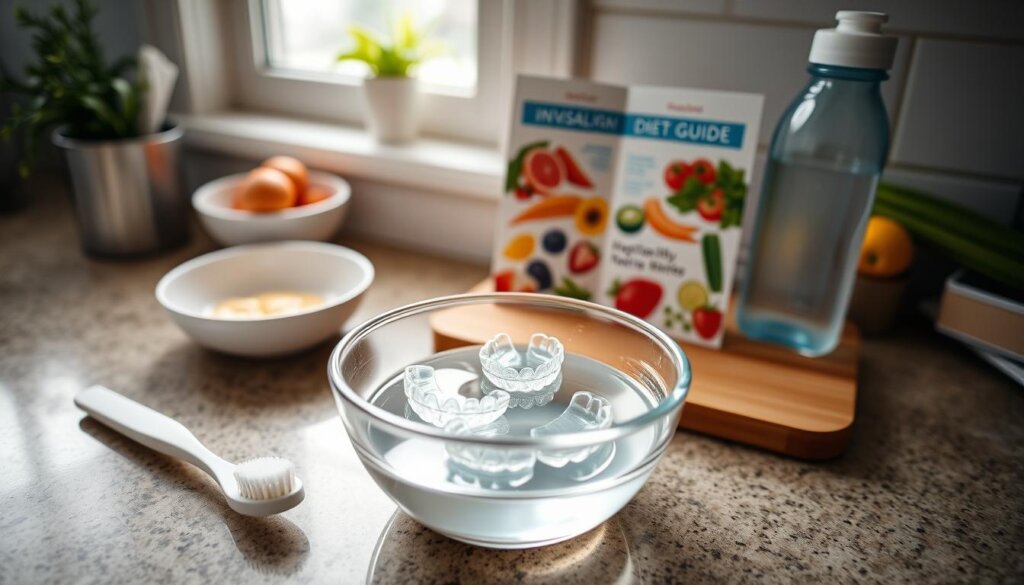
Managing your diet while wearing Invisalign aligners is key to keeping your mouth healthy and your appliances working right. Knowing which foods and drinks to avoid is important. It helps prevent problems that can harm your aligners and teeth.
It’s important to remove aligners before eating any solid foods. This rule helps avoid many problems that can slow down your treatment. If you eat with your aligners in, you risk damaging them and harming your teeth.
Foods to Avoid
You should always take out your aligners before eating. This is true for all kinds of food, no matter how soft or hard. Chewing can damage the aligners, making them not fit right anymore.
Food stuck between your teeth and the aligners can cause problems. It creates a place where bacteria can grow. This can lead to tooth decay because your saliva can’t protect your teeth as well.
Some foods are even riskier after you take out your aligners:
- Sticky or chewy foods like caramel or gummy candies that stick to your teeth
- Highly pigmented foods like berries, tomato sauce, and curry that can stain your teeth
- Hard or crunchy items like nuts, ice, or hard candies that can damage your teeth
- Sugary snacks that feed bacteria and increase acid in your mouth
Choosing the right foods is important for cleaning your Invisalign trays at home. If food stays on your teeth before putting in your aligners, it can cause cavities and bad breath.
Safe Beverages
Water is the only safe drink to have with your aligners. It’s safe because it doesn’t have sugars, acids, or colors that can harm your teeth. Drinking room temperature water is best for your aligners and teeth.
Other drinks need you to remove your aligners because of how they can affect them:
| Beverage Category | Primary Risk Factor | Potential Consequences |
|---|---|---|
| Coffee and Tea | Tannins and chromogens | Severe discoloration, aesthetic compromise, permanent staining |
| Sodas and Sports Drinks | High acidity and sugar content | Enamel erosion, cavity formation, bacterial proliferation |
| Fruit Juices | Natural acids and sugars | Demineralization, increased caries risk, aligner damage |
| Hot Beverages | Elevated temperature | Thermoplastic warping, dimensional changes, fit compromise |
Even drinks that seem safe can be harmful. Clear sodas can erode your teeth over time. Diet drinks may not have sugar but can be acidic and harm your teeth. The aligners trap these harmful substances against your teeth, stopping your saliva from cleaning them.
Drinking hot or cold liquids can also be a problem. Hot drinks can warp your aligners, and cold drinks can change their shape temporarily. These changes can affect how well your teeth move.
When you drink something other than water, always follow the same steps: remove your aligners, drink, brush your teeth, and rinse your aligners before putting them back in. This helps prevent stains and bacteria from building up on your aligners.
Following these dietary rules is key to keeping your Invisalign trays clean at home. It’s better to avoid problems than to try to fix them later. These guidelines help your treatment go smoothly and keep your teeth and aligners healthy.
Mistakes to Avoid While Cleaning
Proper care of aligners goes beyond just cleaning. It’s about avoiding practices that can cause permanent damage. Many people unknowingly harm their aligners by using the wrong cleaning methods. Knowing these mistakes helps keep your aligners clear and in good shape.
What seems like thorough cleaning can actually damage your aligners over time. Spotting these mistakes early can save you from expensive replacements and keep your treatment on track.
Common Myths Debunked
Many myths about caring for aligners are out there, despite the science saying they’re wrong. These myths come from applying dental hygiene to aligners in the wrong way. It’s important to know the truth for the best care.
The first big myth is that stronger cleaners work better. People think using harsh chemicals or strong solutions is best. But, these cleaners can actually damage the aligners, making them cloudy and brittle. Gentle cleaning keeps the material in good shape.
Another myth is using toothpaste to clean aligners. People think toothpaste works for both teeth and aligners. But, toothpaste has abrasive particles that scratch the aligners, making them cloudy and attracting bacteria.
The myth about hot water also causes problems. People think hot water kills more bacteria and removes stains better. But, water above 120°F softens and deforms the aligners. This can change their shape and fit.
Many think that if aligners look clean, they’re clean enough. But, even if they look spotless, they can have hidden bacteria. Proper cleaning is needed to get rid of both visible and invisible dirt.
The following list summarizes key myths patients should recognize:
- Myth: Toothpaste provides safe, effective aligner cleaning
- Reality: Dentifrice abrasives scratch thermoplastic surfaces, compromising clarity
- Myth: Hot water sterilizes aligners better than lukewarm water
- Reality: Thermal exposure causes irreversible deformation
- Myth: Clear appearance indicates complete cleanliness
- Reality: Bacterial contamination exists below visible detection levels
- Myth: Stronger chemicals equal superior results
- Reality: Harsh agents degrade material integrity over time
Potential Damage Factors
Knowing what can damage your aligners helps prevent stains and keeps them working well. Different things can harm your aligners in different ways. Avoiding these can help your aligners last longer.
Hot water is the biggest threat to aligners. When the temperature gets too high, the material softens and can warp. Even a little hot water can make the aligner unfit for use.
Toothpaste can damage aligners through scratches, not chemicals. The abrasives in toothpaste can make the aligners cloudy. This makes them less clear and more prone to stains.
Baking soda is very abrasive, despite being seen as gentle. It can scratch the aligners more than many cleaners. These scratches make the aligners cloudy and hard to clean.
Colored soaps and mouthwashes can stain aligners. If the surface is damaged, these products can stain the aligners. This is why it’s best to use clear, unscented cleaners.
The following table outlines critical damage factors and their effects:
| Damaging Agent | Mechanism of Harm | Resulting Damage | Prevention Method |
|---|---|---|---|
| Hot water (>120°F) | Thermal softening of thermoplastic | Permanent warping and shape loss | Use only lukewarm or cool water |
| Toothpaste with silica | Mechanical abrasion from particles | Surface scratches and cloudiness | Use mild soap or specialized cleaners |
| Baking soda | High abrasivity creates deep grooves | Severe scratching and bacterial retention | Avoid all abrasive powders |
| Colored cleaning products | Pigment absorption into damaged areas | Permanent discoloration and staining | Select clear, unscented cleaning solutions |
Using electric toothbrushes can also damage aligners. The brush heads don’t fit well, causing uneven pressure. This can lead to cracks in the aligners. The vibration can also push particles into scratches.
Wearing aligners while eating can also cause problems. Food gets trapped, leading to bacteria growth. The pressure from chewing makes this worse. This combination of force and bacteria can stain and damage the aligners.
Not cleaning aligners regularly lets bacteria build up. These bacteria can etch the material. Once this happens, it’s hard to clean the aligners and they can stain easily.
Keeping the surface of aligners intact is key to their care. Once damage happens, it’s hard to prevent stains. This shows why preventing damage is more important than fixing it later.
Importance of Regularly Changing Aligners
Changing your aligners regularly is more than just following a routine. It’s a science-backed way to move your teeth. Your Invisalign maintenance routine includes changing aligners, cleaning, and storing them properly. Each aligner is made to apply specific forces at certain times in your treatment.
Knowing how aligners work helps us see why timing is key. Teeth move through a process called bone remodeling. This process needs time to work, and orthodontists plan your treatment carefully.
Combining regular wear with other care steps is key to success. Wearing your aligners as directed and changing them on time helps your treatment work best.
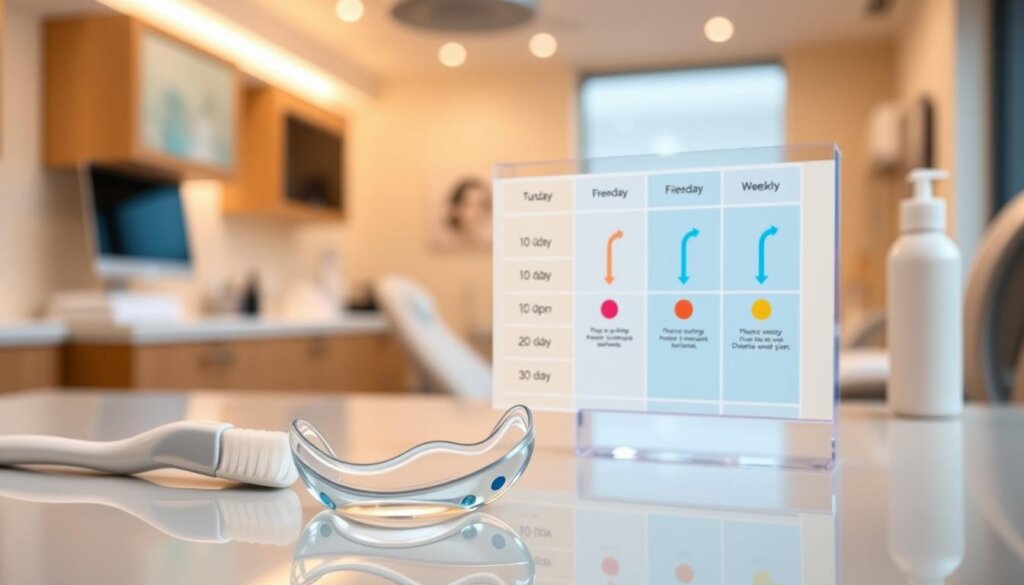
Scheduling Your Aligner Progression
Most Invisalign plans ask you to change aligners every one to two weeks. But, this can vary based on how complex your treatment is. Your orthodontist will decide the best pace for you, considering how far your teeth need to move and the bone around them.
Wearing your aligners for 20 to 22 hours a day is important. This long wear time helps keep the forces needed for tooth movement going. If you don’t wear them as much, the forces won’t work as well.
Before moving to the next aligner, check a few things:
- Fit evaluation: Your current aligner should feel loose and fit easily
- Mobility assessment: Your teeth should be moving as planned
- Comfort level: The aligner should not cause discomfort or pressure
- Visual inspection: Look for signs of wear that mean you’ve worn it too long
Checking these things helps you move at the right pace for your treatment. Your Invisalign maintenance routine should include regular checks to make sure you’re on track.
Advantages of Schedule Adherence
Sticking to your schedule has many benefits. Keeping on schedule means your treatment goes faster. Every delay adds weeks or months to your treatment.
Changing aligners on time also means the forces work better. Each aligner is made for teeth in a specific position. If you wait too long, the forces won’t be as effective. Changing too soon can also cause problems.
Aligners also have a limited lifespan. Wearing them too long can cause them to:
- Plastic degradation: The material loses its shape and strength
- Reduced clarity: They become cloudy, affecting their look
- Increased bacterial colonization: They get more bacteria, even with cleaning
- Diminished force application: They can’t apply the needed forces for tooth movement
Seeing progress is a big motivator. Changing aligners regularly shows you’re making progress. This keeps you motivated to stick with your Invisalign maintenance routine.
Not changing aligners on time can slow down tooth movement and might mean you need more treatment. Your orthodontist might need to make changes to your treatment plan. This can make your treatment longer and more expensive.
Changing too soon can also cause problems. Moving to the next aligner too early can cause discomfort and even damage teeth.
Being consistent is key for your oral health and keeping your trays in good shape. Wearing Invisalign for 20+ hours a day is important for success.
Remember, your maintenance duties are more than just cleaning and storing. Changing aligners is a big part of taking care of your teeth. This approach helps you get the best results from your orthodontic treatment.
Maintaining Oral Hygiene
Keeping your teeth clean is key to successful orthodontic treatment with clear aligners. Good oral hygiene is essential throughout the day. Sanitizing Invisalign aligners properly is just one part of the care. Your mouth must also stay clean to avoid problems.
Make sure to clean your teeth before putting in your aligners. This stops bacteria from getting trapped. Cleaning your teeth well helps prevent plaque and tooth decay.
Brushing and Flossing Techniques
Brush your teeth well after every meal or snack before putting in your aligners. This stops food and bacteria from getting stuck. The modified Bass brushing technique is the best way to clean during orthodontic treatment.
Brush for at least two minutes with toothpaste that has fluoride. Hold your brush at a 45-degree angle to your gums. Use gentle circular motions to clean the gum line and between your teeth.
Use floss or interdental brushes to clean between your teeth. These tools get rid of debris that toothbrushes can’t. Proper brushing and sanitizing Invisalign aligners properly are the keys to successful treatment.
Here are some important brushing and flossing tips:
- Timing: Clean your teeth right after eating, before putting in your aligners to stop bacteria from getting trapped
- Duration: Brush for at least two minutes to remove plaque from all tooth surfaces
- Technique: Use the modified Bass method with bristles angled toward gums for the best cleaning
- Interdental care: Floss every day to remove debris between teeth where cavities often form
- Fluoride protection: Choose toothpaste with fluoride to strengthen your enamel and prevent demineralization
Use of Mouthwash
Antimicrobial rinses are a helpful addition to brushing and flossing. They contain ingredients like chlorhexidine gluconate or essential oils that kill bacteria. These rinses help keep your breath fresh and support your gums during orthodontic treatment.
But, use mouthwash carefully. Rinse with it after removing your aligners, not before putting them back in. Mouthwash left in your mouth can irritate your gums or change your mouth’s pH.
Alcohol-based mouthwashes can dry out your mouth, making it uncomfortable to wear aligners. They also increase the risk of staining your aligners, which can affect their clear look.
| Mouthwash Type | Active Ingredient | Primary Benefit | Consideration |
|---|---|---|---|
| Chlorhexidine | Chlorhexidine gluconate | Superior antimicrobial activity | May cause temporary staining |
| Essential oil rinse | Thymol, eucalyptol, menthol | Reduces plaque and gingivitis | Often contains alcohol |
| Fluoride rinse | Sodium fluoride | Strengthens enamel | Best used at bedtime |
| Cetylpyridinium chloride | CPC quaternary compound | Freshens breath effectively | Some formulations include dyes |
Good oral hygiene and aligner care go hand in hand. Sanitizing Invisalign aligners properly and keeping your teeth clean are key to a healthy smile during treatment.
Staying consistent with oral care is vital during aligner therapy. Clean aligners prevent bacteria, but your mouth must also stay clean. This approach helps avoid tooth decay, gum problems, and bad breath while improving treatment results.
Signs of Scratches or Damage
Your Invisalign aligners need regular checks to work well. They can wear out over time, get damaged by cleaning products, or be affected by the environment. Spotting these problems early helps avoid bigger issues later on.
Finding damage early keeps your aligners looking good and working right. If they’re not perfect, they might not move your teeth as planned. Checking them often is key to a successful orthodontic treatment.
Performing Systematic Aligner Evaluations
Make checking your aligners a part of your daily routine. Use good light and a careful method to check them. Spend about two minutes each morning and night to do a thorough check.
Looking closely at your aligners is the main way to find scratches. Hold them up to light or sunlight to see any marks. This helps spot scratches that might not be obvious at first glance.
Cloudy or frosted-looking aligners mean they have tiny scratches. These scratches often come from toothpaste with silica. Most toothpastes have abrasive ingredients that make tiny grooves on the aligner.
Feeling your aligners with your fingers is also important. This helps find scratches that you can’t see. If they feel rough or have bumps, it’s a sign of damage.
Checking the edges of your aligners is also important. Look for small cracks, chips, or rough spots. These can weaken your aligners and cause problems.
- Small cracks extending from the edge inward
- Chips or missing material along the margin
- Roughened areas that may irritate gum tissue
- Delamination where layers separate visibly
Comparing your current aligners to new ones helps you see if they’re getting damaged. If they’re getting cloudy or less clear, it’s a sign of wear. This helps you catch problems before they get worse.
Identifying Common Degradation Patterns
Knowing how your aligners wear out helps you take care of them better. Different types of damage need different fixes. This way, you can tell if it’s just a cosmetic issue or something more serious.
Scratches that make your aligners look hazy are common. This happens when you clean them the wrong way too many times. Over time, these scratches can make your aligners look cloudy or even opaque.
These scratches can also hold onto bacteria and stains. Choosing the right cleaning products can help prevent this.
Stains from food and drinks can make your aligners look yellow or brown. Drinking coffee, tea, or red wine can cause this. Smoking and bacteria can also make them yellow over time.
Stress whitening makes your aligners look white and cloudy. This happens when you bite too hard or put them in wrong. The white spots are permanent damage to the plastic.
Damage at the edges of your aligners is common. This is because they rub against your gums. If you don’t take care of them, they can break or crack.
Wearing your aligners in hot drinks or in warm places can warp them. This changes their shape and how they fit. This can mess up how your teeth move.
Ignoring damage can lead to bigger problems. Scratches can hold onto bacteria, causing infections. Changes in shape can mess up how your teeth move, making treatment take longer.
Checking your aligners regularly and knowing how to clean them is key. If you find damage early, you can clean it up. But if it’s serious, you need to see your orthodontist right away.
This daily check is important for your treatment to work. It makes you an active part of your orthodontic care. Just a few minutes each day can keep your aligners looking and working great.
Using Invisalign Alongside Other Dental Products
Knowing how Invisalign works with other dental treatments helps patients make better choices. Many people want to improve their smile by using whitening products or protective gear. But, it’s important to know if these products work well together.
Adding other dental products to Invisalign needs careful thought. You need to think about how they work together and when to use them. Invisalign care goes beyond just cleaning to include how it works with other treatments.
Compatibility with Teeth Whiteners
Invisalign aligners might work with teeth whitening products, but safety is key. The main issue is the difference between aligners and whitening trays.
Aligners cover more of your gums than whitening trays. This can cause problems if you use whitening gel too long. Peroxide-based gels can irritate or burn your gums if they’re on them for too long.
Orthodontists often give special whitening gel for safe use with aligners. These products are made to work with aligners and the extra gum coverage they provide.
To safely whiten your teeth, follow these steps:
- Test tissue sensitivity by wearing whitening gel for half the recommended time first
- Watch for gum blanching, redness, or discomfort after each use
- Only use products approved by your orthodontist for aligner use
- Talk to your orthodontist about your whitening plans
- Stop using it right away if you feel any gum sensitivity or irritation
Never wear aligners with teeth whitening gel at night. Wearing it too long can cause serious gum burns. You can’t watch for problems while you’re sleeping, which is dangerous.
If you have any issues with whitening, call your orthodontist right away. Some people are more sensitive and should not whiten their teeth at all.
Using Retainers and Mouthguards
Invisalign retainers help keep your teeth straight after treatment. They need the same care as aligners because they’re made of the same material.
The same cleaning tips for aligners work for retainers. You don’t need special products to keep them clean. Just use mild soap and warm water.
But, mouthguards and bruxism appliances are different. You can’t wear them with aligners because they don’t fit right. Athletes need to take out their aligners before using mouthguards.
If you need both orthodontic treatment and protective gear, talk to your orthodontist. They can help you figure out a schedule that works for both. Sometimes, you might need to stop wearing aligners during sports seasons for safety.
Bruxism guards also pose a challenge. They take up the same space as aligners. Your orthodontist might suggest changing your aligners at certain times to fit your guard use.
Understanding how products work together is key to good aligner care. Making informed choices about other dental products helps keep your treatment effective and your mouth healthy.
Troubleshooting Common Issues
Dealing with common aligner problems helps keep your treatment looking and feeling great. Even with regular cleaning, stains and odors can pop up. Knowing why these issues happen helps fix them and stop them from coming back.
These problems come from how the aligners react with your mouth. Things like food, bacteria, and minerals can stain and smell. By using the right fixes, you can keep your aligners looking and smelling good.
Addressing Stains and Discoloration
Stains from food and drinks are a big worry for people wearing clear aligners. Coffee, tea, and berries can stain the aligners. This is because of tiny scratches on the surface.
Bacteria and saliva deposits also cause stains. To avoid stains, take out your aligners before eating or drinking. This stops the stains from forming.
To clean stains, start with a soft brush and soap. This gently removes stains without harming the aligners.
For tough stains, try hydrogen peroxide. Mix it with water and soak the aligners for 20 minutes. This breaks down the stains without damaging the aligners.
Using hydrogen peroxide might need to be done a few times. It’s safe to use if it’s 3% hydrogen peroxide diluted right.
For stains from minerals, use white vinegar. Mix it with water and soak the aligners for 15 to 20 minutes. Then, rinse well and brush off any plaque. This method removes mineral deposits but might leave a smell.
Important consideration: Vinegar can leave a smell that takes time to go away. Soaking in water helps reduce this smell. But, the smell might not completely disappear.
Don’t mix hydrogen peroxide and vinegar. This can create a harmful chemical. The best way to avoid stains is to eat and drink carefully and rinse right after.
Resolving Odor Problems
Bad smells from aligners mean bacteria are growing on them. These bacteria make smelly gases. This is what worries patients.
It’s important to tell if the smell is from the aligners or your mouth. If it’s your mouth, see a dentist. But, if it’s the aligners, cleaning them more often helps.
To get rid of bad smells, clean your aligners more often. This stops bacteria from growing. Cleaning often helps a lot.
Soaking in solutions that kill bacteria also helps. Hydrogen peroxide and special cleaning crystals work well. They kill bacteria without harming the aligners.
Make sure to clean your mouth before putting in new aligners. Brush and floss to remove food and plaque. This keeps your mouth and aligners clean.
Getting rid of bad smells might take a few tries. If it doesn’t work, you might need to change your aligners early. Or, you might need to see a dentist.
Here are some ways to fix bad smells:
- Clean your aligners three or four times a day
- Soak them in solutions that kill bacteria
- Keep your mouth clean before putting in new aligners
- Store them in clean, dry cases
- See an orthodontist if the smell doesn’t go away
Preventing problems is better than fixing them. Keeping up with cleaning routines helps avoid stains and smells. This keeps your aligners looking and feeling good during treatment.
Understanding the Lifespan of Aligners
Invisalign aligners are made to last for specific times. This is key to their success and keeping your mouth healthy. Each set of aligners is designed to move your teeth in a certain way. The time they are meant to be worn is based on how they are made and orthodontic science.
Keeping your Invisalign maintenance routine up to date is important. It’s not just about cleaning them. Wearing them for the right amount of time is also critical. This helps your teeth move as planned and keeps your mouth clean.
Aligners work best when worn for 20 to 22 hours a day. This constant use makes them wear out. It affects how well they work and how long they last.
Scheduled Replacement Guidelines
Orthodontists usually tell you to change your aligners every 7 to 14 days. But, this can vary based on your treatment. They look at several things to decide when to change them:
- Treatment complexity: More complex treatments need longer wear times.
- Patient age and bone density: Younger people with faster bone turnover may need to change them more often.
- Individual response patterns: Some people’s teeth move faster than others.
- Specific tooth movement requirements: Some movements, like rotations, need longer wear times.
These schedules are based on how forces decrease as teeth move. The aligner applies the most force at first. As teeth get closer to their new position, the force decreases. Changing them too late can reduce their effectiveness.
Sometimes, you might need to change your aligners early. Significant visible damage or stains that won’t come off are examples. These issues can affect how well you can wear them and how they look.
Lost aligners also need to be replaced quickly. If you don’t wear them for long enough, your teeth might move back. Keeping them safe is part of your Invisalign maintenance routine.
Consequences of Prolonged Wear
Wearing aligners for too long can cause problems. The material gets worn out, and the teeth don’t move as much. This might mean you need to change your treatment plan, which can cost more time and money.
Material wear increases with longer use. The surface of the aligners changes, making it easier for bacteria to stick. Even with good cleaning, bacteria can build up, leading to oral health issues.
| Duration of Extended Use | Material Impact | Clinical Consequences | Patient Experience |
|---|---|---|---|
| 1-2 days beyond schedule | Minimal material fatigue | Rarely causes significant issues | No noticeable aesthetic changes |
| 3-5 days beyond schedule | Moderate surface degradation | Reduced force delivery efficiency | Increased staining visibility |
| 1+ week beyond schedule | Significant material breakdown | Incomplete tooth movement requiring revision | Bacterial odor and aesthetic compromise |
| Systematic schedule deviation | Progressive structural failure | Treatment plan failure and restart necessity | Extended treatment time and additional costs |
Wearing them for too long can also make them look less appealing. Stains from food and drinks can be hard to remove. This can make them more noticeable, which might not be what you want.
Bacteria can grow more on aligners the longer you wear them. Even with cleaning, they can build up. This is more likely to happen if you wear them for longer than recommended.
Wearing them for longer than needed doesn’t help much. Teeth that are almost in place don’t move much more. But, the risk of material wear and bacteria growth keeps going up.
Your Invisalign maintenance routine should include wearing them as directed. This helps them work best and keeps your mouth healthy. It also makes sure your treatment goes smoothly.
Seeking Professional Guidance
While daily care is key, professional help is vital for complex issues. Your orthodontist is an expert who helps throughout your treatment. They ensure your treatment and aligners stay in top shape.
Getting advice on best Invisalign cleaning solutions is very important. Your needs can vary due to diet, oral health, or sensitivities. Your orthodontist can suggest the right products and methods for you.
Recognizing When Professional Consultation Becomes Necessary
Some issues need quick orthodontic help to avoid big problems. Knowing when to seek help keeps your treatment on track.
Aligner fit discrepancies are a big red flag. If your aligners don’t fit right, it could mean you’re moving too fast or teeth are moving unexpectedly. This can slow down your treatment.
Damage to your aligners needs quick attention. Cracks or warping can stop your aligners from working right. This can slow down your progress or let teeth move the wrong way.
Long-lasting pain is a sign you need to see your orthodontist. Some discomfort when starting is normal. But if it lasts, it might mean you need a change in your treatment.
Signs of mouth problems need immediate care. Look out for:
- Gingival inflammation or persistent redness around tooth margins
- Unexpected tooth mobility beyond normal treatment expectations
- Soft tissue lesions or ulcerations in the mouth
- Unusual bleeding when removing or inserting aligners
Stains or wear that won’t go away need a check-up. If your aligners keep getting dirty or cloudy, your orthodontist can help.
Ask your orthodontist about your treatment anytime. Talking early can prevent big problems. Orthodontists prefer early patient contact to fix issues before they get worse.
The Critical Role of Regular Progress Evaluations
Regular check-ups are very important during your treatment. They usually happen every six to eight weeks, but can be more often if needed.
These visits let your orthodontist check how your teeth are moving. They compare your progress to the plan to make sure everything is on track.
Your orthodontist also checks your aligners for damage. They use special tools to find small problems before they get big. This helps keep your treatment going smoothly.
They also check your mouth for any health issues. This includes looking for cavities or gum problems. Finding these early helps keep your mouth healthy and your treatment on track.
These visits are a chance for your orthodontist to teach you more about caring for your aligners. They can show you the best Invisalign cleaning solutions and answer your questions. This helps you take better care of your aligners.
These visits also help keep you motivated. Your orthodontist can remind you to wear your aligners as directed. This helps you stay on track with your treatment.
These visits are the minimum, but you might need more based on your treatment. Maintaining regular professional contact helps your treatment go smoothly and keeps complications at bay.
Tips for Staying Compliant with Your Treatment
Getting the most out of Invisalign treatment is not just about keeping your aligners clean. It also involves habits that help you wear them as directed. Wearing them for 20-22 hours a day is key to getting the best results in the shortest time. This means setting up systems and talking to your team to keep up with treatment, even when it gets routine.
Success in treatment depends on both the technical and psychological sides of things. Studies show that wearing aligners as directed helps treatment go faster. If you don’t wear them as planned, treatment might take longer. Making daily wear a part of your health routine can make treatment easier to stick to.
Creating Effective Reminder Systems
Having strong reminders is a big part of keeping up with treatment. With only a little room for mistakes, reminders are very important. They help you remember to wear your aligners as much as you should.
Today, there are many ways to track your treatment. Apps on your phone can help you keep up with your treatment. They do more than just remind you to wear your aligners.
- Orthodontic tracking applications: Apps that track how long you wear your aligners, remind you to clean them, and keep track of when to change them
- Calendar-based systems: Calendars that mark important dates like when to see your orthodontist or change your aligners
- Alarm notifications: Alarms that remind you to put your aligners back in after meals, so you don’t miss out on treatment
- Visual cue placement: Reminders you can see, like on your mirror or desk, to help you remember to clean your aligners
- Habit stacking techniques: Linking aligner care to things you already do, like brushing your teeth, to make it easier to remember
Understanding how habits work can help you stick to treatment. Research shows that doing something for 21-30 days can make it a habit. This means the first few weeks of treatment are very important for setting up good habits.
Making aligner care part of your daily routine can make it easier. If cleaning your aligners is just part of your morning or evening routine, you’re more likely to do it. This makes it easier to remember to wear them.
Maintaining Active Communication with Your Orthodontic Provider
Good communication with your orthodontist is key to success. Talking to your orthodontist regularly helps make sure treatment is going well. They can make changes if needed and keep you motivated.
Patients who ask questions and share their concerns usually do better. Orthodontists can adjust treatment if you’re having trouble. They can also recommend products to help with cleaning.
Here are some ways to stay in touch with your orthodontist:
- Prepare question lists: Write down any questions or concerns before your appointment, so you don’t forget
- Report compliance challenges: Tell your orthodontist if you’re having trouble wearing your aligners or cleaning them
- Request progress visualization: Ask to see pictures or simulations of how your teeth will look at the end of treatment
- Discuss lifestyle accommodations: Talk to your orthodontist about how to fit treatment into your busy schedule
- Clarify maintenance protocols: Make sure you understand how to care for your aligners, and ask questions if you’re unsure
Seeing how far you’ve come can be a big motivator. Looking at before and after pictures can show you how much progress you’ve made. This can help you stay on track with treatment.
Your orthodontist is not just a doctor, but a partner in your treatment. They can suggest changes if needed and help with any challenges you face. This teamwork is key to getting the best results from treatment.
Good daily care tips for Invisalign go beyond just cleaning. They include reminders and talking to your orthodontist. By using technology and understanding habits, you can make treatment a part of your daily life. This makes it easier to stick with it.
Working with your orthodontist is important for success. They can adjust treatment to fit your needs and keep you motivated. This approach makes treatment a part of your health routine, not just a chore.
Conclusion: Best Practices for Longevity
Following the strategies in this guide ensures your orthodontic treatment is a success. Cleaning and caring for your Invisalign aligners becomes easy with daily practice. These simple steps protect your investment and keep your mouth healthy during treatment.
Essential Maintenance Protocols
Effective aligner care starts with a few key steps. Rinse your aligners with lukewarm water as soon as you take them out. Then, brush them gently with a soft-bristled toothbrush and mild soap twice a day. Soak them in cleaning solutions to kill bacteria.
Always store your aligners in protective cases when not in use. Make sure to brush your teeth well before putting your aligners back in. These steps help keep your aligners clear and your mouth healthy.
Building Sustainable Habits
Sanitizing your Invisalign aligners becomes a habit quickly. Most people spend only 5-10 minutes a day on maintenance once they get into the routine. Clean aligners work well and look good too.
How well you care for your aligners affects your treatment’s success. Well-maintained aligners are comfortable and invisible. They also protect your gums and teeth from harmful bacteria.
Long treatments can be tough, but the solutions here help with most issues. Your orthodontist at places like Align Technology is there to help too. Seeing aligner care as an investment keeps you motivated. This leads to the healthy smile you wanted from the start.

