How Do I Keep My Aligners from Staining or Smelling Bad?
Did you know over 50% of aligner users face staining or bad smells? This shows how key proper hygiene is for clear aligners. As more people get orthodontic treatments, knowing how to care for these appliances is vital.
Clear aligners, like Invisalign, are made from special materials. If not cleaned often, these materials can get dirty. This can cause bad smells and stains. It’s not just about looks; it’s also about your teeth and gums.
But, there are easy ways to keep your aligners looking good. By cleaning them daily, using special cleaners, and changing your habits, you can keep them in top shape. This article will show you how to keep your orthodontic treatment clean and discreet.
Key Takeaways
- Regular cleaning prevents bacteria buildup and bad odors.
- Simple daily care routines can keep aligners clear.
- Neglecting hygiene may lead to oral health issues.
- Understanding materials helps in proper maintenance.
- Implementing behavioral changes can enhance aligner care.
Understanding Aligners and Their Care
Clear aligners are a new way to straighten teeth without metal braces. They are custom-made and removable. They work by gently moving teeth into place over time. But, it’s important to know how to take care of them to keep them working well and your mouth healthy.
Aligners can catch food and plaque because they sit on your teeth all day. If not cleaned, this can cause cavities or gum problems. So, cleaning them is key for your health, not just for looks.
What Are Aligners?
Aligners are made from a soft, clear plastic that fits over your teeth. They are different from metal braces because they are less noticeable. You wear them for 20 to 22 hours a day, taking them out to eat, drink, brush, and floss.
Aligners move your teeth slowly, in stages. You switch to a new set every two weeks. This method is both effective and comfortable.
The Importance of Proper Care
Cleaning your aligners well is important to stop bacteria buildup. If not cleaned, they can harbor harmful bacteria like Streptococcus mutans and Candida albicans. These can cause tooth decay and bad breath. So, it’s important to follow good care tips every day.
Here are some key tips for caring for your aligners:
- Clean your aligners daily with a gentle cleanser.
- Rinse them with lukewarm water before putting them back in your mouth.
- Store them in a protective case when not in use to prevent contamination.
Seeing aligners as places where bacteria can grow helps you understand why good hygiene is so important. It keeps your aligners in good shape and your teeth and gums healthy.
Common Causes of Staining and Odor
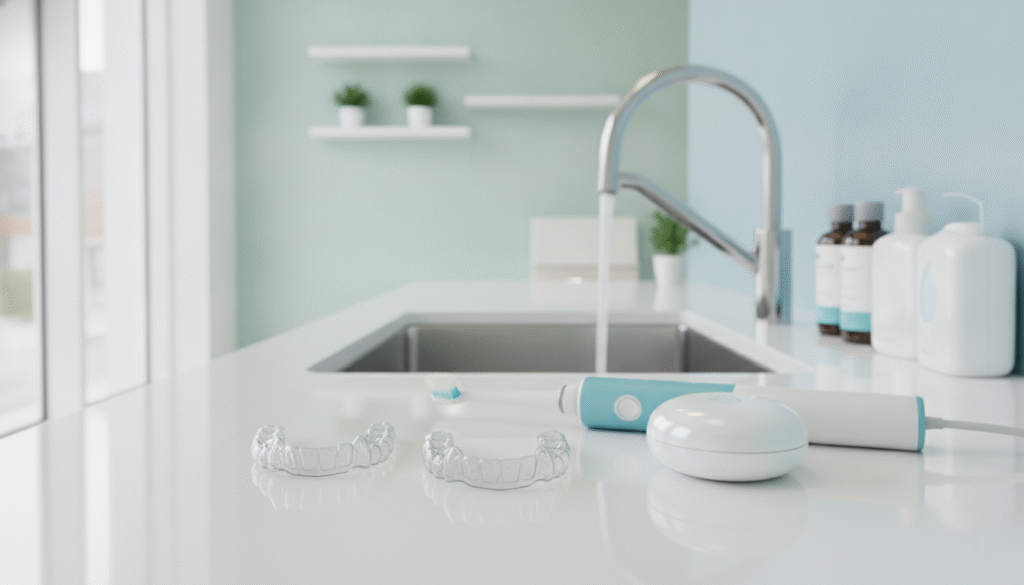
It’s important to know what causes aligner staining and odor. Many things can lead to these problems. This includes the food and drinks we eat, and the buildup of bacteria and plaque.
Food and Drink Impact on Aligners
Some foods and drinks can stain aligners. Coffee, tea, red wine, and cola have tannins and polyphenols. These can stick to the aligners and cause stains.
Drinking these items while wearing aligners can also trap food and sugars. This leads to stains and creates a place for bacteria to grow. This results in bad smells.
Bacteria and Plaque Buildup
Oral bacteria love warm, moist places. Aligners are perfect for them. Without cleaning, plaque and bacteria build up, causing bad smells.
As time goes on, aligners can get tiny holes. This happens if you clean them with harsh agents. These holes trap bacteria. So, it’s key to clean aligners well to avoid odors and stains.
Daily Cleaning Routine for Aligners
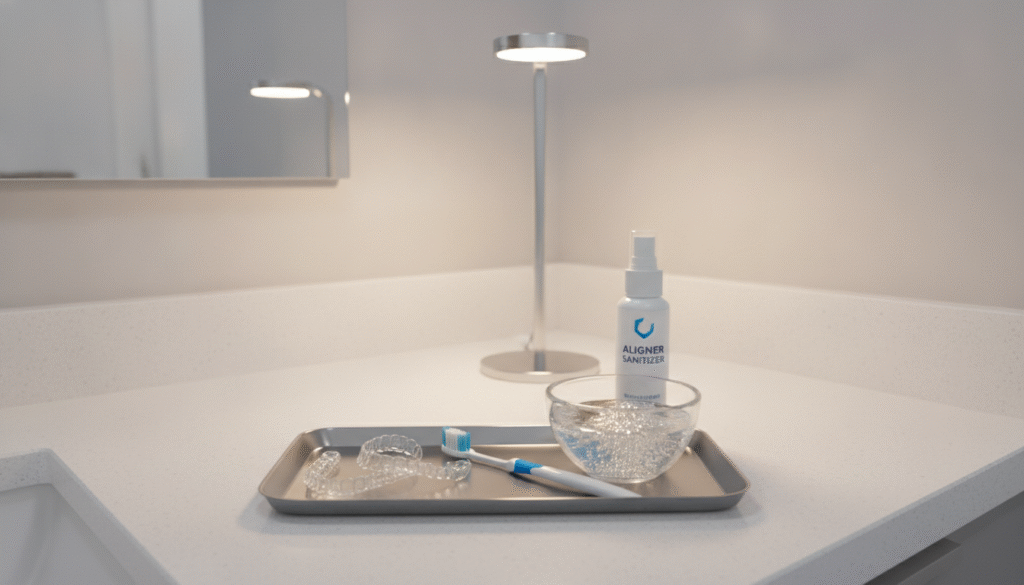
It’s important to clean your aligners every day to keep them clear and long-lasting. Cleaning them regularly helps prevent stains and keeps your mouth healthy. Here’s how to clean your aligners right:
Recommended Cleaning Products
Use these products to keep your aligners looking new:
- Invisalign Cleaning Crystals: They have sodium sulfate and surfactants to kill bacteria.
- Fragrance-Free Liquid Soap: A mild soap that cleans without scratching the aligners.
- Soft-Bristled Toothbrush: Needed for gentle cleaning without damage.
Step-by-Step Cleaning Guide
Here’s how to clean your aligners:
- Rinse: Rinse your aligners with lukewarm water right after taking them out. Don’t use hot water to avoid damage.
- Brush: Use a soft-bristled toothbrush to clean all parts of the aligner, focusing on the teeth side.
- Clean: Put a little cleaning solution on and scrub gently to get rid of dirt.
- Rinse Again: Rinse the aligners well to get rid of the cleaning solution and avoid mouth irritation.
Do this twice a day to remove plaque and prevent stains. If you get a lot of stains, try soaking them in a diluted sodium hypochlorite solution once a week. But ask your orthodontist first.
Best Practices for Wearing Aligners
Wearing aligners right means keeping them clean and comfy. The main goal is to keep them fresh and free from bad bacteria. By following the right steps, you’ll have a better experience with your aligners.
Duration and Frequency of Wear
Aligners should be on your teeth for at least 20 to 22 hours a day. This helps move your teeth into the right spots. Only take them off to eat or brush your teeth. Don’t wear them while drinking anything other than water to avoid food and bacteria getting stuck.
How to Handle Aligners When Eating
When it’s time to eat, take out your aligners and put them in a clean, dry case. Don’t wrap them in a napkin, as it can cause them to get lost or dirty. After eating, brush and floss to get rid of food bits. Then, rinse your aligners with cool water to get rid of any leftover saliva that might cause bad smell.
By following these tips, you can stop bacteria from growing and keep your aligners smelling fresh. Also, avoid sugary or acidic drinks while wearing your aligners. These can get trapped between your teeth and the aligners, helping bacteria grow.
| Practice | Description | Benefits |
|---|---|---|
| Wear Time | 20-22 hours daily | Maximizes effectiveness |
| Removal During Meals | Only remove for eating | Prevents food particle accumulation |
| Proper Cleaning | Brush and rinse before reinserting | Reduces odor and bacteria |
Maintaining Oral Hygiene
Keeping your mouth clean is key when you wear aligners. Brushing and flossing regularly are musts. They help keep your teeth clean and your aligners free from stains and bad smells.
Brushing and Flossing Techniques
To clean your teeth well while wearing aligners, try these methods:
- Use a soft-bristled toothbrush: It’s gentle on your gums and gets rid of plaque.
- Fluoride toothpaste: Use it to make your teeth strong and prevent cavities.
- The Bass technique: Brush at a 45-degree angle to your gums to fight plaque.
- Interdental cleaning: Use dental floss or water irrigators to clean between your teeth. This keeps your aligners clean.
Rinsing Solutions for Freshness
Using the right rinses can also boost your oral care:
- Antibacterial mouthwash: Pick an alcohol-free, chlorhexidine-based mouthwash (0.05% concentration) for quick germ control.
- Saline rinse: A simple saline solution can neutralize acids and freshen your mouth without harm.
- Baking soda solution: Mixing water with baking soda makes a gentle rinse that keeps your mouth fresh.
When you rinse your aligners, make sure the solutions are clear and don’t stain. Good oral hygiene and aligner care work together. A clean mouth means less bacteria on your aligner, and a clean aligner keeps your teeth safe.
This approach is vital for avoiding tooth decay and bad breath. It shows that taking care of your teeth and aligners is the same thing.
Food and Drink Choices with Aligners
Your diet is key to keeping your aligners from staining. It’s important to choose what you eat and drink wisely. Some foods and drinks can stain or cause bad smells, affecting your experience.
Safe Foods and Drinks
Choose foods and drinks that are less likely to stain your aligners. Safe options include:
- Plain yogurt
- White cheeses
- Most vegetables
These foods have little pigment and few carbs that bacteria can feed on. The only safe drink is plain water. Other clear drinks, like sodas or fruit juices, can harm your teeth and aligners.
Items to Avoid
To avoid aligner staining, avoid foods and drinks that stain. Stay away from:
- Coffee
- Black tea
- Red wine
- Curry
- Balsamic vinegar
Even when you take out your aligners, stains can stay on your teeth. They can then get back on your aligners. Keeping your mouth clean after eating these foods is very important. Also, be careful with hot foods and drinks. They can damage your aligners.
By choosing the right foods, you can avoid stains and keep your aligners looking good. This helps you enjoy the clear look of aligner therapy. It’s a big part of keeping your aligners looking great for a long time.
Storing Aligners Properly
How you store aligners affects their performance and smell. Storing them right is key to keeping them clean and working well. Here are some tips and mistakes to avoid.
Recommended Storage Solutions
Always put aligners in a clean, vented case when not wearing them. This keeps them safe from bacteria and damage. A sturdy case lets air in while keeping out dirt.
Make sure to clean your storage case often. Use soap and water, then dry it well to stop germs. When traveling, choose a case that closes tightly to avoid losing or damaging your aligners.
Avoidable Mistakes
Some common errors can harm your aligners:
- Wrapping aligners in tissue or putting them in pockets, which exposes them to bacteria.
- Storing aligners in moist, closed places without air, leading to fungus.
- Keeping aligners near heat or in direct sunlight, which can warp them.
Following these retainers freshness tips helps keep your aligners working well and smelling good. Proper storage is a simple step that greatly affects both the smell and success of your treatment.
| Storage Method | Benefits | Common Mistakes |
|---|---|---|
| Vented Rigid Case | Allows air circulation, prevents contamination | Not cleaning the case regularly |
| Secure Travel Case | Protects aligners during travel | Leaving aligners unprotected in bags |
| Dry Environment | Prevents fungal growth | Storing in moist or enclosed spaces |
Troubleshooting Stains and Odors
Stains and odors on aligners can affect their effectiveness and your oral health. Luckily, there are home remedies and strategies to fix these problems.
Effective Home Remedies
Here are some tips for keeping your aligners clean:
- Diluted Hydrogen Peroxide Soak: Mix equal parts of 3% hydrogen peroxide and lukewarm water. Soak your aligners for 15–20 minutes. This method oxidizes organic stains and eliminates bacteria.
- White Vinegar Solution: Combine one part white vinegar with three parts water. This solution can dissolve mineral deposits but must be thoroughly rinsed afterward to avoid any acidic residue.
- Baking Soda Paste: Create a paste using baking soda and water. While effective, use this sparingly as its abrasiveness may micro-etch the aligner surface over time.
- Invisalign Cleaning Crystals: For persistent odors, a 15-minute soak in Invisalign cleaning crystals or a retainer cleaning tablet containing sodium bicarbonate and citric acid can be beneficial.
These methods help patients handle minor problems on their own. But, if odors don’t go away, it might mean a bigger issue.
When to Seek Professional Help
If home remedies don’t work, see a dentist. Persistent stains or odors could mean:
- Deep-seated Biofilm: This may form within surface irregularities of the aligners, necessitating professional cleaning.
- Systemic Oral Health Issues: Conditions such as periodontitis may require immediate attention to prevent further complications.
Your orthodontist can check the aligners for damage and suggest stronger soaks. Early action can avoid replacing aligners and keep your treatment on track.
Knowing how to handle stains and odors helps keep your aligners in good shape. It also supports your overall oral health.
Alternatives to Traditional Cleaning
Technology keeps getting better, and so do ways to keep aligners clean and fresh. This part looks at new cleaning methods that are good for your aligners and the planet.
Using Ultrasonic Cleaners
Ultrasonic cleaners are a new way to take care of your aligners. They use sound waves to make bubbles in a cleaning solution. These bubbles then clean your aligners without scratching them.
They’re great for people who have trouble cleaning their aligners by hand or want a deeper clean. But remember, ultrasonic cleaners should be used along with your daily cleaning routine. You’ll need to use a cleaning solution in the reservoir to get everything clean.
Eco-Friendly Cleaning Options
If you like green options, there are some good choices. White vinegar is a mild acid that can remove plaque. Sodium bicarbonate can get rid of bad smells. Both are good for the planet and your wallet.
But, you have to rinse them well to get rid of any taste or harm to your aligners. There are also plant-based cleaners that break down biofilm.
Before trying any new cleaning method, make sure it won’t damage your aligners. Using these alternatives can help you stay clean while also being kind to the environment or using technology.
| Cleaning Method | Effectiveness | Environmental Impact | Ease of Use |
|---|---|---|---|
| Ultrasonic Cleaners | High | Moderate | Easy |
| White Vinegar | Moderate | Low | Moderate |
| Sodium Bicarbonate | Moderate | Low | Easy |
| Plant-Based Cleaners | High | Low | Moderate |
Regular Check-Ins with Your Orthodontist
Regular visits to your orthodontist are key to the success of aligner therapy. These appointments, usually every 6 to 8 weeks, help check your treatment’s progress. Your orthodontist can see how your teeth are moving, check if your aligners fit right, and make sure you’re cleaning well.
These follow-up appointments help spot problems early. Small signs of staining or bad smells might mean you’re not cleaning your aligners well. Your orthodontist can catch these issues and fix them before they mess up your treatment.
Also, these visits are a chance to learn how to clean your aligners better. Your orthodontist can show you the best ways to keep them clean, based on your needs. This helps you keep your aligners working well for your whole treatment.
Regular visits also help catch any oral health problems early. Issues like cavities, gum disease, or tooth decay can happen if you don’t clean your aligners right. Working closely with your orthodontic team means you get help fast and avoid longer treatment times or bad results.
In short, talking regularly with your orthodontist is super important for a healthy, straight smile. Going for regular check-ups not only makes your treatment better but also teaches you how to take care of your aligners.
The Role of Lifestyle in Aligner Care
Our lifestyle choices greatly impact how clean and well-maintained our aligners stay. It’s important to know how habits like smoking, drinking alcohol, and staying hydrated affect them.
Impact of Smoking and Alcohol
Smoking, whether from cigarettes or vaping, brings harmful substances like tar and nicotine. These stick to aligners, causing them to turn yellow-brown and smell bad. The heat from smoking can also bend the aligners if they’re not taken out first.
Drinking alcohol, like red wine and dark spirits, can stain aligners. It also dries out the mouth, reducing saliva. Saliva helps clean the mouth and stops bacteria from growing. So, it’s best to take out aligners when smoking or drinking anything other than water.
Staying Hydrated
Drinking enough water is a simple way to keep aligners clean. Water helps make saliva, which washes away food and acids that harm teeth. A moist mouth is less likely to have bacteria, making it easier to keep aligners clean and fresh.
Patients should also rinse their mouths well before putting aligners back in after eating or drinking. This helps keep them clean and free from contamination.
| Lifestyle Factor | Effect on Aligners | Recommendations |
|---|---|---|
| Smoking | Causes discoloration and odor | Remove aligners when smoking |
| Alcohol | Leads to staining and dry mouth | Limit consumption and rinse mouth |
| Hydration | Promotes saliva production | Drink plenty of water |
Changing these habits can make aligners last longer and stay cleaner. This keeps the treatment working well and looking good.
Long-term Care Tips for Aligners
Finishing aligner treatment is a big deal. Moving to retainers means keeping up the same care. Cleaning and storing them right is key to their lasting use.
Transitioning Off Aligners
After aligner treatment, patients get retainers. These keep teeth in place. Clean the last set of aligners well before storing them. This stops stains and smells.
Keep them as a backup for later use.
Final Maintenance Recommendations
Retainers need regular care. Clean them with a soft toothbrush and mild soap every day. Stay away from harsh toothpaste that might damage them.
Deep clean them weekly with Invisalign crystals or hydrogen peroxide. This kills bacteria and keeps them fresh.
Good oral hygiene is also key. Brush and floss regularly. Don’t miss retention check-ups with your orthodontist.
Following these care tips keeps your smile bright. The habits learned during aligner therapy help maintain a healthy smile for years.