
How Do I Store My Aligners When They’re Not in My Mouth
Ever thought about what happens to your orthodontic investment if you forget to store your aligners right? The way you care for your clear aligners during meals, cleaning, and daily life affects how well they work and how long they last.
Orthodontic experts at Wilson Ortho say aligners should always go into a protective case when you take them out. This simple step helps avoid problems that can mess up your treatment. Many people don’t realize how easily these precise devices can get damaged.
Not storing your aligners right can lead to big problems. Leaving them on tables or countertops can cause them to get lost or damaged. Wrapping them in napkins can lead to them being thrown away by mistake. Also, pets might chew on them because of the smell.
Proper aligner storage is more than just a convenience—it’s key to your treatment’s success. The way you store them affects the material, bacteria growth, and how well they work. Knowing this helps keep your investment safe and your teeth clean.
Key Takeaways
- Always store aligners in a protective case when not wearing them to prevent loss and damage
- Improper storage on surfaces or in napkins leads to accidental disposal and contamination risks
- Pets are attracted to aligner scent and may destroy them if left accessible
- Storage conditions directly affect thermoplastic material integrity and treatment outcomes
- Proper storage practices prevent bacterial colonization and maintain hygiene standards
- Protective cases shield aligners from environmental hazards during meals and cleaning routines
- Consistent storage habits protect your orthodontic investment and optimize treatment success
Understanding the Importance of Proper Alignment Storage
Proper dental aligner care is key to successful orthodontic treatment. It affects both treatment results and patient health. How patients store their aligners during meals and cleaning routines is critical.
Research from City Dental Hospital shows why storage matters. They found that proper handling keeps aligners and patients safe. This knowledge helps patients manage their treatment better.
The Scientific Foundation of Proper Storage
Keeping aligners safe involves three main principles. These principles keep treatment effective and patients healthy. City Dental Hospital’s research explains why these are important.
Shape preservation is the first principle. Aligners fit each patient’s teeth perfectly. They must stay precise to move teeth correctly.
Even small changes can mess up tooth movement. Things like temperature changes and chemicals can harm aligners.
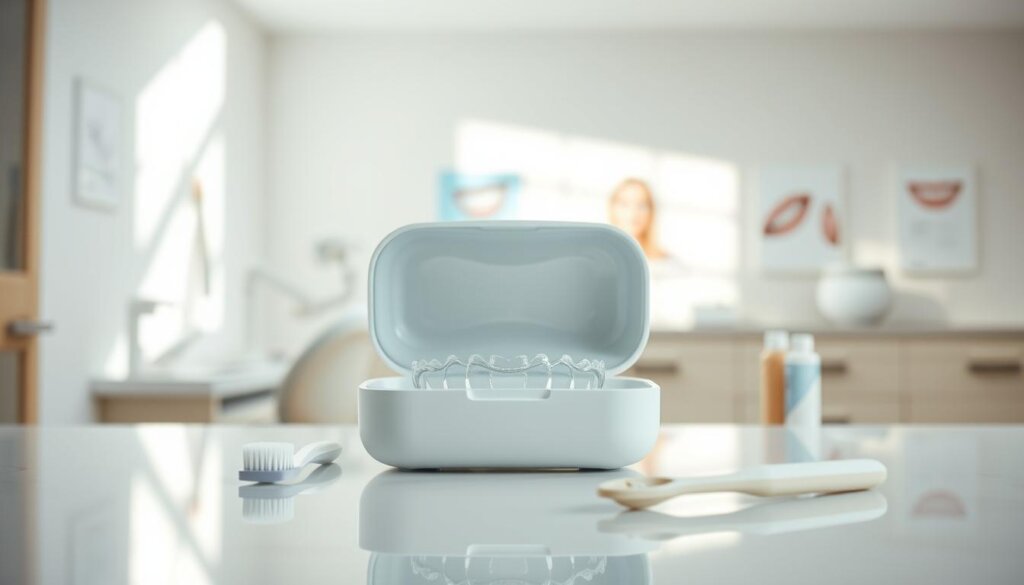
Hygiene maintenance is the second principle. Aligners carry bacteria and food when removed. Without proper cleaning, bacteria grow fast.
Storing aligners right keeps them clean. It stops bacteria from causing cavities and gum disease. A dedicated case keeps them safe and clean.
Damage avoidance is the third principle. The right storage case prevents loss and damage. This keeps treatment on track.
A good storage case protects aligners and helps patients stick to their routine. It’s a key part of successful treatment.
Consequences of Inadequate Storage Practices
Bad storage can lead to many problems. It’s important to understand these risks. Small mistakes can cause big issues with treatment.
Physical risks include warping from heat and cracking from drops. These can hurt the aligner and the patient’s mouth.
Lost aligners mean more time and money. This can make patients frustrated and slow down treatment.
Chemical risks come from things like cleaning products. These can damage aligners and make them less effective.
Biological risks involve bacteria and fungi. Bad storage can lead to infections and health problems. It’s important to keep aligners clean and safe.
Understanding these risks helps keep aligners safe. Using the right storage and following cleaning tips is key. Ongoing research helps us learn more about keeping aligners in top shape.
Recommended Storage Options for Aligners
Choosing the right storage for your aligners is key to keeping them safe. The right container protects against damage, bacteria, and environmental factors. It’s important to have a good storage option wherever you are.
Wilson Ortho suggests having multiple cases in different places. This way, you always have one ready when you need it. Keeping cases at home, work, and in your bag helps protect your aligners.
Professional-Grade Storage Cases
The aligner storage case from your orthodontist is the best choice. These cases are made with special features for orthodontic appliances. Knowing what makes them special helps you see why they’re better than others.
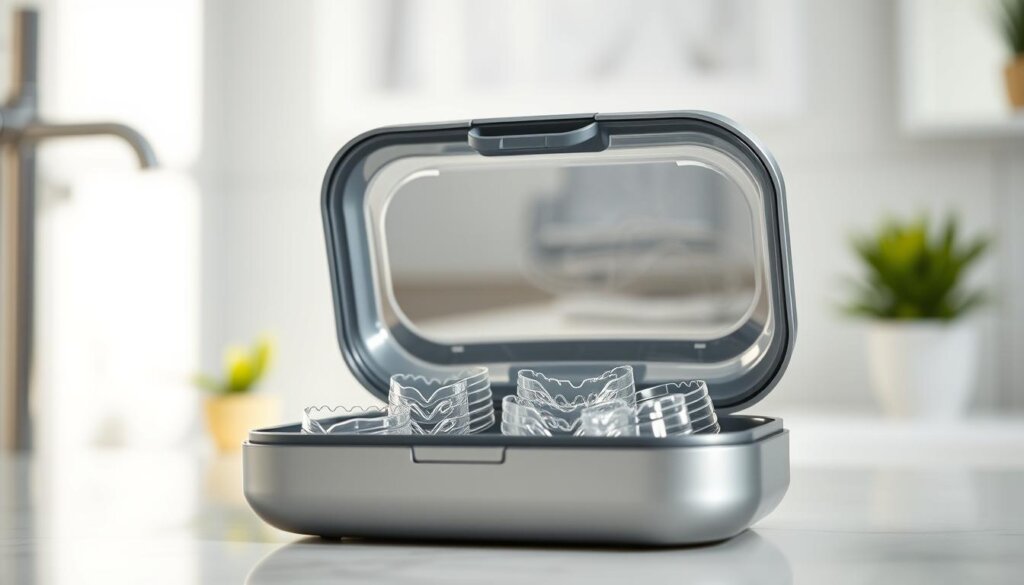
Official cases are tough and won’t get crushed in bags or pockets. They’re made from medical-grade plastics that are safe and last through cleaning. They also have vents to keep moisture out, stopping bacteria from growing.
These cases are more than just protective. They have secure closures to prevent opening by accident. They’re also small enough to carry around but big enough for your aligners.
The case you use is just as important as the aligners themselves—inadequate storage can undo weeks of treatment progress through contamination or physical damage.
Professional cases also block UV rays that can harm your aligners. This is important if you spend time outside or leave your case in a car. The opaque material in quality cases protects against UV and temperature changes.
| Storage Feature | Professional Case | Generic Container | Clinical Impact |
|---|---|---|---|
| Ventilation System | Engineered air flow ports | Sealed or inadequate | Prevents bacterial growth |
| Material Composition | Medical-grade plastic | Unknown polymers | Ensures biocompatibility |
| Crush Resistance | Tested to 50+ pounds | Minimal protection | Prevents aligner warping |
| UV Protection | Opaque barrier design | Often transparent | Maintains material integrity |
Backup Storage Solutions
While your orthodontist’s case is the best, knowing what else is okay is helpful. A retainer storage box can be a good backup if it’s made for orthodontic appliances. It should be sturdy and have enough room inside.
Small contact lens cases can be used in emergencies, but they’re not as good as designed cases. Travel cases for dental appliances are okay for a short time, but they shouldn’t replace your main case.
Some people use small plastic containers or cosmetic cases. But these might not keep your aligners dry or clean. If you use these, make sure they’re clean, dry, and only used until you get a proper case.
Every storage option needs to meet basic criteria. It must protect against damage, keep out bacteria, be easy to clean, and keep the right environment. Any option that doesn’t meet these needs could harm your treatment and should be avoided.
Best Practices for Cleaning Aligners
Before putting your aligners in their case, it’s important to know how to clean them properly. Cleaning your aligners well is key to keeping them hygienic and lasting longer. If you don’t clean them before storing, bacteria can grow in the case.
City Dental Hospital says cleaning your aligners regularly gets rid of plaque and bacteria. This stops bad smells and keeps your aligners clear. Why is this important for your daily routine?
Dirty aligners in a closed case are perfect for bacteria to grow. The warm, moist case with food bits is like a feast for bacteria. So, cleaning your aligners before storing is a must.
Daily Cleaning Protocols
Wilson Ortho has a detailed plan for cleaning your aligners. It keeps them clean and safe. Cleaning your aligners right away is the first step.
The cleaning process starts with rinsing your aligners under cool water. This removes loose bits and saliva. Then, use a soft-bristled toothbrush to gently clean all sides.
Use a toothbrush just for your aligners. Never use the same toothbrush for your teeth to avoid spreading bacteria. Brush in small circles to avoid scratching the aligners.
Brushing gently helps prevent bacteria from sticking. Be careful not to scratch the aligners. Scratches can make them cloudy.
After brushing, rinse your aligners again under cool water. Check them for any remaining debris. Look for cloudy spots or film that needs extra cleaning.
Wilson Ortho also suggests deep cleaning your aligners mid-week. Use special products to remove tough stains. This keeps your aligners fitting right.
Evidence-Based Cleaning Solutions
There are special cleaning products for orthodontic appliances. Two good ones are Retainer Brite and Invisalign Cleaning Crystals. They remove stains and kill bacteria without harming the aligners.
Retainer Brite uses sodium bicarbonate and potassium monopersulfate. These ingredients release oxygen that breaks down stains and kills bacteria. Invisalign Cleaning Crystals work in a similar way but with different ingredients.
Soak your aligners in these solutions for 15-30 minutes. Don’t soak them for too long to avoid damage. After soaking, rinse them well before wearing.
| Cleaning Method | Frequency | Primary Benefit | Key Consideration |
|---|---|---|---|
| Cool water rinse and brush | Every removal (2-3 times daily) | Removes loose debris and prevents odor | Use soft-bristled brush only |
| Retainer Brite soak | Mid-week (2-3 times weekly) | Deep cleaning of biofilm and proteins | Follow manufacturer timing |
| Invisalign Cleaning Crystals | Weekly or as needed | Maintains optical clarity | Complete dissolution required |
| Professional ultrasonic cleaning | Monthly or per orthodontist recommendation | Removes stubborn calcification | Schedule during adjustment visits |
Be careful not to damage your aligners. Hot water can warp them. Water over 100°F (38°C) can start to soften them. Once they’re warped, they won’t work right.
Stay away from harsh chemicals. They can damage your aligners. Household cleaners with bleach or alcohol can scratch them. Denture cleaners can also cloud or discolor them.
Make sure to rinse your aligners well. Leftover cleaning agents can irritate your mouth. This can cause pain or allergic reactions.
Why is cleaning your aligners before storing so important? The case can make bacteria grow faster. Clean aligners stay safe in the case. Dirty ones can get worse.
This careful cleaning routine protects your investment in orthodontic care. It keeps your aligners clean and clear. Following these steps ensures your treatment works well.
Temperature Considerations for Aligner Storage
Knowing how temperature affects your clear aligners is key. The plastic in aligners changes with temperature. This can affect how well they work.
Temperature is a big deal for clear aligner protection. Studies show aligners are made from sensitive plastics. Wrong temperatures can warp them.
Storing aligners right means knowing the science. Cool, dry places keep them accurate. Temperature also affects bacteria on the aligners.
Optimal Temperature Ranges for Storage
Aligners work best at room temperature, 68-77°F (20-25°C). This keeps them flexible and strong.
Why is this temperature important? Thermoplastic polyurethanes used in aligners have specific temperatures. Below these, they become brittle. Above, they lose their shape.
Storage affects bacteria on aligners. Cool, dry places slow down bacteria growth. Bacteria like warm, humid places.
Here are some tips for storing aligners:
- Room temperature locations: Bedroom dressers, kitchen counters, or office desk drawers
- Humidity control: Avoid bathrooms after showers
- Air circulation: Choose well-ventilated spots
- Consistent conditions: Pick places with stable temperatures
Aligner materials need stable temperatures. Changes in temperature can damage them. Keeping temperatures steady makes aligners last longer.
Temperature Hazards to Avoid
Heat is the biggest risk for aligners. Wilson Ortho and City Dental Hospital warn against hot water, dishwashers, and other heat sources. Heat can warp them.
Heat makes polymer chains move too much. This changes their shape and how they work. Small changes can affect treatment a lot.
Car interiors are very hot in summer. Dashboard temperatures can be over 150°F (65°C). Never leave aligners in a car.
Other temperature risks include:
- Hot beverages: Drinking hot drinks with aligners transfers heat
- Heating vents: Avoid spots near radiators or heaters
- Direct sunlight: Sun can damage aligners
- Hot water cleaning: Rinsing with hot water can warp them
- Dishwashers and microwaves: These are too hot for aligners
Cold temperatures are less risky but need attention. Freezing makes aligners brittle. Cold can cause them to crack.
Knowing how to store aligners protects your investment. Replacing warped aligners can add time to treatment. It’s more than just money.
Check storage temperatures with simple thermometers. Digital models with humidity sensors give more info.
Being mindful of temperature and choosing the right storage keeps aligners working right. This ensures your treatment goes smoothly and you get the best results.
Traveling with Your Aligners
Traveling can be tough for aligner care because of new places, changed schedules, and less cleaning options. When you’re away from home, it’s easy to forget about your aligners. Whether you’re on a short trip or a long vacation, you need special plans to keep your treatment going.
Travel places don’t have the same routine as home for taking care of your aligners. Hotels, airports, and meetings aren’t the best for keeping them clean. Wilson Ortho suggests having extra cases in different places, including one for travel, so you always have a safe spot.
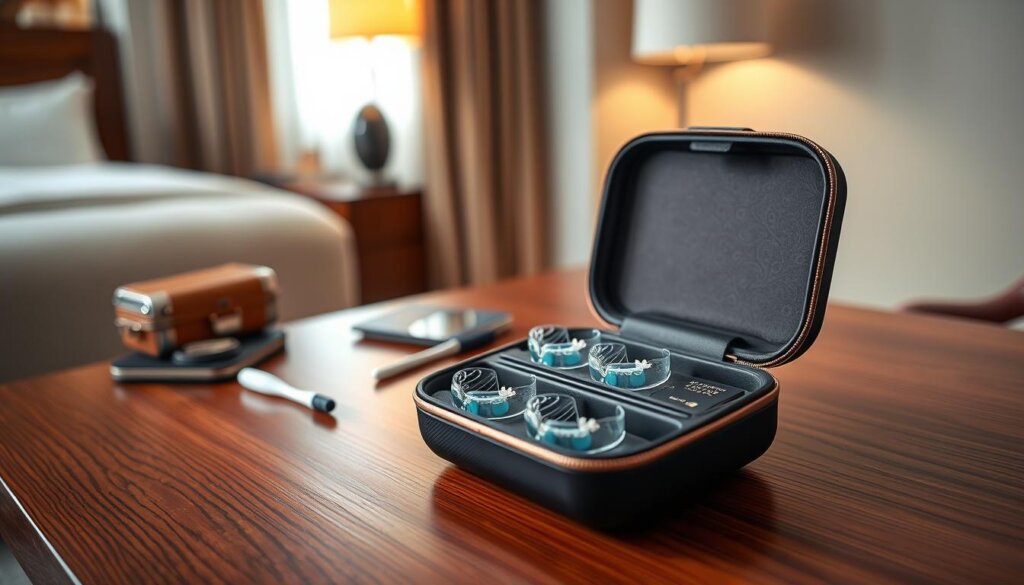
Essential Packing Strategies for Aligner Patients
Getting ready before you leave can help avoid problems with your aligners. You need a travel kit with everything you need and a backup plan. The key is to have enough of what you need.
A good aligner storage case is the heart of your travel kit. But, having only one case is risky. Pack a main case and a backup, and keep them in different bags to avoid losing both.
Keeping your aligners safe also means having portable cleaning stuff. Use travel-sized cleaners, soft toothbrushes, and wipes to clean your aligners when you can’t do it the usual way.
Why carry extra aligners on long trips? Take your current ones and the next set, plus the last one as a backup. This way, you’re safe if you lose or damage some.
Having your orthodontist’s contact info is key for emergencies while traveling. Keep their phone number, email, and after-hours info in places you can easily find, like your phone and a printed copy.
Travel plans need different preparations:
- Short business trips: Pack light with easy-to-carry items, focusing on small storage solutions that fit with your work clothes.
- Extended vacations: Bring a full kit with cleaning stuff, extra aligners, and your orthodontist’s contact info for places far from home.
- International travel: Think about customs rules, adapters for cleaning tools, and orthodontic info in different languages.
Traveling by plane has its own challenges. You might need to take out your aligners at security checks. Keep your aligner storage case in your carry-on to avoid losing it or exposing it to temperature changes.
Optimized Storage Solutions for Mobile Lifestyles
Travel cases need to be tough, portable, and durable. They should be different from home cases because they face different challenges. They must be strong enough for luggage handling but small enough to carry easily.
Good travel cases have special features. Look for clips or loops to attach them to bags or belts, and strong materials to protect them from damage. This way, they won’t get lost or damaged in tight spaces.
Colorful or unique cases help you spot them easily in crowded places. Bright colors or patterns make them stand out, so you won’t leave them behind.
Choosing between minimalist and full cases depends on what you need. Slim cases are great for carrying around but might not have all the features. Larger cases offer more but are bulkier.
When you can’t find a sink, use cleaning wipes or collapsible water containers to clean your aligners. These solutions help keep your aligners clean in places without sinks.
The table below shows the main differences between travel storage options:
| Storage Solution Type | Primary Advantages | Ideal Travel Context | Limitations |
|---|---|---|---|
| Compact Clip-On Case | Maximum portability, secure attachment, pocket-friendly dimensions | Short business trips, day excursions, athletic activities | Limited capacity for cleaning supplies or backup aligners |
| Integrated Travel Kit | Comprehensive supplies, organized compartments, self-contained cleaning | Extended vacations, international travel, remote destinations | Larger size requires dedicated bag space, heavier weight |
| Multi-Compartment Organizer | Separate storage for multiple aligner sets, built-in cleaning tools, protective padding | Long-term travel, professional conferences, family vacations | Moderate bulk, requires consistent organization habits |
| Antimicrobial Travel Case | Built-in bacteria resistance, ventilation design, medical-grade materials | Tropical destinations, areas with hygiene concerns, humid climates | Higher cost, limited availability, specific care requirements |
Our understanding of travel storage challenges keeps growing as we hear from more people. By using smart travel plans, you can keep your treatment on track, no matter where you are. This turns travel challenges into manageable parts of your orthodontic journey.
Tips for Keeping Aligners Safe at Home
Keeping your aligners safe at home is key to a successful treatment. At home, you face different challenges than when traveling. It’s important to have a plan for storing your aligners to keep them safe.
Every day, there are chances your aligners could get lost or damaged. Knowing these risks helps you take steps to protect them. Having a routine for storing your aligners makes it easier and keeps them safe from harm.
Our brains learn through repetition and cues from our surroundings. By picking a specific place for your aligners, you make storing them a natural part of your routine. This way, taking care of your aligners becomes second nature.
Creating a Dedicated Storage Location
Choosing the right spot for your aligners is important. It should be easy to see, get to, and not too hot or cold. Being able to see your case helps you remember where it is, and easy access makes it convenient during meals and cleaning.
Rooms in your house have different advantages for storing aligners. Bathrooms are handy for brushing teeth but can be too humid. Bedrooms are stable but might be far from where you eat.
Kitchens are close to where you eat but can be hot and messy. Choose a kitchen spot away from heat and food prep.
Having a case in each room helps you keep your aligners safe no matter where you are. This small step can save your aligners from damage or loss.
Preventing Common Storage Errors
Studies show common mistakes that lead to lost or damaged aligners. Leaving them on surfaces is a big risk. These spots can be busy and easy to overlook.
Wrapping aligners in napkins is another mistake. It can lead to them being thrown away by mistake. Using napkins might seem helpful but can cause permanent loss.
Pets can also damage aligners. Dogs might chew them, thinking they’re toys. This can be expensive to fix.
Putting aligners in pockets is risky. They can get damaged or lost in the wash. It’s better to have a special place for them.
- Establish remove-clean-store routines that become automatic through consistent repetition
- Use brightly colored cases that stand out visually and reduce the likelihood of accidental disposal
- Store cases in designated spots immediately after removing aligners, not temporarily
- Educate household members about aligner value and vulnerability to prevent accidental damage
- Keep aligners away from pets by storing them in closed drawers or elevated locations beyond animal reach
Replacing damaged aligners can be costly and slow down your treatment. It’s worth taking steps to prevent damage. A little effort now can save a lot of money and time later.
Visual reminders can help you remember to store your aligners properly. Sticky notes, phone alerts, and reminders from family can help. After a few weeks, these habits become easy and don’t take much thought.
Your home should help your orthodontic treatment, not hinder it. By avoiding common mistakes and choosing the right storage spots, you can make your treatment successful. These simple steps fit into your daily life and protect your investment.
Aligners and Food Safety
When you wear aligners, you need to think about what you eat and how you store them. Food choices can affect your aligners and your teeth. It’s important to keep your aligners safe while eating to make sure your treatment works well.
Wilson Ortho has rules for eating with aligners. You should take them out before eating anything except water. This keeps your aligners and teeth safe from harm.
Eating with aligners can be risky. It can stain them and even harm your teeth. This is why it’s best to avoid it.
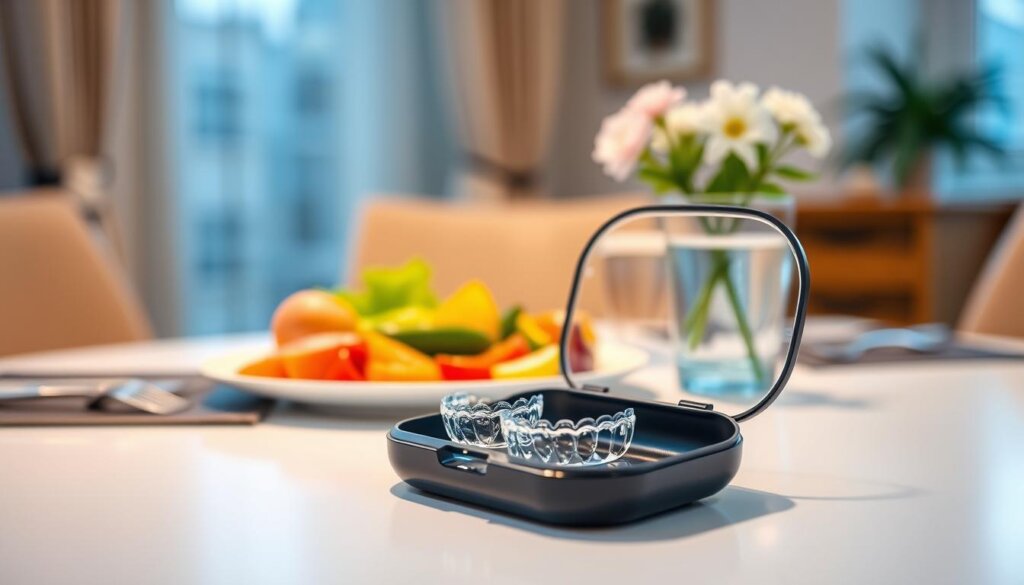
Why Removing Aligners During Meals Protects Your Treatment
Removing your aligners before eating is key. Chewing can damage them or make them lose their shape. Food can also get stuck and cause cavities.
Some foods can stain your aligners. This includes berries, curry, and red wine. These stains can’t be removed easily.
Wilson Ortho says foods like curry and red wine can stain your aligners a lot. These stains can’t be cleaned off.
Acidic foods can also harm your aligners. This includes citrus fruits and soda. They can make your aligners cloudy or weak over time.
Hot drinks can warp your aligners. This can make them not fit right anymore. You might need new ones.
Sticky or hard foods can damage your aligners. This includes caramels and nuts. Fixing or replacing them can make your treatment longer and cost more.
| Food Category | Primary Risk | Examples | Impact on Aligners |
|---|---|---|---|
| Pigmented Foods | Staining | Curry, berries, tomato sauce, red wine | Permanent discoloration affecting aesthetics |
| Acidic Items | Surface Degradation | Citrus fruits, sodas, vinegar dressings | Altered optical clarity and material integrity |
| Hot Beverages | Thermal Warping | Coffee, tea, hot chocolate | Distortion compromising fit and effectiveness |
| Sticky/Hard Foods | Mechanical Damage | Caramels, nuts, hard candies | Deformation or fracture requiring replacement |
Post-Meal Protocols for Optimal Aligner Management
After eating, follow a specific routine. Remove your aligners, store them, eat, brush and floss, clean your aligners, then put them back in. This keeps them safe and clean.
City Dental Hospital says it’s important to avoid food getting stuck in your teeth and aligners. This can lead to cavities and other problems.
Brush your teeth before putting your aligners back in. This removes food and bacteria. If you can’t brush, rinsing with water is better, but do it only when you can’t brush.
Sometimes, you might not be able to follow the best routine. Here’s what to do instead. The best thing is to remove, store, eat, brush, clean, and reinsert. The next best is to remove, store, eat, rinse, rinse aligners, and reinsert. The worst is to eat with them in, but only do this if you really can’t do anything else.
The optimal approach is to remove, store, eat, brush, clean, and reinsert. This keeps your aligners safe from harm.
The acceptable approach is when you can’t clean your mouth well. Remove, store, eat, rinse, rinse aligners, and reinsert. This is better than eating with them in.
The emergency approach is when you really can’t store them. Eating with them in is the least good option. It can stain and damage them.
These rules help prevent cavities. Orthodontic treatment makes it harder to keep your teeth clean. Aligners can trap food and bacteria, making cavities more likely.
Following these rules takes planning and commitment. Carry your storage case, have a travel toothbrush, and know the risks of not following the rules. These steps help keep your aligners safe during treatment.
Understanding how food and aligners work together is key. The routine of remove, eat, clean, store becomes second nature. It helps your treatment and keeps your teeth healthy.
Understanding the Risks of Leaving Aligners Outside
Aligners left out can get dirty and damaged quickly. Putting them on a bathroom counter or nightstand starts a chain of problems. This can harm both their cleanliness and how well they work. Knowing these risks helps us keep our aligners safe and effective.
When you take out your aligners, they carry germs from your mouth. What happens when they sit out in the air? They face dangers from germs and damage that can mess up your treatment. Keeping your aligners clean means knowing these dangers and avoiding them.
City Dental Hospital says storing orthodontic trays right helps prevent germs. This is important for keeping your teeth and gums healthy. It shows how important it is to store your aligners properly.
Microbiological Contamination and Growth
Aligners carry germs like bacteria and viruses when they leave your mouth. These germs don’t just sit there. They grow fast, creating health risks when you put them back in your mouth.
Many things help germs grow on aligners. Temperature is key—room temperature is perfect for many germs. Moisture from saliva helps them grow. Food bits and proteins in saliva feed them.
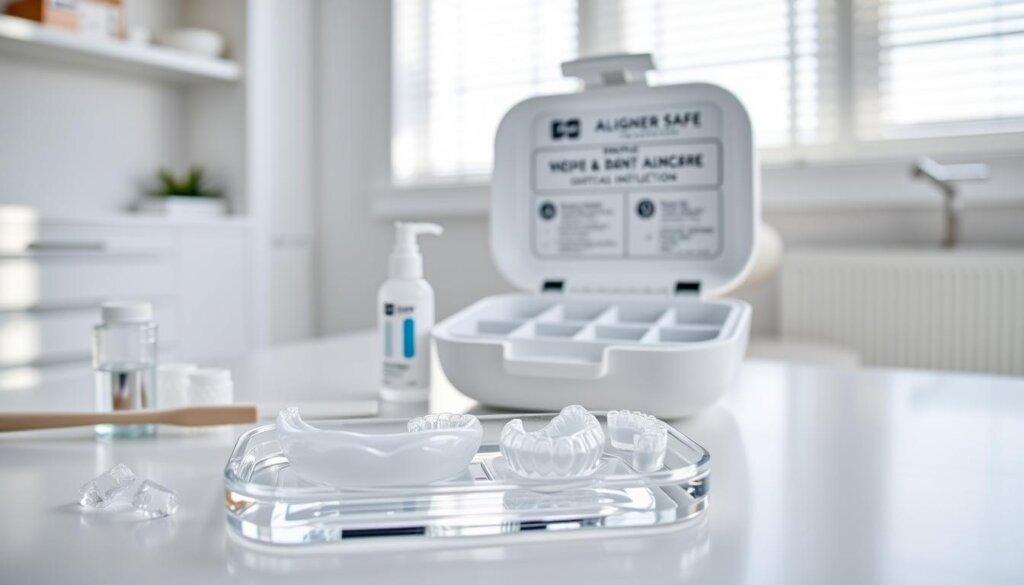
Biofilms form on aligners in a certain way. Germs stick to the aligner’s surface. They talk to each other and grow, making it hard to clean them.
Which germs are the biggest problem? Studies show a few are really bad:
- Streptococcus mutans causes cavities by eating sugars and making acid
- Porphyromonas gingivalis leads to gum disease and makes gums inflamed
- Aggregatibacter actinomycetemcomitans causes severe gum disease and bone loss
- Candida albicans is a fungus that can cause oral thrush
Aligners also pick up germs from the air and surfaces. Bathroom counters have germs, and bedside tables have dust. This mix of germs from your mouth and the environment is very bad.
Physical and Chemical Material Deterioration
Aligners made of plastic can break down when exposed to the environment. They can get damaged by chemicals and physical stress. Keeping them in a case is key to keeping them strong.
UV light can break down the plastic in aligners. This weakens them and can change how they move teeth. UV damage affects how well aligners work in moving teeth.
Oxidation can also damage aligners. Oxygen in the air can change the plastic. This makes aligners look yellow or cloudy. They lose their clear look over time.
Moisture can also harm aligners. They need to touch saliva to work, but too much moisture can damage them. This can make them less effective.
What happens when aligners get damaged? The table below shows how exposure affects them:
| Degradation Type | Environmental Factor | Physical Change | Clinical Impact |
|---|---|---|---|
| Photodegradation | UV radiation exposure | Polymer chain breakage | Altered force delivery, compromised tooth movement |
| Oxidative damage | Atmospheric oxygen | Yellowing and opacity | Reduced aesthetic appearance, visible discoloration |
| Hydrolytic breakdown | Moisture and humidity | Decreased elasticity | Poor fit, reduced retention on teeth |
| Contamination | Airborne particulates | Surface roughening | Enhanced bacterial adhesion, biofilm formation |
Changes in the surface of aligners make it easier for germs to stick. This makes it hard to clean them and increases the risk of germs. The damage and germs work together to make things worse.
Storing aligners in a case is backed by science. Cases protect them from UV light, moisture, and germs. Storing aligners in a case prevents damage and germs and keeps them working well.
Knowing how germs and damage happen helps us keep our aligners safe. A few seconds in a case can stop hours of germ growth and years of damage. This keeps our treatment effective and our teeth healthy.
Common Myths About Storing Aligners
Many people store their aligners the wrong way because of common myths. These myths come from friends, family, or social media. Knowing the truth helps protect your investment and keeps your treatment on track.
Wrong storage can harm your aligners. It can make them warp, get dirty, or get damaged. We’ve looked into why these myths spread and why they’re wrong.
We’ll tackle the most common myths about aligner care. We’ll use science and experience to debunk them. This way, you can make the best choices for your treatment.
Debunking Misconceptions
There are many myths about cleaning and storing aligners. These myths sound right but are actually wrong. Wilson Ortho has listed many harmful practices.
Myth 1: Hot water cleans aligners more effectively than cool water. People think hot water is better for cleaning. But, aligners can warp at temperatures that are not even boiling. They lose their shape at specific temperatures.
Using hot water can ruin your aligners. Even water that feels warm can change the material. Always use cool or lukewarm water to clean your aligners.
Myth 2: Dishwashers provide convenient and thorough aligner cleaning. Some think dishwashers are a quick and easy way to clean aligners. But, they are too hot and can damage your aligners. The heat, water, and detergents can ruin the shape of your aligners.
Using a dishwasher can make your aligners unusable. This means you’ll have to get new ones, which costs more and takes longer.
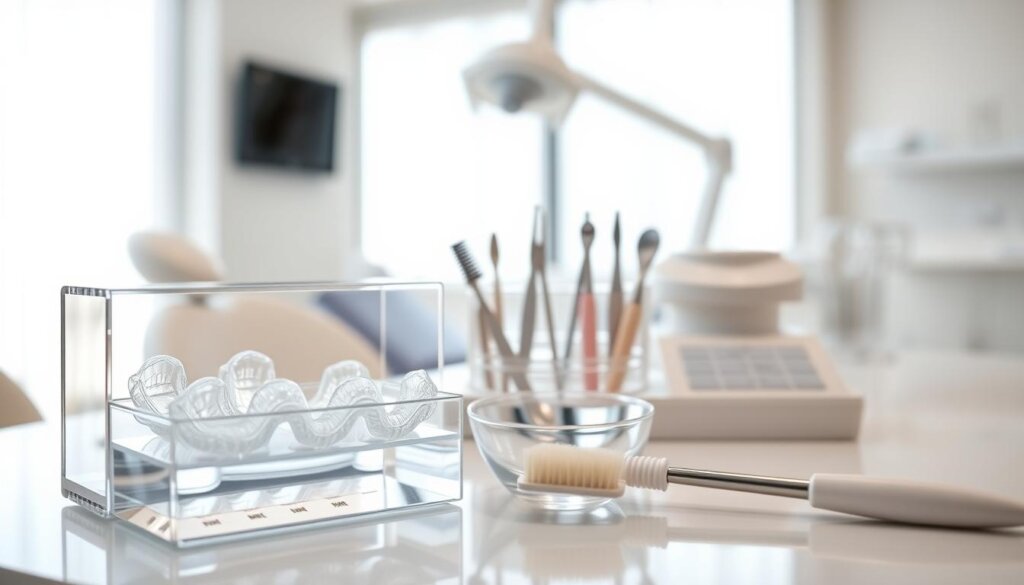
Myth 3: Wrapping aligners in napkins or tissue provides adequate temporary storage. Some people wrap their aligners in napkins when they can’t find a case. But, this can lead to losing your aligners. Napkins don’t protect your aligners from getting dirty or damaged.
Wilson Ortho says wrapping aligners in napkins is a common way to lose them. It’s better to use a case, even if it’s just for a little while.
Myth 4: Leaving aligners in open air helps them “breathe” and prevents bacterial growth. Some think letting aligners breathe is good for them. But, it’s actually bad. The air can carry bacteria and dirt that can stick to your aligners.
Aligners need to be stored in cases that let air in but keep out dirt. These cases help keep your aligners clean and prevent bacteria from growing.
Myth 5: Aligners don’t require cleaning if you brush your teeth before reinsertion. Some think brushing your teeth is enough to keep your aligners clean. But, aligners have their own bacteria that need to be cleaned off. Brushing your teeth helps but doesn’t get rid of all the bacteria on your aligners.
Why do these myths keep going around? It’s because people often believe what sounds right, not what’s proven. They might think what they’ve heard from others is true, even if it’s not backed up by science.
| Common Myth | Why It’s Harmful | Evidence-Based Alternative |
|---|---|---|
| Hot water cleaning | Causes irreversible warping of thermoplastic materials | Use cool water with gentle soap or specialized cleaning solutions |
| Napkin wrapping for storage | Leads to accidental disposal and provides no contamination protection | Always use rigid, ventilated storage cases designed for aligners |
| Open-air drying prevents bacteria | Increases environmental contamination and material degradation | Store in protective cases with proper ventilation features |
| Any closed container works as storage | Lacks necessary ventilation, material compatibility, and protective features | Use orthodontist-approved cases with appropriate design specifications |
Educating Yourself for Better Care
Learning about proper aligner storage takes time and effort. It’s important to have reliable sources of information. This helps you make informed decisions about your care.
Identify credible information sources. Not all advice is equal. Look for peer-reviewed studies and guidelines from professional organizations. These sources are based on science and experience.
Manufacturer guidelines and talking to your orthodontist are also good sources. They offer specific advice based on your situation. This approach focuses on evidence, not just what sounds good.
Develop critical thinking skills for health information evaluation. To judge the reliability of advice, ask important questions. Consider the source’s credentials and the evidence they provide. Look for independent verification and be wary of claims that seem too good to be true.
These skills help you make better choices not just for aligners but for your health in general. Being critical of information helps you stay safe and informed.
Recognize the characteristics of misinformation. Some signs indicate advice is not trustworthy. Be cautious of vague or exaggerated claims without evidence. Advice that goes against what experts say needs strong evidence to be believed.
Information based on personal stories might not be universally true. Shortcuts that seem easy but are actually harmful should raise red flags. Always question advice that seems too convenient.
Stay current with evolving best practices. Orthodontic science is always changing. What was good advice years ago might not be now. Regular check-ins with your orthodontist keep your care up to date.
Learning about aligner care is an ongoing process. Spending time to understand how to care for your aligners shows you’re committed to your treatment. This knowledge helps you avoid problems and get the best results.
By learning and being critical of information, you gain valuable knowledge. This knowledge helps you make smart choices for your orthodontic care. It’s not just about debunking myths but about understanding the best practices for your treatment.
Signs You Need to Replace Your Storage Case
Storage cases wear out over time, affecting your orthodontic treatment. They have a limited life and need regular checks. This ensures they keep your aligners safe.
Your aligner storage case needs to be in good shape to protect your aligners. Damage from use, cleaning, or drops can weaken it. Knowing when to replace it helps keep your aligners safe.
Replacing your retainer storage box is key for treatment success. A bad case can’t protect your aligners from harm or damage.
Recognizing Critical Replacement Indicators
Look out for signs that your case needs to be replaced. Structural damage is a clear sign you need a new one.
Cracks in the case can let in bacteria and dust. Broken hinges or latches can cause the case to open by accident.
A deformed case can’t protect your aligners from damage. It’s not just about visible damage.
Other signs include:
- Persistent discoloration after cleaning means the case is worn out
- Lingering odors show biofilm has built up
- Difficulty operating hinges or latches means they might break soon
- Loss of seal integrity lets in contaminants
- Surface roughness or texture changes mean the case is damaged
Storage cases need to be replaced often because they get dirty. This damage makes it hard to clean them properly.
How long does an aligner storage case last? It depends on how you use it. Cases usually need to be replaced every three to six months. If you travel a lot or store your case in tough places, you might need to replace it more often.
Conducting a Systematic Case Assessment
Check your case regularly to see if it’s working well. This way, you can replace it when needed, not just because of time.
Start by looking at your case carefully. Check for any damage or wear. Look at both the inside and outside.
Then, test how well the case works. Open and close it a few times. Make sure the latch works right.
Also, check if the case smells bad or feels dirty. Even if it looks clean, it might not be.
Think about how you’ve used your case. Has it been dropped or exposed to extreme temperatures? These things can damage it, even if you can’t see it.
| Assessment Category | What to Check | Warning Signs | Action Required |
|---|---|---|---|
| Structural Integrity | Case body, hinges, latches | Cracks, breaks, deformation, loose components | Immediate replacement |
| Surface Condition | Interior and exterior finish | Discoloration, roughness, scratches, cloudiness | Replace within 2 weeks |
| Functional Performance | Opening, closing, sealing | Difficulty operating, poor seal, loose fit | Replace within 1 week |
| Hygiene Status | Odor, residue, cleanability | Persistent smell, residue after cleaning, staining | Replace immediately |
Keep a spare retainer storage box ready. This way, you won’t have to worry about your aligners when you need a new case.
Keep track of when you start using a new case. This helps you know when to replace it. Most orthodontists give you new cases at appointments. But you can also buy more to have extras.
Aligners: A Brief Overview
Before we dive into storage tips, let’s understand what aligners are. They are advanced medical devices that need both scientific knowledge and practical care. Knowing how they work helps us see why protecting them is so important.
This overview sets the stage for our guide on storage. By grasping the technology and how it works, we can see why clear aligner protection is key to success. Proper care ensures these devices work as they should.
The Technology Behind Clear Aligners
So, what are clear aligners? City Dental Hospital calls them custom trays that gently move teeth into straighter positions. But there’s more to them than that.
These devices combine advanced technologies. Digital imaging captures teeth with incredible detail. Then, software plans how to move teeth step by step. And special machines make each aligner just right.
The materials used are also a big deal. They must be strong enough to move teeth but also soft enough to fit comfortably. They need to stay the same shape over time.
But how do aligners actually move teeth? They work by applying gentle forces that help bones change shape. This process moves teeth slowly but surely.
This process needs the right amount of force. Too little, and nothing happens. Too much, and it can hurt or even damage teeth. Each aligner is made to apply the perfect amount of force.
The precision engineering of clear aligners means that any compromise to aligner geometry directly impacts treatment biomechanics and clinical outcomes.
Why is this important for storage? Because aligners are made to exacting standards. Anything that changes them can mess up how they work.
Seeing aligners as more than just plastic trays changes how we care for them. They are medical devices that need careful handling. This view makes storage a critical part of treatment.
Compliance and Consistent Wear Requirements
How long do aligners need to be worn? Wilson Ortho says 22 hours a day, except when eating or brushing teeth. This is because teeth move best when forces are applied constantly.
Wearing aligners for 22 hours a day keeps teeth moving in the right direction. If you stop wearing them, teeth can move back. This makes treatment longer and less effective.
What happens when you take out your aligners? You should eat and brush your teeth. But you can’t do these things with aligners in. Brushing and flossing need aligners out for a good clean.
The “30-minute rule” helps with wearing aligners. Wilson Ortho says don’t go more than 30 minutes without them. This helps keep up the 22 hours a day needed.
Treatment time also shows why wearing aligners is important. It can take 12-15 weeks or more. Each new aligner moves teeth a little bit. Missing wear time messes up this plan.
How does wearing aligners relate to storage? Directly and very importantly. Good storage means aligners are always ready and in the right place. Bad storage leads to lost or damaged aligners, which slows down treatment.
Patients face challenges with wearing aligners. Without a place to store them, they get lost. Without protection, they get damaged. And without clean storage, they get dirty, making patients hesitant to put them back in.
Keeping aligners in place is key to successful treatment. It’s not just about convenience; it’s about making treatment work. Poor storage can lead to longer treatment times and more problems.
Studies show that wearing aligners as directed leads to better results. Those who don’t wear them properly take longer to finish treatment. Sometimes, they even need extra aligners.
Understanding how aligners work and why they need to be worn consistently is key. This knowledge helps us see why clear aligner protection and care are so important. It’s not just about keeping them clean; it’s about making sure they work right.
By knowing this, we see that storage is a big part of orthodontic care. Every choice we make about storage affects how well treatment works. It’s all about keeping aligners in top shape and making sure patients wear them as they should.
Seeking Professional Help
Even with good storage habits, some issues need a professional’s help. Knowing when to ask for help is key to success. This way, patients can handle small problems on their own but know when to seek expert advice.
Today’s orthodontic care teaches patients and offers professional help. Teledentistry and in-office visits work together. This ensures patients get the help they need, no matter the problem.
Recognizing When Professional Consultation Becomes Necessary
Some storage problems need a talk with your orthodontist. Repeated aligner loss might mean you need better storage solutions. It’s about finding the right way to keep your aligners safe.
Keeping aligners clean can be hard, even with the right methods. This could be due to dry mouth, certain foods, or health issues. Your orthodontist can find the real cause.
Here are some times when you should talk to your orthodontist:
- Chemical exposure events where aligners got in contact with harsh substances
- Extreme temperature exposure that might have damaged your aligners
- Damage patterns that show fit problems or other issues needing a check-up
- Contamination concerns from storing in dirty places or touching infectious materials
There are also other clinical issues that need quick attention. If your aligners don’t fit right, or if you’re in pain, see your orthodontist.
Wilson Ortho tells patients to call if they have problems. If you lose or break an aligner, use the next one. For detached attachments, keep going if it fits okay. Use an emery board for rough edges, and take photos for fit concerns.
Modern orthodontics use teledentistry for easy communication. This lets providers check on you and decide if you need to come in.
How do you talk to your orthodontist between visits? Teledentistry makes it easy. Send clear photos of your aligners and any issues.
When you message your orthodontist, include important details. Tell them which aligner you’re using, how long you’ve had the problem, and what you’ve tried. They usually respond within a day or two for non-urgent issues.
Understanding the Consultation Process
Regular check-ups are important for tracking your progress. These visits happen every 12-15 weeks. What happens during these visits, and how do they help?
At these visits, your orthodontist checks how your teeth are moving. They use special imaging to compare your teeth to the treatment plan. They also address any concerns and give you the next set of aligners.
But, if you have a specific problem, you’ll have a different kind of visit. These visits focus on solving your problem. Your orthodontist might need to take more pictures or do tests to figure out what’s going on.
| Appointment Type | Primary Objectives | Typical Duration | Follow-Up Actions |
|---|---|---|---|
| Routine Monitoring | Progress assessment, aligner distribution, patient education reinforcement | 15-30 minutes | Continue current protocol, next appointment in 12-15 weeks |
| Problem-Focused Visit | Issue diagnosis, treatment plan modification, corrective interventions | 30-60 minutes | Adjusted protocol, closer monitoring, possible additional appointments |
| Virtual Check-In | Remote progress verification, minor concern triage, photograph assessment | Asynchronous review | Provider feedback within 48 hours, in-person visit if needed |
Remote monitoring is becoming more common in orthodontics. Patients send photos through apps. Artificial intelligence algorithms check these photos for any issues.
Orthodontists then review these photos to see how you’re doing. This mix of online and in-person visits helps reach more patients. But, in-person visits are always needed for a full check-up.
Remote monitoring helps between visits, but it can’t replace a full check-up. A hands-on exam gives more information than photos. It’s important to keep your aligners safe between visits.
After a consultation, your treatment plan might change. This could be because of unexpected tooth movement. Your orthodontist will explain any changes and why they’re needed.
Knowing when to ask for help and understanding what happens during consultations makes you a part of your care team. This teamwork helps you get the best results and makes sure you use your orthodontist’s time wisely.
Conclusion: Optimize Your Aligner Experience
Storing your aligners properly is key to keeping them safe and your mouth healthy. It’s based on science and what doctors know works. This way, you protect your investment in straightening your teeth.
Essential Storage Principles
Always use the right cases for your aligners. Don’t wrap them in napkins or leave them where they can get lost. Keep cases in places like home, work, and your bag.
Before you store them, clean your aligners well. This stops bacteria from growing. Store them in cool, dry spots, away from heat and sunlight. Pick a spot at home for them to make it a habit.
Check your storage cases often for cracks or damage. Replace them if you see any wear. These steps are the basics of keeping your aligners in good shape.
Your Path to Treatment Success
Orthodontic treatment is a big step for your health and smile. Every day you care for your aligners brings you closer to your goal. Storing them right shows you’re serious about getting the best results.
We aim to improve medical knowledge through learning. By following the right storage tips, you’re helping your treatment succeed. Small, daily steps lead to big changes over time.

