How Does a Partial Denture Attach and Will It Be Comfortable?
Did you know nearly 178 million Americans are missing at least one tooth? This is a common problem many face. When looking for tooth replacement, feeling secure and comfortable is key.
People worry about how these devices stay in place and how they feel. Switching to a prosthetic is a big change. Luckily, dentistry has made big improvements.
New technologies in biomechanics and materials science have created better ways to attach devices. From old clasps to new precision attachments, these aim to make things more stable and comfy. How can a removable appliance feel secure while eating? This article will explore these methods and talk about what affects mouth comfort.
We want to give you all the facts you need. This way, you can make smart choices about your dental health and treatment.
Key Takeaways
- Understanding attachment mechanisms is key for comfort and stability.
- Modern advancements improve the function of removable appliances.
- Getting used to prosthetics is a mental adjustment too.
- How comfortable you feel can depend on many things.
- Having the right information helps you make better choices.
Understanding Partial Dentures
Partial dentures are important for both looks and function. They replace missing teeth and help keep the mouth’s structure stable. This part will cover what partial dentures are, their types, and how they differ from full dentures.
Definition and Purpose
A removable partial denture (RPD) is a dental device that fills in for missing teeth. It’s made to be taken out and put back in. Its main job is to help you chew better and keep your face looking right.
By filling in gaps, partial dentures make it easier to eat and talk. They also help prevent other teeth from moving out of place.
Types of Partial Dentures
There are many kinds of partial dentures, based on what they’re made of and how they work:
- Acrylic-Based Interim Prostheses: These are temporary fixes until you get something more permanent.
- Cast-Metal Framework Dentures: These are stronger and more stable, thanks to a metal base.
- Flexible Partial Dentures: These are made from soft materials that are comfy and flexible.
Differences Between Full and Partial Dentures
It’s important to know the differences between full and partial dentures. Here are the main points:
- Support Mechanism: Partial dentures use your remaining teeth for support, while full dentures don’t have any teeth to rely on.
- Fit and Comfort: Partial dentures usually fit better because they’re made to work with your existing teeth.
- Functionality: Partial dentures can help you chew and speak better than full dentures, if you have some teeth left.
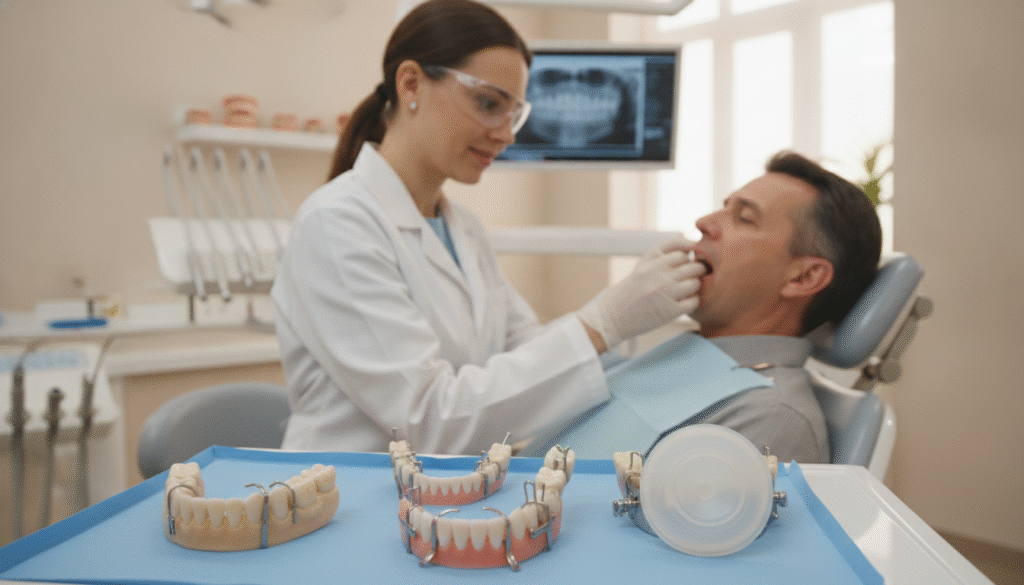
How Partial Dentures Attach
Partial dentures attach through a mix of parts designed for stability and comfort. Knowing how they work can make wearing them better for patients.
Partial dentures mainly use clasps and connectors to stick in place. These parts are key for keeping the denture steady, making it work well for eating and talking.
Clasps and Connectors Explained
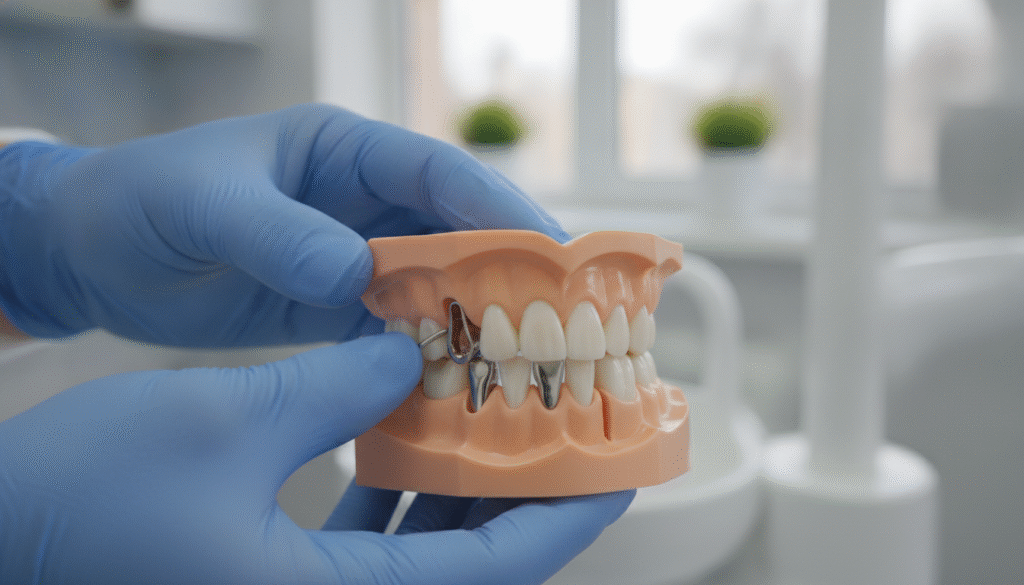
Most partial dentures have metal clasps that grab onto nearby teeth. This holds the denture tight, keeping it from falling out. Sometimes, dentists suggest using precision attachments for a less noticeable option. This method uses a special connector that fits into a tooth, making it less obvious.
The Role of Gum Tissue
Gum tissue is very important for keeping partial dentures in place. The area where teeth are missing, called the edentulous ridge, bears the main stress. Good support from the gum makes chewing and talking more comfortable and stable.
Supporting Teeth and Their Importance
Supporting teeth, or abutment teeth, are key for partial dentures to work. These teeth are often crowned to fit the clasps perfectly. They help spread out chewing forces, keeping the gums and teeth healthy.
| Component | Function | Advantages |
|---|---|---|
| Metal Clasps | Secure the denture to adjacent teeth | Strong retention, cost-effective |
| Precision Attachments | Provide a more aesthetic connection | Less visible, improved comfort |
| Gum Tissue | Support and stabilize the denture | Enhances comfort and function |
| Supporting Teeth | Anchor the partial denture | Distributes forces, protects periodontal health |
The Fitting Process for Partial Dentures
The journey to get a comfortable partial denture starts with a detailed fitting process. This process is key to making sure the denture fits well and works right. It includes several important steps, from the first meeting to the last tweaks.
Initial Consultation and Assessment
The dentist will do a full check-up at the first meeting. They will look at your gums and teeth closely. They need to know if your teeth can hold the denture.
Impressions and Measurements
After the check-up, the dentist will take impressions of your teeth and gums. They use special trays to get accurate impressions. They might also use border molding to make sure the denture fits right.
Adjustments and Final Fitting
Once the denture is made, you’ll have a fitting appointment. This is when the dentist makes any needed changes. They’ll check for any spots that might hurt and adjust the bite for comfort.
They’ll also make sure the denture fits well without any pressure. This makes sure it stays in place and feels good.
| Step | Description | Importance |
|---|---|---|
| Initial Consultation | Thorough oral examination and assessment of abutment teeth. | Identifies any problems and prepares for the denture fitting. |
| Impressions | Custom trays and border molding for detailed impressions. | Ensures a snug fit for comfort and function. |
| Final Fitting | Adjustments to relieve pressure and check fit. | Improves comfort and secures the denture. |
Knowing about the partial denture fitting process is key for comfort and function. By going through these careful steps, patients can enjoy their new dentures more.
Materials Used in Partial Dentures
The materials used in partial dentures affect how well they stay in place and how comfortable they are. It’s important to know about these materials if you’re thinking about getting partial dentures.
Acrylic vs. Metal Frameworks
Partial dentures are made from two main materials: acrylic and metal. Acrylic dentures are cheaper and lighter but might not be as strong as metal ones. They can also be bulkier, which might make them less comfortable and less likely to stay in place.
Metal frameworks, usually made from cobalt-chromium alloys, are a stronger choice. They provide a secure attachment of partial dentures because they are strong and thin. Metal also feels more natural in your mouth because it changes temperature like your mouth does.
Choosing the Right Material for Comfort
Comfort is key when picking materials for partial dentures. Acrylic dentures might be okay for temporary use, but many people prefer metal for lasting wear. Flexible partial dentures made from thermoplastic nylon are another choice. They have nice clasps and spread out stress, which can make them more comfortable for some.
Choosing the right material depends on both how comfortable you feel at first and how well it lasts. It’s best to talk to your dentist to find what works best for you.
Longevity and Maintenance of Materials
The life of your partial dentures depends on the materials. Metal frameworks last longer and are less likely to break than acrylic ones. Keeping them clean and visiting your dentist regularly is key to making them last.
Knowing what materials you have can help you make better choices. Spending more on quality materials might mean better comfort and results in the long run.
Comfort Levels of Partial Dentures
Getting used to partial dentures can be a bit awkward at first. Many people feel strange for a few weeks as their mouth gets used to the denture. This feeling is normal as the body adjusts to the denture.
During this time, you might feel a few things. You might notice:
- A sense of bulkiness in the mouth
- Increased salivation
- Minor challenges with speech articulation
These feelings usually go away as you get more used to the denture. Wearing it all the time for the first day or two helps. It lets you find out if it needs any tweaks for a better fit.
Common Discomfort and Irritations
Some discomfort is okay, but not all of it. If you have ongoing pain or irritation, it might mean the denture doesn’t fit right. You should talk to your dentist about it.
Tips for Enhancing Comfort
Here are some tips to make adjusting easier:
- Wear your denture consistently: This helps your mouth adjust more quickly.
- Transition to a soft diet: Soft foods can minimize discomfort during the initial adjustment phase.
- Perform warm salt-water rinses: This can soothe irritated tissues and promote healing.
Getting comfortable with partial dentures takes teamwork. Talking openly with your dentist and regular check-ups can make a big difference.
| Adjustment Tips | Description | Benefits |
|---|---|---|
| Consistent Wear | Wearing dentures continuously for the first few days. | Accelerates adaptation and identifies pressure points. |
| Soft Diet | Choosing softer foods during the initial phase. | Reduces discomfort while eating. |
| Warm Salt-Water Rinses | Rinsing with warm salt water to soothe the mouth. | Helps alleviate irritation and promotes healing. |
Factors Influencing Comfort
Getting the most comfort from partial dentures involves looking at several factors. Comfort isn’t just one thing; it’s a mix of the denture’s design, how you take care of your mouth, and what you eat.
Design and Fit of the Denture
The design and fit of a partial denture are key to feeling comfortable. A good denture should fit well and support the tissues gently. This helps avoid discomfort and damage over time.
It’s important to get regular check-ups to make sure the denture fits right. As your mouth changes, your denture needs to adjust too.
Personal Oral Hygiene Practices
Keeping your mouth clean is vital for comfort with partial dentures. If you don’t clean well, you might get gum inflammation or gingivitis. These can make your denture feel uncomfortable.
So, make sure to clean your denture and natural teeth well. A regular cleaning routine can help keep your mouth healthy and comfortable.
Dietary Considerations and Adjustments
What you eat can also affect how comfortable your dentures are. While it might seem like a big change, choosing softer foods can help. This protects your dentures and the tissues underneath.
Avoid foods that are hard, sticky, or fibrous. They can cause your denture to move and lead to sore spots. Opting for softer foods can make wearing your dentures more comfortable.
| Factor | Impact on Comfort | Recommendations |
|---|---|---|
| Design and Fit | Minimizes stress on gums | Regular adjustments |
| Oral Hygiene | Prevents inflammation | Daily cleaning routine |
| Dietary Choices | Affects denture stability | Avoid hard/sticky foods |
Maintenance and Care of Partial Dentures
Keeping your partial dentures in good shape is key to their long life and comfort. A regular care routine can stop problems before they start. Here are the top tips for wearing partial dentures comfortably.
Daily Cleaning Routine
Start a daily cleaning routine for your partial dentures. First, rinse them with warm water to get rid of food bits. It’s smart to clean over a towel or in a sink of water to avoid accidents.
Use a denture cleanser approved by the ADA and a special denture brush. Don’t use toothpaste, as it can scratch the denture. Gently brush the denture daily to keep it clean and odor-free.
Periodic Professional Check-ups
Regular dentist visits are important for your partial dentures. Your dentist can do an ultrasonic cleaning and check how well the dentures fit. They might also adjust the clasps for better fit.
These check-ups help keep your dentures comfortable and working well. They prevent problems before they start.
Long-Term Care for Longevity
To keep your partial dentures in shape, keep them moist. Soak them in water or a solution at night. This stops them from warping and losing their fit.
By following these care tips, your partial dentures will stay comfortable and useful for a long time.
| Care Practice | Frequency | Notes |
|---|---|---|
| Daily Cleaning | Every day | Use ADA-approved cleanser and denture brush. |
| Professional Check-ups | Every 6 months | Inspect fit and perform ultrasonic cleaning. |
| Soaking | Every night | Keep dentures moist to prevent warping. |
Cost Considerations for Partial Dentures
It’s important to know the cost of partial dentures before getting them. The price can change based on the materials and how they’re attached. This section will give you a clear idea of what to expect in the United States.
Average Pricing in the United States
In the United States, partial denture prices vary a lot:
- Acrylic interim partials: These are the cheapest, costing between $300 and $500.
- Standard cast-metal partials: These cost between $800 and $2,000. They’re more durable and fit better.
- Premium partials with precision attachments: These top-quality options cost between $2,000 and $4,000 or more. They offer better comfort and look.
Insurance Coverage Options
It’s key to know how insurance affects the cost of partial dentures. Many plans see dentures as a major service. Here are some important points:
- Annual maximums can limit how much insurance covers.
- Patients usually pay 50% of the cost for prosthodontics.
- It’s important to know your plan’s coverage for major vs. basic services.
Financing and Payment Plans
Financing can make getting partial dentures easier. Here are some helpful options:
- CareCredit: This healthcare credit card helps finance dental costs.
- In-house payment plans: Some dental offices offer plans to spread out payments.
Getting quality partial dentures is a long-term investment in your health and happiness. Knowing your options can help you choose the best fit for your budget.
Adjusting to Life with Partial Dentures
Getting used to partial dentures is a big change. It’s not just about physical adjustments. It also involves emotional and mental changes. Learning how to handle these changes is key to feeling comfortable and confident.
One big change is in how you eat. Start with soft foods cut into small pieces. This makes chewing easier and less painful. Try to chew on both sides of your mouth to keep the denture stable.
Eating and Speaking Adjustments
Speaking is also important. Try reading out loud to get used to your new dentures. Focus on sounds like “s” and “f” to improve how you speak. One patient said,
“The initial foreign body sensation fades, and I began to feel more like myself again.”
Emotional and Psychological Adjustments
Wearing dentures can make you feel self-conscious. It’s okay to feel this way. Seeing it as a step towards better health and self-esteem helps. Support from loved ones is also very important during this time.
Lifestyle Tips for Success
Here are some tips to make wearing dentures easier:
- Carry a small denture care kit for discreet cleaning after meals away from home.
- Maintain regular dental check-ups to ensure proper fit and function.
- Stay informed about dietary choices that can enhance comfort and enjoyment while eating.
In summary, adjusting to partial dentures is complex. Focus on eating, speaking, and emotional adjustments. With the right mindset and tips, you can enjoy the benefits of your new dentures.
Advantages of Partial Dentures
Partial dentures bring many benefits that improve a person’s life. They not only make your smile look better but also help you eat and keep your mouth healthy.
They make your face look fuller and more even. This is because they replace missing teeth. A happy patient said,
“With my partial dentures, I feel confident smiling again!”
Improving Aesthetics and Confidence
Getting your smile back can really boost your self-confidence. It changes how you feel about yourself. With partial dentures, you can smile more freely in public.
Enhancing Functionality
Partial dentures make eating easier and more fun. They help you chew better, so you can eat a wide variety of foods. They also make sure you can eat without pain or trouble.
Supporting Oral Health
One of the biggest pluses of partial dentures is how they help your mouth stay healthy. They keep your teeth from moving or tilting. This is key to keeping your mouth in good shape for years to come.
In short, partial dentures do more than just make you look good. They help you eat better and keep your mouth healthy. They are a smart choice for people missing teeth.
Possible Complications with Partial Dentures
Over time, people with partial dentures may face several issues. These can affect how comfortable and functional their dentures are. It’s important to know about these problems to keep your mouth healthy and enjoy your dentures.
Common Issues Over Time
As we age, our mouths can change. This can lead to problems with partial dentures:
- Clasp Fatigue and Fracture: The clasps that hold the denture in place may weaken over time, leading to possible breakage.
- Wear of Acrylic Teeth: The acrylic teeth can wear down, resulting in a loss of vertical dimension and affecting bite alignment.
- Resorption of the Alveolar Ridge: Bone and gum tissue may recede, causing the denture to fit poorly and lead to the “rocking” phenomenon.
When to Consult Your Dentist
It’s important to know when to see a dentist:
- Persistent Sore Spots: Any sores that do not heal could signal a fitting issue or infection.
- Suddenly Loose or Tight Fit: Changes in how the denture fits can indicate changes in the underlying bone structure.
- Fractured Component: Any visible damage to the denture should be addressed immediately.
- Signs of Decay on Abutment Teeth: Monitor the health of the supporting teeth closely.
Preventive Measures
To avoid problems and keep your dentures comfortable, try these steps:
- Meticulous Oral Hygiene: Keep your mouth clean around the teeth that support your denture to prevent decay and gum disease.
- Use of Topical Fluoride: This can help strengthen enamel and protect against decay.
- Biannual Dental Check-ups: Regular visits for professional evaluations are essential to catch minor issues before they escalate.
Choosing the Right Dentist for Partial Dentures
Finding the right dentist for partial dentures is key for a good dental experience. The dentist you choose can affect how comfortable and useful your dentures are. This guide will help you find the right dentist.
Qualifications to Look for
When looking for a dentist, check their qualifications. Here are important things to remember:
- Education: Make sure the dentist has gone to dental school and has a license.
- Specialization: Choose a prosthodontist for partial dentures. They have extra training in complex dental work.
- Continuing Education: It’s good if the dentist keeps learning about new dental tech and methods.
Importance of Experience with Dentures
Experience is very important for fitting partial dentures well. A prosthodontist has three more years of training in dental restorations. They know how to:
- Make sure the dentures fit right
- Choose the right clasp for stability
- Manage the tissue for comfort
They get better with practice, making them great for tough cases.
Patient Reviews and Recommendations
Reading patient reviews is a big part of choosing a dentist. Look for feedback on things like:
- How careful they were during the fitting
- How they handled any problems after the dentures were in
- How natural and comfortable the dentures look
Doing your research can help you have a good experience with your partial dentures.
| Criteria | General Dentist | Prosthodontist |
|---|---|---|
| Training Duration | 4 years | 7 years |
| Focus Area | General Dentistry | Restorative Dentistry |
| Experience with Dentures | Limited | Extensive |
Alternatives to Partial Dentures
Looking into alternatives to partial dentures shows several good options for those missing teeth. While partial dentures are useful, other treatments might be better for some people.
Dental bridges and dental implants are two main alternatives. Each has its own benefits and things to think about. These can greatly affect your oral health and how happy you are with your treatment.
Dental Bridges
A dental bridge is a fixed option that fills in missing teeth by attaching to healthy teeth on either side. It looks good and works well. But, it means changing the teeth next to the gap, which might not be what everyone wants.
Dental Implants
Dental implants are the top choice for replacing teeth. They are put into the jawbone and act like real teeth. They help keep the jawbone strong and prevent it from shrinking. But, getting implants means surgery and they cost more upfront.
The Pros and Cons of Various Options
To make things clearer, here’s a table that shows the good and bad of each choice:
| Option | Pros | Cons |
|---|---|---|
| Partial Dentures | Cost-effective, non-invasive | Less stability, may need adjustments |
| Dental Bridges | Stable, looks natural | Changes nearby teeth |
| Dental Implants | Lasts long, keeps jawbone strong | Expensive, needs surgery |
In summary, knowing about other options to partial dentures is key to making smart dental choices. Each option has its own good and bad points. It’s best to talk to a dentist to find what’s best for you.
Conclusion: Making an Informed Decision
Choosing partial dentures requires careful thought about comfort and function. A well-made partial denture can make you smile again and improve your life. It’s important to know how they fit securely and feel comfortable.
Talking to a skilled dentist is key. They can help pick the right materials and clasp types for you. This ensures a perfect fit, which greatly affects your comfort and happiness.
Partial dentures are not just a quick fix. They are a smart, gentle way to deal with missing teeth. With careful design, they can help you chew better, keep your mouth healthy, and make you feel more confident. Choosing this option can change your life for the better.