How Long Does It Take to Get a Dental Implant?
Did you know it only takes about an hour to place a dental implant surgically? But the whole journey, from the first visit to getting the final crown, can take months. This is because of a natural process called osseointegration, which can take three to six months.
The actual procedure is quick. But the whole process is important for a strong and good-looking tooth replacement. People often wonder how long it takes. This article will tell you it usually takes three to nine months. The time can vary based on how fast you heal, if you need bone grafting, and the type of restoration.
Knowing this timeline helps set realistic expectations. It shows the waiting time is an important investment in your oral health. As we dive deeper, you’ll see why patience is essential for dental implants.
Key Takeaways
- The surgical placement of a dental implant takes about one hour.
- Osseointegration is a key process that can last from three to six months.
- The total treatment duration usually ranges from three to nine months.
- How fast you heal affects the overall time.
- Preparatory steps, like bone grafting, can make it longer.
Understanding Dental Implants
Dental implants are a game-changer for those who’ve lost teeth. They’re not just fake teeth; they’re advanced, body-friendly devices that act like real tooth roots. This part will cover the key parts of a dental implant and how they help bring back your mouth’s function.
What is a Dental Implant?
A dental implant is basically a fake tooth root made of titanium. It’s put into the jawbone during surgery. This gives a strong base for a new tooth or bridge. Unlike dentures, implants stay in place and blend with the bone.
Components of a Dental Implant
Knowing what makes up a dental implant is key to understanding its role. It has three main parts:
- Implant Fixture (Post): This is the titanium post that goes into the jawbone.
- Abutment (Connector): This part links the implant post to the crown.
- Prosthetic Crown: The crown is the part you see, looking like a real tooth and helping with chewing and looks.
How Do Dental Implants Work?
Dental implants work through a process called osseointegration. This is when the bone and the implant become one. When the titanium post is put in, it helps keep the bone strong, stopping it from shrinking.
Unlike bridges that rely on teeth, implants stand alone. They help you chew better and keep the jawbone strong. Knowing this helps understand the timeline and healing times for implants.
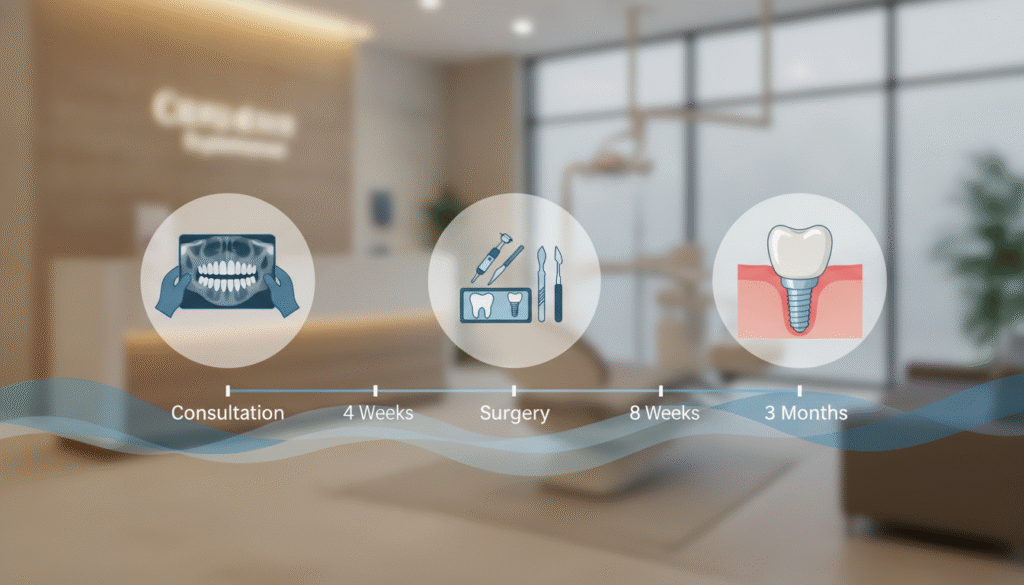
Stages of the Dental Implant Process
The journey to a successful dental implant involves several distinct stages. Understanding each phase can help patients feel more informed and prepared for what lies ahead. This process is typically divided into four key stages:
Initial Consultation
The initial consultation is a vital first step in the tooth implant process duration. During this appointment, the dental professional conducts a thorough clinical examination. Advanced imaging techniques, such as Cone Beam Computed Tomography (CBCT), are used to assess:
- Bone volume and density
- Proximity to critical anatomical structures
- Overall oral health
This detailed assessment ensures that the treatment plan is tailored to the patient’s specific needs.
Treatment Planning
Following the consultation, the treatment planning phase begins. This collaborative process uses digital surgical guides to enhance precision. Key aspects of this stage include:
- Reverse-engineering surgical and restorative outcomes
- Identifying the optimal placement for the implant
- Discussing possible risks and benefits with the patient
Effective treatment planning is key for the best results.
The Surgical Procedure
The surgical procedure is the next stage in the process. This step may involve atraumatic extraction of any remaining teeth if necessary. The dentist prepares the site through precise osteotomy, allowing for optimal fixture insertion. This careful approach minimizes trauma and promotes healing.
Recovery and Healing
After the surgery, the recovery and healing phase begins. This period is essential for osseointegration, where the implant fuses with the bone. Patients are advised to:
- Follow a soft food diet
- Adhere to strict oral hygiene protocols
- Attend follow-up appointments to monitor healing
Each of these stages is critical in the overall tooth implant process duration, with the healing phase often being the most time-intensive.
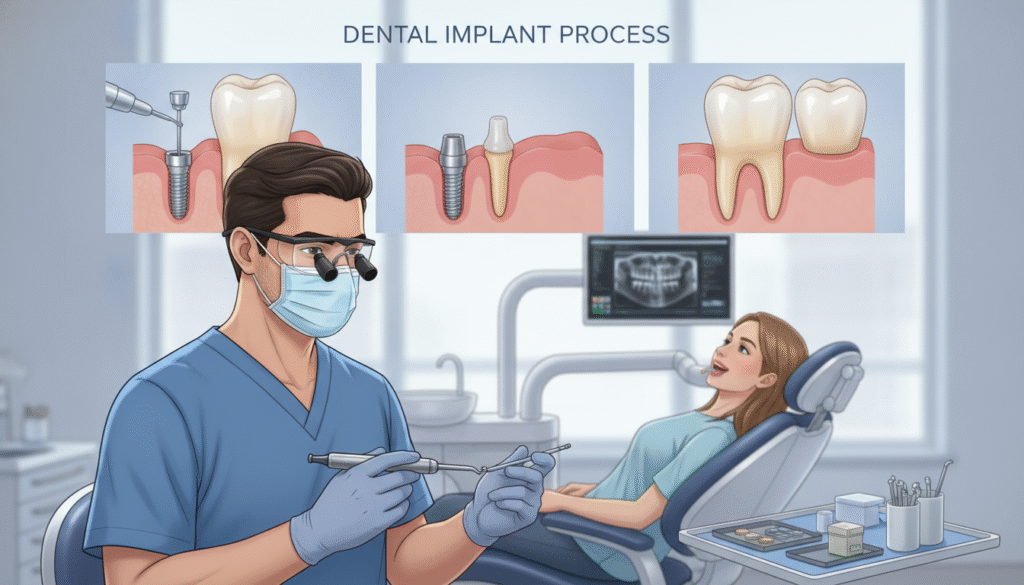
Average Timeframe for Each Stage
Knowing how long each part of the dental implant process takes can help patients know what to expect. The journey to get dental implants has many important steps, each taking a different amount of time. Here, we’ll look at how long each stage usually lasts.
Initial Consultation Duration
The first step is the initial consultation. This usually takes about one hour. The dentist will do a full check-up, including tests and a plan for treatment. You’ll also get a chance to talk about any worries and ask questions.
Surgery Duration
Putting in a single dental implant usually takes less than one hour. But, if you’re getting more than one, it might take up to two hours. This includes getting numb and the surgery itself, which is often done in a clinic.
Healing Period After Surgery
The healing time after surgery is key for the implant’s success. This is called osseointegration and takes three to six months. The bone grows around the implant, making it strong. How long it takes can depend on how well you heal and your overall health.
Final Restoration Process
The last step is putting the crown on the implant. This might need one to two visits if it’s made in a lab. But, with new tech like CEREC, you could get it all done in one go. This makes the end of the process much quicker.
Factors Influencing Implant Timeline
The time it takes for dental implants can change a lot. Knowing what affects it helps patients understand their treatment better.
Patient’s Oral Health
The health of your mouth is key in dental implant timing. Issues like gum disease can slow things down. Also, how thick and strong your jawbone is matters. If it’s not enough, you might need a bone graft, which can take up to four months.
Type of Implant Used
Implant types can speed up or slow down the process. For example, tapered implants might fit better than others. Also, special treatments like sandblasting can help healing, changing the timeline.
Bone Grafting and Additional Procedures
Some people need bone grafts because their bone isn’t enough. Procedures like sinus lifts or ridge augmentation are common. They can add four to six months before surgery starts. So, be ready for these extra steps.
Personal Healing Response
Everyone heals differently. Things like age, diet, and certain medicines can affect how fast your bone integrates with the implant. Even though the surgery is the same, how your body reacts is unique. Following your doctor’s advice is key for success.
Preparing for Dental Implant Surgery
Getting ready for dental implant surgery is key to a good outcome. It involves a detailed dental check-up, talking about your medical history, and planning the treatment. Each part is important for a smooth and successful surgery.
Dental Assessment and X-rays
The first step is a dental check-up. It includes panoramic radiographs and Cone Beam Computed Tomography (CBCT) scans. These tools help see the bone structure in detail.
This three-dimensional view is vital for:
- Checking bone density in Hounsfield units.
- Finding the best spot for the implant.
- Spotting any possible problems.
Switching to three-dimensional imaging makes planning much better.
Discussion of Medical History
Talking about your medical history is also key. This chat helps find any risks that could make surgery harder. Issues like:
- Coagulopathies
- Immunosuppression
- History of intravenous bisphosphonate use
may mean you can’t have surgery. Doctors might also give antibiotics to prevent infection.
Treatment Options and Planning
After checking your dental and medical health, you’ll talk about treatment. This planning is more than just replacing teeth. It includes:
- Deciding how many implants you need.
- Choosing between different types of restorations.
This careful planning reduces surgery risks. It also makes the implant surgery recovery time shorter by making sure the surgery area is healthy.
“Proper preparation is the foundation of a successful dental implant surgery.”
Surgical Procedure Explained
The dental implant process involves several precise steps. These steps are designed to ensure success. Knowing about these steps can help reduce anxiety about the procedure.
Patients can expect a structured surgical experience. It focuses on comfort and effectiveness.
Anesthesia Options
The surgery is done under local anesthesia. This keeps the patient comfortable during the process. Sedation options like conscious oral or intravenous sedation are also available.
These options help manage pain well. They allow patients to feel at ease during surgery.
Step-by-Step of the Implantation
The surgery starts with a crestal incision. This exposes the alveolar ridge. Then, a flap is reflected to access the bone.
Next, the osteotomy preparation is done. This uses drills of increasing size, all under irrigation. This keeps the surgical area clear.
After preparation, the implant is placed. It’s done with care for depth and angle. The implant’s stability is checked through torque values.
Depending on the protocol, a cover screw or healing abutment might be used.
Duration of Surgery
The surgery usually lasts about an hour for one implant. The time can increase with more implants. This phase is the most invasive but the shortest part of the implant placement timeline.
Recovery After Implant Surgery
Knowing how to recover after dental implant surgery is key to feeling better and getting good results. This time is very important because it helps your body heal and the implant to bond with your bone. It’s important to follow the instructions given after surgery to heal well.
Post-Operative Instructions
To reduce swelling and recover smoothly, follow these steps:
- Apply ice packs to the outside of the face in 20-minute intervals.
- Stick to a soft food diet for the first few days.
- Avoid vigorous rinsing or using straws to protect the surgical site.
- Utilize chlorhexidine gluconate rinses for effective plaque control.
Expected Discomfort and Pain Management
Most people feel only mild discomfort. This usually peaks 48 to 72 hours after surgery. To manage pain, use NSAIDs like ibuprofen instead of narcotics. Remember, always talk to your dentist if the pain doesn’t go away.
Signs of Complications
While some pain is normal, watch out for signs of trouble. These include:
- Excessive bleeding that does not subside.
- Severe pain that is unresponsive to medication.
- Signs of infection, such as purulent discharge or persistent swelling after 72 hours.
Spotting these signs early can help you get the right help and recover well. As one expert says, “The key to a successful recovery lies in patient awareness and adherence to post-operative guidelines.”
Understanding Osseointegration
At the heart of dental implant success is osseointegration. This process connects living bone directly to the implant. It’s key to understanding how implants stay stable and last long.
Osseointegration is more than just waiting. It’s a complex series of biological events. First, a fibrin scaffold forms around the implant. This scaffold helps osteogenic cells move to the implant.
Then, woven bone starts to form. After that, it remodels into denser, more organized lamellar bone.
Importance of Osseointegration
Osseointegration is very important. Without it, implants fail under chewing forces. A strong bond between bone and implant is needed for lasting function.
Typical Duration for Osseointegration
The osseointegration time is usually 3 to 6 months. This can change based on bone quality and implant surface technology. For example, bone in the jaw might integrate faster than bone in the upper jaw.
New implant designs, like hydrophilic surfaces, help speed up this process. These surfaces improve cell adhesion, shortening the healing time.
Final Restoration Process
The final step in getting a dental implant is when it looks and works like a real tooth. This part involves attaching an abutment to the implant and placing a custom crown on it. The crown’s material is key to how the implant looks and feels.
Types of Dental Crowns
Dental crowns come in different materials, each with its own benefits:
- Monolithic Zirconia: This material is strong, making it great for back teeth.
- Layered Porcelain: It’s perfect for front teeth because it looks so natural.
- Porcelain-Fused-to-Metal: This option is strong and looks good, making it versatile.
Taking Impressions for the Crown
Getting the crown to fit right starts with taking accurate impressions. There are two main ways to do this:
- Conventional Techniques: This method uses materials that might not be as comfortable.
- Digital Intraoral Scanning: This newer method is more accurate and comfortable, leading to a better fit.
Fitting and Final Adjustments
Getting the crown to fit just right is a big deal. It ensures the implant lasts a long time and works well. Important steps include:
- Checking that the abutment fits without any pressure.
- Tightening the abutment screw as the maker suggests.
- Checking the space between teeth with dental floss.
- Adjusting how the teeth meet to avoid any rubbing.
As shown, the surgical steps focus on healing, while the restorative phase is all about precision. This careful work greatly affects how long it takes to complete the dental implant crown completion time and how well it works.
Maintenance and Follow-Up Care
After getting dental implants, it’s important to keep up with care. This helps the implants last longer and stay healthy. Regular visits to the dentist and good oral hygiene are key.
Importance of Regular Check-ups
Seeing your dentist every 4 to 6 months is vital. Dental implants don’t have a periodontal ligament like natural teeth do. This makes them more prone to problems. Regular check-ups help catch issues early and keep the implant and surrounding areas healthy.
Oral Hygiene After Implants
Keeping your mouth clean after implants is essential. Use special floss or interdental brushes to clean around the implant. Also, choose low-abrasive toothpaste and air flossers to clean without harming the implant. Here are some tools for good home care:
| Tool | Purpose | Recommendation |
|---|---|---|
| Interdental Brushes | Clean between implants and natural teeth | Use daily |
| Low-Abrasive Toothpaste | Prevent scratching of the abutment | Choose a non-whitening formula |
| Rubber-Tip Stimulator | Massage gums and stimulate blood flow | Use gently around the implant |
Avoiding Possible Complications
To avoid problems like peri-implant mucositis and peri-implantitis, manage plaque well. Smoking and diabetes can increase risks. Even though implants can’t get cavities, the bone and soft tissue can. So, lifelong care is a must.
Costs Associated with Dental Implants
Understanding dental implant costs is key for making smart choices. The cost of dental implants in the U.S. usually falls between $3,000 to $6,000. This price includes the surgery, abutment, and crown. Sometimes, these parts are charged separately.
Several factors can affect the cost. These include the complexity of the case and the materials used. Here’s a detailed look at what dental implants cost:
| Cost Component | Estimated Cost | Description |
|---|---|---|
| Diagnostic Phase | $200 – $500 | Includes CBCT scans and initial assessments. |
| Surgical Phase | $1,500 – $3,000 | Covers fixture placement and any necessary grafting. |
| Restorative Phase | $1,500 – $3,000 | Involves custom abutment and CAD/CAM crown fabrication. |
It’s also important to know about insurance coverage. Many dental plans cover part of the crown but not the implant itself. Check your policy to see what’s covered. Dental PPO plans might have a yearly limit for the crown, but medical insurance usually doesn’t cover implants unless for trauma or birth defects.
If upfront costs worry you, there are financing options. CareCredit lets you pay over time. This makes implants more affordable without sacrificing quality. This flexibility can help you decide to get an implant.
Dental Implant vs. Other Tooth Replacement Solutions
Dental implants are a top choice for replacing teeth, beating out dentures and bridges. It’s key to know the differences to make a smart choice.
Dental implants keep the bone healthy, unlike dentures that can cause bone loss. This helps you chew better and keeps your face looking normal. Dentures can make your face look sunken over time.
Dentures can also make it harder to feel the strength of your bite. This is a big deal for those who want their teeth to look and work great.
Comparison with Dentures
Dental implants don’t harm your other teeth, unlike dentures. This is good for your overall mouth health and avoids more dental problems.
Comparison with Bridges
Compared to bridges, implants are better. Bridges need to cut down healthy teeth, which can lead to more problems. Implants don’t touch your other teeth, keeping them safe.
Long-Term Benefits of Implants
Implants last a long time, with a success rate over 95%. They help keep your mouth healthy and your face looking good. This is a big plus for many people.
Having implants also boosts your confidence and smile. This shows how implants are a better choice than other options.
The wait for implants to heal is worth it. They prevent more dental problems and save you money in the long run. Dentures and bridges can lead to more issues and cost more later on.
Success Rates of Dental Implants
Dental implants have a success rate of about 98% over ten years. This shows how reliable they are for replacing teeth. Advances in technology and surgery have made them very effective. But, several things can affect how long and well dental implants work.
Success rates can be influenced by:
- Surgical Determinants: The skill of the surgeon is key. Good placement and stability are important for success.
- Host Determinants: Bone density and health can affect how well the implant fits with the bone.
- Prosthetic Determinants: The crown’s fit and how teeth bite together can also impact success.
It’s important to know the difference between “survival” and “success” with implants. Success means the implant stays in place without problems like infection or pain.
Factors Affecting Success Rates
Studies show that following post-operative care is key for implant success. Regular dental visits and good oral hygiene are essential for long-term success.
Lifespan of Implants vs. Other Options
The titanium part of a dental implant is safe for the bone. But, the crown may need to be replaced every 10 to 15 years. This is similar to or better than bridges and dentures.
The table below compares the lifespan of dental implants with other tooth replacement options:
| Tooth Replacement Option | Average Lifespan | Replacement Frequency |
|---|---|---|
| Dental Implants | Lifetime for fixture; 10-15 years for crown | Every 10-15 years for crown |
| Bridges | 5-7 years | Every 5-7 years |
| Dentures | 5-10 years | Frequent relining required |
In summary, while the crown part of dental implants may need to be replaced, the bone stays strong. This makes implants a durable and conservative choice for the long term.
Common Misconceptions About Dental Implants
Many myths about dental implants spread, causing worry for those thinking about them. It’s key to know these myths to make smart choices about our teeth. We’ll tackle three common myths here.
Pain and Discomfort Myths
One big myth is that getting dental implants hurts a lot. But, most people say it’s less painful than pulling a tooth. This is because implants don’t have a periodontal ligament, which means less pain after.
Recovery Time Misconceptions
Another myth is that recovery takes forever. But, most can go back to normal in just 1 to 2 days. It’s important to know the healing times: soft tissue takes 1-2 weeks, and bone integration takes 3-6 months. During this time, you can use a temporary tooth and won’t feel pain.
Cost Myths
Lastly, many think implants are too expensive. But, they’re actually cost-effective in the long run. The upfront cost is high, but think about the money you save on other treatments. For example, bridges or dentures need to be replaced often, which can damage your jaw and cost more.
By clearing up these myths, we hope to change how you see dental implants. They’re not just a luxury but a smart choice for your health.
Finding the Right Implant Specialist
Finding a good dental implant specialist is key for a successful procedure. Look for those with advanced training. Board-certified periodontists or oral surgeons are often the top picks. General dentists with a Fellowship in the International Congress of Oral Implantologists (ICOI) are also great choices.
When you meet with a specialist, ask important questions. Find out how many implants they do each year and their complication rates. Knowing how they handle problems like failed implants shows their skill. Also, ask about the tools they use and the lab for the final crown.
Reviews and referrals are important in picking the right specialist. Look for feedback on how long implants last and their success rate. This helps you understand the quality of care and what to expect.
Choosing a skilled specialist means a better outcome. They ensure your implants work well and look good. It’s a smart investment for your health.