How Long Does It Take to Repair a Broken Tooth?
Did you know fixing a broken tooth can take weeks or even months? This shows how complex dental repairs can be. Each case is different, based on how bad the break is and the treatment used.
Knowing how long it takes to heal can make you feel better. Some fixes, like bonding, can be done in one visit. But bigger jobs, like crowns or root canals, need more time and visits.
Seeing a dentist right away is key. Waiting too long can cause more problems and make healing take longer. This article will look at what affects how long it takes to fix a broken tooth. It aims to help you feel more confident about your dental care.
Key Takeaways
- The healing process for a fractured tooth can range from days to months.
- Complexity of the fracture significantly impacts treatment duration.
- Some repairs can be completed in one visit, while others require multiple appointments.
- Prompt professional evaluation is essential to avoid complications.
- Understanding your treatment options can help ease anxiety.
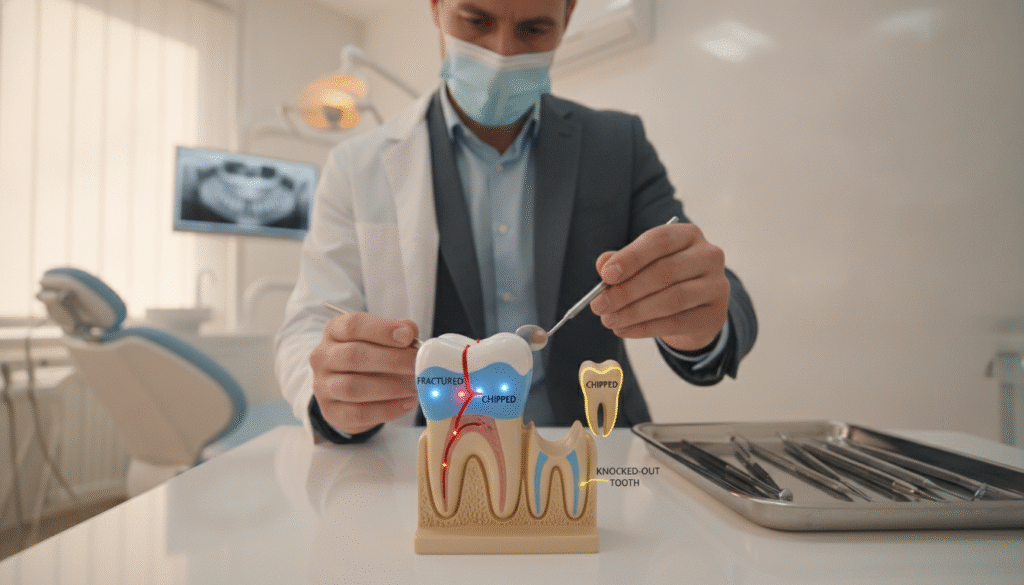
Understanding Broken Teeth and Their Types
A broken tooth can cause many problems. It’s important to know about the different types of tooth breakage. This helps in figuring out how long it will take to fix a broken tooth.
Common Causes of Broken Teeth
There are many reasons why teeth can break. Knowing these reasons helps in preventing and treating tooth breaks. Here are some common causes:
- Biting down on hard foods: Foods like ice or hard candies can put too much pressure on teeth.
- Accidents and sports injuries: Falls or impacts during sports can fracture teeth.
- Weakened teeth from cavities: Decay can make teeth weak and more likely to break.
- Grinding or clenching (bruxism): This habit can wear down enamel and cause fractures over time.
Types of Tooth Breakage
Tooth fractures can be different in severity. Knowing the types helps in choosing the right treatment and recovery time. Here are the main types of tooth breakage:
| Type of Breakage | Description | Impact on Repair Duration |
|---|---|---|
| Craze Lines | Minor surface cracks in the enamel. | Minimal; often requires no treatment. |
| Cuspal Fractures | Breaks affecting the pointed edges of teeth. | Moderate; may need bonding or a crown. |
| Split Teeth | Severe fractures that extend through the tooth. | Significant; often requires extraction or complex repair. |
Each type of breakage affects how long it takes to fix a tooth. For example, chewing ice can lead to a dental emergency. Knowing these details is important for keeping teeth healthy.
Symptoms of a Broken Tooth
Knowing the signs of a broken tooth can stop bigger problems. Spotting symptoms early is key for good treatment. It can also affect how long it takes to fix a broken tooth.
Common Signs to Look For
- Sharp Pain: A sudden, intense pain when biting down can indicate a fracture.
- Sensitivity: Increased sensitivity to hot, cold, or sweet foods may suggest damage.
- Visible Cracks: Look for any noticeable cracks or chips in the tooth surface.
- Changes in Bite: If your bite feels uneven or altered, it may be a sign of a broken tooth.
When to Seek Immediate Care
Some symptoms need urgent care, while others can wait. If you have:
- Severe Pain: Intense, unrelenting pain can indicate deeper issues.
- Persistent Bleeding: Ongoing bleeding from the tooth or gums is a red flag.
- Large Fragments Missing: If a significant piece of your tooth is missing, prompt treatment is necessary.
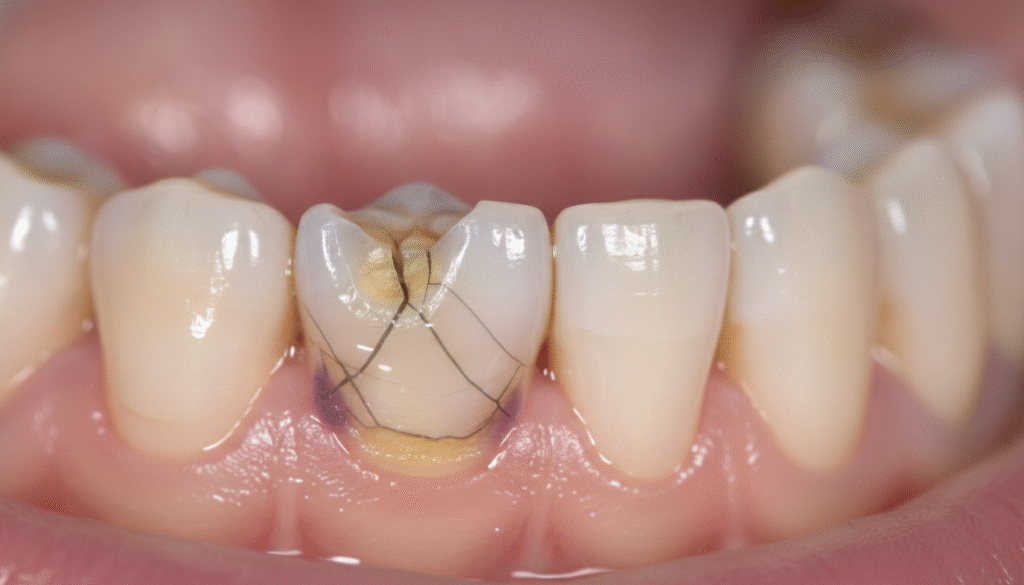
Knowing these signs helps you get the right care fast. Waiting too long can cause more problems. It could make fixing your tooth take longer and harm your dental health.
Initial Steps After a Tooth Breaks
When a tooth breaks, quick action is key. It helps manage pain, stops further damage, and gets you ready for the dentist. Here are important steps to take at home and what to expect at the dentist.
First-Aid Measures at Home
Acting fast after a tooth break is vital. Here are some first-aid tips:
- Rinse your mouth: Use warm salt water to clean the area. This lowers infection risk.
- Preserve any fragments: Save any tooth pieces in milk or saliva. This keeps the periodontal ligament cells alive.
- Apply a cold compress: Use a cold compress on your cheek to reduce swelling and pain.
- Use dental wax: Cover sharp edges with dental wax to avoid tongue or cheek cuts.
These steps can greatly help your broken tooth restoration time by reducing problems at the dentist.
Visiting a Dentist: What to Expect
At the dentist, your comfort and assessment come first. Here’s what usually happens:
- Initial Assessment: The dentist will check your tooth and area to see how bad the damage is.
- X-rays: They might take X-rays to see how deep the fracture is and if the pulp is involved.
- Treatment Planning: Based on what they find, your dentist will talk about your options. They’ll also tell you how long it will take, which affects your broken tooth restoration time.
“When you come in for an emergency visit, our first priority is to get you comfortable and assess the situation… we may take an X-ray.”
Understanding these steps and what to expect can make your experience better. Remember, quick action helps your recovery.
Dental Repair Options for Broken Teeth
There are many ways to fix broken teeth. Knowing these options helps patients choose the best treatment. We’ll look at fillings and bonding, crowns and caps, and root canals.
Fillings and Bonding
The dental bonding process for broken tooth is fast and works well for small chips and cavities. It takes 30 to 60 minutes and can be done in one visit. Here’s how it works:
- Etching: The dentist gets the tooth ready for bonding.
- Bonding: A special resin is applied and shaped to match the tooth.
- Curing: A light makes the resin hard, making it last longer.
Today’s fillings are made from composite resins. They not only fix the tooth but also look natural.
Crowns and Caps
Crowns are strong and last long for big damage. It takes two visits:
- The first visit includes preparing the tooth, making impressions, and putting on a temporary crown.
- The second visit is when the real crown is cemented after it’s made in a lab. This usually takes 2 to 3 weeks.
Crowns are great for fixing teeth that are badly broken.
Root Canals
If the break goes into the pulp, a root canal might be needed. This procedure takes 1 to 2 hours and saves the tooth. After a root canal, a crown is usually put on to protect and fix the tooth.
| Procedure | Duration | Visits Required |
|---|---|---|
| Fillings and Bonding | 30-60 minutes | 1 |
| Crowns | 2-3 weeks (total) | 2 |
| Root Canals | 1-2 hours | 1 (plus crown placement) |
Factors Affecting Repair Time
The time it takes to fix a broken tooth can change a lot. Knowing what affects it helps patients know what to expect.
Three main things decide how long fixing a broken tooth takes:
Severity of the Damage
How bad the tooth is broken is key. Small chips might just need one visit. But bigger breaks that hit nerves could take longer. Here’s what you might see:
- Enamel-only fractures: These are usually fixed quickly, in one visit.
- Dentin fractures: These might need more work, like fillings or crowns.
- Pulp exposure: This often means a root canal and then fixing the tooth, taking longer.
Type of Repair Procedure
The type of fix also plays a big role. Fillings are faster than crowns or veneers, which need lab work. Here’s a quick look:
- Fillings: Done in one visit.
- Crowns: Takes two visits, one for the mold and another for the crown.
- Veneers: Similar to crowns, often needing more than one visit.
Dentist’s Experience
The dentist’s skill level can make a big difference. A good dentist might use new tech to make crowns in hours, not weeks. Consider these points:
- Practice setting: Offices with the latest tech might work faster.
- Patient factors: How well you heal, your oral health, and following aftercare can also affect recovery time.
Typical Timeframes for Different Repairs
Knowing how long dental repairs take can help you prepare. Each procedure’s time depends on its complexity and type. We’ll look at fillings and crowns.
Filling Repairs: Time Overview
The tooth filling procedure duration is usually quick. A simple filling takes 20 to 60 minutes in one visit. You might feel some sensitivity for a few days after.
- Simple fillings: 20-60 minutes
- Complex fillings (e.g., multiple surfaces): 60-90 minutes
- Follow-up visits (if needed): 15-30 minutes
Crown Procedures: Estimated Duration
The dental crown installation timeline is more detailed. First, the dentist prepares the tooth and puts on a temporary crown, taking 60 to 90 minutes. Then, the permanent crown is placed in a second visit, 1 to 3 weeks later, in 30 to 60 minutes.
For CEREC crowns, the whole process takes 2 to 3 hours. This technology lets you get your crown in one visit.
- Initial preparation and temporary crown: 60-90 minutes
- Permanent crown placement: 30-60 minutes
- Same-day CEREC crowns: 2-3 hours
After getting a crown, it might take some getting used to. Healing periods can differ, and you might need adjustments for comfort and function. Keep in mind, these times are averages and can change based on your case and the dentist’s skill.
Emergency Dentistry Situations
Knowing when you need emergency dental care is key. A broken tooth can be urgent. Look for signs that mean you need to see a dentist right away.
When You Can’t Wait for an Appointment
Severe pain, uncontrolled bleeding, or swelling mean you need an emergency dentist. These signs show your tooth might be damaged. Getting help fast can save your tooth.
Here are dental emergencies to watch for:
- Severe pain: This could mean nerve damage or infection.
- Uncontrolled bleeding: You need to see a dentist right away to avoid more problems.
- Pulp exposure: If your tooth’s inner part is exposed, it can get infected.
- Avulsion: If your tooth is knocked out, put it back in within 15–60 minutes for the best results.
Urgent Care vs. Regular Visits
Emergency dental care aims to stop pain and fix the problem temporarily. Regular visits are for detailed plans and lasting fixes. At an emergency visit, the dentist will:
- Check the damage and ease your pain.
- Make sure your tooth is stable and safe.
- Talk about what to do next for a permanent fix.
Getting emergency dental care can depend on where you are. Many dentists offer late-night services or work with emergency clinics. Always have a trusted emergency dentist’s number handy.
How to Prepare for Your Dental Appointment
Getting ready for your dental visit can make your care better. It helps your dentist make a correct diagnosis and plan your treatment well. Here are some important steps to follow:
Gathering Necessary Information
Before your dental visit, gather all your dental history. This info is key for your dentist to plan your treatment. Make sure to include:
- The time and how the tooth broke.
- Any symptoms you’ve had after the break.
- Any past dental work on the tooth.
- Medical conditions or meds that might affect your treatment.
Also, if you have any tooth pieces, bring them. They can help your dentist a lot.
Questions to Ask Your Dentist
Having questions ready can make your visit better. Here are some good ones to ask:
- How long will it take to fix the tooth?
- What can I do in the meantime?
- What options do I have for fixing my tooth?
- What will it cost, and what insurance covers it?
As one expert says,
“We take the time to explain all available options, empowering our patients to make informed decisions.”
This way, you’ll feel sure about your treatment plan.
Preparing well for your dental visit makes the process smoother. It also helps fix your dental problems faster and more effectively.
Aftercare Following Repairs
After a dental repair, taking good care of yourself is key. The first few days are critical for a smooth recovery. By following the right steps, you can make your healing faster and more effective.
Recommended Practices for Care
Here are some care tips after a dental repair:
- Stick to Soft Foods: Eat only soft foods for 24 to 48 hours to avoid irritating the repair site.
- Avoid Hot, Cold, and Spicy Foods: These can cause discomfort and slow down healing.
- Maintain Gentle Oral Hygiene: Use a soft-bristled toothbrush and avoid alcohol-based mouthwashes to keep the area clean without irritation.
- Pain Management: Use over-the-counter pain relievers. A cold compress on the cheek can also help with swelling.
As you feel more comfortable, you can start eating harder foods again. But always be gentle to avoid any problems.
Signs of Infection or Complications
It’s important to watch for signs of infection or complications after a dental repair. Look out for:
- Increased swelling or redness around the repair site.
- Pus or a persistent bad taste in the mouth.
- Fever or unusual discomfort.
Spotting these signs early can help avoid a longer recovery. Being careful and following aftercare tips can improve your broken tooth restoration time and keep your teeth healthy for the long term.
Long-term Outcomes and Maintenance
Keeping your dental repairs in good shape needs regular care and smart choices. The first step, fixing a broken tooth time frame, is just the start. Regular dental visits are key to keeping your teeth healthy.
At these visits, dentists can watch how your tooth is healing. They also check for any problems, like leaks or new cavities. Dr. Iofin says,
“Regular check-ups are vital to track healing and ensure treatment success.”
Importance of Regular Dental Check-ups
Going to the dentist regularly helps catch problems early. It’s smart to visit every six months or as your dentist suggests. This helps in:
- Catching issues before they get worse.
- Keeping your repair strong.
- Getting advice on how to keep your mouth clean.
Lifestyle Changes to Protect Your Teeth
Changing your lifestyle can also help your dental repairs last longer. Here are some tips:
- Avoid chewing on ice or using your teeth as tools.
- Eat softer, less acidic foods to avoid damaging your teeth.
- If you grind your teeth, wear a night guard to protect them.
- Wear a mouthguard while playing sports to prevent injuries.
Following these tips can help avoid more dental work in the future. Early detection at dental visits can save you time and money.
| Maintenance Practice | Frequency | Benefits |
|---|---|---|
| Dental Check-ups | Every 6 months | Early problem detection |
| Use of Mouthguards | As needed | Protection from damage |
| Dietary Adjustments | Daily | Reduced risk of damage |
Cost Considerations of Tooth Repairs
It’s important to know the costs of fixing a broken tooth. These costs can affect what treatment you choose. They can also slow down the broken tooth treatment timeline if you wait because of money worries.
Prices change based on many things. These include the type of repair, where you live, and the materials used. Here’s a quick look at what you might pay for common dental work:
- Bonding: $100 – $400
- Fillings: $150 – $300
- Crowns: $800 – $1,500
- Root Canals: $700 – $1,200
- Extractions: $75 – $300
Keep in mind, these prices can change. This depends on the dentist’s skill and how complex your case is. A small chip is easier to fix than a tooth that’s split in two.
Insurance Coverage and Options
Many dental insurance plans cover things like crowns and bonding well. To get the most from your insurance, do this:
- Check your insurance benefits before you book an appointment.
- Find out if you need to get approval first.
- Know the difference between in-network and out-of-network dentists.
There are also other ways to pay for dental care. These include:
- Dental savings plans: These are membership programs that give you discounts.
- In-house membership programs: Dental offices offer payment plans.
- Third-party credit options: Companies that help with healthcare costs.
Fixing your tooth quickly can save you money in the long run. Taking care of your teeth is good for your health and your wallet.
Dental Innovations in Tooth Repair
New dental technology is changing how we fix broken teeth. These advancements make treatments better and make patients happier. Dental offices are now using the latest tools and materials, changing the field of restorative dentistry.
One big change is in the dental bonding process. Now, with CAD/CAM systems, dentists can make crowns in just one visit. This means less time in the dentist’s chair. Digital impressions also make things easier, getting rid of messy molds and making visits more comfortable.
Laser dentistry is another big step forward. It lets dentists do less invasive work, which means patients heal faster. Plus, it’s more precise, making procedures less painful. New materials that look and feel like real teeth are also being used, making repairs look and feel natural.
Bioactive cements are also becoming popular. They help fix teeth and keep them healthy over time. This is a big win for keeping teeth strong for a long time.
New Technologies in Dentistry
The future of fixing teeth looks bright. Regenerative endodontics is a new area that aims to grow back dental pulp and tissues. This could mean fewer big procedures for fixing teeth.
Stem cell research is also moving fast. Scientists are looking into using our own cells to heal teeth. This could be a game-changer for fixing damaged teeth.
3D bioprinting is also exciting. It lets dentists create custom teeth exactly right for each patient. This could lead to even better tooth repairs in the future.
Future Trends for Tooth Repair
As these new technologies grow, dentistry will change a lot. Dentists will need to learn how to use these new tools. This will help make treatments better and more focused on the patient.
In short, new dental repair technologies are making teeth fixes better and more natural-looking. The future of fixing teeth is looking very promising, with new ways to care for patients’ teeth.
| Technology | Benefits | Future Poteential |
|---|---|---|
| CAD/CAM Systems | Same-day crowns, reduced chair time | Wider adoption in general practice |
| Laser Dentistry | Minimally invasive, quicker recovery | Broader applications in various procedures |
| Biomimetic Materials | Natural appearance, functional integrity | Improved materials for durability |
| 3D Bioprinting | Custom tooth structures | Personalized dental solutions |
Conclusion: Prioritizing Dental Health
Taking care of your dental health is very important, even more so when you have a broken tooth. Acting quickly can make a big difference in how long it takes to fix a tooth fracture. Even small breaks need to be seen by a dentist right away to prevent bigger problems like infections or losing the tooth.
Going to the dentist regularly is key to keeping your mouth healthy. It lets your dentist catch any issues early. Don’t wait until you start feeling pain to make an appointment. Being proactive is the best way to avoid serious dental problems later.
Talking to a trusted dentist can give you advice that fits your specific needs. Make sure to see your dentist regularly. This way, you can understand how to take care of your teeth better and know all your treatment options.
By focusing on your dental health, you’re really looking out for your overall health. Start taking care of your teeth today to keep your smile shining and healthy.