
How Many Hours Per Day Do I Need to Wear Aligners?
What makes your orthodontic treatment finish on time or run late? The key is clear aligner wear time. Knowing this is key to success or delay.
Align Technology and experts say wear aligners 20 to 22 hours a day. This is the minimum for good treatment. It’s based on how teeth move and the material of aligners.
Clear aligners are better than braces because you can take them out. But, you must wear them most of the time. This is important for success.
Studies show that following the wear plan is critical. It ensures the treatment goes as planned. The right pressure from aligners is needed for tooth movement.
Key Takeaways
- Aligners must be worn 20 to 22 hours daily for effective treatment progression and optimal results
- The recommended wear time is based on scientific research into tooth movement physiology and aligner material properties
- Patient compliance with wear protocols directly determines whether treatment finishes on schedule or experiences delays
- Removability offers convenience for eating and hygiene but requires disciplined adherence to maximize treatment effectiveness
- Consistent daily wear ensures sustained pressure necessary for predictable tooth movement throughout therapy
The Importance of Consistent Wear
Understanding why consistent orthodontic wear matters starts with tooth movement biology. Clear aligners work by applying constant pressure. This is needed for predictable results. If patients don’t wear them as recommended, treatment plans can be disrupted.
The link between aligner treatment compliance and success is strong. Studies show that not wearing aligners enough can make treatment longer. They also show that aligners need constant gentle pressure to work well.
“Orthodontic tooth movement is a biological response to mechanical stimulus. Without consistent force application, the cellular processes necessary for bone remodeling simply cannot proceed as planned.”
Cellular Mechanisms and Biomechanical Principles
What happens when pressure is applied consistently versus not? The answer is in how aligners work with tooth-supporting structures. Periodontal ligaments respond to constant pressure by starting important biological events for tooth movement.
The bone remodeling process involves two key activities. Osteoclastic resorption breaks down bone on the pressure side. Osteoblastic deposition builds new bone on the tension side. This creates space for tooth movement.
This process needs constant stimulus to keep moving forward. If wear time is interrupted, periodontal fibers can rebound. This can cause teeth to move back to their original positions.
Meeting Invisalign daily requirements keeps the process going. Wearing them 20-22 hours a day provides the needed constant force. This allows for brief removals for eating and cleaning.
Clinical Evidence and Treatment Timeline Extensions
Orthodontic data shows a clear link between wearing aligners and treatment time. Patients who wear them 20-22 hours a day finish treatment on time. Those who don’t may need more time or extra aligners.
Treatment planning software uses this data to predict outcomes. It assumes consistent orthodontic wear as a key factor. If wear times are not consistent, plans need to change.
Not following wear guidelines can lead to several issues:
- Extended treatment duration: Not wearing them enough can make treatment longer
- Additional aligner sets: New impressions and aligners may be needed
- Increased treatment costs: Longer treatment and more materials mean higher costs
- Compromised final results: Inconsistent pressure can prevent optimal tooth positioning
Studies show that following wear guidelines leads to better results. Patients who wear aligners as recommended are happier with their outcomes.
Not wearing aligners consistently can cause uneven tooth movement. This can make treatment harder and may need extra steps to fix.
Orthodontists say that aligner treatment compliance is essential for success. The way teeth move is based on science. It can’t be changed by wearing aligners only sometimes.
Recommended Daily Wear Time
Orthodontic treatment guidelines say how long to wear aligners each day. This advice comes from lots of research and maker rules to help teeth move right. Knowing these times helps patients reach their treatment goals on time.
The dental aligner schedule is a mix of good treatment and life needs. Align Technology, the maker of Invisalign, has rules based on science. These rules have been tested for years in studies.
Standard Protocol for Daily Wear
The usual rule is to wear 20-22 hours daily for best results. This time keeps the force on teeth needed for them to move. The rest of the time is for taking them off during the day.
Why can’t we wear them all the time? There are good reasons:
- Meal periods: Taking them off while eating stops damage and stains
- Oral hygiene procedures: We need to clean our teeth well after meals
- Aligner maintenance: We must clean the aligners themselves
- Emergency situations: Sometimes, we need to take them off quickly
The 2-4 hour break is for all these needs. It’s not one long break. Studies show too many breaks can slow down treatment and make it last longer.
Individual Variations in Wear Requirements
Even though there are general rules, each person might need different wear times. How complex the treatment is is the main thing that changes these times. Cases with big problems might need to wear them more, up to 22 hours.
Many things can change how long someone needs to wear their aligners:
- Malocclusion severity: More serious problems need constant force
- Patient age: Younger people might move their teeth faster
- Bone density: Denser bones need more time for movement
- Periodontal health: Gum health affects how teeth move
- Biological response variability: Everyone’s body is different in how it responds
Doctors might change the wear time based on what they see. Some might say wear them for 22 hours for tricky cases. But for simpler cases, less wear might be okay, though this is rare.
Wear time and how well treatment works go hand in hand. Studies show that less wear means treatment takes longer. So, sticking to 20-22 hours is key to finishing on time.
It’s important to tailor treatment plans to each person. Doctors look at many things during the first visit to decide on wear time. They check in often to make sure the plan is working and adjust as needed.
Knowing these things helps patients work better with their orthodontists. By following general rules and making changes for each person, treatment can be very successful.
Aligners vs. Traditional Braces
Choosing between aligners and traditional braces depends on your lifestyle and goals. Both methods move teeth but in different ways. Each has its own benefits and requires different levels of effort from the patient.
The choice between removable orthodontics and fixed appliances affects more than looks. It also changes how treatment works and fits into your daily life. The main difference is how teeth move.
Mechanical Approaches and Patient Participation
Traditional braces use brackets and wires to apply constant force. They work all the time, needing only regular brushing. This makes them easy to keep up with.
Clear aligners work differently. They are removable trays that apply pressure to teeth. But, they only work if you wear them as directed.
- Force application: Braces apply constant pressure. Aligners use material that weakens over time.
- Treatment flexibility: You can take out aligners for special events. Braces can’t be removed.
- Patient responsibility: Wearing aligners requires discipline. Braces don’t need any effort from you.
- Comfort factors: Aligners let you eat freely and brush easily. Braces might cause some discomfort at first.
A study by Gu et al. (2017) showed that with proper use, aligners can match braces. This highlights the importance of following instructions for success.
Continuous Force Versus Compliance-Dependent Treatment
The biggest difference is in how long you need to wear them. Braces are on 24/7, from start to finish. This means no worries about wearing them enough.
Aligners need 20-22 hours of wear to be as effective as braces. Not wearing them enough can make treatment longer and less effective.
| Treatment Aspect | Traditional Braces | Clear Aligners |
|---|---|---|
| Daily Active Time | 24 hours (continuous) | 20-22 hours (requires removal) |
| Compliance Requirement | Minimal (automatic function) | High (patient-dependent) |
| Treatment Duration | 12-24 months average | 12-24 months with proper wear |
| Force Consistency | Constant throughout day | Variable based on wear patterns |
Studies by Buschang et al. (2014) looked at how well both methods work. They found that clear braces daily wear of 20-22 hours can match braces. But, wearing them less can make treatment take longer.
Wearing aligners less than 20 hours can cut down on effectiveness. For example, wearing them 15 hours a day is only about 63% as effective. This can double the treatment time.
Choosing between these options means weighing aesthetics and lifestyle against consistent results. Braces offer steady force but limit looks and diet. Aligners look better and are easier to live with but need strict adherence.
Patients should think about their ability to follow wear schedules. If you can stick to it, aligners might work well for you. But, if you’re unsure, braces might be more reliable because they don’t rely on you.
Patient Experiences and Testimonials
Looking at patient stories, we see how they get from the first visit to optimal alignment results. These stories show how important it is to wear aligners every day. They also give hope and advice to those thinking about getting orthodontic treatment.
Doctors know that aligner treatment outcomes depend on more than just biology. They also need psychological strength and good habits. The key is to make wearing aligners a part of daily life, not just a medical task.
Success Stories from Aligners
Many patients have found ways to wear their aligners for 20-22 hours a day. One person made wearing them a habit by doing it every morning. This made it easy to keep up with treatment for 14 months.
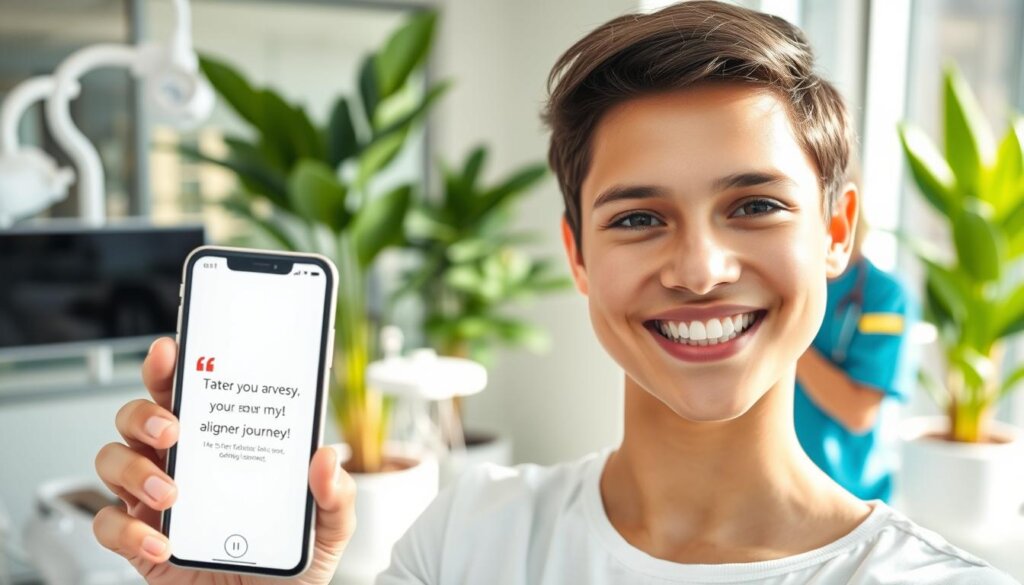
A college student used her phone to stay on track. She took pictures of her smile every week and looked at them monthly. This helped her see how her treatment was going and stay motivated.
Some patients found success by sharing their goals with others. Talking about their treatment with family or online groups helped them stay motivated. These support systems cheered them on and celebrated their progress.
Traveling posed challenges for some patients. But those who prepared well, like carrying cleaning kits, stayed on track. This helped them reach their optimal alignment results on time.
Common Challenges Faced
Patients often face obstacles that make it hard to stick to treatment. The first few days can be uncomfortable as teeth adjust. This discomfort sometimes makes patients skip wearing their aligners after meals.
Social situations are a big challenge for many. People who work may find it hard to wear their aligners during lunch. They might feel awkward about taking time to clean their teeth and put in their aligners.
Teenagers have their own set of challenges. They might feel self-conscious about wearing their aligners in front of their peers. They also worry about how their speech will sound during presentations. And they might not want to take out their aligners during after-school activities.
Some patients, like the elderly, have trouble putting in and taking out their aligners. This is because of arthritis or weak hands. Orthodontists help these patients learn how to do it more easily during check-ups.
Busy schedules make it hard to keep up with meal times and oral hygiene. Patients have to brush their teeth before putting in their aligners. This can be hard to do, but it’s good for their teeth.
The biggest challenge of patient compliance success is also its greatest reward. Patients who succeed in their treatment often find that they become more disciplined in other areas of their lives too.
| Patient Profile | Primary Compliance Challenge | Successful Strategy | Treatment Duration |
|---|---|---|---|
| Working Professional (Ages 28-45) | Business lunch meetings and professional networking events | Scheduling meals strategically and carrying discreet cleaning kits | 12-16 months |
| College Student (Ages 18-22) | Social situations and irregular daily schedules | Progress tracking apps and visual motivation techniques | 10-14 months |
| Teenager (Ages 13-17) | Peer pressure and self-consciousness during removal | Parental accountability and reward systems | 14-18 months |
| Retiree (Ages 60+) | Manual dexterity during insertion and removal | Modified insertion techniques and extended adaptation period | 16-20 months |
These stories show that getting good results from orthodontic treatment is not just about technology. It’s about forming good habits, dealing with social situations, and staying motivated. Knowing what works and what doesn’t helps new patients prepare for the journey ahead. It also gives current patients advice and encouragement.
The Role of Orthodontic Supervision
Clear aligners make teeth straightening easy at home. But, they need professional monitoring for the best results. The bond between patient and orthodontist is key during treatment. It makes sure teeth move as planned.
Even though you wear aligners on your own, orthodontic oversight is vital. Orthodontists guide you, adjusting plans as needed. This teamwork makes treatment more effective and less likely to hit roadblocks.
Regular Professional Check-ups Matter
Orthodontists check in every 6-8 weeks. These visits help track treatment progress. They ensure teeth move as expected, thanks to everyone’s different biology.
At each visit, orthodontists do a thorough check. They look at how well aligners fit, how teeth are moving, and gum health. They also check the bite and how well you’re following the treatment plan.
- Aligner fit verification – Checking for gaps between aligners and teeth that indicate insufficient wear or unexpected tooth response
- Tooth movement assessment – Comparing actual positions against predicted staging in treatment plans
- Soft tissue health examination – Evaluating gum health and checking for inflammation or irritation
- Occlusal relationship analysis – Ensuring bite alignment develops correctly throughout treatment
- Compliance verification – Reviewing wear patterns through both patient reporting and clinical indicators
These visits are great for answering questions and keeping you motivated. Orthodontists can address any concerns you have. They make sure you’re on track and keep you excited about your progress.
Tooth movement is unpredictable. Regular checks help catch any issues early. This prevents longer treatment times and extra costs.
Treatment Plan Modifications
Orthodontists often change treatment plans based on what they see. These changes help meet your unique needs. It shows the value of orthodontic oversight over DIY methods.
They might make you wear aligners longer if teeth move slower. Or, they might shorten wear time if teeth move faster. These adjustments help each stage of treatment go smoothly.
When teeth don’t move as planned, orthodontists might need to make bigger changes. They might use special aligners or other tools to get teeth back on track. This ensures your treatment ends well.
For tough movements, orthodontists might use:
- Elastic attachments – Small rubber bands that create additional directional forces
- Precision cuts – Strategic aligner modifications that allow specific tooth movements
- Temporary anchorage devices – Mini-implants that provide fixed reference points for difficult movements
- Interproximal reduction – Selective enamel removal to create space for alignment
These changes highlight why professional monitoring is key. Orthodontists know when to make changes for better results. They can spot when something needs fixing.
Aligner treatment works best when you and your orthodontist work together. You wear aligners as directed, and they guide you. This team effort leads to better results than going it alone.
With supervision, everyone is accountable. Regular visits let you see how you’re doing. They keep you on track and prevent problems that can happen without guidance.
Eating and Drinking with Aligners
Aligners offer a big advantage over traditional braces because you can remove them during meals. This makes eating easier, but it also means you need to plan your meals carefully. Unlike fixed braces, aligners let you eat whatever you want, but you must follow certain rules to keep your treatment on track.
Doctors say you should only drink plain water with your aligners in. This means you have to find time for meals and cleaning your teeth within a few hours each day. It’s a challenge to fit everything in.
Knowing how to remove your aligners and choosing the right foods is key. It helps you stay on track with your treatment and keeps your teeth healthy.
What Dietary Restrictions Apply to Aligners?
Aligners and traditional braces are different because you can remove aligners. People often wonder if they can eat certain foods with them. The answer is simple: you can eat anything you want, as long as you take out your aligners first.
No food is off-limits with clear aligners. You can eat anything, whether it’s crunchy, sticky, hard, or chewy. Just remember to take out your aligners first.
Why do you need to remove your aligners during meals? There are a few reasons:
- Material integrity: Chewing can damage the aligners, making them less effective.
- Bacterial proliferation: Food can get trapped, leading to cavities.
- Aesthetic compromise: Drinks can stain the aligners, ruining their look.
- Demineralization risk: Sugary or acidic drinks can harm your teeth.
Traditional braces have their own rules because they’re fixed to your teeth. Hard foods can damage them, and sticky foods can bend the wires. But aligners don’t have these problems.
The main thing to think about is when to eat, not what to eat. This is different from fixed braces, which you can’t remove.
“The removability of aligners provides complete dietary freedom, but this advantage becomes meaningful only when patients develop disciplined eating schedules that preserve adequate wear time.”
Drinks are important to remember when using aligners. You can drink plain water with them, but other drinks need to come out. This includes coffee, tea, soda, juice, and alcohol.
Hot drinks can also be a problem. They can change the shape of the aligners, making them not fit right anymore.
Optimizing Your Eating Schedule
Managing your meals with aligners is a big challenge. You need to eat at set times and not snack all day. This might change how you live your life.
Planning your meals is key. You can eat three times a day and clean your teeth for 10 minutes. This leaves little time for snacks or long meals.
Planning your meals can make it easier to use aligners. Here are some tips:
- Consolidate eating occasions: Eat snacks with your meals instead of removing your aligners all the time.
- Plan meal timing: Schedule your meals so you have time for eating and cleaning your teeth.
- Carry protective cases: Always use a case for your aligners when you take them out to keep them safe.
- Develop efficient hygiene routines: Clean your teeth quickly after meals to get your aligners back in fast.
- Prepare portable hygiene kits: Keep toothbrushes, floss, and aligner cleaners with you for meals away from home.
The table below shows how different eating habits affect how long you can wear your aligners:
| Eating Pattern | Removal Episodes | Total Non-Wear Time | Wear Time Achieved |
|---|---|---|---|
| Three consolidated meals with hygiene | 3 times daily | 2 hours | 22 hours (optimal) |
| Three meals plus two snacks with hygiene | 5 times daily | 3.5 hours | 20.5 hours (acceptable) |
| Frequent grazing throughout day | 7+ times daily | 5+ hours | <19 hours (inadequate) |
| Extended social meals without planning | 3 times with delays | 4+ hours | <20 hours (compromised) |
Planning is important for social events and special occasions. Long meals and parties can make it hard to wear your aligners enough.
Using alarms or apps can help you keep track of how long you’ve had your aligners out. It’s easy to forget how much time you spend eating.
Photographing your meals can help you see how often you remove your aligners. This simple trick can show you how often you’re not wearing them.
Work can also make it hard to manage your meals. Business lunches and meetings may require you to take out your aligners for a long time. Talking to your colleagues and planning ahead can help.
Using aligners well requires careful planning and discipline. If you plan your meals, you can get the best results from your treatment.
Starting with a routine early on helps you stick to it. This habit can make it easier to wear your aligners as much as you should, helping you finish your treatment faster.
Cleaning and Maintenance of Aligners
Keeping your aligners clean is key to a successful orthodontic treatment. The special material of modern aligners needs careful care to stay clear and prevent bacteria. If you don’t clean them well, your treatment might not work as planned, and you could face health issues.
Good aligner care is not just about looks. It’s also about keeping your mouth healthy. When you don’t clean your aligners, bacteria can grow. This can lead to problems like cavities and gum disease, which can slow down your treatment.
Daily Cleaning Tips
Start your day by rinsing your aligners right away. This stops saliva and bacteria from drying on them. Use lukewarm water to rinse, as hot water can damage the aligners.
Why can’t you use regular toothpaste to clean your aligners? Toothpaste has abrasive parts that can scratch the aligners. These scratches make them less clear and let bacteria stick to them.
- Gentle brushing with soft-bristled toothbrushes using clear, unscented hand soap or mild dish detergent removes surface deposits without abrading plastic
- Soaking in specialized aligner cleaning solutions or diluted hydrogen peroxide (equal parts 3% hydrogen peroxide and water) for 15-30 minutes daily eliminates bacterial populations
- Avoiding hot water exposure prevents warping that compromises fit accuracy and treatment effectiveness
- Integration of cleaning during meal-time removal maximizes hygiene while minimizing schedule disruption
Make cleaning your aligners a habit, like brushing your teeth. Rinse them quickly when you take them out, and do a deeper clean during meals. Signs of inadequate cleaning include cloudiness, persistent odor, visible white deposits, or rough texture that indicates calculus formation requiring professional attention.
Proper maintenance not only preserves aligner appearance but also prevents oral health complications and ensures consistent comfort that supports compliance with wear requirements.
Avoiding Stains and Discomfort
Some everyday things can stain or make your aligners uncomfortable. Drinks like coffee and red wine can stain them if you don’t remove them first. The stains are hard to get rid of because the aligners are porous.
Smoking is very bad for your aligners and your mouth. It can make them yellow and harm your mouth’s healing process. Smoking can also slow down how well your teeth move.
Biofilm buildup can make your mouth smell bad. It’s a sign that your aligners aren’t clean enough. This biofilm can also harm your teeth if it’s not cleaned off.
To keep your aligners looking good and feeling comfortable, follow these tips:
| Staining Source | Prevention Strategy | Corrective Action |
|---|---|---|
| Coffee, tea, red wine | Remove aligners before consuming, rinse mouth before reinsertion | Soak in specialized cleaning solution, replace if staining persists |
| Smoking/tobacco use | Cessation recommended; remove aligners if smoking unavoidable | Professional cleaning, accelerated aligner replacement schedule |
| Biofilm/bacterial deposits | Twice-daily brushing with appropriate cleaning agents | Extended soaking in hydrogen peroxide solution, orthodontic consultation |
| Calculus formation | Consistent cleaning after each removal, regular dental hygiene appointments | Professional removal required, cannot be eliminated at home |
Calculus can make your mouth hurt and make it hard to keep wearing your aligners. It forms when plaque stays on your aligners too long. You can’t get rid of it at home and need a dentist to fix it.
Keeping your aligners clean is important for their look, comfort, and health. Spending a few minutes each day on cleaning can make a big difference in your treatment’s success and your overall health.
Effects of Over- or Under-Wearing Aligners
Wearing aligners too little or too long can cause problems. It affects how well treatment works and your dental health. Knowing why it’s important to follow the plan helps a lot.
Aligners work best when worn as directed. If you don’t wear them enough, teeth don’t move as planned. This can lead to delays or even needing to start over.
When You Don’t Wear Aligners Enough
Wearing aligners less than 20-22 hours a day is common. It makes treatment take longer than expected.
Why does it matter? It’s because teeth and gums need constant pressure to move right. Without it, they don’t move as well.
Removing aligners for too long lets teeth move back. This makes progress slow and frustrating.
Not wearing aligners enough can cause several problems:
- Uneven tooth movement patterns where some teeth respond while others remain stationary
- Poor aligner fit as actual tooth positions diverge from designed aligner geometry
- Increased discomfort when reinserting aligners after extended absences
- Additional aligner sets required beyond the original treatment plan
- Potential treatment failure necessitating restart with new impressions
Each stage of aligner treatment is for 1-2 weeks. This lets teeth and gums adjust slowly. Skipping days or wearing them less makes each stage longer.
The biggest risk in orthodontic treatment is not the case’s complexity. It’s the patient’s commitment to following the plan every day.
Not following the plan can lead to big problems. Teeth might not move as planned. This means you might need to start over with new impressions and aligners.
Problems From Wearing Aligners Too Much
Wearing aligners too long is different. It’s not as risky as not wearing them enough. Teeth stay in place once the force is gone.
But, not taking them out for cleaning is a big risk. Bacteria and food get trapped, leading to cavities and gum problems.
Wearing them too long also makes them wear out faster. They can crack or lose shape. This can mess up treatment.
| Wear Pattern | Primary Risk | Treatment Impact | Health Consequence |
|---|---|---|---|
| Under-wearing (less than 20 hours daily) | Tooth regression between wear periods | Extended timeline, possible restart | Increased discomfort with reinsertion |
| Optimal wear (20-22 hours daily) | Minimal when protocols followed | Treatment proceeds as planned | Normal adaptation responses |
| Over-wearing single stage (beyond 2 weeks) | Treatment delay without tooth movement | Timeline extension without progress | Potential aligner degradation |
| Insufficient removal (poor hygiene) | Bacterial accumulation under aligners | Possible treatment interruption | Increased caries and gum disease risk |
How often you get new aligners depends on your treatment. Some people get new ones every week, others every two weeks. It depends on your body and how it responds.
It’s important to wear aligners as directed and take them out for cleaning. This keeps treatment on track and your mouth healthy. Not following the plan can cause problems.
Knowing the risks helps you make better choices about wearing your aligners. Sticking to the plan is key to a successful treatment.
Adjusting to Wearing Aligners
Starting aligner therapy means a short but important time of getting used to new things. This time is not just at the beginning but also with each new set of aligners. Knowing what to expect helps patients stay confident and keep up with their treatment.
Most people get used to wearing aligners in 2-3 days. But how long it takes can vary. It depends on how sensitive you are and how well the aligners fit. These feelings are normal and show that your body is adjusting to the treatment.
Physical Sensations During Early Treatment
When you first start wearing aligners, you might feel some pressure. This is because the aligners are moving your teeth slowly. It’s a sign that the treatment is working.
You might also feel like there’s something new in your mouth. This is because the aligners take up space that your tongue and cheeks used to have. But don’t worry, you’ll get used to it soon.
Another thing you might notice is that you’re making more saliva. This is your body’s way of protecting itself from the new objects in your mouth. It usually goes back to normal in a day or two.
Speaking might feel a bit different at first, like your “s” and “z” sounds are off. This is because the aligners change how you move your tongue and breathe. But don’t worry, you’ll get better at speaking in just a few days.
Chewing might feel a bit sore, but it’s usually not too bad. This is because the aligners are pushing on your teeth and gums. But it will get better as your teeth start moving and your mouth gets used to it.
| Adaptation Timeline | Common Symptoms | Expected Duration | Management Approach |
|---|---|---|---|
| First 24 Hours | Peak pressure sensation, increased salivation, speech awareness | Most intense during initial day | Start aligners at bedtime, use over-the-counter pain relief |
| Days 2-3 | Moderate pressure, improving speech, reduced salivation | Symptoms decline by 50-70% | Practice speaking, consume softer foods, maintain wear schedule |
| Days 4-7 | Minimal discomfort, normalized speech, comfortable wear | 90% symptom resolution | Resume normal diet, continue consistent wear patterns |
| With Each New Aligner | Brief pressure recurrence, minor sensitivity | 12-48 hours typically | Apply same comfort strategies, adaptation occurs faster |
Evidence-Based Comfort Strategies
Using certain strategies can make starting aligners easier. Wearing them to bed helps you sleep through the worst of it. This way, you wake up feeling better.
Over-the-counter pain relievers can also help. But always talk to your orthodontist first. They can tell you what’s best for you.
Practicing speaking can help you get used to the way your mouth feels. Reading out loud a few times a day can make a big difference. You’ll get better at speaking in no time.
Changing what you eat can also help. For the first few days, eat soft foods. This makes it easier to chew and helps you get used to the aligners.
- Soft proteins like eggs, fish, or ground meats that require minimal chewing force
- Cooked vegetables instead of raw ones to reduce bite pressure
- Smoothies and soups for easy-to-chew nutrition
- Room-temperature foods to avoid sensitivity
- Smaller bites to spread out chewing forces
Orthodontic wax can help if the aligners are bothering your mouth. It creates a barrier between the appliance and your gums. You might only need it for a few days or when the aligners don’t fit right.
The most important thing is to keep wearing the aligners. Taking them out too often can slow down your progress. Wearing them regularly helps your mouth get used to them faster.
As you get used to wearing aligners, it gets easier each time. What took 3 days at first might only take 12-24 hours later on. This shows that your body and mind are getting more comfortable with the treatment.
Being positive about the process can really help. Seeing the discomfort as a sign that the treatment is working can change how you feel. With the right mindset and a few simple tips, starting aligners can be a breeze.
Aligners and Oral Hygiene
Aligners offer flexibility but demand better hygiene. Unlike fixed braces, aligners can protect or harm teeth based on how well you care for them. It’s key to balance orthodontic goals with dental health.
Aligners trap bacteria and food for 20-22 hours a day. This creates a unique environment that affects your teeth. Good oral hygiene is more important than ever.
Maintaining Good Oral Health
Aligners trap food and plaque against your teeth. This increases the risk of cavities. Saliva helps protect your teeth, but aligners block it.
Aligners protect teeth from outside harm but trap bad stuff inside. Good hygiene is essential to avoid problems.
Brush and floss after meals to avoid trapping bacteria. This is more important than regular brushing. It’s a way to manage the risks of aligners.
Good oral care during aligner treatment includes:
- Post-meal brushing: Clean teeth after every meal or snack, not just morning and evening sessions
- Portable hygiene kits: Carry travel-sized toothbrushes, toothpaste, and floss for away-from-home situations
- Fluoride application: Use fluoride toothpaste to enhance enamel remineralization and strengthen tooth surfaces
- Preventive rinses: Consider prescription-strength fluoride or remineralizing mouth rinses for high-caries-risk patients
- pH-neutral products: Select oral care products that maintain optimal mouth acidity levels
Following these steps helps prevent cavities and gum disease. Studies show that good dental care depends on education and supervision.
Importance of Brushing and Flossing
Flossing is key when wearing aligners. Aligners can trap food between teeth. This makes it hard to clean and increases the risk of cavities.
Proper flossing technique requires threading material between each contact point to remove plaque biofilm and food debris from surfaces that toothbrush bristles cannot reach. During aligner therapy, this process should occur at minimum once daily, though ideally after each meal before aligners are reinserted.
There are many flossing aids to choose from:
- Traditional string floss: Offers maximum control and effectiveness when used with proper C-shaped wrapping technique around each tooth
- Floss picks: Provide convenience and portability for away-from-home cleaning situations
- Water flossers: Deliver pulsating streams that dislodge debris and stimulate gingival tissue, particularl beneficial for patients with limited manual dexterity
- Interdental brushes: Clean larger spaces effectively while accommodating varying gap sizes
Managing time for hygiene is a challenge. You need to clean well without wearing aligners too long. It’s all about planning and technique.
The following table compares standard oral hygiene protocols with enhanced aligner-specific requirements:
| Hygiene Component | Standard Protocol | Aligner Treatment Protocol | Key Difference |
|---|---|---|---|
| Brushing Frequency | Twice daily minimum | After every meal or snack | Increased to 4-6 times daily |
| Flossing Requirement | Once daily preferred | After each meal ideally | Multiple daily sessions recommended |
| Fluoride Application | Standard toothpaste sufficient | Enhanced fluoride products advised | Prescription-strength for high-risk patients |
| Portable Kit Necessity | Optional convenience | Essential requirement | Mandatory for compliance outside home |
Good oral hygiene is key for aligner success. It helps avoid problems and ensures a healthy smile. We focus on teaching patients to care for their teeth during treatment.
Children and Teenagers Wearing Aligners
Young patients need special care in orthodontics because of their ongoing dental growth and maturity levels. The field of adolescent orthodontics has grown with new aligner systems for growing individuals. Unlike adults, kids and teens face unique challenges that require special attention.
Orthodontists must balance the benefits of clear aligners with the needs of younger patients. This includes considering their dental growth, erupting teeth, and ability to follow treatment plans.
Age-Specific Clinical Factors
Younger patients and adults have different needs in orthodontic care. This is because kids and teens are growing and their teeth are changing. Why do orthodontists treat a 12-year-old differently than a 25-year-old with the same dental issues?
The answer is dental development. Younger patients need special spaces in their aligners for teeth that are coming in. This lets the aligner move both new and existing teeth into place.
Young patients’ growth can help or hinder treatment. Orthodontists can guide this growth to achieve better results than surgery for adults. But, they need to watch and adjust treatment often.
Other factors to consider with pediatric aligners include:
- Lower bone density: Younger patients have less dense bones, which can affect tooth movement and require gentler forces
- Root development: Teeth that are just coming in need to be moved carefully to avoid harming their roots
- Growth velocity variations: Kids grow at different rates, which can change how teeth move and need to be adjusted
- Dental arch expansion: Growing jaws can expand without removing teeth, unlike adults
Companies like Align Technology have made systems for these needs. Compliance indicators in aligners change color if worn correctly. This helps ensure kids and teens wear them as directed.
Building Consistent Wear Habits
Getting kids and teens to wear aligners is key to success. Youth compliance strategies must tackle both practical and psychological barriers. It takes maturity to wear aligners for 20-22 hours a day.
How can parents and orthodontists help kids stick to wearing aligners? Setting clear expectations before starting treatment is important. Families need to understand that wearing aligners is a big responsibility.
Effective youth compliance strategies include:
- Pre-treatment maturity assessment: Checking if a patient is ready for removable appliances through questions and talks
- Positive reinforcement systems: Using charts, rewards, or privileges for consistent wear
- Objective monitoring tools: Using built-in indicators for accurate feedback, not just patient reports
- Increased appointment frequency: Seeing patients more often to keep them on track and make adjustments
- Patient involvement: Letting teens help plan their treatment to increase their commitment
Teenagers often worry about how others will see their braces. Orthodontists can reassure them about the discretion advantages of clear aligners. This can help teens feel more comfortable and wear their aligners as directed.
Parents play a big role in helping teens wear their aligners. Younger teens might need more help, while older teens can be more independent. Finding the right balance is important to keep treatment positive and effective.
| Consideration Factor | Pediatric/Adolescent Patients | Adult Patients | Clinical Implications |
|---|---|---|---|
| Dental Development | Continuing eruption of permanent teeth requiring accommodation | Fully erupted stable dentition | Adolescent systems require eruption tabs and flexible staging |
| Compliance Verification | Color-changing indicators and frequent monitoring recommended | Self-reporting generally sufficient with periodic verification | Objective compliance tools are very helpful for younger patients |
| Growth Patterns | Ongoing craniofacial growth can be therapeutically guided | Growth complete; skeletal discrepancies may require surgery | Treatment timing is critical to utilize or accommodate growth |
| Responsibility Level | Developing discipline requires external support and reinforcement | Established self-management capabilities | Maturity assessment determines treatment candidacy for removable appliances |
Some doctors prefer fixed appliances for patients who can’t wear aligners consistently. This choice reflects the fact that even the best aligners can’t work without proper wear. Maturity assessment tools help orthodontists decide if aligners are right for a teen.
When teens wear aligners well, they get many benefits. These include better oral hygiene, fewer emergency visits, and less discomfort. These advantages make it worth the effort to teach teens to wear aligners correctly.
The field of adolescent orthodontics is growing. It’s improving technology and ways to support teens in wearing aligners. By understanding how growth and behavior work together, orthodontists can make treatment plans that work well for young patients.
Travel and Special Events
Life’s big moments and travel adventures don’t stop for orthodontic treatment. This makes event management and travel planning key to successful aligner therapy. Patients often face challenges, like destination weddings and family vacations, where keeping up with treatment is tough.
Knowing how to handle these situations helps patients stay on track. It’s about being prepared, flexible, and knowing what’s best for treatment.
Managing Aligners While Traveling
Travel adds many challenges to aligner routines. Things like meal schedules, time zone changes, and limited cleaning supplies make it hard to keep up with treatment. Business trips and vacation plans can make it hard to stick to the two-hour daily removal rule.
Getting ready for travel is the best way to keep treatment on track. Pack a care kit with cleaning supplies, toothbrushes, and any special tools. This way, you can keep your aligners clean and avoid long removal times.
Carrying extra aligner stages is smart for long trips. Having the current, next, and previous sets lets you adjust if needed. This is really helpful when traveling internationally, where getting new aligners can be hard.
Time zone changes need attention to keep wear schedules consistent. Use phone alarms to remember to wear aligners for 22 hours a day. A few hours of extra removal can add up over a week-long trip.
Knowing where to find orthodontic help at your destination is reassuring. This way, you can quickly fix problems like lost aligners or discomfort.
Travel scenarios need special strategies:
- Long flights: It’s hard to remove aligners for meals and clean them properly. Try to eat during layovers where facilities are better.
- Outdoor activities: Activities like hiking can make it hard to keep things clean. Bring wipes and water for basic hygiene.
- Cultural dining experiences: Long meals can make you remove aligners for too long. Plan meals to keep within the two-hour limit.
- Business travel: Social events can make you remove aligners for too long. Keep track of total removal time to avoid non-compliance.
Tips for Special Occasions
Special events like weddings and presentations can make you feel self-conscious about aligners. Should you remove them for these events? This question shows the balance between treatment needs and social pressures.
Removing aligners for big events like weddings has little impact if you wear them more afterward. But removing them often for small things can slow down treatment.
It’s important to know when to make exceptions and when to stick to the plan. Removing aligners for a big event is different from doing it for small social things.
Here are some tips for handling special occasions:
- Practice speaking: Rehearse with aligners to feel more confident. You might find that small speech changes aren’t noticeable.
- Strategic timing: Change aligners when you’re not in the spotlight. This way, you avoid discomfort during important times.
- Photographer communication: Talk to photographers about your concerns. They might have ways to hide your aligners without needing to remove them.
- Informed decision-making: Remember that each hour of removal needs to be made up for. Make choices that fit your treatment plan.
Professional events require careful thought because they can make you want to remove aligners. Does wearing aligners affect your credibility, or is it just anxiety? Most people focus on what you say, not how you look.
If you decide to remove aligners for important reasons, make sure to compensate. Wear them more the next day or find other ways to keep up with treatment.
| Scenario | Compliance Challenge | Management Strategy | Impact Assessment |
|---|---|---|---|
| International vacation (7-10 days) | Disrupted meal timing, limited hygiene access, time zone changes | Pre-pack a care kit, set alarms across time zones, research local orthodontic resources | Low impact with preparation; high risk without planning |
| Wedding ceremony (2-4 hours) | Visibility concerns during photos and ceremony | Remove for ceremony only, then reinsert, extend wear next 2-3 days | Minimal impact for single event; problematic if multiple events weekly |
| Business conference (3-5 days) | Multiple networking meals, professional presentation concerns | Practice speaking beforehand, strategic meal selection, maintain removal tracking | Moderate risk requiring conscious management |
| Outdoor adventure trip | Limited facilities for hygiene, extended outdoor exposure | Portable cleaning supplies, bottled water, protective case during activities | Moderate impact; hygiene challenges create compliance barriers |
Travel and special events require careful planning to keep treatment on track. It’s better to make exceptions and then compensate than to let them become the norm. This way, you can keep up with treatment and enjoy life’s moments.
Orthodontic treatment goes on for months or years, and life will throw challenges your way. The question is not whether challenges will arise, but how patients respond when they do. Viewing temporary adjustments as exceptions helps you stay on track without missing out on life’s experiences.
Understanding the Technology Behind Aligners
Modern aligner technology turns digital plans into real devices that move teeth step by step. It uses advanced materials and precision to make custom orthodontic tools. This technology comes from years of studying how materials and bodies work together.
Going from the first visit to the end of treatment involves many new technologies. Each step helps make the treatment work better. Knowing how these steps work helps patients see why wearing aligners as directed is key.
How Clear Aligners Work
Clear aligners use a method called staged progressive movement. Each aligner is made to move teeth a little bit more than the last. When you wear them, they push teeth into new positions.
So, how do these plastic shells move teeth without wires? It’s because of their elastic properties. When they don’t fit perfectly, they bend a bit.
This bending creates forces that push teeth. These forces go through the teeth to the gums, starting the movement process.
The forces’ strength, direction, and spread are controlled in several ways:
- Aligner geometry design: The shape decides which teeth get pushed and how.
- Material thickness variations: Thicker parts push harder, while thinner parts bend more.
- Attachment placement: Small buttons on teeth help apply more force.
- Staging intervals: Each aligner is made for a specific amount of movement.
The process starts with digital scanning or traditional impressions to get tooth positions. Then, special software makes a 3D model of the teeth. Orthodontists use this to plan how to move teeth step by step.
This software looks at how teeth will move under force. It considers many things like tooth roots and bone density. It plans each step of the treatment.
There are two main ways to make aligners. The old way is to heat and shape plastic over 3D models. The new way uses 3D printing directly, which might be more precise.
Patients get a series of aligners to wear for a few weeks each. These small movements add up to big changes. This shows how engineering helps move teeth.
Innovations in Orthodontic Treatment
New technologies have made aligners better and faster. One big change is multi-layer thermoplastic materials. These materials have different properties in each layer, making them better for force and comfort.
Materials like SmartTrack give more consistent force. They keep the force steady for longer, which helps treatment work better. This means fewer changes are needed during treatment.
| Material Generation | Force Consistency | Patient Comfort | Treatment Efficiency |
|---|---|---|---|
| First Generation Single-Layer | Rapid force decay within 48 hours | Moderate discomfort initially | Baseline performance |
| Second Generation Multi-Layer | Sustained force over 7-10 days | Improved comfort throughout wear | 15-20% reduction in treatment time |
| Third Generation Engineered Polymers | Constant force for 14+ days | Enhanced comfort with reduced pressure points | 25-30% improvement in predictability |
New designs in attachment placement have made aligners better for tough movements. Old systems had trouble with certain tooth movements. Now, there are special attachments for these cases.
Attachments like precision wings and bite ramps help with different movements. They don’t need extra appliances. This shows how treatment is always getting better.
The biggest change is artificial intelligence-assisted treatment planning. AI uses data from many cases to plan treatments. It learns from past successes to help plan new cases.
AI can spot when a treatment might need extra steps or special features. It also finds cases at risk for problems. This new way of planning treatments is a big change.
Studies show aligners work as well as traditional braces for many problems. They are good for mild to moderate issues. This is a big improvement from older systems.
Why is it important to wear aligners as directed? Even the best technology can’t make up for not wearing them enough. Teeth need constant movement to change.
Knowing how aligners work helps patients understand their role in treatment. The technology is advanced, but wearing aligners correctly is what makes it work.
Customizing Wear to Individual Needs
Each patient needs a unique treatment plan for aligner therapy. The 20-22 hour daily wear is a general rule. But, orthodontic specialists tailor treatment to fit each person’s needs.
They look at many factors, like how the teeth fit together and the patient’s lifestyle. This helps create a treatment plan that works best for each person.
Tailoring the Treatment Plan
Orthodontic specialists do a detailed check-up before they decide on a treatment plan. They look at many things, not just how the teeth look.
How bad the malocclusion is is a big part of planning. Some cases need more work than others. For example, cases with big rotations or vertical movements might need extended wear times approaching 22 hours daily.
Age is also important. Teenagers might move their teeth faster because they are growing. But, younger patients might have trouble following the treatment plan.
Adults over 40 might need a gentler approach because their bones are less dense. This means their teeth move slower.
The health of the teeth and gums is also key. Patients with compromised periodontal tissues need special care. Those with a lot of dental work might need special attachments.
The table below shows how different factors affect treatment:
| Patient Factor | Clinical Consideration | Treatment Modification | Wear Time Impact |
|---|---|---|---|
| Complex Malocclusion | Significant rotations or vertical movements | Enhanced attachment configuration | 22 hours recommended |
| Adolescent Patient | Active growth, compliance variability | Family involvement, frequent monitoring | 20-22 hours with oversight |
| Compromised Periodontium | Reduced bone support | Gentler forces, extended staging | Consistent 20+ hours critical |
| Extensive Restorations | Bonding surface limitations | Alternative attachment strategies | Standard 20-22 hours |
Looking at a patient’s medical history is important. Some medicines can affect how teeth move. This might mean changing the treatment plan.
Working with Your Orthodontist
Good results come from working together with your orthodontist. This is different from using products without a doctor’s help.
Talking openly is key. Patients should share any problems or worries. The orthodontist can then offer solutions or advice.
Regular check-ups are important. They let the orthodontist see how the teeth are moving. This helps catch any problems early and keeps the patient on track.
Treatment plans should be flexible. Things don’t always go as planned. Being able to change the plan shows that the orthodontist and patient are working together.
Teaching patients about how teeth move helps them follow the treatment. When they understand why wearing aligners is important, they are more likely to do it.
Deciding together on changes to the treatment plan makes patients feel more involved. Talking about the options helps them choose what’s best for them.
This way of working together is key to success. The orthodontist brings the knowledge, and the patient brings their commitment. Together, they get the best results.
Each person’s treatment plan is unique. Some might need to wear aligners for the full 20-22 hours. Others might need more time or extra help.
Final Thoughts on Aligning Treatment Goals
Clear aligner treatment is a modern way to fix teeth. It works best when you know what to expect and stay committed.
Setting Realistic Expectations
Expectations should match what’s possible. Most people finish in 6 months to 2 years, based on how complex their case is. Cases that aren’t too bad can finish faster if you wear the aligners as directed.
Wearing the aligners for 20-22 hours a day is key. If you do this, you’ll likely finish on time. But, if you don’t, it will take longer to see your new smile.
It takes discipline at first, but it becomes easier over time. Seeing your teeth move is a big motivator.
The Journey to a New Smile
Success in aligner treatment comes from teamwork. You need the right tech, a skilled dentist, and your own effort. Wearing the aligners as directed is your part.
It’s not just about looks. You’ll also get better bite function, easier cleaning, and more confidence. These benefits make the hard work worth it.
Sticking to the wear schedule is essential for the best results. The effort you put in now will pay off for years to come.

