How Many Missing Teeth Can a Single Bridge Replace? Explained
Did you know nearly 178 million Americans are missing at least one tooth? This shows how important dental solutions like bridges are. The number of teeth a bridge can replace isn’t simple. It depends on the bridge type and the strength of the teeth or implants it’s attached to.
A good bridge can replace one or two teeth. But, with the right planning and strong teeth, it might cover three or four gaps. It’s key for those looking into dental fixes to understand this. The space left by missing teeth and the teeth around them play a big role in bridge success.
This article will explore the basics of fixing teeth with bridges. We’ll look at what decides how many teeth can be fixed. By the end, you’ll know more about this important part of dental care.
Key Takeaways
- Nearly 178 million Americans are missing at least one tooth.
- Bridges typically replace one or two teeth, but can cover more with strong support.
- The number of replaceable teeth depends on the strength of abutment teeth or implants.
- Effective planning is essential for successful dental bridge placement.
- Understanding the biomechanical principles can aid in making informed decisions.
Understanding Dental Bridges
Dental bridges are key for those who have lost teeth. They are fixed devices that replace missing teeth by attaching to nearby teeth or implants. Knowing about the different types of dental bridges helps in choosing the right option for tooth replacement.
What is a Dental Bridge?
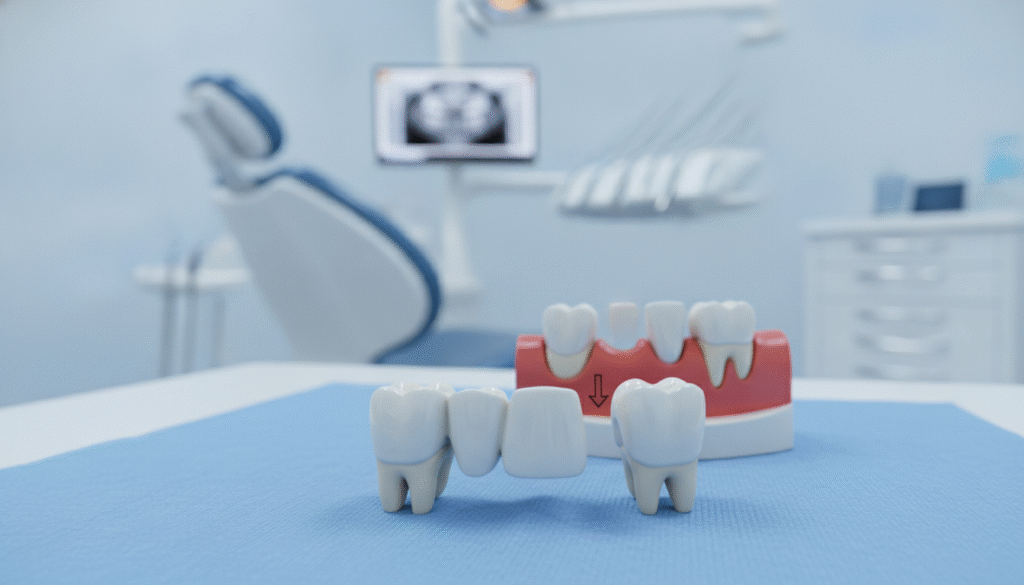
A dental bridge has two main parts: the pontic, which is the fake tooth, and the abutment crowns, which cover the teeth used for support. Together, they make sure the bridge is stable and works well, helping with chewing and speaking.
Types of Dental Bridges
There are many types of dental bridges, each for different needs:
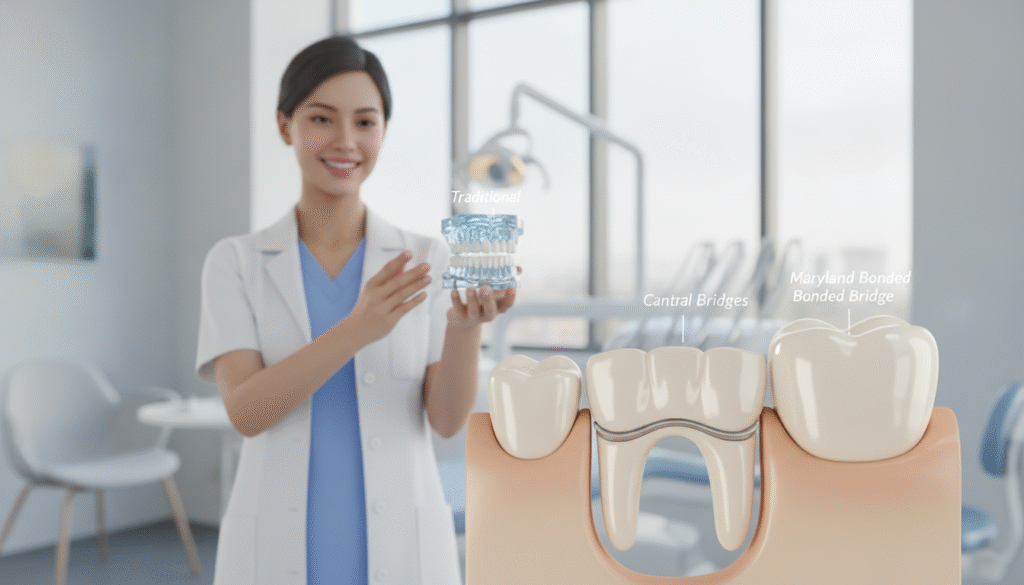
- Traditional Bridge: The most common, made of porcelain fused to metal. It has two crowns on the teeth it’s anchored to, supporting the fake tooth.
- Cantilever Bridge: Used when there’s only one tooth next to the gap. It’s not as common but works in some cases.
- Maryland Bridge: A conservative option that uses a metal framework to hold the fake tooth in place without crowns.
- Implant-Supported Bridge: Anchored to implants, not teeth, for better stability and longer life.
Why Choose a Dental Bridge?
Choosing a dental bridge offers many benefits:
- Prevention of Tooth Drifting: Bridges stop teeth from moving into gaps left by missing teeth.
- Preservation of Facial Structure: They keep the face’s natural shape by filling gaps, preventing sagging.
- Improved Functionality: Patients can chew and speak better, which is important for daily life.
- Enhanced Aesthetics: Bridges can be made to look like natural teeth, improving looks.
The Functionality of Dental Bridges
Dental bridges are key in keeping our teeth in good shape. They fill gaps left by missing teeth. The bridge has a fake tooth, called a pontic, held by crowns on nearby teeth. This setup spreads out chewing forces evenly.
Unlike removable options, dental bridges are stable. They’re fixed in place, giving patients a secure feeling when eating or talking. This fixed solution not only helps with chewing but also keeps the mouth healthy.
How Do Dental Bridges Work?
Dental bridges link the pontic to the teeth next to it. These teeth are shaped to hold the bridge. This connection keeps the teeth in line, preventing them from moving.
Also, dental bridges:
- Fill gaps in the teeth.
- Keep the face’s shape.
- Help with chewing and speaking.
- Make your smile look better.
- Replace a removable denture with a permanent one.
Benefits of Using a Dental Bridge
There are many good reasons to choose a dental bridge. As one expert says,
“Bridges don’t just make your smile look great again; they also stop the rest of your teeth from moving around, make eating easier, and bring back your confidence when you laugh or chat.”
Some main benefits are:
| Benefit | Description |
|---|---|
| Restoration of Functionality | Bridges help you chew and speak better. |
| Preventing Tooth Movement | They stop teeth from shifting, which can cause more problems. |
| Aesthetic Improvement | Bridges make your smile look natural and better. |
| Long-term Solution | They are a strong and reliable choice for replacing teeth. |
In short, dental bridges are vital for tooth replacement. They not only fix the teeth but also boost confidence and improve life quality.
Determining the Number of Missing Teeth
Choosing the right number of teeth for a dental bridge is complex. It’s important for the bridge to last long and work well. There are guidelines to help dentists make these decisions.
Ante’s Law is a key principle in fixed prosthodontics. It says the root area of the anchor teeth must be as big as or bigger than the missing teeth. This rule affects the dental bridge options for patients. For example, a resin-bonded bridge works best for one missing tooth. But, a traditional bridge can support up to six teeth, with two anchor teeth.
Many things can affect a dental bridge’s capacity. The health of the teeth next to the bridge is very important. If these teeth are weak, the bridge might not stay stable.
Also, habits like grinding teeth can put too much stress on the bridge. This could cause it to fail.
The location of the missing teeth matters too. Teeth in the front of the mouth face different forces than those in the back. The shape of the dental arch also plays a role in how pressure is spread. A long bridge can put too much stress on the anchor teeth, weakening them over time.
In short, figuring out how many teeth to replace with a dental bridge is complex. Knowing these guidelines helps both patients and dentists make good choices for successful results.
Single vs. Multiple Tooth Replacement
Dental bridges can replace more than one tooth at a time. A single bridge can handle up to three or four missing teeth, depending on the teeth it’s attached to. This is based on how strong those teeth are.
A three-unit bridge is common for replacing one tooth. But for more gaps, a four-unit bridge might be needed. This requires careful checks to make sure it works well.
Can One Bridge Replace Multiple Teeth?
Yes, a single bridge can fill gaps for up to three teeth. But for four or more missing teeth, implants might be better. “For resin-bonded bridges, only one tooth is ideal for the highest rate of success.” This shows the importance of knowing what each bridge can do.
Ideal Scenarios for Using a Single Bridge
There are good times to use a single bridge. These include:
- Replacing a single tooth in the back, where a bridge is quick and affordable.
- Replacing two teeth next to each other, if the teeth it’s attached to are healthy.
While it’s possible to bridge six teeth, it’s risky. Implants are usually a safer choice for a stable smile in such cases.
Evaluation Process for Dental Bridges
The evaluation process for dental bridges is key to finding the right solution for patients. It lets dentists look at different missing tooth replacement options for each person. They consider many factors to pick the best option.
First, the dentist reviews the patient’s medical and dental history. This helps understand the patient’s health and past dental work. Then, they check the teeth and gums around the missing tooth. This is important for a successful bridge.
They also check the bone and gums to see if they’re healthy. This affects the type of bridge that’s best. The dentist will talk about the pros and cons of each option.
Dentist Assessment and Recommendation
After the first check, the dentist takes scans and checks the patient’s bite. This ensures the bridge fits right and works well. They then talk about the missing tooth replacement options with the patient.
Diagnostic Tools Used
Diagnostic tools are very important in this process. Dentists use X-rays to see the teeth and bone. These images help them understand the patient’s dental structure.
For harder cases, they might use advanced imaging like CBCT. This gives a 3D view of the bones. It helps the dentist make a choice that looks good and works well.
Duration and Durability of Dental Bridges
Knowing how long dental bridges last is key for those thinking about them. A well-made bridge can last 10 to 15 years or more. The secret to a long-lasting bridge is good care and upkeep.
Many things affect a bridge’s life span. The material, how well it fits, and your oral habits are important. Materials like porcelain and metal are durable. A good fit stops problems like tooth decay. Your diet and how hard you bite also play a role.
Lifespan of a Dental Bridge
Studies show that a well-made bridge can last for years. Here are things that can make it last longer or shorter:
- Material Quality: Better materials mean longer bridges.
- Oral Hygiene: Keeping your mouth clean is key to avoiding decay.
- Regular Check-ups: Seeing your dentist often helps catch problems early.
Maintenance for Longevity
To keep your bridge strong, you need to take care of it. Here’s how:
- Daily Cleaning: Use special tools to clean around the bridge.
- Professional Cleanings: Regular dental visits keep the bridge and teeth healthy.
- Monitoring: Regular checks catch problems before they get worse.
In short, taking good care of your bridge and seeing your dentist often can make it last a long time. By following these tips, you can enjoy your bridge for many years.
| Factor | Impact on Lifespan | Recommended Actions |
|---|---|---|
| Material Quality | High durability | Choose high-quality materials |
| Oral Hygiene | Prevents decay | Brush and floss daily |
| Regular Check-ups | Early issue detection | Visit the dentist biannually |
Cost Considerations for Dental Bridges
Knowing the costs of dental bridges is key to making smart choices about tooth repair. The prices for dental bridges can change a lot, based on different things. We’ll give you a detailed look at the costs and what insurance might cover.
Breakdown of Costs
The cost of a dental bridge includes several parts:
- Diagnostic Procedures: First, you’ll need exams and scans to check your teeth.
- Number of Units: A bridge with three units costs more than a single crown but less than one with six units.
- Material Selection: The type of material used, like metal or zirconia, affects the price.
- Laboratory Fees: Making the bridge custom can add extra costs, based on how complex it is.
Each of these parts adds to the single tooth replacement cost. It’s important to talk about your specific needs with your dentist.
Insurance Coverage for Dental Bridges
Dental plans usually see bridges as major work. They’ll pay a part of the cost after you meet your deductible. But, there are limits to watch out for:
- Missing Tooth Clauses: Some plans won’t cover teeth that were missing when you started your policy.
- Annual Maximums: Most plans have a yearly limit on how much they’ll pay for dental work.
Knowing these things can help you use your benefits wisely. It prepares you for what you’ll have to pay out of pocket. At Smile Stories, we’ll help you find the right bridge for your budget and smile.
Patient Eligibility for Dental Bridges
Knowing who can get dental bridges is key for success. The best candidates have one or more missing teeth. These teeth must be supported by healthy teeth on either side.
These supporting teeth need strong gums and a good balance of tooth and root. Keeping your teeth clean and having a stable bite is also important.
Those who fit these criteria often see great results with dental bridges. As one expert said,
“The application of a dental bridge depends on the patient’s age, bite, and the condition of the adjacent teeth.”
This shows how complex it is to decide if someone is right for a dental bridge.
Who is a Good Candidate?
A good candidate for a dental bridge usually has:
- One or more missing teeth.
- Healthy teeth on either side with strong gums.
- Good oral hygiene.
- A stable bite without severe clenching or grinding.
Dentists will do detailed checks before suggesting a dental bridge.
“We will take scans, check your bite, and look at the health of your teeth before recommending what’s best.”
This careful evaluation makes sure the treatment fits the patient’s needs.
Contraindications for Dental Bridges
Not everyone can get a dental bridge. Some reasons include:
- Extensive bone loss in the area without teeth.
- Active gum disease.
- High risk of tooth decay.
- Weak teeth that can’t support the bridge.
Younger patients with big pulp chambers might face risks with traditional bridges. In these cases, other options should be explored.
Alternative Solutions to Dental Bridges
When looking to replace missing teeth, patients often compare dental bridges with other options. Each choice has its own benefits and things to think about. These options meet different needs.
Implants vs. Bridges
Dental implants and bridges are top choices for missing teeth. Let’s dive into their differences:
- Invasiveness: Bridges need changes to nearby teeth for support. Implants require surgery and bond with the jawbone.
- Longevity: Implants usually last a lifetime with care. Bridges might need to be replaced every 5 to 15 years.
- Bone Preservation: Implants keep the jawbone strong, which is good for long-term health.
- Success Rates: Implants have a 95% success rate. Bridges’ success varies based on the situation.
If you’re missing more than four teeth, implants or an implant-supported bridge are better. They offer better function and look.
Full and Partial Dentures
For those who can’t have surgery or want something easy to remove, dentures are a good choice. They’re great for those with lots of tooth loss or want something temporary.
- Full Dentures: Good for those who’ve lost all teeth in one or both jaws. They restore function and look.
- Partial Dentures: Best for those with some teeth left. They fill gaps and stop other teeth from moving.
When picking between these, think about your health, bone density, and what you prefer. Talking to a dentist can help find the best option for you.
Common Misconceptions about Dental Bridges
Dental bridges are often misunderstood. This leads to many myths about how they work and how to care for them. These myths can cause people to make bad choices for their teeth. We will look at some common myths and clear up the facts.
Myths about Dental Bridges
Many people believe wrong things about dental bridges. This can lead to confusion about their use and upkeep. Here are some common myths:
- Myth 1: A dental bridge can replace an unlimited number of teeth.
- Myth 2: The procedure for installing a bridge is excessively painful.
- Myth 3: Dental bridges are permanent and do not require maintenance.
Facts that Clarify the Truth
It’s important to correct these myths with the truth:
- Fact 1: Dental bridges have a limit on how long they can span. Longer bridges can cause problems with stability and support.
- Fact 2: The procedure is done with local anesthesia, making it painless for the patient.
- Fact 3: While traditional bridges are fixed, they need the same care as natural teeth to stay healthy.
To show the differences between dental restorations, look at this table:
| Type of Restoration | Removability | Maintenance Requirements |
|---|---|---|
| Dental Bridge | Fixed | Regular cleaning and dental check-ups |
| Partial Denture | Removable | Daily cleaning and periodic adjustments |
| Dental Implant | Fixed | Regular cleaning and dental check-ups |
By clearing up these myths, patients can make better choices for their teeth. Knowing the truth about dental bridges helps people take better care of their mouths.
Preparing for Dental Bridge Installation
Before getting a dental bridge, it’s important to prepare well. This means knowing what to do before and after the procedure. Good preparation makes the process smoother and more comfortable.
Pre-Procedure Instructions
Here are the key steps before the dental bridge is installed:
- Consultation: Talk to your dentist about the procedure and any worries you have.
- Local Anesthetic: You’ll get a shot to numb the area, so you won’t feel pain during the procedure.
- Tooth Preparation: The teeth for the bridge will have some enamel removed. This makes room for the crowns.
- Impression Taking: A precise mold will be made using digital scanning or special materials. This mold will be used to create the bridge.
- Temporary Bridge: A temporary bridge will be put in place. It protects the teeth and looks good until the permanent one is ready.
Post-Procedure Care
After the bridge is in, it’s important to follow care instructions:
- Managing Sensitivity: You might feel some sensitivity. Use toothpaste made for sensitive teeth as your dentist suggests.
- Adapting to the New Restoration: It takes time to get used to the new bridge. Start with soft foods to make the transition easier.
- Hygiene Protocol: Keep your teeth and bridge very clean. Use special tools to clean around the bridge and teeth, to prevent problems.
| Step | Description | Importance |
|---|---|---|
| Consultation | Discuss procedure details with your dentist. | Clarifies expectations and addresses concerns. |
| Local Anesthetic | Administered to numb the area. | Ensures patient comfort during the procedure. |
| Tooth Preparation | Enamel removal for crown fitting. | Creates space for the dental bridge. |
| Impression Taking | Creating a mold for the bridge. | Ensures a precise fit for the permanent bridge. |
| Temporary Bridge | Placed until the permanent bridge is ready. | Protects prepared teeth and maintains esthetics. |
Real-life Cases and Experiences
Looking into real-life dental bridge experiences shows their big impact. Many people have shared how these solutions changed their smiles and lives.
In this section, we’ll look at patient testimonials and case studies. They show how dental bridges work well.
Patient Testimonials
Patients say they chew better and feel more confident after getting dental bridges. Here are some stories:
-
“After getting my dental bridge, I can eat my favorite foods again without any pain. It feels like I have my real teeth back!”
-
“I was embarrassed to smile before. Now, I feel confident and happy with my new smile!”
-
“The team at Smile Stories explained everything clearly. I felt supported throughout the process, and the results are fantastic!”
These stories show how dental bridges can change lives. They highlight the need for skilled professionals who focus on both looks and function.
Case Studies on Successful Installations
Case studies give us a closer look at dental bridge success stories. Here are two examples:
| Case Study | Initial Condition | Treatment Provided | Outcome |
|---|---|---|---|
| Case 1 | Missing mandibular first molar | Three-unit bridge installation | Restored chewing function and improved aesthetics |
| Case 2 | Four missing incisors | Six-unit anterior bridge installation | Enhanced smile and increased patient confidence |
Each case shows the challenges and careful planning needed for success. Dental bridges can greatly improve lives when done right.
Conclusion: Making an Informed Decision
Dental bridges are a solid choice for missing teeth, improving both how well you can eat and how you look. The number of teeth a bridge can cover depends on many things. This includes how strong your jaw is, your gum health, and the materials used.
Seeing a dentist is key to getting a plan that fits you. Every person’s teeth and mouth are different. A dentist will use special tools and know-how to create a plan just for you.
If you’re thinking about a dental bridge, knowing its benefits is important. The aim is to make sure the bridge can handle everyday tasks. To learn more, contact our dental office today to set up a visit. Getting a new smile is based on science and expert advice.