
How Often Will I Change to a New Set of Aligners?
What determines the timing for successful orthodontic results? It’s all about clear aligner switching frequency and its effect on teeth alignment.
Clear aligner therapy is a modern way to straighten teeth. It uses a schedule made by orthodontists. This schedule helps move teeth smoothly and keeps patients comfortable.
Most people get new aligner trays every two weeks. This routine applies the right amount of force to teeth. It leads to good results if patients stick to the plan.
Orthodontic treatment scheduling includes visits every six weeks. At these times, dentists give patients three new sets of aligners. This lets them check progress between visits.
Knowing this basic plan helps patients take part in their treatment. Following the plan well leads to better results. It makes treatment time more predictable when patients understand the importance of regular changes.
Key Takeaways
- Standard aligner replacement occurs every two weeks for most patients undergoing clear aligner therapy
- Office visits with orthodontic professionals typically happen once every six weeks during treatment
- Patients receive three sets of aligners at each dental appointment to use between visits
- Switching frequency directly impacts treatment effectiveness and overall timeline for dental correction
- Individual protocols may vary based on case complexity and specific orthodontic objectives
- Patient compliance with prescribed rotation schedules significantly influences treatment outcomes
- Understanding the systematic approach helps patients actively participate in their orthodontic journey
Understanding the Aligners Process
Clear aligners are a key part of orthodontic care. They work by fitting over your teeth and moving them into place. This method is backed by science and is a great alternative to metal braces.
The Science Behind Clear Aligners
Clear aligners are made from special materials like polyurethane or polyethylene terephthalate glycol. These materials help the aligners work well and feel comfortable. Each set is made just for you, using advanced technology.
Invisalign is a well-known example of this technology. It helps people straighten their teeth without metal braces. The aligners fit your teeth and move them slowly, using gentle pressure.
The materials in these devices are important for their success. They help the aligners:
- Keep the right amount of pressure
- Stay clear and not stain
- Be easy to see and not noticeable
- Apply force in the right way
Biological Mechanisms of Tooth Movement
Clear aligners work by applying gentle pressure. This pressure makes your teeth move by changing the bone around them. This process is called bone remodeling.
Each aligner is slightly different, helping your teeth move a little bit at a time. This careful movement is key to a successful treatment. It helps your teeth move without discomfort.
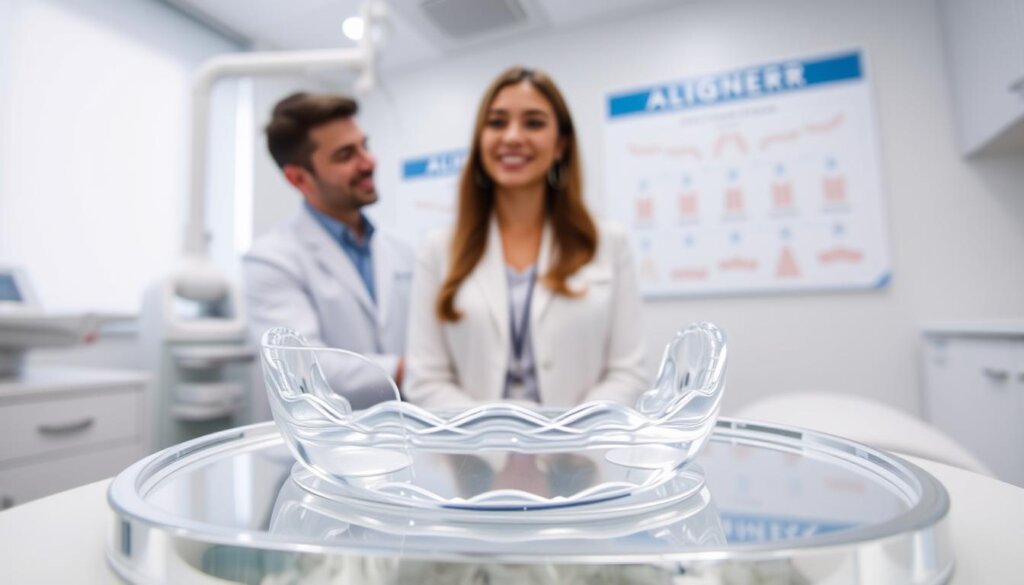
You’ll wear each aligner for about one to two weeks. During this time, the aligner gently pushes your teeth into place. Each aligner builds on the progress of the last one.
Orthodontists use digital tools to plan your treatment. This helps them give you a good idea of how long it will take and what to expect. It makes your treatment journey clearer.
Clinical and Practical Advantages
Aligners offer many benefits beyond just looking good. They help with both how your teeth work and how they look. Knowing these benefits can make you appreciate the treatment more.
Key advantages include:
- Enhanced Aesthetics: Aligners are almost invisible, helping you feel confident.
- Improved Oral Hygiene: You can brush and floss easily, reducing the risk of problems.
- Reduced Soft Tissue Irritation: The smooth surface of aligners is gentle on your mouth.
- Dietary Freedom: You can eat whatever you want, without worrying about your braces.
- Predictable Outcomes: Digital planning shows you what to expect before you start.
Being able to take out your aligners is a big plus. You can do this for special events or photos. But, to get the best results, you should wear them for 20 to 22 hours a day.
These advances in orthodontics are exciting. They use technology and science to make treatments better and more comfortable. Clear aligners are a big step forward in making orthodontic care better for everyone.
Average Duration of Treatment
The time needed for clear aligners varies a lot. This is because different people have different dental problems. Knowing how long treatment will take helps patients plan better and stay committed.
How fast teeth move can differ from person to person. Some might see changes in just two weeks. Others might wait three months before noticing a difference.
After five to six months, some people start to see their smile changing. Seeing these early changes can keep patients motivated to finish their treatment.
Typical Treatment Lengths
Studies show that treatment times follow certain patterns. Simple cases like a little crowding or spacing usually take less time. But, more complex issues like big rotations or vertical problems need longer treatments.
The number of aligner stages affects how long treatment lasts. People needing 20-25 stages usually finish faster than those needing 40-50. Each stage is a small step towards moving teeth into place.
| Case Complexity | Typical Duration | Aligner Stages | Common Conditions |
|---|---|---|---|
| Mild Cases | 6-12 months | 20-25 aligners | Minor crowding, small gaps |
| Moderate Cases | 12-18 months | 26-40 aligners | Moderate crowding, rotations |
| Complex Cases | 18-24+ months | 41-50+ aligners | Severe malocclusion, bite correction |
As we learn more, we understand treatment times better. But, every person is different, and that’s what makes it challenging.
Factors Influencing Duration
Many things can affect how long treatment takes. How bad the problem is at the start is a big factor. How fast teeth move also depends on things like bone density and age.
Younger people tend to move their teeth faster. This is because their bodies are more active and can change faster than older people’s. This affects how long treatment will take.
Wearing the aligners as directed is also key. New technology helps track how well patients follow the treatment plan. This helps doctors know if the plan is working or if the patient needs to do better.
Other things that can change how long treatment takes include:
- Biological response variability – Individual metabolic rates affect tooth movement speed
- Skeletal versus dental discrepancies – Purely dental movements progress more predictably
- Adjunctive procedures – Attachments, IPR, or elastics may extend timelines
- Treatment modifications – Mid-course corrections add stages to the original plan
- Retention protocols – Post-treatment stabilization extends overall care duration
Dealing with skeletal problems is harder than just moving teeth. Cases needing to fix the jaw or bite take longer. Knowing this helps doctors give better estimates and helps patients understand the time commitment.
Frequency of Changing Aligners
Orthodontic aligner rotation follows established protocols. These balance tissue adaptation with tooth positioning. The schedule for changing aligners is based on how teeth move through bone. This timing helps patients get the best results while keeping their mouth healthy.
The body responds to orthodontic forces in phases. Teeth move within hours in the first phase. Then, a lag phase happens from days two to seven, where cells reorganize.
After day seven, teeth start moving linearly. Bone remodeling stabilizes the new tooth position. This is when the real movement starts.
Standard Protocols for Aligner Progression
Most orthodontists say to change clear aligners every one to two weeks. This aligner transition schedule is common for many patients. The exact time depends on how complex the treatment is and how the body responds.
To keep teeth moving with Invisalign, switch aligners every two weeks. This two-week gap lets teeth move and bone remodel. The periodontal structures adapt to new forces before the next aligner.
Some cases might need aligners changed weekly. These faster schedules use technologies that boost cellular activity. Devices like high-frequency vibration and photobiomodulation can shorten treatment time.
Choosing between weekly and bi-weekly schedules depends on several factors:
- Treatment complexity: Simple cases might progress faster with weekly changes
- Patient age: Younger patients tend to have faster cell turnover
- Compliance history: Consistent wear time supports more aggressive schedules
- Technology integration: Additional devices can speed up progress
- Orthodontist assessment: A professional evaluation determines the best timing
Your orthodontist decides when to change aligners based on digital planning. These plans predict tooth movement at each stage. They assume consistent advancement through the aligner series at set intervals.
| Change Schedule | Typical Duration | Best Suited For | Requirements |
|---|---|---|---|
| Weekly Changes | 7 days per set | Simple cases, younger patients | 22+ hours daily wear, adjunctive devices |
| Bi-Weekly Changes | 14 days per set | Standard treatments, most patients | 20-22 hours daily wear, regular monitoring |
| Extended Protocol | 21+ days per set | Complex movements, slower responders | Strict compliance, frequent appointments |
| Customized Schedule | Variable timing | Mixed complexity cases | Professional oversight, flexible approach |
Adherence to Prescribed Timing
Following your aligner transition schedule is key to success. Deviating from the schedule can ruin the treatment plan. Consistent progression is essential for predictable outcomes.
Changing to the next aligner too soon causes problems. Teeth haven’t moved enough into their new positions. The new aligner won’t fit right, putting too much pressure on some teeth.
Waiting too long to change aligners also hurts treatment success. Wearing an aligner longer than needed extends treatment time. Teeth have already reached their intended position, so extra wear doesn’t help.
Sticking to the schedule is important for timely results. Digital treatment planning calculates the number of aligners and when treatment will end. Each delay affects the rest of the treatment.
The forces in each aligner lose effectiveness over time. After the best wearing period, the plastic material relaxes. The forces then drop below what’s needed for tooth movement.
Talking to your orthodontist about changing aligners ensures your treatment fits your needs. Some patients need schedule changes based on their body’s response. Regular check-ups allow for these adjustments.
Signs It’s Time for a New Set of Aligners
Following the Invisalign tray replacement schedule is key. But, knowing when it’s time for a new set is also important. This lets you see how well your teeth are moving. It helps you stay involved in your orthodontic care and catch any problems early.
Even if you stick to the schedule, knowing how aligners work with your teeth is helpful. Your body gives clear signs about how your teeth are moving. These signs help, but don’t replace visits to your orthodontist.
Recognizing Fit Changes and Discomfort Patterns
Aligner comfort and tooth movement have a clear connection. When you get a new set, you might feel some pressure. This is normal as your teeth start to move.
As your teeth move, the pressure will lessen, and the aligner will fit better. By the time you’re ready for a new set, the aligner should feel loose. This means your teeth have moved into their new positions.
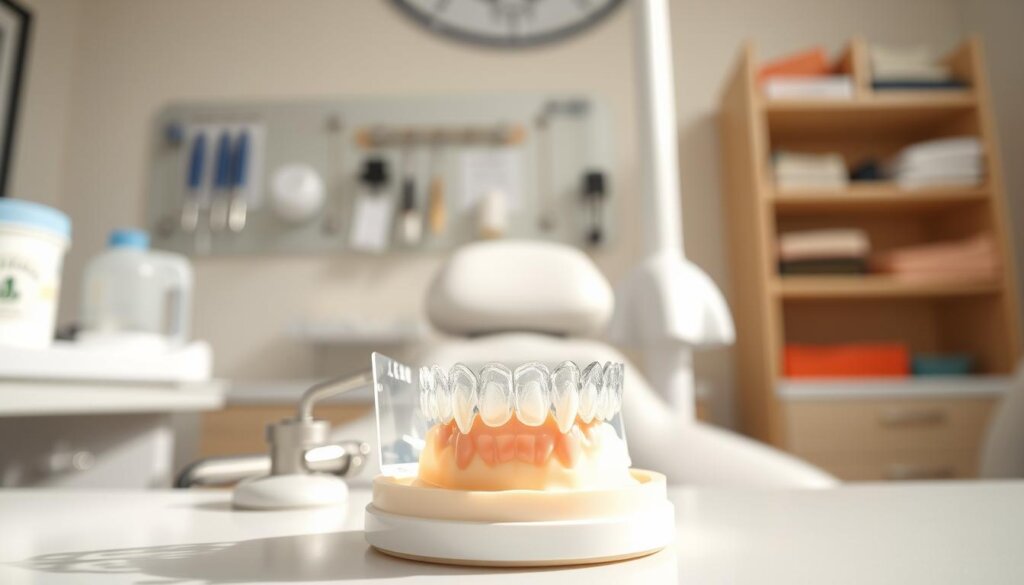
At first, new aligners might feel uncomfortable. But, as your teeth adjust, this discomfort should lessen. If you feel too little pressure too soon, your teeth might be moving too fast. On the other hand, if it feels too tight, your teeth might be moving too slow.
Key fit indicators include:
- Excessive looseness: Aligners that move freely or feel unstable may signal completed tooth movement for that stage
- Reduced insertion resistance: Decreasing effort required to seat aligners properly indicates proper tooth progression
- Minimal pressure points: Absence of tight spots suggests teeth have reached their target positions
- Easy removal: Aligners that detach with less effort than initially demonstrate appropriate fit changes
Even though you can check how well your aligners fit, it’s important to have a professional check too. If your aligners feel too loose too soon, it could mean there’s a problem.
Observable Progress Indicators
There are signs you can see and feel to check if your treatment is working. How well your aligners fit can tell you a lot. If there’s less space between the aligner and your teeth, it’s a good sign.
Checking how well your teeth fit into each aligner is important. Look for any gaps between the aligner and your teeth. These gaps mean the aligner isn’t fitting right and you might need to see your orthodontist.
Essential progress indicators include:
- Visual alignment changes: Noticeable tooth straightening or spacing adjustments throughout treatment
- Improved aligner seating: Aligners that snap into place without gaps along the gum line
- Consistent wear patterns: Even stress distribution across aligner surfaces without specific pressure points
- Progressive comfort improvement: Each new set becomes comfortable more quickly than previous aligners
- Photographic documentation: Visible differences when comparing current tooth positions to earlier treatment stages
How easy it is to put in and take out your aligners can tell you a lot. As your teeth move, it should get easier to do both. This change happens slowly over time.
While you can check how your aligners fit, it’s best to have a professional check too. Orthodontists use tools like photos and scans to see how your treatment is going. They can tell if you need to change your treatment plan.
Remember that everyone responds differently to aligners. What works for one person might not work for another. Talking to your orthodontist regularly helps make sure you’re on the right track.
The Role of Your Orthodontist
Regular visits to your orthodontist are key to successful aligner therapy. They ensure your treatment is both effective and safe. While you can use aligners at home, your orthodontist’s guidance is vital for the best results.
Your orthodontist checks on your progress regularly. They look at how your teeth are moving and make sure everything is going as planned. This helps catch any small problems before they get bigger.
Monitoring Your Progress
Your orthodontist checks your teeth at each visit. They compare how your teeth are moving to the plan. This helps them see if any changes are needed.
They use special scans to track your progress. These scans show how your teeth are moving in 3D. This helps them see if you’re on track or if adjustments are needed.
Your orthodontist also checks how well the aligners fit. They make sure the attachments are secure. These attachments help move your teeth and must stay in place.
Regular visits are important, even with at-home treatment. They help catch any problems early. This way, small issues don’t turn into big problems.
| Assessment Component | Evaluation Method | Clinical Significance | Intervention Threshold |
|---|---|---|---|
| Tooth Position Accuracy | Visual inspection and digital scanning | Confirms treatment is progressing as planned | Deviation exceeding 0.5mm from prediction |
| Aligner Fit Quality | Assessment of gaps between aligner and teeth | Indicates whether teeth are tracking properly | Visible gaps or poor seating detected |
| Attachment Condition | Examination of composite bonding integrity | Ensures optimal force delivery to teeth | Any detached or damaged attachments |
| Soft Tissue Health | Periodontal examination and gingival assessment | Prevents inflammation or recession during movement | Signs of gingival inflammation or recession |
When to Schedule Appointments
Invisalign patients usually see their dentist every four to six weeks. These visits are important for many reasons. They help keep your treatment on track and make sure you’re wearing the aligners correctly.
At each visit, you get three new sets of aligners. This means you change them every one to two weeks at home. You’ll only need to see your dentist every six weeks for new aligners.
How often you need to see your dentist depends on your case. Simple cases might need visits every eight weeks. But more complex cases might need visits every six weeks.
These visits are key to making sure your treatment is going well. If there are any problems, your orthodontist can make changes. This helps your treatment work better and faster.
Custom Treatment Plans
Your dental alignment needs affect how often you’ll switch to new aligner sets. Orthodontic care now focuses on personalized plans. Each patient gets individualized treatment protocols based on their unique needs.
The Invisalign process is unique for each patient. This means your dental visits might change. Your orthodontist will adjust the schedule based on your case’s complexity.
Patient-Specific Variables in Treatment Timing
Many factors influence your customized aligner schedule. Bone quality and density are key in planning your treatment. Patients with thinner bones might see faster tooth movement.
On the other hand, denser bones need longer wear times, 10-14 days per aligner. This is because teeth move through bone remodeling at different rates.
Age also affects how fast you progress through individualized treatment protocols. Younger patients might move faster due to higher cellular turnover rates. Adults, with slower bone remodeling, need longer timelines.
Success in orthodontic treatment comes from balancing biological capacity with mechanical force.
Periodontal health is also important in planning your treatment. Poor gum health might mean slower progress and longer intervals between aligner changes. The size of the planned movements also affects how long you’ll wear each tray.
Treatment Modifications for Challenging Malocclusions
Some dental conditions are complex orthodontic cases needing special care. Severe crowding and significant rotations can extend treatment times.
Closure of extraction spaces is one of the toughest movements. These cases often require longer wear times for each aligner. Deep overbites and skeletal discrepancies also need adjusted schedules.
Our understanding of how teeth move is growing. Complex cases might use additional procedures like TADs for better control. This helps in managing difficult movements.
Interproximal reduction helps in crowding cases. It creates space and allows for better movement. This technique, along with strategic attachment placement, makes clear aligner therapy possible for more cases.
The treatment is divided into phases. Each phase focuses on specific goals before moving on. This approach prevents overloading and keeps treatment safe.
Customization goes beyond planning. It includes making adjustments based on progress. Regular checks allow for changes in the customized aligner schedule as needed. This ensures the treatment stays efficient and safe.
Aligning Expectations
Patient satisfaction in orthodontic treatment is more about meeting expectations than achieving perfection. The psychological aspect of success is just as important as the physical results. When patients know what clear aligners can and can’t do, they start their journey with confidence.
Orthodontists must clearly explain what clear aligners can achieve. This education changes the treatment experience. Patients see their journey as a team effort, not just a product purchase.
What Clear Aligners Can Really Achieve
Clear aligner technology has made big strides, but knowing its limits is key for patient happiness. These systems can fix many malocclusions well. Treatment outcome predictions from digital planning help, but there’s always some variation.
Aligners work best for simple tooth movements but struggle with complex ones. Simple movements like moving teeth forward or backward usually work as planned. But more complex movements can vary a lot due to individual differences.
| Malocclusion Type | Treatment Effectiveness | Predictability Level |
|---|---|---|
| Mild to moderate crowding | Highly effective | 85-95% accuracy |
| Spacing corrections | Highly effective | 90-95% accuracy |
| Minor rotations | Effective with attachments | 75-85% accuracy |
| Severe skeletal discrepancies | Limited effectiveness | 40-60% accuracy |
| Major root torque movements | Challenging | 50-70% accuracy |
Some cases are harder for aligners to fix. For example, big jaw movements or vertical problems might need other treatments. Hybrid treatment approaches might work better for these cases.
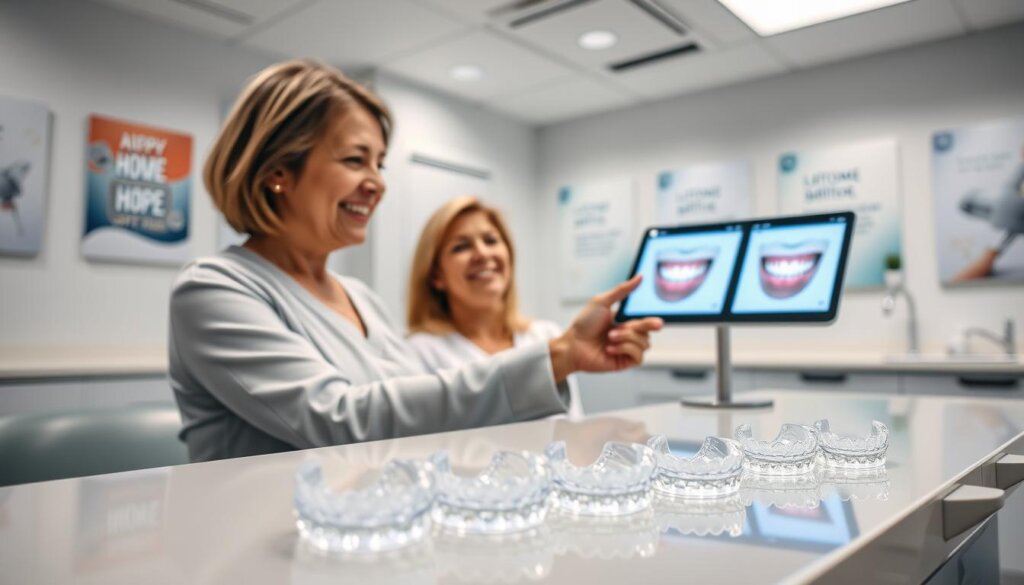
Treatment planning software makes predictions based on ideal movements. But, each person’s body responds differently. This means sometimes, more aligners are needed to fix small issues.
Dispelling Common Misunderstandings
Many myths about clear aligners exist, despite efforts to clear them up. Addressing these myths helps patients have realistic aligner expectations. This avoids disappointment and improves treatment success.
Some think aligners don’t need professional checks once treatment starts. But, clinical monitoring is key to track progress and make needed changes.
Others believe treatment time won’t change, even if they don’t wear aligners as directed. But, not wearing them enough can make treatment longer. How well you follow the treatment plan affects how fast your teeth move.
It’s also a myth that aligners work for all types of malocclusions. While they’re getting better, some problems are better solved with traditional orthodontics. Honest assessment at the start helps avoid frustration later.
Some worry that aligners will be very uncomfortable. While they’re usually more comfortable than braces, they can cause some discomfort. This usually happens when you first start wearing a new set of aligners.
By setting clear expectations based on science, orthodontists can make patients happier, even if some changes are needed. Patients who understand that small adjustments are normal are more patient. This approach makes treatment outcome predictions more like a shared goal that respects each person’s unique needs.
Daily Wear Recommendations
Wearing your aligners for 20-22 hours a day is key for success. This time helps your teeth move into their new positions. Knowing why this is important helps you see why it’s so critical.
Orthodontic treatment works best when teeth are under constant pressure. Taking out your aligners for too long stops this process. This can make treatment take longer and affect how well it works.
Why 20-22 Hours Matters for Your Treatment
Orthodontists usually tell patients to wear their aligners for 20-22 hours a day. This leaves only a few hours for eating and cleaning your teeth. Wearing them for so long keeps the teeth moving steadily.
Why do you need to wear them for so long? It’s because the forces from the aligners need to be strong enough to move your teeth. If you take them out for too long, the teeth stop moving.
There’s also something called force decay to consider. When you first put on a new aligner, it applies a lot of force. But as your teeth move, this force gets weaker. Wearing them every day keeps this force strong for longer.
Studies have shown that people don’t always wear their aligners as much as they say they do. These studies use small blue dots that fade with wear. They show that some people wear their aligners much less than they claim.
When you take out your aligners, your teeth can move back a bit. This is because the tissues around your teeth can relax. But if you take them out for too long, this can slow down your treatment a lot.
- Cellular activity: Constant pressure helps your teeth move by working on the bone around them.
- Tissue remodeling: Wearing them for a long time keeps the tissues around your teeth adapting.
- Treatment predictability: Wearing them as directed helps your teeth move as planned by your orthodontist.
- Timeline accuracy: Sticking to the recommended wear time keeps your treatment on track.
Addressing Unique Patient Circumstances
Some people need to adjust their wear time because of special situations. Orthodontists can help find ways to keep treatment on track even when things get tough.
People with jaw problems might need to take breaks from wearing their aligners. They work with their orthodontists to find the right balance between treatment and comfort. This usually means taking them out at specific times, not for too long.
Those who speak a lot might find it hard to get used to wearing aligners. But most people get used to it in a few days. Talking to your orthodontist about your job can help find ways to make treatment work better for you.
For athletes, wearing aligners can be tricky because of mouthguards. Some aligners can be worn with mouthguards, but others can’t. Your orthodontist can help figure out the best solution for your sport.
Musicians playing wind instruments face special challenges with aligners. They might need to adjust how they play to wear their aligners. Working with your orthodontist and music teacher can help find ways to keep your music skills sharp while wearing aligners.
Not wearing your aligners as directed can mess up your treatment plan. Wearing them as your dentist says is the best thing you can do to speed up your treatment.
Here are some tips to help you stick to wearing your aligners:
- Set reminders on your phone to put them back in right after meals.
- Always carry a case for your aligners so you don’t lose them.
- Plan your meals so you only take them out a few times a day.
- Talk to your orthodontist about any problems you’re having with wearing them.
- Use apps to track how often you wear your aligners.
Not wearing your aligners enough can really slow down your treatment. It can also make your teeth not move as well as they should. You might even need more aligners to fix any problems.
How well you stick to wearing your aligners is very important. It directly affects how well your treatment works. If you wear them as much as you should, you’ll get the best results possible.
Comparing with Traditional Braces
Choosing between fixed and removable appliances is a big decision in orthodontics. Both traditional braces and clear aligners can straighten teeth, but they work differently. Knowing the differences helps pick the right treatment for each person.
Each option has its own benefits and drawbacks. Metal braces are best for complex cases, while aligners are more appealing and flexible. The choice depends on the specific biomechanical requirements of each case, not just what the patient likes.
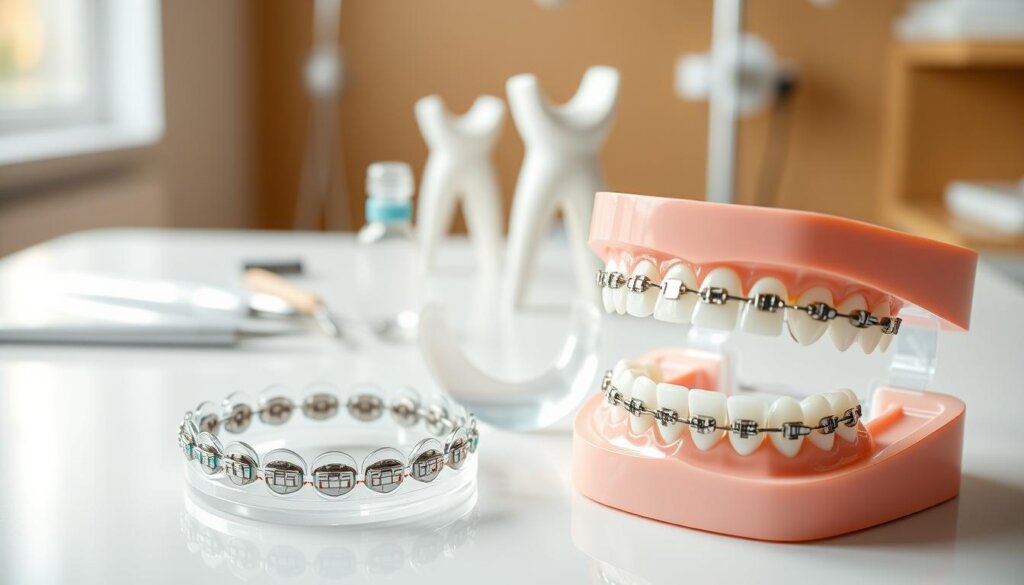
Adjustment Mechanisms and Force Delivery
Fixed appliances need regular adjustments, every four to eight weeks. At these visits, orthodontists change wires and springs to move teeth. This introduces new forces that fade over time until the next visit.
This pattern of stronger and weaker forces happens throughout treatment. Patients feel more pressure right after adjustments, which lessens as teeth adjust.
Aligners, on the other hand, need more frequent changes, every one to two weeks. This can lead to more consistent force application during treatment. They also offer better hygiene and diet freedom, which is a big plus.
But, aligners rely on patient compliance. If not worn as recommended, treatment may fail. Fixed appliances, by contrast, apply forces 24/7, regardless of wear.
Biomechanical Capabilities and Efficiency
Traditional braces are great at making specific tooth movements. They can control root torque, translation, and vertical movements. This is because they engage teeth in three dimensions.
Aligners mainly do tipping movements, with some control from attachments. While they’ve improved, some movements are easier with braces. Aligners might need more time for complex rotations and vertical adjustments.
| Treatment Aspect | Traditional Braces | Clear Aligners |
|---|---|---|
| Adjustment Frequency | Every 4-8 weeks with orthodontist | Every 1-2 weeks self-changed |
| Force Application | Continuous 24/7 engagement | Compliance-dependent (20-22 hours daily) |
| Best Movement Types | Root torque, bodily translation, vertical control | Tipping movements, spacing closure |
| Oral Hygiene Access | Challenging with fixed attachments | Excellent with removable design |
Treatment Duration Analysis
Studies show that treatment times can be similar for both options. The key is excellent patient compliance with aligner wear, which should be 20 to 22 hours daily.
Meta-analyses indicate that mild to moderate cases take 12 to 18 months with either method. Complex cases might favor fixed appliances for some movements. Yet, advances in technology are making more cases suitable for aligners.
Neither system is always faster. The choice should be based on what each case needs, not just assumed speed. The best path to straight teeth depends on the specific needs found during a thorough orthodontic check-up.
Patients looking for advice should talk to experienced orthodontists. They’ll consider how complex the tooth movements are, the patient’s lifestyle, and how likely they are to follow treatment. This helps pick the best system for long-term dental health and looks.
Maintaining Oral Hygiene
Aligners are easy to clean, but they need regular care. Proper orthodontic appliance maintenance keeps them looking good and your teeth healthy. If not cleaned right, they can hold bacteria that harm your treatment.
Why is ignoring hygiene bad for orthodontic therapy? The aligners and your mouth are close, making it easy for bacteria to grow. These bacteria are more than just a cosmetic issue—they can harm your gums and teeth.
Proper Cleaning Methods for Treatment Appliances
Knowing how to clean aligners is key. The materials used in making them need gentle care to stay clear and fit right. Using harsh toothpaste can scratch them and make them less appealing.
To clean aligners, start by rinsing them with warm water. This stops saliva from drying on them. Then, gently brush them with a soft-bristled toothbrush to remove dirt without damaging them.
There are special tools to help keep aligners clean. Cleaning tablets and ultrasonic devices can remove bacteria and odors. These tools help get rid of bacteria that can hide in the aligners’ nooks and crannies.
It’s also important to avoid hot water when cleaning aligners. Hot water can change their shape, which can mess up how they work. This can make your treatment less effective and might mean you need new aligners.
| Cleaning Method | Effectiveness | Advantages | Considerations |
|---|---|---|---|
| Soft-bristle brushing | High for debris removal | Immediate availability, low cost | Requires proper technique to avoid scratching |
| Effervescent tablets | Excellent for biofilm control | Chemical action reaches all surfaces | Requires soaking time (15-20 minutes) |
| Ultrasonic cleaning | Superior for deep cleaning | Mechanical agitation enhances results | Initial equipment investment required |
| Antibacterial soaks | Moderate for bacterial reduction | Targets pathogenic organisms | May affect material properties over time |
Enhanced Dental Care Requirements
Oral care gets more important with aligners. The attachments on your teeth can trap bacteria. Brushing and flossing after every meal is now a must, not just a suggestion.
What happens if you put dirty aligners back in? Food and sugars can stay on your teeth, causing acid that weakens them. This is a big risk for white spots during orthodontic treatment.
The best oral care routine is structured. Brush your teeth well with fluoride toothpaste after eating or drinking. Use floss or orthodontic flossers to clean between your teeth where your brush can’t reach.
Fluoride can help protect your teeth from decay. Use toothpaste with more fluoride if you’re at risk. Antimicrobial mouth rinses may be recommended for those with gum problems or many attachments.
Sticking to good hygiene practices with aligners has many benefits. It keeps your smile looking great and your teeth healthy. This care is worth the investment in your smile.
Compliance for Success
Patient responsibility is key to clear aligner therapy’s success. Unlike braces, clear aligners need patient effort to work. This makes treatment a team effort, blending clinical skill with patient dedication.
Knowing how sticking to the schedule affects treatment is vital. Each aligner step is a part of a bigger plan. If patients don’t follow the plan, the treatment’s precision can suffer.
Why Following Your Treatment Schedule Matters
Clear aligners move teeth step by step. Each aligner is made to move teeth a little bit more. This process needs each step to be done right before moving on.
Studies show that wearing aligners for less than 16 hours a day can lead to longer treatment times. On the other hand, wearing them for 20+ hours a day can speed up treatment.
Aligners need to be worn constantly to keep teeth moving in the right direction. Without enough wear, teeth can move back to where they started. This makes it hard for the next aligner to fit right and do its job.
What Happens When Compliance Falls Short
Not wearing aligners as directed can cause more than just delays. It can lead to several problems:
- Extended treatment duration: Teeth may not move as planned, adding months to treatment
- Increased refinement requirements: More aligners may be needed to fix tracking issues
- Compromised final outcomes: Teeth might not reach their planned positions
- Higher treatment costs: Making more aligners can increase costs
- Alternative treatment needs: In some cases, different treatments might be needed
Looking after aligners is also important. Losing or damaging them can set treatment back. It may take a while to get new ones.
If an aligner is lost, wearing the previous one can be a temporary fix. But, it won’t help teeth move further. Moving to the next aligner too soon can cause problems.
Not following the treatment plan can also cost more. Most plans include a certain number of aligners. If more are needed, it can cost extra. Some places might even make patients pay for lost aligners.
Success with clear aligners depends on patient commitment. The detailed planning and making of aligners mean nothing without daily use and care. Patients who see their treatment as a team effort with their orthodontist tend to do best.
Adjusting to New Aligners
When patients get their next set of aligners, they start a cycle of adjustment. This cycle can be made easier with evidence-based methods. Each new aligner brings a controlled increase in force to move teeth to their final positions. Knowing how the body responds and using practical strategies can make the process more comfortable and help patients stick to the treatment plan.
The first 24 to 48 hours with new aligners are the most noticeable. The periodontal ligament around tooth roots gets compressed. This compression starts the process of bone remodeling, allowing teeth to move.
The feelings during this adjustment should feel like pressure or tightness, not sharp pain. This helps patients know if they’re feeling normal discomfort or if something is wrong.
Tips for a Smooth Transition
Changing aligners at the right time can make the adjustment easier. Changing to new aligners in the evening helps the body adapt while you sleep. This makes patients happier with their treatment.
Getting the aligners to fit right is key. Chewies help aligners fit snugly against teeth. Patients should bite on chewies for a few minutes after putting in new aligners.
Here are some tips to make the transition smoother:
- Keep your teeth clean to avoid sensitivity during the adjustment
- Drink plenty of water to help your body adapt
- Wear the aligners as directed to keep the process going
- Practice speaking with the new aligners to get used to them
Having a routine for aligner changes helps patients get ready for the adjustments. Many patients make their aligner changes part of their evening routine. This makes them feel more comfortable with the changes.
| Adjustment Strategy | Implementation Method | Expected Benefit | Optimal Timing |
|---|---|---|---|
| Evening Aligner Change | Insert new aligners 1-2 hours before bedtime | Sleep through peak discomfort period | First 8-10 hours |
| Chewie Utilization | Bite on chewies for 5-10 minutes after insertion | Ensures proper aligner seating and force distribution | Immediately after placement |
| Dietary Modification | Consume softer foods for 24-48 hours | Reduces chewing pressure on sensitive teeth | First 1-2 days |
| Enhanced Oral Hygiene | Gentle brushing with soft-bristled toothbrush | Minimizes gingival inflammation and sensitivity | Throughout adjustment period |
Managing Initial Discomfort
The feelings with new aligners are normal. Patients often feel pressure, more when biting or chewing. This feeling usually goes away in 24 to 48 hours.
Managing discomfort can include using over-the-counter pain relievers. Acetaminophen is best for orthodontic pain because it works well without stopping the healing process. Sometimes, non-steroidal anti-inflammatory drugs (NSAIDs) are used, but not too often because they can slow healing.
The discomfort with new aligners is a good sign. It means your treatment is working. The pressure is what’s moving your teeth.
Eating softer foods in the first few days can help. Choose foods that are easy to chew to avoid discomfort. Smoothies, yogurt, scrambled eggs, and soft pasta are good choices.
It’s important to know when to worry. Severe or ongoing pain needs to be checked by a dentist. This could mean something is wrong with the treatment.
Signs that need a dentist’s attention include:
- Sharp, localized pain that lasts more than 48 hours
- Difficulty putting in aligners that used to fit fine
- Changes in the gums, like swelling or recession
- Teeth feeling loose, more than usual
As patients get used to new aligners, they get better at handling the discomfort. Most people find it easier over time. This shows they’re committed to their treatment plan.
Tracking Your Progress
Effective progress monitoring methods make patients active in their orthodontic journey. They see changes clearly, which boosts their commitment to treatment. This also helps them talk better with their orthodontists.
Tracking progress has many benefits. Patients who keep detailed records are happier and stick to their treatment plans better. Seeing their progress helps them feel the change happening.
There are many ways to track progress, old and new. The choice depends on what the patient likes and needs. Mixing different methods can give a full picture of progress.
Recording Treatment Changes
Keeping a journal of aligner changes is very helpful. It shows how treatment is going and helps motivate patients. It turns personal feelings into facts that help in treatment talks.
Good journal entries include the date of each change. This helps see how fast treatment is moving. Notes on how it feels during the first few days help spot patterns.
Pay close attention to how well the aligners fit. Any issues with fit should be noted. This is important for talking about during visits.
Things like diet and lifestyle can affect treatment. If you don’t wear the aligner as much as you should, note it. This helps find solutions for the future.
Photos are a powerful way to track progress. Taking them weekly or every two weeks shows changes that are hard to see every day. These photos show big changes that might be missed.
Keeping a journal does more than just keep records. It makes patients feel more connected to their treatment. This feeling can make them more likely to follow the treatment plan.
Digital Monitoring Solutions
Technology has changed how we track treatment progress. Apps from aligner makers offer tools to track treatment. These apps make it easy to keep up with progress.
These apps send reminders for when to change aligners. They track how long you wear them. They also have tips for each stage of treatment, helping you understand what’s happening.
Being able to check in virtually is a big step forward. Patients can send photos or videos for a quick check. This means you can get checked more often without having to go to the office.
AI can look at photos you send and spot problems. This means issues can be caught early. It adds an extra layer of care between visits.
Scans of your mouth show how teeth are moving. This gives exact data on how treatment is going. It’s a new way to see progress.
Platforms for talking to dentists online are also helpful. They’re great for quick questions or if you can’t get to the office. This makes getting care easier, no matter where you are.
| Monitoring Method | Primary Benefits | Best Used For | Technology Required |
|---|---|---|---|
| Written Journal | Personal insights, pattern identification, subjective experience documentation | Recording discomfort levels, compliance challenges, daily observations | None (paper or basic digital notes) |
| Photography Timeline | Visual progress documentation, motivation enhancement, long-term comparison | Tracking gradual changes, sharing progress with orthodontist | Smartphone camera or digital camera |
| Manufacturer Apps | Automated reminders, wear time tracking, virtual check-ins, educational resources | Daily compliance management, remote monitoring, treatment education | Smartphone with compatible operating system |
| Intraoral Scanning | Precise 3D measurements, quantitative progress data, prediction comparison | Objective assessment of tooth movement accuracy, mid-treatment verification | Clinical-grade scanning equipment (orthodontist office) |
Using both old and new ways to track progress is best. Patients who do both tend to do better. This way, they get the best of both worlds.
Tracking progress well takes effort. But it’s worth it for better results. Patients who track their progress well usually do better than those who don’t.
Adjustments in Treatment
Digital treatment planning is very advanced. But, tooth movement is not always predictable. This means sometimes, we need to change the treatment plan to get the best results. These changes are because everyone’s teeth move differently, not because the original plan was wrong.
Knowing when and why changes are needed helps patients stay realistic. Our approach is to understand that even with the latest technology, teeth can move in different ways.
Recognizing When Changes Become Necessary
There are times when we need to make changes during treatment. Tracking discrepancies are common. This happens when teeth don’t move as planned. It’s often because the attachments or forces used are not strong enough.
Some people’s teeth move slower or faster than expected. This might mean we need to adjust the treatment plan or how long you wear the aligners.
If you don’t see any changes, it’s time to see your dentist. If you’ve been wearing the aligners for 20 to 22 hours a day and don’t see results, you should make an appointment.
Refining the treatment plan is not a failure. It’s about making small changes to get the best results.
Refinement means adding more aligners to fix any remaining issues. Studies show that about 20-50% of cases need this extra step. It helps us adjust to how teeth actually move, not just what we think they will.
There are a few reasons we might need to change the treatment plan:
- Attachment loss or damage that needs to be fixed before we can continue
- Changes in what you want to achieve with your treatment
- Discovering during treatment that we need to adjust the plan for better results
- Problems with wearing the aligners as planned
Scanning your teeth during treatment helps us make new plans. This way, we can make sure the next aligners fit your teeth as they are now, not as we thought they would be.
| Adjustment Scenario | Common Causes | Typical Solution | Timeline Impact |
|---|---|---|---|
| Tracking Problems | Inadequate force application, poor compliance, attachment issues | Rescan and refinement series | 2-4 months added |
| Slow Movement Response | Dense bone structure, biological variation | Extended wear time per aligner stage | 1-3 months added |
| Attachment Failure | Dietary habits, oral hygiene issues | Reattachment and current aligner continuation | Minimal delay |
| Objective Modification | Patient preference changes, functional concerns | New treatment plan with revised goals | Variable extension |
Maintaining Open Dialogue with Your Clinical Team
Talking openly with your orthodontist is key to a successful treatment. Letting us know about any issues early helps us fix them before they get worse. We can only help if you tell us about your problems.
Here are some things you should tell your orthodontist:
- If the aligners don’t fit well anymore
- If you see gaps between the aligners and your teeth
- If you don’t see any progress, even if you’re wearing the aligners as directed
- If you’re experiencing pain that doesn’t go away
- If you’re having trouble wearing the aligners as planned
Waiting too long to tell us about problems can make them harder to fix. Early detection helps us make smaller changes, not big ones.
Asking questions or sharing concerns is not a bother. It’s important for us to know how you’re doing. This helps us work together to get you the best results.
Regular check-ups are important, but don’t wait for them to talk about any issues. We offer virtual check-ins too, so you can talk to us without having to come in.
Changing the treatment plan is part of making sure you get the best results. By understanding when changes are needed and talking openly with us, you’re helping to make your smile the best it can be.
Patient Success Stories
Looking at orthodontic treatment through the eyes of those who’ve gone through it helps a lot. Real stories from patients offer insights that go beyond just the facts. They show the emotional side of choosing clear aligners, helping others see what to expect.
These stories help people make better choices about their orthodontic care. Each tale shares unique challenges and how they were overcome. Together, they paint a full picture of life with aligners.
Real Experiences from Diverse Patients
Stories come from people of all ages and backgrounds. Working folks say clear aligners fit easily into their busy lives. They can go to meetings without anyone noticing.
College students talk about how easy it is to take out aligners at big events. They feel more confident in class and when hanging out with friends.
Parents say aligners work well with family life. They can take them out during meals and have fewer emergency visits. Many say it also made their families brush their teeth more often.
What makes people successful with aligners varies, but some common tips stand out. People say:
- Make a routine for putting in and taking out aligners at the same times every day.
- Use reminders on your phone to remember to wear them for 20-22 hours a day.
- Keep cases handy in different places to avoid losing or damaging them.
- Travel with a kit that has cleaning stuff for when you’re away from home.
- Mark milestones like getting new aligners to see how far you’ve come.
Many people find benefits beyond just straight teeth. Some say they have less jaw pain and headaches. Others find it helps them drink more water and snack less.
Starting out can be tough, but most people get used to it. The first few days might feel weird, but it gets better. Talking funny for a bit is common, but it usually gets better in a week or two.
Documented Treatment Outcomes
Looking at real-life results shows how well aligners work for different problems. These examples help show what’s possible and how treatment plans are made.
For crowded teeth, aligners can fix the problem over time. One case fixed a big gap in 14 months with 28 sets of aligners. It needed some special tools to move the teeth right.
For gaps, aligners can close them up. One case closed a big gap in 10 months with 20 sets. It used special tools to make sure it stayed closed.
Aligners can also fix how teeth bite together. Some cases fix big problems in 16 months with lots of aligners. It used special tools to make sure the teeth bit right.
| Malocclusion Type | Average Treatment Duration | Typical Aligner Stages | Common Adjunctive Procedures |
|---|---|---|---|
| Moderate Crowding | 12-16 months | 24-32 aligners | Interproximal reduction, precision attachments |
| Anterior Spacing | 8-12 months | 16-24 aligners | Optimized attachments, elastic protocols |
| Overbite Correction | 14-18 months | 28-36 aligners | Bite ramps, vertical elastics, posterior intrusion |
| Rotation Correction | 10-14 months | 20-28 aligners | Rotation attachments, extended wear protocols |
Aligning teeth that are turned the wrong way is another challenge. Special tools help move them the right way. One case turned a tooth 35 degrees in 12 months with 24 aligners.
These stories are both inspiring and educational. They show the detailed planning that goes into aligner therapy. Each case is different, showing how treatment plans are tailored to each person’s needs.
It’s important to remember that these success stories are just examples. Results can vary based on many factors. But they give a good idea of what’s possible with modern clear aligner systems.
Final Thoughts on Treatment Journey
Ending active aligner treatment marks a big step in orthodontic care. Knowing what’s next helps patients keep their smile safe. It ensures they enjoy the results of their hard work.
Preparing for Final Results
The orthodontist checks if treatment is done by comparing the results to the plan. They look at tooth alignment, bite, and how the teeth look. Sometimes, a few tweaks are needed to get things just right.
It’s okay if the results aren’t perfect. What matters most is if the teeth work well together. Talking openly about how happy you are with your smile is key before treatment ends.
Long-Term Care After Treatment
Keeping teeth in place after treatment is very important. Teeth can move back to where they were before. This is why wearing retainers is a must.
Retainers can be fixed or removable. At first, you might need to wear them all the time. Later, you can wear them only at night. Studies show that wearing retainers forever is the best way to keep your smile.
It’s important to take care of your retainers. Clean them regularly and see your orthodontist for check-ups. Even with retainers, teeth can move a bit over time. This is normal and not a sign that treatment failed. Knowing this helps you enjoy your smile for years to come.

