
How Soon Will I Start Seeing Results With Invisalign?
Ever wondered when your smile will start looking straighter? Knowing the Invisalign treatment timeline helps you understand when you’ll see changes.
Most people see their first small changes in 6-8 weeks of treatment. These early changes might be a slight straightening of teeth or closing of gaps. This happens because of the way teeth move in the jawbone.
Some might see changes in 2-3 weeks, but these might be hard to notice. Big changes usually show up around 3-6 months, depending on how complex your case is and how well you follow your treatment plan.
Treatment can last from 6 months to 2 years. Invisalign progress expectations should remember that changes happen slowly. Wearing your aligners for 20-22 hours a day helps your treatment go faster.
Key Takeaways
- Initial visible changes typically appear within 6-8 weeks of starting Invisalign treatment
- Some patients notice subtle improvements as early as 2-3 weeks into their orthodontic journey
- Significant transformations become apparent around 3-6 months for most cases
- Complete treatment duration varies from 6 months to 2 years depending on complexity
- Patient compliance with wearing aligners 20-22 hours daily directly impacts treatment speed
- Tooth movement occurs through biological bone remodeling processes that require time
- Individual results vary based on malocclusion severity and specific orthodontic needs
Understanding Invisalign Treatment
Clear aligner technology is a big step forward in fixing teeth. It’s a popular choice for those looking for a different way to straighten their teeth. Knowing how Invisalign works helps patients understand what to expect during their treatment.
These clear appliances work by applying forces to move teeth. Each part of the system is designed to work together for the best results.
What is Invisalign?
Invisalign uses clear, custom-made aligners to fix teeth. It’s different from traditional braces because it uses special plastic instead of metal.
The aligners are made with advanced technology. This ensures they fit perfectly and apply the right amount of pressure to move teeth.
The clear aligner technology makes Invisalign almost invisible. This is a big plus for people who don’t want to show off their braces.
How Does It Work?
Invisalign works by applying precise forces to teeth. Each new aligner in the series moves teeth in a specific way.
This process uses the body’s natural responses to move teeth. It’s a natural way to straighten teeth.
Advanced 3D imaging helps plan the treatment. Patients can see what their teeth will look like before starting.
Wearing aligners for 20 to 22 hours a day is key. This ensures teeth move as planned.
Patients only take out their aligners for eating, drinking, brushing, and sports. This is important for the treatment to work well.
Being able to remove the aligners is a big plus. But, it’s important to wear them as directed to get the best results.
Benefits of Using Invisalign
Invisalign offers many benefits beyond just looks. It’s good for your teeth and how you feel about them.
The clear aligners are almost invisible. This makes it easier for people to feel comfortable with their treatment.
It’s also easier to keep teeth clean. You can brush and floss without worrying about brackets and wires.
It’s also kinder to your mouth. The smooth material doesn’t cause irritation like metal braces can.
Seeing what your teeth will look like helps. It makes it easier to decide to start treatment.
You can eat whatever you want. Unlike braces, you don’t have to avoid certain foods.
It’s also good for your social life. Clear aligners are discreet, which is great for adults and teens.
It’s convenient for busy people. You don’t have to worry about emergencies as much as with traditional braces.
The Timeline for Visible Results
When thinking about clear aligner therapy, the time it takes to see results is key. The visible teeth movement with Invisalign depends on how crooked your teeth are and how your body reacts to the treatment. Knowing the Invisalign teeth straightening timeline helps set realistic goals and keeps you motivated during treatment.
Clear aligner technology offers clear milestones, unlike traditional orthodontics. Most people see improvements that boost their confidence and keep them on track. The journey to a straight smile is divided into phases, each with its own changes and improvements.
Initial Changes: What to Expect
The first signs of change with when Invisalign shows changes are noticeable within 2-3 weeks. This is true for minor adjustments or small gaps between teeth. These early changes are often seen in photos, showing how teeth are moving.
Between 6-8 weeks, more noticeable changes happen. Teeth in the front start to line up better, and crowded teeth become less crowded. People often notice their bite feels different and their teeth feel more comfortable.
How soon you notice these changes can vary. It depends on:
- How crooked your teeth are and how crowded they are
- The specific movements planned for your early aligners
- How sensitive you are to changes in your teeth
- How often you check your progress with photos
“The first noticeable changes typically occur in the anterior teeth, where even small movements create visually significant improvements that motivate patients to maintain their treatment commitment.”
Average Duration for Results
The time it takes to see results with Invisalign varies from a few months to over two years. This depends on how complex your case is and what you want to achieve. Knowing this helps you understand your progress in relation to others.
Orthodontists group cases into three levels of complexity. Simple cases, like small gaps or slight crowding, can be fixed in 6-9 months. More complex cases, needing bigger movements, take 9-15 months.
For the most challenging cases, like severe crowding or big bite problems, it can take 15-24 months. These cases need more time because of the complexity of the movements and the need to keep teeth healthy.
| Case Complexity | Typical Duration | Common Conditions | Visible Changes Timeline |
|---|---|---|---|
| Mild | 6-9 months | Minor spacing, slight rotation | Noticeable at 6-8 weeks |
| Moderate | 9-15 months | Moderate crowding, alignment issues | Significant at 3-4 months |
| Complex | 15-24 months | Severe malocclusion, bite corrections | Progressive over 6+ months |
| Refinement | 2-4 months | Final positioning adjustments | Subtle improvements |
Clear aligner therapy usually takes 6-18 months for mild to moderate cases. This is faster than traditional braces, which can take 18-24 months. The faster time is due to advanced technology and better treatment planning.
Factors Influencing Treatment Time
Many things affect when Invisalign shows changes and how long treatment takes. Knowing these factors helps you make the most of your treatment. Research shows several key factors that influence how fast teeth move and how well treatment works.
Wearing aligners as directed is the most important thing you can control. Aligners need to be worn for 20-22 hours a day to keep the teeth moving. Wearing them less can make treatment take longer and might not work as well.
How fast teeth move also depends on your age. Younger people tend to move their teeth faster because their bones are more active. Adults may need longer treatment because their bones are denser.
The type and amount of tooth movement also affects treatment time. More complex movements, like rotations or vertical shifts, take longer than simple movements. Orthodontists plan these movements carefully to ensure they are safe and effective.
Other factors that can influence treatment time include:
- Your overall oral health and any gum problems
- The density and thickness of your bones
- If you’ve had orthodontic treatment before and how well it worked
- How often you see your orthodontist for check-ups
- How well you take care of your aligners
Everyone’s body reacts differently to orthodontic treatment. Some people move their teeth quickly with little discomfort, while others take longer. These differences are due to genetics and how your body responds to treatment, which you can’t control but your orthodontist can adjust for.
Stages of Invisalign Treatment
Invisalign treatment has three main stages. Each stage brings changes and improvements in dental alignment. Knowing these stages helps patients understand the process and stay hopeful.
The treatment follows a timeline with different stages of change. Patients who know what to expect often feel happier with their results.

Phase One: Initial Adjustments
The first two weeks are when you get used to wearing aligners. You might feel tightness or pressure, which means your teeth are moving.
Speech might change a bit at first. You might sound a little different because of the aligners. But this usually goes away in a few days.
By the one-month mark, you’ll start to see small changes. Teeth might look a bit closer together or be slightly rotated. These small changes are big steps in orthodontic treatment.
Adjusting to eating and speaking is part of this phase. These changes are temporary and happen because your body is adapting. Wearing your aligners as directed is key to success.
Phase Two: Mid-Treatment Assessments
Between three and six months, you’ll see big changes. Your teeth will move more and your smile will look better. You’ll feel more confident too.
By the three-month mark, you’ll notice big improvements. Spaces between teeth will get smaller and twisted teeth will start to straighten. Your bite will also start to feel more even.
The six-month check is a big moment. Your orthodontist will see how your teeth are doing compared to the plan. They might need to make some adjustments.
During this phase, you might get new aligners. These help make sure your teeth end up in the right place. Getting these adjustments is a normal part of treatment.
- Gap closure: Spaces between teeth shrink noticeably during this phase
- Rotation correction: Twisted teeth gradually align with adjacent teeth
- Bite improvement: Upper and lower teeth begin meeting more evenly
- Midline alignment: The centerline of upper and lower teeth starts matching
Phase Three: Final Adjustments
The last stage starts around nine months in. It’s all about making small changes to get your teeth just right. The changes might be slower now.
Changes might seem slower in this phase. But that’s okay. The aligners are making tiny adjustments to get your teeth perfectly aligned.
This stage needs you to keep up with your treatment plan. Making sure to wear your aligners as directed is important. It helps get your teeth in the perfect spot.
When you finish this phase, your teeth will be in their final position. Your orthodontist will check to make sure everything looks good. Then, you’ll move into the retention phase to keep your smile straight.
| Treatment Phase | Typical Timeframe | Primary Focus | Observable Changes |
|---|---|---|---|
| Initial Adjustments | Weeks 1-4 | Adaptation and first movements | Minor spacing and rotation corrections |
| Mid-Treatment Assessments | Months 3-6 | Major alignment corrections | Significant gap closure and bite improvements |
| Final Adjustments | Months 9+ | Precision positioning | Subtle refinements and perfecting details |
Knowing about these stages helps you see your progress. Each phase is important for getting a smile that’s both beautiful and functional.
Common Questions About Results
Many people ask about daily wear requirements and if treatment can be faster. They want to know how to get the best results. These questions show they care about how long treatment will take and how to make it faster.
Answering these questions helps patients make informed choices. Knowing what to expect helps them get the most out of their treatment.
Daily Aligner Wear Schedule
Wearing Invisalign aligners for 20-22 hours a day is key. You only take them out for eating, drinking, and brushing your teeth. This ensures the aligners work best.
Wearing them for this long helps teeth move as planned. The bone and gums need constant pressure to move teeth correctly. If you don’t wear them enough, teeth might move back.
Not wearing aligners enough can slow down treatment. It can even make treatment last longer than expected.
Wearing aligners as directed is the most important thing for success and how fast treatment goes.
Knowing how compliance impacts results helps patients focus on wearing them. Even a little extra wear can make a big difference over time.
Treatment Acceleration Strategies
People often ask about making treatment faster. New technologies might help, but bones move at their own pace. Things like vibration devices and light therapy might help a bit.
But bones can only move so fast. The best way to speed up treatment is to follow the plan closely. This means wearing aligners as directed and going to check-ups on time.
Here are some tips to make treatment go faster:
- Never skip scheduled aligner changes: Changing aligners on time keeps the pressure steady
- Maintain exemplary oral hygiene: Healthy gums and bones move teeth better
- Attend all monitoring appointments: Regular checks help adjust the treatment plan
- Address concerns immediately: Quick action on fit issues avoids delays
- Use aligner removal tools properly: This keeps aligners in good shape for longer use
Trying to speed up treatment by changing aligners too often can actually slow it down. Teeth need time to adjust to new positions before more changes can happen.
Age-Related Timeline Variations
Some wonder if treatment takes longer for adults than kids. The answer is yes, but it’s not just about age. Kids’ bones are more flexible because they’re growing, which can help teeth move faster.
Younger patients have bones that are easier to move because they’re not fully grown. This can make treatment a bit shorter. But for most cases, the difference is only a few weeks or months.
Adults might take longer, but they often follow the treatment plan better. This can lead to better results, even if treatment takes longer. Both kids and adults can get great results if their treatment plans are tailored to their needs.
The compliance impact on results is often more important than age. A dedicated adult can do better than a less consistent teenager. Orthodontists create plans that work for everyone, no matter their age.
Impact of Compliance on Results
Following your Invisalign treatment plan is key to getting the best results. Unlike traditional braces, Invisalign aligners need you to wear them consistently. This ensures the necessary forces move your teeth correctly.
Studies show that wearing aligners as directed is linked to better treatment outcomes. If you wear them as recommended, you’ll see steady progress toward your smile goals. But, not wearing them enough can slow down or even reverse your progress.
Knowing how your actions affect your treatment lets you take charge. Sticking to the plan is essential for achieving the smile you want.
Following Your Prescribed Treatment Protocol
Your Invisalign plan is more than just a schedule. It’s based on advanced algorithms that calculate the forces needed for tooth movement. This process involves changing the bone around your teeth.
Each aligner applies specific forces to move your teeth in the right way. The order and timing of these changes are critical. If you don’t follow this plan, your teeth won’t move as expected.
Wearing your aligners as directed helps your teeth move as planned. This ensures that each new aligner fits right and keeps moving your teeth. Keeping up with your treatment plan is the key to success.
Not wearing your aligners enough can lead to problems. This might mean you need to change your treatment plan, which can make it longer. Staying consistent is the best way to avoid these issues.
What Happens When You Skip Wearing Time
Wearing your aligners less than recommended can cause problems. The periodontal ligament tries to move your teeth back to their original position. Long periods without aligners can undo the progress you’ve made.
Not wearing your aligners enough can create a cycle of moving and then moving back. This can make your teeth shift back to where they started. Putting them back in after a long time can be uncomfortable because they don’t fit right anymore.
| Compliance Level | Typical Outcomes | Treatment Impact |
|---|---|---|
| 20-22 hours daily | Steady progress as planned | On-time completion |
| 15-19 hours daily | Slower tooth movement | Extended timeline by 25-40% |
| Below 15 hours daily | Minimal progress or regression | Treatment restart often required |
Aligners that don’t fit right because of poor compliance can mess up your treatment. They can’t apply the right forces because they don’t fit snugly. In some cases, you might need to start over with a new set of aligners.
Not wearing your aligners enough can cause discomfort, cost more, and make you frustrated. Understanding why compliance is important can help you stay motivated.
Practical Strategies for Maintaining Commitment
Staying motivated for a long treatment requires strategies. Creating routines for wearing and removing aligners helps make it a habit. Many people put aligner care into their daily routines.
Technology can help you stay on track. Reminders on your phone can remind you to change aligners and check wear time. There are apps that track your wear and give you updates on your progress.
Preparation can make it easier to wear your aligners consistently:
- Keep multiple aligner cases in places you often visit, like work or the gym, to avoid losing them
- Set daily wear goals that include time for meals and breaks, aiming for 20-22 hours
- Take photos regularly to see how your teeth are moving and stay motivated
- Keep your aligners clean to stay comfortable and avoid removing them
- Go to your orthodontist appointments to get support and check on your progress
Talking to your orthodontist is important for staying on track. They can offer advice to help you overcome any challenges. Remember, it’s normal to face obstacles, but with the right support, you can overcome them.
Being consistent is more than just going to appointments. It’s about your daily commitment to your treatment. Seeing compliance as an investment in your health and smile can keep you motivated. Your hard work today will pay off in the long run.
Real Patient Experiences
Patient testimonials Invisalign show many different transformations. They give real insights into what to expect. People see both how their teeth look and how they work better.
Seeing how others do helps set the right expectations. Everyone’s journey is different. This is because of their unique needs and how well they follow their treatment plan.
Success Stories and Documented Transformations
Case studies show clear aligner therapy works for many. Those with small issues see big changes in a few months. Teeth start to straighten and gaps close.
For more complex problems, like rotations and spacing, progress is steady. People notice their smile and bite getting better. By six months, the changes are dramatic.

Patients also feel better in their daily lives. They can clean their teeth easier, have less jaw pain, and chew better. The last part of treatment makes sure the changes last.
Stories cover all ages and problems. Adults feel more confident, and teens like the secret treatment. Everyone gets the smile they want.
Treatment Duration Across Patient Populations
Looking at real results shows how long treatment takes. Knowing this helps people understand their own time frame. Here’s a table showing average times for different problems.
| Case Complexity | Average Duration | Typical Corrections | Progress Visibility |
|---|---|---|---|
| Mild Cases | 6-9 months | Minor crowding, small gaps, slight rotations | Noticeable within 2-3 months |
| Moderate Cases | 9-15 months | Moderate crowding, spacing, crossbite correction | Significant by 4-6 months |
| Comprehensive Cases | 18-24 months | Complex rotations, significant bite issues, skeletal discrepancies | Gradual progress throughout treatment |
| Refinement Phase | 2-4 months additional | Fine-tuning alignment, perfecting occlusion | Subtle adjustments to finalize results |
These times are based on many patients. But, everyone is different. Those with simple problems finish faster than those with big ones.
The extra time for fine-tuning is important. It lets orthodontists make sure everything is perfect. Case-specific results depend on how well the teeth move as planned.
Individual Factors Affecting Treatment Outcomes
Many things affect how treatment goes. Knowing these helps explain why everyone’s journey is unique. Here are the main factors:
- Biological Variables: Things like bone density and tooth roots affect how teeth move.
- Compliance Patterns: Wearing the aligners as directed is key to success.
- Oral Hygiene Maintenance: Keeping teeth clean is important to avoid problems.
- Technical Considerations: Attachments and other tools can change how long treatment takes.
- Age-Related Factors: Younger patients may move teeth faster because their bones are growing.
Some people move teeth faster than others. This is because of their body’s response to treatment. Adjustments might be needed to fit the plan better.
Orthodontists watch these factors closely. They make changes as needed to keep treatment on track. This helps patients stay hopeful and committed to their treatment.
Success stories and data show clear aligner therapy works well. These experiences help people understand what to expect. Looking at real cases gives a true picture of what’s possible.
When to Consult Your Orthodontist
Knowing when to see your orthodontist is key to a successful Invisalign treatment. The clear aligner system is convenient, but getting professional help is essential for the best results. Catching small problems early can prevent big delays in treatment.
Having a good relationship with your orthodontist is important. Regular talks help catch any issues early. This teamwork makes treatment go smoothly and keeps problems to a minimum.
Recognizing Warning Signs
Some signs show your treatment might not be on track. Spotting these signs early helps fix problems before they get worse. Keep an eye out for symptoms that mean your teeth aren’t moving right.
Here are signs you should see your orthodontist right away:
- Persistent poor aligner fit despite wearing them for the prescribed 20-22 hours daily
- Lack of visible tooth movement after progressing through several aligner sets
- Development of new spacing or bite discrepancies during treatment
- Inability to advance to subsequent aligners due to inadequate tooth tracking
- Increased discomfort that extends beyond the typical 2-3 day adjustment period
- Aligners that feel looser than they should as treatment progresses
These signs mean your teeth might not be moving as planned. This is called tracking error. It needs a professional to fix and adjust your treatment plan.

Addressing Treatment Effectiveness Concerns
It’s normal to have doubts about your treatment. But knowing how to talk about these concerns is important. It can make a big difference in how well your treatment works.
Here’s what to do if you’re worried about your treatment:
- Take clear photos of your teeth from different angles
- Write down what you’re worried about in detail
- Keep in touch with your orthodontist online
- Ask for more check-ups if you need them
- Don’t change your treatment on your own
Changing your treatment without a doctor’s say-so can mess things up. It can make tracking errors worse. Only a professional can decide what’s best for you.
The Importance of Scheduled Monitoring
Regular visits to your orthodontist are key to tracking your progress. These visits happen every 6-8 weeks. They help catch any problems early.
At these visits, your orthodontist will check a few things:
- How well your teeth are moving
- Your gum and tooth health
- For any cavities that might have come up
- If your aligners fit right and if you’re wearing them enough
- If you’re on track to meet your treatment goals
The six-month mark is a big deal in treatment. At this time, you might get new scans to see if you need extra aligners. These extra aligners help fix any teeth that aren’t moving right.
These extra aligners are not a sign of failure. They show how Invisalign can handle tough cases. Many people need them to get the best results.
Regular check-ups stop small problems from getting big. Your orthodontist can fix things early on. This keeps your treatment on track and avoids long delays.
Knowing when to see your orthodontist helps you do well in treatment. If you’re worried between visits, reach out. Getting help early usually leads to better results than waiting too long.
Lifestyle Considerations
Using clear aligners every day means making some changes in your life. These changes help your treatment work better and feel more comfortable. Knowing how to fit aligners into your daily routine is key to success.
You’ll need to change some of your daily habits to keep your aligners and teeth clean. These new habits will help you reach your orthodontic goals.
Eating and Drinking with Aligners
Always take out your aligners before eating or drinking anything except water. This stops food from getting stuck and helps prevent tooth decay. It also keeps your aligners from getting stained by food and drinks.
Hot drinks can damage your aligners. They can warp the material, making it less effective. Try to avoid warm drinks too, as they can also harm your aligners over time.
Plan your meals carefully to wear your aligners for the right amount of time. Eating less often helps you keep your aligners in more. This is important for your treatment to work well.
The following table outlines dietary considerations during Invisalign treatment:
| Food/Beverage Category | Protocol | Reason | Risk Level |
|---|---|---|---|
| Water (room temperature) | Safe with aligners in place | No staining or damage | None |
| Hot beverages (coffee, tea) | Remove aligners completely | Heat causes warping and deformation | High |
| Colored drinks (soda, juice) | Remove aligners before consumption | Staining and sugar exposure risks | Moderate to High |
| All solid foods | Always remove aligners first | Prevents damage and traps debris | High |
Always put your aligners in their case when you’re not wearing them. This keeps them safe and prevents damage.
Oral Hygiene Practices
Keeping your mouth clean is very important during treatment. You need to clean your aligners and teeth well to avoid problems. Not cleaning enough can lead to tooth decay and other issues.
Here are some important steps for oral hygiene during treatment:
- Brush and floss after every meal or snack before putting your aligners back on. This removes food and bacteria.
- Clean your aligners with a soft-bristled toothbrush and gentle toothpaste to avoid scratching.
- Rinse your aligners with lukewarm water each time to prevent bacteria.
- See your dentist regularly to keep your teeth and gums healthy.
- Avoid using harsh cleaning materials that can damage your aligners.
Skipping these steps can lead to problems. Bacteria and food can cause damage to your teeth. This can lead to permanent stains or damage.
Going to the dentist every few months helps catch problems early. This can prevent bigger issues later on.
Managing Discomfort and Adjustments
When you get a new set of aligners, you might feel some pressure. This is because your teeth are moving. It usually goes away in a few days. This feeling means your teeth are moving as they should.
You can take over-the-counter pain relievers if it hurts too much. But only take them as the package says. If the pain doesn’t go away, talk to your doctor.
Here are some common things you might feel when using aligners:
- Temporary changes in how you speak as your tongue gets used to the aligners. This usually goes away in a few days.
- More saliva at first as your mouth gets used to the aligners.
- Mild headaches or jaw tension when you first get new aligners.
- Dry lips or minor irritation from taking out and putting in your aligners.
- Sore spots on soft tissues where the aligners touch your cheeks or tongue.
If your aligners are too rough, you can use orthodontic wax to make them feel better. But if they’re really sharp, you should talk to your orthodontist. They can fix it for you.
It’s important to know the difference between normal discomfort and pain. Normal discomfort feels like pressure that goes away. Pain gets worse, is sharp, and makes it hard to do things. If you have pain like this, see your orthodontist right away.
Sticking to your routine for taking care of your aligners, brushing, and eating helps your treatment go smoothly. These habits become second nature as you get used to wearing aligners.
Innovations in Invisalign Technology
Invisalign has made big strides in clear aligner therapy. It uses new materials and digital planning systems. This has changed how orthodontists work to align teeth.
These changes have made treatment better and more accessible. Invisalign leads in orthodontic innovation. Patients now have shorter treatments and more comfort than before.
Advances in Aligners for Faster Results
New aligner tech aims for faster, better results. Refined force systems help teeth move more precisely. This means better adjustments at each step.
Engineers have also improved how attachments work. This lets for more complex tooth movements. Sophisticated algorithms plan tooth movements for the shortest time possible.
Research looks into new ways to speed up treatment. This includes mechanical vibration and laser therapy. But, more studies are needed to confirm their benefits.
Digital Treatment Planning
Digital orthodontics has changed treatment planning. It starts with scans or digital impressions. This gives accurate 3D models of teeth.
Special software then plans the treatment. It uses biomechanics and biology to guide the plan. 3D imaging technology lets orthodontists see and change plans before making aligners.
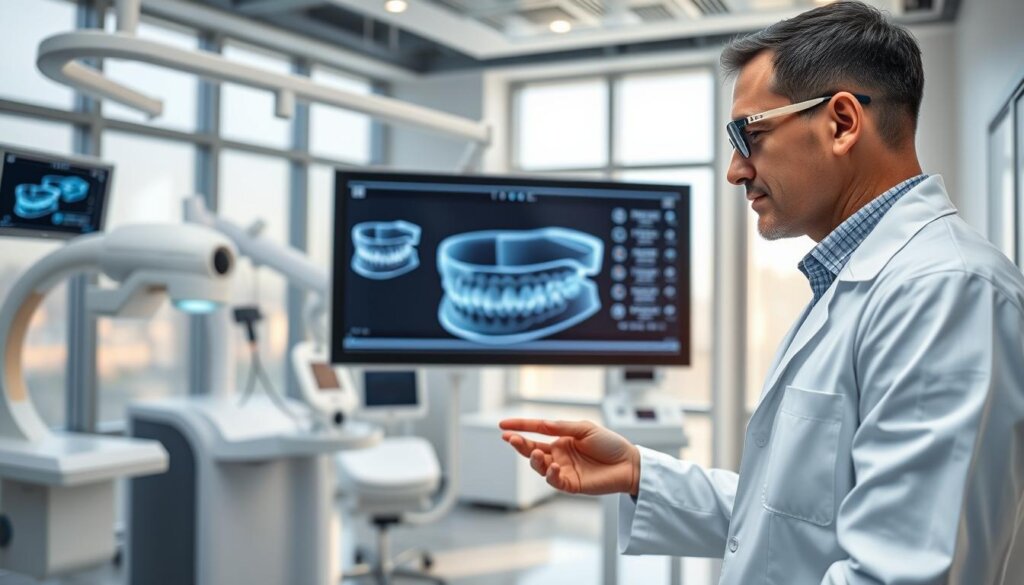
Patients get to see what their teeth will look like before treatment. This helps them understand what to expect. It makes them more informed and excited for the change.
Artificial intelligence is also improving planning. It learns from past cases to make plans better. This is the future of making orthodontic care better.
SmartTrack Material Benefits
Invisalign’s SmartTrack material is a big step forward. It’s a special polyurethane resin. It’s more elastic than before, which means better force delivery.
It’s also easier to put in and take out. This makes it more comfortable for patients. The right mix of flexibility and stiffness makes treatment both effective and comfortable.
SmartTrack also looks better and lasts longer. It’s clear and doesn’t stain or deform easily. This means aligners stay effective longer.
Here’s what makes SmartTrack special:
- Constant force application: Keeps pressure on teeth evenly
- Enhanced precision: Moves teeth more predictably
- Improved comfort: Reduces discomfort during adjustment
- Optical clarity: Looks better during wear
- Structural integrity: Lasts longer without cracking or warping
SmartTrack and digital planning work together for better results. This makes treatment more comfortable and effective. Patients get to enjoy a smoother, more pleasing journey to straight teeth.
Maintenance and Aftercare
Finishing Invisalign treatment is a big achievement. But, keeping your smile perfect requires ongoing care. Knowing how to take care of your teeth after treatment is key to keeping your smile bright.
Teeth can move back to their original spots after orthodontic treatment. This is why post-treatment retention is so important. Wearing retainers and keeping your teeth clean will help your smile stay perfect for a long time.
Retainers Post-Treatment
After your aligners, you’ll start wearing retainers to stop teeth from moving. This is a critical part of taking care of your teeth after treatment. The forces that moved your teeth in the first place are always working, trying to move them back.
Many things can cause your teeth to move back. The elastic fibers in your gums and the bone around your teeth need time to settle. Your jaw muscles and how you bite also play a role in where your teeth end up.
Most retainers are clear like aligners and designed for comfortable nighttime wear. But, you’ll need to wear them more often at first. You’ll likely wear them all the time for the first few months. This helps your gums and bones settle into their new positions.
After that, you can usually wear them only at night. This keeps your teeth straight without bothering your daily life. Your orthodontist will tell you how often to wear them based on your needs.
Different types of retainers have their own benefits:
- Clear overlay retainers: Look like Invisalign aligners and cover all your teeth for good retention
- Traditional wire-and-acrylic retainers: Last a long time and can be adjusted, but are more visible
- Bonded lingual retainers: Stay on your teeth all the time, so you don’t have to remember to wear them
You’ll need to get new retainers if they wear out or don’t fit right anymore. Clear retainers usually last one to three years with good care. If they crack, get discolored, or don’t fit right, it’s time for a new one.
“Retention is the most important phase of orthodontic treatment. Without proper retainer wear, even the most beautifully aligned teeth will shift back toward their original positions.”
Possible Touch-ups for Perfection
Some people might want small changes after their main treatment is done. These small tweaks can make your smile even better. Touch-ups are a normal part of getting your smile just right.
Even with retainers, your teeth might move a bit during the early stages. Or, you might see things you’d like to tweak. Limited additional aligner therapy can fix these small issues without needing a lot of extra work.
Touch-ups usually need just a few more aligners. Because your teeth are already close to perfect, making small changes is easy. This process is much quicker than the main treatment.
Timing matters significantly when considering touch-ups. The sooner you get touch-ups, the better they work. Waiting too long can mean more work to get your smile back on track.
Many Invisalign providers include touch-up time in your treatment package. This lets you fine-tune your smile without extra cost. Talk to your orthodontist about touch-up options during your last visits to see what’s included in your plan.
Long-term Oral Care Tips
Having straight teeth makes cleaning easier, but you must keep up with good hygiene. Finishing orthodontic treatment doesn’t change how important it is to take care of your teeth. You need to keep up with brushing, flossing, and dental visits for the rest of your life.
Having straight teeth makes it easier to clean your teeth. When teeth are crowded or crooked, it’s harder to get rid of plaque. Your straight smile makes it easier to keep your teeth clean.
Here are some key practices for long-term smile maintenance:
- Brush twice a day with fluoride toothpaste and use the right technique
- Floss or use interdental brushes every day to clean between your teeth
- Go to your dentist every six months for cleanings and check-ups
- Tackle any dental problems right away to avoid bigger issues
- Clean your retainers every day to stop bacteria from building up
Many people find it easier to take care of their teeth after Invisalign. The effort you put into straightening your teeth pays off in better dental health. Straight teeth wear less, have less chance of gum disease, and cavities.
Retention is a lifelong commitment, not just a short phase. Your teeth can always move back, even after treatment. Bones and gums keep changing, and chewing and speaking affect your teeth’s position.
Keeping your teeth straight requires wearing retainers and taking care of your teeth. Most people find wearing retainers at night easy and don’t mind doing it. This small effort keeps your smile looking great.
Understanding the importance of aftercare helps you make the right choices for your teeth. Your orthodontist can answer any questions you have about retainers, oral hygiene, and how to keep your smile perfect. Make sure to go to your follow-up appointments to keep your smile looking great for years.
Affordability and Insurance Coverage
Understanding the cost of Invisalign is key. It’s a big decision that affects your wallet and health. Knowing how much it costs helps you decide if it fits your budget.
The cost of treatment isn’t just the initial price. It also includes how long it lasts and how often you need to visit the office. Invisalign is faster than traditional braces for some cases. This can save you time and money.
There are many ways to pay for orthodontic care. Knowing your options helps you make a smart choice. This is important for your health and wallet.
Cost Comparison: Invisalign vs. Traditional Braces
Invisalign costs between $3,000 and $8,000. The price depends on how complex your case is and where you live. Traditional braces cost about the same, but complex cases can cost more.
Choosing between Invisalign and braces depends on several factors. How long treatment takes is a big one. Aesthetics also play a role, as they do in your professional and social life.
How treatment affects your daily life is important. Invisalign is easier to clean than braces. You can also eat whatever you want with Invisalign.
Braces need more visits than Invisalign. This means more time and travel costs for some patients. It’s something to think about.
| Cost Factor | Invisalign Treatment | Traditional Braces | Value Considerations |
|---|---|---|---|
| Treatment Price Range | $3,000 – $8,000 | $2,500 – $7,000 | Similar overall investment for comparable cases |
| Average Treatment Duration | 6-18 months (mild-moderate) | 18-24 months (typical) | Shorter timeline reduces time investment |
| Office Visit Frequency | Every 6-8 weeks | Monthly adjustments | Fewer appointments save time and travel costs |
| Dietary Restrictions | None (removable for meals) | Multiple food limitations | Greater flexibility improves quality of life |
| Oral Hygiene Impact | Normal brushing and flossing | Specialized cleaning required | Easier maintenance reduces time commitment |
Insurance Plans That Cover Invisalign
Many insurance plans cover Invisalign like traditional braces. This shows that clear aligners are seen as a real treatment option. Knowing what your plan covers can help you save money.
Insurance usually covers a part of the cost, from $1,000 to $3,000. The exact amount depends on your plan. Lifetime maximum benefits are the most your insurance will pay for orthodontic care.
Check with your insurance before starting treatment. Ask about age limits, how much they cover, and any special rules. This helps you understand what you’ll pay out of pocket.
Some plans need you to get approval before they cover treatment. This means sending in records and plans. Working with your orthodontist’s insurance team can make this easier.
Financing Options to Consider
There are many ways to pay for orthodontic care. This makes it easier to get the treatment you need. Many orthodontists offer payment plans that fit your budget.
Orthodontists can set up payment plans for you. These plans let you pay over time without interest if you finish on time. It’s easier to manage your payments this way.
Healthcare financing companies offer longer-term plans. Companies like CareCredit let you pay back over time. Just be careful of the terms to avoid extra fees.
FSAs and HSAs can help you pay for orthodontic care with pre-tax dollars. This can save you money. But, check the limits and what you can use it for.
Some employers offer orthodontic benefits. These can help you pay for treatment. Looking at all your options can help you find the best way to pay.
Using insurance, tax-advantaged accounts, and payment plans can make treatment more affordable. Financial advisors at orthodontic offices can help you find the best plan for you.
Emotional and Psychological Impact
Getting straight teeth through Invisalign does more than just fix your smile. It changes how you feel about yourself and how others see you. Studies show that orthodontic treatment can change how you present yourself and live your life.
Thinking about the emotional side of straightening teeth is important. It can affect your job, relationships, and overall happiness. These changes go beyond just looking good.
Boost in Confidence from Results
Feeling more confident starts before your teeth are fully straight. People often smile more in photos and feel more at ease in social situations. This boost in confidence usually happens in the first few months.
Feeling less self-conscious about your teeth makes social interactions easier. Many patients say they feel more comfortable talking in public, on video calls, and in close conversations. This is because they no longer worry about how their teeth look.
Orthodontic treatment also makes everyday life more comfortable. Proper alignment reduces jaw tension and enamel wear, making your bite feel better right away. Easier cleaning means fewer cavities and healthier gums, boosting your confidence in your oral health.
Having straight teeth can also help your career. People with straight teeth are seen as more successful, trustworthy, and competent at work. This can lead to better job opportunities and more confidence in your professional life.
- Enhanced willingness to smile genuinely in professional and social photographs
- Reduced self-consciousness during close-range conversations and presentations
- Improved comfort on camera for virtual meetings and social media content
- Greater ease participating in social activities without dental anxiety
- Increased satisfaction with overall facial aesthetics and self-image
Managing Discomfort and Expectations
Understanding that teeth straightening takes time is key to managing expectations. Patients who have realistic timelines are happier and less frustrated. It’s important to remember that progress may not always be visible, even when teeth are moving.
Feeling discomfort after changing aligners is normal. This sensation means the aligners are working to move your teeth. Dealing with these feelings gets easier when you know what to expect.
Staying positive during slow progress periods is important. Looking at your treatment plan can remind you of your goal when changes seem small. Taking progress photos shows how far you’ve come, even if it’s not always visible.
Talking openly with your orthodontist can help manage worries. They can explain if progress is on track or if changes are needed. This honesty keeps you trusting your treatment team.
- Review initial treatment visualizations monthly to maintain perspective on final goals
- Take weekly progress photographs from consistent angles and lighting conditions
- Document sensations and observations to discuss during orthodontic appointments
- Acknowledge that some treatment phases show more visible progress than others
- Establish realistic milestone expectations based on provider guidance
Support Systems During Treatment
Having a strong support system is vital during orthodontic treatment. Family members offer encouragement and help you stay on track. Their celebration of your progress makes the journey feel less lonely.
Online communities provide a place to connect with others going through similar experiences. These networks offer advice, share success stories, and help you feel less alone. People who have had Invisalign understand the emotional ups and downs better than those who haven’t.
Orthodontic teams are also a big help. They offer support, advice, and encouragement. They know when you’re feeling down and can help you see challenges in a new light.
Reaching out for help prevents feeling isolated. Instead of struggling alone with doubts, you find that others face similar challenges. This support keeps you motivated and improves your treatment experience.
The emotional investment in orthodontic treatment brings lasting benefits. Patients feel more confident, smile more, and enjoy social moments more fully. These psychological gains are just as valuable as the physical changes.
FAQs About Invisalign Results
Many people starting Invisalign wonder about their treatment schedule, changing aligners, and how long it will take. These questions are common and help patients understand their journey better. Knowing the answers helps them stay on track and motivated.
Answering these questions early can make patients feel more at ease. The next sections will cover the most common concerns about tracking progress and making adjustments.
How Often Will I See Progress Updates?
Most orthodontists check in every 6-8 weeks during Invisalign treatment. They check how teeth are moving and if the aligners are working right.
Patients can also track their progress by taking photos every two weeks. This shows changes that might not be seen daily. It’s a great way to stay motivated.
Some offices use online systems for progress checks. Patients can send photos for review, which might mean fewer in-person visits. This helps catch any issues early and avoid delays.
Can I Switch Aligners Sooner?
Patients should never move to the next aligner without a doctor’s okay. Each aligner is designed for a specific time, usually 7-14 days.
Switching too early can mess up the treatment plan. It can lead to poor fit and not enough movement. This might mean needing more aligners to fix the issue.
There are faster plans, but these need a doctor’s special approval. It’s important to follow the plan and not rush through it.
What Happens if Treatment Takes Longer?
Treatment might take longer than expected for several reasons. By six months, doctors review progress and might change the plan if needed. This helps catch any issues early.
There are many reasons why treatment might take longer, including:
- Not wearing the aligners enough
- Teeth moving in unexpected ways
- Oral health problems that need to be fixed first
- Discovering more movements are needed for the best results
Patients might get extra aligners if their teeth need more help. Most Invisalign plans include these, but check with your doctor first.
Even if treatment takes longer, it’s not a failure. It means the doctor is working hard to get the best results. Talking about the timeline with your doctor helps keep expectations realistic and keeps you on track.
Conclusion: Setting Realistic Expectations
Getting the best results with Invisalign starts with knowing what to expect. This guide has covered how long treatment takes, the importance of following instructions, and the technology behind Invisalign. Understanding these points helps patients feel confident and patient during their orthodontic journey.
Changing your smile with Invisalign takes more than just wearing clear aligners. It requires dedication, consistency, and a clear understanding of the treatment process from start to finish.
Embracing the Gradual Nature of Orthodontic Transformation
Tooth movement is a slow process that can’t be rushed. Bone remodeling, the key to moving teeth, happens at a certain rate. This rate is controlled by cells called osteoclasts and osteoblasts.
These cells work at their own pace, which can’t be sped up without risks. Trying to rush the process can lead to problems like root resorption or damage to the gums.
Being patient with orthodontics means understanding the complex biology behind smile changes. The slow progress allows your face and teeth to adjust gradually. This is a big advantage.
Changing how you see orthodontic treatment can help a lot. Instead of seeing it as a long wait, think of it as a journey of small steps leading to big changes. Keeping track of your progress with photos can show you how far you’ve come.
Seeing your progress can motivate you and keep your expectations in check.
Active Participation Through Consistent Compliance
Success with Invisalign depends on following the treatment plan closely. The plan assumes you’ll wear the aligners as directed and take good care of your teeth.
Not following the plan can make treatment take longer. This might mean you need to do more work to get your teeth straight.
Seeing treatment as a team effort, not just following rules, is important. Wearing the aligners as directed is a big step towards your goal. Not wearing them as planned can slow down your progress.
Here are key things to do to make sure your treatment goes well:
- Wear aligners 20-22 hours daily to keep teeth moving as planned
- Change aligners on time to keep treatment on track
- Keep your teeth and mouth clean to avoid problems
- Go to all your appointments for checks and adjustments
- Use any extra tools as directed to help your treatment
Following the treatment plan is key to success. Even the best technology can’t make up for not following the plan.
Looking Forward: Your Investment in Lifelong Benefits
Choosing orthodontic treatment is an investment in your health and confidence. Straight teeth are easier to clean and can help your teeth last longer.
They also make chewing and biting more comfortable. This can help prevent problems with your teeth and mouth in the future.
Orthodontic treatment can also boost your self-esteem. Feeling good about your smile can make you more confident in social and work situations.
Most people are very happy with their Invisalign treatment. They feel it was worth the time and effort for the amazing results.
Your orthodontic journey can also teach you valuable life skills. The discipline and patience needed for treatment can help you in many areas of life.
| Treatment Journey Aspect | Successful Approach | Challenged Approach | Impact on Results |
|---|---|---|---|
| Aligner Wear Compliance | Consistent 20-22 hours daily | Sporadic 12-16 hours daily | On-time completion vs. extended treatment |
| Mindset and Expectations | Realistic timeline understanding | Expecting rapid transformation | Satisfaction vs. frustration |
| Progress Documentation | Regular photos and comparisons | No tracking of changes | Motivation vs. discouragement |
| Orthodontist Communication | Attending all scheduled appointments | Missing or rescheduling visits | Optimal adjustments vs. delayed corrections |
| Treatment Outcome | Planned results achieved on schedule | Extended treatment with compromises | High satisfaction vs. disappointment |
Getting the smile you want takes commitment. But knowing how teeth move, following the treatment plan, and having realistic expectations can make the journey smoother.
Every day you wear your aligners brings you closer to your goal. The slow changes add up to lasting results.
Your commitment to the process directly determines the quality and timeliness of your results. Be patient, follow the plan, and look forward to the lasting benefits of your orthodontic investment.
Call to Action
Starting your journey to a confident smile is easy. Just understand your treatment options. This guide helps you make smart choices for your orthodontic care.
Schedule a Consultation with an Invisalign Provider
Booking a consultation is the first step. At your first visit, you’ll get a detailed dental check-up. Advanced 3D imaging technology will measure your teeth and jaw.
You’ll see how your treatment might look before you start. Contact a certified Invisalign provider to talk about your treatment plan. They’ll answer all your questions and help you feel ready to begin.
Explore Financial Options for Treatment
Looking into how you’ll pay for treatment is important. Many places offer payment plans that fit your budget. You might also get help from your insurance.
Health savings and flexible spending accounts can help too. They let you pay for treatment without paying taxes on it.
Join Invisalign Success Stories Online
Joining online communities is a great way to get support. You’ll find people who have gone through similar things. They share tips and celebrate each other’s successes.
Seeing before-and-after photos helps you know what to expect. It’s also a chance to connect with others who are on the same journey as you.

