
I Have a Crown/Veneer/Implant – Can I Stil Get Invisalign?
Have you spent a lot on dental work and wonder if you can straighten your teeth? Many people want to improve their tooth alignment without harming their current dental work.
Now, Invisalign with dental restorations is a big step forward in orthodontics. Some think having dental work means they can’t get orthodontic treatment. But, dentists have new ways to treat complex cases.
Understanding clear aligner treatment compatibility means looking at how orthodontic forces work with different dental restorations. Dental implants are fixed, but teeth around them can move. Crowns and veneers let the teeth under them move too.
This deep dive looks at how orthodontic treatment works with dental restorations. We’ll see how it’s done, what’s needed, and what the results are. Our goal is to give you and your dentist the info you need to decide on tooth alignment treatment.
Key Takeaways
- Orthodontic treatment is possible for most with dental restorations like crowns, veneers, and implants
- Dental implants can’t move, but teeth around them can with the right plan
- Crowns and veneers let teeth move because they bond to the tooth root
- Success needs a custom plan and careful dental check by experts
- Modern clear aligners can handle complex cases with advanced designs
- Results depend on the type of restoration, its position, and overall dental health
Understanding Invisalign and Its Benefits
Invisalign is a modern way to straighten teeth. It uses advanced technology to fit different dental needs. People with crowns or other dental work can also use Invisalign.
Digital technology and orthodontics work together to create personalized plans. This means dental professionals can fix teeth while keeping existing work safe. It’s a big chance for people with crowns, veneers, or implants to improve their smile.
What is Invisalign?
Invisalign uses special aligners made from SmartTrack material. This material applies gentle pressure to move teeth. The aligners fit around dental work without causing problems.
The process starts with digital scans of your teeth. These scans are more accurate than old methods. They help plan how your teeth will move.
Each aligner makes small changes to your teeth. This slow movement is safe and effective. It works by gently pushing teeth through bone remodeling.
How Does Invisalign Work?
You wear each aligner for one to two weeks. They must be on for 20 to 22 hours a day. This is to get the best results.
How long you need Invisalign depends on your teeth. Most people need 12 to 18 months. But, it can be shorter or longer.
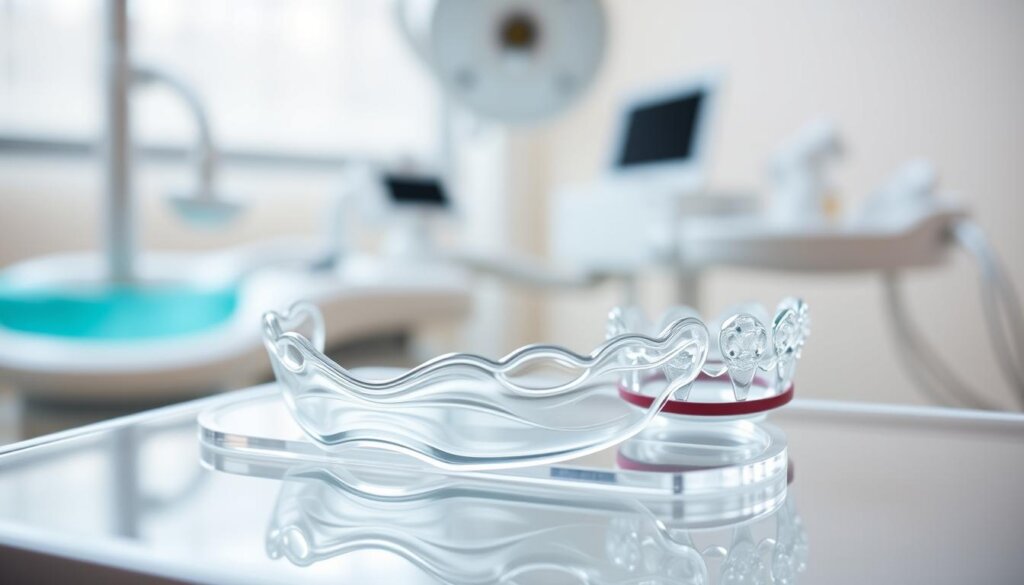
Invisalign is flexible and gentle. It works well with dental work without causing harm. The digital planning makes sure it fits perfectly.
Benefits of Choosing Invisalign
Invisalign is not just about looks. It also makes eating and cleaning your teeth easier. Removability is a big plus for keeping your teeth clean.
It’s also more comfortable than traditional braces. The smooth aligners don’t irritate your mouth. Seeing your new smile before starting helps you feel more confident.
Key benefits include:
- Enhanced comfort through smooth, custom-fitted aligners without metal components
- Improved oral hygiene access by removing aligners for thorough brushing and flossing
- Dietary freedom without food restrictions, as aligners are removed during meals
- Professional appearance maintained throughout treatment with nearly invisible aligners
- Predictable outcomes visualized through advanced digital treatment planning
- Compatibility with dental work accommodating existing crowns, veneers, and restorations
For those with dental restorations, Invisalign compatibility with dental work is a big plus. It’s made to fit around your dental work safely. This is better than traditional methods that might damage your teeth.
| Treatment Aspect | Invisalign Characteristics | Patient Experience | Clinical Advantages |
|---|---|---|---|
| Wear Time | 20-22 hours daily | Removable for meals and hygiene | Consistent force application |
| Treatment Duration | 6-18 months average | Predictable timeline with milestones | Customized to case complexity |
| Office Visits | Every 6-8 weeks | Minimal disruption to schedule | Progress monitoring and adjustments |
| Material Technology | SmartTrack thermoplastic | Comfortable and nearly invisible | Precise force delivery system |
| Restoration Compatibility | Custom-fitted accommodation | Protects existing dental work | Comprehensive treatment planning |
Invisalign combines advanced materials, digital planning, and design. It’s a complete solution for straightening teeth. It’s safe for people with dental work and offers new options for those who couldn’t get traditional braces.
Types of Dental Restoration: Crown, Veneer, and Implant
Dental restorations like crowns, veneers, and implants help fix oral health issues. Each type has its own role in fixing teeth. Knowing how they work is key for both patients and dentists when planning orthodontic treatments.
About 15 million Americans have dental crowns. They are very common because they can fix many dental problems. It’s important to know how each type works for those thinking about orthodontic treatments.
What is a Dental Crown?
A dental crown is a custom cap for a damaged or weak tooth. It covers the tooth from the biting surface to the gum line. Crowns fix both looks and function of the tooth.
Dentists suggest crowns for many reasons. They are good for teeth after root canals, big fillings, grinding damage, and cracks. The crown acts as a protective barrier and helps with chewing.
The material of crowns affects how they work with orthodontic forces. Different materials have different benefits and things to consider:
| Crown Material | Key Characteristics | Durability Rating | Aesthetic Quality |
|---|---|---|---|
| Porcelain and Ceramic | Most natural appearance, excellent color matching, ideal for front teeth | Good (5-15 years) | Excellent |
| Porcelain-Fused-to-Metal | Strong metal base with porcelain overlay, balanced strength and aesthetics | Very Good (10-15 years) | Good |
| Gold and Metal Alloys | Extremely strong, requires minimal tooth removal, biocompatible | Excellent (15+ years) | Poor (visible metal) |
| Zirconia | Strong, fracture-resistant, natural-looking, modern option | Excellent (10-15 years) | Very Good |
| Composite Resin | More affordable option, less durable than other materials | Fair (5-7 years) | Good |
Crowns have different surface energy than natural teeth. This affects how orthodontic attachments stick. Ceramic and porcelain materials need special care when planning orthodontic treatments.
Crowns usually last 5 to 15 years. Their lifespan depends on the material, oral care, and chewing forces. Patients thinking about Invisalign should check if their crowns can last long enough.
Understanding Tooth Veneers
Tooth veneers are thin shells bonded to the front of teeth. They fix looks but don’t cover the whole tooth like crowns. Veneers are about 0.5 to 0.7 millimeters thick.
Veneers fix many cosmetic issues. They’re good for closing gaps, covering stains, fixing chips, and making smiles look better. They’re less invasive than crowns.
Veneers are usually made of porcelain or ceramic. They bond to enamel with special cement. The bonding process creates a strong connection between veneer and tooth, but it’s important to consider this when planning orthodontics.
Veneers cover the front of teeth, making them tricky for orthodontics and dentistry. Orthodontic attachments bond to the front, which veneers cover. This requires special planning to avoid damaging the veneer or restoration.
What is a Dental Implant?
A dental implant is a permanent tooth replacement. It’s a titanium post in the jawbone. Unlike crowns and veneers, implants replace the root and crown of missing teeth.
The implant process takes months. First, a surgeon places the titanium post in the jawbone. Then, bone grows around the post. After 3-6 months, a dentist attaches an abutment and crown.
Osseointegration creates a direct structural connection between the implant and bone. This means the implant can’t move like natural teeth. Implants don’t have the same mobility as natural teeth.
Implants can’t move, which is a big consideration for orthodontic treatments. Orthodontists plan tooth movements around implants, not trying to move them. This makes implants different from other restorations for clear aligner therapy.
Knowing about crowns, veneers, and implants helps understand treatment options. Each type interacts differently with orthodontic forces and needs a personalized approach from dental professionals.
Can You Get Invisalign with a Crown?
Having a dental crown doesn’t mean you can’t get Invisalign. It’s important to check a few things first. Most people with crowns can get clear aligners because the tooth under the crown can move.
Crowns cover the top part of teeth but don’t touch the roots. This means the roots can move, just like natural teeth. This is key for orthodontic treatment with crowns to work.
Biomechanical Considerations for Crown Movement
The way crowned teeth move is similar to natural teeth. When aligners push on a crown, the force goes to the tooth under it. This makes the tooth move through bone remodeling.
But, crown compatibility with aligners has its own challenges. Crowns don’t have the same tiny details as natural teeth. This makes it harder for orthodontic attachments to stick.
Aligners need to fit perfectly over crowns. Orthodontists make sure the fit is right during the impression or scanning process. If the fit is off, treatment might not work as well.
Attachment Placement and Bonding Challenges
Attachments help aligners move teeth. They stick to natural teeth well but not as well to crowns. This makes it tricky to place them.
When you ask “I have a crown/veneer/implant – can I get Invisalign?”, the answer depends on the crown’s location. Orthodontists use different methods to make attachments work on crowns.
- Adjacent tooth placement: Attachments can go on teeth next to the crown for similar effects
- Specialized bonding protocols: Treatments like etching and silanization can help attachments stick better
- Alternative attachment designs: Changing the shape or size of attachments can help
- Button alternatives: Small metal buttons can be used on back teeth for extra grip
The location of the crown affects treatment. Back teeth are easier to work with, but front teeth need more careful planning. This is because front teeth are more visible and often need more precise movements.
Crowns might move at different rates than natural teeth. This is because forces spread differently over the crown-tooth interface. Orthodontists adjust the aligners to make sure all teeth move together.
Crown Condition Assessment Before Treatment
Before starting treatment, crowns need to be checked. Old or weak crowns might not handle the forces of aligners. A thorough check-up helps identify any crowns that need to be replaced.
Badly worn or loose crowns can be risky during treatment. The constant use of aligners can cause them to fall out or break. Replacing them before treatment starts avoids problems later on.
Good crowns usually work fine with aligners. Dentists look at the crown’s edges and the tooth under it. They decide if the crown can stay in place during treatment or if it needs to be replaced.
| Crown Location | Compatibility Level | Common Considerations | Typical Solutions |
|---|---|---|---|
| Posterior Molars | High compatibility | Limited attachment needs, less visible, buttons may be required | Standard treatment protocol with minimal modifications |
| Premolars | High compatibility | Moderate attachment requirements, good bonding alternatives available | Adjacent tooth attachments or specialized bonding |
| Anterior Incisors | Moderate compatibility | High aesthetic demands, precise rotational control needed, difficult attachment placement | Strategic attachment positioning on adjacent teeth, careful force planning |
| Canines | Moderate to high | Important for bite alignment, strong bonding challenges on crown surface | Alternative attachment designs, possible button placement |
Professional Consultation Process
Figuring out if crowns work with aligners needs expert help. The first step is a detailed check-up of all teeth, including crowned ones. Experts look at the crown’s condition and the health of the teeth around it.
They use digital images or scans to see the tooth under the crown. This helps them plan the treatment. They make sure the crown fits the tooth’s new position after treatment.
During the consultation, they talk about replacing crowns before, during, or after treatment. Sometimes, the crown needs to be changed after the teeth move. This ensures the crown looks and works best in its new position.
Patients get all the details about how their crowns will affect treatment. This helps them decide if Invisalign is right for them. Getting advice from experts makes them feel more confident about their dental plan.
They also learn how to take care of their crowned teeth during treatment. Experts give tips on cleaning around the crown margins. This helps avoid problems that could affect both the treatment and the crown’s life.
Can You Get Invisalign with Veneers?
Many people with veneers wonder if clear aligners can work with their dental restorations. The good news is that Invisalign with dental restorations like veneers is a good option for many. But, the success of treatment depends on several factors like veneer placement, material quality, and oral health.
Veneers cover only the front of teeth, unlike crowns that cover the whole tooth. This difference creates unique challenges and opportunities for orthodontic treatment. Orthodontists can work with the exposed natural tooth structure.
To understand veneer compatibility with orthodontics, you need a thorough evaluation by your orthodontist and dentist. They will check if your situation allows for successful alignment correction while keeping your cosmetic work intact.
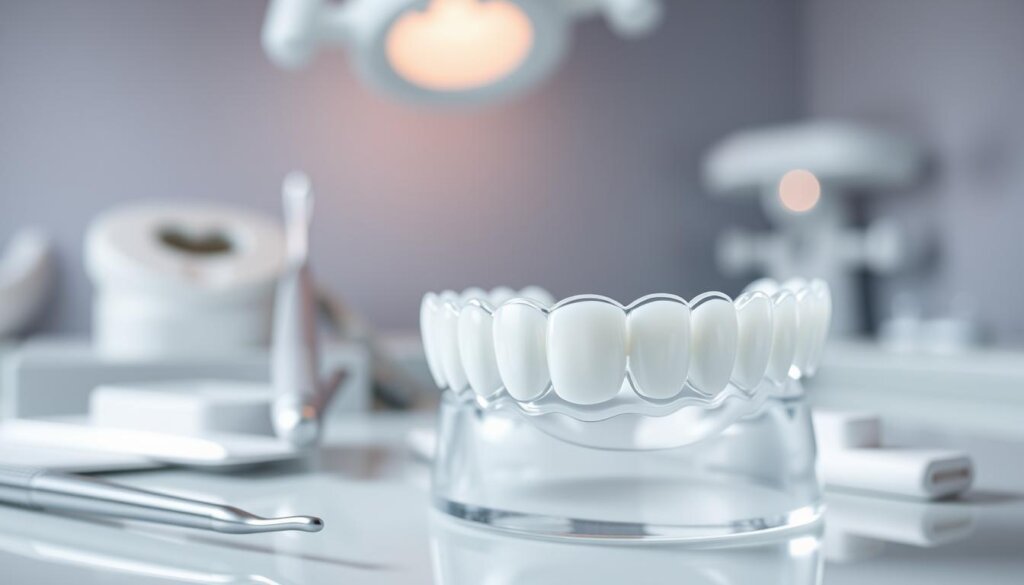
Impact of Veneers on Treatment
Veneers affect how orthodontic forces are applied during Invisalign treatment. Porcelain and ceramic veneers are strong but different from natural enamel. This affects how teeth move under the gentle pressure of clear aligners.
Orthodontists must consider veneer thickness and bonding quality when planning treatment. Thinner veneers may be more prone to chipping or fracturing under orthodontic forces. The areas where veneers meet natural teeth are weak points that need careful monitoring.
Where to place attachments is key for patients with veneers. Orthodontists usually put attachments on the tongue-side of veneered teeth or on non-veneered teeth next to them. This approach reduces stress on the veneer while moving teeth effectively.
The age and how veneers were made also matter. Newer veneers with modern bonding protocols usually do better under orthodontic treatment. Stronger bonds between the veneer and tooth structure reduce the risk of veneer debonding.
| Veneer Characteristic | Treatment Consideration | Clinical Implication | Recommended Action |
|---|---|---|---|
| Veneer Age | Restorations over 10 years old | Increased debonding risk | Pre-treatment evaluation and possible replacement |
| Material Thickness | Ultra-thin veneers (0.3mm or less) | Higher fracture susceptibility | Modified force application protocols |
| Bonding Quality | Marginal integrity and seal | Potential for microleakage | Assessment before treatment initiation |
| Coverage Area | Number of veneered teeth | Affects attachment placement options | Customized treatment planning approach |
Tooth movement can change how veneered and non-veneered teeth look. This might reveal differences in color or shape. Patients might need veneer replacement after orthodontic treatment to keep their smile looking good.
Assessing Your Current Dental Health
A detailed dental health check is key for successful Invisalign treatment with veneers. Your dentist will look for signs of wear or weakness in veneers. This helps identify problems that could get worse during treatment.
X-rays show the tooth-veneer interface that can’t be seen with the naked eye. They reveal decay or structural issues that could affect treatment. Digital scanning technology helps orthodontists create precise plans that consider veneer placement and size.
The health of teeth under veneers is important for treatment success. Teeth with enough natural structure usually respond well to orthodontic forces. Your dental team will check if there’s enough healthy tooth to support both the veneer and the aligners.
Previous dental work, like fillings or crowns, also needs evaluation. Patients with multiple dental restorations require a thorough assessment to ensure all work can handle treatment demands. The presence of other restorations on nearby teeth affects treatment planning.
Gum health is another critical factor. Periodontal disease or gum recession can make orthodontic treatment harder, even with veneers. Your dentist will check for signs of gum inflammation, pocket depth, and bone support before recommending Invisalign.
Bite alignment and jaw relationship are also important. Some orthodontic issues require more tooth movement than others. Your orthodontist will decide if the desired tooth movements are safe for your veneers.
Good communication between your general dentist and orthodontist is essential. They work together to monitor veneer condition during treatment and address any issues. Regular dental check-ups during Invisalign help catch problems early, protecting your investment in orthodontic correction and cosmetic dentistry.
Can You Get Invisalign with an Implant?
Patients with dental implants can get Invisalign for a beautiful smile. But, the treatment needs special planning because of implants. This is because implants don’t move like natural teeth do.
Dental implants are titanium posts in the jawbone. They fuse with bone, making them stable. This means they can’t move like natural teeth during orthodontic treatment.
Unlike natural teeth, implants don’t have a periodontal ligament. This ligament helps teeth move during orthodontic treatment. Implants, being fixed, don’t have this ability.
Compatibility and Considerations
Before starting Invisalign with implants, a careful check is needed. Implants can’t move, but they don’t stop other teeth from moving. Orthodontists plan treatments that work around these fixed points.
Several things affect Invisalign compatibility with dental work involving implants:
- The position and angle of implants in the jaw
- The number of natural teeth that can move
- The shape and condition of implant crowns
- The space between implants and nearby teeth
- The treatment goals and desired tooth positions
Aligners must fit around implant crowns without harming them. The plan focuses on moving natural teeth around the fixed implant. This ensures a balanced look and function.
Timing is key for success. Patients needing implants might start Invisalign first. This makes sure the implant fits perfectly in the corrected mouth.
For those with implants, the orthodontist checks if the implant helps or hinders tooth movement. Sometimes, adjusting the implant crown is needed for better alignment.
How Implants Affect Treatment Planning
Planning with osseointegrated implants and orthodontics needs advanced analysis. Orthodontists use digital scans to map implants and teeth. This helps make custom aligners that respect implant positions while moving other teeth.
Implants act as anchors during treatment. While natural teeth move, implants stay in place. This stability can help in certain cases by preventing unwanted tooth movements.
Starting Invisalign before implant surgery can be beneficial. It creates space for the implant and improves tooth alignment. This approach avoids common problems.
For those with implants, careful analysis is needed. This includes checking implant position, crown shape, and soft tissue health. This ensures the best possible outcome.
- Implant angle and depth in the bone
- Crown shape and its effect on nearby teeth
- Soft tissue health around the implant
- Occlusal relationships with opposing teeth
- Limitations on tooth movements near the implant
Aligners are designed to fit around implant crowns without causing pressure. Advanced software helps plan the treatment digitally. This helps spot any issues before starting treatment.
If implant position limits treatment, other options might be considered. Modifying the implant crown can sometimes solve problems. This allows teeth to move into better positions.
Good communication between the orthodontist and implant dentist is vital. Working together ensures both orthodontic goals and implant integrity are met. This team effort leads to great results for both alignment and dental health.
Importance of a Comprehensive Dental Evaluation
A thorough dental check is key for those thinking about straightening teeth with dental work already done. This detailed check goes beyond a simple dental visit. It needs special skills to see how crowns, veneers, and implants fit with orthodontic plans.
Every patient is different, needing a unique plan. Dental work adds special challenges that can change how treatment works. Without a good check, patients might face problems that harm their orthodontic results and dental work.
The Essential Role of Dental Professionals
Dental experts bring a wide range of skills to the evaluation process for Invisalign with dental restorations. They know a lot about orthodontics, prosthodontics, and how teeth move in restored dentition. This knowledge helps make sure treatment plans cover all of oral health.
The check starts with detailed documentation of medical and dental history. Providers need to know when dental work was done, what materials were used, and if any problems happened. Knowing why dental work was done helps plan orthodontic treatment.
Orthodontic specialists look at dental history to see what might affect treatment success. Past dental issues, healing responses, and how well dental work is maintained give clues. This helps predict how teeth and restorations will react to aligner therapy.
The success of orthodontic treatment in patients with existing restorations depends entirely on the thoroughness of the initial evaluation and the expertise of the treating professional.
Planning treatment for patients with dental work needs careful thought. If a patient plans to get a dental implant, orthodontists often suggest doing Invisalign first. Aligning teeth before implant placement makes sure teeth are in the best position and simplifies treatment.
Comprehensive Assessment of Oral Health Prior to Treatment
The clinical exam requires careful attention to many factors that affect treatment possibility. Dental experts check the integrity and stability of all existing restorations first. If crowns or bridges are loose or unstable, they must be fixed before starting Invisalign therapy.
Checking periodontal health is also key. The health of the tissues supporting teeth and restorations is very important. Poor periodontal health can stop teeth from moving properly and needs fixing before starting orthodontic treatment.
A detailed orthodontic assessment also looks at how teeth meet during normal function. It checks for habits like bruxism that can affect aligners and dental restorations.
| Evaluation Component | Assessment Focus | Clinical Significance | Treatment Impact |
|---|---|---|---|
| Restoration Integrity | Stability, margins, and structural soundness of crowns, veneers, and implants | Determines whether existing work can withstand orthodontic forces | May require replacement or reinforcement before treatment |
| Periodontal Status | Gum health, attachment levels, and bone support around natural and restored teeth | Ensures adequate foundation for tooth movement | Active disease must be treated prior to orthodontic therapy |
| Occlusal Analysis | Bite relationships, contact patterns, and jaw function | Identifies functional limitations and treatment goals | Influences aligner design and movement sequence |
| Diagnostic Imaging | Root positions, bone levels, and restoration-tooth interfaces | Reveals hidden conditions affecting treatment feasibility | Guides three-dimensional treatment planning |
Advanced diagnostic imaging is key in modern orthodontic evaluation. Digital radiography shows bone levels, root shape, and how restorations fit with teeth. These images show conditions not seen during a simple check.
Cone beam computed tomography is used in complex cases for detailed three-dimensional views. This imaging gives precise info about root positions, bone volume, and anatomical limits. Such detailed data helps plan treatment for tough cases.
Digital impressions make precise three-dimensional models of tooth and restoration anatomy. These models let orthodontists plan tooth movements before treatment starts. Virtual planning accounts for prosthetic work throughout the proposed treatment timeline, ensuring everything fits together well.
The check must find any problems that need fixing before starting orthodontic treatment. Issues like active periodontal disease, failing restorations, or structural problems need fixing first. Fixing these problems prevents treatment problems and improves results.
Providers also check the condition of dental cement and bonding materials in existing restorations. Orthodontic forces can stress these interfaces between natural tooth structure and prosthetic materials. Ensuring strong bonds protects against restoration failure during treatment.
Assessing the condition of the temporomandibular joint completes the evaluation. Joint health affects treatment planning and appliance design. Patients with TMJ concerns may need special approaches to avoid stressing the jaw.
The evaluation ends with a treatment plan made just for the patient. This plan combines orthodontic goals with keeping or modifying existing dental work. Dental experts create strategies tailored to each patient’s needs and anatomy.
Treatment plans specify which attachments can be placed on restored teeth and which teeth will serve as anchorage points. They outline the sequence of tooth movements designed to work with existing restorations. This level of customization distinguishes professional orthodontic care from generic approaches.
The skill of the dental professional greatly affects Invisalign success with dental restorations. Experienced providers spot problems before they happen. Their detailed approach ensures patients get good results while keeping their dental work safe.
Alternative Orthodontic Options
Knowing about all orthodontic options helps patients make better choices for their smile. While Invisalign is popular, many alternative orthodontic treatments can meet specific needs. Dentists look at each patient’s situation to suggest the best treatment.
Choosing between orthodontic options depends on several things. These include the type of dental restorations, how complex the tooth movement is, and what the patient prefers. Each option has its own benefits for different situations.
Other Types of Aligners
The clear aligner market has more than just one brand. There are many systems with different materials and technologies. Patients with clear aligners for patients with crowns should talk to their dentist about all options.
Here are some well-known aligner systems:
- ClearCorrect: Offers detailed treatment plans and materials that work well with dental restorations
- SureSmile: Uses advanced 3D imaging for better control over tooth movements
- 3M Clarity Aligners: Has special attachments for working around crowns and veneers
- Candid and Byte: Allow for remote monitoring, best for simpler cases
Each aligner system has its own strengths when it comes to dental restorations. The material affects how well the aligners grip teeth, whether they’re natural or prosthetic. The manufacturing process also impacts how well the aligners fit around complex teeth.
When it comes to working with dental restorations, all aligner systems face similar challenges. These include placing attachments on crowns, distributing forces through prosthetics, and keeping the aligners in place. Some systems might be better for certain situations, like controlling tooth movement in the back or making small changes between teeth.
Traditional Braces vs. Invisalign
Traditional braces are the traditional choice for orthodontic care. They have advantages over clear aligners, like working well with dental restorations. Choosing between orthodontic treatment with crowns using braces or aligners depends on the patient’s needs.
Braces offer benefits for patients with a lot of dental work. They can move teeth in ways that aligners can’t, like vertical movements or precise rotations. But, attaching brackets to crowns and veneers is tricky.
Brackets need special preparation for prosthetics, which can affect how well they stick. Brackets might stick better because they cover more surface area, but they’re harder to clean around. This makes oral hygiene a challenge.
| Treatment Factor | Traditional Braces | Clear Aligners | Clinical Consideration |
|---|---|---|---|
| Mechanical Control | Superior for complex movements | Effective for mild-moderate cases | Severe misalignments favor fixed appliances |
| Restoration Bonding | Larger surface area, stronger retention | Smaller attachments, aesthetic advantage | Both face surface preparation challenges |
| Patient Compliance | Non-removable, eliminates compliance issues | Requires 20-22 hours daily wear | Fixed appliances guarantee consistent force |
| Oral Hygiene | More challenging around restorations | Removable for easier cleaning | Restoration longevity depends on hygiene |
Invisalign is versatile but might not be the best for severe problems. In such cases, braces can offer better results. Aligners are easy to wear and clean, but they need the patient to wear them consistently.
Braces are often better for complex cases, like many dental restorations or severe crowding. The visible parts of braces might not be as appealing, but they can lead to better results. The choice depends on many factors, not just the dental work.
Deciding between braces and aligners involves more than just dental work. Lifestyle, appearance, oral hygiene, and how long treatment will take are all important. Dentists consider these factors to recommend the best treatment.
Some treatments use both braces and aligners. Braces handle the tough movements first, then aligners refine the results. This mix of treatments shows how flexible orthodontics can be today.
Age Considerations for Invisalign Users
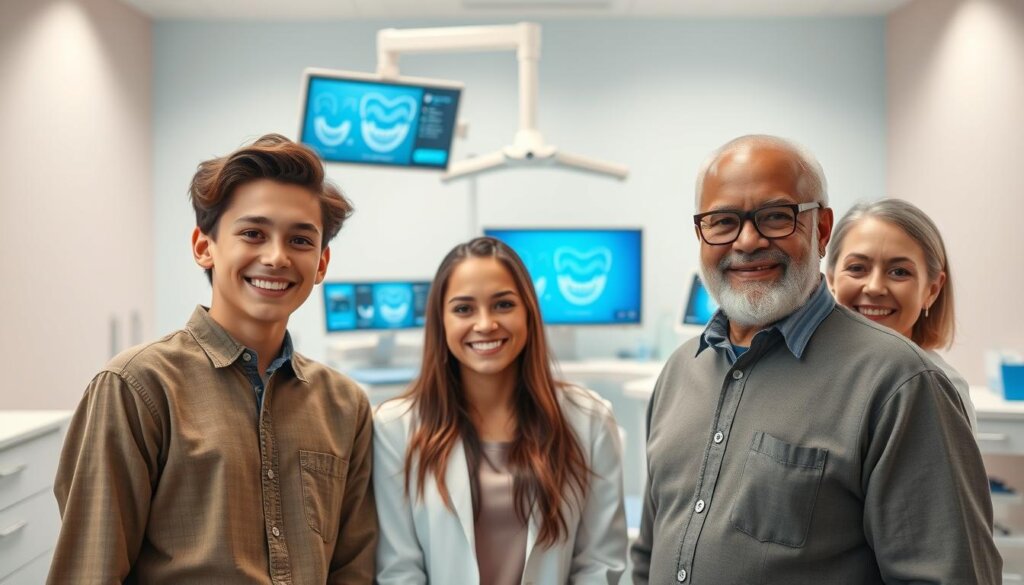
Different life stages bring unique challenges and opportunities when pursuing Invisalign treatment alongside existing dental restorations. The prevalence and types of dental work vary significantly between age demographics, requiring tailored approaches to clear aligner therapy. Understanding how patient age influences orthodontic treatment across age groups enables both clinicians and individuals to set realistic expectations and achieve optimal outcomes.
Modern orthodontic technology has evolved to accommodate patients of all ages with various dental restoration histories. Whether someone received dental work in adolescence or adulthood, Invisalign compatibility with dental work remains possible with proper evaluation and planning. The key lies in recognizing age-specific biological and psychological factors that shape treatment approaches.
Adult Patients with Restorations
Adults represent the primary population seeking orthodontic correction while managing multiple dental restorations. By middle age, cumulative dental disease and previous interventions often result in crowns, bridges, and implants throughout the mouth. These patients typically pursue Invisalign for both aesthetic enhancement and functional rehabilitation.
The biological environment in adult orthodontics differs substantially from adolescent treatment. Denser bone structure and reduced metabolic activity mean teeth move more gradually through supporting tissues. Adult patients may require extended treatment durations compared to younger individuals, though outcomes remain equally successful with appropriate force application.
Periodontal health becomes increasingly critical as patients age. Adults with extensive restoration histories often have compromised gum tissue or bone loss from previous dental disease. Orthodontists must carefully assess periodontal status before initiating clear aligner therapy to prevent complications during tooth movement.
“Adult patients demonstrate significantly higher compliance rates with aligner wear protocols, which directly correlates with treatment success despite the biological challenges of moving teeth through mature bone structures.”
The relationship between dental implants and clear aligners presents specific considerations in adult treatment. Implants cannot move through bone like natural teeth, serving instead as fixed anchor points around which other teeth are repositioned. This limitation requires sophisticated treatment planning to achieve harmonious alignment while respecting implant positions.
Adults with restorations often present underlying conditions requiring ongoing monitoring. Bruxism, enamel defects, or advanced caries history may have necessitated the original dental work. These factors continue influencing oral health throughout orthodontic treatment and demand vigilant professional oversight.
Teenagers and Early Dental Work
Adolescent patients occasionally require dental restorations due to developmental anomalies, traumatic injuries, or genetic conditions affecting tooth formation. Invisalign compatibility with dental work in teenagers introduces unique considerations related to ongoing growth and dental maturation. Treatment planning must account for facial development that continues into the early twenties.
Restorations placed during teenage years frequently require replacement in early adulthood. Normal facial growth, gingival maturation, and evolving aesthetic preferences all contribute to this need for future dental work. Orthodontic positioning optimized for current restorations may need adjustment when replacements occur years later.
The psychological dimensions of orthodontic treatment across age groups differ markedly between teenagers and adults. Adolescents often experience heightened self-consciousness about both misaligned teeth and visible dental restorations. The discreet appearance of clear aligners provides significant emotional benefits during these formative social years.
Teenagers generally demonstrate excellent treatment outcomes when compliance remains high. Their active bone metabolism facilitates efficient tooth movement, potentially shortening treatment duration. Inconsistent aligner wear patterns common in adolescent populations can compromise results and extend therapy timelines.
| Consideration Factor | Adult Patients (25+ years) | Teenage Patients (13-19 years) |
|---|---|---|
| Bone Density | Higher density requiring controlled forces and potentially longer treatment | Active remodeling allowing efficient tooth movement with standard protocols |
| Restoration Permanence | Crowns and implants typically permanent with replacement only for failure | Early restorations often temporary, requiring future replacement after growth completion |
| Compliance Patterns | Superior adherence to wear schedules and oral hygiene protocols | Variable compliance requiring additional monitoring and motivation strategies |
| Biological Response | Slower tooth movement due to reduced cellular activity in mature tissues | Rapid tooth movement supported by active growth and high metabolic activity |
| Periodontal Health | Potential compromise from previous disease requiring careful assessment | Generally healthy tissues with minimal disease history providing stable foundation |
Treatment expectations vary significantly between age groups pursuing clear aligner therapy. Adults typically demonstrate greater realism about limitations and willingness to accept compromise outcomes. They understand that preserving existing dental work sometimes necessitates departures from theoretical orthodontic ideals.
Teenagers and their families often expect perfect results without considering restoration constraints. Education about treatment limitations becomes essential when early dental work affects achievable outcomes. Open communication helps align expectations with clinical realities, preventing disappointment and ensuring satisfaction with final results.
The integration of dental implants and clear aligners requires careful planning in younger patients. Implants placed before facial growth completion may appear malpositioned as surrounding natural teeth continue development. Orthodontists must project future growth patterns when planning treatment that incorporates both clear aligners and existing implants.
Age-appropriate treatment approaches maximize success rates across all demographics. Recognizing the distinct biological, psychological, and practical considerations that characterize different life stages allows clinicians to optimize Invisalign compatibility with dental work for each individual patient situation.
The Process of Starting Invisalign Treatment
Starting Invisalign treatment for patients with crowns, veneers, or implants needs special steps. The usual Invisalign process is adapted to fit these dental work needs. Orthodontists work carefully to straighten teeth with existing dental work.
Dental restorations change how teeth move during treatment. Each type of restoration needs its own plan. This makes treatment more precise.
Initial Consultation Process
The first visit is key for a good treatment outcome. The orthodontist does a detailed check-up. They answer questions like “I have a crown/veneer/implant – can I get Invisalign?” based on the patient’s dental situation.
The orthodontist looks at the dental restorations’ condition and location. They check the gums and bone too. This helps decide if teeth can move safely.

Advanced digital tools have changed the start of treatment. Intraoral scanning systems make detailed 3D models of teeth. These models help create a treatment plan that considers all dental work.
During the first visit, the orthodontist talks about how dental work affects treatment. They explain how long treatment might take and what results to expect. This clear talk helps build trust and avoid misunderstandings.
The orthodontist also looks for any problems before treatment starts. Issues like not enough space for tooth movement or problems with crowned teeth are addressed early. This way, they can avoid problems during treatment.
Treatment Planning and Expectations
After the first visit, the planning starts with digital tools. The 3D models from scans are used in software to simulate tooth movement. This digital method is a big help for patients with dental work.
Orthodontists use the software to plan how teeth will move. They make sure aligners fit well without harming veneers or crowns. The software shows how teeth will move during treatment.
Planning for complex cases often involves working with other dentists. Working together with the patient’s dentist or prosthodontist is key. This teamwork is important for making sure treatment goals match dental needs. It also helps when changes to dental work might be needed.
The Invisalign process for patients with dental restorations includes special steps:
- Digital plans take into account the shape of dental restorations when making aligners
- Teeth with certain restorations move slower, so treatment plans are adjusted
- Attachments are placed carefully to avoid damaging existing dental work
- Pressure is calculated to avoid harming crowns and implants
- Plans are made for any needed changes to dental work during treatment
When taking impressions, dentists make sure they fit over dental crowns. This prevents gaps that could harm treatment or damage restorations.
Setting realistic time frames is also important. Teeth with certain restorations move slower. Patients are given accurate time estimates that take this into account. Treatment can last from several months to over a year, depending on the complexity.
Patients are told how often to wear their aligners. They should wear them for 1-2 weeks at a time, for 20-22 hours a day. This consistent wear is key for getting good results, even with dental restorations.
Regular check-ups are planned during treatment. These visits are every 6-8 weeks. They help track progress and make sure aligners fit right. This way, any problems can be caught early and fixed.
Education continues during treatment planning. Orthodontists teach patients how to keep their dental work clean during treatment. They also talk about signs of problems and the importance of wearing aligners as directed. This approach helps ensure treatment success and protects dental work during orthodontic treatment.
Cost Considerations When Getting Invisalign
When thinking about Invisalign with dental restorations, planning your budget is key. The cost for orthodontic treatment with crowns is higher than usual aligners. This is because it needs more care and planning.
Having crowns, veneers, or implants can make treatment more expensive. These need special attention during planning. You might also need more check-ups. Knowing all the costs helps you decide if clear aligner therapy is right for you.
Average Cost of Invisalign Treatment
The cost of clear aligner therapy changes based on several things. Where you live and who your provider is can affect the price. The complexity of your case and how long it takes also play a role.
In the U.S., Invisalign with dental restorations usually costs between $3,000 and $8,000. Most cases cost around $5,000 to $6,000. But, if you have many crowns, veneers, or implants, it might cost more.
Treatment usually takes 12 to 18 months. Simple cases might finish in 6 months. But, cases with lots of restorations might take longer. Longer treatment means more costs for aligners and visits.
Several things can make treatment more expensive with dental restorations:
- Enhanced treatment planning – Digital scanning and special software for checking if restorations fit
- Extended treatment duration – More time to get teeth in the right place around fixed dental work
- Refinement aligners – More aligner sets might be needed to get teeth perfectly aligned
- Specialized monitoring – More visits to check on restorations as they move
- Modified attachment protocols – Special ways to attach aligners to existing dental work
- Specialist coordination – Fees for working with restorative dentists
Standard treatment fees include many important things. Make sure you know what your quote covers. This way, you won’t get surprised by extra costs. Here’s a table to help you understand what’s included and what might not be:
| Included in Treatment Fees | Potentially Excluded Costs | Additional Considerations |
|---|---|---|
| Initial consultation and diagnostic records | Pre-treatment restoration repairs or replacements | Emergency appointments for restoration issues |
| Digital scanning or impressions | Mid-treatment restoration complications | Specialist referral consultations |
| Complete treatment planning | Post-treatment restoration modifications | Additional refinement aligners beyond planned sets |
| All planned aligner sets | Long-term retainer replacements | Accelerated treatment device rentals |
| Clinical appointments throughout treatment | Restoration bonding or attachment adjustments | Advanced imaging if complications arise |
Knowing what standard fees cover and what might cost extra helps you budget. Talking openly about costs during the first meeting is important. This way, you can plan without worrying about surprises.
Insurance Coverage and Payment Options
Dental insurance for orthodontic treatment with crowns varies a lot. Many plans cover some orthodontic costs, but there are limits. It’s good to know what your policy covers before starting treatment.
Insurance plans usually cover about 50% of costs. They have a maximum amount they’ll pay, usually between $1,000 and $3,000. Some plans only cover orthodontics for certain ages. Others might have waiting periods before you can start treatment.
Patients with dental restorations should ask if their insurance considers treatment necessary. Some plans offer more benefits if treatment helps keep your existing dental work in good shape.
The cost of clear aligner therapy can be more manageable with different payment options. These options help more people get the treatment they need, even if they can’t pay all at once. Flexible payment plans can make orthodontic care more accessible.
Here are some ways to pay for treatment:
- In-house payment plans – Many orthodontists offer monthly payments, sometimes without interest if you pay off the balance quickly
- Third-party healthcare financing – Companies offer longer payment terms, but you’ll likely pay interest
- Health Savings Accounts (HSAs) – You can use pre-tax money to lower your costs
- Flexible Spending Accounts (FSAs) – Your employer might offer accounts for tax-free dental expenses
- Credit-based options – Special cards for medical and dental bills
HSAs and FSAs can save you 20% to 30% on treatment costs. If your employer offers these, use them to reduce your expenses.
Many practices offer detailed financial talks before starting treatment. These talks help you understand the total cost, payment plans, and how insurance works. Clear financial talks help you feel confident about starting treatment without worrying about unexpected costs.
Treating teeth with crowns, veneers, or implants requires more money. But, the long-term benefits of straight teeth are worth it. Better oral health, easier dental care, and more confidence are great reasons to invest in treatment.
Maintaining Your Dental Work During Treatment
Keeping your dental work in top shape during Invisalign treatment is key. This is true for those with crowns, veneers, or implants. You need to know how to care for these restorations while your teeth are being moved.
Good oral hygiene is more important than ever with Invisalign. The aligners can be cleaned well, but you must stick to a strict cleaning routine. This helps avoid any problems.
Always take out your aligners before eating or drinking anything except water. This keeps your aligners and dental work safe from damage.
Care Tips for Crowns, Veneers, and Implants
Each dental restoration needs its own care plan during orthodontic treatment. Clear aligners for patients with crowns need extra attention. The bonding cement can be stressed by the forces of tooth movement.
Watch for signs of trouble with your crown, like sensitivity or feeling rough. If your crown feels loose, see a dentist right away.
For crowned teeth, gentle brushing and using the right toothpaste are key. Also, floss carefully and consider using a water flosser. This helps clean around the crown without causing damage.
- Gentle brushing techniques: Use soft-bristled toothbrushes to avoid damaging crown margins and the surrounding gum tissue
- Low-abrasion toothpaste: Select products that clean effectively without scratching ceramic crown surfaces
- Thorough flossing: Pay special attention to crown margins where bacterial accumulation commonly occurs
- Water flosser consideration: These devices effectively clean around crown margins without applying mechanical stress that traditional floss might create
Veneers are thin and need careful handling. Avoid applying too much pressure when putting in or taking out your aligners. This helps prevent them from coming loose.
Learn how to remove your aligners without putting too much pressure on your veneers. Avoid habits that can stress your veneers, like biting hard objects.
Be careful with your veneers to avoid problems. This includes not biting hard objects or opening packages with your teeth. Restoration maintenance during orthodontics with veneers also means being careful with the adhesive that holds them in place.
Implant care during Invisalign focuses on keeping the soft tissues healthy. The implant itself can’t get cavities, but the tissues around it can get inflamed like gum disease.
It’s very important to clean around implant abutments and crowns well during orthodontic treatment. Use special tools to get into areas that regular brushing can’t reach.
- Interdental brushes sized appropriately for spaces around implant components
- Floss threaders that allow cleaning beneath implant-supported bridges or prosthetics
- Specialized implant floss designed to access subgingival areas without damaging soft tissues
Keep an eye on the health of the tissues around your implants. Look for signs of inflammation, like bleeding or discharge. Also, watch for any changes in pocket depth.
Regular Check-Ups During Invisalign
Regular dental check-ups are important when using clear aligners for patients with crowns or other restorations. These visits help monitor your progress and ensure your dental work stays in good shape.
Your dentist will check on the health of your restorations at each visit. They look for signs of problems, like loose crowns or veneer fractures. Catching these issues early can prevent bigger problems later.
Patients with extensive dental restorations might need to see their dentist more often. Some dentists recommend visits every four to six weeks, instead of the usual six to eight weeks.
These appointments also include a professional cleaning. This helps remove plaque and calculus that you might miss at home. Your hygienist can also give you tips on how to improve your oral hygiene routine.
These visits are also a chance for your dentist to teach you how to take care of your teeth properly. They can give you personalized advice based on your specific situation.
Your dentist will also check to make sure your aligners aren’t putting too much pressure on your crowned teeth. If there are any concerns, they can adjust your treatment plan to protect your dental work.
Combining good home care with regular dental check-ups creates a strong maintenance plan. This plan helps keep your dental work in great shape while you’re getting your teeth straightened with Invisalign.
Potential Complications and Concerns
Patients with crowns, veneers, or implants should know that orthodontic treatment can be tricky. Invisalign compatibility with dental work is usually good, but some problems can pop up. Knowing these issues before starting treatment helps everyone involved.
Most problems involve attachments not sticking well, crowns not staying in place, or implants being too fixed. These issues don’t usually stop treatment but might make it take longer or need extra steps.
Common Issues with Veneers and Crowns
Crowns often face challenges during clear aligner therapy. Attachment bonding failures happen when crowns don’t stick as well as natural teeth.
When attachments fall off crowns, moving teeth becomes harder. This can make treatment take longer or affect the final look if not fixed quickly.
- Extended etching protocols to better prepare surfaces
- Ceramic primers for better bonding
- Dual-cure resin systems for stronger attachments
- Alternative attachment positioning on other teeth if crowns don’t work
Crowns can loosen or fall off if orthodontic forces are too strong. This often happens with crowns that aren’t prepared well or use temporary cement.
If a crown doesn’t fit right after teeth move, a new crown might be needed. This is more likely if the crown was already old or worn before treatment.
If a new crown is needed before starting Invisalign, the dentist and orthodontist work together. They make sure the crown fits well without messing up the aligners. If a new crown is needed during treatment, the aligners might not fit anymore. A new scan will be needed to make updated aligners.
Crown fractures are rare but can happen due to too much stress during tooth movement. Crowns made of ceramic are more likely to break, mainly if several factors come together:
- Damage or chipping on the crown that weakens it
- Too much pressure from clenching or grinding teeth
- Choosing the wrong material for the crown
- Orthodontic forces that put too much stress on the crown
Veneers face similar problems but with more risks because they are thinner. Veneers are more likely to come off during treatment because they have a smaller surface area. Attachments don’t stick as well to veneers as they do to natural teeth, making things harder for orthodontists.
Patients should talk about the chance of needing new veneers after orthodontic treatment. This is because tooth movement can change how veneers look. The color and how clear they are might need to be adjusted to match the rest of the teeth.
Managing Expectations with Implants
Understanding dental implants and clear aligners means knowing how implants work differently than natural teeth. Implants don’t move like natural teeth because they are fixed in place.
This means there are certain things that can’t be changed with implants. Ideal orthodontic outcomes may not be achievable if implants are in the wrong place.
Orthodontic treatment can sometimes make implants look out of place. This happens when the teeth around the implant move but the implant doesn’t. This can make the implant look misaligned compared to the other teeth.
Dealing with these issues requires careful planning and thinking about different solutions:
- Implant crown modification to improve how it looks
- Acceptance of compromise occlusion to work with the fixed implant
- Implant removal and replacement in a better position after treatment
Working with implants is complex and needs careful planning before starting treatment. Digital simulations must take into account that implants don’t move. The plan should work around the fixed implant positions.
Dealing with complications also involves talking openly and working together. It’s important to set realistic expectations before starting treatment. This includes talking about any limitations from existing dental work.
If problems come up during treatment, being open helps keep patients on board. The dental team should see complications as challenges to overcome, not failures. This shows that working together is key to success, even with obstacles.
Conclusion: Invisalign, a Viable Option?
Modern orthodontic technology has opened up new treatment options for those with dental restorations. The answer to “I have a crown/veneer/implant – can I get Invisalign?” is usually yes.
Final Thoughts on Treatment with Restorations
Getting teeth straight with dental work needs a custom plan and skill. Invisalign can work well with implants, crowns, and bridges if orthodontists make the right plan. Success depends on the type of restorations, overall health, and following the treatment plan.
Today’s orthodontic methods make it easy to use clear aligners with dental work. Getting Invisalign with crowns is simple for most when doctors use advanced tools and careful planning.
Importance of Professional Guidance
Good orthodontic care starts with finding an experienced doctor who knows how to handle patients with restorations. Look for orthodontists who have shown they can handle these cases well. They should work with other specialists too.
Choosing treatment should be a team effort between you and your doctor. This way, you both know what to expect. It helps keep your dental work safe while improving your smile.

