If I Broke a Tooth That Had a Filling/Crown, What Will the Dentist Do?
Did you know nearly 30% of adults face dental injuries? This shows how important it is to know what to do in a dental emergency. When you hear a crunch or feel sharp pain, stay calm and know what to do.
A broken tooth is more than just a cosmetic problem. It means your tooth’s defense is broken. This lets bacteria in, which can cause bigger problems if not treated right away. Seeing a dentist quickly is key to avoid worse damage or losing the tooth.
Today’s dentistry has many fixes, from simple bonding to crowns. Knowing these options and the need for quick action can help ease your worry.
Key Takeaways
- Nearly 30% of adults face dental injuries at some point.
- Immediate dental care is vital to prevent further complications.
- A broken tooth can lead to bacterial infections if untreated.
- Modern dentistry provides multiple effective treatment options.
- Staying informed can help manage the anxiety of dental emergencies.
Understanding Dental Fillings and Crowns
It’s important to know the difference between dental fillings and crowns. These two types of dental work serve different needs. They help keep your teeth healthy and working right.
What Are Fillings?
Dental fillings fix teeth damaged by decay or injury. They fill in cavities to restore the tooth. But, they don’t make the tooth stronger. Over time, other problems can develop around the filling.
What Are Crowns?
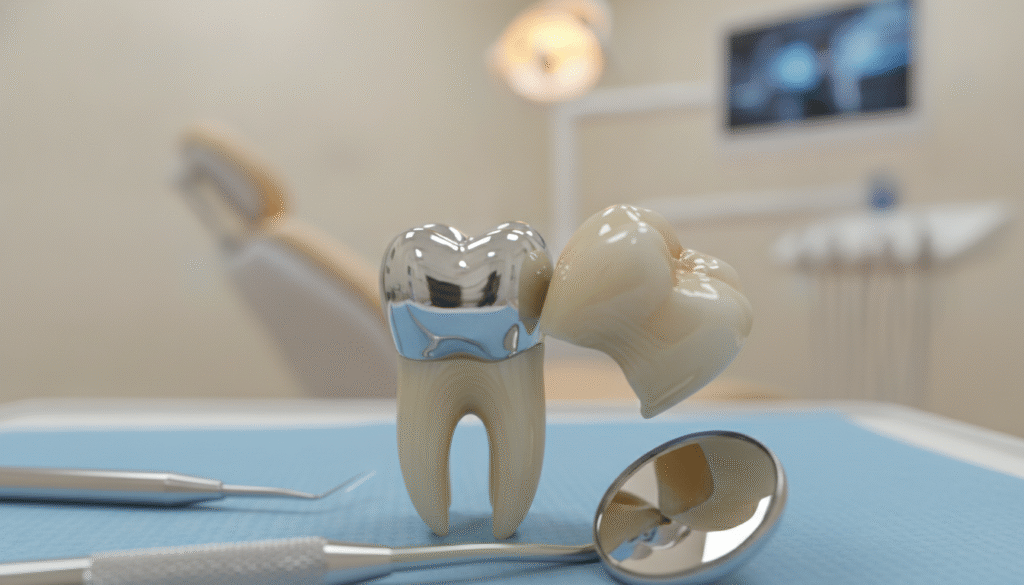
Dental crowns cover the whole tooth to protect it. They act like a helmet for your tooth. Crowns can be made from metal, porcelain, or resin. Metal crowns are the strongest, while porcelain ones look more natural.
Why Are They Used?
Filling and crowns are chosen based on how much damage a tooth has. The decision depends on the tooth’s strength, how it looks, and how much tooth is left. Remember, no restoration can make a tooth completely safe.
| Feature | Dental Filling | Dental Crown |
|---|---|---|
| Purpose | Repair damaged teeth | Protect and encircle remaining tooth structure |
| Material Options | Composite, amalgam, glass ionomer | Metal, porcelain, resin |
| Longevity | 5-10 years | 10-15 years or more |
| Aesthetic | Varies (more visible) | Can be matched to natural teeth |
Common Reasons for Breaking a Tooth
Many things can make a tooth break. Knowing why is key to keeping your teeth healthy. Here are some common reasons for a tooth to crack or chip.
Trauma or Injury
Getting hurt in the face can cause a tooth to break. This can happen from:
- Falling or getting hit in the face
- Biting hard things, like ice or hard candy
- Injuries from sports
These events can put too much pressure on your tooth. This can make it break.
Decay Underneath a Filling or Crown
Decay under a filling or crown is another big problem. This is called microleakage. It happens when the seal of a filling or crown gets broken. This lets bacteria get in and cause:
- New cavities to form
- More damage to the tooth
This decay often doesn’t show symptoms until it’s too late. Then, it can cause a tooth to break.
Excessive Pressure from Grinding
Grinding your teeth can also lead to breaks. Grinding puts a lot of pressure on your teeth. This can make tiny cracks that can grow and cause a tooth to break.
Initial Steps After a Tooth Breaks
When a tooth breaks, acting fast is key to avoid more harm and pain. Knowing how to react can greatly affect your dental health. Here are the key steps to take right after a tooth breaks.
Assessing the Damage
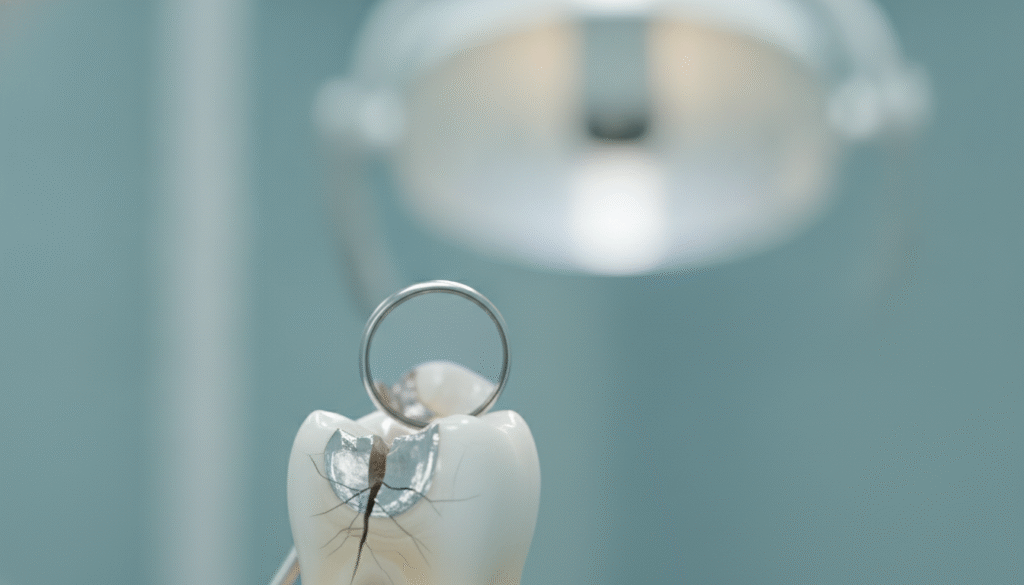
First, take a close look at the broken tooth. Use a mirror in a bright area to see clearly. Look for these things:
- How big is the break? Is it just a small chip or a bigger crack?
- Is there a tooth piece missing? Try to find it.
- Is there bleeding or exposed tissue? Check for any color changes or pain.
If you find a tooth piece, put it in milk or saliva. This keeps the cells alive, which your dentist might be able to reattach.
Managing Pain and Sensitivity
Pain after a tooth break is common. Here’s how to handle it:
- Use over-the-counter pain meds like acetaminophen or ibuprofen.
- Wash your mouth with warm salt water to clean it.
- If there are sharp edges, cover them with dental wax or sugar-free gum to protect your tongue and cheeks.
Contacting Your Dentist
Even if you don’t feel pain right away, call your dentist quickly. A broken tooth is a serious issue that needs a dentist’s check-up. Waiting too long can cause problems like:
- Bacterial infections
- More damage to the tooth
- Need for more complicated treatments
Acting fast can save your tooth and keep your dental health good.
| Step | Action | Purpose |
|---|---|---|
| 1 | Assess the damage | Determine the severity of the break |
| 2 | Manage pain | Reduce discomfort and prevent further injury |
| 3 | Contact dentist | Ensure professional evaluation and treatment |
What to Expect During Your Dental Appointment
Knowing what happens during a dental visit can make you feel less nervous. If your tooth breaks, you’ll need a detailed check-up to figure out how to fix it. This guide will walk you through what happens at your dental appointment.
Examination and Diagnosis
Your visit starts with a thorough check-up. The dentist will look closely at your tooth and the area around it. They use special tools and lights to see everything clearly.
They will also touch your tooth gently to check its edges and look for any decay. This helps them understand the damage better.
Next, they might tap your tooth to check the bone and pulp. This test shows if your tooth is alive and healthy. It’s a key part of figuring out what’s wrong.
Possible X-Rays
Often, X-rays are needed to see the full picture. Smile Makers Dental Center says,
“The first thing we’ll do when you come in is perform a thorough examination. This will likely include taking X-rays to see the full extent of the damage, including what’s happening below the gumline and around the tooth’s roots.”
X-rays show hidden damage, like cracks under the gum or decay that can’t be seen by the eye. They help the dentist understand the problem fully.
Discussion of Treatment Options
After looking at your tooth and X-rays, the dentist will talk about how to fix it. They’ll use all the information they have to plan the best treatment for you. They’ll think about how much tooth is left, if the pulp is affected, and other important details.
This is a key step to decide if your tooth can be saved or if it needs more serious treatment.
| Assessment Type | Purpose | Outcome |
|---|---|---|
| Visual Inspection | Identify visible damage | Initial diagnosis |
| Tactile Exploration | Assess margin integrity | Detect caries |
| X-Rays | Reveal underlying issues | Comprehensive understanding |
Immediate Treatment Options
When a tooth breaks, it’s important to get help right away. There are several same-day treatments, depending on the damage.
Replacing a Broken Crown
If your crown is broken, the dentist will remove it first. This lets them check the tooth underneath. They look for:
- Secondary caries (decay under the crown)
- Additional fractures in the tooth
- Remaining tooth structure for a core buildup
If the tooth is strong enough, a new crown can be put in. If the old crown is okay, it might be put back on.
Repairing a Filling
For damaged fillings, the dentist can fix it in one visit. They do:
- Acid etching the enamel margins to prepare the surface
- Applying dentin bonding agents to enhance adhesion
- Incrementally placing composite resin to restore the tooth’s anatomical form
This fixes the tooth quickly and makes it look good again.
Temporary Solutions
Not all fixes can be done in one visit. In these cases, temporary fixes are needed. These include:
- Application of interim restorative materials, such as glass ionomer
- Use of zinc oxide-eugenol-based temporary restorations
- Placement of preformed temporary crowns to maintain occlusal stability
These temporary fixes keep the tooth safe until a permanent one can be made. They prevent tooth movement and protect from harm.
Long-Term Treatment Solutions
When a tooth gets badly damaged, finding long-term solutions is key. The right fix depends on how bad the damage is and what the patient needs. We’ll look at different ways to fix a tooth, when a root canal is needed, and compare crowns and fillings.
Options for Tooth Restoration
There are many ways to fix a tooth, based on the damage. Here are some common ones:
- Direct Composite Restorations: Good for small to medium damage, these use a tooth-colored resin right on the tooth.
- Indirect Inlays and Onlays: For bigger damage, these are custom-made to cover the tooth and are stuck on.
- Full-Coverage Crowns: If the tooth is really damaged, a crown is best. It protects the tooth well and makes it look and work like new.
When to Consider Root Canal Therapy
Root canal therapy is needed when the tooth’s pulp gets inflamed or infected. Look out for these signs:
- Spontaneous pain that happens without any reason.
- Thermal sensitivity that lasts after something hot or cold is removed.
- Percussion sensitivity, which means the tooth hurts when tapped.
- X-rays show problems at the tooth’s root.
This treatment removes the bad pulp, cleans the root canal, and seals it to stop bacteria from coming back.
Crowns vs. Fillings: Pros and Cons
It’s important to know the differences between crowns and fillings to choose the best option. Here’s a comparison:
| Criteria | Crowns | Fillings |
|---|---|---|
| Fracture Resistance | High | Moderate |
| Tooth Structure Preservation | Less preservation | More preservation |
| Longevity | 10-15 years | 5-10 years |
| Aesthetic Outcomes | Excellent | Good |
| Cost-Effectiveness | Higher initial cost | Lower initial cost |
Fillings are cheaper and more conservative at first. But crowns protect the tooth better, which is great for teeth with big damage.
How Dentists Prepare Teeth for Treatment
Getting a tooth ready for treatment is a detailed process. Dentists take many steps to make sure the tooth works and looks good again. Each step is important for a successful fix, like a filling or crown.
Cleaning the Affected Area
The first thing dentists do is clean the area. They remove dirt, temporary fixes, and germs. They use air, water, and special cleaners to make it clean.
This step is key to stop infections and make the fix last longer.
Removing Decayed Material
After cleaning, dentists remove the decay. This is important to tell the difference between infected and affected parts of the tooth. They use special dyes and feel the tooth to remove all bad parts.
Dentists use tools to see better and remove decay carefully. They want to make a strong base for the fix.
Impression and Molding Process
Next, dentists make an impression of the tooth. They used to use special materials, but now they often use digital scans. This method is more accurate and helps make better fixes.
These digital scans help make sure the fix fits perfectly. Dentists might also put a temporary fix on the tooth while they make the permanent one.
| Step | Description | Purpose |
|---|---|---|
| Cleaning | Removal of debris and contaminants | Establish a sterile environment |
| Decay Removal | Excavation of infected dentin | Ensure a solid foundation for restoration |
| Impression | Creating a mold of the tooth | Facilitate accurate restoration design |
| Provisional Restoration | Temporary covering for the tooth | Protect the tooth during fabrication |
Aftercare Following Treatment
After getting treatment for a broken tooth, it’s important to take good care of yourself. This means managing pain, eating soft foods, and watching for any signs of trouble. By following these steps, you can make sure your tooth heals well and your mouth stays healthy.
Pain Management Tips
It’s normal to feel some pain after dental work. Here are some ways to handle it:
- Over-the-counter medications: Acetaminophen or ibuprofen can help with pain. Ibuprofen also reduces swelling.
- Saltwater rinses: Warm salt water can ease inflammation and help healing.
- Cold compress: A cold pack on your cheek can lessen swelling and numb pain.
A trusted dental source says, “If the tooth hurts, try acetaminophen or another pain reliever.”
Dietary Recommendations
Your diet is key to getting better. Here are some tips:
- For the first 24 to 48 hours, eat soft foods like yogurt, soup, or smoothies.
- Avoid foods that are too hot or cold to avoid irritating the area.
- Slowly add back harder foods as you feel more comfortable.
These tips can help you feel better and heal faster.
Signs to Watch For
Even though recovery usually goes well, watch for any odd symptoms. Call your dentist if you notice:
| Symptom | Action |
|---|---|
| Persistent pain beyond three to five days | Schedule a follow-up appointment |
| Pain on biting | Check for occlusal issues |
| Thermal sensitivity that doesn’t improve | Consult your dentist for evaluation |
| Swelling or signs of infection | Seek immediate dental care |
| Feeling that the restoration is loose | Return to your dentist for assessment |
Keeping an eye out for these signs ensures your recovery goes smoothly and your mouth stays healthy.
Alternatives to Traditional Fillings and Crowns
The world of fixing teeth has changed a lot. Now, we have new materials that make teeth look better and last longer. These new options are stronger and more attractive than old ones.
Composite Fillings
Composite fillings have really improved. The old ones didn’t last long. But now, nanohybrid and nanofilled composites are here. They look and feel like real teeth.
These fillings stick well to teeth thanks to special adhesives. This makes them a top pick for many people.
Zirconia Crowns
Zirconia crowns are a big step forward. They’re made from a special ceramic that’s very strong. This makes them great for fixing teeth.
They’re also good for your mouth because they don’t react badly. You can choose between strong, plain zirconia or a mix for better looks.
Dental Inlays and Onlays
Inlays and onlays are a smart way to fix teeth. They save more of your tooth than crowns do. They’re made from advanced materials.
They help your teeth work better and look good. This makes them a great choice for those who want something that lasts.
Financial Considerations
Understanding the cost of dental repairs is key to making smart choices. Unexpected problems like a broken tooth can be costly. This section will help you understand the financial side of dental care.
Insurance Coverage for Repairs
Dental insurance can help with the cost of tooth repairs. Most plans have different coverage levels for different procedures:
- Preventive services: Often covered at 100%.
- Basic restorative procedures: Typically covered at 70-80%.
- Major restorative procedures: Usually covered at 50%.
It’s important to know your policy details. Look at your annual maximum, deductibles, and waiting periods. Also, understand the difference between in-network and out-of-network providers.
Out-of-Pocket Expenses
Knowing what you might have to pay out of pocket is important. Costs can vary based on several factors:
- Geographic location: Prices differ from one region to another.
- Provider expertise: Experienced dentists may charge higher fees.
- Material selection: The choice of materials can affect overall costs.
- Case complexity: More complex cases may incur higher fees.
Costs for treatments like fillings and crowns vary. A filling might cost between $150 to $300. A crown could range from $800 to $1,500.
Financing Options for Dental Care
There are ways to manage dental costs:
- Dental office payment plans: Many practices offer flexible payment plans.
- Third-party financing: Companies provide extended payment terms, often with promotional interest-free periods.
- Health savings accounts (HSAs): These allow you to use pre-tax dollars for qualified dental expenses.
- Dental discount plans: These plans offer reduced fees through participating provider networks.
Getting a fractured tooth fixed quickly can save you money. It’s cheaper than dealing with more serious problems later. Early treatment can save you money and avoid pain.
The Importance of Regular Checkups
Regular dental checkups are key to keeping your fillings and crowns in good shape. These visits are more than just routine. They are vital for managing your oral health effectively. By making regular visits, you can catch problems early and avoid bigger issues later.
Dentists do many things during these checkups. They look closely at your teeth and gums to find any issues. They also use special tools to check for problems that can’t be seen easily. Sometimes, they take X-rays to find hidden cavities.
Preventative Care for Long-Lasting Fillings and Crowns
Preventative care is important for your dental restorations to last. Dentists check your teeth during visits to see if anything needs to be replaced. This can help avoid sudden dental emergencies.
Professional Cleanings and Their Role
Professional cleanings are key in keeping your teeth healthy. Dental hygienists use special tools to clean your teeth without harming your fillings or crowns. Regular cleanings help your dental work last longer.
Monitoring Changes in Dental Health
Keeping an eye on your dental health is important. Dentists watch for any changes in your teeth or gums over time. This helps them catch problems early and fix them before they get worse.
Regular dental care is much cheaper than fixing problems later. It’s a good idea to schedule regular exams and X-rays. This can catch problems early that you can’t see. For more info on dental exams and cleanings, visit this link.
Frequently Asked Questions
When a tooth breaks, many people wonder what to do next. Here are answers to some common questions about broken, chipped, or cracked teeth.
Can I wait to see the dentist?
It’s important to see a dentist right away if your tooth breaks. Even if it doesn’t hurt, a broken tooth can let bacteria in. This can lead to infections without any symptoms until it’s too late.
Will my tooth eventually need to be extracted?
Most of the time, you won’t need to have your tooth pulled. Modern dentistry can fix many damaged teeth. Whether or not to save a tooth depends on a few things:
- How much tooth is left above the gum line.
- If there are no cracks in the root.
- If the tooth can be properly fixed with adhesives.
If these conditions are met, your dentist can likely save your tooth.
How can I prevent future breakage?
To avoid breaking teeth again, you can change some things. Try these:
- Use a custom guard if you grind your teeth.
- Stop chewing ice or using your teeth as tools.
- Keep your teeth clean to avoid more cavities.
- Go to your dentist for check-ups and cleanings as recommended.
By doing these things, you can lower your chances of breaking teeth again.
Conclusion: Taking Care of Your Dental Health
Keeping your teeth healthy is key, even more so after a tooth breaks. Getting help right away is important. This can stop problems like infections and more damage.
Talking openly with your dentist is important. Share your symptoms and worries. This builds trust and helps make a plan that works for you.
Knowing about your dental options helps you feel more in control. It makes you less worried and more happy with your treatment. Ask questions and look for good info about your teeth.
A broken tooth might worry you, but it’s fixable. With quick dental care, good home care, and regular visits, you can get your teeth back to normal. This way, you keep your teeth healthy for a long time.