
Invisalign Attachments and Buttons: What to Expect
Ever thought about small additions to your smile during your clear aligner journey? Learning about orthodontic attachments is key to getting ready for treatment success.
These tooth-colored structures help your aligners work better. They act as grip points for complex tooth movements.
Not everyone needs these clear aligner treatment components. It depends on your orthodontic needs and goals.
Your orthodontist checks if you need these additions. They look at rotation, vertical adjustments, and malocclusion severity. Some get great results without them, while others need the extra help.
This guide covers everything about these treatment enhancements. We’ll look at their purpose and what you can expect during your orthodontic journey.
Key Takeaways
- Small tooth-colored composite structures may be added to teeth to enhance aligner effectiveness during treatment
- These biomechanical auxiliaries help achieve complex tooth movements that aligners alone cannot accomplish
- Not all patients require these additions—necessity depends on individual treatment complexity and orthodontic goals
- Your orthodontist determines the need based on rotation requirements, vertical adjustments, and malocclusion severity
- These components are designed to be discreet and blend naturally with your tooth enamel
- Understanding their purpose helps set realistic expectations for your clear aligner journey
Understanding Invisalign Attachments
Invisalign attachments are small, tooth-colored bumps that help move teeth into place. They are made of a material used in dental fillings. These attachments are key to moving teeth in complex ways that aligners alone can’t do.
Invisalign SmartForce attachments work between the aligner and teeth. They help apply forces in different directions. This makes clear aligner orthodontics more effective.
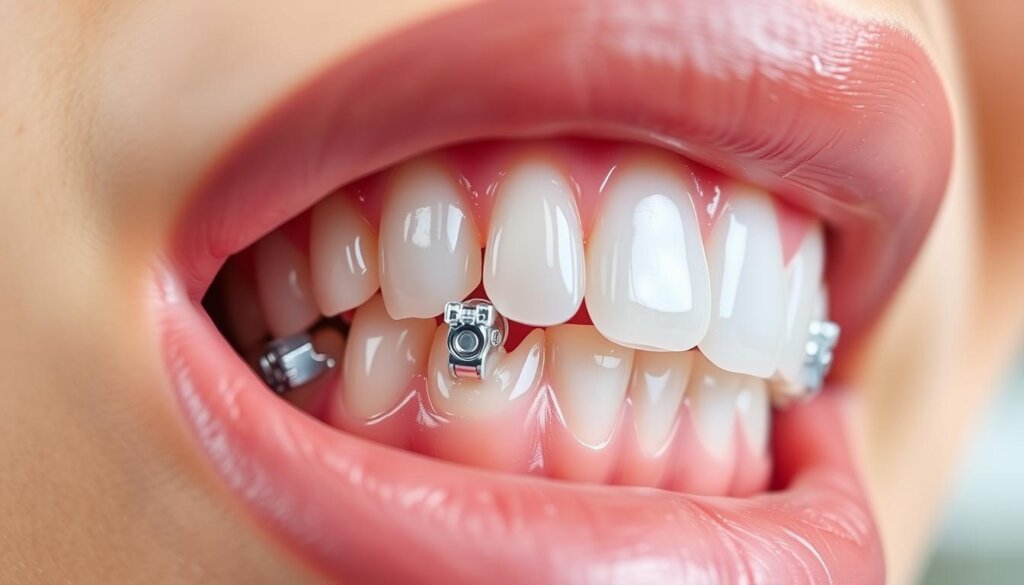
The Physical Composition of Attachments
Attachments are made from a material that matches tooth color. This ensures they blend in with your teeth. They stick to teeth using dental adhesive.
These bumps are 2-4 millimeters big. They are custom-made for each tooth. This precision helps them work well without being noticeable.
Attachments stay strong during treatment, even when you take out and put back your aligners. They are made to last and won’t change color. Their design focuses on being strong and safe for your body.
Biomechanical Function and Clinical Necessity
Invisalign attachments are needed for complex tooth movements. They help with rotations, extrusions, and root torque. Without them, aligners can’t do these movements well.
Attachments create a lock with the aligner. This prevents it from slipping. It lets orthodontists control tooth movement better.
Attachments are used differently for each patient. Some need many, while others need just a few. It depends on how complex their treatment is.
Key benefits include:
- Enhanced rotational control for canines and premolars through optimized attachment geometry
- Vertical repositioning capability enabling extrusion and intrusion movements
- Root movement precision through torque application that affects tooth angulation
- Retention improvement ensuring aligners maintain proper seating throughout wear cycles
Classification of Attachment Geometries
There are different attachment designs for clear aligner therapy. Each is made for specific goals. Treatment planning software picks the best design for each tooth.
Rectangular attachments are the most common. They help move teeth in many ways. They are 3mm long and work well for most movements.
Optimized rotation attachments are special for rotating canines and premolars. They have beveled edges for better control. Studies show they work better than other shapes.
Ellipsoid attachments are rounded for less irritation. They are often used on front teeth. They make putting on the aligner smoother.
Beveled attachments have angled surfaces for better force control. They help with vertical movements. Their design is effective for pushing teeth up or down.
| Attachment Type | Primary Function | Typical Placement | Dimensional Characteristics |
|---|---|---|---|
| Rectangular | General translation and tipping | Premolars and molars | 3mm length, parallel sides |
| Optimized Rotation | Canine and premolar rotation | Canines, first premolars | Beveled edges, asymmetric design |
| Ellipsoid | Anterior aesthetics with retention | Central and lateral incisors | Rounded contours, 2-3mm diameter |
| Beveled | Vertical repositioning (extrusion/intrusion) | Multiple locations as needed | Angled surfaces, 2.5mm height |
Using different attachments together makes a strong system. Software plans where to place them for the best results. This makes treatment more efficient and uses fewer attachments.
Attachment designs are getting better as research improves. New shapes and ways to place them are being developed. This shows how clear aligner technology is always getting better.
The Role of Buttons in Invisalign Treatment
Buttons are special in Invisalign treatment because of their design and how they work. They are different from standard attachments. Knowing this helps patients understand how orthodontists plan their treatment.
Patients might get confused by the terms “buttons” and “attachments.” But knowing their roles helps clear up what to expect during treatment.
Clarifying Orthodontic Button Design
Orthodontic buttons are made to attach to teeth for specific reasons. They are often bigger than usual attachments and have unique shapes. Their design depends on the force needed for treatment.
Buttons are key for attaching elastic bands between the upper and lower teeth. This is important for treatments that need to work on both arches. They provide a strong point for the bands to attach to, helping to apply the right forces.
Some buttons also help keep the aligners in place better. This is important when eating or talking. The material used for buttons is close to tooth color, keeping the treatment looking natural.
Clinical Indications for Button Application
Software helps decide if buttons are needed for each case. Buttons are often used for severe problems that regular aligners can’t fix. This includes issues with the bite and teeth that need to move a lot.
Buttons are also used for teeth that need to move up or down more than aligners can handle. They help with rotations of teeth that need more than thirty degrees of movement.
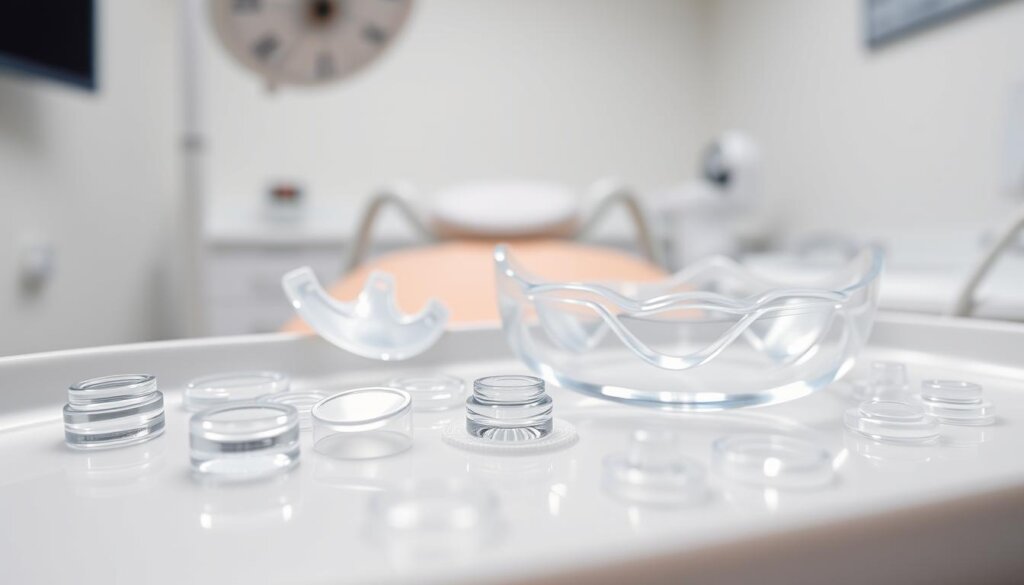
Software predicts how much force is needed during planning. It finds cases where aligners alone can’t move teeth enough. Then, it suggests where buttons should be placed for the best results.
Adding buttons to Invisalign makes it a more complete treatment option. It can handle complex problems while keeping the treatment removable.
Advantages of Button Integration
Buttons bring many benefits to Invisalign treatment. They make it possible to fix complex problems while keeping the treatment easy to remove. This means patients can get advanced treatments without losing the look of clear aligners.
Key benefits include:
- More precise treatment with targeted forces
- Teeth move faster and more efficiently
- Aligners stay in place better, even during daily activities
- Buttons help with rotations, vertical movements, and closing gaps
- Treatment can be shorter because of controlled forces
One big advantage is that buttons can move teeth in ways regular aligners can’t. This means orthodontists can use buttons to fix problems that used to need metal braces. This opens up more options for patients who want clear, removable treatments.
Buttons also make aligners fit better and feel more comfortable. They keep the aligners from moving around, ensuring the forces work as planned. This leads to more predictable results.
How Attachments and Buttons Work Together
Clear aligner attachments are tiny, high-tech parts that turn simple trays into powerful tools for moving teeth. They work with buttons and aligners to form a complete orthodontic system. This team helps fix complex teeth problems that traditional braces can’t handle.
This partnership shows the advanced engineering in today’s orthodontics. Each part has its own role, working together to meet treatment goals. The use of attachments and buttons marks a big step forward in orthodontic science.
Enhancing Tooth Movement
Attachments act as mechanical handles for clear aligners. Without them, aligners can only apply general pressure. This limits movement to simple tips, not enough for full orthodontic correction.
The shape of attachments determines the forces applied to teeth. Different shapes allow for specific movements in three dimensions. For example, rectangular attachments help rotate teeth, while beveled ones push or pull them vertically.
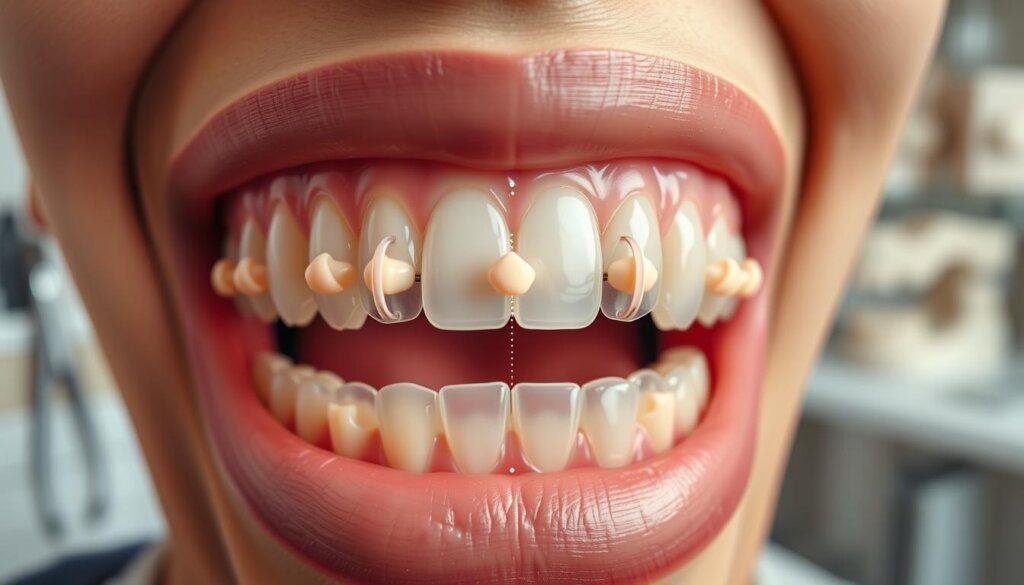
This method changes how orthodontists move teeth. Bodily translation, where teeth move straight without tilting, is now possible. Attachments and aligners work together to move roots precisely, without the need for brackets and wires.
Attachments also help with vertical movements. They enable intrusion and extrusion by applying vertical forces. This helps fix deep bites, open bites, and uneven gums.
Improving Alignments
Attachments make sure aligners fit right, ensuring the right forces are applied. They check if aligners are in place correctly each time. This is key for effective treatment.
Attachments also keep forces consistent. As aligners wear out, attachments keep the treatment force steady. This is important for the 20 to 22 hours a day aligners are worn.
This steady force delivery leads to more accurate tooth movement. Studies show that attachments help teeth move as planned. This means fewer changes and adjustments during treatment.
Buttons add to this system by providing points for elastic wear. They help fix bite issues that aligners and attachments can’t solve alone. Together, they offer a flexible solution for many orthodontic problems.
Optimizing Treatment Efficiency
Attachments make treatment faster. Complex cases with attachments can finish in less time than traditional braces. Research shows a 15 to 30 percent reduction in treatment time for certain movements.
This speed comes from using multiple forces at once. Traditional braces move teeth one step at a time. Attachments allow for simultaneous movements in different directions, speeding up treatment.
Adding attachments at the right time also helps. Orthodontists can introduce new forces as needed. This approach avoids overloading teeth and keeps treatment moving smoothly.
Shorter treatments also save money. Fewer visits and less time mean lower costs for patients. The precision of attachments reduces setbacks and keeps treatment on track.
Studies back up these benefits for many patients. Clear aligner treatment with attachments is as good as or better than traditional braces for many cases. This makes clear aligners a strong option for many orthodontic needs.
Do All Invisalign Patients Require Attachments?
Many patients wonder if they need attachments with Invisalign. The answer is simple: not every Invisalign patient needs attachments. Whether or not you get attachments depends on how complex your case is and what you want to achieve.
Clear aligner therapy can fix many orthodontic issues. Some people get great results without attachments. Others need them to get the best results.
Factors Influencing Necessity
Orthodontists look at many things when deciding if attachments are needed. These treatment planning factors help make your treatment plan unique and decide if attachments are needed.
How bad your teeth are misaligned is a big factor. If you just need a little space or your front teeth are a bit crowded, you might not need attachments. But, if your teeth are really misaligned, you might need attachments to help move them.
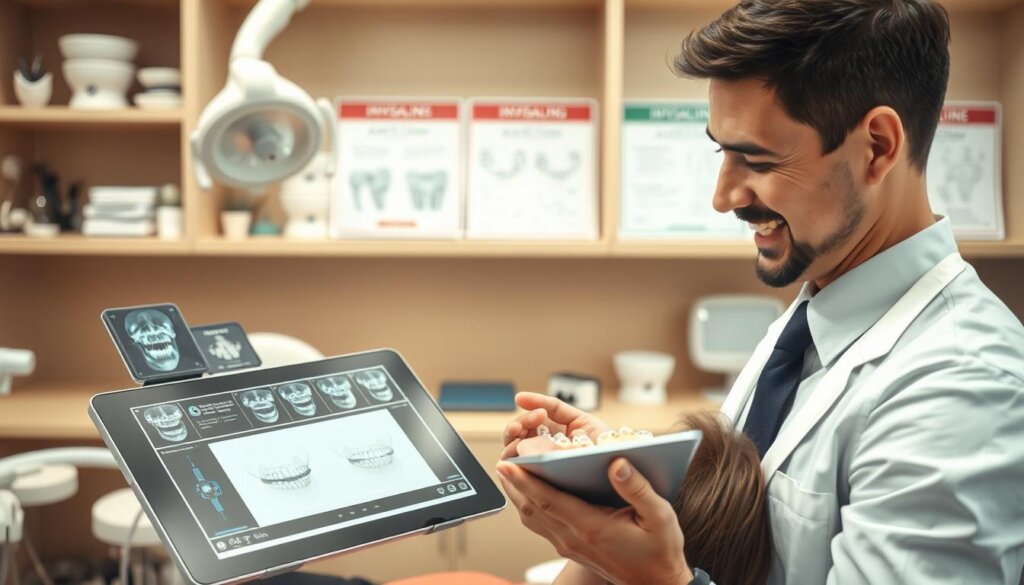
Modern software helps decide if attachments are needed. It looks at how much force is needed to move each tooth. This helps figure out which teeth need attachments.
Several things can make attachments necessary:
- Root torque control requirements: If you need to change the angle of a tooth at the root, attachments are needed for the right force.
- Rotational corrections: Teeth that need to rotate more than twenty degrees usually need attachments for enough force.
- Bodily tooth movement: Moving a whole tooth horizontally needs attachments because it’s harder than just tipping it.
- Vertical dimension changes: Changing the height of teeth, like pushing them up or down, benefits from attachments.
- Arch expansion needs: Widening the dental arch often needs attachments for the right placement.
Tooth shape and gum health also play a role. Teeth that are hard to hold the aligner on or have unusual shapes might need attachments. Gum health is important because it affects where attachments can be placed.
Cases Where Attachments Are Common
About seventy to ninety percent of Invisalign cases use attachments. This shows attachments are common in clear aligner therapy.
Some cases always need attachments. Class II and Class III malocclusions often need attachments because they involve big jaw problems. Attachments help move teeth in ways that fix these jaw issues.
Severe crowding is another common reason for attachments. When you need to pull teeth apart or remove teeth, attachments help control the movement. This is because aligners alone can’t always do it right.
Fixing open bites is hard. Closing gaps between teeth needs special control. Attachments help push teeth up to close the bite.
Reducing overjet also often needs attachments. Moving front teeth back needs strong forces. Attachments help direct these forces better.
Rotating canines always need attachments. Canines are hard to rotate because of their shape and single root. Only simple cases without attachments are possible.
Alternatives to Attachments
If you don’t want attachments, you have other options. Talking to your orthodontist about these can help you decide what’s best for you.
Sequential treatment approaches are one option. This means doing simpler movements first without attachments. Then, if needed, add attachments for harder corrections. This way, you can start without attachments and add them later if needed.
Combination therapy is another choice. Some orthodontists suggest using braces for hard movements and then Invisalign for fine-tuning. This way, you use fewer attachments during the Invisalign part.
If you really don’t want attachments, your orthodontist can try to do your treatment without them. But, you should know that this might limit how well your teeth can be fixed.
Without attachments, your treatment might take longer. Some movements that attachments can do in a year might take eighteen to twenty-four months without them. If you want your treatment to look good, you might be willing to wait longer to avoid attachments.
Deciding on attachments should be a team effort between you and your orthodontist. Modern tools let orthodontists show you what your teeth might look like with and without attachments. This helps you make a choice that fits your needs and understands how teeth move.
Placement and Removal of Attachments
Attaching small composite elements to teeth might seem complex. Yet, the process is straightforward, thanks to years of orthodontic innovation. Knowing about the attachment bonding procedure helps patients feel more confident about their treatment. The steps ensure the attachments stick well and are placed correctly for effective tooth movement.
Patients usually spend thirty to forty-five minutes in the orthodontist’s chair for attachment placement. The time needed depends on how many attachments are required. The procedure is comfortable, with most patients feeling little to no pain.
Clinical Protocol for Attachment Application
The process starts with preparing the tooth surface for bonding. The orthodontist cleans each tooth with prophylaxis paste to remove plaque and debris. This step is key for a strong bond.
Next, the teeth are dried completely. Moisture can weaken the adhesive. Then, the tooth enamel is etched with phosphoric acid gel for fifteen to thirty seconds. This step creates tiny features for better bonding.
After rinsing and drying, a bonding agent is applied. The orthodontist uses a template aligner to place the attachments accurately. The template design is a key part of modern clear aligner technology.
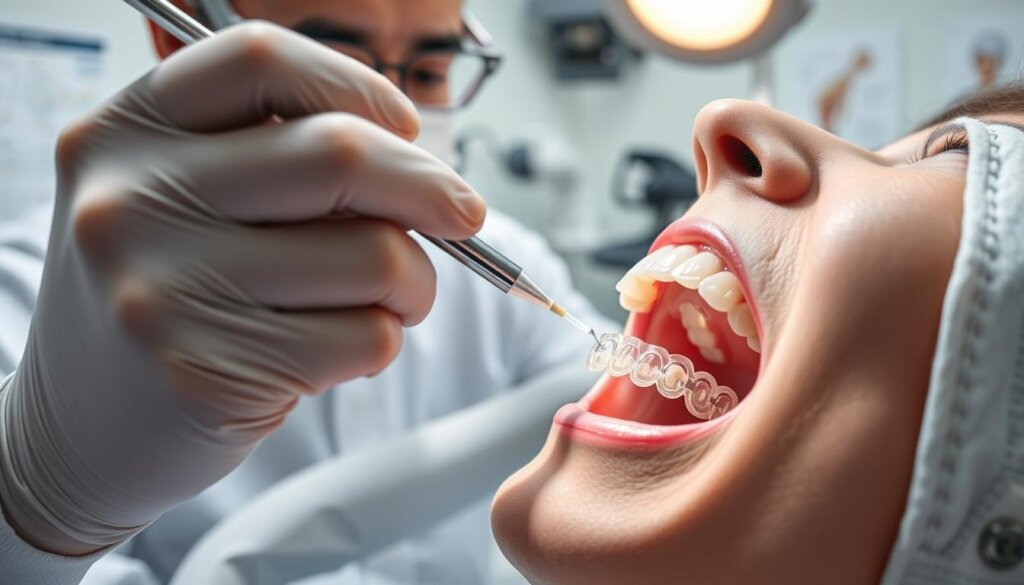
Orthodontic composite resin is dispensed into the template reservoirs. The filled template is then placed over the teeth. Excess material is removed before curing begins.
A high-intensity curing light is used to harden the resin. This process transforms the resin into a strong attachment. Each attachment site is cured for ten to twenty seconds.
After removing the template, the orthodontist checks each attachment. Any rough edges are smoothed. Patients can eat and drink normally right after, as the attachments are fully strong.
Duration of Attachment Wear
Attachments stay on teeth throughout treatment, which can last from six months to two years. The exact time depends on how much tooth movement is needed.
Attachments are very durable when placed correctly. Studies show less than five percent detach prematurely. This means most patients finish treatment without losing any attachments.
Several factors help attachments last longer. The special resin used provides strong adhesion. The tooth preparation and the way the aligner and attachment work together also help. Replacing a detached attachment usually takes just a few minutes.
If an attachment comes off before treatment ends, tell your orthodontist right away. Replacing it quickly keeps treatment on track. Missing attachments can slow down tooth movement or reduce treatment precision.
Safe Removal After Treatment Completion
When treatment is done, removing attachments is the last step. This is done carefully to protect the teeth. Orthodontists use special tools for this.
Removing attachments involves using a fine-grit rotary bur or hand scaler. The goal is to remove the attachment without harming the tooth. This careful technique requires skill and patience.
After removing the attachment, each tooth is polished. This step makes the tooth surface smooth and shiny again. The polishing takes a few minutes per tooth.
Research shows that removing attachments properly doesn’t damage the enamel. The etching process only affects the outermost layer, which can be replenished. Patients leave with their teeth looking and feeling normal.
| Treatment Phase | Procedure Details | Duration | Patient Experience |
|---|---|---|---|
| Initial Placement | Tooth preparation, etching, bonding agent application, composite placement, and curing | 30-45 minutes | Minimal discomfort, immediate return to normal activities |
| Active Treatment | Attachments remain bonded while aligners guide tooth movement | 6 months to 2 years | Regular wear with occasional replacements if needed |
| Final Removal | Debonding with rotary instruments or scalers, followed by enamel polishing | 15-30 minutes | No discomfort, restoration of natural tooth appearance |
| Post-Removal | Transition to retention phase with retainers to maintain alignment | Ongoing (lifelong) | Smooth enamel surfaces, no residual attachment evidence |
The whole life of attachments, from start to finish, shows how advanced orthodontics is. Understanding each step helps patients see how these small additions are carefully managed. It’s all about the precision and care in both applying and removing them.
Comfort Level with Attachments and Buttons
Many patients worry about the comfort of Invisalign attachments and buttons before starting treatment. The feeling of wearing these parts can vary from person to person. Yet, research and experience show what to expect.
Most Invisalign patients adjust well without much trouble. Patient adaptation happens naturally as the mouth gets used to new parts that help the treatment work better. Both tooth-colored buttons Invisalign and composite attachments are designed with comfort in mind.
The Initial Adjustment Period
Some people might feel a bit of discomfort after getting attachments. This is because the attachments add extra pressure when wearing aligners. But, this discomfort usually goes away as treatment goes on.
It usually takes a couple of weeks for people to get used to the buttons. At first, they might feel a bit odd in the mouth. But, most people find they get used to it quickly. Studies show that about sixty to seventy percent of patients feel some discomfort, but it’s usually mild.
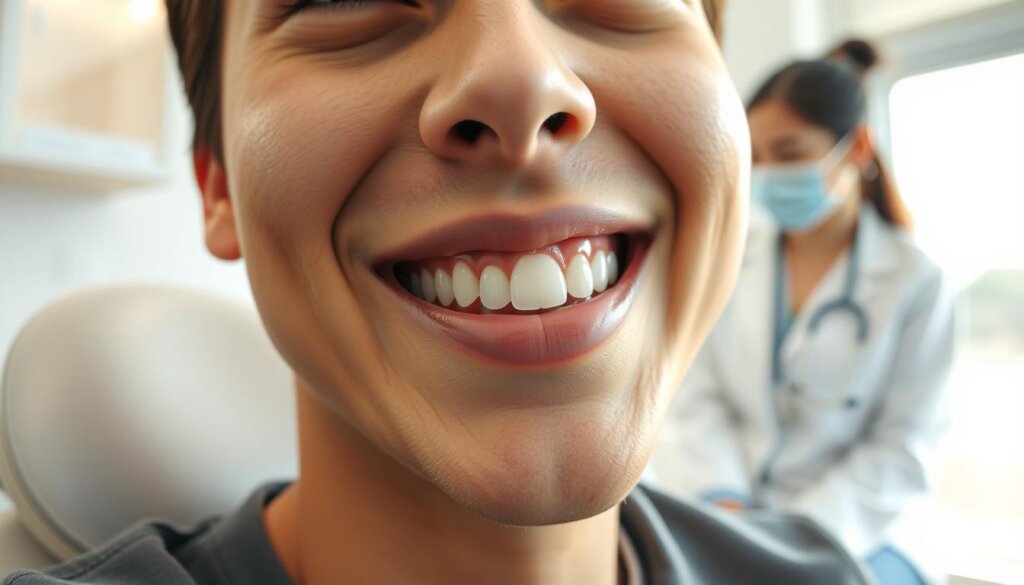
Right after getting attachments, patients often notice a few things. They might feel their teeth more because their tongue is exploring. They might also feel some irritation where their lips or tongue touch the attachments, like on the front teeth.
Lastly, they might feel a bit of tightness when putting on the aligners. These feelings are normal because of the new things in your mouth and the start of moving your teeth. The discomfort usually gets better within a week.
Evidence-Based Strategies for Managing Discomfort
There are many ways to make discomfort from attachments and buttons better. These methods help with both physical and emotional comfort. Here are some tips based on research:
- Over-the-counter analgesics: Taking ibuprofen or acetaminophen in the first few days can help with pain and swelling.
- Orthodontic wax application: Putting wax on attachments that bother your mouth can make them feel smoother.
- Dietary modifications: Eating soft foods in the beginning can help avoid putting too much pressure on your teeth.
- Cold therapy: Using cold packs on your jaw can help with swelling and give temporary relief.
- Proper seating techniques: Learning how to put on your aligners correctly can help avoid putting too much pressure on attachments.
It’s best to start using these tips early to avoid more pain later. Using a few of these methods together can help a lot in the first week.
Also, wearing your aligners as directed can make attachments feel more comfortable. Taking them out too often can make it harder to get used to them. Wearing them for the full 20 to 22 hours a day helps your mouth adjust better.
Sustained Comfort Throughout Treatment
After getting used to attachments, most people find they hardly notice them anymore. It takes about two to three weeks for your brain to get used to the new feel. This is similar to how you might stop noticing glasses or jewelry after wearing them a lot.
Keeping attachments in good shape is key to feeling comfortable for a long time. If attachments get worn down or come loose, you should see your orthodontist. This helps keep treatment on track and prevents irritation.
Attachments that don’t work right can slow down treatment by not moving teeth as well. Fixing them quickly is important to keep treatment on schedule and avoid irritation.
| Treatment Phase | Typical Sensations | Duration | Recommended Actions |
|---|---|---|---|
| First 48 Hours | Moderate pressure, heightened awareness, mild soreness | 1-2 days | Use analgesics, apply orthodontic wax, consume soft foods |
| Days 3-7 | Diminishing discomfort, occasional tightness with aligner changes | 5 days | Continue wax as needed, gradually return to normal diet |
| Weeks 2-3 | Minimal awareness, normal sensation with aligners | 2 weeks | Monitor for sharp edges, maintain oral hygiene routine |
| Month 2+ | Complete adaptation, attachments unnoticeable | Remainder of treatment | Regular orthodontic check-ups, report any changes |
Studies show that discomfort gets better over time as you get used to attachments. Knowing this can help you stay on track with your treatment. It’s important to remember that the initial feelings don’t last forever.
Some people find that attachments make their Invisalign treatment better than traditional braces. Attachments are smooth and don’t cause long-term irritation like metal brackets can. Plus, they don’t have wires that can poke or break.
The Aesthetic Impact of Attachments
Many worry about how visible their orthodontic treatment will be. This worry grows when they learn about small attachments bonded to teeth. Knowing about these attachments helps patients make better choices for their treatment.
Today, orthodontics looks much better than it used to. Modern attachments are designed to work well and look good. This means patients can move their teeth without losing their natural smile.
How Noticeable Are Orthodontic Attachments?
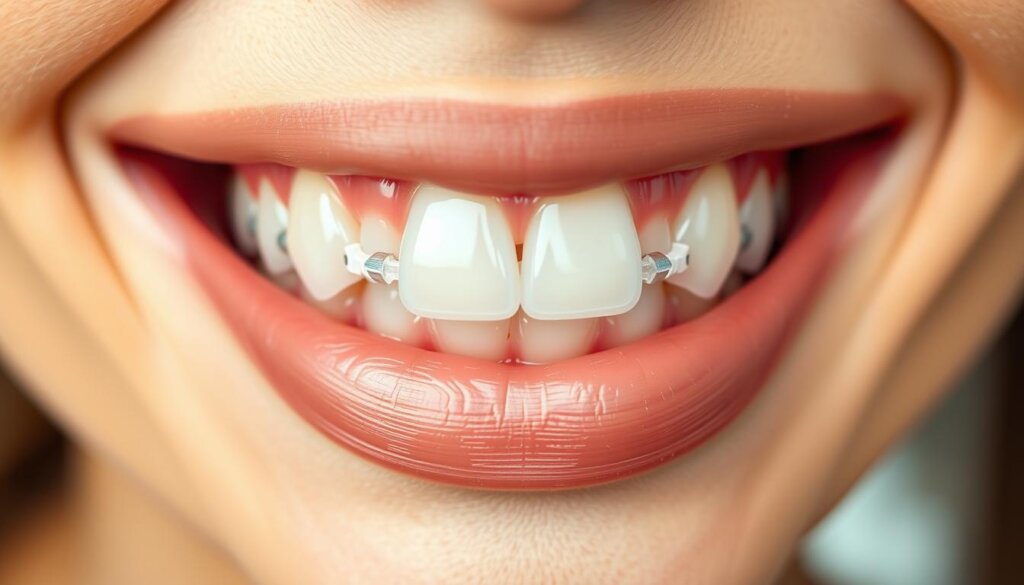
The visibility of attachments depends on several factors. These small pieces are usually two to four millimeters in size. Their small size makes them less noticeable than metal brackets.
Where the attachments are placed affects how much they show. Attachments on front teeth are more visible. But, those on premolars and molars are almost invisible.
How the attachments are placed also matters. Attachments on the outside of teeth are more visible. Orthodontists try to place them in a way that looks good and works well.
Studies show that attachments look better than metal brackets. People think teeth with attachments look more natural. Clear aligners make attachments even less noticeable.
Addressing Patient Appearance Concerns
Patients worry about how they’ll look during treatment. Orthodontists take these concerns seriously. They know that small bumps on teeth can be a worry.
Invisalign offers a big advantage in looks compared to traditional braces. Attachments are much smaller and less visible than metal brackets. Most people find the trade-off worth it for the convenience of clear aligners.
How visible attachments seem can depend on the situation. People in jobs where they meet clients often worry more. Knowing attachments are less visible than other options helps them feel more confident.
Younger people often get used to attachments faster. Adults might need more reassurance. Talking openly with orthodontists helps make sure treatment fits what you want.
The Science of Attachment Blending
Attachments are made from materials that blend in with teeth. They are made to look like natural tooth enamel. This makes them hard to notice.
Orthodontists choose colors that match each tooth. The material lets light through, just like natural teeth. This makes attachments look like they’re part of the tooth.
Several things affect how well attachments blend in:
- Shade selection accuracy – Getting the right color is key
- Surface texture – Smooth attachments reflect light like enamel
- Material quality – Good composite resins stay the same color
- Bonding technique – How attachments are applied matters
Keeping attachments looking good requires good oral hygiene. Things like coffee and red wine can stain them. Avoiding these foods before big events helps.
Any staining can be removed when treatment ends. This means teeth will look natural again without any lasting effects.
Orthodontics is getting better at being less noticeable. Attachments are designed to look good while working well. Patients understand that these small parts are worth it for a better smile.
Maintenance of Attachments and Buttons
Keeping Invisalign attachments in good shape depends on daily care and prevention. Attachments don’t change basic dental care, but they can trap bacteria if not cleaned right. Knowing how to care for attachments helps them stay strong and work well during treatment.
Oral hygiene with orthodontics needs effort and the right technique. Attachments are made of durable materials but can be damaged by certain things. Taking good care of attachments protects them, the teeth, and gums.
Cleaning Techniques
Cleaning attachments needs a special approach for both teeth and aligners. Brush your teeth with fluoride toothpaste after meals. This stops food from getting stuck around attachments.
Brush in circular motions over the whole tooth. Angle your brush towards your gums at 45 degrees. This helps prevent plaque buildup around attachments.
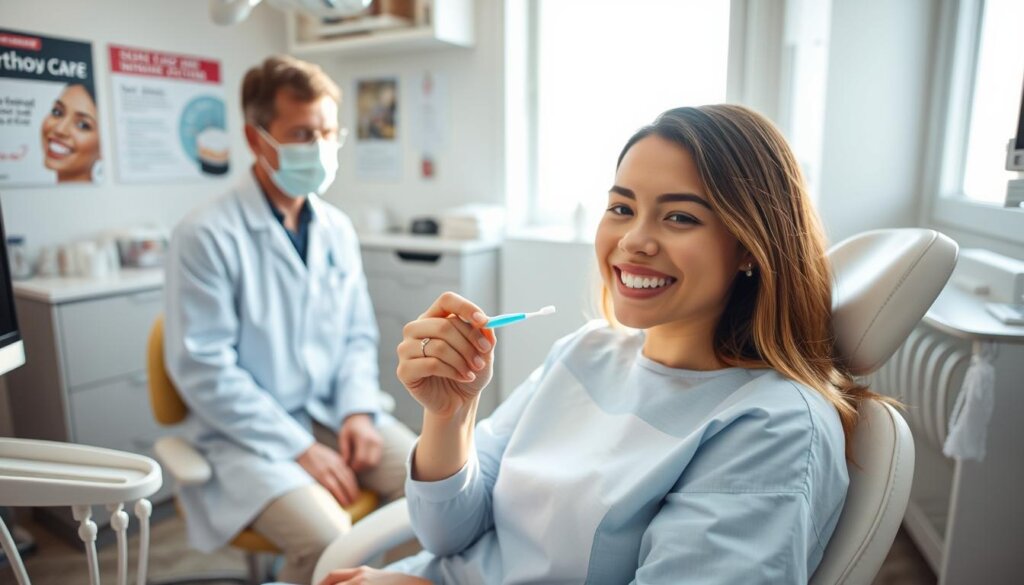
Dealing with orthodontic attachments means special care for interdental spaces. Flossing is effective if done carefully. For those who find floss hard, there are good alternatives.
Water flossers help remove debris from hard-to-reach spots. Interdental brushes fit into tight spaces. Floss threaders make it easier to floss without using too much force.
Here’s a comparison of cleaning tools for attachment care:
| Cleaning Tool | Primary Function | Best Used For | Frequency |
|---|---|---|---|
| Soft-Bristled Toothbrush | Surface plaque removal | Attachment perimeters and tooth surfaces | After each meal |
| Water Flosser | Pressurized irrigation | Tight spaces and attachment margins | Once daily minimum |
| Interdental Brushes | Gap cleaning | Larger spaces between teeth | Once daily as needed |
| Floss Threaders | Guided flossing | Precise interdental cleaning | Once daily minimum |
Keeping aligners clean is also key. Clean aligners to stop bacteria from spreading. Rinse them with warm water and brush gently.
Don’t use hot water on aligners because it can damage them. Use special cleaning solutions or mild soap to clean them without harming the material.
Avoiding Damage
Attachments need protection from things that can damage them. Avoid eating hard foods like ice or hard candies. These can break attachments.
Grinding or clenching your teeth can also damage attachments. If you grind your teeth, talk to your orthodontist about how to protect them. Don’t use your teeth to open things because it can also damage attachments.
Some foods and drinks can also harm attachments. Acidic drinks like citrus or soda can weaken them. While it’s okay to have them sometimes, too much can be a problem.
Here are some ways to keep attachments safe:
- Remove aligners before eating
- Cut hard foods into small pieces
- Avoid chewing on non-food items
- Limit acidic drinks and rinse your mouth
- Tell your orthodontist if an attachment feels loose
These habits may seem like a lot, but they become second nature. Most damage to attachments can be prevented by being mindful of your daily habits and food choices.
Regular Check-ups with Your Orthodontist
Regular visits to your orthodontist are important for attachment care. Most see their orthodontist every six to eight weeks. These visits help track how treatment is going.
Orthodontists check attachments for damage or wear during these visits. They also make sure teeth are moving as planned. They check your gums too, to see if you’re taking good care of them.
These visits are also a chance to talk about any issues with attachments. Orthodontists can fix problems, replace attachments, or adjust your treatment plan. Talking openly with your orthodontist helps fix small problems before they get bigger.
Orthodontists also track how treatment is going. They might take scans or photos to see how teeth are moving. This helps them make sure treatment is on track.
Be ready for your appointments by writing down any questions or concerns. This way, you can make sure to cover everything during your visit. Going to your scheduled appointments helps treatment go smoothly and increases the chances of success.
Timeline for Attachment and Button Adjustment
Time is key in orthodontic treatment, and attachments are vital for progress. Knowing the treatment timeline helps patients set realistic goals. Attachments are put on teeth at the start and stay until almost the end, guiding tooth movement.
The Invisalign treatment duration varies a lot. Orthodontists look at many things to guess how long treatment will take. These include how bad the misalignment is, how well the patient wears aligners, and the needed tooth movements.
People often wonder if attachments make treatment longer. But research shows they actually make treatment faster. They help treat complex cases that would need traditional braces or longer aligner therapy.
Expected Treatment Timeframes
The time attachments are needed depends on how bad the misalignment is and what needs to be fixed. Mild cases need less time, while complex ones need more. Each case gets a plan during the first visit.
Different problems need different times to fix. The orthodontist gives a specific time during planning. They use digital tools to predict how teeth will move, making accurate timelines.
| Case Complexity | Treatment Duration | Typical Issues Addressed | Attachment Requirement |
|---|---|---|---|
| Mild Cases | 6-12 months | Minor crowding, small gaps, slight rotations | Minimal attachments (2-5 teeth) |
| Moderate Cases | 12-18 months | Significant crowding, bite corrections, multiple rotations | Moderate attachments (6-12 teeth) |
| Complex Cases | 18-24+ months | Severe malocclusion, significant bite issues, extractions | Extensive attachments (12+ teeth) |
| Comprehensive Cases | 24-36 months | Multiple orthodontic challenges, surgical coordination | Strategic placement throughout dentition |
Studies show attachments can get similar results to traditional braces in less time. They are also better because they are clear and removable. This makes treatment faster and more appealing to adults.
Attachments help treat complex cases that clear aligners can’t handle or would take too long for.
Modification Protocols During Treatment
Invisalign treatment changes with new aligners every one to two weeks. Attachments stay on the teeth through many aligner changes. This method helps teeth move in a controlled way.
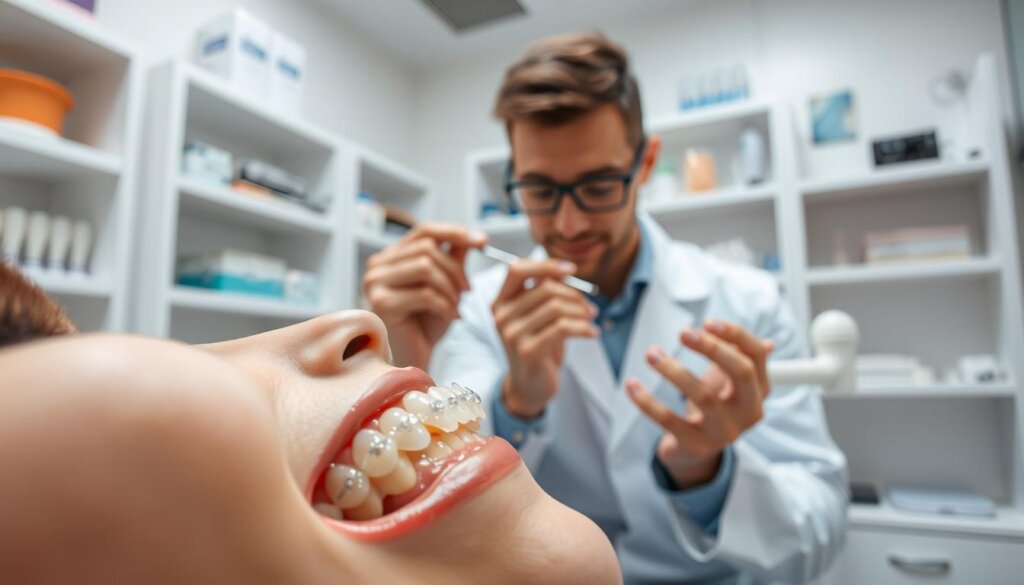
Attachments might need attachment modification as treatment goes on. The orthodontist checks attachments at each visit. Sometimes, the first setup isn’t enough, so adjustments are made.
Orthodontists might add attachments at specific times during treatment. This is done when certain movements are needed. It keeps the number of attachments visible low while controlling tooth movement.
The attachment modification process is quick and done during a regular visit. The orthodontist might remove an attachment, add new ones, or move existing ones. Each change is planned using digital tools.
Monitoring Treatment Advancement
Orthodontists check how treatment is going in many ways. Orthodontic progress monitoring happens at regular visits, every six to eight weeks. They look at how teeth are moving compared to the plan.
Photos show how treatment is going over time. They help see the changes from the start to the end. Some offices use 3D models to track tooth movement.
Good attachment function shows in several ways:
- Predictable aligner fit: Aligners fit well without gaps
- Consistent tooth movement: Teeth move as planned, without delays
- Attachment integrity: Attachments stay on without breaking
- Patient comfort: Little discomfort means the treatment is working right
If things don’t go as planned, attachments might need to be changed. The orthodontist makes these changes quickly to keep treatment on track. New technologies help find problems early, before they affect the final result.
Patients help track their progress by wearing aligners as directed. How well they follow this affects how fast treatment goes. Talking with the orthodontic team helps solve any problems quickly, keeping treatment on schedule.
Potential Drawbacks of Attachments
Attachments in orthodontics are rare but knowing the risks helps patients. The material used for attachments doesn’t harm teeth. Before attaching, teeth just need to be cleaned.
Knowing the possible issues helps patients prepare for treatment. This knowledge is key for making informed choices.
Most issues with attachments can be managed with the right approach. This section looks at the real challenges that might come up during Invisalign treatment with attachments.
Impact on Treatment Duration
Patients often wonder if attachments make treatment longer. Attachments don’t make treatment longer by themselves. The complexity of the case is what affects the time needed.
Attachments are used for more complex cases. These cases need more time to correct, not because of the attachments but because of the complexity. This is important to understand.
But, if attachments fail, it can cause delays. If attachments break or get removed, they need to be replaced. This can slow down treatment.
Studies show that attachments work well most of the time. This means delays due to attachments are rare. Most patients finish their treatment on time.
Possible Complications
There are some possible problems with Invisalign attachments. Knowing about these can help manage them better. Here are the common issues:
- Soft tissue irritation: The first few days might feel a bit uncomfortable as your mouth gets used to the attachments.
- Temporary sensitivity: Some people might feel a bit of pain after getting attachments. This usually goes away in a few days.
- Plaque accumulation: If you don’t clean well around the attachments, you might get cavities.
- Staining concerns: Attachments can stain if you eat certain foods like coffee or red wine.
- Attachment debonding: Sometimes, attachments might come loose and need to be replaced.
- Enamel damage risk: If attachments are removed the wrong way, it could hurt your teeth. But this is rare.
- Aesthetic dissatisfaction: Some people might worry about how attachments look.
Most problems can be avoided with the right care and technique. The material used for attachments is safe for teeth. Regular checks help catch any issues early.
The key to successful attachment outcomes lies not in avoiding all complications, but in recognizing and addressing them promptly when they arise.
Strategies to Mitigate Drawbacks
There are ways to make attachments work better. Risk management in orthodontics focuses on preventing problems. Here are some strategies to help:
Meticulous bonding technique is key for attachments to last. Orthodontists use special methods to make sure attachments stay in place. Keeping the area dry during attachment helps prevent them from coming loose too soon.
Teaching patients how to take care of their teeth and what to eat is also important. Telling them how to brush around attachments and what foods to avoid helps prevent problems. Patients who understand these tips are more likely to follow them.
Placing attachments in less visible areas helps with looks. This makes treatment more acceptable without losing its effectiveness.
| Risk Factor | Mitigation Strategy | Expected Outcome |
|---|---|---|
| Attachment debonding | Proper isolation and bonding protocol | 95%+ survival rate throughout treatment |
| Staining of composite | Dietary modification and oral hygiene education | Minimal discoloration in compliant patients |
| Soft tissue irritation | Strategic positioning and patient adaptation period | Resolution within 5-7 days for most patients |
| Plaque accumulation | Enhanced brushing technique instruction | Maintained oral health throughout treatment |
Regular checks help keep attachments and soft tissues healthy. This allows for early action if problems start. Regular visits are a big part of managing risks in orthodontics.
Talking openly with your orthodontist about any issues is important. This way, you can work together to solve problems. This teamwork makes treatment better and keeps patients happy throughout.
Patient Testimonials and Experiences
Real stories from people who’ve had Invisalign treatment offer a true look at what it’s like. These stories give a real view, not just the technical details. They help those thinking about getting Invisalign know what to expect.
Many Invisalign users share similar feelings about their experience. They talk about how they felt at first, their worries about looks, and how happy they are with the results. This helps new patients get ready for their own journey.
Real Stories from Invisalign Users
People who’ve had Invisalign attachments share a common story. At first, they worry about how they look and if it will hurt. But, they soon get used to them.
The attachments are colored to match teeth, so they’re not very noticeable. They might feel a bit odd at first, but most people get used to them in a couple of weeks.
Wearing Invisalign attachments is easy to get used to. One person with crowded teeth said they barely noticed them after a month. Another with severely rotated teeth said they got used to them in just ten days.
- Initial apprehension about appearance diminishes rapidly as patients realize attachments blend naturally with tooth enamel
- Adaptation occurs faster than expected, with most users forgetting about attachments during normal conversation and eating
- Effectiveness appreciation grows as patients observe tooth movements that attachments facilitate
- Retrospective perspective shifts occur when patients recognize attachment concerns were minor compared to smile improvement value
Studies show that people’s views change a lot during treatment. At first, they worry a lot about how they look. But, as they see their teeth moving, they start to focus more on the progress.
Comparing Experiences with and without Attachments
Reviews show big differences between those with few attachments and those with many. Those with fewer attachments find it easier to start and clean their teeth. But, they might have to wear Invisalign longer for more complex teeth movements.
Those with more attachments might feel a bit more discomfort and need to pay more attention to cleaning. But, most people are very happy with their treatment in the end. Doctors say that how many attachments you have doesn’t really affect how happy you are with the results.
One interesting thing is that people with more attachments actually take better care of their teeth. This is because they pay more attention to cleaning. This good habit often stays even after treatment is over.
When it comes to how attachments look, people might think more attachments would be more noticeable. But, what people say is that they get used to them quickly. Whether you have two or twelve attachments, it takes about the same amount of time to get used to them.
Expert Insights into Patient Perceptions
Doctors see a pattern in how patients feel about attachments over time. Most people get used to them in a couple of weeks. They stop thinking about them during everyday activities.
Doctors say that explaining attachments to patients before treatment is key. Showing them what attachments look like and explaining why they’re needed helps a lot. This makes patients more comfortable and helps them follow the treatment plan better.
Doctors also learn a lot from what patients say. This helps them talk to patients better and address their concerns early on. It makes the whole process smoother.
Doctors say that patients who understand attachments better are more confident during treatment. Knowing that attachments are temporary and help fix teeth makes them feel more positive about the process.
Doctors notice that everyone reacts differently to attachments. But, most people find that their worries were not as big as they thought. This shows how important it is to talk things through and set the right expectations from the start.
Professional Tips for New Patients
Getting started with Invisalign can be exciting and a bit scary. It’s important to know what to expect and ask the right questions. This helps you feel more confident and prepared for your journey to a perfect smile.
At the beginning of Invisalign, you might not have buttons right away. Your orthodontist will decide when to add them based on your treatment plan. This decision is made during your first orthodontic consultation, which is a key part of getting ready.
Getting Ready for Initial Consultation
Before your first visit, it’s a good idea to write down what you want to change about your smile. Pictures can also help your orthodontist understand your goals. This way, they can create a plan just for you.
It’s also important to gather all your dental and medical history. This includes any past orthodontic work and current health issues. Knowing what medications you take can also affect your treatment plan.
Don’t forget to bring your insurance information if you have it. Knowing what your insurance covers helps with planning your budget. Ask about the costs and options to make sure you understand everything.
Going into your consultation with realistic expectations makes the process better. Orthodontists use many tools to diagnose and plan your treatment. By sharing your goals and budget, you help make a plan that works for you.
Essential Questions for Your Orthodontist
Being an informed patient leads to better results and a happier experience. Start by asking questions that help you understand what to expect. Here are some good questions to ask:
Treatment-specific questions should address:
- What specific malocclusion characteristics require correction in my case?
- Will my treatment require attachments or buttons, and if so, how many and where?
- What is the projected treatment duration for achieving desired results?
- What alternative treatment options exist and what are their comparative advantages?
- How frequently will progress appointments occur during active treatment?
It’s also important to talk about the cost of treatment. Knowing how much it will cost helps you plan your budget. Ask about payment plans and insurance coverage to make sure you understand your options.
Ask about what to do if something goes wrong, like if an attachment comes off. Knowing what to expect after treatment helps keep your smile looking great for a long time.
Understanding your treatment fully is part of the informed consent process. Your orthodontist wants you to know everything about your treatment. This way, you can make the best decisions for your smile.
Creating Your Treatment Support Network
Having a strong support system is key to a successful treatment. This includes friends, family, and even online communities. They offer encouragement and help you stay on track.
Talking openly with your orthodontic team is important. They can answer your questions and help with any problems. They’re there to support you every step of the way.
Connecting with others who are going through the same thing can be really helpful. Online groups and support groups offer a place to share experiences and advice. They can make you feel less alone in your journey.
Having your loved ones on board can make a big difference. They can offer emotional support and celebrate your progress. Their encouragement can help you stay motivated.
Personal motivation strategies strengthen individual resilience:
- Progress tracking through regular photographs documents visible improvements
- Reward systems celebrate compliance milestones and treatment achievements
- Goal visualization maintains focus on the desired outcome
- Journal documentation records experiences and emotional responses
Success in treatment depends on following the plan and taking care of your aligners. Your support system can help when you need it. Together, you can make your treatment a positive experience.
Being an active participant in your treatment is important. With the right preparation, questions, and support, you can get the most out of your treatment. This approach ensures you’re happy with the results and confident in your smile.
Understanding the Cost Implications
Understanding the cost of Invisalign treatment helps patients make informed decisions. It’s important to know the financial aspects of orthodontic care. This knowledge helps balance quality care with budget constraints.
Many patients worry about orthodontic costs when considering Invisalign therapy with attachments. Clear pricing information removes uncertainty. Healthcare investments need careful consideration of both immediate and long-term costs.
Cost of Attachments and Buttons
Attachments are a key part of Invisalign treatment, not extra costs. Most practices include attachment fees in the overall cost. This makes financial planning easier for patients.
Invisalign pricing usually covers all needed services for treatment. This includes diagnostic records, custom aligners, and attachment placement. Patients know exactly what their investment covers.
In the United States, treatment costs range from three thousand to eight thousand dollars. Several factors affect the cost, including case complexity and location. Cases needing more attachments are usually more expensive.
Several factors affect the total cost of Invisalign therapy:
- Treatment duration – Longer treatments cost more
- Case complexity – More complex cases require more work
- Geographic location – Costs are higher in urban areas
- Provider credentials – Specialists charge more
- Practice amenities – Modern facilities cost more
Patients should ask for a detailed fee breakdown during consultations. This helps avoid surprises. Clear pricing builds trust between patients and providers.
Insurance Coverage Insights
Many dental insurance plans cover Invisalign treatment, including attachments. Benefits can range from one thousand to three thousand dollars. Knowing policy details helps maximize benefits.
Coverage varies among insurance plans. Some plans only cover patients under eighteen. Others may require medical necessity documentation for adults.
Key insurance considerations include:
- Benefit verification – Confirm coverage before treatment
- Deductible requirements – Know out-of-pocket costs
- Network restrictions – Check if providers are in-network
- Pre-authorization procedures – Follow approval requirements
- Lifetime maximums – Check remaining benefits
Orthodontic practices often help with insurance. They can verify coverage and process claims. This makes navigating insurance easier.
For patients with multiple insurance plans, coordinating benefits is key. Primary and secondary plans can combine to cover more costs. Understanding how they work together is important.
Budgeting for Your Invisalign Treatment
Practical financial planning makes orthodontic care affordable. There are many payment options to spread costs over time. Budgeting turns treatment into a manageable investment.
Many practices offer payment plans. These plans divide costs into manageable installments. Interest-free plans are great for those on a budget.
Healthcare financing companies like CareCredit offer extended payment terms. These plans have promotional periods or low monthly payments. Patients can choose repayment schedules that fit their budget.
Tax-advantaged accounts can help with Invisalign pricing costs:
- Health Savings Accounts (HSAs) – Pre-tax contributions reduce taxable income
- Flexible Spending Accounts (FSAs) – Pre-tax payroll deductions for healthcare
- Contribution limits – IRS sets annual maximums
- Eligible expenses – Invisalign treatment qualifies
Comparing costs among providers ensures quality care at a fair price. Price is just one factor. Experience, convenience, and reputation are also important.
Financial decisions should balance cost with quality care goals. Choosing experienced providers can prevent costly complications. Short-term savings can lead to long-term expenses if care is not adequate.
Some patients consider dental discount plans as an alternative to insurance. These plans offer reduced fees for a yearly fee. They are best for those without employer-sponsored dental insurance.
The Science Behind Attachments and Buttons
Orthodontic biomechanics explains how attachments make aligners work better. These small parts use science to move teeth in the right way. They are key to modern clear aligner therapy.
Teeth move when forces are applied in a controlled way. Attachments help by making sure aligners work well. They are placed and shaped based on years of research.
How They Affect Orthodontic Forces
Teeth move when forces stress the bone around them. This stress makes cells work to change the bone. Osteoclasts remove bone on pressure sides, and osteoblasts add bone on tension sides.
Clear aligners push teeth by trying to return to their shape. But they don’t move teeth well because they push on the whole tooth. This makes it hard to move teeth in complex ways.
Attachments change how aligners push teeth. They make sure forces go where they need to. Think of them as handles that help move teeth better.
Attachments on the front of teeth help turn teeth. They push teeth in a way that makes them turn. The shape and position of the attachment decide how well this works.
Attachments on the back help teeth move up. They push teeth in a way that makes them move up. Without these attachments, aligners can’t move teeth up well.
Applying orthodontic force changes the bone around teeth. This starts a process that moves teeth.
How much force is used is very important. Light forces work best because they are gentle. Attachments help aligners use the right amount of force.
The Engineering of Invisalign Technology
Advanced systems plan treatment using attachments. They use computer methods to figure out the best attachments for each patient. This is a mix of old knowledge and new tech.
Computers simulate how teeth move with different attachments. This helps plan treatment before it starts. It tries many options to find the best one.
Treatment planning uses old research in new ways. It looks at many things like tooth shape and bone density. This makes sure attachments work well.
Computers are key to making tooth movement science better. They get better with more data from treatments. This makes planning more accurate and saves time.
Material science is also important. Attachments need to stick to teeth well and look good. Making them right is a big challenge.
Research Supporting Their Use
Studies show attachments work well. They help move teeth in complex ways better. This is important for orthodontics.
Attachments make turning teeth much better. Without attachments, teeth turn only 50-60%. But with attachments, they turn 85-95%. This shows how attachments help.
Attachments also help move teeth up and down. Without them, these movements are hard to do. But with attachments, they work well.
| Attachment Type | Geometric Design | Primary Movement Facilitated | Clinical Accuracy Rate |
|---|---|---|---|
| Rectangular Horizontal | 3mm × 2mm horizontal orientation | Rotational corrections | 85-95% |
| Beveled Occlusal | Angled surface facing occlusally | Extrusive movements | 80-90% |
| Optimized Root Control | Multi-plane geometric structure | Bodily tooth movement | 75-85% |
| Vertical Rectangular | 2mm × 3mm vertical orientation | Intrusive movements | 70-80% |
Long-term studies show attachments work as well as traditional orthodontics. They help teeth move in a healthy way. This doesn’t harm the roots or the bone around them.
Attachments make treatment faster. This means fewer aligners are needed. It’s good for patients and doctors alike.
More research proves attachments are important in orthodontics. They show we understand how teeth move. And they help us get the best results.
Future Innovations in Invisalign Treatment
Orthodontic care is on the verge of a big change. This is thanks to fast progress in digital tech and materials science. Clear aligner therapy is set to get a big boost from these new developments. They promise to make treatments more precise and shorter for patients.
New dental tech will tackle current issues with attachments and aligner materials. Labs and clinics around the world are working on big changes. These could be as big as the switch from metal braces to clear aligners.
Emerging Technologies in Orthodontics
Scientists are working on new materials for clear aligners. They want to make aligners that change their force delivery based on biological signals. This could mean aligners that adjust their strength without needing to be changed often.
Artificial intelligence is changing how orthodontists plan treatments. AI systems look at many past cases to find the best plan for new patients. This tech helps predict how a patient will respond and how well they’ll follow treatment.
Scanners are getting better at capturing detailed images of teeth and gums. Future scanners might even show bone density and gum health. This would help place attachments and adjust forces more accurately.
Researchers are also looking into ways to make orthodontic treatments faster. They’re exploring:
- Photobiomodulation therapy to speed up bone growth
- Micro-osteoperforation procedures to make teeth move faster
- Vibrational devices to shorten treatment time
- Pharmaceutical interventions to control how fast teeth move
These new technologies could change orthodontics a lot in the next few years. They might make treatments more efficient and effective. This could mean fewer attachments needed or more complex cases treated with clear aligners.
Potential Changes to Attachments and Buttons
Smart attachments with sensors are an exciting idea. These could track how much force is applied and for how long. This would help orthodontists see if patients are wearing their aligners correctly and if the treatment is working as planned.
Attachments that release fluoride or minerals are also being researched. These could help protect teeth during orthodontic treatment. This addresses a big concern for patients about attachments.
Attachments that can change shape or properties in response to stimuli are being developed. This could mean aligners that adjust their force without needing to be changed. This could make treatments more convenient for patients.
Attachments that are almost invisible are being worked on. This is because patients often don’t like the look of attachments. Researchers are looking at materials that blend in with teeth, making attachments almost invisible.
| Innovation Category | Primary Benefit | Expected Timeline | Clinical Impact |
|---|---|---|---|
| Smart Attachments | Real-time compliance monitoring | 3-5 years | Enhanced treatment predictability |
| Bioactive Materials | Enamel protection during treatment | 5-7 years | Reduced demineralization risk |
| Adaptive Geometry | Staged force delivery | 4-6 years | Fewer clinical appointments |
| Optical Matching | Near-invisible attachments | 2-4 years | Improved patient acceptance |
Insights from Industry Leaders
Experts in orthodontics and clear aligners are hopeful about the future. They think that treatment planning will get smarter over the next decade. This will help make attachments fit each patient’s needs better.
Companies are working on making attachments that fit each patient perfectly. This means treatments that are tailored to each person’s unique needs. It’s all about making treatments more precise and effective.
Scientists are also working on new materials for aligners. These materials could last longer and apply consistent force. This could mean fewer aligners needed for treatment.
Experts say that new technologies need to be tested carefully before they’re used. They need to make sure they’re safe and work well. This is important for keeping patients safe and getting the best results.
The future of orthodontics looks bright. With AI, new materials, and better diagnostics, treatments will get better. This means patients will get the care they need in a way that’s more efficient and comfortable.
Conclusion on Attachments and Buttons in Invisalign
Attachments and buttons change how we see Invisalign. They turn it from a mystery to a clear choice. These small parts are advanced tools that open up new ways to fix teeth while keeping them looking good.
Essential Information About Invisalign Components
Attachments and buttons act as guides for moving teeth. They are easy to put on and don’t take long. Most people get used to them in just two weeks, and they’re almost invisible.
How complex your treatment is decides if you need attachments. Simple fixes might not need them, but more complex cases do. Your orthodontist will decide based on your needs.
Perspective on Treatment Enhancement
Attachments make Invisalign work better without being too invasive. They help create a new smile that also improves your health and looks. Taking care of them is easy, and you can keep your mouth clean while wearing them.
Support for Beginning Your Journey
Starting Invisalign makes you feel more in control. Many people have done it and had great results without big changes in their life. Talking to your orthodontist helps you stay on track and excited about your new smile.
Invisalign buttons are key to making your teeth move right. They help the aligners do their job. Wearing them is easy, so you can focus on getting the smile you want.
