
Invisalign Treatment: Does It Cause Pain or Discomfort?
Are you worried about pain when switching to clear aligners? This is a big concern for those thinking about straightening their teeth. Knowing what to expect with clear aligner therapy helps you make a smart choice and get ready for your orthodontic journey.
Studies show that around 54% of people using clear aligners feel mild, temporary discomfort. This discomfort is usually a bit of tenderness or sensitivity when biting. It also feels like pressure around the teeth. This feeling means the teeth are moving into their new positions.
What makes clear aligners different is the kind and how strong the sensations are. People say the pressure is not as bad as with traditional braces. The soreness is a sign that the teeth are moving well, not a problem that needs quick action.
Key Takeaways
- About 54% of clear aligner patients experience mild, temporary soreness during therapy
- The sensation typically presents as tooth tenderness and pressure, not sharp pain
- Discomfort levels are generally lower compared to traditional metal braces
- Pressure sensations indicate successful tooth movement and proper biomechanical forces
- Temporary sensitivity usually subsides as teeth adjust to each new aligner stage
- Understanding expected sensations helps patients maintain realistic expectations throughout their orthodontic journey
Understanding Invisalign Treatment
Invisalign uses advanced materials and digital planning for predictable results. This new orthodontic technology has changed how teeth are aligned. Knowing how it works helps patients understand their treatment journey.
What is Invisalign?
Invisalign is a clear aligner system that moves teeth with removable trays. It uses computer design to make custom aligners for each patient. The system plans the whole treatment path from start to finish.
The SmartTrack material is key to Invisalign’s success. It’s a special thermoplastic that applies gentle force. This keeps patients comfortable while moving their teeth.
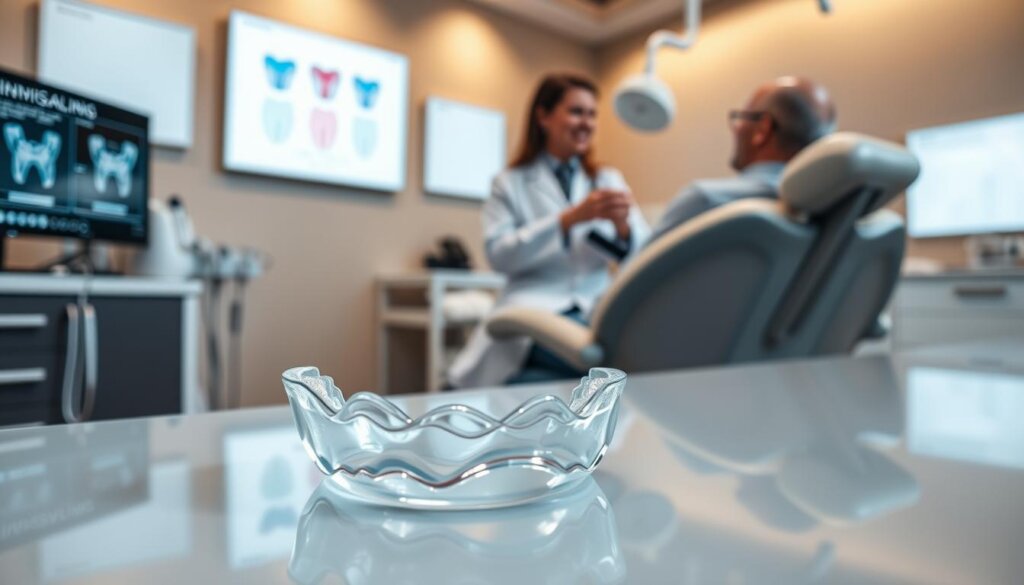
Each aligner fits over the teeth, creating pressure points. The material keeps the force consistent. This leads to better results and less discomfort.
How Does It Work?
Patients wear a series of aligners for 20 to 22 hours a day. Each set is worn for one to two weeks before moving to the next. This gradual approach ensures teeth move safely and effectively.
The treatment applies precise forces to specific teeth. Each aligner moves teeth by 0.25 to 0.33 millimeters. These small changes help avoid discomfort while making steady progress.
The process involves controlled pressure on the teeth. This pressure triggers bone changes. Special cells break down and build bone, allowing teeth to move.
This natural process, called bone remodeling, is enhanced by Invisalign’s gentle force. Digital planning lets doctors see each stage before starting treatment.
Benefits of Using Invisalign
Invisalign offers many benefits beyond looks. It has clinical and lifestyle advantages that make patients happy. These reasons explain its growing popularity.
Aesthetic appeal is a big plus. The clear aligners are almost invisible. This is great for adults and teens who don’t want to show off their braces.
There are many practical benefits too:
- Improved oral hygiene access: You can brush and floss easily without brackets and wires
- Dietary freedom: You don’t have to avoid certain foods because you can remove the aligners
- Reduced soft tissue trauma: The smooth aligners don’t irritate the mouth like metal braces can
- Enhanced treatment predictability: Digital planning lets you see your final smile before starting
Invisalign also means fewer emergency visits. Traditional braces can break or poke, but Invisalign aligners rarely cause problems. This makes treatment more convenient for everyone.
Patients find it easier to speak with Invisalign than with lingual braces. The thin aligners allow for quick adaptation. Most people can speak normally within a few days.
Invisalign can treat complex cases that once needed traditional braces. Its advanced technology and staging protocols make it suitable for many patients. This means more people can get the treatment they need without traditional braces.
Common Concerns About Invisalign
Many people wonder about the initial discomfort and adjustment period when starting Invisalign. They also compare it to metal braces. These worries are normal, often coming from past dental experiences or fear of orthodontic treatments. Knowing what to expect can help patients feel more confident and prepared.
Most concerns are about how much discomfort there will be and how well the mouth will adjust to wearing aligners for 20-22 hours a day. Answering these questions can help reduce anxiety before treatment starts.
First Days with New Aligners
The initial aligner discomfort often feels like tightness and pressure on specific teeth. This is a sign that the aligners are working to move teeth into place. Most people find it noticeable but bearable, similar to after a dental cleaning.
Speech changes are another common reaction in the first 48-72 hours. You might notice a slight lisp or trouble with certain sounds. This is because your tongue is getting used to the aligners. These changes will go away as your mouth adapts.
The edges of the aligners can cause minor irritation to gums and cheeks in the first week or two. This irritation will lessen as your mouth gets used to it. Tenderness during this time means the treatment is working.
Adaptation Throughout Treatment
Adjusting to Invisalign involves both physical and mental changes. Physically, your mouth starts to adapt to the aligners by moving teeth. This process creates predictable pressure that you’ll get used to with each new set of aligners.
Getting used to wearing aligners is also a mental adjustment. At first, you might notice them more. But within two weeks, most people get used to having them in their mouth. This mental adjustment is just as important as the physical one.
Your mouth is very adaptable during orthodontic treatment. It develops a protective layer in response to the aligners. This layer reduces irritation over time. So, discomfort usually gets less with each new set of aligners.
Side-by-Side Treatment Comparison
Many people wonder about the pain levels between Invisalign vs braces. Studies show that Invisalign is generally less painful than metal braces. This is because Invisalign applies constant, gentle pressure, while braces use sharp, intermittent forces.
Braces require adjustments every 4-6 weeks, which can be painful. These adjustments can make eating solid foods hard for a few days. In contrast, Invisalign’s gentle pressure is more consistent and easier to handle.
| Comparison Factor | Invisalign Clear Aligners | Traditional Metal Braces |
|---|---|---|
| Force Application | Continuous, low-magnitude pressure distributed throughout treatment | Intermittent, high-magnitude forces during adjustment appointments |
| Peak Discomfort Timing | First 2-3 days after changing to new aligner set | 3-5 days following wire activation appointments |
| Soft Tissue Irritation | Minimal after initial adaptation period; smooth plastic edges | Frequent irritation from metal brackets and wires; higher risk of cuts |
| Emergency Appointments | Rare; typically related to lost or damaged aligners | Common; broken brackets, protruding wires, soft tissue injuries |
| Overall Comfort Rating | Higher patient satisfaction scores for daily comfort | Lower comfort ratings due to fixed appliance presence |
Emergency visits for appliance problems or mouth injuries are much rarer with Invisalign than with braces. The fact that aligners can be removed means you don’t have to worry about broken brackets or wires that need urgent fixes.
Telling patients about these differences can really help ease their worries before starting treatment. Knowing that Invisalign’s discomfort is predictable and manageable, unlike the sharp pain from braces, helps people make better choices. This comfort makes patients more likely to stick to their treatment plan.
Pain and Discomfort Levels
Everyone feels pain differently when using clear aligners. This is because each person has their own unique body and dental structure. Studies show that about 54% of people using Invisalign feel mild, temporary pain during treatment.
To understand Invisalign pain, we need to look at both the physical and personal sides of pain. The aligners put pressure on teeth and gums, starting the process of tooth movement. But how each person feels this pressure can vary a lot.
Are Pain Levels the Same for Everyone?
Pain from Invisalign can be different for everyone. How much pain someone feels depends on their own pain tolerance. Genetic background, past pain experiences, and mental state all play a part in how we feel pain.
Most people say their pain is mild to moderate. On a scale of 1 to 10, most rate their pain between 2 and 4. This shows that clear aligners are generally less painful than other dental treatments.
Several things can affect how much pain someone feels:
- Baseline pain threshold: People with a higher pain threshold might not feel as much pain
- Complexity of tooth movements: More complex movements can cause more pressure
- Inflammatory response patterns: How tissues react to the treatment can change how much pain someone feels
- Psychological modulation: Stress and anxiety can make pain feel worse or better
- Gender differences: Research shows men and women might feel pain differently
The type of dental correction needed can also affect how much pain someone feels. For example, moving back teeth or doing big rotations can cause more pain than just moving front teeth.
Mild Discomfort and Sensitivity
Most people say their Invisalign pain feels like mild pressure, not sharp pain. This pressure is like a gentle force on the teeth. It can feel tender when biting down or sensitive to hot or cold foods.
Common feelings include:
- Pressure across several teeth at once
- Being more aware of tooth position when putting in or taking out aligners
- Mild jaw soreness from getting used to the aligners
- Sensitivity to cold or hot foods
- Some discomfort when eating hard or crunchy foods
These feelings are usually mild and don’t stop people from doing their daily activities. Unlike traditional orthodontic problems, clear aligner discomfort is usually predictable and easy to manage. Knowing that these feelings mean your teeth are moving can help you see them in a positive light.
Duration of Discomfort
Pain from Invisalign follows a pattern that reassures patients. Discomfort usually peaks in the first 1-2 days after a new aligner is put in. It then gets better as the gums and bones adapt. Most people say their symptoms go away in 1-3 days after a new aligner.
Studies show that pain reaches its highest point about 24 hours after the aligner is applied. It then starts to go back to normal within a week. This shows how our bodies adapt to the treatment and start moving teeth.
| Time Period | Discomfort Level | Patient Experience | Management Strategy |
|---|---|---|---|
| 0-24 hours | Gradually increasing | Pressure sensation builds as teeth respond to new forces | Switch aligners before bedtime to sleep through initial adjustment |
| 24-48 hours | Peak intensity | Maximum pressure and mild soreness when chewing | Consume softer foods and use over-the-counter pain relief if needed |
| 3-5 days | Progressive reduction | Noticeable decrease in pressure sensations | Gradually reintroduce normal diet and activities |
| 6-14 days | Minimal to none | Comfort returns to baseline levels | Prepare mentally for next aligner transition |
As our bodies get used to the treatment, pain gets less over time. Teeth start moving into their new positions, and the tissues around them adjust. People often find that each new aligner change feels less painful as they get used to the treatment.
How to Manage Discomfort from Invisalign
Effective pain relief strategies make Invisalign more comfortable for most patients. The journey to straighter teeth may cause some discomfort, but there are many ways to lessen it. By using medicine and making lifestyle changes, patients can stay on track with treatment and feel less pain.
Understanding that some pressure is normal helps patients see their treatment in a positive light. Doctors suggest using a mix of treatments to tackle both physical and emotional pain.
Over-the-Counter Pain Relief
Medicine is a key part of managing pain during Invisalign treatment. Anti-inflammatory drugs are the best choice for reducing inflammation. These drugs work by blocking enzymes that cause pain in affected areas.
Ibuprofen is usually the best option for most people. It’s recommended to take 400 to 600 milligrams as needed. It helps reduce inflammation and provides relief within 30 to 45 minutes.
For those who can’t take NSAIDs, acetaminophen is a good alternative. It’s best to take 500 to 1000 milligrams when you feel the most pain. While it helps with pain, it doesn’t have the same effect on inflammation as ibuprofen.
Always talk to a doctor before starting any medication. Certain health conditions or other medicines might make some drugs unsafe. A doctor can help choose the safest and most effective option for you.
Tips for Easing Discomfort
There are also non-medical ways to ease pain. These methods can help with irritation, inflammation, and getting used to the treatment. Using these techniques can make treatment more comfortable.
Cold therapy can provide quick relief. Drinking cold water or using an ice pack can help reduce swelling and numb the pain. This method doesn’t need medication and works fast.
Changing aligners at the right time can also help. Switching to new ones before bed means you’ll feel the most pressure when you’re asleep. This makes waking up more comfortable.
Eating softer foods can also help. Here are some tips for eating comfortably during treatment:
- Smoothies and protein shakes for easy nutrition
- Mashed vegetables and soft fruits for gentle chewing
- Yogurt, pudding, and other soft dairy for easy meals
- Scrambled eggs and tender fish for protein without strain
- Cooked pasta and rice for meals that are easy on your jaw
Using orthodontic wax can also help. It creates a barrier where the aligner touches your gums. This can prevent sore spots and make wearing aligners more comfortable.
Invisalign chewies have two benefits. They help the aligners fit right and promote adaptation. Chewing them helps the aligners move teeth properly and makes getting used to them easier.
Importance of Following Treatment Guidelines
Following the treatment plan is key to managing pain and getting the best results. Wearing aligners as directed keeps the pressure steady and prevents too much discomfort. It’s important to wear them for at least 20 hours a day.
Not wearing aligners as planned can cause problems. Teeth may move back to their original position. When you put the aligners back on, it can cause more pain than usual.
Don’t rush through the treatment. Each set of aligners needs time to work. Moving too fast can cause too much pressure and lead to complications.
Learning about the reasons behind orthodontic pain can help you handle it better. Knowing that some pressure is a sign of progress can make treatment easier to accept. This can help you stay on track and feel less anxious about discomfort.
Talking to your orthodontist is important. They can help if you’re experiencing unusual pain. While some discomfort is normal, certain signs need attention. Severe pain, swelling, or pain that lasts too long should be checked by a professional.
| Relief Method | Mechanism of Action | Implementation Timing | Expected Effectiveness |
|---|---|---|---|
| Ibuprofen (400-600mg) | Anti-inflammatory enzyme inhibition | As needed during peak discomfort | High – addresses root cause |
| Cold water/ice therapy | Reduces inflammation and nerve sensitivity | Throughout day when discomfort occurs | Moderate – temporary relief |
| Soft food diet | Minimizes masticatory pressure on moving teeth | First 2-3 days after aligner changes | Moderate – prevents aggravation |
| Bedtime aligner switching | Peak pressure occurs during sleep | Evening before bed | High – improves daytime comfort |
| Invisalign chewies | Promotes proper seating and tissue adaptation | After insertion and periodically throughout day | Moderate – accelerates adjustment |
Using a mix of pain relief strategies can work better than one alone. Combining medicine, lifestyle changes, and following the treatment plan can make treatment more comfortable. This approach helps you stay on track and enjoy a better quality of life during orthodontic treatment.
Aligners and Jaw Pressure
Jaw pressure and tooth sensitivity during Invisalign therapy come from basic orthodontic principles. These principles help teeth move into their new positions. Knowing these forces helps patients understand normal treatment responses and when to seek help.
The pressure from clear aligners is not a side effect but a needed part of treatment. Each set of aligners applies specific forces to start tooth movement. This controlled force is key for moving teeth predictably during treatment.
The Biomechanics Behind Aligner Pressure
Clear aligners use controlled orthodontic forces to move teeth. These forces range from 50 to 300 grams per tooth. This careful force helps teeth move efficiently without harming the roots.
The pressure creates areas of compression and tension on teeth. This triggers cells in the periodontal ligament to start tooth movement. Osteoclasts and osteoblasts work together to move teeth by remodeling bone.
At first, wearing a new aligner can feel intense. This is because the body is adapting to the new forces. After 24 to 48 hours, the discomfort usually lessens, even though the aligners keep applying forces.
Jaw discomfort can happen when the bite changes a lot. The jaw and muscles need to adjust to the new tooth positions. This adjustment can cause temporary jaw fatigue or clicking, but it usually goes away as the body gets used to the new position.
Different Invisalign Systems and Their Applications
There are several Invisalign systems for different needs. Each system uses the same basic principles but varies in treatment length and number of aligners. This means each system is tailored to the complexity of the case.
- Invisalign Comprehensiv: For complex cases, this system offers unlimited aligners for 12 to 18 months.
- Invisalign Lite: For mild to moderate issues, it uses 14 aligners for 6 to 8 months.
- Invisalign Express: For minor adjustments, it uses 5 to 10 aligners for 3 to 6 months.
- Invisalign Teen: Made for teens, it includes features like eruption tabs for growing teeth.
Modern aligners use advanced materials for consistent force delivery. These materials keep the force strong throughout each wear cycle. This ensures the teeth move healthily.
Each system has similar wear times, usually 20 to 22 hours a day. Patients switch to new aligners every 7 to 14 days. This schedule helps balance tooth movement with comfort and tissue adaptation.
Timeline for Pressure Adaptation
Pressure sensations follow a predictable pattern. Peak intensity happens in the first 24 to 48 hours. This is when teeth feel the most force as they start moving.
As tissues adapt, discomfort decreases. By the third or fourth day, most people notice a big drop in pressure sensations. This shows the body is getting used to the forces.
Tooth movement continues with each aligner, but the body gets used to the pressure. This is why aligners feel more comfortable over time, even though they keep applying the same forces.
Everyone reacts differently to pressure. Factors like pain sensitivity, bone density, and tooth movement plans affect how you feel. People with denser bones might feel more pain at first.
With each new aligner, the body starts adapting again. While it might feel intense at first, it gets easier over time. This is because the body gets used to the treatment.
The Role of Attachments in Treatment
Attachments play a key role in Invisalign treatment. They help move teeth more effectively. Knowing about attachments can make the treatment process easier to understand.
Orthodontists use attachments to get better results. They place these small elements on teeth to control movement. This helps in achieving precise tooth alignment.
What Are Attachments?
Attachments are small, tooth-colored buttons made of composite resin. They are bonded to teeth to help move them. These buttons are almost invisible and match the color of your teeth.
The process of attaching them is simple. First, the tooth is prepared. Then, a special adhesive is applied, and the attachment is placed. This whole process takes just a few minutes.

After the attachment is placed, it is hardened with a special light. This makes it strong and durable. Most people need between 3 to 10 attachments, depending on their treatment.
There are different types of attachments for different movements. For example, some attachments help turn teeth, while others help move them up or down. This ensures precise control over tooth movement.
| Attachment Type | Primary Purpose | Tooth Movement | Common Placement |
|---|---|---|---|
| Optimized Rotation | Enhanced grip for turning teeth | Rotational correction | Canines and premolars |
| Vertical Rectangular | Upward or downward force application | Extrusion and intrusion | Incisors and molars |
| Beveled | Root torque control | Root angulation adjustment | Anterior teeth |
| Multi-plane | Complex movement coordination | Translation and rotation combined | Various locations as needed |
Do Attachments Cause More Discomfort?
Attachments usually don’t cause more pain than regular Invisalign treatment. Some people might feel a bit of sensitivity during the bonding process. This usually goes away within a few hours.
After the attachments are placed, people might notice their teeth more. This is normal and not painful. It’s just your body getting used to the new feel.
Attachments can make teeth feel a bit more pressure when you put on new aligners. But this is mild and goes away quickly. It’s because attachments help teeth move better.
Some people might feel a bit of discomfort when aligners move over attachments. This is because the aligner is flexing over the attachment. But this is easy to manage by using the right technique when changing aligners.
Managing Discomfort from Attachments
Managing attachment discomfort is similar to handling Invisalign soreness. Over-the-counter pain relievers can help if needed. Most people find that the discomfort goes away on its own within a day or two.
Orthodontic wax is a good solution for any rough spots. Apply a small amount to the attachment to protect your mouth. This makes it more comfortable.
Here are some tips to reduce attachment discomfort:
- Practice gentle aligner removal techniques using proper leverage points instead of forcing aligners over attachments
- Maintain excellent oral hygiene around attachment sites to prevent inflammation that could increase sensitivity
- Apply cold compresses externally during the first day after bonding to reduce any initial swelling
- Avoid extremely hot or cold foods immediately after attachment placement to minimize temperature sensitivity
- Communicate with your orthodontist about any persistent sharp edges that may require smoothing or adjustment
Attachments offer many benefits, even if they cause a bit of discomfort. Most people get used to them quickly. They help teeth move better, leading to faster and more effective treatment.
Remember, attachment discomfort is just a small part of orthodontic treatment. It’s worth it for the long-term benefits to your smile and dental health. Understanding attachments helps you feel more confident during treatment.
Speaking and Eating with Invisalign
Clear aligners change how we speak and eat. These changes are normal parts of treatment. Knowing what to expect helps patients adjust.
Invisalign looks good but needs getting used to. Most people get used to it in days or weeks.
Changes to Speaking Your Mind
Aligners make speech feel a bit different at first. The plastic on your teeth changes how you make sounds. Sounds like “s” and “sh” might sound different.
This feeling goes away in a week or two. Our brains get used to it as we keep talking. Reading out loud helps a lot.
Most people get used to it in a week or two. Others might not even notice. Our tongues adapt quickly to the aligners.
Eating Pain for First-Time Users
Teeth feel sensitive for 48-72 hours after getting new aligners. It feels like general tooth tenderness, not sharp pain.
Unlike braces, you can take out Invisalign to eat. But, teeth might feel sensitive even when the aligners are off.
The first time is usually the hardest. But, it gets easier with each change. Patients learn how to handle it better.
Best Foods to Eat During Treatment
Eating soft foods helps when teeth are sensitive. Choose foods that are easy to chew but nutritious. Here are some good options:
- Protein sources: Scrambled eggs, flaked fish, ground meats, soft tofu, Greek yogurt, and well-cooked legumes
- Vegetables: Steamed or roasted vegetables, mashed sweet potatoes, vegetable soups, and blended smoothies
- Fruits: Bananas, berries, avocados, applesauce, and fruit smoothies without seeds
- Grains: Oatmeal, cream of wheat, soft pasta, white rice, and muesli blended with milk
- Dairy products: Cottage cheese, soft cheeses, pudding, and ice cream
Avoid hard or crunchy foods when teeth are sensitive. Foods like raw carrots and nuts are too hard. Cutting chicken into small pieces helps.
Smoothies are great for nutrition without chewing. They’re perfect for the first few days with a new aligner. These changes help you stay comfortable and on track with treatment.
As teeth get less sensitive, you can eat firmer foods again. This pattern becomes easier with time.
Follow-Up Care and Consultations
Keeping in touch with your orthodontist is key during Invisalign treatment. This helps keep you comfortable and ensures the treatment works well. Regular check-ups help catch any problems early, before they get worse.
Your orthodontist is more than just a provider. They guide and solve problems as you wear aligners. This teamwork makes sure you’re comfortable and your teeth move as planned.
Importance of Regular Check-Ups
You’ll see your orthodontist every six to ten weeks. These visits are important for tracking your progress. Treatment tracking is a big part of these check-ups.
At each visit, your orthodontist checks a few key things. They make sure attachments are secure and give you new aligners. They also talk about any issues you’ve had.
Regular visits help catch problems early. Your orthodontist can spot issues that might cause pain. This helps avoid delays in your treatment.
These appointments also provide educational opportunities. Your orthodontist teaches you about normal and concerning symptoms. This helps you know when to seek help.
Knowing When to Contact Your Orthodontist
Knowing when to call your orthodontist is important. Not every discomfort needs an emergency call. But some symptoms are serious and should not be ignored.
If discomfort lasts more than three days after getting new aligners, call your orthodontist. Pain that doesn’t get better might mean a problem. Your orthodontist needs to check it out.
Severe pain that makes eating or speaking hard needs immediate help. If pain meds don’t work or pain gets worse, call your orthodontist. This could mean your aligners don’t fit right or your teeth are moving too much.
Today, you can talk to your orthodontist even when you’re not in the office. Many offer systems where you send photos of your teeth. This lets your orthodontist check on your progress without needing to see you.
Signs That Indicate More Than Normal Discomfort
Some pain is normal, but some is a sign of a bigger problem. Here are signs that mean you should call your orthodontist right away:
- Persistent severe pain lasting more than 72 hours after placing new aligners suggests a problem
- Sharp, localized pain in a specific tooth may indicate trauma, root problems, or attachment complications requiring examination
- Signs of infection including swelling, redness, pus discharge, or fever demand urgent professional evaluation
- Extreme temperature sensitivity to hot or cold substances could signal pulpal involvement or nerve irritation
- Aligner fit discrepancies where trays no longer seat properly indicate treatment tracking problems
It’s hard to tell if pain is normal or not. Your orthodontist will look at your symptoms and do an exam to decide what to do. This helps keep your teeth and mouth healthy.
Some people worry they’re bothering their orthodontist with normal pain. But it’s better to check and find out it’s nothing than to ignore it and find out it’s something serious. Your comfort and safety always take priority over treatment timelines.
Keeping a record of your symptoms helps your orthodontist make the right decisions. Write down when the pain started, how bad it is, where it is, and what makes it better or worse. This helps them figure out what to do next.
Working together, you and your orthodontist can make sure you’re comfortable and your teeth are moving right. Regular check-ups and talking openly about any pain or issues means you can go through Invisalign with confidence and less pain.
Debunking Myths About Invisalign Pain
When it comes to Invisalign pain myths, it’s key to know fact from fiction. Misinformation about clear aligners spreads fast on social media and in conversations. This false info can make people worry and stop them from trying a treatment that could really help their teeth and confidence.
Many worries about Invisalign pain come from old info or confusion with metal braces. Don’t let fear of pain stop you from getting Invisalign—it’s not as bad as you think. Knowing what’s true and what’s not helps people start their orthodontic journey with the right mindset and less worry.
Common Misconceptions
Many myths about Invisalign pain are not backed by science. One big myth is that clear aligners hurt as much as metal braces. But studies show Invisalign patients feel less pain and need less pain meds than those with braces.
Another myth is that aligners don’t move teeth enough because they’re removable. This ignores how aligners work. They use continuous light forces for efficient tooth movement with less pain than metal braces.
Some think discomfort stays the same throughout treatment. But, the truth is, pain follows a pattern. It’s mild after changing aligners and goes away in a few days.
More myths include:
- Invisalign hurts more than braces because you change aligners frequently
- The plastic material causes severe mouth irritation and sores
- Any discomfort means something is wrong with your treatment
- You’ll need strong pain medication to get through treatment
- Speaking and eating will be painful throughout the entire process
Real-Life Experiences vs. Myths
Studies show a big gap between what people think and what they actually feel with Invisalign. Most users find it manageable and less impactful than they thought. This is because we tend to worry more about future pain than we should.
If you’ve had braces before or heard about their pain, Invisalign hurts less. People who’ve tried both say Invisalign is more comfortable. The lack of metal brackets means less irritation to soft tissues.
Real experiences also change how we see things. A little tenderness and discomfort are signs that aligners are working. When we understand this, we can see discomfort as a sign of progress, not a problem.
Here’s what real patients say:
- Most users get used to aligners in three to five days
- Discomfort drops off after the first few sets
- Over-the-counter pain meds are enough for symptoms
- Daily life goes on without big issues
- The benefits of looks and comfort outweigh the temporary discomfort
Understanding Individual Pain Tolerance
Pain tolerance varies a lot from person to person. It’s hard to predict how much pain someone will feel. Research shows some people are naturally more sensitive to pain.
Our past dental experiences also affect how we feel during treatment. If someone had a tough time with braces, they might worry more about Invisalign. This worry can make discomfort feel worse.
Knowing your own pain tolerance helps set the right expectations. People who feel pain more intensely aren’t weak. They just process pain differently. This means we need to tailor treatment to each person, not just follow a general plan.
Many things affect how we feel pain during treatment:
- Genetic predisposition to pain sensitivity
- Previous orthodontic or dental experiences
- Current stress levels and mental health status
- Cultural attitudes toward pain and medical procedures
- Age and hormonal factors affecting pain perception
The main thing is that people’s experiences with pain are different. What feels okay to one person might hurt more to another. This shows how complex pain is and why we need to treat each person as an individual.
Invisalign and Oral Hygiene
Keeping your mouth clean while wearing aligners is key to a smooth treatment. Clear aligners are easy to clean, unlike traditional braces. This makes it simple to brush and floss as usual.
But, you must stick to a strict cleaning routine. Good oral hygiene is essential for comfort during treatment. Skipping cleaning can make treatment uncomfortable.
Maintaining Oral Health with Aligners
Start by removing your aligners before meals and snacks. This stops food from getting stuck and prevents stains and bacteria.
Brush your teeth well with fluoride toothpaste before putting your aligners back in. This keeps food out of your teeth and prevents irritation. Don’t forget to floss, as plaque can build up in tight spaces.
- A soft-bristled toothbrush for gentle cleaning
- Travel-sized fluoride toothpaste to strengthen teeth
- Dental floss or interdental brushes for plaque removal
- A small case for your aligners during meals
- Sugar-free mints for fresh breath when brushing isn’t possible
These tools help you keep your teeth clean anywhere. Staying consistent can prevent problems that might slow down your treatment.
Effect of Poor Hygiene on Discomfort
Poor oral care can make treatment more uncomfortable. Bacteria grow quickly in the warm, moist environment of aligners. This can lead to gum problems and pain.
Gum inflammation makes pressure from tooth movement feel worse. It’s hard to tell if the discomfort is from the treatment or poor hygiene.
Food trapped under aligners can cause sharp pain. This pain gets worse as time goes on.
Poor oral hygiene can also increase cavity risk during treatment. Cavities might need extra treatment, making your treatment longer. The pain from cavities and orthodontic pressure is hard to handle.
Cleaning Your Aligners Properly
Cleaning your aligners right is important for your health and treatment success. Bacteria can build up on them, leading to infections. Regular cleaning also stops bad smells and keeps the material in good shape.
Brush your aligners twice a day gently. Use a soft-bristled toothbrush and mild soap or special cleaners. Make sure to clean all sides, but be gentle.
Never use hot water to clean your aligners, as thermal exposure can warp the material. Water that’s too hot can change the shape of your aligners. This can cause discomfort and irritation.
Rinse your aligners with lukewarm or cold water. This keeps them clean without damaging them. For deeper cleaning, keep the water cool to protect the material.
Here are some advanced ways to clean your aligners:
- Soak aligners in denture cleaning solutions or special cleaners once a week
- Use ultrasonic cleaners for deep cleaning without scrubbing
- Rinse aligners right after taking them out to prevent saliva buildup
- Store clean aligners in well-ventilated cases to stop bacteria growth
Good oral hygiene and aligner care make treatment more comfortable. Patients who keep their teeth and aligners clean have a better experience. This turns Invisalign into a manageable journey to better teeth.
Comparisons with Other Orthodontic Options
The world of orthodontics offers many treatment choices, each with its own comfort level. People often find it hard to choose when faced with so many options. Looking closely at the differences in pain, comfort, and patient experience helps.
Knowing these differences helps people make choices that fit their needs and lifestyle. Studies give us clues on how different treatments affect daily life during treatment.
How Pain Differs from Other Treatments
Traditional metal braces and clear aligners work in different ways. Metal braces use brackets and wires that are adjusted every few weeks. This adjustment causes sharp pain that lasts for a day or two.
Invisalign, on the other hand, uses a soft material that applies gentle pressure. It changes every week or two. This method causes mild pain but less often than metal braces.
Studies show that Invisalign patients feel less pain, with scores 20-40% lower. They also use less pain medicine during treatment.
The way these treatments apply force affects how our bodies react. Invisalign’s steady pressure helps our bones adjust slowly. Metal braces, with sudden changes, cause more pain.
Other treatments have their own pain levels:
- Lingual braces: These braces are on the inside of teeth and can be hard to get used to because of tongue irritation
- Ceramic brackets: They look better but cause the same pain as metal braces
- Self-ligating brackets: They might be a bit more comfortable than regular braces but are not perfect
The Comfort of Clear Aligners vs. Metal Braces
Clear aligners and metal braces differ in how they feel. Metal braces can hurt the soft tissues in your mouth. The edges of the brackets can cause painful sores that take weeks to heal.
Wire ends can also poke and irritate your cheeks and gums. The elastic ligatures hold onto food and bacteria, making things worse. These issues cause ongoing pain, not just from moving teeth.
Clear aligners are more comfortable because they don’t irritate your mouth. They have smooth edges and fit your teeth perfectly. You don’t have to worry about metal parts falling off or hurting your mouth.
Being able to take out your aligners is a big plus. You can eat normally and brush your teeth without any problems. This helps prevent gum inflammation and keeps you comfortable.
| Treatment Feature | Invisalign Clear Aligners | Traditional Metal Braces | Ceramic Braces |
|---|---|---|---|
| Force Delivery Model | Continuous low-level pressure every 1-2 weeks | Intermittent high-force adjustments every 4-6 weeks | Intermittent high-force adjustments every 4-6 weeks |
| Peak Pain Duration | 24-48 hours per aligner change | 48-72 hours post-adjustment | 48-72 hours post-adjustment |
| Soft Tissue Irritation | Minimal with smooth edges | Frequent from brackets and wires | Frequent from brackets and wires |
| Eating Restrictions | None (removable during meals) | Extensive (avoid hard, sticky foods) | Extensive (avoid hard, sticky foods) |
Studies show that clear aligners are the most comfortable option for many cases. But, metal braces are needed for more complex problems. The data supports that Invisalign is better for many people.
People say clear aligners are more comfortable in many ways. They feel better when speaking, eating, and socializing. This makes treatment more enjoyable and helps people stick with it.
Emotional Impact of Using Invisalign
Fear often stops people from getting orthodontic care they need. The mind plays a big role in deciding to get orthodontic treatment. Knowing this helps patients feel more confident and set realistic goals.
About 36% of Americans have some dental anxiety. This fear grows when thinking about orthodontic treatments. The worry of pain can be more stressful than the treatment itself.
When Fear Prevents Progress
Many people delay or skip orthodontic treatment because of fear of pain. This choice can lead to long-term dental problems. Problems like uneven wear and jaw strain can make it hard to keep teeth clean.
The fear-avoidance model shows how fear can create a cycle. Patients who worry a lot about pain might feel more pain when treatment starts. This is because they are so focused on the pain.
But, Invisalign’s benefits are much greater than the slight discomfort. Here are some reasons why:
- Shorter treatment time compared to traditional braces in many cases
- Nearly invisible appearance that hardly anyone will notice during daily interactions
- Easier oral health maintenance through removable aligners
- Prevention of future dental problems that could require more invasive interventions
- Enhanced smile aesthetics contributing to a younger, more attractive appearance
Talking about what to expect before treatment can really help. Learning from others and getting accurate information can change how you see the treatment.
Understanding Your Mind’s Response to Treatment
How you feel about discomfort can vary a lot. People who see discomfort as a sign of progress tend to handle it better. This way of thinking can make the treatment feel like an achievement.
Thinking too much about pain can make things worse. This is called catastrophizing. People who do this might find it helpful to learn new ways to think about pain.
The biopsychosocial model says pain comes from biology, psychology, and social factors. It’s not just about physical sensations.
Having clear goals for your Invisalign treatment can help a lot. Thinking about what you want to achieve can keep you motivated. Visualizing your goals can help you stay focused.
How you handle discomfort can also affect your experience. Some people like to know all the details, while others prefer distractions. Knowing what works best for you can help you manage better.
Building Your Circle of Support
Having a support system is key to staying positive and on track. Family and friends can offer encouragement when you need it. Their support can make the temporary challenges easier to handle.
Your orthodontist is also a big part of your support team. Talking regularly with them can help you feel heard and understood. Orthodontists who work closely with patients tend to have happier and more compliant patients.
Online groups for Invisalign users can also be a big help. These communities let you:
- Share tips for dealing with challenges
- Celebrate milestones with others who get it
- Learn from thousands of experiences
- Feel less alone with common concerns
Being part of social media groups can connect you with others going through similar things. Seeing how others have overcome challenges can boost your confidence and reduce anxiety.
If dental anxiety or past trauma is a big issue, getting help from a mental health professional might be a good idea. They can offer special help like systematic desensitization or relaxation training.
Don’t let fear of pain stop you from getting orthodontic treatment. Today, there’s a lot of support available, from dental teams to online communities. The mind’s role in orthodontics is now well understood, making it easier to overcome emotional barriers.
Preparing for Your First Invisalign Appointment
Your first Invisalign appointment is a big step. It includes detailed evaluations, digital imaging, and planning talks. Getting ready for this helps you understand what’s happening and makes decisions easier. Knowing what to expect can reduce stress and set the stage for your journey.
This visit lasts 60 to 90 minutes. It covers many important steps. Your orthodontist will explain each part of the process during the visit.
What to Expect During Your Initial Visit
The Invisalign consultation starts with a detailed check-up. Your orthodontist looks at your teeth, bite, and overall health. They check your gums, jaw, and any dental work that might affect your treatment.
Modern tech makes this part easier. An iTero intraoral scanner takes precise 3D scans without the usual goo. This tech gives a clear picture of your teeth, making your aligners fit better.
The scan takes about 10 minutes and is usually comfortable. This accuracy means your aligners will fit snugly, reducing discomfort.
You’ll see a simulation of your teeth moving during the visit. This ClinCheck software shows how your smile will change. It’s a powerful tool for understanding your treatment.
Your orthodontist will talk about how long treatment will take, how many aligners you’ll need, and how to wear them. They’ll also discuss costs, payment plans, and insurance. This clear talk helps you plan for the treatment.
Questions to Ask Your Orthodontist
Coming prepared with questions makes your visit more valuable. Asking the right questions helps you understand your treatment better. It also shows you’re interested and helps you communicate well with your provider.
Here are some questions to consider:
- Treatment duration: How long will my treatment take, and what might affect the time?
- Aligner quantity: How many sets of aligners will I need, and how often will I change them?
- Attachment requirements: Will I need tooth-colored attachments, and where will they go?
- Compliance expectations: What’s the right wear time, and how does not following this affect my treatment?
Ask about managing discomfort to better handle normal adjustment periods. Find out about common pain with new aligners and what pain relief is safe.
Talk about your lifestyle during your Invisalign consultation:
- Speaking adaptation: How long does it take to get used to speaking with aligners, and what exercises help?
- Eating modifications: What foods should I avoid, even when not wearing aligners, and why?
- Social visibility: How noticeable are the attachments, and what lighting makes them stand out?
- Emergency procedures: What’s a true emergency, and how can I reach you outside regular hours?
Choosing the right provider is key. Ask about their experience with Invisalign, how many cases they do a year, and if they keep up with education. Knowing this builds trust in their recommendations.
The provider designation matters a lot. More experienced providers offer better results. Understanding your orthodontist’s skills makes you more confident in their plan.
| Provider Level | Annual Cases | Experience Indicator | Outcome Predictability |
|---|---|---|---|
| Preferred Provider | 10+ cases | Basic competency established | Standard success rates |
| Platinum Provider | 50+ cases | Substantial experience demonstrated | Enhanced outcome reliability |
| Diamond Provider | 150+ cases | Advanced expertise confirmed | Superior results consistency |
| Diamond Plus | 300+ cases | Elite proficiency level | Optimal outcome achievement |
Setting Realistic Expectations
Setting the right expectations is key. Knowing that some discomfort is normal helps you cope better. This knowledge helps you stay on track with your treatment.
The feeling of pressure with new aligners means they’re working. This feeling usually peaks in the first 48 hours. Knowing this helps you stay calm and keep up with your treatment.
Treatment time varies based on how complex your case is. Your orthodontist will give you a personalized estimate. Things like how far your teeth need to move and your bone density affect the time.
Remember, perfect comfort isn’t the goal. It’s about moving your teeth effectively. Accepting this makes your treatment less stressful.
Choosing an experienced provider makes a big difference. Those with iTero scanners and high Invisalign levels offer better experiences. Their experience means better planning and guidance on managing discomfort.
Your first orthodontic appointment sets the stage for success. Being prepared and having realistic expectations makes this visit valuable. The information you get helps you start your smile transformation journey with confidence.
Final Considerations on Comfort During Treatment
When we think about the end of treatment, we look at how short-term discomfort leads to long-term smile improvements. Treatment compliance is key, meaning wearing aligners as directed and following orthodontist advice.
For the best results, wear aligners for 20 or more hours daily. Switch to new ones as scheduled and keep all appointments. These steps help teeth move smoothly and reduce discomfort.
Long-Term Comfort vs. Short-Term Discomfort
Understanding the link between initial discomfort and future benefits is vital. Studies show that the 12 to 18 months of treatment are worth it for decades of better dental health and looks. Seeing the long-term benefits makes the short-term hassle worth it.
Long-term orthodontic outcomes include better dental health and function. The benefits far outweigh the brief discomfort. Patients who see the big picture are happier with their treatment.
Knowing how teeth move helps us understand discomfort. Teeth move naturally, and we can’t rush it. Accepting this helps us stay motivated during treatment.
Monitoring Your Own Pain Levels
Patient self-monitoring is very important. It helps spot problems early and keeps you involved in your treatment. Knowing what’s normal helps you know when to worry.
Keeping a pain diary is a good way to track your feelings. It helps you see patterns and check if your plan is working. Know when to ask for help, but don’t worry about normal feelings.
| Pain Level | Description | Action Required | Expected Duration |
|---|---|---|---|
| Minimal (1-3) | Light pressure sensation, awareness of aligners | Continue normal routine, use cold water if needed | First 2-3 days after aligner change |
| Moderate (4-6) | Noticeable discomfort when chewing, consistent pressure | Use over-the-counter pain relief, apply cold compress | 3-5 days, gradually decreasing |
| Significant (7-8) | Persistent pain affecting daily activities, difficulty eating | Contact orthodontist for evaluation, document patterns | Should not exceed 5 days |
| Severe (9-10) | Sharp pain, bleeding, extreme sensitivity unrelated to adjustments | Immediate orthodontist consultation required | Not normal – requires professional assessment |
This guide helps you understand your pain. Keeping records is useful for you and your doctor.
The Importance of Patience in Treatment
Being patient is key to successful orthodontic treatment. Teeth move naturally, and rushing can harm results or safety. Unrealistic expectations for rapid results can lead to disappointment and lower treatment compliance.
Understanding treatment biology helps you cope better. Mindfulness can improve pain tolerance and reduce suffering. It’s about being aware of your feelings without reacting.
Combining psychology with practical tips makes treatment better. Patients who are patient are happier and stick to their treatment plan. Long-term orthodontic outcomes are better for those who stay committed.
Remember, your Invisalign smile will last forever. The benefits are worth the temporary discomfort. Seeing treatment as a journey to a better smile helps you stay on track.
Conclusion: Navigating Pain and Discomfort
Choosing orthodontic treatment should be based on facts, not fear. This Invisalign summary shows that discomfort is short-lived and can be managed. Most people feel only mild pressure, not severe pain.
Final Thoughts on Managing Discomfort
Strategies for managing orthodontic discomfort are simple. Cold water, pain relievers, and following the aligner schedule can help. Success in treatment depends more on sticking to the plan and being patient than on how much pain you can handle.
Studies reveal that discomfort peaks in the first 24-48 hours after changing aligners. As teeth adjust, the pain fades. Knowing this helps prepare mentally and physically.
Getting professional advice is key during treatment. Regular visits ensure you’re on track and address any issues right away. Talking openly with your orthodontist leads to better results.
Embracing the Journey to a Beautiful Smile
Invisalign offers more than just a pretty smile. It improves oral health and makes cleaning easier. It also prevents future dental problems, adding long-term value.
Every person’s experience with Invisalign is unique. Pain levels, dental complexity, and how you respond can vary. Knowing this helps manage expectations.
The journey to straight teeth brings benefits that last a lifetime. The initial discomfort is short-lived, but the results are permanent. Making informed choices about your oral health empowers you for the future.

