
Is Invisalign Appropriate for Very Crooked or Complicated Cases?
Can modern dental technology fix even the toughest alignment problems without metal braces? Many patients wonder if clear aligners can work for them, despite being told they’re too crooked.
When clear aligners first came out in the late 1990s, they only fixed simple problems. They were mainly for slightly crooked and crowded teeth. Now, the technology has grown a lot.
Over 20 years of progress have made clear aligners a real option for complex cases. While they’re mostly used for crowding, now, few cases are too hard for them.
Figuring out the best treatment for severe misalignment needs a pro’s eye. This article looks at what makes someone a good candidate for clear aligners. It also talks about the limits of treatment and why a dentist’s opinion is key.
Key Takeaways
- Modern clear aligner technology has evolved significantly from the late 1990s. It can now handle complex malocclusions that were once only treatable with traditional braces.
- Invisalign’s capabilities have grown to include treatments for severely crowded teeth, significant spacing issues, and various bite problems across different age groups.
- Getting a professional orthodontic evaluation is vital to see if clear aligners are right for your dental misalignment.
- Treatment success depends on several factors, including how severe the misalignment is, how well the patient follows the treatment, and the orthodontist’s skill with advanced aligner techniques.
- While most cases can now be treated with clear aligners, some extreme situations might need different or combined treatments.
Understanding Invisalign: An Overview
Before we dive into whether Invisalign can fix severely crooked teeth, let’s get to know this clear aligner treatment better. It’s a new way to straighten teeth, different from old-school orthodontics. Knowing how it works and what makes it unique is key for those thinking about it.
What is Invisalign?
Invisalign is a modern orthodontic treatment that uses clear, custom-made plastic aligners to move teeth. Unlike traditional braces, which have metal brackets and wires, Invisalign uses removable orthodontic appliances that fit over your teeth. Each aligner is made from a special, smooth material designed for orthodontics.
This system is a big change in teeth straightening. It’s better-looking than traditional braces, which is why many adults and teens like it. It’s a way to get straight teeth without the look of braces.
What makes Invisalign different from traditional braces? It’s how the aligners work. Traditional braces apply constant forces that orthodontists adjust at visits. Invisalign, on the other hand, uses new aligners to make small, controlled movements in your teeth.
How Does Invisalign Work?
The Invisalign process starts with detailed digital scans of your teeth. During your first visit, your orthodontist uses iTero digital scanning technology to get 3D images of your teeth and mouth. This tech replaces old-fashioned impressions that can be uncomfortable.
With this digital data, your orthodontist creates a plan for moving your teeth. They use special software to see how your teeth will move at each step. This plan is then turned into a series of aligners, each one designed to move your teeth a little bit.
Each aligner applies gentle pressure to your teeth, slowly moving them through a process called bone remodeling. This process changes the shape of your bones to move your teeth into place.
You’ll wear each aligner for about 20 to 22 hours a day. Take them out only to eat, drink, or brush your teeth. Wearing them all the time is key to making the treatment work.
At each visit, you’ll get new aligners to wear. You’ll switch to a new one every one to two weeks. Your orthodontist will check on your progress and make any needed changes every 8 to 12 weeks. Sometimes, they might add small, tooth-colored buttons to help move your teeth in certain ways.
Key Benefits of Using Invisalign
Invisalign offers more than just a good look. It also helps your teeth work better and can improve your health. Here are some reasons why it’s a good choice:
- Aesthetic Discretion: The clear aligners are almost invisible, making them perfect for those who don’t want to show off their orthodontic treatment.
- Enhanced Oral Hygiene: You can brush and floss easily without worrying about braces getting in the way, which can help prevent gum problems and tooth decay.
- Dietary Freedom: You can eat whatever you want without worrying about damaging your braces, unlike with traditional braces.
- Reduced Soft Tissue Irritation: The smooth aligners are gentler on your mouth than metal braces, which can cause sores.
- Predictive Visualization: You can see how your teeth will look before starting treatment, thanks to digital planning software.
- Fewer Emergency Appointments: Without metal parts that can break, you’ll need fewer visits to fix problems.
Invisalign also lets orthodontists plan treatments more precisely. They can see challenges coming and adjust plans before making aligners. This is different from traditional braces, where changes are made as needed during visits.
But, there are things to keep in mind. Invisalign works best if you wear the aligners as directed. If you don’t, it won’t work as well. This means it’s not for everyone, like those who can’t remember to wear them or have trouble following instructions.
It also helps if you’re old enough to take care of the aligners. Young patients need to be able to keep track of their aligners and take good care of them. This is important for making sure the treatment works well, even for complex cases.
Complex Dental Cases: An Introduction
Not all crooked teeth are the same. Some dental problems are more complex than just looks. Knowing how complex orthodontic cases are helps patients make better choices about their treatment.
Crooked teeth can come from many reasons. Genetics play a big role in jaw size and tooth position. Dental trauma before teeth are fully grown can also cause lasting problems.
Childhood habits like thumb sucking and tongue thrusting can push teeth out of place. Losing teeth can also cause other teeth to move, leading to more alignment issues.
Having crooked teeth can affect how you feel about yourself. It can make you feel shy or hold you back in your career. It can also lead to gum disease and make it hard to speak clearly.
Wearing down teeth too fast is another problem. It can make eating hard and affect your health over time.
What Constitutes a Complicated Case?
Orthodontists use special systems to figure out how hard a case is. They look at many things, not just one number.
Severe malocclusion classification systems sort dental problems into different groups. Class I means the jaw is aligned but teeth are not. Class II means the upper teeth stick out too much. Class III means the lower jaw sticks out too much.
How far teeth need to move is also important. Moving teeth a lot is harder than just a little bit.
Problems with the jaw bones add to the complexity. These issues can’t be fixed just by moving teeth. Sometimes, surgery is needed too.
Rotating teeth is very hard. If teeth need to rotate more than 20 degrees, it’s tough for aligners to handle.
Problems with how teeth sit vertically are also challenging. These include open bites, deep bites, and midline discrepancies.
- Open bites: Gaps between upper and lower teeth when the mouth is closed, preventing proper contact
- Deep bites: Excessive overlap where upper teeth cover lower teeth too extensively
- Midline discrepancies: Misalignment between the center of upper and lower dental arches
- Crossbites: Irregular positioning where some upper teeth sit inside lower teeth
Having many problems at once makes treatment harder. For example, if you have crowding, rotation, and a Class II malocclusion, you need a detailed plan to fix all of them.
The orthodontic complexity assessment looks at all the problems together. This helps decide if new treatments like Invisalign can work or if old methods are better.
The Importance of Consulting an Orthodontist
Only experts can really figure out how complex a case is. Why can’t patients do it themselves? Dental problems are too complex for self-assessment.
Orthodontists study for extra years to learn about teeth and jaw growth. They can see things that regular people can’t.
Advanced diagnostic imaging gives important info that can’t be seen with the naked eye. It shows jaw size and tooth roots in 3D.
Digital scans are very accurate. They help orthodontists plan treatments and see if they will work.
Orthodontists look at more than just teeth. They check the jaw, teeth health, and how teeth fit together. They also consider how well you’ll follow treatment and your lifestyle.
- Temporomandibular joint function and any existing dysfunction patterns
- Periodontal health and bone support levels around teeth
- Occlusal relationships in multiple jaw positions
- Facial proportions and their relationship to dental positioning
- Patient compliance and lifestyle factors
Patients can’t always see all their dental problems. They might focus on the front teeth but ignore back problems. Or, they might think their case is more complex than it is.
Only experts can really understand complex orthodontic cases and Invisalign. They consider many things to find the best treatment plan.
Getting advice from a professional helps set realistic goals and plan for any changes that might be needed. This advice is key when choosing between old and new orthodontic treatments.
Assessing Your Candidacy for Invisalign
Not everyone with crooked teeth is a good fit for Invisalign. A professional check is key. This check looks at your dental health, how you behave, and what you hope to achieve. Knowing if you’re a good candidate helps set the right expectations.
Every case is different and needs a professional’s opinion. It’s not just about how crooked your teeth are.
Factors Influencing Candidacy
Several things decide if you’re right for clear aligners. Orthodontists look at how crooked your teeth are first. Mild to moderate cases usually work well with Invisalign. But, severe problems might be harder to fix.
Other dental issues also matter. You can’t start treatment if you have gum disease. And, if you have cavities or old fillings, they might get in the way.
Patient selection criteria for clear aligners include:
- Root morphology and bone density: These affect how teeth move with aligners
- Crown-to-root ratios: Teeth with weak support may not move well
- Impacted or missing teeth: These need special plans or might not work with clear aligners
- Temporomandibular joint health: TMJ problems need careful planning
- Existing dental work: Things like bridges or implants can affect treatment
Behavior also plays a big part. You need to wear the aligners for 20 to 22 hours a day to get good results.
Lifestyle choices also matter. If you speak a lot or play sports, you might need special care. Athletes need to protect their aligners during games.
Age, Dental Health, and Treatment Goals
Invisalign works for many people at different ages. Invisalign Teen is made for younger patients. It has special features like wear indicators and eruption compensation.
Teenagers need to be responsible to wear aligners. Orthodontists check if they can follow the treatment plan.
Adults are also getting Invisalign more and more. They want to fix their smile or correct past orthodontic work. Adults need to have good dental health and realistic goals.
It’s important to match your goals with what Invisalign can do. Some people want a better smile, while others need to fix their bite. Knowing what Invisalign can do is key.
| Candidacy Factor | Favorable Indicators | Potential Limitations |
|---|---|---|
| Malocclusion Severity | Mild to moderate crowding, spacing, or rotations | Severe skeletal discrepancies or vertical bite problems |
| Dental Health Status | Healthy gums, minimal restorations, good oral hygiene | Active periodontal disease, extensive dental work, poor hygiene |
| Patient Commitment | High motivation, responsible lifestyle, understanding of requirements | Inconsistent habits, frequent aligner removal, poor compliance history |
| Treatment Expectations | Realistic goals aligned with Invisalign capabilities | Expectations exceeding technology limitations or requiring surgical intervention |
First Steps: Scheduling an Evaluation
Getting a full check is the only way to know if you’re a good candidate. Just looking at your teeth isn’t enough. Seeing an orthodontist is the first step to understanding your options.
At your first visit, the orthodontist uses advanced tools to get a full picture of your teeth. The iTero digital scanning system makes detailed 3D images quickly and easily. It’s much better than old-fashioned impressions.
The scan helps in many ways. It gives exact measurements for planning. It also lets the orthodontist show you what your teeth might look like after treatment. This helps you decide if Invisalign is right for you.
Your check-up will include several parts:
- Clinical examination: A close look at your teeth, gums, and how your teeth fit together
- Digital scanning: The iTero system makes detailed 3D images of your teeth and gums
- Photographic documentation: Pictures of your face and mouth to keep records
- Radiographic imaging: X-rays to see the roots and hidden parts of your teeth
- Treatment discussion: A review of your case, options, and what’s best for you
This detailed check usually takes 45 to 60 minutes. The orthodontist will talk about your case and what Invisalign can do. They’ll explain what works well and what might be tricky.
This is also a chance to talk about your goals and any worries you have. Asking questions helps you make a smart choice about treatment.
Can Invisalign Correct Severe Crooked Teeth?
Invisalign’s treatment range is shaped by its biomechanical strengths and limits. Over the last 20 years, clear aligner tech has made big strides. Yet, its success with severely crooked teeth hinges on several factors. These include the tooth’s misalignment, the type of movement needed, and the dental anatomy.
Invisalign works well for mild to moderate alignment issues by applying controlled forces. But, there’s no set rule for how crooked teeth can be for Invisalign to work. Each case requires a unique approach for the best results.
There are different paths for treatment, based on how complex the case is. Some cases need only Invisalign to fix the alignment. Others might require a small reduction between teeth to make space. In more complex cases, removing teeth might be needed before starting Invisalign. Sometimes, traditional braces are used first, then Invisalign for the final touches.
Limitations of Invisalign in Complex Situations
Invisalign’s limitations come from how it applies forces differently than traditional braces. It uses friction and surface contact, unlike braces that attach directly to teeth. This difference affects how well Invisalign can correct teeth.
Studies show Invisalign can only straighten teeth rotated up to 20 degrees. Beyond that, traditional braces are needed for the right force. This is a big challenge for teeth like canines, which are hard to rotate.
There are specific tooth movements that Invisalign struggles with. These include:
- Significant vertical tooth extrusion – moving teeth outward is hard for aligners
- Severe torque discrepancies – aligners struggle with root angulation in multiple planes
- Bodily translation over substantial distances – moving whole teeth is tough for removable appliances
- Complex rotations of round-rooted teeth – aligners have less surface area to work with
The material of aligners also limits their force delivery. Thermoplastic polymers are flexible, but can’t apply strong forces. When aligners meet resistance, they might bend instead of moving teeth.
Patient compliance is also key. Aligners need to be worn 20-22 hours a day for best results. If wear time drops, treatment success and time can suffer.
When Traditional Braces are More Effective
Some cases do better with traditional braces. Braces offer biomechanical benefits that aligners can’t match. Knowing when to use braces is based on evidence, not just preference.
Severe skeletal issues often need braces for surgery. Braces help prepare the jaw for surgery and refine it afterward. This requires precise control that aligners can’t provide.
Braces are also better for precise root positioning for implants. Creating the right space for implants needs exact root placement. Braces can do this better than aligners.
| Clinical Scenario | Invisalign Effectiveness | Traditional Braces Effectiveness | Primary Advantage |
|---|---|---|---|
| Mild to moderate crowding | Highly effective | Highly effective | Patient preference determines choice |
| Rotations exceeding 20 degrees | Limited effectiveness | Highly effective | Direct rotational force control |
| Severe vertical corrections | Minimally effective | Highly effective | Intrusion and extrusion mechanics |
| Skeletal discrepancies with surgery | Not recommended | Highly effective | Surgical coordination capabilities |
| Complex bodily tooth movement | Moderately effective | Highly effective | Root movement precision |
Extreme vertical corrections are another area where braces outperform. Braces can apply forces perpendicular to the teeth better than aligners.
Using Class II or Class III elastics for a long time also favors braces. Invisalign can handle elastic wear, but braces offer more versatile mechanics. The orthodontist must weigh biomechanical needs against patient preferences.
Planning treatment involves detailed records and analysis. Orthodontists use these to predict tooth movement. If aligners can’t handle the movement, braces are recommended based on evidence, not just technology.
Case Studies: Success Stories vs. Complications
Real-world cases show the possibilities and limits of Invisalign for severe crowding. These examples highlight the importance of accurate diagnosis and personalized treatment plans.
A 28-year-old patient with 8 millimeters of crowding space was treated with Invisalign. Strategic adjustments and consistent wear led to great results in 18 months. The success came from careful planning and patient compliance.
A patient with moderate crowding and a mild Class II malocclusion was treated with Invisalign and elastics. This combination corrected both crowding and jaw alignment in 14 months. The treatment met patient expectations and clinical goals.
But not all cases go as planned. A 35-year-old patient with over 25 degrees of rotation on two teeth didn’t see enough progress after six months. Switching to braces was necessary to complete the correction.
This switch shows the importance of treatment predictability. If Invisalign doesn’t work as expected, switching to braces is a responsible move. It ensures the best outcome for the patient.
A patient with severe crowding initially refused tooth removal. After eight months of Invisalign, tooth removal was deemed necessary. The patient agreed, and treatment continued with modified aligners. This case shows how patient preferences can change with clinical realities.
Complications can arise from poor attachment retention. One patient had bonding failures, making it hard to rotate teeth. Traditional brackets were needed to ensure proper force application.
These examples show that success with severely crooked teeth depends on many factors. Accurate diagnosis, realistic planning, patient cooperation, and orthodontist expertise are all key. While aligners are getting better, traditional braces are often needed for complex cases.
Advanced Invisalign Techniques
Today’s clear aligner treatment uses special attachments and hybrid protocols for tough cases. These methods make Invisalign for severe malocclusion more effective. They add strategic enhancements to handle aligner-only treatment limits. Clear aligners become active systems for complex movements.
Orthodontic innovation keeps improving these techniques. What makes advanced Invisalign different is using biomechanical aids. These aids help deliver forces better and make treatment more predictable.
Utilizing Attachments and Rubber Bands
Precision attachments for complex movements are bonded to teeth. They provide the needed mechanical advantage for tough tooth moves. These attachments help aligners move teeth in three dimensions more accurately.
Different attachments serve different purposes. For example, optimized rotation attachments help canines and premolars. Vertical rectangular attachments help move teeth up or down.
Beveled attachments help move roots and apply torque. These small changes in design make a big difference in tooth movement. It’s all about the force direction and amount.
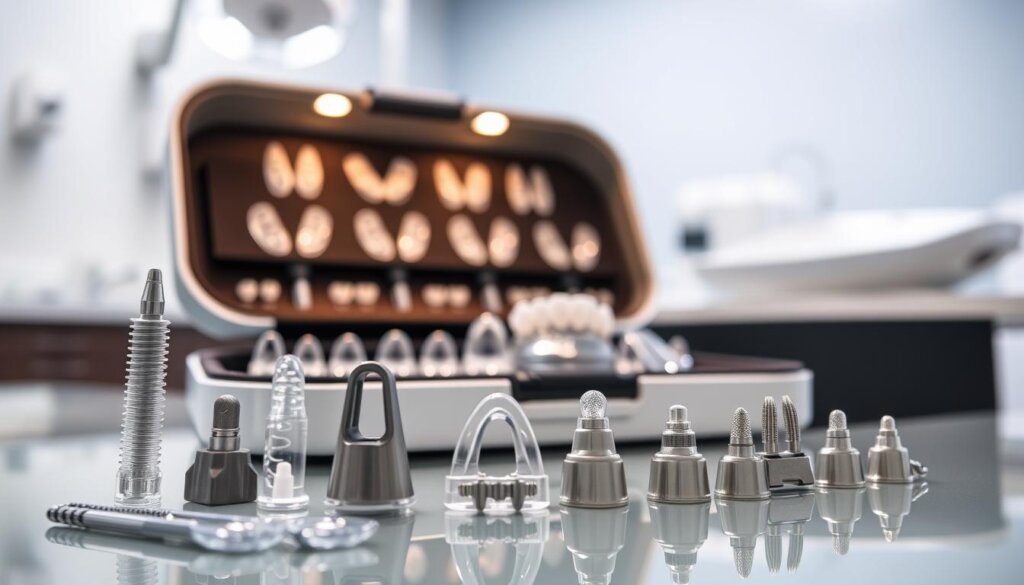
Attachments and buttons are used for specific issues like overbites. They’re tooth-colored to blend in. Placing these auxiliary orthodontic devices with clear aligners needs careful planning.
Precision cuts in aligners fit elastics for certain malocclusions. These elastics help correct jaw and dental problems. Aligner mechanics and elastic traction work together for full correction.
Invisalign aligners with mandibular advancement help push the lower jaw forward. This is great for growing patients with small jaws. It uses growth to improve jaw position.
Attachments and devices have changed clear aligners. They’re now full orthodontic systems for severe malocclusions.
| Attachment Type | Primary Function | Clinical Application | Biomechanical Advantage |
|---|---|---|---|
| Optimized Rotation | Create rotational couples | Canine and premolar rotation | Enhanced torque generation through beveled edges |
| Vertical Rectangular | Facilitate extrusion movements | Vertical tooth positioning | Vertical force application points |
| Beveled Root Control | Enable root torque expression | Root angulation correction | Force direction toward apex |
| Precision Wings | Mandibular advancement | Overbite correction in growth | Consistent sagittal force delivery |
Hybrid Treatments: Combining Braces and Invisalign
Sequential treatment protocols use braces and clear aligners together. Braces are great for some movements, while Invisalign is better for others. This mix is used for complex cases.
Braces are better for very rotated teeth. They apply constant force for better control. Vertical corrections and space closure also work better with braces.
Switching to clear aligners happens when the hard parts are done. This lets patients enjoy the benefits of Invisalign for the rest of treatment. It’s more comfortable and looks better.
Sequential treatment protocols need careful timing. Orthodontists plan when to switch based on tooth movement and goals. It balances efficiency with what the patient wants.
This approach is great for adults with complex teeth. Braces handle the hard parts, and Invisalign finishes it off. Treatment planning is key for success.
Custom Treatment Plans for Difficult Cases
Experienced providers like Diamond and Elite Invisalign practitioners create special plans for tough cases. They use advanced knowledge to customize treatment. This is key for Invisalign for severe malocclusion cases.
Using interproximal reduction creates space without removing teeth. It’s a way to make teeth fit better without harming them. This can avoid the need for tooth removal in some cases.
Staging tooth movements helps avoid problems. Instead of doing everything at once, treatment is done in stages. This respects the body’s limits and ensures better results.
Custom treatment planning for complex cases includes:
- Comprehensive diagnostic records including CBCT imaging for three-dimensional treatment visualization
- Biomechanical analysis of proposed tooth movements to identify possible complications before starting treatment
- Strategic attachment placement based on force system requirements, not just template positioning
- Scheduled refinement stages in the original plan to address expected changes
- Patient compliance protocols including monitoring wear time and progress
Mid-course corrections are important for complex cases. Even with good planning, things can change. Experienced providers check progress and make adjustments as needed.
Refinement aligners are used for unexpected movements. They fine-tune tooth positions and complete corrections. This shows proactive management and a commitment to the best results.
Managing severe malocclusion with clear aligners needs understanding and problem-solving skills. The best results come from anticipating challenges, making strategic changes, and keeping treatment on track. This is what advanced Invisalign practice is all about.
The Role of the Orthodontist
Invisalign technology is advanced, but a trained orthodontist’s judgment is key to success. Digital planning software shows possible outcomes. Yet, interpreting these simulations and making adjustments needs years of training.
An orthodontist turns technology into real results through professional planning. This is critical for complex dental cases. The role of training, experience, and judgment in treatment success is clear.
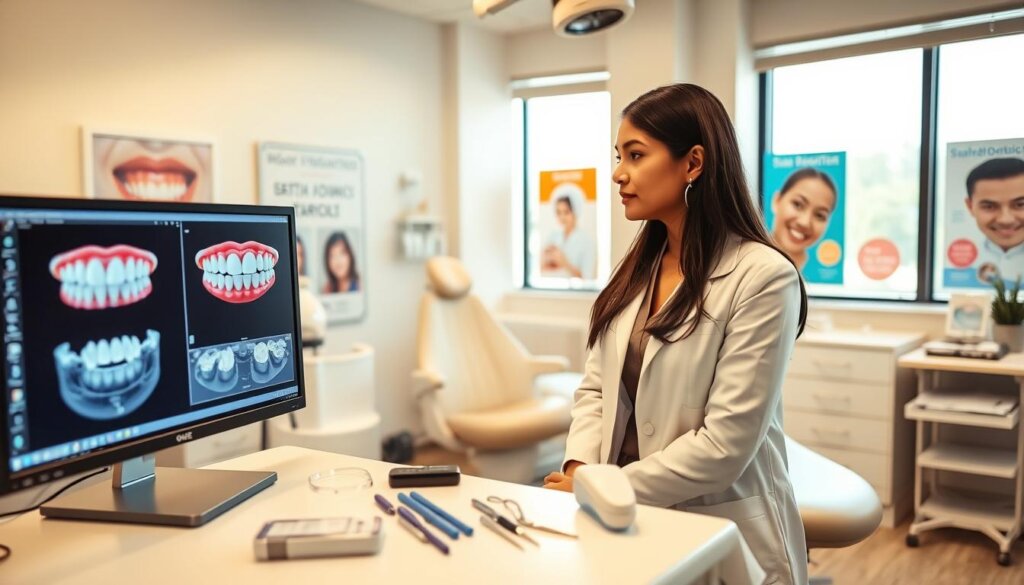
The Critical Value of Specialized Training
A qualified orthodontist offers more than just aligners. They have two to three years of extra education. This focuses on orthopedics, biomechanics, and treatment planning.
General dentists might offer Invisalign after weekend courses. But, specialists are better for complex cases. Orthodontic expertise in clear aligner therapy includes growth and jaw analysis.
Provider levels in the Invisalign system show experience. These levels help patients know the practitioner’s skill:
| Provider Level | Annual Case Volume | Experience Significance |
|---|---|---|
| Preferred Provider | 20+ cases per year | Established practice with consistent patient flow |
| Premier Provider | 50+ cases per year | Extensive recent experience with diverse case types |
| Elite Provider | 1,000+ lifetime cases | Deep knowledge of system capabilities and limitations |
| Diamond Provider | Top 1% nationally | Exceptional volume demonstrating mastery of complex treatments |
Dr. Scott, an Elite Provider, has over a thousand cases. His experience helps him spot complications and solve problems.
Customizing Treatment Through Clinical Expertise
Orthodontists turn digital plans into personal plans. They use technology and judgment. Orthodontic expertise in clear aligner therapy shows in their adjustments.
ClinCheck software creates a first plan. Experienced orthodontists then adjust it. Treatment planning protocols are key to success.
Orthodontists check if tooth movements are possible. They decide on attachments and adjustments. This ensures the aligners work well.
They plan treatment in phases. This approach fixes foundational issues first. It makes sure later movements work well.
Orthodontists deeply understand each patient. They consider more than just teeth. This approach ensures a complete treatment plan.
Tracking Treatment and Making Necessary Modifications
Regular checks are key to clear aligner therapy. Orthodontists see patients every eight to twelve weeks. These visits are important for more than just new aligners.
At these visits, orthodontists check if teeth are moving right. Progress monitoring systems help spot small problems early. This prevents bigger issues later.
When teeth don’t move as expected, adjustments are needed. Experienced orthodontists know how to fix this. They might change the aligners or add attachments.
Adjustments are normal in complex cases. The first aligners set the stage. But, adjustments are needed for the best results. Progress monitoring systems help make these changes.
Good orthodontists see treatment as a process that needs updates. They talk with patients about progress and changes. This approach uses mid-course correction strategies to handle complex cases.
The relationship between patient and orthodontist lasts the whole treatment. Regular visits help address concerns and celebrate progress. This keeps patients involved and informed.
Patient Testimonials: Real-life Experiences
Looking at Invisalign patient outcomes shows both successes and challenges. People who have used clear aligners share their experiences. This helps others know what to expect, beyond just the facts.
Many adults who had braces as kids now use Invisalign. They want a straight smile again. But, they must wear their retainers all the time to keep their teeth straight.
Success Stories with Invisalign
People from all over the US have straightened their teeth with Invisalign. What makes some people do better than others? It’s a mix of good treatment and how well the patient follows the plan.
Some adults got their teeth straightened again after they relapsed. They did it in 12 to 18 months by wearing their aligners every day. Others with crooked teeth also saw big changes, thanks to clear aligners.
There are a few key things that help people get good results:
- Wearing the aligners for 20-22 hours a day consistently
- Going to check-ups on time to make sure treatment is going right
- Cleaning the aligners well to avoid problems
- Knowing what to expect from the treatment
Clear aligners can fix many problems with teeth. They can even fix crowding and overbites. This shows how flexible and effective they are.
How long treatment takes can vary. Some people get their smile in a year, while others need six months more. It depends on how crooked their teeth were and how well they followed the treatment plan.
Challenges Faced by Patients
Patients face many challenges with Invisalign. Knowing about these compliance challenges with clear aligners helps prepare for treatment. Being honest about what to expect helps avoid disappointment.
Getting used to new aligners can be hard. Patients might feel pressure and soreness as their teeth move. But, this usually goes away in a few days.
Speaking clearly can be tough at first. The aligners can change how you sound. But, most people get used to it in a week or two.
Changing your diet can be hard. You have to take out your aligners to eat. This means planning your meals and finding times to clean your teeth.
Other challenges include:
- Keeping up with wearing the aligners all day, every day
- Dealing with visible bumps from attachments in public
- Fixing problems with the aligners when they don’t fit right
- Being careful with hot or cold drinks after putting in your aligners
These compliance challenges with clear aligners show why picking the right patient is key. People who do well with Invisalign are motivated and organized.
Insights from Orthodontic Professionals
Orthodontists have insights on what makes treatment successful. They say it’s a mix of technology and patient effort. The patient’s role is just as important as the treatment itself.
Orthodontists look for certain traits in patients. Those who ask questions and understand the treatment do better. People who are organized and have realistic expectations are also more likely to succeed.
Common problems include not wearing the aligners enough and losing or damaging them. This can mess up the treatment plan. It’s important to address these issues quickly.
The technology is great for planning tooth movements. But, it’s the patient’s commitment to wearing the aligners that makes it happen.
To help patients stick to the treatment, orthodontists use reminders and regular check-ups. They also encourage patients to talk about any problems they have. This helps avoid bigger issues later on.
Orthodontists also say it’s important to choose the right cases for clear aligners. Trying to fix too much with them can lead to disappointment. It’s better to be honest about what can be fixed and what can’t.
| Experience Factor | Success Indicators | Challenge Indicators | Professional Recommendations |
|---|---|---|---|
| Treatment Compliance | Consistent 20-22 hour daily wear, organized routine integration | Irregular wear patterns, frequent aligner loss or damage | Implement reminder systems, establish accountability through regular appointments |
| Patient Communication | Proactive questions, prompt reporting of issues | Delayed problem disclosure, unrealistic expectation persistence | Create open dialogue channels, encourage immediate concern reporting |
| Lifestyle Adaptation | Seamless integration of removal/insertion protocols, dietary planning | Social dining complications, professional setting concerns | Provide practical strategies for various scenarios, normalize adjustment period |
| Outcome Satisfaction | Realistic pre-treatment expectations, appreciation of gradual progress | Impatience with timeline, focus on minor imperfections | Establish clear milestones, use progress photos to demonstrate improvement |
Orthodontists agree that success with Invisalign comes from teamwork. The technology helps, but it’s the patient’s effort and understanding that really make a difference.
Comparing Treatment Duration: Invisalign vs. Braces
The time it takes to get a straighter smile varies a lot. This depends on the orthodontic method and individual factors. Both Invisalign and traditional braces can straighten teeth, but the time it takes differs.
Knowing how long orthodontic treatment will take helps patients make better choices. The time needed is a big commitment that affects daily life and finances. For those with complicated cases, choosing between Invisalign and braces is a big decision.
Every person’s treatment time is different. It depends on their teeth, how crooked they are, and how well they respond to treatment. What works for one person might take longer for another, even with the same treatment.
Average Treatment Times for Different Cases
Invisalign treatment time varies based on how complex the case is. Some people get their smile in 12 months, while others take 18 months or more. The time needed depends on how crooked the teeth are and how much correction is needed.
For simple cases, like minor spacing issues, treatment can take 6 to 12 months. These cases need only a little tooth movement. More complex cases, like significant crowding, take 12 to 18 months.
Severe cases, like very crooked teeth, can take 18 to 24 months or longer. Extremely crooked teeth take longer to straighten, while mildly crooked teeth need less time.
| Case Complexity | Invisalign Duration | Traditional Braces Duration | Key Considerations |
|---|---|---|---|
| Simple (Minor alignment) | 6-12 months | 6-12 months | Comparable timelines for both methods |
| Moderate (Significant crowding) | 12-18 months | 12-18 months | Similar efficiency for appropriate cases |
| Complex (Severe malocclusion) | 18-24+ months | 18-24 months | Braces may be faster for boundary cases |
| Hybrid Treatment | 20-26 months | 18-22 months | Slightly extended but offers aesthetic benefits |
How do treatment timelines for Invisalign compare with traditional braces for similar cases? Research shows that for the right cases, Invisalign and braces can take about the same time. But, cases that are close to the limit of what Invisalign can do might take longer.
Factors That Affect Treatment Length
Many things can change how long orthodontic treatment takes. Knowing these factors helps patients set realistic goals and get the best results. The mix of clinical factors and patient behavior determines the final time needed.
Wearing aligners for 20 to 22 hours a day is key to success and time. If aligners are worn less, treatment takes longer. Wearing them consistently keeps the teeth moving as planned.
Important factors that affect treatment time include:
- Initial severity of malocclusion: More severe misalignment needs more tooth movement and longer treatment.
- Complexity of required tooth movements: Rotations and vertical movements take longer than simple tipping movements.
- Biological factors: Age and bone density affect how fast teeth move, with younger patients moving faster.
- Treatment tracking accuracy: How well teeth follow the planned movement sequence affects the need for refinements.
- Mid-course refinements: Adding new aligner sets to correct discrepancies extends treatment but improves results.
Starting with braces for complex cases and then switching to Invisalign for the finish can take similar or a bit longer time than braces alone. This approach offers big aesthetic benefits during the final stages.
Long-Term Commitment to Oral Health
Orthodontic treatment is just one part of taking care of your teeth for life. The active correction phase must be followed by a long-term retention plan to keep the teeth straight. This long-term commitment extends far beyond the initial treatment duration.
Keeping teeth straight long-term requires wearing retainers, either fixed or removable, as directed by your orthodontist. Many orthodontists recommend wearing retainers every night to prevent teeth from shifting back. Teeth naturally want to move, so this is a lifelong habit.
Protecting the investment in orthodontic correction requires diligent retention practices. Neglecting retention can lead to disappointing results, requiring more treatment to fix. The retention phase is a critical part of maintaining the results of active treatment, making it essential when considering overall treatment time.
Cost Considerations for Invisalign
When choosing orthodontic treatment, cost is a big factor. Knowing all the costs helps people make smart choices. This includes insurance, payment plans, and the long-term benefits of better health and looks.
Talking openly about costs helps avoid surprises. What should patients think about when looking at the cost of orthodontic care?
Average Costs Compared to Traditional Braces
Invisalign costs vary based on how complex the case is and how long treatment takes. In the U.S., prices range from $3,000 to $8,000. This range shows the difference in the number of aligners, treatment time, and how severe the teeth issues are.
Traditional metal braces cost between $3,000 and $7,000. Ceramic braces, which look like Invisalign, cost from $4,000 to $8,000. This shows Invisalign is a good option, not just a pricey choice.
Several things affect the cost:
- Laboratory fees for making custom aligners and digital planning tools
- Professional expertise of the orthodontist and their training
- Technology investments in digital tools and 3D imaging
- Monitoring frequency and how often adjustments are needed
- Case complexity and if more aligners or special treatments are needed
More complex cases or longer treatments cost more. The orthodontist’s skill with Invisalign also affects the price.
Insurance Coverage and Financial Options
Insurance for clear aligners is similar to traditional braces. Most plans have lifetime maximums from $1,000 to $3,000. Insurance doesn’t usually care if it’s Invisalign or metal braces.
Check your policy, as some plans have age limits or need approval before starting treatment.
There are other ways to pay for orthodontics too:
- Flexible Spending Accounts (FSAs) let you use pre-tax dollars for orthodontics
- Health Savings Accounts (HSAs) offer tax benefits and carry over funds
- Internal financing arrangements by orthodontists for monthly payments
- Interest-free payment plans for 12-24 months
- Third-party healthcare credit for medical and dental costs
Orthodontists often help find payment plans that fit your budget. This makes treatment more accessible without sacrificing quality.
“The best orthodontic treatment is the one that achieves optimal clinical results while respecting the patient’s financial circumstances and personal preferences.”
Understanding the Value of Personalized Treatment
Looking at treatment as an investment shows its value goes beyond looks. It improves health and wellbeing for life.
It makes eating better, reduces gum disease risk, and protects teeth. These benefits mean fewer dental problems and lower healthcare costs later.
It also boosts self-confidence and social life. Studies show happy smile people do better in life and work.
Cost is just one thing to think about. Choosing the wrong treatment for cheap can lead to worse outcomes and more costs later.
The right treatment depends on the case, lifestyle, and expected results. An orthodontist’s advice considers all these factors.
Real value means fixing the problem well, in a reasonable time, and within your budget. This balanced view ensures cost doesn’t rule out the best treatment.
Preparing for Your First Invisalign Appointment
Getting ready for your first Invisalign visit is key. It helps you make informed choices and feel more involved in your treatment. Knowing what to expect can make you feel less nervous and more ready to start.
Many orthodontists offer free smile exams and complimentary evaluations. This makes it easier for you to check out treatment options without worrying about the cost right away.
Understanding the Initial Consultation Experience
Your first Invisalign visit starts with a detailed talk about your dental needs. Your orthodontist will ask about your concerns, what you want to look like, and any issues with your bite. This helps them understand your situation better.
The exam itself looks at many parts of your teeth and mouth. It checks if treatment is possible and what it might look like.
How does advanced technology transform the consultation experience? Today, iTero digital scanning technology makes detailed 3D images of your teeth and gums. It’s quick and doesn’t hurt like old-fashioned impressions.
This tech helps plan your treatment better. You can see how your teeth might move with the aligners. This helps you understand what to expect.
The exam looks at several important things:
- Facial proportions and symmetry to check if your face looks balanced
- Tooth positions and occlusal relationships to find any alignment problems
- Periodontal health screening to see if your gums are healthy enough for treatment
- Existing dental restorations that might affect how the aligners fit
- Temporomandibular joint function to check your jaw’s health
Essential Questions for Your Orthodontic Provider
It’s important to ask questions during your visit. This shows you’re serious about understanding your treatment. It also helps set clear expectations.
Ask about your orthodontist’s experience with Invisalign and complex cases. Knowing they’re skilled in your situation can give you confidence. What percentage of their practice involves clear aligner therapy versus traditional appliances?
Ask about the treatment itself, too:
- Alternative treatment options: What else could work, and what are the benefits?
- Treatment duration: How many sets of aligners you’ll need and how long it will take
- Progress monitoring: How they’ll track your progress and handle any problems
- Refinement policies: What if you need changes in your treatment plan, and what will it cost?
- Retention protocols: What happens after your treatment to keep your smile looking good
- Comprehensive costs: What the total cost will be, including any extra fees
Patients who are involved in their treatment and ask the right questions usually get better results and are happier with their treatment.
Talk about insurance and payment options to understand the financial side. Knowing the total cost helps avoid surprises and lets you plan better.
Practical Steps Before Beginning Treatment
Before starting treatment, there are a few things to do. Make sure your teeth are in the best shape possible before getting your aligners.
Fix any dental problems like cavities or gum disease before starting treatment. This includes cavity treatment, periodontal therapy, and planned extractions if needed. These steps must be done before your aligners are made.
Start good oral hygiene habits early. Brushing and flossing daily are key to keeping your teeth and gums healthy while wearing aligners.
Get ready for some lifestyle changes. You’ll need to wear your aligners for 20-22 hours a day. Remove them only for eating and drinking, then clean your teeth before putting them back in.
You might need to change your diet to protect your aligners and teeth. Avoid hard, sticky, or sugary foods to prevent problems. Plan your meals and snacks to fit your aligner schedule.
Make sure you can get to your regular check-ups. These visits usually happen every 6-8 weeks. They let your orthodontist check on your progress and give you new aligners. Keep your schedule open for these appointments to avoid delays.
Your success with Invisalign depends a lot on your first visit and the steps you take before starting treatment. Being well-prepared and understanding your role in the process can lead to great results.
Managing Discomfort and Adjustments
When starting Invisalign, some people feel temporary discomfort. This usually goes away with time and the right strategies. It’s normal for your body to adjust to the aligners moving your teeth.
Getting your teeth straight with Invisalign needs you to manage discomfort well. Sticking to the treatment plan is key. Most issues are short-lived and get better as you get used to wearing the aligners.
Common Challenges with Invisalign
There are a few common issues when using clear aligners. Feeling pressure and soreness when you first put on a new set is common. This is because the aligners are moving your teeth.
Some people notice their speech changes at first. This is because your tongue needs to get used to the aligners. Usually, your speech goes back to normal in a couple of weeks.
It’s normal to have more saliva at first. This usually goes back to normal in a week. You might also feel some irritation where the aligners touch your gums or cheeks. This usually gets better as your mouth gets used to the aligners.
Wearing the aligners for 20 to 22 hours a day can be tough. It might be hard to keep up with this, but it’s important for your teeth. Some people worry about how they look with the aligners, but they are pretty hard to see.
How do you know if you’re feeling normal discomfort or if you need to see a dentist? Discomfort that goes away in three to four days is usually okay. But if you have pain that lasts, or if your aligners don’t fit right, you should see a dentist.
| Challenge Type | Typical Duration | Management Approach | Professional Intervention Needed |
|---|---|---|---|
| Pressure and soreness | 2-4 days per aligner change | OTC pain relievers, evening transitions | Only if pain persists beyond 5 days |
| Speech alterations | 1-2 weeks initial adaptation | Practice exercises, gradual improvement | Only if continues beyond 3 weeks |
| Soft tissue irritation | Variable, typically 3-7 days | Orthodontic wax, smoothing edges | If causing ulceration or bleeding |
| Increased salivation | 3-7 days initial period | Hydration, time for adaptation | Rarely required |
Tips for Easing Discomfort
There are ways to make treatment more comfortable. One good tip is to put on new aligners in the evening. This way, you can adjust to the feeling while you sleep.
Over-the-counter pain relievers can help with the first few days of new aligners. Always follow the instructions on the package. Talk to your dentist about what’s best for you.
Using orthodontic wax can help with irritation. It creates a barrier between the aligners and your gums. This can help prevent soreness.
Practicing speaking can help with speech changes. Try reading out loud or repeating words. Most people find their speech gets back to normal in a couple of weeks.
Using the right tools to remove your aligners can prevent damage. These tools make it easier to take out your aligners without hurting your teeth or gums.
Keeping your teeth and gums clean is important. This helps your mouth feel better and can make treatment more comfortable. Brush your teeth after meals and before putting in your aligners.
Drinking plenty of water can help with saliva issues. Staying hydrated can also help your body adjust to the aligners. It’s good for your overall health too.
The Importance of Consistent Wear
Wearing your aligners as directed is very important. It’s based on how teeth move when forces are applied. If you don’t wear them enough, your teeth might not move as planned.
Why is it so important to wear your aligners consistently? Following the treatment plan helps your teeth move as planned. If you don’t wear them enough, it can slow down your treatment.
Not wearing your aligners as directed can lead to problems. Your teeth might not move as expected. This can make it hard to fit your aligners properly, which can slow down your treatment.
Not following the treatment plan can affect how well your teeth straighten. If you don’t wear your aligners enough, your teeth might not end up where they’re supposed to be. This can mean you need more aligners, which can make treatment longer and more expensive.
Building a routine for wearing your aligners can help. Try to put them in and take them out at the same times each day. Using reminders or apps can help you stay on track.
Having a case for your aligners can help you remember to wear them. It’s easier to keep them in their case when you’re not wearing them. This makes it less likely that you’ll lose them.
Having your family support you can help too. They can remind you to wear your aligners and encourage you when it gets tough. This is really helpful for kids who are just starting treatment.
Patients who stick with it and get used to wearing their aligners usually do well. They get the results they want in the time they expect. Starting off on the right foot and wearing your aligners consistently makes treatment easier and more successful.
Aftercare: Retainers and Maintenance
The retention phase is key to keeping teeth straight after orthodontic treatment. Keeping teeth aligned is a lifelong commitment. Without proper care, teeth can move back to their original spots.
Many adults get Invisalign again because they didn’t wear their retainers. This shows that even the best orthodontic work can fail without proper care.
Keeping teeth straight for a long time depends on the care you give them after treatment. The effort and money spent on straightening teeth should be protected.
Available Retention Appliance Types
Orthodontists offer different retainers after clear aligner therapy. Each type has its own benefits for different needs. The choice depends on many factors.
Vacuum-formed retainers look like Invisalign aligners and work the same way. They are made from the final tooth positions and are clear. But, they need the patient to wear them all the time.
Hawley retainers have a plastic part and wire clasps. They are strong and can be adjusted. But, they are more noticeable because of the wire.
Fixed lingual retainers are thin wires bonded to the teeth. They can’t be removed and are great for keeping teeth in place. They are perfect for preventing teeth from moving.
What decides the best retainer for you? Orthodontists look at several things:
- Initial malocclusion severity: More severe cases need stronger retainers
- Age and growth status: Younger patients need longer retention
- Periodontal health: Gum health affects the choice of retainer
- Contributing habits: Habits that caused the misalignment are considered
- Patient reliability: How well you follow instructions matters
Many orthodontists suggest using both fixed and removable retainers. This way, teeth in the front get automatic support, and teeth in the back get flexible support. It’s a good mix.
Preserving Your Orthodontic Investment
Tooth positions can change over time. Growth, gum changes, and other factors make retention necessary forever. This keeps teeth in their place.
Thinking treatment is “finished” is a mistake. Teeth are always moving due to forces in the mouth. Retention is a lifelong process.
How often should you wear retainers? The usual plan is to wear them all the time at first, then at night. This helps teeth stay in place.
| Time Period | Wear Schedule | Monitoring Frequency |
|---|---|---|
| First 3-6 months | Full-time wear (22+ hours daily, except during meals and oral hygiene) | Monthly evaluation |
| 6-12 months post-treatment | Nighttime-only wear (8-10 hours nightly) | Every 3 months |
| Beyond first year | Nightly wear indefinitely | Every 6-12 months |
| Long-term maintenance | Minimum 3-4 nights weekly (lifelong) | Annual check-ups |
This plan helps teeth stay stable while keeping retention going. Wearing them full-time at first is very important for stability.
Stopping retention too soon can lead to teeth moving back. Studies show up to 70% of patients experience tooth movement without retention. Many adults get Invisalign again to fix this.
Knowing retention is a lifelong commitment helps set realistic goals. It makes wearing retainers a permanent part of taking care of your teeth.
Ongoing Professional Monitoring
Regular check-ups are needed even after treatment ends. These visits are usually every six months to a year. They help keep teeth straight.
Orthodontists check how teeth are aligned during these visits. They compare current alignment to what it was after treatment. This helps catch any movement early.
They also check the condition and fit of retainers. Retainers can wear out and need to be replaced. If they don’t fit right, they can’t keep teeth in place.
Orthodontists also look for signs of teeth moving back. If teeth move too much, they might need to adjust the retainer or do a little more treatment. Catching it early helps avoid big problems later.
These visits are also a chance to remind patients about the importance of wearing retainers. Patients who understand why they need to wear retainers for life are more likely to do it.
If patients stop wearing retainers, teeth will start to move back. At first, it might seem like just a little bit, but it can get worse over time without treatment.
Orthodontic treatment is a big investment that needs ongoing care. Seeing retainers as a small part of that care helps protect the investment. Not wearing them means watching teeth move back to their original spots.
Good long-term care keeps teeth looking and working well. It keeps the benefits of treatment, like a better bite and healthier teeth, for a long time.
Final Thoughts: Is Invisalign Right for You?
Deciding if Invisalign is right for you involves careful thought. It’s about understanding your dental needs through a professional evaluation.
Weighing the Pros and Cons
Clear aligners have many benefits. They are almost invisible, easy to remove, and comfortable. They can even fix complex cases that metal braces used to handle.
But, they work best if you wear them as directed. Some severe problems might need traditional braces instead. Your suitability for clear aligners depends on your teeth, not just what you prefer.
Making an Informed Decision
Getting a professional evaluation is key to choosing the right treatment. You can’t fully understand your options without a dentist’s help. Experienced providers are better at handling tough cases.
Knowing what to expect from treatment is important. It helps you be happy with the results. Your dentist can guide you through this.
Next Steps on Your Journey to a Straighter Smile
The only way to know if Invisalign is for you is to get a free exam. Don’t worry if you think your case is too complex. Many people with severe issues have found success with clear aligners.
Start your journey to better dental health by contacting an orthodontic office. They can help you see if Invisalign is the right choice for you. Advances in orthodontics have opened up new possibilities for many.

