
I’ve Been Missing a Tooth for Years – Is It Stil Possible to Replace It Now?
Did you know that not replacing a lost tooth can cause up to 25% bone loss in a year? This shows how urgent it is to fix tooth loss quickly. Many think it’s okay to live with a gap in their smile. But, this small issue can lead to big dental problems.
But, modern dentistry has good news even if you’ve lost a tooth for years. It’s not too late to think about dental implants. Even if the jawbone weakens, new techniques like bone grafting can help rebuild it for a successful fix.
This article will look at how the mouth changes after losing a tooth and why acting fast is important. Knowing these changes helps when you’re thinking about replacing a tooth. It’s not just about looks; it’s also about keeping your mouth healthy for the long run.
Key Takeaways
- Delaying tooth replacement can lead to significant bone loss.
- Dental implants remain a viable option even after years without a tooth.
- Bone grafting can restore the jawbone, enabling successful implant placement.
- Understanding biological changes is key to effective treatment.
- Timely intervention can prevent further dental complications.
Understanding Tooth Loss
It’s important to know why teeth fall out to keep our mouths healthy. Teeth can fall out for many reasons, causing physical and emotional problems. This part will look at why teeth fall out and how it affects people.
Common Causes of Tooth Loss
There are several reasons why teeth might fall out. Here are some main ones:
- Advanced Periodontal Disease: This gum disease damages the teeth’s support, causing them to fall out.
- Dental Caries: Cavities can weaken teeth, making them likely to be pulled out.
- Traumatic Injury: Accidents can cause teeth to fall out, mostly in young people.
- Systemic Conditions: Diseases like diabetes can harm oral health, leading to tooth loss if not treated.
Without chewing, the jawbone can weaken. This can cause teeth to shift, leading to a bad bite. The biggest problem is jawbone loss, which happens when teeth roots are gone and the bone is absorbed by the body.
Emotional Impact of Missing Teeth
Missing teeth can deeply affect a person’s feelings. A gap can make someone feel:
- Diminished Self-Esteem: They might feel ashamed of how they look.
- Social Anxiety: They might avoid social events because of fear of being judged.
- Reluctance to Smile: This can hurt personal and work relationships.
These feelings show why finding tooth replacement options is so important. Getting teeth replaced is not just about looks; it’s about feeling confident and improving life quality.
| Cause of Tooth Loss | Physical Impact | Emotional Impact |
|---|---|---|
| Advanced Periodontal Disease | Loss of supporting structures | Increased anxiety and self-consciousness |
| Dental Caries | Compromised tooth integrity | Feelings of shame and frustration |
| Traumatic Injury | Immediate loss of teeth | Emotional distress and isolation |
| Systemic Conditions | Increased risk of oral health issues | Feelings of helplessness |
Benefits of Replacing a Missing Tooth
Choosing to replace a missing tooth is key for health and self-esteem. Knowing the benefits can encourage people to find a missing tooth solution. We’ll look at the main advantages of tooth replacement, including looks, function, and confidence.
Improved Aesthetics
One big plus of replacing a missing tooth is how it looks. A fake tooth fills the gap in your smile. It also brings back the shape of your face that might have changed.
This makes you look better and stops you from looking older than you are.
Enhanced Oral Functionality
Replacing a missing tooth also makes eating and talking easier. Without a tooth, chewing and speaking can be hard. This might cause a lisp or slurred words.
A dental prosthetic helps you chew right. It spreads out the force of biting, protecting your other teeth from wearing down too fast.
Boosted Confidence
Lastly, having a full smile is very important for your mind. Gaps in teeth can make you feel shy. This can hold you back in social and work situations.
With all your teeth, you can talk and meet people more easily. You’ll feel more at ease in both your personal and work life.

Timing: How Long Can You Wait to Replace a Tooth?
Replacing a missing tooth quickly is key to keeping your mouth healthy. Losing a tooth affects more than just how you look. It also changes the jawbone, making future dental work harder.
Knowing when to replace a tooth is important. Immediate replacement means putting in a dental implant right after you lose the tooth. This helps keep the jawbone strong and prevents bone loss. Delayed replacement means waiting a while before getting the implant. This can make the procedure more complicated, possibly needing bone grafts to build up the bone.
Immediate Replacement vs. Delayed Replacement
Putting in a dental implant right away has many benefits:
- It lowers the chance of bone loss.
- It makes the treatment shorter.
- It keeps your face looking good.
Waiting too long can make things harder. The jawbone can weaken over time. But, even if you wait, dental implants are often possible. Doctors can use special scans to see if your jawbone is ready for an implant.
Bone Health and Tooth Replacement
Not having a tooth means the jawbone doesn’t get the stress it needs. This can cause the bone to weaken. The bone needs the tooth root to stay strong.
In short, how soon you replace a tooth matters a lot. Doing it quickly can make things easier and cheaper. If you’re thinking about dental implants, talk to a dentist to see what’s best for you.
Available Tooth Replacement Options
When you lose a tooth, there are many ways to get it back. You can choose from dental implants, dentures, or bridges. Each option has its own benefits and drawbacks. It’s important to know what each one offers to find the best fit for you.
Dental Implants
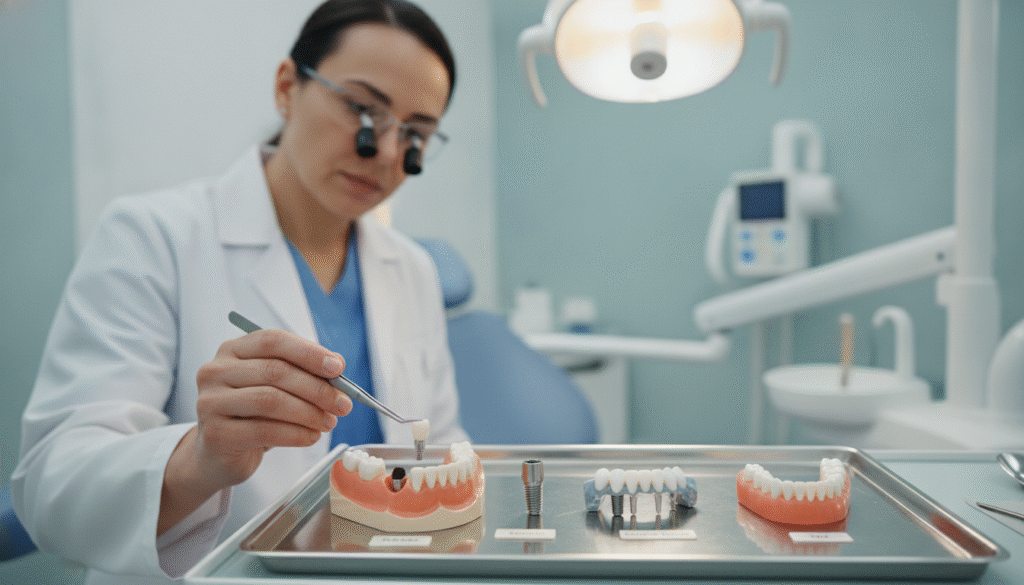
Dental implants are a top choice for tooth replacement. They have a titanium post that’s placed in your jawbone. This post acts like a tooth root and helps keep your jawbone strong.
Here are some key benefits of dental implants:
- Jawbone Preservation: Excellent. Stimulates bone, preventing resorption.
- Longevity: Excellent. Often lasts a lifetime.
- Impact on Adjacent Teeth: None.
Dentures
Dentures are removable and can replace many missing teeth. They’re a good option if you’re missing several teeth. But, they don’t stop bone loss in your jaw.
Here are some things to consider about dentures:
- Jawbone Preservation: Poor. Rests on gums, accelerating bone loss.
- Longevity: Fair. Typically lasts 5-10 years.
- Impact on Adjacent Teeth: None.
Bridges
Bridges are fixed and can replace one or more teeth. They attach to your natural teeth. But, they do require some of your healthy teeth to be filed down.
Here are some important points about bridges:
- Jawbone Preservation: Poor. Does not stimulate bone beneath the missing tooth.
- Longevity: Good. Generally lasts 5-15 years.
- Impact on Adjacent Teeth: Negative. Enamel reduction required.
| Dental Option | Jawbone Preservation | Longevity | Impact on Adjacent Teeth |
|---|---|---|---|
| Dental Implants | Excellent | Lifetime | None |
| Dentures | Poor | 5-10 years | None |
| Bridges | Poor | 5-15 years | Negative |
In summary, dental implants are the best choice for keeping your mouth healthy long-term. Knowing about dental options can help you make a choice that fits your life and dental needs.
The Process of Getting a Dental Implant
Learning about the replacing missing tooth procedure can ease worries about dental implants. This process has several key steps to ensure a successful and lasting fix for tooth loss. We’ll look at each step, from the first meeting to the final tooth placement.
Initial Consultation
The first step is an initial consultation. Here, your dentist checks your oral health. They use Cone Beam Computed Tomography (CBCT) to get a detailed 3D image of your jawbone. This helps them see if your bone is strong enough for the implant.
Surgical Procedure
After checking your health, the surgery starts. A small, biocompatible titanium implant post is placed in your jawbone. This method is gentle, keeping your tissues safe and helping you heal faster. The implant acts as a root for your new tooth, giving it a strong base.
Recovery Timeline
The recovery has several stages:
- Initial Healing: Your soft tissues start healing in the first few weeks after surgery.
- Osseointegration: Over 3 to 6 months, the implant becomes part of your jawbone, ready for the crown.
- Abutment Placement: After it’s fully integrated, a small connector piece, or abutment, is attached to the implant.
- Final Crown Restoration: Last, a custom-made crown is placed on the abutment, finishing the process.
If you’ve lost teeth for a long time, you might need a bone graft first. This adds a few months to the process but is key for the implant’s success.
| Phase | Duration | Description |
|---|---|---|
| Initial Healing | 1-2 weeks | Soft tissue healing around the implant site. |
| Osseointegration | 3-6 months | Implant fuses with the jawbone. |
| Abutment Placement | 1-2 weeks | Connector piece is attached to the implant. |
| Final Crown Restoration | 1-2 weeks | Custom crown is placed on the abutment. |
Knowing each part of the replacing missing tooth procedure can make you more confident in choosing dental implants. For more on tooth extraction and other dental services, check out this resource.
Dentures: An Alternative to Implants
Dentures are a good choice for those looking for alternatives to dental implants. They are removable and can make your mouth look and feel better. But, it’s important to know the different types of dentures and their good and bad points.
Types of Dentures Available
There are a few types of dentures to think about:
- Conventional Full Dentures: These are for people who have lost all their teeth. They sit on the gums and can be taken out.
- Partial Dentures: These dentures have a metal base and fit where some teeth are left. They are more stable than full dentures.
- Implant-Retained Overdentures: These dentures are held in place by implants. They are more stable and help prevent bone loss.
Pros and Cons of Dentures
It’s important to know the good and bad sides of dentures:
- Pros:
- They don’t need surgery to put in.
- They are cheaper than implants at first.
- They can be made and adjusted quickly.
- Cons:
- They don’t help keep the jawbone strong, which can cause bone loss.
- They might need to be adjusted or replaced often because they don’t fit well.
- They don’t chew as well as natural teeth or implants.
- They can be uncomfortable and irritate the gums.
Dentures are a good option for many, but they are not as good as implants. Implants help keep the jawbone strong, while dentures can make it weaker. This can lead to more problems over time.
Dental Bridges: When Are They Appropriate?
Dental bridges are a good choice for people missing teeth. They use nearby teeth as anchors to hold a fake tooth in place. This not only makes eating easier but also makes your smile look better.
Before getting a dental bridge, it’s important to know how it works. First, the anchor teeth are shaped to fit crowns. This changes the teeth forever, so think carefully about it.
How Bridges Work
Dental bridges work by attaching to the anchor teeth with crowns. This lets the bridge fill in the gap left by missing teeth. But, the bone under the fake tooth can start to shrink over time.
Longevity of Dental Bridges
Dental bridges usually last 5 to 15 years. How long they last depends on how well you take care of them and your teeth. Problems like tooth decay and bone loss can happen. Bridges are a good option for some, but they’re not a permanent fix.
| Factor | Impact on Longevity | Notes |
|---|---|---|
| Oral Hygiene | High | Regular brushing and flossing can extend lifespan. |
| Material Quality | Medium | Higher quality materials may last longer. |
| Dental Visits | High | Routine check-ups help identify issues early. |
| Bone Health | Medium | Healthy bone structure supports the bridge. |
In summary, dental bridges are a good option for those who need teeth fast. But, think about the long-term effects on your teeth and jaw. Talking to a dentist can help decide if a bridge is right for you.
Factors Influencing Your Tooth Replacement Options
Many things can affect the tooth replacement options you have. It’s important to understand these factors to make the best choice for your oral health.
Oral Health Considerations
Before picking a tooth replacement, check your oral health first. Some health issues can affect your ability to get certain treatments. Key things to consider include:
- Active Periodontal Disease: This can make dental implants and other surgeries less likely to succeed.
- Insufficient Bone Volume: Not enough bone might mean you need a bone graft before getting an implant.
- Systemic Conditions: Conditions like uncontrolled diabetes or past bisphosphonate use can slow healing.
Getting your oral health in top shape is key before any dental work. Regular dental visits can help spot and fix these problems early.
Budget and Insurance
The cost of tooth replacement is a big deal. A single dental implant can cost between $3,000 to $4,500. But, traditional Medicare doesn’t cover routine dental care, making it hard for many to afford.
But, there are ways to handle these costs:
- Dental Schools: Many offer care at lower prices, often 30% to 50% off.
- Community Health Centers: Resources from the Health Resources & Services Administration (HRSA) can help find affordable dental care.
- Payment Plans: Talking to your dentist about payment plans can make it easier to manage costs.
Knowing your budget and insurance can help you choose the best dental care for you.
| Factor | Impact on Treatment | Possible Solutions |
|---|---|---|
| Active Periodontal Disease | May delay or prevent surgery | Treat periodontal disease before proceeding |
| Insufficient Bone Volume | May require bone grafting | Consider bone grafting options |
| Systemic Conditions | Can hinder healing | Manage health conditions before surgery |
Addressing Concerns About Pain and Recovery
Many people worry about pain and recovery when thinking about dental implants. Knowing how to manage pain can ease these worries. This part talks about pain control during and after the procedure, and how long it takes to get better.
Pain Management Strategies
During the dental implant surgery, deep local anesthesia is used to keep patients comfortable. For those who are nervous, sedation options like oral conscious sedation or nitrous oxide are there. These help patients feel little to no pain during the procedure.
After the surgery, some soreness is normal. To handle this, doctors usually recommend taking NSAIDs like ibuprofen. Also, using a cold compress on the area can help with swelling and pain.
Expected Recovery Time
Recovering from dental implant surgery is usually easy. Most people can go back to their usual activities in a day or two. It’s worth noting that the soreness usually gets worse in the first 48 hours but then gets better in a few days.
The healing process has two parts: the initial recovery and the osseointegration phase. The first part is when you feel sore, but the second part is when the implant bonds with your jawbone. Knowing this can make the process seem more manageable than expected.
| Phase | Duration | Symptoms | Management Strategies |
|---|---|---|---|
| Acute Recovery | 1-2 days | Pain, swelling | NSAIDs, cold compress |
| Osseointegration | 3-6 months | Minimal discomfort | Regular follow-ups |
The Role of Age in Tooth Replacement
Many think age limits tooth replacement. But, it’s not true. What really matters is your health and bone quality, not just your age.
Studies show dental implants work well even in people over 90. This proves age isn’t a big deal for dental treatments.
Older adults might face special challenges. A detailed medical check is key to find the right tooth replacement. Things like health problems and many medicines can affect the choice.
Is Age a Barrier to Replacement?
Age shouldn’t stop you from getting dental help. Dental experts look at your health, not just your age. If you’re healthy and have strong bones, you can get implants, no matter how old you are.
Considerations for Older Adults
Older people might have dry mouth, which makes oral care harder. This needs special care during tooth replacement. Also, implants can make eating and living better than old dentures.
| Factor | Impact on Treatment | Considerations |
|---|---|---|
| Bone Density | Critical for implant success | Bone grafting may be needed |
| Comorbidities | Affects healing and recovery | Medical clearance required |
| Xerostomia | Increases risk of decay | Hydration and saliva substitutes recommended |
In short, age shouldn’t stop you from looking into tooth replacement. A dental check can help older adults get the care they need.
“The greatest gift is not being afraid to question.”
Importance of Professional Consultation
Finding a skilled dentist is key when looking to replace a tooth. The right professional can help you through the replacing missing tooth procedure. It’s important to know the roles of different specialists for the best results.
General dentists can do extractions, dentures, and implants. But for complex cases, you might want a specialist. Periodontists work on gum health and might place implants. Oral surgeons handle extractions and implants, while prosthodontists focus on the final restoration, like crowns.
Having a team of specialists work together can lead to the best results. Look for a provider with training in implantology and access to advanced tools like CBCT scans. These tools help plan treatments better and can improve success rates.
Questions to Ask During Your Consultation
- What is your experience with cases involving long-term edentulism?
- What are your success rates for dental implants?
- Will I need bone grafting before the procedure?
- Can you provide a detailed breakdown of the timeline and costs?
- What type of final restoration do you recommend?
Asking these questions helps you make a well-informed decision. Knowing the provider’s expertise and the treatment plan is key. Being well-informed makes your tooth replacement journey smoother.
Lifestyle Changes After Tooth Replacement
After tooth replacement surgery, it’s key to start healthy habits. These changes help your new dental work last longer. This part will cover important diet and oral care tips for a smooth recovery.
Dietary Adjustments
Right after surgery, eat soft, gentle foods. This keeps the healing area safe. Good options include yogurt, mashed potatoes, and smoothies.
As you heal, you can eat more foods. But be careful. Dental implants let you chew well, but don’t use your teeth as tools or chew hard things like ice. This can harm the implant.
Oral Hygiene Practices
Keeping your mouth clean is vital after surgery. Treat your implants like your own teeth. This means:
- Brushing twice a day with a soft toothbrush.
- Using gentle toothpaste to avoid implant damage.
- Using interdental brushes or water flossers for the implant area.
Good daily care stops problems like peri-implantitis. Regular dental visits are also key to check implant health.
| Dietary Recommendations | Foods to Avoid | Oral Hygiene Tips |
|---|---|---|
| Soft foods like yogurt and smoothies | Hard candies and ice | Brush twice daily |
| Mashed potatoes and soups | Crunchy snacks like chips | Use low-abrasive toothpaste |
| Steamed vegetables | Using teeth as tools | Regular dental check-ups |
Maintaining Your Replacement Tooth
Keeping your tooth replacement in good shape is very important. Regular care and visits to the dentist can greatly improve how long they last. This part will cover the best ways to take care of these replacements, so they last for many years.
Regular Check-Ups
Going to the dentist regularly is key for your dental replacements. These visits help in many ways:
- They let your dentist check the bone around your implants.
- They clean your implants with special tools to avoid damage.
- They check the health of your gums and teeth.
Regular dentist visits keep your replacements in top shape. They also help keep your whole mouth healthy.
Caring for Implants or Dentures
How you care for dental implants and dentures is different. Dental implants can last 20 years or more with the right care. You should brush and floss them like your natural teeth. But, the crown might need to be replaced after 10-15 years because of wear.
Dentures need a lot of care. They should be taken out every day for cleaning and soaked in a solution to stop bacteria. They can break easily, so you need to handle them carefully.
Knowing how to take care of your tooth replacements is important. It helps them last longer and keeps your mouth healthy.
Moving Forward: Regaining Your Smile
Having a missing tooth can cause many problems. It affects your health and how you feel. It’s important to know you can fix this. Doing so can stop more issues like bone loss and teeth moving out of place.
Getting a missing tooth replaced can really help your mind. A new smile can make you feel better about yourself. People often say they feel more confident and enjoy being around others more.
After talking to your dentist, make sure to follow their advice. Look over the treatment plan they suggest. If needed, get ready with procedures like bone grafting. This will help your teeth before the main fix.
Modern treatments can fix the damage from losing teeth. Seeing a dentist is the first step to a better smile. It’s the start of your journey to a healthy, confident smile.
