What are the Risks or Complications of Getting a Dental Implant?
Did you know nearly 5 million dental implants are placed in the United States each year? These implants help restore chewing ability and improve appearance. But, they come with their own set of challenges.
Dental implants are a top choice for tooth replacement, with a high success rate. Yet, problems can happen at any time. This includes right after surgery, during healing, or even years later. Some issues might cause the implant to fail, showing as looseness or loss.
It’s important to know about these possible problems before getting a dental implant. By understanding the risks, like biological, mechanical, or esthetic ones, you can prepare better. This knowledge helps you make smart choices about your dental health.
Key Takeaways
- Dental implants can fail due to various complications.
- Complications can occur at different stages of the process.
- Understanding risks is essential for effective management.
- Risks can be categorized into biological, mechanical, and esthetic.
- Informed decisions can enhance dental health outcomes.
Understanding Dental Implants
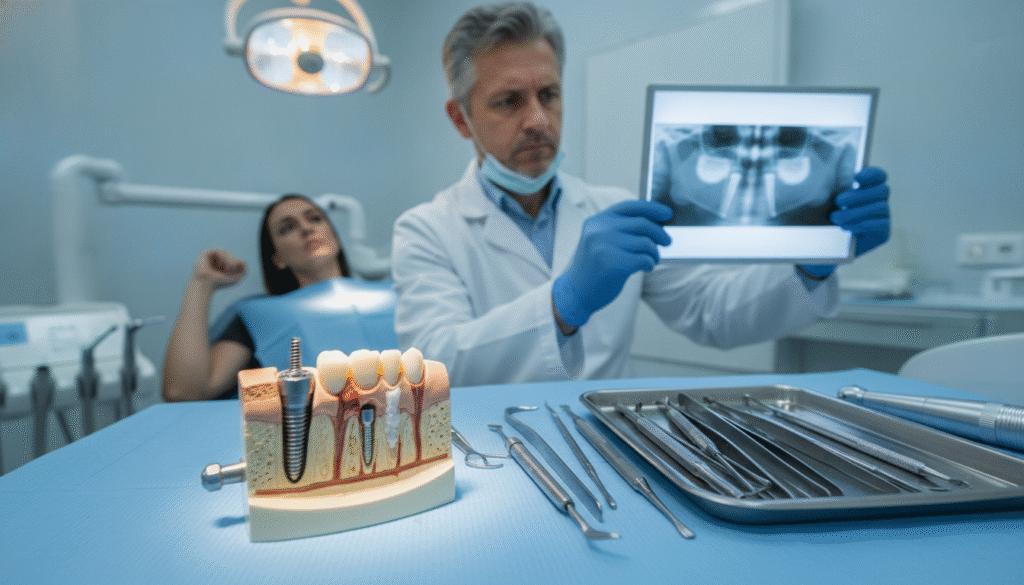
Dental implants are a modern fix for those wanting to improve their smile and chewing. They are placed in the jawbone, acting like a tooth’s root. They help hold artificial teeth in place, like crowns or dentures.
It’s key to know what makes up a dental implant system. This knowledge helps us see why problems might happen.
Definition and Purpose
Dental implants replace missing teeth by blending with the jawbone. They help you chew better, keep your jaw strong, and look good. The implant works by fusing with the bone, making it a strong and lasting choice.
Components of a Dental Implant
A dental implant system has three main parts:
- Implant Body: This is the titanium or zirconia post that goes into the jawbone, like a tooth’s root.
- Abutment: A connector that links the implant body to the gum, supporting the final tooth.
- Prosthesis: The artificial tooth, like a crown or denture, that sits on the abutment.
| Component | Material | Function |
|---|---|---|
| Implant Body | Titanium/Zirconia | Serves as the root of the tooth |
| Abutment | Metal/Plastic | Connects the implant to the prosthesis |
| Prosthesis | Ceramic/Resin | Visible replacement tooth |
Potential Risks of Dental Implants
Dental implants are a great fix for missing teeth, but they carry risks. It’s important to know these risks before deciding. Infections and nerve damage are big concerns that can affect your mouth health for a long time.
Infections at the Implant Site
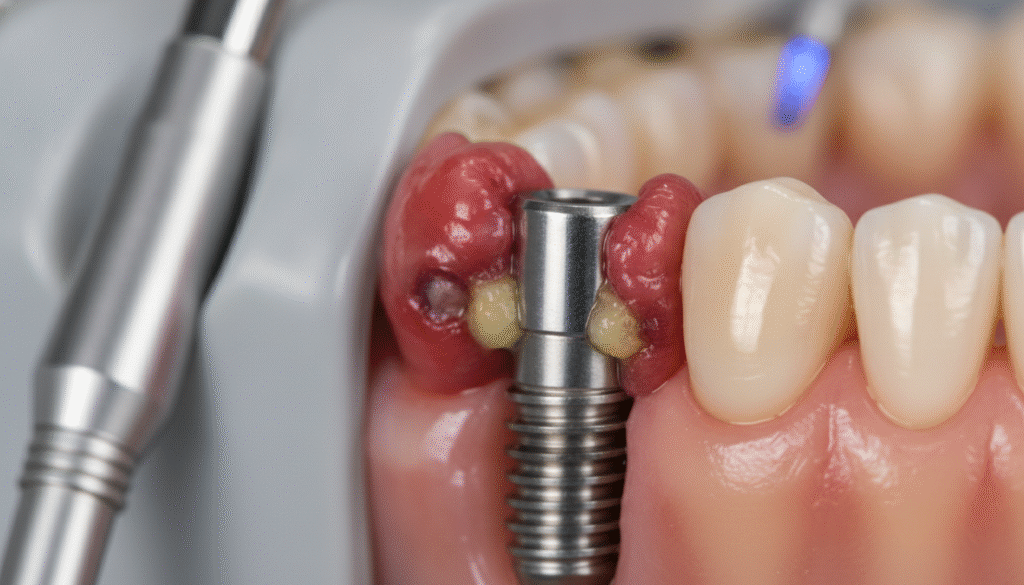
Dental implant infection is a major risk. This infection, called peri-implantitis, causes inflammation around the implant. Early signs include:
- Redness and swelling around the implant
- Bleeding during brushing
- Pain or discomfort
- A bad taste or odor in the mouth
If not treated, this infection can lead to bone loss and implant failure. Keeping the area clean and visiting the dentist regularly can help avoid this.
Nerve Damage or Paresthesia
Nerve damage is another serious risk. It can cause numbness, tingling, or burning in the face or mouth. Implants in the lower jaw are more likely to affect nerves.
To lower these risks, careful planning is key. Using 3D imaging helps dentists avoid nerves during surgery. This makes the procedure safer.
“Understanding the risks of dental implants is key to making good choices for your mouth.”
Common Complications During Surgery
It’s important to know about possible problems during dental implant surgery. Most surgeries go well, but some risks can happen. We’ll look at two common issues: anesthesia reactions and too much bleeding.
Anesthesia Reactions
Some people might have bad reactions to anesthesia. These can be mild or serious. Most patients do okay with local anesthesia, but some might faint or have more serious problems.
Dentists need to check patients before surgery. They look at medical history and talk about past reactions. This helps lower the risk of serious problems.
Excessive Bleeding
Bleeding too much during surgery is a big worry. It can happen if you have bleeding problems or take certain medicines. Doctors need to have plans to deal with this.
Doctors should ask about your medical history to see if you might bleed a lot. They can use special methods during surgery to stop bleeding. If bleeding doesn’t stop, they must act fast to keep you safe.
| Complication | Potential Causes | Management Strategies |
|---|---|---|
| Anesthesia Reactions | Previous reactions, allergies | Thorough assessment, emergency protocols |
| Excessive Bleeding | Anticoagulant use, bleeding disorders | Medical history review, hemostatic measures |
| Sinus Perforation | Upper jaw implants | Use of surgical guides |
Dentists can make surgery safer by knowing about these problems. They can plan better and tell patients what to expect. This makes sure everyone is ready for the surgery.
Complications Related to Healing
The healing process after a dental implant is key for its long-term success. During this time, the bone bonds with the implant. But, several factors can make this process harder, leading to risks.
Delayed healing can come from many sources. Systemic factors include uncontrolled diabetes, smoking, and a weak immune system. Local factors might be surgical trauma or infections that slow recovery.
Delayed Healing Process
Delayed healing can harm a dental implant’s success. If healing takes too long, the implant might not bond well with the bone. This can cause problems like:
- Increased risk of infection
- Prolonged discomfort
- Higher chance of implant failure
Implant Failure
Implant failure is a big worry, happening early or late in healing. Early failure is usually within months, often because the bone and implant didn’t bond well. Late failure can happen years later, often from too much stress on the implant or infection.
Spotting signs of implant failure is critical. Symptoms include:
- Progressive bone loss
- Mobility of the implant
- Discomfort or pain around the implant site
Diagnosing implant failure needs a detailed check-up and X-rays. Knowing about these issues helps patients and dentists work together to prevent problems and make implants successful.
| Type of Failure | Timing | Common Causes |
|---|---|---|
| Early Failure | Within months | Infection, poor bone quality |
| Late Failure | After years | Biomechanical overload, peri-implantitis |
Long-term Risks of Dental Implants
It’s important to know the long-term risks of dental implants before making a decision. These implants can replace missing teeth but come with possible complications. Bone loss and gum recession are two major risks.
Bone loss, or resorption, can happen around the implant. This can be due to natural body changes or diseases like peri-implantitis. Peri-implantitis is an inflammatory condition that can cause bone loss if not treated. Also, too much force on the implant can lead to bone loss, making proper placement and adjustments key.
Gum recession is another issue that can occur after getting dental implants. It can expose the implant, leading to plaque and inflammation. This can be upsetting for patients, affecting their smile and overall look. It also makes it hard to keep the gums around the implant clean.
Long-term, mechanical problems can also happen, like loose or broken screws or prosthetic parts. These issues often come from too much force, grinding teeth, or a bad fit. Regular dental check-ups can help catch and fix these problems early.
In summary, dental implants are a good option for tooth replacement but knowing the long-term risks is key. Being aware of bone loss and gum recession helps patients take care of their teeth and implants for a long time.
Risk Factors for Complications
It’s important to know the risks of dental implants for them to work well over time. Certain behaviors and health issues can affect how well implants do. We’ll look at smoking, oral hygiene, and health conditions as main risks.
Smoking and Oral Hygiene
Smoking can harm the healing of dental implants. It cuts off blood flow, weakens the immune system, and slows bone growth. These problems can make it hard for implants to heal and stay in place.
Studies show smokers face a higher risk of implant failure, about 11%. This is compared to only 5% for non-smokers. It’s clear that quitting smoking before getting implants is key.
Good oral hygiene is also vital to avoid implant diseases. Keeping your mouth clean is essential to prevent infections and keep implants working well.
Existing Medical Conditions
Your overall health affects how well dental implants work. Diabetes can slow healing and increase infection risk. High blood sugar can also stop implants from bonding with bone, which is needed for stability.
Other health issues, like osteoporosis, can also impact implants. Taking steroids can weaken bones, making healing harder. Also, certain medications can cause jaw problems, making implants more complicated.
Dentists need to check your medical history carefully. This isn’t just a formality. It helps them understand your risks and plan the best treatment for you.
| Risk Factor | Impact on Implant Success | Recommended Actions |
|---|---|---|
| Smoking | Increased failure rates | Smoking cessation programs |
| Poor Oral Hygiene | Higher risk of infection | Regular dental check-ups |
| Uncontrolled Diabetes | Delayed healing | Blood sugar management |
| Osteoporosis | Reduced bone density | Bone density evaluation |
Psychological Effects of Dental Implants
Dental implants affect more than just our teeth. They can boost our confidence and happiness. But, getting implants can make some people very nervous. This fear often comes from worries about the surgery and possible problems.
Talking openly about the procedure can help ease these worries. Explaining what will happen and discussing sedation options can make patients feel better. Many people feel less scared once they know what to expect.
Anxiety and Patient Satisfaction
Most patients are very happy after getting dental implants. They feel relieved and happy because their teeth and smile look great again. But, it’s important to remember that not everyone has a positive experience.
When things go wrong, like if the implant fails or hurts a lot, it can really upset someone. This can make them feel sad and less confident about themselves.
Impact on Self-esteem
Bad outcomes can make people feel down and less confident. If the implants are visible or if the gums pull back, it can be hard to feel good about them. These problems can make the whole experience feel like a failure.
It’s key for doctors to care for both the physical and emotional sides of dental implants. By setting the right expectations and supporting patients, doctors can help them through the tough times.
Importance of Choosing the Right Dentist
Finding a qualified dentist is key for a successful dental implant procedure. A skilled dentist makes the surgery smoother and lowers the risk of problems, like dental implant rejection. This term is often misunderstood, as it means the implant didn’t bond with the bone, not an allergic reaction.
When picking a dentist, check their qualifications and experience. Look for board certification in periodontics or oral surgery. This shows they have the right skills. Also, check if they have advanced training in implant surgery and keep up with new techniques.
Researching Qualifications and Experience
Looking into a dentist’s background can tell you a lot. Start by reading online reviews and talking to past patients. Also, have a consultation to talk about your needs and their experience with implants.
Role of Technology in Implant Surgery
Modern tech makes dental implant surgery safer and more precise. Tools like Cone Beam Computed Tomography (CBCT) create detailed 3D images of the jaw. This helps plan the best implant placement, avoiding damage to important structures.
Guided implant surgery and computer-assisted navigation also improve the procedure’s accuracy. These tools help avoid complications, leading to better implant success rates. Choosing a dentist who uses these technologies can lead to better results.
Preparing for the Dental Implant Procedure
Getting ready for a dental implant is key for success. Good preparation can boost the success rate of dental implant surgeries. It also helps reduce worries about dental implant pain and makes recovery easier.
Start with a thorough pre-surgery check-up. This includes looking at your medical and dental history. It’s important to see if you’re a good candidate for the procedure. A dentist will also examine your mouth and take X-rays to check your bone health.
The dentist will look for any risks or problems that might affect the surgery. This helps make sure the procedure goes well without any big issues.
Talking about the risks of dental implants is important. It’s not just about filling out forms. It’s a chance to learn about possible dental implant pain and how it will be managed. Knowing what to expect helps set realistic goals for recovery.
It’s also important to know the signs of normal healing versus problems. This lets patients act fast if something goes wrong. It helps ensure the surgery is a success.
| Assessment Type | Purpose | Expected Outcome |
|---|---|---|
| Medical History Review | Identify health conditions affecting surgery | Determine candidacy for dental implants |
| Clinical Examination | Evaluate oral tissue condition | Assess suitability for implant placement |
| Radiographic Analysis | Assess bone quantity and quality | Identify anatomical risks and contraindications |
Post-Surgery Care and Requirements
The journey to a successful dental implant outcome starts with careful post-surgery care. After your procedure, your role is key. Following your dentist’s instructions closely can greatly affect your healing.
Attending follow-up appointments is a critical part of post-operative care. These visits let your dentist check on your healing. They can:
- Remove sutures if necessary.
- Check your plaque control and oral hygiene.
- Spot early signs of complications that might not be obvious.
Importance of Follow-Up Appointments
Regular follow-up appointments are vital. They make sure your implant is fitting well with your jawbone and there are no issues. Your dentist will look for signs of infection, swelling, or any unusual feelings around the implant site.
Signs of Complications to Watch For
Be alert and report any odd symptoms right away. Persistent or worsening pain, too much bleeding, fever, smelly discharge, implant movement, or sensation changes are red flags. Acting quickly can help you manage your recovery better.
In short, careful post-surgery care, including regular check-ups and watching for complications, is key to your dental implant’s success. Your active role in this phase is essential for the best results.
Managing Risks Effectively
Managing risks well is key to getting the best results from dental implants. It starts before surgery and goes on during healing. Using smart strategies and new tech can really cut down on problems.
Good risk management is about layers. It includes:
- Systemic Optimization: This means stopping smoking and keeping blood sugar levels right for diabetics.
- Meticulous Surgical Technique: Using gentle methods and careful planning to avoid hurting nearby tissues.
- Prosthetically-Driven Planning: Planning the final tooth carefully to fit well and put less stress on the implant.
Techniques to Minimize Complications
New ways to tackle problems are coming up. For example, laser therapy and LAPIP™ (Laser-Assisted Peri-Implantitis Procedure) are non-invasive for treating infections. They help clean out the infection and heal the tissue without big surgery.
Innovative Technologies in Implant Dentistry
New tech is changing implant dentistry. Tools like guided surgery and custom guides help place implants exactly right, avoiding nerves and sinuses. Also, PRF (platelet-rich fibrin) speeds up healing, making recovery better.
In short, being proactive and using tech can greatly lower the chance and severity of implant problems. As one expert said,
“Good planning and follow-up lower complications dramatically.”
| Technique | Description | Benefits |
|---|---|---|
| Laser Therapy | Minimally invasive treatment for infections | Promotes healing and reduces recovery time |
| LAPIP™ | Protocol for treating ailing implants | Non-destructive, effective infection management |
| Guided Surgery | Precise implant placement using technology | Reduces risk of nerve and sinus damage |
Alternative Solutions to Dental Implants
Looking into other options for tooth replacement can be helpful. Dental bridges and dentures are two traditional choices. Each has its own set of steps, benefits, and risks. It’s important to know about them.
Dental Bridges
A dental bridge is a fixed device that fills in missing teeth. It’s attached to healthy teeth on either side. The process includes:
- Preparation: Teeth are prepared by removing some enamel for the bridge.
- Impressions: Molds are made to create a custom bridge.
- Placement: The bridge is cemented in place, improving looks and function.
While bridges can make your smile better, there are risks:
- Irreversible Preparation: Healthy teeth are changed, which might cause future problems.
- Decay Risk: Decay can happen under the bridge if you don’t clean well.
- Pulp Necrosis: There’s a chance of nerve damage in nearby teeth, leading to more dental issues.
Dentures
Dentures are removable devices that replace missing teeth. They can be full or partial. The steps are:
- Consultation: A dentist checks your needs and designs the denture.
- Impressions: Molds are taken for a good fit.
- Fitting: The dentures are adjusted for comfort and function.
Despite their benefits, dentures have risks:
- Bone Resorption: Without teeth, bone in the jaw can shrink.
- Stability Issues: Dentures might move or feel loose, affecting eating and speaking.
- Quality of Life: Some people find dentures uncomfortable or affect their taste and enjoyment of food.
In summary, dental implants are a common choice, but knowing about dental bridges and dentures is key. Each option has its own advantages and drawbacks. This helps patients make choices that fit their needs.
| Feature | Dental Bridges | Dentures |
|---|---|---|
| Type | Fixed | Removable |
| Procedure Complexity | Moderate | Simple |
| Impact on Adjacent Teeth | Requires alteration | No alteration |
| Risk of Bone Loss | Low | High |
Real Patient Experiences
Real-life stories of dental implant patients can clear up myths. They show the ups and downs of getting implants. These stories offer insights into the journey, from challenges to triumphs.
Case Studies of Complications
A patient with undiagnosed bruxism faced issues with their implant. The prosthetic screws kept coming loose, and the ceramic broke. This shows how important it is to check how teeth fit together before surgery.
The patient went through many visits and adjustments. But, with the right treatment, they got their implants to work well.
Another patient got early peri-implantitis. But, laser treatments helped fix the problem. This shows that even with issues, implants can work out.
Testimonials from Successful Implant Recipients
Many patients have had life-changing experiences with dental implants. One said,
“After struggling with a failing dentition for years, my dental implants have restored my confidence and functionality. I can eat, smile, and engage socially without fear.”
These stories prove that the good points of implants often outweigh the bad. The path may have bumps, but the end is worth it.
Insurance and Cost Considerations
Understanding the costs of dental implants is key for those considering them. The price can change based on the procedure’s complexity and the implant type. Also, insurance coverage can be tricky, as not all plans cover dental implants fully.
Many find out that medical insurance rarely covers the implant itself. But, it might cover the crown or part of the surgery. This can lead to unexpected costs. So, it’s vital to talk about insurance with your dentist’s team.
What Insurance Covers
Insurance for dental implants varies a lot. Some things that might be covered include:
- Initial consultation and diagnostic imaging
- Partial coverage for the surgical procedure
- Cost of the crown or abutment
Always ask for a detailed list of what your insurance will pay before starting treatment. This can help avoid financial surprises.
Financial Risks of Complications
Complications after dental implants can also be costly. Issues like peri-implantitis or needing to replace a failed implant can be expensive. These costs are often unexpected and can be a financial burden.
To prepare for these risks, patients should:
- Have a clear financial talk with their provider.
- Ask for a pre-treatment estimate that includes possible fixes.
- Know their financial responsibility for the treatment and any follow-up care.
By doing these things, patients can better understand the financial side of dental implants. This helps them make informed choices about their dental health.
| Insurance Plan Type | Coverage for Implants | Out-of-Pocket Costs |
|---|---|---|
| Basic Dental Plan | Limited | High |
| Comprehensive Dental Plan | Partial | Moderate |
| Medical Insurance | Rarely Covers | High |
“Financial preparedness is key to managing the risks associated with dental implants.”
Advances in Dental Implant Technology
New technologies in dental implants are changing oral health. They focus on better imaging and new materials. These changes make dental implants safer and more effective for patients.
3D imaging and planning are big steps forward. They use Cone Beam Computed Tomography (CBCT) for clear views. This lets dentists:
- See bone volume and density accurately.
- Find nerves and other important structures.
- Make precise guides for implant placement.
This method places implants for best function and looks. It also lowers surgery risks.
New materials in dental implants are also exciting. For years, implants were made from titanium. But now, zirconia implants are gaining attention. They offer:
- A tooth-colored option for better looks.
- Less plaque, which may lower disease risk.
Dentists say the future of implants depends on materials and tech. This shows the need for ongoing innovation.
Conclusion: Weighing Risks vs. Benefits
Dental implants are a big step forward in fixing teeth. They can really improve your life and how healthy your mouth is. It’s important to think about the good things they can do and the possible downsides before you decide.
Before you choose dental implants, think about a few things. If you’re missing a tooth, have several gaps, or don’t have any teeth left, implants might be right for you. They help keep your jaw strong and your teeth working right.
Deciding on dental implants means knowing about your health and what could go wrong. Ask your dentist about the process, how you’ll feel after, and how to keep your implants in top shape. With the right plan and care, implants can change your life for the better.
Even though problems can happen, they shouldn’t stop you from getting implants. Instead, they help you know what to expect and how to stay safe. Being informed and ready can make your dental journey smoother and more confident.