
What Are Those Little Attachments and What Do They Do?
Ever wondered how small parts in orthodontic treatment can make such a big difference? Invisalign attachments are a game-changer in tooth alignment. They work quietly to change smiles in a big way.
Attachments are tiny, tooth-colored buttons made from composite resin. This is the same material used for dental fillings. They stick to the front of teeth. This gives aligners points to push against for better results.
Each attachment is designed with biomechanical principles in mind. Different shapes help teeth move in different ways. When aligners cover these buttons, they apply precise pressure. This helps teeth move into their best positions.
Key Takeaways
- Invisalign attachments are small, tooth-colored buttons made from composite resin material bonded to tooth surfaces
- Each attachment shape is specially designed to help teeth move in certain ways through biomechanical force
- Attachments give aligners points to push against, making orthodontic corrections more precise and controlled
- The composite resin material used is the same biocompatible substance dentists use for dental fillings
- Different attachment shapes help teeth rotate, move outward, or move side to side, depending on the treatment needed
- These extra parts let clear aligner therapy get results that were only possible with traditional braces before
Understanding Attachments: An Overview
Attachments are key parts that make equipment better without needing to change the whole system. They are found in many areas of our lives, but we often don’t notice them. Knowing about attachments helps us see how they make things work better and more efficiently.
Attachments can turn regular tools into special ones. This makes things cheaper and more flexible for both work and home use.
Definition of Attachments
Attachments are extra parts or devices that connect to main equipment to improve or add new functions. In simple terms, an attachment is a secondary tool made to do a specific job.
These parts work in several ways:
- Mechanical advantage: They use physics to make things stronger or more precise
- Force distribution: They spread out pressure for better results
- Specialized task execution: They let equipment do things it can’t normally do
- Interface adaptation: They connect different systems or parts smoothly
In orthodontics, composite resin is used to make attachments. This mix of materials helps aligners grip teeth better for complex movements.
The science behind these materials is advanced. Composite resins are strong, look good, and stick well. They’re also used for things like bridges and fillings in dentistry.
Importance in Various Fields
Attachments are vital in many fields because they follow the principle of functional modularity. Instead of making new equipment for every task, attachments let us adapt and specialize.
In healthcare, this means doctors can tailor treatments. They can adjust plans based on each patient’s needs. Orthodontic attachments are a great example of this.
Orthodontic attachments are placed and angled carefully. They apply forces in specific ways to move teeth as planned. This turns simple aligners into powerful tools.
Medical attachments must be safe and work well in the body. Dental ones are tested a lot for safety and effectiveness. This testing keeps patients safe while ensuring the attachments work well.
Attachments are important in many areas, not just healthcare:
- Culinary applications: Small appliance accessories explained through mixer attachments, food processor blades, and specialized cooking tools
- Industrial manufacturing: Tool attachments that convert single machines into multi-functional production systems
- Technology sector: Device peripherals that expand smartphone and computer capabilities
- Office environments: Equipment add-ons that streamline workflow and boost productivity
Creating attachments involves a lot of research. Designers must think about how they will handle stress, wear, and cleaning. They also need to make sure they are easy to use.
| Field | Attachment Type | Primary Material | Key Function |
|---|---|---|---|
| Medical/Dental | Orthodontic attachments | Composite resin | Enhanced aligner grip and force application |
| Kitchen Appliances | Mixer attachments | Stainless steel | Task-specific food processing |
| Office Equipment | Printer cartridges | Plastic polymer | Ink delivery and document production |
| Technology Devices | Smartphone accessories | Aluminum alloy | Functionality expansion and protection |
Attachments are where materials science, design, and specific needs meet. They keep getting better, helping equipment work better and more efficiently in many fields.
So, what are attachments and why are they important? They help in many ways, from better dental care to making kitchen tasks easier. They offer solutions that are effective and affordable without being too complicated.
Common Types of Attachments
Attachments are found in homes and workplaces, each with its own purpose. They show how design has evolved in both consumer and professional gear. Knowing these types helps users get the most out of their household tool attachments purpose and make better choices.
Attachments fall into three main groups: kitchen gadgets, office equipment, and tech devices. Each group meets specific needs while working with base equipment. This design makes things more affordable and versatile for users.
Kitchen Gadget Attachments
Kitchen attachments are well-known to consumers. They turn basic appliances into tools for various cooking tasks.
Blade assemblies are key in kitchen attachments. They cut, dice, and chop food finely. Made from food-safe stainless steel, these blades stay sharp and corrosion-free.
Mixing paddles and whips add more to kitchen tools. They come in different shapes and materials for specific tasks. Dough hooks handle thick batters, while wire whisks whip up light meringues and creams.
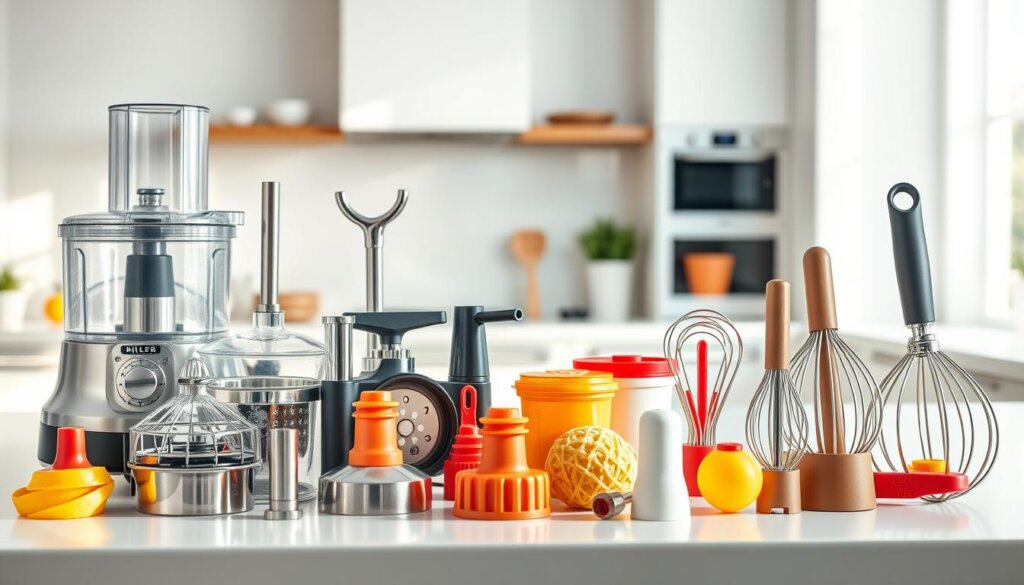
Shredding and grating attachments offer more food prep options. They have different hole sizes for coarse shreds to fine gratings. These attachments are built to withstand high speeds and are easy to clean.
Designing attachments with safety in mind is essential. They must meet FDA standards and resist acidic damage. This ensures they stay safe and functional over time.
Office Equipment Attachments
Attachments for office equipment boost work efficiency. They add to document processing without disrupting existing systems.
Paper feeders are key for high-volume printing. They scan pages automatically, saving time. These feeders also detect paper jams to prevent damage.
Stapling cartridges and binding tools turn printers into document finishers. Heavy-duty staplers handle thick stacks, and binding tools create professional-looking presentations. Installing these attachments is easy, requiring little technical skill.
Special printing heads allow for different output formats. Duplex units print on both sides, saving paper. Color cartridges turn monochrome printers into full-color devices without replacing the whole printer.
These office attachments show the value of modular design. Buying versatile base equipment with interchangeable parts saves money. It also keeps options open for future needs.
Tech Device Attachments
Attachments for tech devices, like smartphone accessories and laptop peripherals, are always changing. They make devices do more than they originally can.
Charging cables and power adapters are basic tech attachments. USB-C connectors work with many devices, and wireless charging pads get rid of cables. Fast-charging tech means less waiting for devices to charge.
Audio adapters help old headphones work with new devices. They adapt to the shift from analog to digital audio. Bluetooth adapters also make wireless audio possible.
External storage devices are essential for more space. Solid-state drives are fast, while hard drives offer more storage for less. These devices connect easily to many devices, making them versatile.
Special sensors add new features to devices. Camera lens attachments improve phone photos, and biometric sensors add security with fingerprint or facial recognition.
Attachments also help the environment by reducing waste. Upgrading parts instead of replacing whole devices is better for the planet. It keeps devices current while saving resources.
Standardizing connections is key for all attachments. Universal mounts and power specs make attachments work with many brands. This choice benefits users with more options and lower prices for makers.
Kitchen Gadget Attachments: What to Know
Kitchen gadget attachments show how engineering meets food prep needs. They turn regular appliances into tools for many tasks. Knowing about kitchen gadget attachments explained helps us see how they balance function, durability, and safety.
Each attachment has a special job based on its design. The materials and how they move affect their work and life span. What makes one attachment better for certain tasks? It’s all about the engineering behind it.
Cutting Tools: Blades and Shredders
Blade attachments are key for cutting in kitchen appliances. They have sharp stainless steel edges for slicing, chopping, or pureeing. The blade’s angle and material keep it sharp over time.
Stainless steel is chosen for its resistance to corrosion and safety. It stays strong against acidic foods and moisture. This keeps blades sharp and safe to use.
Shredder attachments work differently than blades. They use holes or teeth to shred food evenly. This makes food with the right texture.
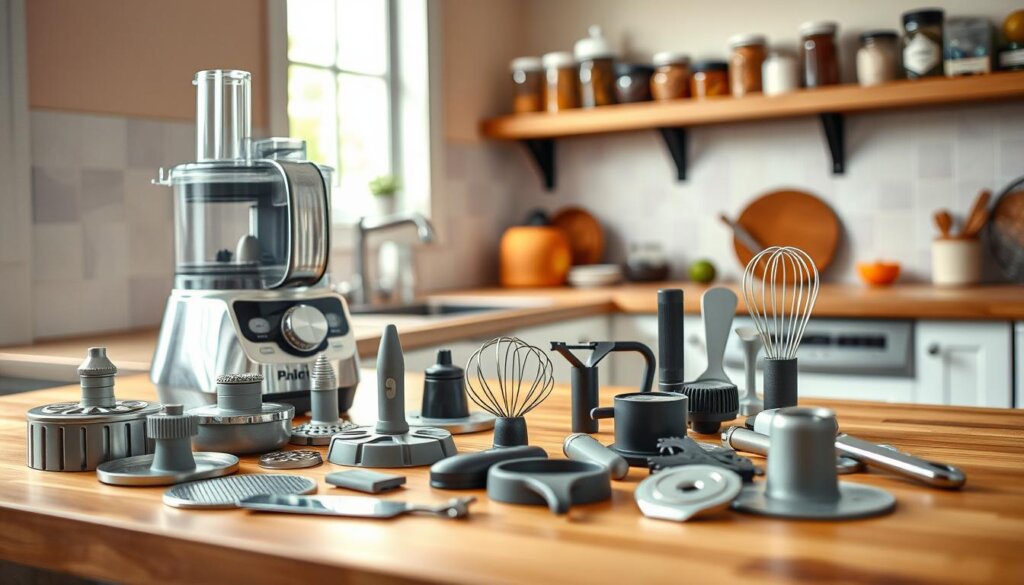
The design of shredding discs is key for the right size of shredded food. Engineers balance efficiency and motor load to avoid strain. This ensures kitchen attachments work safely and effectively.
Attachments also need to handle heat well. Fast rotation can cause friction, affecting food and the attachment. Good design helps keep food quality and prevents damage.
Aeration Components: Mixing and Whipping Tools
Mixing and whipping attachments focus on fluid dynamics and aeration. They include dough hooks, flat beaters, and wire whisks. Each design meets different cooking needs through unique actions.
Dough hooks have a spiral shape for kneading dough. They mimic hand kneading to improve texture. This makes bread making easier and consistent.
Wire whisks are made to whip up air in mixtures. Their design creates foam in egg whites or cream. It’s all about understanding how to mix and aerate.
Choosing materials for mixing attachments is important. They must be safe for food and strong. They also need to be easy to clean to avoid bacteria.
Flat beaters are for mixing batters and doughs. Their wide surface scrapes the bowl well. This ensures all ingredients are mixed evenly.
Understanding kitchen gadget attachments shows the engineering behind them. It’s how science makes cooking better. Choosing the right attachment makes food prep more efficient and consistent.
Office Equipment Attachments in Detail
Office equipment attachments turn regular office tools into powerful productivity systems. They boost document handling while keeping costs low. This is great for businesses looking to save money without sacrificing quality.
These attachments fit into modern offices perfectly. They adapt to different document types and volumes. This makes work easier and more efficient.
Printer Components and Enhancement Systems
Printer attachments offer many ways to improve basic printing. Paper feed systems are key, using rollers to move paper smoothly. This prevents jams and keeps printing going without stops.
There are also advanced printer systems. For example, duplex printing modules print on both sides of a page. This cuts down paper use by half. Envelope feeders adjust to different sizes, making sending mail easy.
High-capacity input trays mean less need to refill paper often. They hold 500 to 1,500 sheets, depending on the printer. Finishing units handle tasks like stapling and folding automatically.
| Attachment Type | Primary Function | Capacity Range | Maintenance Frequency |
|---|---|---|---|
| Paper Feed Tray | Document supply | 250-1,500 sheets | Monthly cleaning |
| Duplex Module | Two-sided printing | 50-100 pages/minute | Quarterly inspection |
| Envelope Feeder | Specialized media handling | 50-100 envelopes | Bi-monthly cleaning |
| Finishing Unit | Post-print processing | 20-50 booklets | Weekly maintenance |
Designing printer attachments requires precision and electronics. Control systems adjust rollers for different paper types. This keeps documents safe and print quality high.
Stapling Systems and Functional Extensions
Staplers and their attachments show how design can extend function. You can add attachments for stapling booklets or pamphlets. This saves money by not needing new equipment.
Adjustable clinchers change how staplers fasten documents. They offer different styles for different needs. This flexibility is key in professional settings.
Cartridge systems make reloading staples easy. They also track usage, helping plan for maintenance. This saves time and money in the long run.
Cleaning attachments are important for office equipment. They remove ink and dust to keep printers working well. This extends the life of your equipment.
Regular cleaning with these attachments can make equipment last 30 to 40 percent longer. It keeps them running smoothly and efficiently.
Attachments are vital for office productivity. They allow for specific tasks without big costs. They also make it easy to adapt to changing needs.
Attachments are cheaper than buying new equipment. A finishing attachment costs 10 to 15 percent of a new printer. This makes upgrading affordable for growing businesses.
Attachments also save space. A single printer with attachments takes up less room than several separate devices. This makes offices more efficient and organized.
Tech Device Attachments Explained
The digital age has brought many tech device attachments. Each one solves a specific problem. These accessories turn regular electronics into tools that fit our needs.
Attachments connect our devices to our specific needs. They let us customize without making many versions. This way, we can upgrade as our needs change, reducing waste.
Smartphone Accessories
Smartphone accessories are very dynamic. They add features beyond what the phone can do. From simple cases to advanced sensors, they cover a wide range.
Charging attachments are complex. They manage power flow and prevent overheating. They also check if the accessory is real to keep our devices safe.
Like power tools, smartphone accessories add new features. External batteries and camera systems are examples. They let us do more with our phones.
Audio adapters solve the problem of missing headphone jacks. They convert digital signals to sound. Some even match the quality of dedicated audio gear.
Camera lens attachments improve our photos. Macro lenses get us close to subjects. Telephoto lenses bring distant things into view. Wide-angle adapters capture more than our phones can.
Laptop Peripheral Attachments
Laptop attachments turn laptops into full workstations. They make laptops as useful as desktops. Docking stations are a great example.
Docking stations support many things at once. They handle displays, data transfer, and charging. This makes work easier and more efficient.
External graphics processing units boost laptop power. They help with tasks like video editing. This upgrade doesn’t need changing the laptop’s hardware.
USB-C has changed laptop attachments. It does many things with one connection. This makes attachments simpler and more compatible.
| Attachment Category | Primary Function | Key Technical Feature | Typical Use Case |
|---|---|---|---|
| Docking Stations | Connectivity Expansion | Multi-display Support | Desktop Workstation Setup |
| External Storage | Data Capacity Extension | High-Speed Transfer Protocols | Media Production Workflows |
| Graphics Processing Units | Computational Enhancement | Dedicated GPU Resources | 3D Rendering and Gaming |
| Networking Adapters | Connectivity Options | Cellular or Ethernet Integration | Remote Work Environments |
External storage adds more space for data. Solid-state drives are fast for editing videos. They’re also tough for carrying around.
Networking adapters add internet options. They work with or without WiFi. This keeps us connected everywhere.
Special input devices enhance laptops for work. Drawing tablets and presentation remotes are examples. They let us customize our laptops for our jobs.
Attachments need engineering to work right. They must handle power, heat, and signals well. Drivers make them work with our computers.
As devices get smaller, attachments add more features. This shows how we use technology in new ways. Like power tools, we choose attachments for our needs.
Medical Equipment Attachments and Their Uses
In healthcare, special attachments turn simple tools into full systems for diagnosis and treatment. These medical device accessories are key in many fields, from orthodontics to surgery. They are made with great care to meet strict rules and work well in clinics.
Doctors use attachments to make their tools better without buying new ones. This way, they save money and space. It also lets them tailor equipment for each patient’s needs.
The creation of biocompatible attachments has made patient safety better. These parts are tested hard to make sure they don’t harm people. Before they can be used in clinics, they must pass strict tests.
Essential Attachments for Diagnostic Tools
Diagnostic tools need special probes and sensors to work right. These medical device accessories help doctors get accurate data during exams. Each type is made for a specific job, like checking the heart or brain.
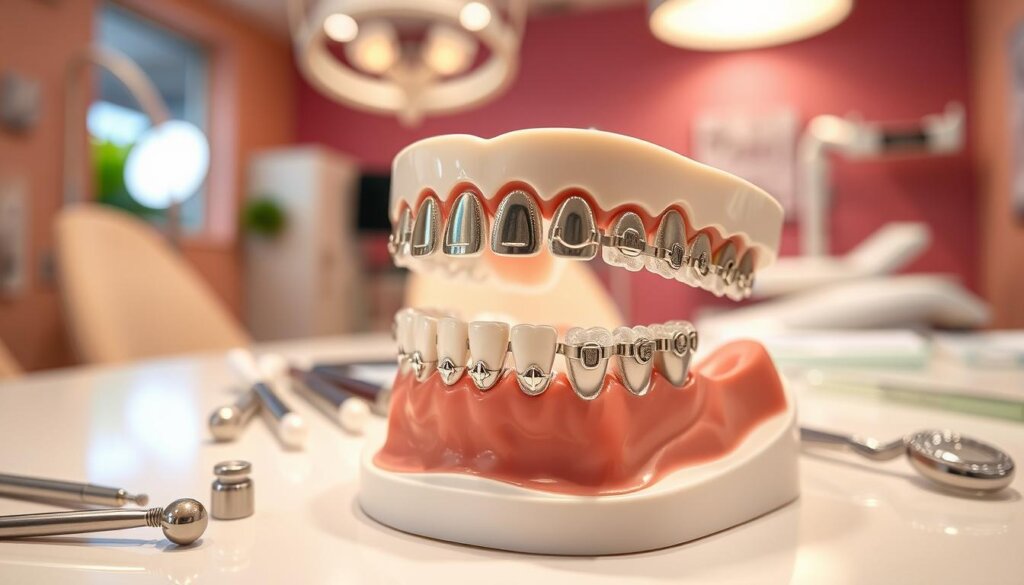
In orthodontics, orthodontic attachments have changed clear aligner therapy. These small parts stick to teeth and help move them during treatment. They are made of a special resin that bonds well to teeth.
How do orthodontic attachments help in aligner therapy? They act as anchors for the aligners to push teeth in the right direction. Without them, aligners can’t do the complex moves needed for straight teeth.
The dental composite materials in these attachments are a mix of resin and glass. This mix is strong, looks good, and sticks well to teeth. It’s also used in fillings, bridges, and veneers in dentistry.
Putting on orthodontic attachments is a precise process:
- Tooth surfaces are cleaned well to remove dirt and plaque
- Acid etching makes tiny spots on the tooth for bonding
- Bonding agents are applied to help the tooth and composite stick together
- The composite is placed carefully using templates
- Light is used to harden the material into attachments
Each attachment is shaped to fit the way teeth move. Not everyone needs orthodontic attachments for clear aligners. It depends on how much the teeth need to move.
Diagnostic imaging uses special transducers as biocompatible attachments for ultrasound. These parts vary in frequency and shape for different body parts. High-frequency ones show details on the surface, while lower ones go deeper.
Surgical Tool Attachments
Surgery needs special tools like cutting heads and cauterization tips. These medical device accessories must be strong and precise. They are made from materials like stainless steel and titanium for safety.
In endoscopy, attachments like biopsy forceps and lights turn basic scopes into full systems. These biocompatible attachments let doctors see inside without big cuts. They can take biopsies and stop bleeding through small openings.
What makes surgical attachments different from regular accessories? It’s the strict testing and quality control. Each batch is checked to ensure all parts work the same.
Electrosurgical tools use special tips for cutting and coagulating. The shape of the tip affects how it works on tissue. Surgeons pick the right tip for the job.
The following table compares common surgical tool attachment categories:
| Attachment Category | Primary Function | Material Composition | Sterilization Method |
|---|---|---|---|
| Cutting Instruments | Tissue dissection and separation | Surgical stainless steel with tungsten carbide edges | Autoclave steam sterilization |
| Cauterization Tips | Hemostasis and tissue coagulation | Titanium alloy with insulated coating | High-level disinfection or gas sterilization |
| Endoscopic Tools | Biopsy collection and foreign body removal | Stainless steel with polymer insulation | Autoclave or enzymatic cleaning systems |
| Suction Devices | Fluid evacuation from surgical field | Medical-grade polymers or stainless steel | Autoclave steam sterilization |
Orthopedic surgery uses drill bits and saws as biocompatible attachments for bone work. These tools need to stay sharp for many uses. They are made to cut bone without causing too much heat damage.
Robotic surgery has special tools that give doctors more control and precision. These medical device accessories let surgeons move instruments in ways humans can’t. This helps with complex surgeries through small openings.
Checking the quality of surgical attachments is key. They are tested for size, material, and function. This ensures they work well for a long time. It also keeps patients safe and helps fix any problems quickly.
The future of surgical attachments includes smart tools that give feedback during surgery. These smart medical device accessories can measure things like tissue temperature and force. This helps doctors make better decisions during surgery, leading to better results and fewer problems.
How to Select the Right Attachment for Your Needs
Choosing the right attachment starts with knowing what you need. It’s about looking at both the technical and functional sides. This approach is different for every situation, from home use to medical needs. It helps avoid problems and keeps things safe.
When making a choice, you need to think about a few things. The cost, how well it works, and how long it lasts are all important. For example, if you need Invisalign attachments, it depends on your dental treatment plan.
Understanding Compatibility Requirements
Checking if attachments fit is key. Physical compatibility means the attachment fits with the equipment. This includes things like thread sizes and how they connect.
For attachments that need power, like motors, you need to check the electrical side. This includes things like voltage and how they talk to the equipment. If it’s too much for the equipment, it can cause problems.
In medical settings, it’s also about if the attachment is safe for the body. Dentists look at teeth and pictures to decide if attachments are needed.
Attachments that need software also need to fit with what you already have. This is important for things that need updates or drivers. How do you check all these things?
- Consult manufacturer specifications for detailed technical requirements and limitations
- Identify interface standards to verify physical connection compatibility
- Verify capacity alignment between attachment demands and equipment capabilities
- Review material safety data for applications involving direct contact or sensitive environments
- Check software requirements including operating system versions and driver availability
For vacuum attachments, it’s about matching the hose size. Also, making sure the vacuum can handle the airflow. And, knowing what kind of dirt it’s for makes it work better.
Matching Function to Purpose
Understanding what you need the attachment for is important. Think about how often you’ll use it. If it’s not often, you might not need to spend as much.
How well it works is also key. For example, suction power matters for vacuum attachments. And, for tools, it’s about the torque. In orthodontics, it’s about how much force it can apply.
In medical settings, it’s about the specific needs of the treatment. Dentists look at how teeth need to move. This helps decide if attachments are needed.
This process is about matching what the attachment can do with what you need. It’s about making sure it fits and is safe. What are the main things to consider?
- Define specific tasks the attachment must accomplish with measurable outcomes
- Quantify performance requirements including speed, force, precision, or capacity specifications
- Estimate usage frequency to determine appropriate quality and durability levels
- Analyze operating conditions such as temperature ranges, moisture exposure, or physical stresses
- Consider expandability needs for future capability additions or upgrades
It’s also about weighing the cost against what you get. Think about how long it will last and if it’s worth it. In medical fields, following rules is very important.
It’s also about how well it works in the long run. And, how easy it is to use. This is important, even more so for things that need special training.
For outdoor or industrial use, the environment matters. Things like temperature and chemicals can affect what you need. Safety checks make sure it meets standards.
How well the instructions are matters too. Good instructions and support help make using it easier. These things help make choosing attachments easier, no matter what you need it for.
Maintaining Your Attachments for Longevity
Understanding how to care for attachments makes them last longer. Each attachment needs special care based on its material and use. This care prevents damage and keeps them clean for safe use.
Kitchen attachments need quick cleaning to avoid food buildup. Vacuum cleaner nozzles and brushes get clogged with debris. Medical attachments, like those for orthodontics, need gentle care to work well.
Choosing the right cleaning method is key. Some materials can handle tough cleaners, while others might get damaged. It’s important to match the cleaning to the material.
Cleaning Tips for Kitchen Gadgets
Start cleaning kitchen attachments right after use. This stops food from drying and sticking. Rinsing blades under water keeps them sharp.
Take apart attachments to clean every part. Many gadgets are made to be easy to clean. Each part should be washed separately to remove all food.
Some attachments can go in the dishwasher, but check first. Here are some tips:
- Stainless steel blades: Usually safe in the dishwasher, but hand washing keeps them sharp
- Plastic mixing attachments: Check if they can handle high temperatures
- Rubber gaskets and seals: Hand wash with mild soap to keep them flexible
- Electronic components: Only wipe with a damp cloth
Be gentle when cleaning attachments with sharp edges. Avoid harsh cleaners that can dull blades. Soft-bristled brushes are best for removing food without damage.
Attachments need special care, not just basic cleaning. Invisalign attachments must be brushed gently. Flossing daily helps keep them clean. Avoid dark drinks to prevent stains.
Good dental care is key for orthodontic attachments. Use a soft toothbrush and gentle toothpaste. This keeps the attachment and teeth healthy.
Vacuum cleaner nozzles and brushes need regular care. Clean the brushes to keep suction strong. Check plastic parts for damage.
Make sure vacuum attachments are clear of blockages. Clogs reduce suction power. Regular checks help avoid this.
Proper Storage Solutions
Proper storage protects attachments from damage and contamination. Use dedicated systems for kitchen attachments. This prevents dulling and keeps them organized.
Storage conditions affect attachment life. Keep them away from extreme temperatures and humidity. This prevents corrosion and damage.
Here are some storage tips:
- Blade protection: Store sharp attachments in sheaths or dedicated compartments to prevent edge contact
- Orientation matters: Hang vacuum cleaner nozzles and brushes vertically to prevent bristle deformation
- Separation principle: Keep attachments away from cleaning chemicals that could cause material degradation
- Accessibility balance: Store frequently used attachments within easy reach while protecting less common items
Medical attachments need to be stored in a sterile way. For orthodontic attachments, careful eating habits are more important than storage. Avoid hard foods and be gentle when removing aligners.
Proper care for attachments is essential. Regular maintenance saves money by avoiding early replacements. It ensures attachments work well for a long time.
| Attachment Type | Primary Cleaning Method | Storage Recommendation | Maintenance Frequency |
|---|---|---|---|
| Kitchen Blades | Hand wash with soft brush | Protective sheaths in drawer | After each use |
| Vacuum Nozzles | Remove debris, rinse monthly | Vertical hanging position | Weekly inspection |
| Mixing Attachments | Dishwasher safe (top rack) | Dedicated storage case | After each use |
| Orthodontic Composites | Gentle brushing, daily flossing | Remain bonded to teeth | After every meal |
Regular maintenance keeps attachments in good shape. Keeping track of cleaning and inspections helps plan for replacements. This approach improves performance and saves money.
Common Myths About Attachments Debunked
It’s important to separate fact from fiction when it comes to attachments. Many myths affect our choices in various fields, from orthodontics to electronics. Knowing the truth behind these myths helps us make better decisions.
Medical attachment myths can influence patient choices in orthodontics. People might avoid treatments because of false beliefs. Scientific evidence can clear up these misconceptions, helping patients make better choices.
Understanding Utility Beyond Common Misconceptions
Many believe attachments are just extra costs. But, they actually add important functions to equipment. This is shown through engineering analysis.
In orthodontics, there’s confusion about clear aligner attachments. Some think all Invisalign treatments need them. But, not every case does, as shown by clinical data.
Attachments are often misunderstood in terms of size and visibility. People think they’re big and will be seen. But, they’re actually small and blend in with teeth.
Even on front teeth, attachments are hard to notice. Studies show that small, well-placed attachments work well for complex tooth movements.
Another myth is that attachments are permanent. Some worry they’ll stay on forever. But, they can be easily removed when treatment ends.
So, do attachments really improve things? It depends on how well they match the task at hand. For clear aligner therapy, attachments help with big movements but not small ones.
Examining Price and Quality Relationships
The cost-quality relationship in attachments is complex. Some think expensive means better, while others believe it’s just marketing. The truth is more nuanced.
Quality, precision, and design play big roles in attachment performance. These factors can make attachments more expensive. But, the price also reflects brand, distribution, and regulatory costs.
In medicine, quality is key, no matter the cost. Tests for safety, sterility, and manufacturing standards add to costs. But, they’re essential for patient safety.
Generic or fake medical attachments might seem cheap but are risky. They often lack important quality checks. Using them can lead to serious problems.
| Common Myth | Scientific Reality | Clinical Evidence | Decision Impact |
|---|---|---|---|
| All aligner patients need attachments | Attachment necessity depends on specific tooth movements required | Simple cases may not require attachments for successful outcomes | Reduces unnecessary treatment anxiety |
| Attachments are large and highly visible | Structures measure 2-3mm and use tooth-colored composite materials | Attachments blend with natural dentition, barely noticeable even on front teeth | Improves treatment acceptance rates |
| Higher price always means better quality | Cost-quality relationship includes multiple factors beyond performance | Mid-range options from reputable manufacturers often provide optimal value | Enables informed purchasing decisions |
| Budget medical attachments offer equivalent safety | Medical attachments require biocompatibility testing and GMP manufacturing | Unverified components create clinical risks exceeding cost savings | Prioritizes patient safety appropriately |
In consumer products, mid-range attachments often offer the best value. They use quality materials and design without high prices. Look at performance, durability, warranty, and reviews to judge value, not just price.
To spot real quality, look at technical specs, independent tests, and how well attachments fit the task. This approach goes beyond simple myths about quality or price.
Debunking myths about attachment effectiveness and cost-quality relationship needs science and analysis. Whether for orthodontics or professional tools, knowing the facts helps make better choices.
Innovations in Attachments: The Future
Smart attachments are changing how we use our equipment. They use sensors and feedback systems for better performance. This mix of technology and materials science opens new possibilities in kitchens, offices, and hospitals.
What’s driving these changes? People want things that are easy to use, good for the planet, and fit their needs. This push for better attachments is making them smarter and more useful.
Intelligent Kitchen Attachments With Connectivity
Kitchen attachments are getting smarter. They now have sensors that tell you how much food you need. This means no more guessing or using extra tools.
Attachments can also check the temperature of your food. This helps prevent overcooking and keeps your food safe. You can even check on your food from another room.
Blades in attachments can tell when they need to be sharpened. This helps avoid bad performance and safety issues. The attachments learn how you use them to work better over time.
Attachments can even help you cook better. They adjust their speed based on what you’re making. This makes cooking easier, even for beginners.
Office Equipment Attachment Evolution
Office attachments are getting better too. They’re more automated, better for the environment, and easier to use. This makes work more efficient and comfortable.
Attachments are now made to be more eco-friendly. They use less energy and last longer. This helps save money and the planet.
Attachments are also designed to be easier on your body. They have better grips and are easier to use. This helps prevent injuries and makes work more comfortable.
How do these changes help at work? They make tasks faster and safer. They also save money by using less energy and lasting longer.
Medical Device Attachment Breakthroughs
Medical attachments are getting smarter too. They might soon be made of materials that dissolve on their own. This could make dental work easier and less painful.
Attachments in dentistry could also have sensors. These sensors track how teeth move and send data to dentists. This helps make dental work more precise and faster.
Attachments for diagnosing diseases are getting better too. They use AI to help doctors find problems earlier. This can lead to better treatment and faster recovery.
Surgical attachments are getting smarter too. They provide better feedback to surgeons during operations. This makes surgery more precise and safer.
Attachments for regenerative medicine are also improving. They help implants work better and deliver medicine directly to the right place. This makes treatments more effective and safer.
What’s next for attachments? They’ll get smaller and more connected. This will make them more useful and convenient. They’ll also be better for the environment and tailored to your needs.
Attachments will soon be made with new materials and techniques. This will make them more advanced and useful. They’ll work better and be more connected than ever before.
Troubleshooting Common Issues with Attachments
Every attachment user faces maintenance problems that need quick fixes. These issues happen in many areas, like kitchen appliances, office gear, and medical devices. Knowing how to diagnose problems helps solve them fast and prevents them from happening again.
Good attachment troubleshooting means finding the real cause, not just treating symptoms. This way, you save time and money, and your attachments last longer. Most problems come from wrong assembly, wear and tear, or parts not fitting right.
The right way to fix problems involves four steps. First, look for any damage or wear. Then, check if everything is put together right. Next, test it to find where the problem is. Lastly, look at the manual for specific advice.
Addressing Kitchen Appliance Attachment Failures
Kitchen gadgets often break down, making food prep hard. If blades don’t cut well, they might need sharpening or replacing. This is often because of hard veggies or bad cleaning.
Mixing attachments that shake could mean they’re not mounted right. Make sure they’re locked in place. Also, clean the parts where they connect to stop them from coming loose.
If mixing attachments can’t reach the bottom of the bowl, the problem might be the wrong attachment for the bowl size. Adjusting the height can help. Always check if the attachment fits the bowl size right.
Leaks in blender attachments can be fixed by replacing worn-out gaskets or tightening loose parts. This keeps the seals tight and stops leaks.
By using a systematic approach to attachment troubleshooting, you can turn frustrating problems into easy fixes that make things work again.
To avoid kitchen attachment maintenance problems, follow these tips:
- Clean attachments right after use to avoid residue buildup
- Store parts in their places to avoid damage
- Don’t overload attachments as recommended by the maker
- Check seals and gaskets every few months for wear
- Lubricate moving parts as needed
Solving Printer Attachment Connection Problems
Printer attachments have their own set of issues, like paper jams and connectivity problems. Paper jams often happen because the paper is too heavy for the attachment. Make sure the paper weight matches the attachment’s design.
Debris in the rollers can cause jams. Clean the rollers well to fix this. Remove jammed paper carefully to avoid damaging the printer. Use a damp cloth to clean the rollers and keep them working well.
Worn-out pickup rollers need to be replaced. They lose grip over time, causing feeding problems. How often you need to replace them depends on how much you use the printer.
Attachments that don’t connect with the printer need special troubleshooting. Check the electrical connections and update the drivers. Resetting the printer can also help.
For orthodontic attachments, medical attachment complications need quick action and expert advice. If an Invisalign attachment falls off, keep wearing the aligner as usual. Contact your dentist to get it replaced.
Not replacing the attachment right away might mean your treatment takes longer. Wearing the current aligner for longer helps. This keeps your treatment on track while you wait for the replacement.
Why do orthodontic attachments sometimes come off? It could be because the surface wasn’t prepared well or because of contamination. Or, it might be because you’re using too much force or eating hard foods.
| Attachment Type | Common Issue | Primary Cause | Recommended Solution |
|---|---|---|---|
| Kitchen Blades | Poor cutting performance | Dulled edges from hard materials | Professional sharpening or replacement |
| Mixing Attachments | Wobbling during operation | Incomplete locking engagement | Verify mounting and clean interfaces |
| Printer Feeders | Recurring paper jams | Debris on rollers or wrong paper weight | Clean rollers and verify paper specifications |
| Orthodontic Attachments | Debonding from teeth | Excessive force or inadequate bonding | Professional replacement and technique review |
To avoid medical attachment complications, handle attachments carefully and keep your mouth clean. Use the right way to put in and take out aligners. Good oral hygiene helps attachments stay in place.
Avoid foods that could knock attachments loose. If attachments are sharp, use dental wax to protect your mouth. Stains around attachments can happen from bad hygiene or food.
Brushing right and not drinking too much coffee or wine helps with looks. Regular dental visits catch problems early. This keeps your treatment on track and avoids big issues.
The key to fixing attachment problems is to find the cause and understand how they work. Fixing problems right away saves money and builds your skills. This turns attachment maintenance problems into easy fixes.
The Environmental Impact of Attachments
As we focus more on sustainability, the impact of attachments on the environment is key. The whole lifecycle of attachments, from making to disposing, affects our planet. Knowing this helps us make choices that are good for both the environment and our needs.
Attachments, from kitchen tools to medical gear, have big environmental effects. Every step in their life cycle adds to their environmental cost. How can we lessen this impact while keeping attachments effective?
Designing with the environment in mind is more than a trend. It shows a big shift in how products are made and how we choose to buy them.
Reusable Solutions and Waste Reduction
Single-use attachments lead to a lot of waste and use up resources. Reusable medical devices and durable attachments are better for the planet. Kitchen attachments made from quality materials last longer than disposable ones.
Studies show reusable designs are better for the environment when they last long enough. They compare the energy and materials needed to make durable attachments to making disposable ones. Usually, reusable attachments are better after 20-50 uses.
What makes attachments reusable? A few key features help them last longer and be better for the environment:
- Robust construction using materials that don’t corrode and can be used many times
- Modular designs that let you replace parts instead of the whole thing
- Standardized interfaces so they work with different equipment over time
- Sterilization capability for medical use to keep infections away
In medicine, reusable medical devices need special care to stay clean. Surgical attachments are made to withstand being sterilized many times. This cuts down on waste and keeps things clean.
But, some medical attachments must be thrown away to keep patients safe. This is because they touch blood or are used in places where germs are a big risk. Finding a balance between keeping patients safe and being kind to the planet is a big challenge.
Sustainable design is not about giving up—it’s about finding new ways to meet our needs while taking care of the planet.
Orthodontic attachments have a special environmental story. Invisalign attachments stay on teeth for 12-18 months before being removed easily. They don’t leave marks and don’t harm the environment much when they’re gone.
Removing these attachments is simple and doesn’t harm the planet. The small amount of material used doesn’t cause big environmental problems. This shows how some medical tools can do their job without harming the environment.
Material Innovation and Sustainable Equipment Choices
Sustainable attachments go beyond being reusable. They also use materials that are good for the planet and manage waste well. Using recycled materials in attachments helps save natural resources. Biodegradable materials are also used where they work well.
Designing attachments to be easy to take apart helps recycle materials. This makes recycling possible and helps the economy. It’s part of a bigger effort to keep materials in use instead of throwing them away.
New packaging ideas also help make attachments more sustainable. Using less material, recycled packaging, and better shipping methods all help reduce waste. This keeps the environment safe while keeping attachments safe during shipping.
How do we measure if attachments are sustainable? We look at several important factors:
| Sustainability Metric | Assessment Criteria | Environmental Benefit |
|---|---|---|
| Material Origin | Recycled content percentage, renewable vs. petroleum-based sources | Reduces virgin resource extraction and fossil fuel dependence |
| Manufacturing Intensity | Energy consumption per unit, water usage, emission levels | Minimizes production-phase environmental footprint |
| Product Lifespan | Expected service duration, durability under typical use conditions | Extends time between replacements, reducing cumulative impact |
| End-of-Life Disposition | Recyclability, biodegradability, specialized disposal requirements | Prevents landfill accumulation and enables material recovery |
Choosing sustainable attachments helps create a market that values the environment. As more people want eco-friendly products, companies make better choices. This leads to products that are good for the planet without losing quality.
Rules and trends are changing how attachments are made. These changes make companies think more about the environment. They want to make products that can be recycled and don’t harm the planet.
Regenerative medicine and sustainable attachments share the same goals. They both aim to use resources wisely and reduce waste. This means we’ll see more products that are good for both people and the planet.
Thinking about the environment is now key when choosing attachments. By choosing reusable options and supporting companies that care about the planet, we all help reduce waste. This makes attachments better for everyone.
Conclusion: The Significance of Understanding Attachments
Knowing how attachments work changes how we pick equipment for any task. Attachments add special features to things like kitchen tools and medical gear. They make these items work better and get better results than they could on their own.
Essential Insights About Attachment Applications
Kitchen attachments turn simple appliances into multi-use tools. They make office work easier and keep things tidy. Tech attachments let devices do more without needing a whole new system.
Medical attachments are really important. For example, Invisalign attachments help teeth move in ways regular aligners can’t. They’re small and almost invisible, but they play a big role in straightening teeth. When treatment is done, they’re taken out by a dentist.
Making Smart Equipment Investment Decisions
Choosing the right equipment starts with checking if it fits and works well. The materials used must be right for the job. It’s also important to think about how easy it is to keep it in good shape.
Understanding medical science means knowing about treatment parts. Patients do better when they know how attachments help. This knowledge helps them talk better with doctors and feel more sure about their treatment.
Attachments are advanced solutions for human needs. Knowing how they work and how to take care of them helps us use them best in all kinds of equipment.

