
What Dental Issues Can Invisalign Correct?
Ever thought about fixing your smile without metal braces? Clear aligners have changed how we fix teeth. They’re a big step forward in orthodontics.
Invisalign uses special clear aligners to move teeth into place. These are removable and almost invisible. They fix many types of tooth problems.
It can fix many issues like crowded teeth, gaps, and bad bites. It works for overbites, underbites, crossbites, and open bites too.
To see if Invisalign works for you, we need to look at its tech. It uses 3D scans and special materials. This lets it move teeth in a controlled way.
This article dives into what Invisalign can fix. It gives you the facts to decide if it’s right for you.
Key Takeaways
- Invisalign uses transparent, removable aligners to progressively shift teeth into proper alignment without the visibility of metal braces
- The treatment effectively addresses overcrowding and spacing irregularities between teeth through controlled biomechanical forces
- Multiple bite misalignments including overbites, underbites, crossbites, and open bites can be corrected with clear aligner technology
- Advanced 3D imaging creates custom treatment plans that map tooth movement along predetermined trajectories for optimal results
- Understanding the specific orthodontic conditions responsive to aligner therapy helps patients make informed treatment decisions
Introduction to Invisalign and Its Benefits
Invisalign has changed how we fix teeth. It’s a clear, easy way to straighten teeth without metal braces. This method uses advanced tech and planning to fix many dental problems.
Many people don’t want metal braces because they’re not pretty. Invisalign treatment for misalignment is a better choice. It works well and fits with your life.
The Technology Behind Clear Aligner Systems
The heart of Invisalign is a special material called SmartTrack. It’s made to move teeth gently and slowly. This helps teeth move into the right place.
First, doctors make a detailed map of your teeth. They use special scanners or old-school impressions. Then, they turn this into a 3D model for planning.
Doctors use software to see how teeth will move before making any aligners. They can change the plan to make sure it works best. This makes sure the treatment is right before you start.
Each aligner is made for a specific step in the treatment. You wear each one for a week or two. This way, teeth move in a controlled and predictable way.
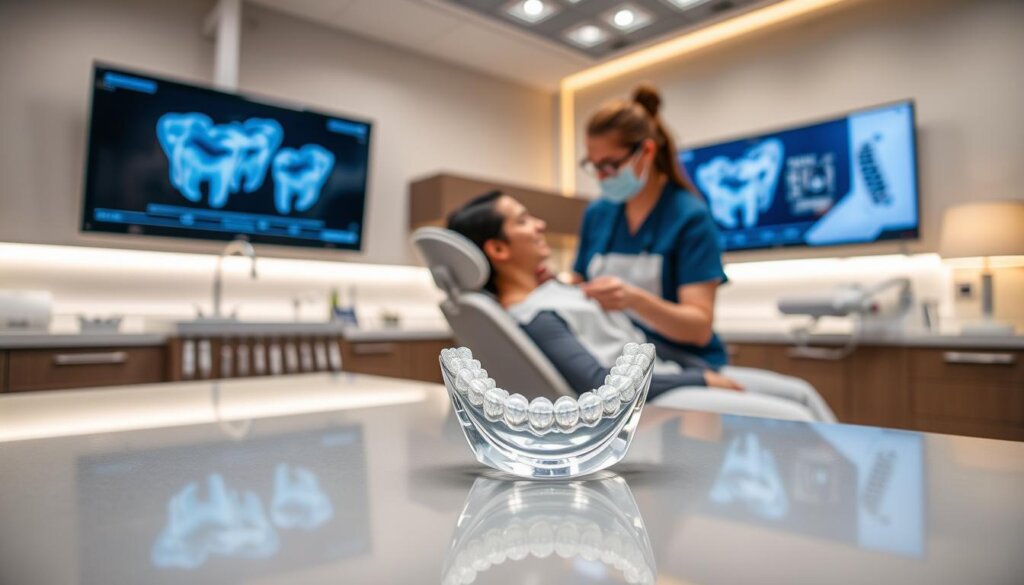
3D imaging has made treatments more accurate. Doctors can plan tooth movements down to tiny details. This means treatments are shorter and work better for more people.
How Clear Aligners Differ from Conventional Orthodontics
Braces have been around for a long time. They work, but they’re not perfect. Clear aligners offer a better option.
Clear aligners are almost invisible. This is great for people who don’t want to show off their braces. They’re easy to take out for meals and cleaning.
Clear aligners are also more comfortable. They don’t have sharp edges like braces do. This means fewer visits to the dentist for problems.
| Treatment Aspect | Invisalign Clear Aligners | Traditional Metal Braces | Clinical Significance |
|---|---|---|---|
| Appearance | Nearly invisible transparent plastic | Visible metal brackets and wires | Higher patient acceptance, special adults |
| Removability | Patient can remove for eating and cleaning | Fixed permanently until treatment completion | Improved oral hygiene and no dietary limitations |
| Comfort | Smooth plastic with no sharp edges | Metal components may irritate soft tissues | Fewer soft tissue injuries and emergency visits |
| Treatment Planning | Digital 3D simulation of entire process | Adjusted incrementally at appointments | Enhanced predictability and patient visualization |
| Compliance Requirements | Must wear 20-22 hours daily for success | Continuous force application automatically | Patient discipline critical for aligner effectiveness |
Invisalign makes it easier to predict how long treatment will take. This helps patients plan better. It’s more transparent and helps with scheduling.
But, it’s important to wear the aligners as directed. If you don’t, treatment might take longer or not work as well. It requires more responsibility than braces.
Clear aligners mean fewer emergency visits. Braces can break or come loose, but aligners don’t. You only need to see the dentist every six to eight weeks.
Our understanding of teeth movement is growing. This new knowledge helps make Invisalign better. It’s a big step forward in orthodontics.
Understanding Dental Crowding
When teeth don’t have enough space, crowding happens. This issue affects people of all ages and is a big reason for seeking orthodontic help. Knowing how Invisalign can fix crowding starts with understanding why it occurs.
Crowding happens when there’s not enough room for all teeth. This forces teeth to overlap or grow in wrong ways. It’s not just about looks; it can also harm your teeth and gums.
Crowded teeth are hard to clean, leading to plaque and cavities. They also wear down faster and can cause bad breath. These problems are due to the teeth not fitting right.
Root Causes of Tooth Crowding
Many things can cause crowded teeth. Genetics play a big role in jaw and tooth size. If you inherit a small jaw but big teeth, you’ll likely have crowding.
Changes in jaw size over time also play a part. Our jaws have gotten smaller, but our teeth haven’t. This is why about 60% of people today have crowded teeth, more than our ancestors.

When baby teeth fall out too soon, it can cause crowding. This is because other teeth move into the empty space. This makes it hard for permanent teeth to come in right.
Other things that can cause crowding include:
- Retained primary teeth that block permanent teeth
- Abnormal tooth size or shape that messes up spacing
- Oral habits like thumb-sucking that affect jaw growth
- Impacted teeth that push other teeth out of place
Invisalign’s Approach to Resolving Crowding
Invisalign uses clear aligners to fix crowded teeth. It’s different from old-fashioned braces because it uses computers to plan the treatment. This way, orthodontists can make sure it will work.
To fix crowding, Invisalign uses a few key methods. One is called IPR, which removes a tiny bit of enamel between teeth. This makes room for teeth to move without needing to pull any out.
Another method is arch expansion. Invisalign aligners slowly make the jaw wider. This gives teeth more room to spread out evenly. It’s great for cases where pulling teeth out would be too extreme.
Attachments are used when crowding is really bad. These small, tooth-colored pieces help the aligners grip teeth better. This lets orthodontists move teeth more precisely.
| Treatment Component | Primary Function | Clinical Application | Expected Outcome |
|---|---|---|---|
| Interproximal Reduction (IPR) | Creates space between teeth | Removes 0.2-0.5mm of enamel per contact | Eliminates need for extractions in 70% of cases |
| Arch Expansion | Increases dental perimeter | Gradual widening of upper and lower arches | Provides 3-6mm of additional space |
| Composite Attachments | Enhances aligner grip | Bonded to specific teeth surfaces | Improves rotational control by 40% |
| Sequential Alignment | Coordinates tooth movement | Staged progression over 6-18 months | Achieves complete alignment correction |
Invisalign moves teeth slowly and predictably. Each aligner moves teeth a little bit, keeping forces safe. This makes treatment comfortable and effective.
Studies show Invisalign works well for mild to moderate crowding. It can fix crowding in about 87% of cases without pulling teeth. For those wondering if Invisalign can fix crowding, the answer is yes, it can.
Addressing Overbite Issues
Millions of Americans face the challenge of overbite, where upper teeth overlap lower teeth too much. This can cause problems ranging from mild to severe. A slight overbite is normal, but a big one can affect how teeth work and look.
Knowing when an overbite needs treatment is key. The amount of overlap tells us if we need to act to avoid future problems.
| Overbite Classification | Vertical Overlap Measurement | Incisor Coverage Percentage | Treatment Recommendation |
|---|---|---|---|
| Normal Overbite | 2-4mm | 20-40% coverage | No treatment needed |
| Moderate Overbite | 4-6mm | 40-70% coverage | Clear aligner therapy recommended |
| Severe Overbite | 6mm or greater | 70-100% coverage | Comprehensive orthodontic evaluation required |
| Deep Bite | Complete overlap | 100% coverage with palatal contact | May require combined treatment approach |
The Impact of Overbites on Oral Health
Overbites can lead to serious dental issues if left untreated. The constant rubbing of teeth can wear down the enamel, making teeth flat and short.
The gums behind the upper teeth also suffer from this misalignment. Lower incisors can push against the palate, causing inflammation and recession. This can lead to exposed roots and sensitivity.
Jaw joint problems are another issue with overbites. The jaw is forced into unnatural positions, leading to pain and limited movement. Symptoms include jaw pain, clicking sounds, and headaches.
Teeth grinding is common in those with overbites. The unstable bite triggers grinding during sleep, causing more wear and potentially leading to tooth fractures.
Early gum disease and tooth decay are more likely with overbites. The misalignment makes it hard to clean teeth, leading to plaque and tartar buildup. This can cause inflammation and bone loss.
Studies show a strong link between malocclusion and gum disease. Overbites can lead to gum problems and tooth mobility.
Protruding upper incisors are more prone to injuries. Activities or accidents can cause chips or cracks, or even tooth loss. This makes fixing overbites important for active people.
Invisalign’s Approach to Overbite Correction
Invisalign uses advanced technology to fix overbites. It applies precise forces to move teeth in a controlled way. This approach combines different elements for a complete fix.
Posterior bite ramps are key in reducing overbites. These ridges in the aligners create pressure when biting, moving teeth upward. This process gradually corrects the overbite.
The teeth move in a planned sequence. First, aligners focus on leveling and alignment. Then, they work on the vertical aspect. This ensures the teeth are in the right position.
Precision attachments help control tooth movement. These small buttons on teeth work with the aligners. They allow for precise intrusion and extrusion of teeth.
- Controlled intrusion of maxillary incisors through optimized force vectors
- Extrusion of posterior teeth to support the corrected bite relationship
- Rotational control preventing unwanted tooth tipping
- Enhanced aligner retention for consistent force application
Elastic bands provide forces similar to traditional braces. They help reposition the jaw and establish proper bite relationships. This is done by applying vertical and horizontal forces.
Invisalign’s gentle pressure gradually reduces the overlap. Each aligner moves teeth a small amount, typically 0.25mm. This approach is comfortable and effective for mild to moderate overbites.
Success in fixing overbites with Invisalign depends on accurate diagnosis. Orthodontists must identify dental versus skeletal overbites. Digital planning helps anticipate challenges and plan the treatment.
Wearing aligners for 20-22 hours a day is key to success. Elastic wear, when needed, must be consistent. Treatment time varies from 12 to 24 months, based on the severity and response.
Severe cases might need surgery. The orthodontist decides if aligners can fix the problem or if surgery is needed.
Treating Underbites with Invisalign
An underbite happens when the bottom teeth are in front of the top teeth. This can make eating and talking hard. It can also wear down teeth faster and cause cavities.
Understanding underbites helps find good treatments. Invisalign is a good option because it’s comfortable and not visible like metal braces.
Recognizing the Difference Between Bite Misalignments
Underbites and overbites are different. Overbites mean the top teeth are too far forward. Underbites mean the bottom teeth are in front.
Underbites are when the lower jaw is too long. This makes the bottom teeth stick out. Dental experts call this a negative overjet.
Dental underbites can be fixed with braces. But skeletal underbites need jaw surgery because of jaw size problems.
Untreated underbites can cause more problems. They can wear down teeth, make chewing hard, and affect how we speak. They can also hurt the jaw and make us feel bad about our looks.
Benefits of Clear Aligner Therapy for Underbite Correction
Invisalign has many benefits over metal braces. It uses special movements to fix the teeth.
It moves the top teeth forward and the bottom teeth back. This makes the teeth line up better. It also helps with how the teeth fit together.
Special cuts in the aligners help move the teeth. This makes the teeth move in the right way. It also helps with how the teeth fit together.
Using Invisalign has many advantages. It’s comfortable, easy to wear, and looks better than metal braces. It’s also easy to take out for important times and cleaning.
- Enhanced patient comfort during the mandibular repositioning process
- Improved compliance compared with traditional headgear protocols
- Aesthetic benefits throughout extended treatment periods
- Removability for important social occasions and oral hygiene
- Reduced soft tissue irritation during active treatment
Sometimes, small bumps are added to the teeth. These bumps help the aligners move the teeth better.
But, skeletal underbites with big jaw problems need more than just aligners. In some cases, surgery is needed to fix the jaw bones before or with aligners.
Choosing between Invisalign and traditional braces depends on the underbite. Detailed tests help decide the best treatment for each person.
Correcting Open Bites
An open bite is when there’s a gap between your teeth when you close your mouth. This makes it hard to speak and eat properly. It’s not just about looks; it affects how you use your mouth every day.
Invisalign is a good fix for many with open bites. About 3.5% of Americans have this issue. Knowing what an open bite is helps find the best way to fix it.
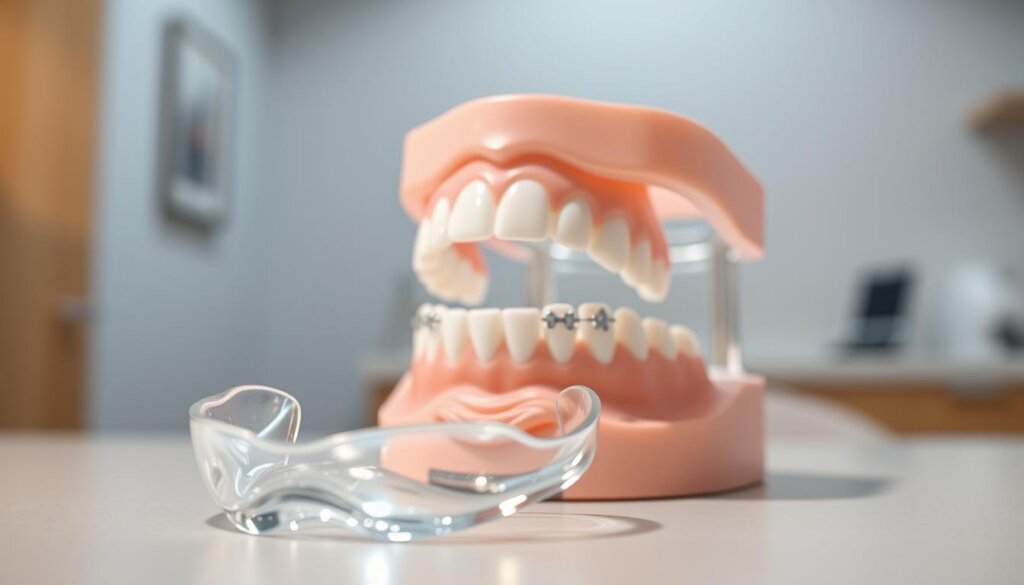
Understanding Open Bite Characteristics
An open bite happens when your teeth don’t meet right when you close your mouth. It can show up in two main ways.
Anterior open bites affect the front teeth. This is the most common type. People notice the gap when they bite down and see space between their teeth.
Posterior open bites happen in the back teeth. This is less common. It can make chewing food hard.
Several things can cause open bites:
- Prolonged digit habits: Sucking on thumbs or fingers can mess up how teeth grow.
- Tongue thrust patterns: Putting your tongue too far forward can block teeth from growing right.
- Skeletal dysplasias: Too much growth in the upper jaw or a steep lower jaw can cause open bites.
- Airway obstruction: Breathing problems can make your tongue push forward, affecting teeth alignment.
Open bites make eating and speaking harder. They can also wear down your back teeth faster. This puts more stress on your jaw joints.
Open bite malocclusions are tough because they involve teeth and jaw structure. Both need to be fixed for a lasting solution.
Invisalign’s Correction Approach
Invisalign uses special forces to fix open bites. It’s different from old-fashioned braces.
Invisalign works by using the aligner material to push teeth back. This makes the back teeth go down while the front teeth come up. It’s a clever way to close the gap.
The design of Invisalign aligners is key. They cover the back teeth to push them down. This lets the front teeth move up over time.
| Treatment Component | Mechanism | Clinical Effect | Timeline |
|---|---|---|---|
| Posterior Coverage | Continuous vertical pressure on molars | Intrusion of back teeth | 6-12 months |
| Anterior Activation | Removal of eruption barriers | Vertical movement of front teeth | 8-14 months |
| Precision Attachments | Enhanced force delivery points | Targeted tooth movement | Throughout treatment |
| Compliance Monitoring | 22-hour daily wear requirement | Predictable force application | Ongoing |
For tough cases, doctors might use tiny titanium screws. These screws help push back teeth more when the gap is big.
How well treatment works depends on why you have an open bite. Dental open bites from habits can get better with Invisalign and therapy. This fixes the teeth and the habit.
Skeletal open bites are harder to fix. They might need surgery to change the jaw shape. Doctors plan treatment carefully to know what to expect.
Aligners are easy to clean, which is a big plus. They don’t get in the way of brushing teeth like braces do. This keeps your mouth healthy while you’re getting your teeth fixed.
Thanks to new tech, fixing open bites with clear aligners works better than before. Doctors can try out different plans on computers before starting. This helps pick the best treatment for you.
Fixing Crossbites
When upper and lower jaws don’t align right, a crossbite forms. This can make chewing and smiling hard. It happens when some upper teeth fit inside the lower teeth instead of outside.
Ignoring a crossbite can lead to fast tooth wear and gum damage. It affects both front and back teeth, depending on where it is. Catching it early helps avoid bigger problems later.
Today’s orthodontics have good solutions for these issues. They help fix crossbites before they harm your teeth and gums.
Identifying Crossbite Patterns
A crossbite means your jaws don’t line up. Orthodontists sort them out by where they happen and which teeth are involved. Anterior crossbites affect front teeth, where incisors sit behind lower teeth when you close your mouth.
Posterior crossbites affect back teeth, like premolars and molars. They can be on one side or both. Knowing if it’s dental or skeletal is key for treatment.
Dental crossbites are about tooth position, but jaw structure is fine. Skeletal crossbites mean the upper jaw is too narrow. A dentist can spot this by looking at your teeth.
Dentists can see how your jaw moves during an exam. This movement can wear down teeth unevenly. It’s not just about looks; it’s about how your teeth work together.
“Crossbites are more than just looks—they change how teeth wear down, affecting your mouth’s health long-term.”
Ignoring crossbites can lead to more problems. You might see:
- Tooth surfaces that wear down unevenly
- Gum damage from teeth rubbing together wrong
- Problems with your jaw joint from uneven jaw use
- Long-term jaw shape issues in kids
Treatment Approaches Using Clear Aligners
Invisalign for crossbite correction uses special aligners to move teeth. The plan depends on if it’s a dental or skeletal issue. Each aligner moves teeth a little bit until they’re right.
For dental crossbites, the goal is to move teeth without changing bone. Attachments on teeth help control the movement. These tiny, tooth-colored bumps help aligners push teeth in the right direction.
Plans might change how fast teeth move in different parts of your mouth. This makes sure teeth move at the best pace. Success rates for Invisalign for crossbite correction are high in teens and adults with dental issues.
But, skeletal crossbites are harder to fix. Sometimes, you need other treatments first. This helps the aligners work better.
Orthodontists make sure the treatment fits within bone limits for good results. They use special scans to plan the best treatment. This makes sure you get the best outcome.
How long treatment takes depends on how bad the crossbite is and how well you follow instructions. Most people need 12 to 18 months of wearing aligners. Regular checks help adjust the plan as needed.
Invisalign fixes teeth positions for a better bite and avoids future problems. It’s more comfortable and looks better than old metal braces. You can take out the aligners to eat and brush your teeth, making daily care easier.
Alleviating Gaps Between Teeth
Gaps between teeth, known as diastema, are both a cosmetic and functional issue. Many people seek orthodontic treatment to close these gaps. These spaces often appear between the upper front teeth.
Understanding why gaps occur and the modern treatments available helps patients make informed choices. This knowledge is key to closing gaps effectively.
Gaps between teeth can lead to oral health problems. They allow food, sugars, and bacteria to easily get stuck. This buildup can cause gum disease and inflammation.
By closing these gaps, teeth can fit together properly. This protects gum health and reduces the risk of tooth decay.
Understanding the Origins of Tooth Spacing
Several factors can cause gaps between teeth. The most common reason is when teeth are too small for the jawbone. This mismatch creates gaps.
Thick labial frenum attachments can also cause spacing issues. The frenum is a tissue band that connects the lip to the gums. If it extends between the central incisors, it blocks teeth from closing the gap.
Congenitally missing teeth, or hypodontia, also causes spacing. When teeth don’t develop, gaps appear. This affects both function and appearance.
Microdontia, or abnormally small teeth, creates spacing. This condition affects maxillary lateral incisors, causing gaps on either side of the front teeth.
Oral habits like tongue thrust patterns can also create gaps. The tongue pushing forward against teeth during swallowing or at rest can move teeth apart over time.
| Cause of Gaps | Location Affected | Contributing Factors | Clinical Impact |
|---|---|---|---|
| Tooth-Arch Discrepancy | Throughout dental arch | Small teeth, large jaw structure | Multiple spacing issues |
| Prominent Frenum | Between central incisors | Thick tissue attachment | Midline diastema |
| Hypodontia | Sites of missing teeth | Developmental absence | Localized gaps |
| Microdontia | Usually lateral incisors | Undersized tooth formation | Proportional spacing |
| Tongue Thrust | Anterior region | Habitual pressure patterns | Progressive spacing |
Treatment Success with Clear Aligner Technology
Clear aligner technology is effective in closing gaps between teeth. It works by moving teeth slowly and safely. This approach is as successful as traditional braces in closing gaps.
The treatment starts with precise three-dimensional planning. Orthodontists decide the best way to close the gap. This depends on the dental midline and facial aesthetics.
Attachments on teeth near the gap help move teeth. These small buttons on the teeth allow the aligners to work. Without them, the aligners can’t close the gap.
Advanced features in aligners help close gaps better:
- Elastic thread features add extra closing force when needed
- Power ridge designs focus pressure for faster tooth movement
- Precision cuts allow for extra elastic placement for complex cases
- Coordinated corrections address vertical and rotational issues during space closure
When a frenum attachment prevents closure, a minor surgery called frenectomy may be needed. This removes the tissue barrier, allowing teeth to move together.
After treatment, it’s important to wear retainers to keep the gaps closed. This is because spaces can reopen, which is more likely if the gap was due to jaw or tooth size issues.
Closing gaps improves oral health. It prevents food from getting stuck and reduces bacteria buildup. This improves gum health and reduces inflammation risk.
Gap closure can also improve speech. It helps with sounds like “s” and “th” that are harder to make with gaps. Restored dental anatomy allows for normal airflow during speech.
Realigning Teeth After Tooth Loss
When a tooth is lost, the balance of dental alignment is disrupted. This can cause teeth to shift far from the tooth that was lost. Understanding how orthodontic problems solved by clear aligners work with dental restorations is key for effective treatment.
The balance of dental alignment relies on teeth touching each other. When this balance is broken, teeth start to move. This can affect how teeth function and look.
Why Timely Intervention Matters After Losing Teeth
What happens when a tooth is lost? It affects many areas of oral health, making things worse over time.
Teeth next to the empty space move into it. This is called mesial migration. It happens because of the forces of biting. This movement can harm the gums and teeth.
Teeth on the opposite side also face problems. Without the bite, they move up. This makes it harder to fit prosthetics later.
The effects of losing a tooth go beyond just the mouth:
- Occlusal plane distortions: Teeth move differently, causing uneven bites
- Reduced masticatory efficiency: Chewing gets worse with missing teeth
- Asymmetric loading patterns: Losing a tooth can hurt the jaw joint
- Progressive bone resorption: Bone around empty spaces changes, affecting future treatments
Space closure is a big challenge for future treatments. Teeth moving into the empty space makes it harder to place implants. This might mean more bone grafting or no implants at all.
How Clear Aligners Support Tooth Replacement Planning
Invisalign helps manage tooth loss and prepares for future restorations. Its flexibility is key in handling tooth movement after loss.
Aligners keep spaces open during healing. This is important when implants can’t be placed right away. It avoids the need for more surgery later.
For spaces that have closed, aligners can reopen them. This makes it easier to place implants or prosthetics. Digital planning ensures the space is just right for the planned restoration.
Aligning teeth helps them support prosthetics better. Teeth that lean into gaps can’t support crowns or bridges well. Straightening them helps distribute forces better and improves their health.
Clear aligners offer many benefits in restorative dentistry:
- Aesthetic continuity: Aligners can include fake teeth, giving an immediate fix
- Clinical accessibility: They can be removed for impressions and surgery
- Predictable coordination: Digital planning ensures teeth and implants align perfectly
- Patient comfort: Slow tooth movement is less painful than quick methods
Working together is key for the best results. Orthodontists, periodontists, and prosthodontists plan together. This ensures teeth move as needed for looks and function.
Managing orthodontic problems solved by clear aligners after tooth loss needs careful planning. Quick action and a clear plan are essential for success and stability in the long run.
Impact of Invisalign on Overall Oral Health
Many people get Invisalign for how it looks, but it also improves oral health a lot. Invisalign treatment for misalignment helps in many ways, not just looks. It makes dental health and overall life quality better.
Knowing the health benefits helps people choose orthodontic care wisely. What else does Invisalign do beyond making teeth straight? Research shows many health benefits that last a long time.
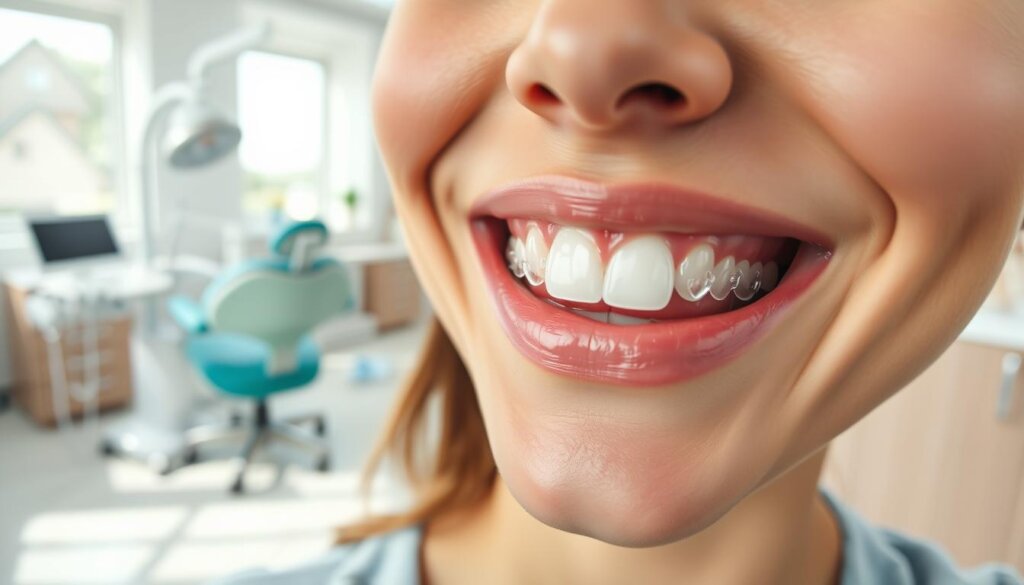
Long-term Benefits of Straightened Teeth
Aligned teeth make cleaning teeth easier for life. With Invisalign, brushing and flossing become simpler, helping avoid dental problems.
Without tight spaces, cleaning teeth is better. Studies show orthodontic patients have healthier gums after treatment. They have less gum bleeding and deeper pockets.
Fixing teeth also improves chewing and speaking. It reduces tooth wear and jaw pain, thanks to better bites. Teeth work better together.
Aligning teeth also helps teeth last longer. Proper alignment spreads out the force of biting. This reduces wear and damage to teeth.
Fixing underbites makes chewing easier and reduces jaw pain. It also improves facial looks. Studies show better muscle activity and joint health after treatment.
Orthodontic treatment boosts oral health, self-esteem, and social comfort.
Research links oral health to overall health. Poor oral health is linked to heart disease and diabetes. Invisalign treatment for misalignment may help overall health by improving gum health.
Correcting teeth also improves speech. Studies show better speech clarity after orthodontic treatment. This helps in personal and work life.
Orthodontic treatment also boosts self-confidence. Patients feel more comfortable in social and work settings after treatment.
Evidence from Dental Studies
Research supports the health benefits of orthodontic treatment. Long-term studies show lasting oral health improvements. What do these studies say?
Studies show better gum health after teeth alignment. Proper alignment reduces plaque and inflammation. Patients keep these improvements with good oral hygiene.
Biomechanical studies confirm the benefits of proper alignment. Teeth in the right position handle biting forces better. This may help teeth last longer.
Quality of life studies show clear benefits of orthodontic treatment. They improve physical health, self-esteem, social comfort, and overall well-being. These findings show orthodontics is more than just looks.
Orthodontic treatment is a health investment, not just for looks. Clear aligners make cleaning easier during treatment. This is a big plus over fixed braces.
Studies show better gum health with removable aligners. They can be taken out for cleaning, unlike fixed braces. Invisalign treatment for misalignment is great for gum health.
Long-term studies show lasting benefits of orthodontic treatment. Keeping teeth straight with proper care maintains these benefits. This makes orthodontics a wise investment in oral health for life.
Patient Eligibility for Invisalign
Not every dental misalignment is right for Invisalign. It’s important to check if a patient is a good fit for clear aligner therapy. Orthodontists look at many things to decide if Invisalign is the best choice.
Dental misalignment’s complexity affects treatment plans. Invisalign can handle more complex cases than before. But, some cases need other treatments.
Factors Influencing Suitability
Malocclusion severity is key when deciding if Invisalign is right. Mild to moderate overbites often work well with Invisalign. The amount of dental crowding and spacing issues also matters.
Invisalign works for mild underbites, mainly if dental issues are the main problem. Cases with less than 6-7mm of arch length deficiency usually do well. But, severe malocclusion Invisalign treatment has limits when skeletal issues are big, often needing surgery.
Invisalign can handle many cases, from slight crowding to more serious issues. But, very severe overbites might need more advanced treatments. The size of the misalignment is important during the first check-up. Class II and Class III malocclusions with dental or mild skeletal issues can get good results with the right plan.
| Clinical Factor | Favorable Conditions | Limiting Conditions | Alternative Considerations |
|---|---|---|---|
| Crowding Severity | Less than 6mm arch deficiency | Severe crowding exceeding 7mm | Extraction or fixed appliances |
| Vertical Discrepancies | Mild to moderate overbite/open bite | Severe skeletal open bites | Surgical intervention required |
| Skeletal Relationships | Dental or mild skeletal issues | Anteroposterior excess beyond 5mm | Orthognathic surgery protocols |
| Patient Compliance | 20-22 hours daily wear capacity | Inability to maintain regimen | Fixed orthodontic appliances |
Patient-related factors play a big role in treatment success. How well a patient follows the treatment plan is very important. Wearing aligners 20-22 hours a day is key. If a patient can’t or won’t do this, treatment may take longer and not work as well.
Age is more than just how old you are. It’s about when your teeth come in and how they’re growing. All permanent teeth should be in before starting treatment. This helps ensure the best results.
Good periodontal health is needed for treatment. If you have active gum disease, it must be treated first. A dentist will check your teeth and plan the best treatment for you.
Some dental problems might stop treatment from starting. Issues like severe enamel problems, active cavities, or weak teeth need to be fixed first. This makes sure treatment can work well and safely.
Common Misconceptions
Many myths surround Invisalign. These myths can lead to wrong expectations or keep people from getting the help they need. It’s important to clear up these misunderstandings.
One big myth is that Invisalign only fixes small cosmetic issues. But, it can handle more complex problems with the right planning. Severe malocclusion Invisalign treatment has improved a lot with new techniques and tools.
- Age limitations: Thinking age means you can’t get treatment is wrong. Adults can get good results if their gums and bones are healthy.
- Complexity restrictions: Invisalign can now handle more complex cases with special attachments and plans.
- Attachment concerns: Thinking attachments are bad is a misunderstanding. They are part of the treatment plan to help fix teeth.
- Treatment duration myths: Thinking treatment takes forever is not true. Complex cases need more time, no matter the treatment.
In severe cases, other treatments or surgery might be needed with or instead of Invisalign. This is because of careful planning, not because of the technology’s limits. Using different treatments together can lead to the best results.
So, who is a good candidate for Invisalign? It’s not just about the teeth. It’s about how well the patient will follow the treatment plan. If the patient is ready and willing, Invisalign can work well.
Choosing the right treatment means looking at many things. This includes checking the teeth, taking X-rays, and using digital scans. Talking openly with the dentist helps set realistic goals and timelines. This teamwork makes sure the treatment is the best choice for the patient.
Maintenance and Care of Invisalign Aligners
Getting the most out of Invisalign treatment for misalignment means sticking to a daily care routine. It’s not just about the orthodontist’s skill. How well you follow the care instructions is key. Knowing how to take care of your aligners helps keep your teeth healthy and your treatment on track.
For clear aligner therapy to work, you need to wear the aligners as directed and keep them clean. This means following specific steps for both your teeth and the aligners. Doing this right helps your teeth move as planned and avoids problems during treatment.
Daily Oral Hygiene Requirements During Treatment
Keeping your mouth clean is even more important with Invisalign treatment for misalignment. The aligners cover your teeth for a long time. This means you need to clean them more often to get rid of bacteria.
Brush your teeth well after every meal before putting the aligners back on. This stops food and sugars from sticking to your teeth for too long. It helps prevent cavities and keeps your enamel strong.
It’s also important to floss daily, using tools like interdental brushes or floss. This gets rid of plaque in tight spaces. Flossing at least twice a day keeps your gums healthy and prevents gum disease.
- Brush teeth after each meal before reinserting aligners to prevent food particle entrapment
- Floss at least twice daily to remove interdental plaque and maintain gum health
- Use fluoride toothpaste to provide additional cavity protection in the modified oral environment
- Rinse with antimicrobial mouthwash to reduce bacterial load and freshen breath
- Avoid sugary beverages while wearing aligners to prevent acid exposure and staining
Using fluoride toothpaste and mouthwashes helps protect your teeth from cavities. The way saliva works with your teeth changes with aligners. So, talking to your orthodontist about fluoride options is a good idea.
Essential Aligner Care and Maintenance Protocols
Keeping your aligners clean is important for their clarity and to prevent bacteria. Rinse them with cool water right after taking them out. Clean them with a soft-bristled brush and clear soap. This keeps them clear and prevents bacteria buildup.
Don’t use toothpaste on your aligners, even though it might seem like a good idea. Toothpaste can scratch the surface of the aligners. These scratches can trap bacteria, making your aligners less effective.
Use special cleaning products or diluted solutions to remove bacteria and odors. Many orthodontists recommend using cleaning tablets made just for clear aligners. These products clean without damaging the aligners or affecting how well they fit.
| Maintenance Activity | Recommended Frequency | Primary Purpose | Key Considerations |
|---|---|---|---|
| Aligner rinsing | Every removal | Remove saliva and debris | Use cool water only |
| Soft brush cleaning | Twice daily | Remove biofilm buildup | Clear soap, not toothpaste |
| Chemical soaking | Once daily | Deep cleaning and deodorizing | Follow product instructions |
| Professional check-ups | Every 6-8 weeks | Monitor treatment progress | Assess attachment integrity |
It’s important to avoid hot water when cleaning your aligners. Hot water can change the shape of the aligners. This can affect how well they work. Even warm water can cause slight changes that might slow down your treatment.
How you store your aligners is also important. Always put them in their case when you’re not wearing them. Don’t wrap them in napkins, as this can lead to losing them. Leaving them out can let bacteria get on them.
- Wear aligners 20 to 22 hours daily to ensure continuous force application necessary for tooth movement
- Remove aligners only for eating and oral hygiene to maintain treatment timeline
- Store aligners in protective cases when not in use to prevent loss or damage
- Clean aligners with cool water and clear soap using soft-bristled brushes twice daily
- Avoid hot beverages while wearing aligners to prevent thermal distortion and staining
- Attend regular orthodontic appointments every 6-8 weeks for progress monitoring
Eating right is important during Invisalign treatment for misalignment. You can eat more things than with traditional braces. But, be careful with hard or sticky foods. They can damage your teeth, even if they don’t hurt the aligners.
Going to your orthodontist regularly is key. They check how your teeth are moving and your overall health. These visits help make sure your treatment is on track and fix any problems.
Using wear indicators in your aligners helps your orthodontist see if you’re wearing them as you should. Many systems have blue dots that fade with use. But, telling your orthodontist about any issues is also important.
Not wearing your aligners as directed can slow down your treatment. This might mean you need to wear them longer or get more aligners. Knowing this helps you stay on track with your treatment.
Potential Limitations of Invisalign
Invisalign has made orthodontic treatment easier and less noticeable. Yet, it’s not perfect for everyone. Knowing its limits helps doctors and patients choose the best treatment.
Invisalign isn’t for everyone. Some cases need surgery or other treatments along with orthodontics. But, many people find it works well for moderate issues.
Recognizing Treatment Constraints and Clinical Challenges
Clear aligners face challenges in complex cases. The way they work limits their effectiveness.
Moving teeth in three dimensions is hard with aligners. This is true for closing spaces and moving roots. Fixed appliances can control movements better.
Rotating teeth is tricky, too. Teeth like canines and premolars need special attachments. Even with the best plans, aligners might not move them as much as traditional braces.
Vertical movements are also a problem. Moving roots up or down can be too much for aligners. This needs careful watching and realistic goals.
Some complex movements are hard to achieve with aligners:
- Significant molar distalization beyond what’s safe often doesn’t work well
- Substantial expansion can lead to teeth moving back
- Severe rotations over 30-40 degrees are hard to fix with aligners
- Precise root torque control is needed for good bite alignment
Wearing aligners as directed is key. Without consistent wear, treatment fails. This is why choosing the right patient is so important.
Some dental problems make aligners hard to use. Severe gum disease or teeth that are hard to attach to aligners are examples. These issues need careful consideration.
Clinical Scenarios Favoring Fixed Orthodontic Appliances
Traditional braces are better for some cases. They offer more control and precision.
Severe skeletal discrepancies need the control braces provide. These cases often require surgery or other treatments too.
Complex cases where teeth need to be moved a lot also need braces. Aligners can’t handle these movements as well as braces can.
Some patients are better suited for braces:
- Predicted compliance issues like young kids who might not wear them
- Cognitive impairments that make following treatment hard
- Mixed dentition cases where teeth are not fully grown
- Patients needing fast treatment with no room for delays
Age is also a factor. Young patients might need phased treatment with braces. This helps their teeth grow while fixing immediate problems.
Choosing the right treatment is all about knowing what each option can do. Using the wrong treatment can lead to long, unsuccessful treatments. But, not using aligners when they’re a good choice can also disappoint patients.
Orthodontic success comes from matching treatment to the case. Braces are often the best choice for complex cases. Knowing when to use them shows wisdom and puts the patient’s needs first.
Cost Considerations for Invisalign Treatment
When thinking about Invisalign, patients want to know how it compares to other options. They also look into payment plans. Knowing the costs helps patients decide on the best orthodontic treatment for them.
The cost of orthodontic care is more than just the initial price. Several things affect the total cost, like how complex the treatment is and where you live.
Price Comparison with Other Orthodontic Options
How do the costs of Invisalign compare to other treatments? Invisalign costs range from $3,000 to $8,000. This price varies based on how complex the case is and how long treatment takes.
Knowing the costs of different treatments helps patients choose the best option for them. Here’s a table showing typical costs:
| Treatment Type | Cost Range | Treatment Duration | Visibility |
|---|---|---|---|
| Metal Braces | $2,500 – $7,000 | 18-36 months | Highly visible |
| Ceramic Braces | $4,000 – $8,000 | 18-36 months | Moderately visible |
| Invisalign Aligners | $3,000 – $8,000 | 12-24 months | Nearly invisible |
| Lingual Braces | $8,000 – $10,000 | 18-36 months | Not visible |
When comparing costs, consider more than just the price. Clear aligners often treat mild to moderate cases faster. This means less time and fewer visits. Adults like clear aligners because they’re not visible.
Other benefits include:
- Less need for emergency visits because clear aligners are less likely to cause problems
- Easier to keep teeth clean during treatment, which can prevent more dental issues
- More freedom with what you eat because you can remove the aligners for meals
- Less discomfort because there are no metal parts to irritate your mouth
- Clearer results thanks to digital planning before starting treatment
Where you live also affects the cost of orthodontic care. Cities with higher costs usually charge more. The experience and specialty of your orthodontist also play a role in pricing.
Insurance and Financing Options
What options are there to make orthodontic care more affordable? Many dental plans now cover orthodontic care, even for adults. Typical coverage is $1,000 to $2,000 for treatments like Invisalign or braces.
It’s important to check your insurance before starting treatment. Look at things like lifetime limits, age restrictions, and any waiting periods. Some plans need proof that the treatment is necessary.
There are also other ways to pay for orthodontic care:
- In-house payment plans from your orthodontist let you spread out the cost without interest
- Third-party financing through companies like CareCredit offers extended payment plans with no interest for a while
- Flexible spending accounts (FSAs) and health savings accounts (HSAs) let you use pre-tax dollars for treatment, saving on taxes
- Employer benefits sometimes include orthodontic coverage during open enrollment
Monthly payments for orthodontic care usually range from $100 to $300. This makes it easier to manage the cost over time, without a big upfront payment.
Orthodontic treatment offers long-term benefits like better oral health and a more confident smile. These benefits are worth the initial cost.
The benefits of orthodontic treatment last long after treatment ends. Properly aligned teeth make it easier to keep your mouth clean, reducing the risk of dental problems. They also help prevent excessive wear on your teeth and can even help with jaw pain.
If cost is a concern, talk to your orthodontist about options. They might suggest a phased treatment or a combination of treatments. The goal is to improve your oral health and smile within your budget.
Understanding all the costs, including insurance and financing, helps patients make informed decisions. This way, they can choose Invisalign if it’s the best option for them.
Conclusion: Making the Right Choice for Your Smile
Choosing orthodontic treatment is a big step for your health and confidence. It’s important to think about what you need, how you live, and what you want to achieve. Knowing what Invisalign can fix helps you make the best choice for you.
Benefits of Clear Aligner Technology
Clear aligners are very flexible and effective. They can fix crowded teeth, gaps, and many bite problems. They work for overbites, underbites, crossbites, and open bites too, if they’re not too severe.
These modern aligners are more comfortable than old metal braces. They’re almost invisible, so you can feel confident in public. Plus, you can take them out to eat and brush your teeth easily.
Determining Your Optimal Path Forward
Orthodontists are key in planning your treatment. They do detailed checks to see what will work best for you. Sometimes, more complex cases need different or extra treatments.
New technology in orthodontics gives you more options. Clear aligners keep getting better, with new materials and ways to fix teeth. For those looking for a discreet and comfy fix, Invisalign is a top choice. It’s not just about fixing teeth; it’s about improving your life and smile for the long term.

