What Happens If I Don’t Replace a Missing Tooth?
Did you know that about 178 million Americans are missing at least one tooth? This shows a common dental health issue. Many wonder if they need to replace a tooth, even if it’s not visible and doesn’t hurt.
But, not replacing a tooth can lead to big problems. Even if it doesn’t hurt, your body starts changing. These changes can harm your mouth and overall health.
It’s important to understand what happens when you don’t fill a gap in your smile. It’s not just about looks. Delaying replacement can start harmful processes. This article will explain the effects of not replacing a tooth, covering the physical, functional, and mental impacts.
Key Takeaways
- Missing teeth can lead to significant structural changes in the mouth.
- Bone resorption occurs when teeth are not replaced.
- Dental drift can misalign remaining teeth.
- Long-term consequences may affect overall health.
- Timely replacement is essential for maintaining oral health.
Understanding the Importance of Tooth Replacement
Replacing missing teeth is key to keeping your mouth healthy and your overall well-being. Each tooth is important for chewing and speaking well. Knowing this can help you make better choices for your health.
Teeth do more than just look good. They help keep your mouth in balance by touching each other. This balance is important for chewing and speaking right. Also, teeth help keep the jawbone strong by sending signals when you chew.
The Role of Teeth in Oral Health
Teeth are not just for chewing. They are vital for keeping your mouth healthy. Without a tooth, your mouth can get out of balance. This can cause problems like:
- Shifting of adjacent teeth
- Changes in bite alignment
- Increased wear on remaining teeth
These issues can lead to more problems. So, it’s important to think about replacing teeth quickly.
Impact on Overall Health
Missing teeth can affect more than just your mouth. It can make it hard to eat certain foods. This can lead to not getting enough nutrients.
Also, missing teeth can make you feel less confident. This can hurt your mental health and how you interact with others. So, fixing tooth loss is important for your health in many ways.
| Factor | Impact of Missing Teeth | Potential Solutions |
|---|---|---|
| Chewing Ability | Reduced efficiency in food processing | Dental implants, bridges, dentures |
| Bone Health | Bone resorption and loss | Bone grafting, implants |
| Self-esteem | Lower confidence and social interaction | Cosmetic dentistry, orthodontics |
Consequences of Not Replacing a Missing Tooth
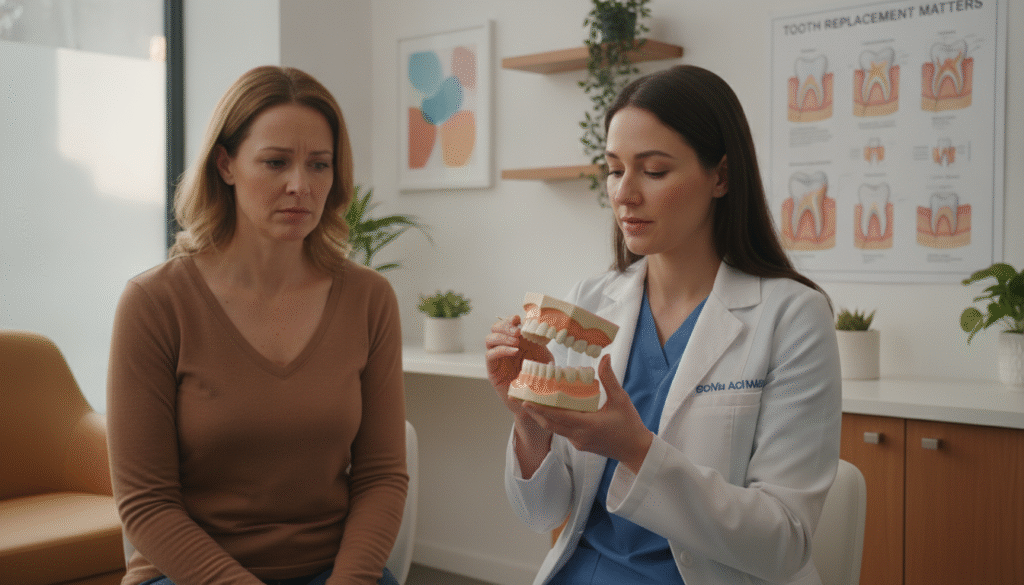
Not replacing a missing tooth can lead to many dental problems. These issues can get worse over time. It’s important to know these effects to keep your teeth and overall health in good shape. We will look at three main problems: teeth shifting, changes in how your teeth bite together, and a higher chance of tooth decay.
Shifting of Adjacent Teeth
When a tooth is lost, the teeth next to it might start to move. This is called dental drift. It messes up the balance of your teeth, making it hard to clean between them.
Changes in Bite Alignment
Without a tooth, the tooth on the other side might grow too long. This can change how your teeth fit together. It might even hurt your jaw and make your muscles tired. Over time, this can put too much pressure on your teeth, leading to cracks or breaks.
Increased Risk of Tooth Decay
Teeth that don’t fit right can trap food, making it hard to clean. This can cause plaque to build up, leading to cavities and gum problems. These changes happen slowly, so it’s important to fix missing teeth quickly.
| Consequence | Description | Potential Impact |
|---|---|---|
| Shifting of Adjacent Teeth | Teeth tip into the gap, disrupting balance | Increased plaque accumulation |
| Changes in Bite Alignment | Opposing tooth over-erupts, altering occlusion | Joint strain and muscle fatigue |
| Increased Risk of Tooth Decay | Food traps form, hindering cleaning | Higher chance of cavities and gum disease |
Psychological Effects of Missing Teeth
When you lose a tooth, it’s not just a physical issue. It can also affect your mood. A missing tooth can change how your smile looks. If it’s near the front, it might be seen when you talk, eat, or smile.
This can make you feel shy about your smile. You might avoid smiling, cover your mouth when laughing, or not want to be in photos. This can hurt your personal and work life a lot.
Impact on Self-Confidence
Visible tooth loss can change how you see yourself. Many people feel less attractive and less confident because of it. This can make you anxious and want to stay away from people.
Emotional and Social Challenges
Missing teeth can also cause deeper emotional problems. Studies link tooth loss to more social anxiety and depression. People might:
- Not want to be around others
- Miss out on job chances
- Feel less good about themselves
Also, changes in your face, like sunken cheeks, can make these feelings worse. These changes can make you look older than you are, which can hurt your self-image even more.
| Psychological Effects | Symptoms | Potential Solutions |
|---|---|---|
| Low Self-Esteem | Feeling unattractive | Dental implants, bridges |
| Social Withdrawal | Avoiding social situations | Therapy, support groups |
| Increased Anxiety | Fear of judgment | Counseling, confidence-building activities |
In conclusion, missing teeth affect more than just how you look. Knowing this can help you find the right dental care and emotional support.
Dental Options for Replacing Missing Teeth
Looking into different dental solutions for missing teeth is key for good oral health. Today, people have many effective options to choose from. Each has its own pros and cons, helping people make smart dental health choices.
Dental Implants
Dental implants are seen as the top choice for tooth replacement. They involve surgically placing a titanium fixture in the jawbone, acting as a tooth root. The benefits of dental implants include:
- Bone Preservation: Implants keep jawbone density by providing needed stimulation.
- Longevity: With proper care, implants can last a lifetime.
- Natural Appearance: They look like natural teeth, improving looks.
Bridges
Bridges are another popular option, using nearby teeth for support. A bridge has one or more artificial teeth (pontics) attached to the teeth next to them (abutments). Key points about bridges include:
- Effective Functionality: Bridges help with chewing and speaking.
- Aesthetic Appeal: They can match the color of natural teeth.
- Alteration of Healthy Teeth: Preparing adjacent teeth is needed, which can cause more dental problems.
Dentures
Dentures are removable appliances that replace missing teeth. They are cheaper than implants and bridges but have some drawbacks:
- Stability Issues: Dentures might move when eating or speaking.
- Bone Loss: They don’t stop jawbone loss as well as implants.
- Comfort Concerns: Some find dentures uncomfortable or hard to get used to.
| Option | Cost | Longevity | Bone Preservation | Maintenance |
|---|---|---|---|---|
| Dental Implants | High | Lifetime | Yes | Low |
| Bridges | Moderate | 10-15 years | No | Moderate |
| Dentures | Low | 5-10 years | No | High |
Each option has its own tooth replacement benefits and things to think about. For many, the dental implant necessity comes from wanting a solution that looks and feels like natural teeth. Knowing these options can help patients choose the best for their smiles.
How Missing Teeth Affect Nutrition
Missing teeth can greatly affect how we eat and what we eat. Even losing one molar can make chewing harder. People often chew on one side, which can cause jaw pain and uneven wear on teeth.
When you lose a tooth, chewing can become uncomfortable. This is true for molars and premolars. Over time, you might start to avoid hard foods like crunchy veggies or meats. Instead, you might eat soft, processed foods that are less nutritious. This change in diet can cause health problems.
Difficulty in Chewing
Chewing food well is key for digestion. Without teeth, chewing food right is hard. This can lead to:
- Asymmetric Muscle Development: The body tries to chew on one side, straining the jaw.
- Increased Wear on Teeth: Teeth wear down faster because of uneven chewing.
- Jaw Discomfort: Strain can cause pain in the jaw muscles and joints.
Impact on Digestive Health
Not chewing food well puts more stress on the digestive system. This can cause:
- Indigestion: Hard food particles can cause discomfort and slow digestion.
- Reduced Nutrient Absorption: Nutrients may not be absorbed well because of poor digestion.
- Alterations in Gut Microbiome: Changes in diet can upset the balance of gut bacteria.
Patients might avoid foods like fibrous veggies, lean meats, nuts, and other nutrient-rich foods. This can lead to a lack of protein, fiber, vitamins, and minerals. Understanding the link between oral health and nutrition is important.
Long-term Oral Health Risks
Ignoring a missing tooth can lead to serious problems. It can affect your mouth and overall health. Bone loss in the jaw and gum disease are two major risks. It’s important to know about these risks if you’ve lost a tooth.
Bone Loss in the Jaw
When a tooth is gone, the jawbone loses its stimulation. This is key for keeping the bone strong. Without it, the jawbone starts to shrink, causing alveolar bone resorption.
Studies show that in the first year, the jawbone under the gap can lose up to 25% of its volume.
This can lead to:
- Narrowing and flattening of the alveolar ridge.
- It makes dental implants harder to place, possibly needing grafting.
- It can also change how your face looks.
Gum Disease Developments
A missing tooth creates a space for bacteria to grow. Many people find it hard to keep this area clean. This can cause plaque and bacteria to build up, leading to gum disease.
Gum disease can cause:
- More inflammation and infection at the missing tooth site.
- It can also harm the teeth next to it.
- It can cause bad breath and other mouth problems.
“The health of your gums is directly linked to the health of your teeth.”
In short, losing a tooth has big consequences. Bone loss and gum disease are serious risks. Getting dental help quickly is key to avoiding more problems.
Cost Considerations for Tooth Replacement
Understanding the costs of tooth replacement is key for making choices. It’s not just about looks or function. It’s also about the money involved. This part talks about upfront costs versus long-term savings and insurance help.
Initial Costs vs. Long-term Savings
Replacing a tooth right after it’s lost is the easiest. But waiting can make things more complicated and expensive. Dental implants or bridges might seem pricey at first. But they can actually save you money in the long run.
Here’s why:
- Bone Grafting: Waiting too long can cause bone loss. This might need extra procedures like bone grafts.
- Orthodontic Treatment: Teeth can move over time. This might mean you need orthodontic work to get them straight again before fixing your tooth.
- Gum Treatments: Delaying can lead to gum problems. This could mean more treatments for gum disease.
These issues can make treatment more expensive and take longer. So, acting fast is a smart move for your wallet and comfort.
Insurance Coverage Insights
Dental insurance can be tricky to understand, even more so for tooth replacement. Plans differ a lot. Knowing some key terms can help you make better choices:
| Term | Description | Impact on Coverage |
|---|---|---|
| Annual Maximums | The maximum your insurance will pay in a year. | Can limit how much you get for big treatments. |
| Waiting Periods | Time before coverage starts. | Can delay getting the care you need. |
| Alternative Benefit Clauses | Insurance might only cover cheaper options. | Can limit your treatment choices. |
Knowing these terms can help you use your insurance better. This way, you can spend less out of pocket.
Preventive Care for Remaining Teeth
Effective preventive measures can greatly improve your teeth’s lifespan. Taking care of your remaining teeth is not just about looks. It’s also key to your overall health. Regular dental visits and good home care are vital to avoid more dental problems.
Regular dental checkups are key for catching problems early. These visits help dental experts keep an eye on your teeth. They can spot early signs of decay, gum disease, and other issues before they get worse.
Importance of Regular Dental Checkups
- Early detection of decay and gum disease.
- Professional cleaning to remove plaque and tartar.
- Customized advice on maintaining oral health.
Home Care Practices
Home care is just as important for keeping your teeth healthy. Here are some tips backed by science:
- Use a modified brushing technique to clean around edentulous spaces.
- Incorporate interdental brushes or water flossers to maintain the proximal surfaces of teeth adjacent to gaps.
- Apply fluoride varnishes or use high-concentration toothpaste to strengthen enamel against the increased caries risk.
Following these tips can help reduce the oral health effects of tooth loss. Staying committed to preventive care helps keep your teeth strong and improves your overall health.
“An ounce of prevention is worth a pound of cure.”
Choosing the Right Replacement Option
Choosing a tooth replacement solution involves many important factors. Each patient’s needs are different. The right choice depends on several clinical factors. Knowing these factors can greatly affect the treatment’s success.
Factors to Consider
When looking at tooth replacement options, consider these:
- Location of the Missing Tooth: Front teeth need to look good, while back teeth need to work well.
- Bone Availability: Enough bone is key for implant stability. A clinical exam and imaging help check this.
- Bite Forces: The strength of chewing forces is important to make sure the chosen method lasts.
- Adjacent Teeth Condition: The health of nearby teeth can affect the choice.
- Patient’s Systemic Health: Health issues like diabetes can impact healing and implant success.
- Long-term Goals: Knowing what the patient wants is key to making the right choice.
Each factor is important in picking the best replacement. As noted, “The best choice comes from combining clinical findings and patient needs.”
Consulting a Dental Professional
Talking to a dentist is key in making this choice. A detailed clinical exam and 3D bone scan are needed. This helps check bone levels and bite stability.
Diagnostic casts and a full medical history review are also important. They help understand occlusal relationships and any health risks. Working together, patient and dentist can find the best option.
Understanding the tooth replacement benefits helps make a better choice. The aim is to restore function and improve life quality.
The Connection Between Missing Teeth and Speech
Missing teeth can change how we speak. Gaps in the mouth, like those in the front, mess with airflow. This can cause speech problems that affect our daily lives.
Missing teeth can mess with how we make sounds. Sounds like “th” need our tongue and teeth to work right. Without these teeth, we might sound different or have trouble speaking clearly.
Also, sounds like “f” and “v” need our lips and teeth to make them right. Without these, our speech can get distorted. Sounds like “s” and “z” also get affected, leading to speech issues.
These speech changes can make us feel shy or nervous when talking. It can make us avoid talking in public or at work. This can hurt our chances to make friends or get ahead in our careers.
In short, missing teeth can really affect how we speak and how we feel. Getting dental help can improve our speech and boost our confidence.
Lifestyle Changes After Tooth Loss
When a tooth is lost, people often change their lifestyle in big ways. They might start eating differently or feel shy in social situations.
Chewing can become hard or less effective without a tooth. So, people might avoid crunchy foods and eat softer, processed foods instead. This can lead to a diet lacking in important nutrients.
Feeling self-conscious about their smile can also change how people act. They might hide their mouth when laughing or avoid smiling in photos. Some might even skip meals or gatherings where eating is key.
These changes can make people feel isolated and unhappy. It’s important to understand how tooth loss affects our lives.
In short, losing a tooth can deeply impact our daily life. It’s key to see how tooth loss affects us and why finding a good replacement is so important.
How to Find a Qualified Dentist
Finding a good dentist is key for replacing teeth well. You need to do your homework and think about several things. Look for dentists who are well-trained in fixing teeth and implants.
Researching Local Dentists
When looking for a dentist, keep these points in mind:
- Board Certification: Make sure the dentist is certified in their field.
- Fellowship Credentials: Check if they have fellowships from groups like the American Academy of Implant Dentistry.
- Continuing Education: See if they keep up with the latest in implant dentistry.
- Advanced Diagnostic Technology: Ensure they use modern tools, like cone-beam computed tomography.
- Comprehensive Treatment Planning: Choose dentists who plan treatments fully, not just one thing.
Importance of Patient Reviews
What others say about a dentist matters a lot. Online reviews can give you clues, but be careful. Look for common themes in comments about:
- How well they communicate
- The success of their treatments
- How they help after treatment
Having a first meeting with the dentist is very important. It should include tests and a talk about your options, risks, and what to expect. This is the first step to a successful tooth replacement.
The Role of Family History in Tooth Loss
Understanding the genetic parts of tooth loss helps in preventing dental problems. Many people don’t know that their family history affects their teeth. Some inherited conditions can make losing teeth more likely, so being aware and acting early is key.
Genetic traits can affect oral health in many ways. For example, aggressive periodontitis can run in families. This means if a family member has it, others might too. Also, conditions like amelogenesis imperfecta and dentinogenesis imperfecta can weaken teeth, making them more prone to damage.
Hereditary facial shapes can also affect how teeth fit and function. This can lead to more tooth fractures and other dental problems. Knowing about these genetic links doesn’t mean you’re doomed. It shows the importance of personalized preventive care.
Genetic Predispositions
Knowing about genetic predispositions helps people take better care of their teeth. Those with a history of tooth loss in their family should:
- Go to the dentist regularly to check their teeth.
- Have more frequent cleanings and check-ups.
- Consider using treatments like sealants and fluoride.
Importance of Early Dental Care
It’s vital to start seeing a dentist early, if you have a family history of tooth loss. Early dental care can spot risks and help prevent them. By being proactive, you can lower your risk of losing teeth.
In short, knowing about genetic tooth loss factors helps improve dental health. This knowledge leads to better preventive care, reducing the risk of serious dental problems later on.
| Genetic Condition | Impact on Dental Health | Preventive Measures |
|---|---|---|
| Aggressive Periodontitis | Increased risk of gum disease | Regular cleanings, periodontal evaluations |
| Amelogenesis Imperfecta | Weak tooth enamel | Fluoride treatments, protective sealants |
| Dentinogenesis Imperfecta | Fragile teeth prone to fractures | Use of occlusal guards, regular check-ups |
Myths About Missing Teeth
Many people think losing one tooth won’t cause big problems. But, this is not true. Ignoring the need to replace missing teeth can lead to serious dental issues. We will clear up common myths and share the facts about why replacing teeth is important.
Debunking Common Misconceptions
Some think a single missing tooth is no big deal because it’s not seen. But, this thinking can lead to ignoring dental care. The truth is, every tooth is key to keeping our mouths healthy.
Another myth is that if you don’t feel pain, you’re fine. But, many dental problems sneak up on you. For example, bone loss starts right after a tooth is gone, which can cause more problems later.
Some believe you can always put off tooth replacement without any issues. But, losing a tooth can start a chain of problems like teeth moving and uneven bites. These issues can last a long time.
Lastly, some think implants are only for the young. But, many older adults get implants and do well. Age shouldn’t stop you from getting the care you need.
Understanding Dental Health Facts
It’s important to know how fast bone loss happens after a tooth is gone. Studies show a lot of bone loss can happen in just a year. Losing one tooth can also mess up the teeth around it.
Changes in how we bite can lead to teeth getting out of line and more tooth loss. So, it’s key to replace missing teeth quickly to keep your mouth healthy.
There are times when not replacing a tooth might be okay, like with some third molars or if the space is stable. But, these decisions should always be made with a dentist’s advice, not just guesses.
| Myth | Truth | Consequences of Belief |
|---|---|---|
| One missing tooth is inconsequential. | Every tooth is vital for oral health. | Increased risk of shifting teeth and bite misalignment. |
| No pain means no problem. | Many issues develop without pain. | Silent progression of dental diseases. |
| Replacement can wait indefinitely. | Bone loss and dental drift occur quickly. | Long-term complications and higher treatment costs. |
| Age prevents implant therapy. | Older adults can successfully receive implants. | Missed opportunities for effective treatment. |
Future Innovations in Tooth Replacement
New technologies are changing tooth replacement. Patients will soon have better and less painful ways to fix their smiles. These new methods will make dental fixes look better and last longer.
Computer-guided implant surgery is a big step forward. It uses special scans to place implants exactly right. This means treatments can be done much faster, in just days.
New materials like zirconia implants are also exciting. They’re strong and don’t look like metal. Bioactive coatings help implants blend with the jawbone faster.
Future treatments might use stem cells and proteins to grow new tissue. This could change how we replace teeth, making it more natural.
There’s also a trend towards making sure patients are happy with their smile. Digital tools let them see what they’ll look like before it’s done. This makes them more likely to be happy with the results.
Monolithic ceramic restorations are becoming popular. They’re strong and look natural. Doctors are also trying to keep more of the natural tooth when fixing it.
These new ideas are important, but they don’t forget the basics of dental health. Keeping the bone, teeth, and gums healthy is key. The future of dental tech will make smiles look better and keep mouths healthy.
Conclusion
It’s very important to address the tooth replacement importance for your oral health. Missing teeth can cause many problems. These include teeth shifting, bite issues, and jaw bone loss.
These problems can make treatment harder and more expensive over time. Not fixing a missing tooth now can lead to big problems later.
Knowing the risks of not filling a gap in your teeth shows why acting fast is key. Getting a missing tooth replaced can stop more dental problems. It also keeps your smile looking good.
Ignoring a missing tooth can also hurt your self-confidence and make you feel like staying home. This shows how important it is to take action.
Waiting too long to see a dentist can limit your options. A dental check-up can show you the best way to fix your teeth. Early treatment is usually simpler and less painful.
Fixing missing teeth is not just about looks; it’s about keeping you healthy. Taking care of your teeth now means a healthier, happier future. If you’ve been putting off tooth replacement, it’s time to see a dentist. Your smile is worth it.