What if I Cannot Afford an Implant – What’s the Next Best Option?
Did you know that about 178 million Americans are missing at least one tooth? This number shows how common tooth loss is. It also points out the financial challenge of replacing teeth.
Tooth loss affects more than just your smile. It can also make eating difficult. This is why finding a good replacement is so important.
Dental implants are the best choice for many. But, they are expensive. This makes it hard for some to afford them.
When implants are not an option, keeping the jawbone healthy is key. This is done through bone grafting. It helps prepare the jaw for future dental work.
Replacing teeth quickly is important. Without teeth, the jawbone can shrink. This makes it harder to get implants later on.
In this article, we will look at affordable tooth replacement options. We will also discuss ways to keep your teeth healthy over time. Our goal is to help everyone find a solution that works for them.
Key Takeaways
- 178 million Americans face tooth loss, highlighting a significant health concern.
- Dental implants are often too costly for many individuals.
- Osseointegration is key for implant success but not possible for all.
- Bone grafting helps keep the jawbone healthy for future dental work.
- Looking for affordable alternatives is vital for oral health.
Understanding Dental Implants
Dental implants play a key role in fixing teeth that are missing. They are a smart choice for those who have lost teeth. Knowing how they work, their benefits, and the cost helps patients make better choices for their teeth.
What Are Dental Implants?
Dental implants are made of titanium, a material that the body accepts well. They are placed in the jawbone during surgery. This titanium post acts like a tooth root, holding prosthetic teeth in place.
The bone and the implant bond together, making the implant strong and stable. This bond is called osseointegration.
Benefits of Choosing Dental Implants
Choosing dental implants has many benefits:
- Enhanced Stability: Implants are more stable than dentures, making eating and speaking easier.
- Bone Preservation: They help keep the jawbone strong, preventing it from shrinking after tooth loss.
- Natural Appearance: Implants look and feel like real teeth, improving your smile.
- Longevity: With proper care, implants can last a lifetime, making them a good investment.
The Cost of Dental Implants
The cost of dental implants can change based on several things:
| Factor | Average Cost Range | Notes |
|---|---|---|
| Geographic Location | $3,000 – $4,500 | Prices differ by area and local market. |
| Practitioner Expertise | $3,500 – $6,000 | More experienced dentists may charge more. |
| Adjunctive Procedures | $500 – $3,000 | Extra procedures like bone grafts may be needed. |
While dental implants may seem expensive at first, they offer long-term benefits. Many people find the benefits, like lasting function and appearance, make the cost worth it.

Alternative Tooth Replacement Options
Exploring tooth replacement options is key when dental implants aren’t the best choice. Dentures and bridges are two common alternatives. Each has its own benefits and things to consider.
Dentures: Types and Costs
Dentures are a good option for those missing teeth. There are complete and partial dentures. Complete dentures are for those who have lost all teeth. Partial dentures are for those with some teeth left.
Denture costs vary based on materials and case complexity. Complete dentures cost between $1,000 and $3,000. Partial dentures range from $500 to $2,000. Costs depend on material, dentist expertise, and location.
Bridges: A Viable Alternative
Bridges are another good choice. They use crowns on nearby teeth to fill gaps. There are different types of bridges:
- Traditional Bridges: Need crowns on adjacent teeth.
- Cantilever Bridges: Used when only one tooth is next.
- Maryland Bridges: Less invasive, use resin-bonded frameworks.
Bridge costs range from $2,000 to $5,000. They’re durable but need good oral care to last.
Partial vs. Full Dentures
Choosing between partial and full dentures depends on tooth loss. Partial dentures are for those with some teeth. Full dentures are for those with no teeth.
Both have pros and cons. Here’s a table to help you see the differences:
| Type | Cost Range | Durability | Invasiveness |
|---|---|---|---|
| Complete Dentures | $1,000 – $3,000 | 5-10 years | Non-invasive |
| Partial Dentures | $500 – $2,000 | 5-15 years | Non-invasive |
| Bridges | $2,000 – $5,000 | 10-15 years | Minimally invasive |
Understanding these affordable dental options helps patients make better choices. Dentures or bridges, always talk to a dentist to find the best fit. For more on dental fillings, visit this page.
Temporary Solutions for Tooth Loss
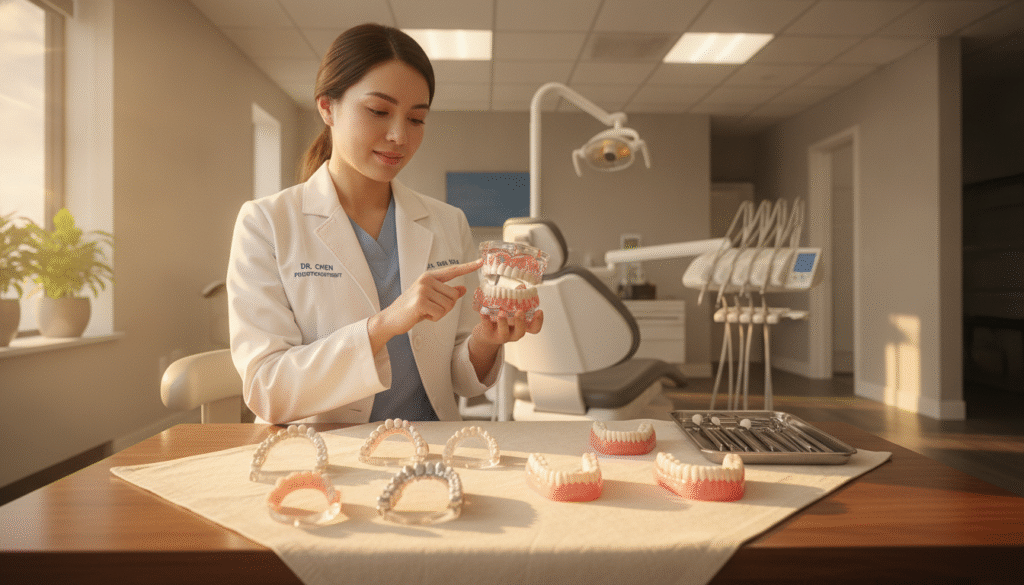
When you lose teeth, temporary fixes can help. They keep your mouth working and looking good while you look for a permanent fix. This is a smart way to manage until you can afford or find a better solution.
Flipper Dentures
Flipper dentures are a budget-friendly choice. They are light and made to replace missing teeth. They have a gum-colored base and metal clasps.
They are great for:
- Maintaining Space: They stop other teeth from moving into gaps.
- Restoring Aesthetics: They make your smile better while your mouth heals.
- Ease of Use: They are simple to put in and take out.
Temporary Bridges
Temporary bridges are another quick fix for tooth loss. They are made from materials like composite resin or acrylic. They are more stable and functional than flippers.
They offer:
- Improved Stability: They are fixed to your teeth, making them more secure.
- Enhanced Functionality: They help you chew and speak better, which is important for daily life.
- Quick Installation: They can be put in fast, giving you quick relief.
While flippers and bridges are good for now, they have some downsides. They don’t last as long as permanent options and might irritate your gums if not fitted right. Keeping your mouth clean is key to avoid problems.
In short, these temporary fixes are part of a bigger plan. They help you keep your mouth working and looking good while you figure out your next dental steps.
| Feature | Flipper Dentures | Temporary Bridges |
|---|---|---|
| Material | Acrylic | Composite Resin/Acrylic |
| Stability | Removable | Fixed |
| Cost | Low-cost dental treatments | Moderate |
| Durability | Lower | Higher |
Financing Options for Dental Implants
Getting dental implants doesn’t have to break the bank. There are many ways to make this expensive treatment more affordable. We’ll look at different options that can help you get the dental care you need without financial stress.
Dental Insurance Coverage
Many dental insurance plans see implants as major procedures. This means they often cover only a part of the cost. You’ll need to check your policy to see what’s covered.
Some plans let you use two insurances at once, which can help pay for implants. You can also use flexible spending accounts (FSAs) and health savings accounts (HSAs) to pay for dental care with pre-tax dollars.
Payment Plans and Financing
Dental offices often have their own payment plans. These plans let you pay for implants over time, making it easier to handle the cost. Some offices even offer membership plans that give discounts to those without insurance.
There are also third-party financing options like CareCredit and LendingClub. These companies offer payment plans for dental implants. Just be sure to look at the interest rates and any promotional periods before choosing.
Health Care Credit Cards
Health care credit cards can help with dental costs. They let you make payments over time, which can help with budgeting. But, be careful of the deferred interest traps that can happen if you miss payments.
By using insurance, savings, and financing options, you can make dental implants more affordable. Here’s a quick overview of the financing options we’ve discussed:
| Financing Option | Pros | Cons |
|---|---|---|
| Dental Insurance | Partial coverage, dual insurance possible | Limited coverage, annual max |
| Payment Plans | Flexible payments, member discounts | May need credit approval |
| Health Care Credit Cards | Manageable payments, easy to apply | Risk of deferred interest |
Comparing Costs of Alternatives
When looking at tooth replacement options, it’s key to consider both the upfront and long-term costs. Knowing about affordable tooth replacement choices helps patients make smart decisions. These choices should fit their health needs and budget.
Cost Analysis: Implants vs. Dentures
Dental implants are seen as a top choice because they last long and work well. But, dentures might seem cheaper at first. Here’s a look at the average costs:
| Option | Initial Cost | Expected Lifespan | Amortized Cost per Year |
|---|---|---|---|
| Dental Implant with Crown | $3,000 – $4,500 | 10 – 15 years | $300 – $450 |
| Three-Unit Bridge | $2,000 – $3,000 | 5 – 10 years | $200 – $600 |
| Removable Partial Denture | $1,500 – $2,500 | 5 – 7 years | $300 – $500 |
Dentures and bridges might cost less at first, but they often need to be replaced or adjusted. This can make their total cost higher than implants. Even though implants are pricier at first, they might save money in the long run.
Long-term Value of Each Option
When looking at the long-term value of dental options, think about:
- Durability: Implants can last over a decade with good care, while dentures may need to be replaced every 5-7 years.
- Maintenance Costs: Dentures often need regular relining and adjustments, which can increase costs.
- Health Implications: Missing teeth can cause bone loss, affecting oral health and possibly leading to more expenses.
“The most affordable tooth replacement is not necessarily the cheapest upfront but the one that minimizes future interventions and preserves oral health.”
Hidden Costs of Dental Procedures
It’s important to know about hidden costs of dental procedures. For example:
- Preparing healthy abutment teeth for bridges can harm their health.
- Recurrent decay under clasps in partial dentures can lead to more treatments.
- Bone resorption occurs when roots are not replaced, potentially leading to more extensive dental work later.
Also, indirect costs like nutritional deficiencies from poor chewing and the psychosocial impact of tooth loss can affect quality of life. So, it’s important to consider all factors when choosing a tooth replacement option.
Choosing the Right Dentist
Finding the right dentist is key for your teeth’s health and success with tooth replacement. A dentist’s skill can greatly affect your treatment’s quality and your happiness. It’s important to know the differences between dental professionals to make a good choice.
Importance of Finding a Specialist
Not all dentists are the same. Here are the main types of specialists you might consider:
- General Dentists: These professionals handle routine dental care but may not have specialized training in complex procedures.
- Prosthodontists: These specialists focus on restoring and replacing teeth, requiring additional years of training beyond dental school.
- Oral Surgeons: They perform surgical procedures, including tooth extractions and implant placements, and also undergo extensive training.
Choosing a specialist means you get care that fits your needs, leading to better results.
How to Evaluate Dentists
When picking a dentist, look at these factors:
- Board Certification: Make sure the dentist is board-certified, showing they meet high standards.
- Before-and-After Cases: Look at the dentist’s past work to judge their skill and success.
- Technology Adoption: A modern practice with advanced tech, like cone-beam computed tomography, can improve treatment planning.
- Continuing Education: Check if the dentist keeps up with the latest in restorative dentistry through ongoing education.
Questions to Ask During Consultations
During your consultation, ask these questions to understand the dentist’s approach:
- What is your treatment philosophy?
- What are your complication rates for the procedures I need?
- Why do you recommend this particular treatment option over others?
- Can I see examples of your previous work?
See the consultation as a chance to talk and learn together, not just a sales pitch. This will help you feel more at ease and informed in your decision.
Maintaining Oral Health with Alternatives
To keep your mouth healthy, you need to take good care of your dental prosthetics. This means cleaning them every day and getting them checked by a dentist regularly. This helps them last longer and work better.
Hygiene Practices for Dentures
Looking after your dentures is key to avoiding problems and keeping your mouth healthy. Here are some important steps:
- Daily Cleaning: Use a gentle cleanser to clean your dentures well each day.
- Overnight Soaking: Soak your dentures in a solution at night to keep them from warping.
- Brush Your Palate and Tongue: Brushing these areas helps prevent infections and keeps your mouth clean.
Caring for Dental Bridges
Dental bridges need special care to stay effective and not cause more dental problems. Here’s what to do:
- Use Floss Threaders: These tools help clean under the bridge and around the crowns, stopping cavities.
- Interdental Brushes: Use these to clean areas your regular toothbrush can’t reach, making sure everything is clean.
Regular Check-ups for Prosthetics
Going to the dentist regularly is vital for keeping your prosthetics and real teeth healthy. Dentists suggest:
- Biannual Evaluations: Visit your dentist at least twice a year to check how well your prosthetics fit and wear.
- Soft Tissue Health Checks: Make sure your gums and tissues are healthy and not sore.
Also, be aware of peri-implantitis, a problem that can affect implant-supported prosthetics. Just like real teeth, how long your prosthetics last depends on your home care and dentist visits.
| Practice | Purpose | Frequency |
|---|---|---|
| Daily Cleaning | Remove food particles and plaque | Every day |
| Overnight Soaking | Prevent warping | Every night |
| Regular Check-ups | Assess health of prosthetics | Every 6 months |
Psychological and Social Considerations
Dealing with tooth loss can be tough on your mind and how you see yourself. It can make you feel less confident or embarrassed. Studies show that losing teeth can cause a lot of emotional pain, like anxiety and sadness.
Tooth loss also affects how we interact with others. Some people might feel too shy to join in because they’re worried about what others will think. This can make them feel lonely and isolated. The choice of tooth replacement can also affect how others see you. For example, dentures might make you feel self-conscious because they’re visible and can slip.
On the other hand, options like bridges or implants can make you feel more confident. They look natural and can help you feel more at ease in social situations. This way, you can enjoy talking and laughing with friends without worrying about your teeth.
Impact of Tooth Loss on Self-Esteem
Our self-image is closely linked to how we look. Losing teeth can make you feel less attractive or less capable. This can make you hesitant to smile or speak up in public. It can also affect your relationships at work and with friends.
Social Implications of Different Options
The type of tooth replacement you choose can affect how others see you. For instance, dentures with visible clasps might draw attention, while a Maryland bridge is more discreet. Knowing these differences can help you pick the best option for your lifestyle and social life.
Support Groups and Resources
It’s important to have support when dealing with tooth loss. Groups like the Academy of Osseointegration offer helpful information. Online communities also provide a space to share experiences and find ways to cope. Connecting with others who understand can help you stay positive and strong.
| Tooth Replacement Option | Self-Esteem Impact | Social Perception | Emotional Support Resources |
|---|---|---|---|
| Removable Dentures | May lower self-esteem due to visibility | Potential stigma and embarrassment | Support groups available online |
| Bridges | Improves self-image | Generally positive social acceptance | Educational materials from dental associations |
| Implants | Significantly boosts confidence | High acceptance and natural appearance | Online forums for shared experiences |
Dental Assistance Programs
Many people facing financial struggles often miss out on dental care help. Luckily, there are programs that make dental care affordable. This section looks at non-profit groups, state programs, and dental schools that offer low-cost care.
Non-profits Providing Assistance
Many non-profit groups help people get dental care at low or no cost. Some examples include:
- Dentistry From The Heart: They host events where dentists give free care to those in need.
- Dental Lifeline Network: They have a Donated Dental Services program. It connects patients with dentists who work for free.
- Smiles for Everyone: They provide free dental care to those who can’t afford it through community events.
State Programs for Low-Income Patients
Every state has a Medicaid program that might cover dental care for low-income people. But, the coverage can differ a lot. Here are some important points:
- Some states only cover extractions, while others might include partial dentures or bridges.
- It’s key to check what your state covers to know what treatments are included.
- Federally Qualified Health Centers (FQHCs) offer dental services at a cost based on income.
Dental Schools Providing Affordable Care
Dental schools are a great choice for affordable dental care. Students, under the watch of experienced teachers, do treatments at lower costs. Here are some benefits:
- Cost Savings: Patients can save 50-70% compared to regular dental offices.
- Comprehensive Care: Dental schools offer many services, from routine check-ups to complex treatments.
- Educational Environment: Patients know their care is supervised by skilled professionals.
To make the most of these options, patients need to be ready with the right documents. They should also know that there might be waitlists. By using these resources, people can get the dental care they need without financial stress.
Long-term Considerations for Tooth Replacement
It’s important to think about the long-term effects of tooth replacement. Each choice has its own durability, costs, and recovery times. These factors can greatly impact your dental health.
Different tooth replacement options last for varying lengths of time. Dental implants can last decades, providing a stable solution. On the other hand, resin-bonded bridges may need to be replaced every 5 to 10 years. This is key for planning your dental care long-term.
It’s also important to understand the difference between prosthetic survival and success. A denture might last, but if bone changes, it can fail. Dental literature shows that bone loss continues after tooth loss. Waiting too long to get an implant can lead to bone loss issues.
Future costs are another thing to consider. Patients may face expenses for relines, repairs, and replacing teeth for bridges. These costs can add up, so it’s important to include them in your dental care budget.
Recovery times differ between options. Flipper dentures can be put in right away, helping patients smile again quickly. But dental implants need several months to integrate with the jawbone. This ensures a strong and lasting base.
The effect on bone preservation is also critical. Only implant-retained prosthetics help keep bone volume. Patients should think about how their choices might affect future treatments, like whether bone loss could prevent implant placement.
In conclusion, choosing tooth replacement wisely means considering durability, costs, and recovery times. Understanding these aspects helps patients make better decisions for their dental health.
Life After Tooth Loss: Emotional Support
Tooth loss affects more than just your teeth. It can also change how you feel. People often feel sad, deny the loss, or get angry. It’s important to understand these feelings to move forward.
There are ways to deal with these emotions. These methods help you heal and stay positive while you recover.
Coping Mechanisms for Tooth Loss
- Mindfulness Techniques: Mindfulness can help with anxiety about how you look. Meditation and deep breathing can keep you calm.
- Speech Exercises: Getting used to new teeth may need speech practice. This can improve how you talk and make you feel more confident.
- Gradual Social Exposure: Going back to social events slowly can help you feel more at ease. It’s a step-by-step way to get comfortable again.
Temporary fixes can also help you feel better right away. They act as a bridge to feeling more confident while you wait for permanent solutions.
Building Confidence Post-Treatment
Building confidence takes time and realistic goals. It’s important to remember that even the best new teeth need time to get used to. Celebrating small victories, like eating your favorite food again, can really boost your self-esteem.
If you’re really struggling with how you feel about your body, talking to a counselor can help. A mental health professional can offer support and ways to deal with these feelings.
| Coping Mechanism | Benefits | Recommended Practices |
|---|---|---|
| Mindfulness Techniques | Reduces anxiety | Meditation, deep breathing |
| Speech Exercises | Improves communication | Practice with a speech therapist |
| Gradual Social Exposure | Increases comfort | Join small gatherings |
The journey after tooth loss is complex, needing both physical and emotional healing. By focusing on both dental and emotional health, you can recover fully.
Debunking Myths About Tooth Replacement
It’s important to clear up common myths about tooth replacement. Many people are scared or unsure about dentures and bridges. This is because of false information.
Common Misconceptions About Dentures
One myth is that dentures are only for the elderly. But, tooth loss can happen to anyone, at any age. It’s due to accidents, birth defects, or other reasons.
Another myth is that dentures look fake. But, thanks to new dental materials, dentures now look very natural. This makes people feel more confident when they smile.
Some think dentures cause bone loss. But, it’s actually the lack of teeth that leads to bone loss. Wearing dentures correctly can help keep the jawbone strong.
Myths About Bridges and Their Efficacy
Many think dental bridges are as strong as real teeth. While they are a good option, they need care. Studies show that the teeth supporting bridges can break over time.
Some also believe bridges don’t need special cleaning. But, they do. Keeping the bridge clean is key to avoiding problems. Brushing and flossing around the bridge are important.
In summary, knowing the truth about dentures and bridges helps people make better choices. By clearing up these myths, patients can feel more confident about their dental care.
Exploring Innovative Technologies
The future of tooth replacement looks bright with new technologies coming. Dental treatments are changing thanks to these advancements. This section looks at recent breakthroughs that could change how we replace teeth.
Advances in Dental Treatment Options
Digital dentistry has made big steps forward, like intraoral scanning and 3D printing. These tools make making temporary crowns and dentures faster and cheaper.
Regenerative medicine is also a big deal in dentistry. Scientists are working on growing new teeth using stem cells. Also, platelet-rich fibrin is helping bone grafts work better.
Zirconia is being used for implants and bridges because it’s strong and looks good. It’s a favorite among patients and dentists.
What’s on the Horizon for Tooth Replacement?
Adhesive dentistry is getting better, leading to stronger, less invasive bridges. This means patients feel less pain and heal faster.
Artificial intelligence is helping dentists plan treatments better. Smart prosthetics with sensors are also being developed. They can track how hard you bite, giving you insights into your teeth.
While these new technologies are exciting, we should be realistic. The best options now are proven to work well. It’s important to talk to a dentist to find the right choice for you.
| Technology | Benefits | Future Poteential |
|---|---|---|
| 3D Printing | Reduced costs, faster production | Widespread adoption in clinics |
| Stem Cell Research | Natural tooth regeneration | New treatment protocols |
| Zirconia Implants | Durability, aesthetic appeal | Increased patient acceptance |
| Smart Prosthetics | Real-time feedback on bite | Enhanced patient monitoring |
Frequently Asked Questions
Many people looking for dental alternatives have common questions. This section answers these questions about tooth replacement options. We cover what to expect, how long these solutions last, and when you’ll see results.
What to Expect When Getting Alternatives?
Choosing dentures or bridges means going through several steps. These steps are designed to make sure you’re comfortable and can eat and speak well. For dentures, the process includes:
- Impressions: Taking molds of your gums for a perfect fit.
- Try-in: Trying the dentures to check fit and look before finalizing.
- Delivery: Putting in the final dentures and making any last-minute changes.
- Follow-up: Checking how you feel and making any needed adjustments.
For bridges, the steps are a bit different:
- Tooth Preparation: Shaping teeth next to the gap for support.
- Temporization: Putting in a temporary bridge while the real one is made.
- Cementation: Permanently attaching the bridge.
How Long Do Alternatives Last?
The life of dental alternatives depends on the material and how well you care for them. Here’s a quick guide:
| Type of Alternative | Expected Lifespan | Notes |
|---|---|---|
| Removable Partial Dentures | 5-10 years | May need to be relined or replaced over time. |
| Bridges | 10-15 years | How long it lasts depends on your oral hygiene and the materials used. |
| Complete Dentures | 5-7 years | Often need to be relined or replaced as your gums change. |
Are the Results Immediate?
Some options, like flipper dentures or temporary bridges, can look good right away. But, more permanent solutions take more time. You should be ready for:
- Initial Adjustments: Giving your mouth time to get used to the new look.
- Speech Adaptation: Getting used to speaking with new dental appliances.
- Dietary Restrictions: Being careful with certain foods at first.
Knowing this can help you feel better about any discomfort or adjustment time. It makes the transition smoother.
Next Steps: Making a Decision
Choosing the right tooth replacement option is a big decision. It depends on your personal needs and situation. Things like how many teeth are missing, the health of your bones, and your dental condition matter a lot.
Thinking about your budget is also key. Knowing how much you can spend helps narrow down your choices. Use cost estimators, check your insurance, and look into payment plans. These steps help you focus on what’s most important while keeping costs in check.
Talking to dental experts is a must. A detailed consultation lets them review your dental records. This includes X-rays and charts of your gums. They can then create a plan just for you.
See tooth replacement as a team effort with your dentist. This partnership improves your dental care. By starting with a consultation, you can ask the right questions. This helps you make a confident choice for your teeth.