What If the Tooth Broke at the Gum Line – Can It Stil Be Saved?
Did you know that nearly 30% of adults face dental fractures at some point? When a tooth breaks just below the gum line, it’s a big problem. It can leave a jagged edge, exposing sensitive parts like dentin and pulp.
This injury often causes immediate pain, making eating or drinking hard. A fracture at this level weakens the tooth’s structure. It also opens a path for bacteria, raising the risk of decay and infection.
If a molar is broken, acting fast is key. Getting to the dentist quickly can help save the tooth and avoid more problems.
In this article, we’ll look at what happens when a tooth breaks at the gum line. We’ll also talk about the treatment options. Knowing the severity can help patients make better choices for their teeth.
Key Takeaways
- Nearly 30% of adults face dental fractures in their lifetime.
- Fractures below the gum line expose sensitive tooth layers.
- Immediate care is key to saving the tooth.
- Infection risk goes up if treatment is delayed.
- Modern methods can fix damaged teeth.
Understanding Tooth Damage at the Gum Line
Tooth damage at the gum line can come from many sources. Knowing these causes is key to treating and preventing tooth fractures. We’ll look at the main reasons teeth break, why the gum line is important, and the types of damage that can happen.
What Causes Teeth to Break?
Several things can cause tooth fractures, mainly at the gum line. Here are some common causes:
- Biting Hard Objects: Accidental bites on hard foods or objects can lead to sudden fractures.
- Untreated Cavities: Cavities that go untreated can weaken the tooth structure, making it more susceptible to breaking.
- Chronic Teeth Grinding (Bruxism): This condition generates microfractures over time, which can culminate in significant damage.
- Facial Trauma: Accidents or sports injuries often lead to broken teeth, mainly in the front.
- Temperature Changes: Sudden shifts in temperature can cause stress on the tooth, leading to fractures.
The Importance of the Gum Line
The gum line is vital for oral health. It acts as a protective barrier, sealing the area where the tooth meets the gum. This seal prevents bacteria from entering and causing periodontal disease. If a fracture occurs at or below the gum line, it can break this barrier. This increases the risk of infection and more serious problems.
Types of Tooth Damage
Tooth damage can be categorized based on its severity:
| Type of Damage | Description | Prognosis |
|---|---|---|
| Enamel Fracture | Surface-level damage affecting only the enamel. | Generally good; often requires minimal treatment. |
| Enamel-Dentin Fracture | Involves both enamel and dentin layers. | Moderate; may require restorative procedures. |
| Enamel-Dentin-Pulp Fracture | Extends into the pulp, affecting nerves and blood vessels. | Poor; often necessitates root canal therapy. |
| Root Fracture | Damage occurs below the gum line. | Variable; treatment depends on extent and location. |
Understanding these factors and types of damage is key for effective tooth fracture treatment. Early action can prevent more problems and keep your mouth healthy.
Signs of a Broken Tooth
Spotting a broken tooth near the gum line is key to getting help fast. Knowing the signs helps you find the right dental care. Here are the main signs you might have a broken tooth.
Pain and Discomfort
Pain is a big sign of a broken tooth. It can show up in different ways:
- Localized Pain: Exposed dentin can cause sharp pain, often from hot or cold things.
- Dull Throbbing: If the pulp is out, you might feel a dull, throbbing pain that spreads.
- Intermittent Pain: Pain might come and go, showing the inflammation’s cycle.
As one expert says, “Pain is often the body’s way of signaling that something is wrong, and a broken tooth is no exception.”
Swelling and Inflammation
Swelling around the tooth can mean the tissues are inflamed. This could be from:
- Localized Gingival Edema: Swelling just around the gums of the broken tooth.
- Facial Cellulitis: Severe swelling that goes beyond the gums, needing quick dental care.
Any swelling means you should see your dentist, as it might show deeper problems.
Visible Fractures
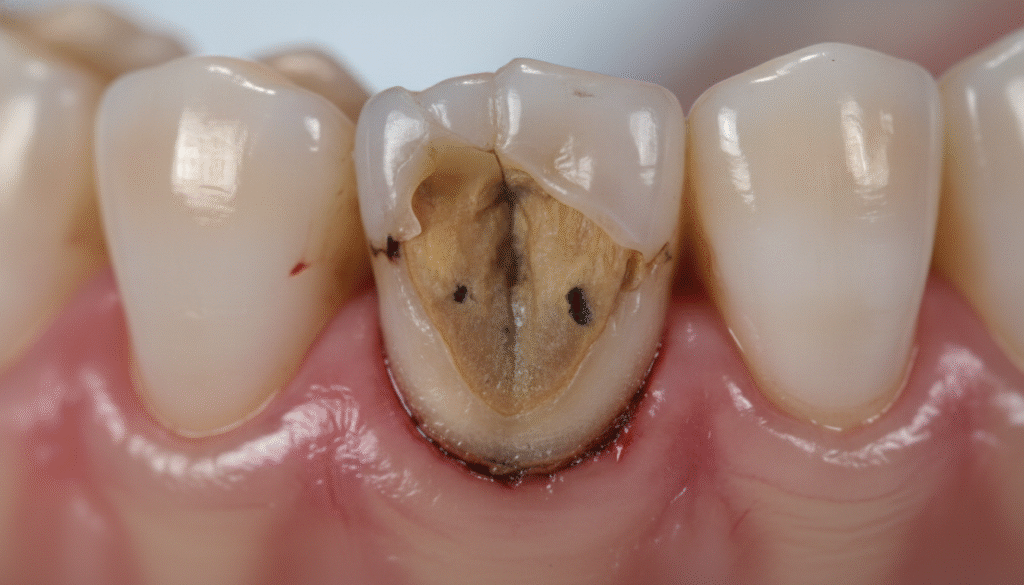
At times, a broken tooth is easy to see. Look for:
- Jagged Edges: Sharp edges you can feel with your tongue.
- Color Changes: Yellow means dentin is exposed, pink means pulp is visible. Dark brown or black means decay.
- Blood: Tasting blood means the fracture hit blood vessels in your gums.
Even without pain, visible breaks need a dentist’s check to avoid bigger problems like pulp necrosis.
Immediate Steps to Take
It’s important to act fast when you have a broken tooth. The steps you take right away can greatly affect your dental health. Here are some key actions to consider:
Rinse with Warm Salt Water
Start by rinsing your mouth with warm salt water. This helps kill bacteria and cleans the area around the broken tooth. Mix half a teaspoon of salt in eight ounces of warm water. Gently swish it around to avoid pushing any fragments or clots.
Avoiding Hard Foods
Stay away from hard foods that could make the break worse. Eating hard things can damage the tooth more. Choose soft, lukewarm foods that are easy to chew. Also, avoid foods that are too hot or cold.
When to See a Dentist
Seeing a dentist is key, even more so if the break shows dentin or pulp. If you see signs of infection like fever, swelling, or discharge, go to the emergency room if you can’t see your dentist. A dentist can help fix the tooth and prevent bigger problems.
Diagnostic Tools Used by Dentists
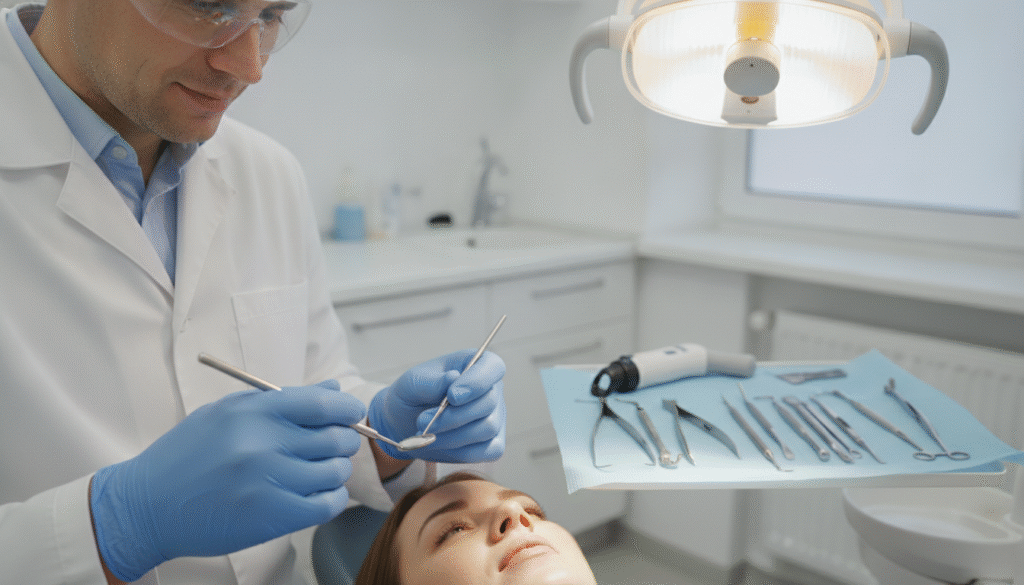
Dentists use many tools to check a cracked tooth at the gum line. Finding out what’s wrong is key to picking the right treatment. Here are some common methods used:
Visual Examination
The first thing dentists do is look at the tooth. They start by checking outside for any signs of swelling. Then, they look inside with special lights and tools.
Dentists use explorers to find cracks. They might also use light to see cracks better. Special dyes can make cracks stand out, helping them see how bad it is.
X-rays and Imaging
X-rays are very important for finding dental problems. They show if the root is okay and if there’s any swelling. But, they only show one side.
Cone-beam computed tomography (CBCT) is better for seeing everything. It shows the tooth in 3D, helping find cracks and see the bone. This is great for finding cracks that regular X-rays can’t see.
Periodontal Assessment
Checking the gums around the crack is also important. Dentists use tools to see how deep the crack is. Knowing this helps them decide how to fix it.
“Accurate diagnosis is the cornerstone of successful intervention.”
Treatment Options for Broken Teeth
There are many ways to fix broken teeth, depending on how bad the break is. Choosing the right treatment is key to getting your teeth back to normal. It’s important to know your options well.
Dental Crowns and Bridges
Dental crowns cover the whole tooth to protect it. They help spread out the force of chewing. But, you need enough tooth left for a crown to work.
If not enough tooth is left, you might need a crown lengthening. This surgery makes more tooth visible for the crown. It’s done to make sure the crown fits right.
Bridges are like fixed dentures that fill in gaps between teeth. They attach to nearby teeth. There are different types of bridges for different needs.
Root Canal Therapy
Root canal therapy is needed when the tooth’s pulp gets infected. It removes the pulp and fills it with a rubbery material. This stops the pain and infection.
The dentist makes a hole in the tooth, cleans the canal, and fills it. This is done when the pulp can’t be saved. It’s decided by looking at the tooth and using special images.
Tooth Extraction Considerations
Extraction might be the best choice for some broken teeth. This is when the break is too big or there’s not enough tooth left. The dentist will weigh the pros and cons before deciding.
Factors Influencing Treatment Success
Several factors can affect whether a broken tooth can be saved. Knowing these can help both patients and dentists make better choices. The damage’s extent, the patient’s oral health, and their age and bone density are key.
Extent of the Damage
The damage’s extent is a big factor in saving a tooth. Consider these points:
- Fractures above the gum line usually have a better chance of being saved.
- Exposure or damage to the pulp means more complex treatments.
- More tooth structure left means a better chance of saving the tooth.
Overall Oral Health
Oral health plays a big role in treatment success. Issues like:
- Active periodontal disease can weaken the tooth’s support.
- High caries risk can lead to more decay, making restoration harder.
- Poor oral hygiene can slow healing after treatment.
Fixing these problems before trying to save the tooth is key for the best results.
Age and Bone Density
Age and bone density also matter. Younger patients often have:
- A wider space at the tooth’s base, helping it heal.
- Stronger dentin, making repairs easier.
Older patients might face:
- Brittle dentin, making repairs harder.
- Changes in bone density that affect treatment options like implants.
Understanding these factors helps create a personalized risk profile. This profile aids in making the best treatment plan for the patient.
| Factor | Impact on Treatment Success | Considerations |
|---|---|---|
| Extent of Damage | Higher success rate with supragingival fractures | Evaluate fracture location and pulp involvement |
| Overall Oral Health | Active conditions may reduce success | Improve hygiene and address diseases |
| Age and Bone Density | Younger patients tend to heal better | Assess bone quality and healing capacity |
For more on treatment options, check out tooth extraction considerations.
The Role of Dental Insurance
Dental insurance plays a big role in your choice between tooth repair or extraction. Policies vary in what they cover. Restorative treatments like crowns and root canals are often covered 50% to 80% of the cost. But, tooth extraction might be covered more, making it seem cheaper.
Think about the long-term effects of tooth extraction versus repair. Extraction might seem cheaper at first, but it can lead to more costs later. Options like dentures or implants can cost thousands of dollars. So, it’s important to consider these future costs.
Understanding your insurance plan is key to managing costs. For example, a root canal on a molar can cost $1,000 to $1,500. A dental crown might be $800 to $2,000. Knowing these prices helps you make better choices.
Finding dentists in your network is also important. In-network dentists usually charge less. Always check your coverage before getting treatment. While cost matters, don’t forget about the look and function of your teeth.
Preventive Measures for Future Care
Preventing tooth damage starts with taking action. Keeping your teeth healthy is key. This means brushing regularly, visiting the dentist often, and choosing the right foods.
Maintaining Good Oral Hygiene
Good oral hygiene is the base of dental health. Brush your teeth twice a day with a soft-bristled toothbrush. Hold it at a 45-degree angle to your gums.
Flossing every day is also vital. It cleans between your teeth where a toothbrush can’t. Using fluoride toothpaste helps make your teeth stronger and less likely to break.
Regular Dental Checkups
Seeing the dentist every six months is important. They can spot problems early. They check your teeth, look for cavities, and check how your teeth fit together.
Professional cleanings and fluoride treatments help keep your teeth healthy. They add extra protection against tooth decay and damage.
Avoiding Hard or Sticky Foods
Your diet affects your teeth. Stay away from hard foods like ice and hard candies. They can harm your teeth. Sticky foods, like caramel, can also cause problems.
If you grind your teeth, a custom guard can help. It spreads out the force and protects your teeth and any fillings.
Preventing dental problems is a team effort. By focusing on oral hygiene, regular dental visits, and smart eating, you can keep your teeth healthy for longer.
The Emotional Impact of Tooth Loss
When a tooth breaks at the gum line, it can be very emotional. People may feel anxious, embarrassed, and less confident. It’s important for both patients and dentists to understand these feelings.
Psychological Effects of Dental Issues
Loosing a tooth can make you feel anxious and self-conscious. You might worry about what others think of you, which can make social situations tough. This can lead to:
- Avoidance of social interactions
- Reluctance to smile or speak openly
- Increased stress during meals, specially in public
It shows how important it is to deal with the emotional side of dental care too.
Building Confidence After Treatment
Getting your confidence back after losing a tooth takes time. Treatments like dental implants or crowns can really help. Temporary fixes can also make it easier to get used to your new look before the permanent ones are in.
Putting in an implant right away can also help. It lets you get back to normal faster, which can make you feel better about yourself sooner.
Support Systems and Resources
Having a support system is key to getting better. You can find help from:
- Patient advocacy groups for support and advice
- Online forums run by dentists for accurate info
- Counseling services for health-related anxiety
Dealing with the emotional side of tooth loss is a big part of dental care. By helping patients feel supported, dentists can make the whole experience better.
| Emotional Response | Impact on Daily Life | Potential Solutions |
|---|---|---|
| Anxiety | Avoiding social situations | Therapy, support groups |
| Embarrassment | Reluctance to smile | Cosmetic dental solutions |
| Diminished Self-Esteem | Reduced social interactions | Provisional restorations, implants |
Myths About Tooth Damage and Recovery
Many people have wrong ideas about tooth damage and how to fix it. These wrong beliefs can make dental problems worse. It’s important to clear up these myths so patients get the right care.
Misconceptions About Tooth Remnants
One common myth is that tooth pieces will go away on their own. But, enamel and dentin are acellular tissues that can’t dissolve. Pieces left behind can cause infections, like chronic periapical periodontitis or cysts. Knowing this shows why it’s key to fix broken teeth quickly.
The Truth About Self-Repair
Some think teeth can heal like bones. While dentin can repair itself a bit, enamel has no regenerative power. It’s important to understand the difference between fixing early tooth decay and fixing broken teeth.
Popular Myths Debunked
There are many myths about fixing broken teeth. For example, some think putting aspirin on a broken tooth helps with pain. But, aspirin is acidic and can burn the mouth. Also, thinking a broken tooth that doesn’t hurt doesn’t need fixing is wrong. Pulp necrosis can happen without pain, and silent infections can cause a lot of damage.
| Myth | Fact | Consequences |
|---|---|---|
| Broken tooth remnants will dissolve. | Enamel and dentin do not resorb. | Risk of infection and complications. |
| Teeth can heal themselves. | Dentin has limited reparative ability. | May lead to untreated fractures. |
| Aspirin on teeth relieves pain. | Aspirin can cause chemical burns. | Potential for oral tissue damage. |
| No pain means no treatment needed. | Pulp necrosis can occur without pain. | Risk of severe bone loss. |
In conclusion, knowing the truth about tooth damage and recovery is key for good dental care. Getting accurate info and talking to a dentist can avoid problems and lead to better results.
Long-Term Outcomes After Tooth Damage
It’s important to know how a broken tooth near the gum line affects your mouth long-term. After treatment, you might feel sore or in pain. But, this pain should get better in a few days if no infection happens.
Following your dentist’s advice is key to healing well. If you had a root canal, avoid chewing on the tooth for a while. Eating soft foods and liquids is best during this time. Once you’re healed, you can go back to eating as you normally do.
To keep your smile bright, you need to do several things:
- Meticulous Oral Hygiene: Clean around your restorations, focusing on the crown margin, to stop plaque buildup.
- Regular Professional Maintenance: Get regular check-ups and cleanings to keep an eye on your mouth’s health.
- Occlusal Monitoring: Watch for any changes in your bite that might mean your restoration isn’t working right.
Even with treatment, problems can happen. These might include:
- Recurrent Caries: This is when new cavities form at the edge of your restoration.
- Periapical Pathosis: After a root canal, you might get persistent pain or new infections at the root tip.
- Crown or Bridge Debonding: If the cement fails or you get new cavities, your restoration might come loose.
- Root Fracture: Teeth that have had root canals can break, which can be serious.
Keep an eye out for signs of trouble. Look for:
- Pain on Biting: This could mean you have inflammation or a broken root.
- Mobility: If your tooth moves more than usual, it might mean your gums are getting worse.
- Gingival Swelling: Swelling or a fistula could mean you have a chronic infection.
The success of fixing a broken tooth near the gum line depends on you and your dentist working together. Regular check-ups and telling your dentist about any changes are important for your mouth’s health.
When Is Extraction Necessary?
Deciding to extract a tooth often comes after trying other options. It’s key for both patients and dentists to know when a tooth can’t be saved.
Several factors help decide if a tooth can’t be fixed:
- Extent of the Fracture: If a crack goes more than 2 millimeters below the gum line, it’s usually too far gone.
- Remaining Tooth Structure: Not having enough tooth left around the crown can make it hard to keep it in place.
- Vertical Root Fracture: This type of crack is almost always a sign that the tooth needs to come out.
- Periodontal Status: If the gum and bone around the tooth are weak, it can’t support a crown.
Even when it seems like there’s no other choice, there might be other ways to save a tooth. These include:
- Crown Lengthening: This makes more tooth available for a crown.
- Orthodontic Extrusion: Moving the tooth up can sometimes save it.
- Hemisection or Root Amputation: If only one root is damaged, this might work for multi-rooted teeth.
After a tooth is pulled, taking care of the area is very important:
- Hemostasis: Bite on gauze for 30 to 60 minutes to help the area heal.
- Pain Management: Use pain relievers like ibuprofen or acetaminophen as needed.
- Dietary Modifications: Eat soft foods and avoid straws to keep the area clean.
- Oral Hygiene: Keep the area clean but gentle to help it heal.
Replacing the tooth quickly is important to avoid problems like bone loss. This can start as soon as three months after losing a tooth. Quick action helps ensure better results for future dental work.
Legal Rights Regarding Dental Care
It’s important to know your rights in dental care to make good choices. In the U.S., patients have rights that protect them in dental offices. These rights let patients decide what treatments they want or don’t want.
When you have a dental emergency, like a broken tooth, knowing your rights is key. Here are the main areas to understand:
Patient Rights in Treatment Decisions
Patients have the right to:
- Get clear info about their diagnosis and treatment choices.
- Help decide with their dentist.
- Choose treatments that fit their values and preferences.
Consent and Disclosure
Informed consent is vital in dental care. For any major procedure, like a root canal or tooth extraction, the dentist must:
- Tell you about your diagnosis and the treatment plan.
- Explain the risks and benefits of the treatment.
- Talk about other options, including not doing anything.
This way, you know all your choices and can pick what’s best for you.
Filing Complaints Against Dental Practices
If you think you got bad care, you can file a complaint. The steps are:
- Write a complaint to the state dental board.
- Send any important records or documents.
- Maybe take part in an investigation.
Even though you can take legal action, talking to your dentist first is usually best. Most dentists want to do right by their patients and make them happy.
Understanding Full Mouth Rehabilitation
Full mouth rehabilitation is a detailed plan to fix the whole mouth. It’s for those with badly damaged teeth, often because of broken teeth at the gum line. This treatment uses many different areas of dentistry and is made just for each person.
First, a detailed check-up is done. This includes:
- Mounted diagnostic casts
- Photographic documentation
- Occlusal analysis using articulators
This helps figure out how the teeth fit together and how they move. It’s the first step in creating a treatment plan that fits just right.
What It Involves
Planning for full mouth rehabilitation brings together many specialties. These include:
- Restorative dentistry
- Endodontics
- Periodontics
- Orthodontics
- Oral surgery
This team effort makes sure all the basics are fixed before the final touches are added. This leads to a stronger and more functional result.
Who Needs It?
People with severe tooth wear, missing teeth, or jaw problems might need full mouth rehabilitation. A broken tooth at the gum line could be a sign of bigger issues that need a full treatment.
Expected Outcomes
Full mouth rehabilitation can bring big improvements. These include:
- Restoration of masticatory efficiency
- Elimination of pain from occlusal dysfunction
- Improvement in facial aesthetics by restoring vertical dimension
- Long-term stability with proper home care and professional follow-up
It’s a big step, needing dedication and careful thought. Talking it over with a prosthodontist or skilled restorative dentist is key.
Choosing the Right Dental Professional
Choosing the right dentist is key when you have a broken tooth. Subgingival fractures need specialists with advanced skills. Knowing how to find a good specialist is important for your treatment.
How to Find a Specialist
There are a few ways to find a dental specialist. Your general dentist can give you a referral. You can also check directories from groups like the American Board of Endodontics.
Academic dental centers are also a great choice. They have the latest technology and experts for complex cases.
Questions to Ask During a Consultation
Getting ready for a consultation helps you learn about your options. Ask these questions:
- What is the extent of the fracture and what are my treatment options?
- What is your experience with cases similar to mine?
- What are the success rates for the proposed treatment?
- What are the risks of complications?
- What will the recovery process involve?
- What are the costs and what does my insurance cover?
Evaluating Credentials and Reviews
Checking a dentist’s credentials is important. State dental board websites have info on licenses and disciplinary actions. Online reviews can give insights, but be cautious.
Professional reputation among peers is also a good sign. The relationship between you and your dentist should be based on trust and communication.
Cost Considerations for Dental Procedures
Knowing the cost of fixing a broken tooth is key to making smart choices. Many people choose treatments based on price. This part will look at average costs in the U.S., financing options, and how prices change by location.
Average Costs in the United States
Dental costs vary a lot. This depends on the treatment and where you are. Here are some typical prices for common fixes:
| Procedure | Average Cost (USD) |
|---|---|
| Root Canal (Molar) | $1,000 – $1,500 |
| Crown | $800 – $2,500 |
| Crown Lengthening | $1,000 – $3,000 |
| Tooth Extraction | $150 – $800 |
| Implant Placement with Restoration | $3,000 – $6,000 |
Financing Options Available
There are ways to handle the cost of fixing a broken tooth:
- Dental Insurance: Many plans help pay for dental work.
- Dental Savings Plans: These offer lower fees for a yearly fee.
- Third-Party Financing: CareCredit and others let you pay over time.
- In-House Payment Plans: Some dentists have their own payment plans.
Price Variation Across Regions
Prices for dental care change a lot by location. Cities, like those on the coasts, often cost more than rural areas. This is due to living costs, competition, and laws.
While cost matters, don’t forget about the quality of care and long-term results. The cheapest option might not be the best in the long run.
Encouragement for Patients with Dental Concerns
Having a cracked tooth at the gum line can be scary. It’s important to act fast. If a molar breaks below the gum, see a dentist right away. If your dentist is not available, go to another dental clinic or an emergency room.
It’s key to talk openly with your dentist. You should share your worries and what you want. Your dentist should listen well and explain your options clearly. This builds trust and makes your care better.
Don’t forget about taking care of your teeth at home. Brushing regularly, visiting the dentist, and wearing mouthguards help a lot. Eating well also strengthens your teeth and gums.
Even though a cracked tooth is tough, dentistry has come a long way. With quick action and good care, you can get your smile back. Take care of your teeth and get help when you need it.