What is an Implant-Supported Bridge or Denture Explained
Did you know that nearly 70% of adults aged 35 to 44 have lost at least one permanent tooth? This shows a big dental problem many face. They look for good solutions, and dental implants have changed restorative dentistry a lot.
Implant-supported prosthetics are a great choice instead of old dentures and bridges. They use titanium posts put into the jawbone, like artificial roots. This makes them stable and lets people eat, speak, and smile with confidence.
These systems are more than just replacements. They are designed to work like natural teeth. They anchor to dental implants, giving strong support over long distances. This makes them a top pick for many patients.
Learning about these dental solutions helps bridge the gap between technical terms and what patients understand. This guide aims to make clear the key points of implant-supported bridges and dentures. It helps readers see their importance in today’s dentistry.
Key Takeaways
- Dental implants serve as stable anchors for bridges and dentures.
- These solutions restore both function and aesthetics for patients.
- Implant-supported options mimic natural tooth roots for enhanced stability.
- They provide a long-term solution for missing teeth.
- Understanding these systems is key for making smart dental choices.
Understanding Implant-Supported Bridges and Dentures
Implant-supported bridges and dentures are new ways to improve your oral health and look. They help replace missing teeth, making your mouth both functional and beautiful.
Definition and Overview
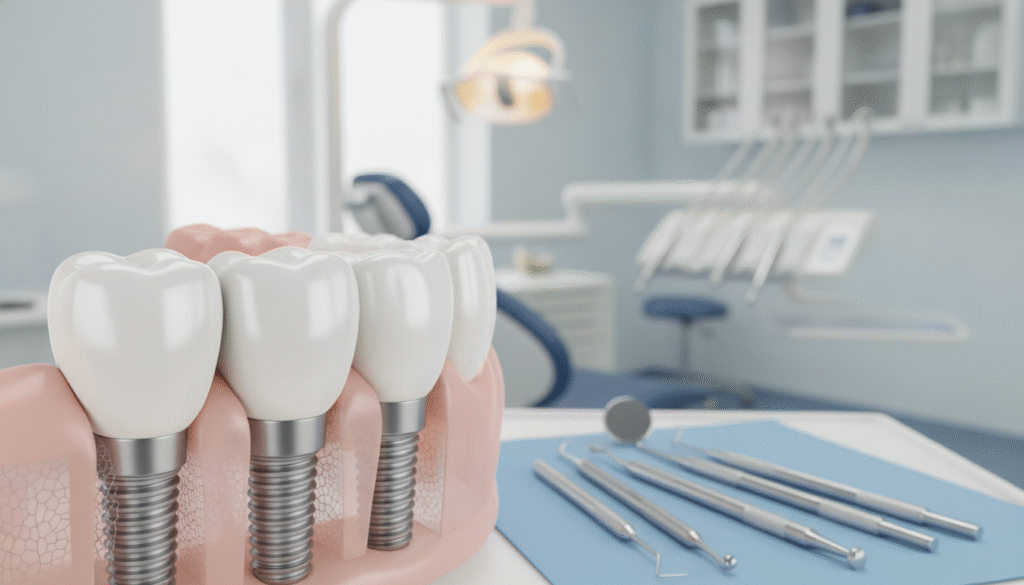
An implant-supported bridge is a dental fix that fills gaps in your teeth. It uses titanium implants in your jawbone. This is different from regular bridges that need teeth next to them for support.
These implants work with your bone, making the bridge stable. This means it lasts a long time.
Each bridge has three parts:
- Implant Fixture: The titanium post in your jawbone.
- Abutment: A piece on top of the implant that holds the tooth or bridge.
- Prosthetic Superstructure: The fake teeth that finish the bridge.
Comparison with Traditional Options
Implant-supported bridges differ from old ways in important ways:
- Preservation of Healthy Teeth: They don’t harm your other teeth, keeping them strong.
- Jawbone Preservation: The implants help keep your jawbone healthy, unlike missing teeth.
- Stability and Functionality: These bridges don’t slip and don’t need glue, making eating easier.
Choosing between old and new dental options can be tough. But, the benefits of implant-supported bridges and dentures are clear. They offer better stability and are easier to care for.
Benefits of Implant-Supported Solutions
Exploring implant-supported solutions shows their big impact on oral health. These advanced dental options offer many benefits. They improve both function and appearance. Let’s look at three main benefits that make these prosthetics a top choice for patients.
Improved Aesthetics
One big plus of implant-supported solutions is how they restore natural looks. Custom-made crowns can match the color, shape, and shine of real teeth. This makes the smile look seamless and restores facial contours lost with tooth loss.
Enhanced Functionality
Implant-supported solutions also boost functionality. Patients often say they can chew better, enjoying a wide range of foods without limits. Plus, the implants’ secure fit helps prevent speech problems that loose dentures can cause. Why choose a removable appliance when a fixed one can restore full function?
Long-Term Durability
Long-term durability is a key reason to choose implant-supported solutions. Studies show dental implants can last a lifetime with proper care. The prosthetic parts are made to last decades, giving a reliable and stable solution. Patients can feel confident knowing their investment in oral health is long-lasting.
The Implantation Process
Understanding the dental implant procedure involves several critical stages. Each step is designed to address specific needs. It ensures a smooth transition to an implant-supported restoration.
Initial Consultation and Planning
The first step is the initial consultation. During this visit, the provider evaluates the patient’s oral health. They gather essential information through:
- Comprehensive diagnostics, including X-rays and 3D imaging.
- A thorough review of the patient’s medical history.
- Discussion of the patient’s expectations and treatment goals.
This planning phase is key. It allows the provider to create a personalized treatment plan. This plan is tailored to the patient’s specific needs.
Surgical Procedure
Once planning is complete, the surgical procedure begins. This is done under local anesthesia or sedation to ensure comfort. The process involves:
- Preparation of the implant sites in the jawbone.
- Placement of titanium posts, which serve as the foundation for the implants.
- Extraction of any compromised teeth, if necessary, during the same appointment.
Modern techniques, like computer-guided implant placement, enhance precision. They minimize risks associated with the procedure.
Healing and Osseointegration
After the surgical procedure, the healing phase begins. This stage is characterized by osseointegration. It’s a biological process where bone cells grow onto the implant surface, creating a stable bond. This process can take several months and is vital for the success of the dental implant procedure.
During this time, patients may wear temporary prosthetics. These help maintain aesthetics and functionality. Following post-operative instructions is critical for a successful recovery.
Types of Implant-Supported Bridges
When looking at tooth replacement options, it’s key to know the different types of implant-supported bridges. These bridges fall into two main categories: fixed and removable. Each has its own benefits and things to consider, so it’s important to think about what you need and want.
Fixed Bridges
Fixed bridges are stuck onto dental implants. They feel most like natural teeth because they stay in place. But, you can’t take them out yourself, so you need a dentist to clean them.
Fixed bridges are great because they don’t move. They’re best for people who have lost many teeth in a row. Usually, two implants can hold a three-tooth bridge, giving strong support. This is good for those who want their teeth to look and feel right.
Removable Bridges
Removable bridges, or implant-retained overdentures, clip onto implants. You can take them out for cleaning, making them easy to care for. They offer a good mix of stability and ease of use.
These bridges are good for people with a lot of bone loss or who want to clean their teeth easily. They can also change with your mouth, making them flexible. Though they’re not as stable as fixed bridges, they’re a solid choice for many.
Choosing between fixed and removable bridges depends on many things. This includes how much bone you have, what you prefer, and your dental situation. Talking to a dentist can help you decide what’s best for your teeth and health.
Types of Implant-Supported Dentures
Implant-supported dentures come in different forms to help those with lost teeth. Knowing about these options can guide patients in choosing the right dental care.
There are mainly two types: bar-retained and ball-retained dentures. Each has its own benefits and things to consider.
Bar-Retained Dentures
Bar-retained dentures use a thin metal bar linked to two to five implants. The denture base has clips that snap onto this bar. This setup offers great stability and spreads out chewing forces well.
These dentures are great because they don’t move when eating or talking. They also feel more natural than regular dentures. Patients can eat a wider range of foods without pain.
Ball-Retained Dentures
Ball-retained dentures, or stud-attachment dentures, have ball-shaped abutments on each implant. These balls fit into sockets in the denture. This design is simpler and often cheaper.
Even though they’re not as stable as bar-retained dentures, they’re easier to clean. Many patients like the simple design, making their experience better.
Both types of dentures are better than regular dentures. They stop bone loss and make chewing better. Patients can eat a variety of foods and speak clearly.
Candidates for Implant-Supported Solutions
To find out if you’re a good fit for implant-supported solutions, a detailed check is needed. This check looks at your health and dental status. It’s key to making sure you get the best results.
General Health Considerations
Your overall health is very important. If you have diabetes or heart disease, it must be under control. People who don’t smoke usually heal faster than smokers.
Keeping your mouth clean is also essential. If you have gum disease or an infection, you need to get it treated first.
Bone Density Requirements
The health of your bones is another big factor. You need enough bone for the implant to stick and heal properly. Losing teeth can cause your bone to shrink, with up to 25% loss in the first three months.
If you don’t have enough bone, there are ways to add to it. Bone grafts can help. But, some medicines might slow down healing. It’s important to talk about your meds with your dentist.
New techniques have made it possible for more people to get implants. A full check-up will help figure out the best plan for your smile.
Care and Maintenance of Implant-Supported Devices
Proper care is key for the long life of implant-supported devices. Daily routines and regular dental visits are vital. These steps help keep your implants looking and feeling great.
Brushing your teeth twice a day is a must. Use a soft-bristle toothbrush and gentle toothpaste. This removes plaque and food bits. Also, use interdental brushes or water flossers to clean hard-to-reach spots.
Antimicrobial mouth rinses can help fight bacteria. This keeps the soft tissue around your implants healthy. Watch out for signs of inflammation, as it can lead to bigger problems.
See your dentist every 3 to 6 months. They can clean your implants, check their stability, and make sure your bite is right. This helps catch any problems early.
Avoid habits that can harm your implants. Don’t chew ice, use your teeth as tools, or grind your teeth without a guard. Following these tips keeps your implants working and looking good for years.
“With good daily care and regular visits, an implant-supported bridge can serve you well for many years.”
Costs Associated with Implant-Supported Bridges and Dentures
The cost of implant-supported bridges and dentures is a big deal. It’s important to think about these costs when deciding on dental care. Prices can range from $3,000 to $30,000 or more, based on several factors.
Several elements influence the overall cost of implant-supported solutions:
- Type of Bridge or Denture: The choice between fixed and removable options can affect pricing.
- Number of Implants: More implants generally lead to higher costs.
- Material Used: Options like zirconia or porcelain-fused-to-metal can vary in price.
- Preparatory Care: Procedures such as bone grafting or sinus lifts may be necessary.
- Insurance Coverage: Medical insurance rarely covers implants, but some dental plans may assist with the prosthetic costs.
The skill of the dental team also plays a role in cost. Dentists with advanced training might charge more for their expertise.
Financing options can help make these treatments more affordable. Many dental offices offer financing plans like CareCredit, Cherry, and Sunbit. These plans let patients pay over time.
| Cost Factor | Average Cost Range | Notes |
|---|---|---|
| Implant Placement | $1,500 – $3,000 | Varies by location and provider |
| Bridge/Denture | $2,000 – $15,000 | Depends on type and materials |
| Preparatory Procedures | $500 – $3,000 | Bone grafting, sinus lifts, etc. |
While the upfront cost of implant-supported bridges and dentures is higher, they offer long-term benefits. Their durability and function can save money in the long run.
Possible Risks and Complications
It’s important to know the risks and complications of dental implants. These implants can greatly improve your life, but problems can happen during and after surgery. Knowing about these risks helps you take steps to avoid them.
One big worry during surgery is infection at the implant site. This can cause serious problems, like the implant not working. Other risks include:
- Injury to the inferior alveolar nerve: This can make the lower lip and chin numb, either temporarily or permanently.
- Perforation of the sinus membrane: This is a big concern for implants in the upper jaw.
- Excessive bleeding: This is rare but can happen during surgery.
Another big worry is if the implant fails early. This can happen if it doesn’t integrate well with the bone. Reasons for this include:
- Smoking: Smoking can slow down healing.
- Poor bone quality: Not enough bone density can make integration hard.
- Surgical error: Mistakes in planning or technique can cause problems.
Long-term problems can also happen, affecting how long the implant lasts. One issue is peri-implantitis, which can cause bone loss. Other problems include:
- Abutment screw loosening: This can make the prosthetic unstable.
- Fracture of the prosthetic material: This might mean you need repairs or a new one.
- Occlusal overload: This can happen if you grind your teeth too much.
To lower these risks, careful planning and a clean surgical method are key. Following aftercare instructions well is also important. Avoiding habits like chewing ice or grinding teeth can help keep your implants safe.
In summary, while dental implants come with risks, these can be managed. Choosing experienced doctors and watching for any unusual signs is important. Knowing and learning about these risks can help ensure a good outcome.
Innovations in Implant Technology
The field of implant dentistry is changing fast, thanks to new tech. These changes are big steps forward in how implants are made, put in, and cared for.
New implant materials are a big deal. Before, titanium was the top choice. Now, zirconia implants are gaining ground. Zirconia is a tooth-colored, metal-free option that works well with the body. It also helps implants fit better and faster.
3D printing and digital tools are changing how implants are made. With tools like CBCT and intraoral scans, doctors can plan surgeries better. This means implants fit perfectly and procedures are quicker and more comfortable.
Future research could make implants even better. Work on growth factors and stem cells might make bone grafts unnecessary. This could make implants easier to get and recovery faster.
In short, new implant tech is making dental care better. Places like Dental Associates of Jersey City and Aspen Dental are using these advances. Patients can expect better results and a more comfortable experience.
Success Rate of Implant-Supported Options
Implant-supported bridges and dentures are highly successful in modern dentistry. They have a survival rate over 95% in a decade. Studies show a success rate of 90–95% for the prosthetic parts at 15 years. This is good news for those thinking about these options.
Several factors affect the success of these solutions. These can be divided into three main groups: patient-related, site-related, and clinician-related factors.
Factors Affecting Success
Patient-related factors are key to dental implant success. Smoking can increase the risk of implant failure. Diabetic patients need to control their blood sugar well for healing. Keeping the mouth clean is also vital for implant longevity.
Site-related factors also matter. The bone needs to be dense enough to hold the implant. The location of the implant site is also important for success.
Clinician-related factors include the surgical technique and prosthetic design. Experienced dentists using advanced methods can improve success rates.
Long-Term Outcomes
Long-term results for implant-supported solutions are mostly positive. The implant itself can last forever with care. But, the prosthetic parts might need to be replaced after 10–15 years due to wear or looks.
Traditional bridges often face more problems like tooth decay and root canal issues. Removable dentures can also cause bone loss, leading to more issues.
In summary, the success rates of implant-supported options show they are reliable. With the right care and attention to important factors, patients can enjoy long-term benefits from these advanced dental treatments.
Psychological Impact of Tooth Loss and Replacement
Loosing a tooth is not just about the physical loss. It deeply affects how we feel emotionally. Many people struggle with low self-esteem and may pull back from social events. This is often because they fear how others will see them and judge their speech.
Simple tasks like eating or talking can become hard after tooth loss. This can hurt both personal and work relationships. People may feel shy about showing their smile.
- Decreased Self-Confidence: Feeling embarrassed or anxious about how you look can make you shy away from social events.
- Impact on Social Interactions: Being afraid to smile or speak in public can make you feel isolated.
- Increased Anxiety and Depression: Constant worries about how you look can lead to mental health problems.
But, there’s good news. Dental implants do more than just fix a tooth. They also make your smile look natural again. This can greatly boost your confidence.
Smiling freely can change how you interact with others. It’s about feeling empowered and more involved in life. Patients often say they feel more confident and connected after treatment.
In short, dealing with the emotional side of tooth loss is key. Dental implants not only make you look better but also help you feel better. By focusing on both, you can regain your confidence and enjoy life more.
Frequently Asked Questions
Many patients have questions about implant-supported solutions. This section answers the most common ones. It clears up misconceptions about implant-supported bridges and dentures.
Common Concerns and Misconceptions
Patients often worry about the process and results of implant-supported solutions. Here are some common myths:
- Dental implants are extremely painful: Today’s anesthesia and sedation make the procedure comfortable.
- Implants are only for the elderly: Age doesn’t matter; it’s your overall health that counts.
- The process takes too long: Healing time is needed for success, but the timeline varies.
Addressing Patient Inquiries
Patients have practical questions about their treatment options. Here are answers to some common ones:
| Question | Answer |
|---|---|
| How many implants are needed for a bridge? | Usually, two implants support a bridge that replaces three teeth. |
| Can I eat normally after getting an implant bridge? | Yes, once healed, you can eat a wide variety of foods. |
| How long do implants last? | With proper care and dental visits, implants can last a lifetime. The bridge might need replacement in 10-15 years. |
| Does insurance cover implant-supported bridges? | Coverage varies by plan. Many plans help with the bridge but not the implant itself. |
“With good daily care and regular visits, an implant-supported bridge can serve you well for many years.”
Conclusion
Implant-supported bridges and dentures are top choices for replacing teeth. They offer great stability, look natural, and last a long time. You can pick from fixed or removable options, each with its own benefits.
These modern solutions greatly improve your oral health and boost your confidence. Thanks to dental tech advancements, these treatments are now more available and reliable. If you’re thinking about them, seeing an implant dentist is key. They can help you see how these options can change your smile and life.
If you’re ready to move forward, there are resources to help. Talk to experts like those at Aspen Dental, who focus on making smiles whole again. Or call Dental Associates of Jersey City at (201) 433-0773 to set up a meeting. Learn how implant-supported bridges can make a big difference in your life.