What Kind of Pain Reliever Can I Take for Broken Tooth Pain?
Did you know nearly 1 in 5 adults in the United States face dental pain? This fact shows how vital it is to know how to handle pain, like when you have a broken tooth.
A cracked tooth can cause sharp pain when you chew, sensitivity to hot or cold, and even sudden aching. These symptoms happen because the crack exposes sensitive parts inside the tooth. This sends nerve signals that can be very painful. Getting quick relief is key to ease the pain and avoid more problems.
In this article, we’ll look at ways to ease broken tooth pain. You’ll learn about medicines you can buy over the counter, like ibuprofen and acetaminophen. We’ll also cover home remedies, such as rinsing with warm salt water and using cold compresses. But remember, these methods are just temporary fixes. They’re not a replacement for seeing a dentist.
Knowing how dental pain works can help you act fast. Quick steps can not only ease the pain but also lower the chance of infection and more damage. Let’s explore the best ways to manage your pain and get your mouth back to health.
Key Takeaways
- Dental pain affects a significant portion of the population.
- Cracked teeth can expose sensitive tissue, causing severe discomfort.
- Immediate relief can be achieved through OTC medications and home remedies.
- Understanding pain mechanisms helps in effective management.
- Professional dental care is key for long-term solutions.
Understanding Broken Tooth Pain
It’s important to know about broken tooth pain to manage it well. This part talks about what causes and shows symptoms of this dental issue. Knowing these helps people choose the right treatment.
Causes of Pain from a Broken Tooth
There are many reasons for broken tooth pain. Here are the main ones:
- Tooth Decay: Bacteria can eat away the enamel, causing cavities and pain.
- Gum Disease: Gum inflammation and infection can make teeth sensitive.
- Cracked Tooth: Even if you can’t see it, a crack can hurt a lot when you bite.
- Abscess: An infection at the tooth’s root can cause a lot of pain.
- Teeth Grinding: Grinding your teeth too much can weaken them and cause breaks.
Each cause can lead to different kinds of pain. For example, sharp pain when biting might mean a cavity or crack. But a dull ache could mean an infection.
Symptoms You May Experience
The symptoms of broken tooth pain can be different. Knowing these symptoms helps you see when you need to see a dentist:
| Type of Pain | Description | Possible Cause |
|---|---|---|
| Sharp Pain | Stabbing sensation when biting or chewing | Cavity or cracked tooth |
| Dull Ache | Persistent discomfort that may worsen over time | Infection or pulpitis |
| Sensitivity | Discomfort with hot or cold foods | Worn enamel or exposed roots |
| Throbbing Pain | Severe pain that disrupts sleep | Pulp inflammation or infection |
Knowing these symptoms helps manage tooth pain better. As the saying goes,
“An ounce of prevention is worth a pound of cure.”
Understanding broken tooth pain helps with toothache pain relief. It also shows why seeing a dentist quickly is so important.

Types of Pain Relievers
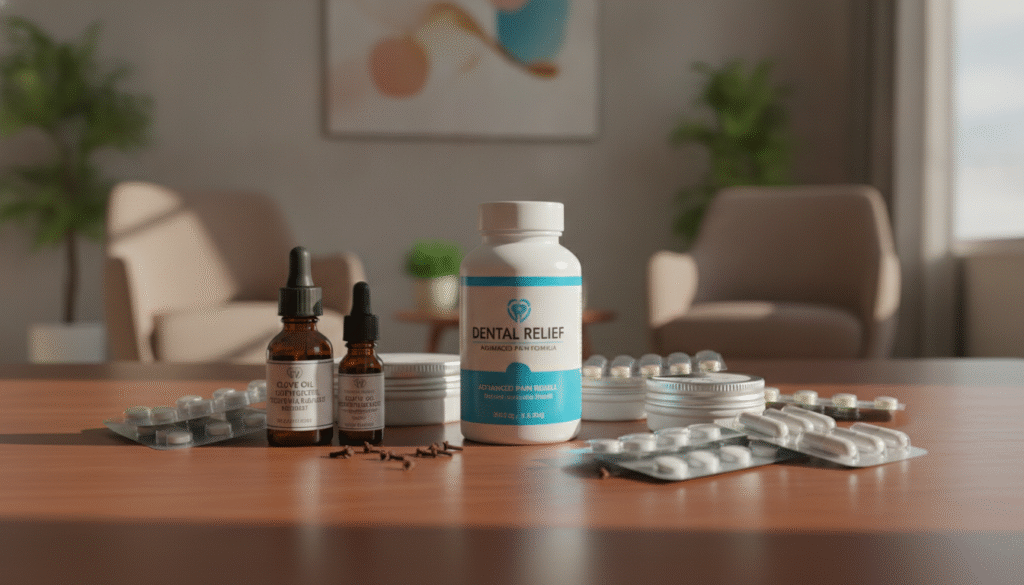
Pain relief for a broken tooth comes from many sources. Each has its own benefits. It’s important to know these options to manage pain well. We’ll look at over-the-counter, prescription, and natural remedies.
Over-the-Counter Options
OTC medications are often the first choice for broken tooth pain. They include:
- Ibuprofen (Advil, Motrin): A nonsteroidal anti-inflammatory drug (NSAID) that reduces both pain and inflammation.
- Acetaminophen (Tylenol): Effective for blocking pain signals but does not address inflammation.
- Naproxen sodium (Aleve): Another NSAID that offers longer-lasting relief.
- Topical analgesics: Products like Orajel and DenTek provide localized numbing, which can be soothing.
Prescription Medications
For more severe pain, doctors may prescribe stronger drugs. These include:
- Stronger NSAIDs: These medications offer enhanced pain relief and anti-inflammatory effects.
- Combination analgesics: These medications combine different types of pain relief for better efficacy.
- Opioids: In extreme cases, short-term use of opioids may be necessary, but they should always be prescribed and monitored by a professional.
Natural Remedies
Many people also use natural remedies to help with pain. Some effective options include:
- Clove oil: Rich in eugenol, it acts as a natural anesthetic.
- Salt water rinses: These can help reduce inflammation and cleanse the affected area.
- Cold compresses: Applying a cold compress can reduce swelling and numb the pain.
- Peppermint tea bags: They can provide a soothing effect when applied to the affected area.
- Garlic and guava leaves: Both have antibacterial properties that may aid in pain relief.
- Thyme essential oil: Known for its antibacterial qualities, it can also help with pain.
- Hydrogen peroxide rinses: These can assist in disinfecting the area.
When to Take Pain Relievers
Timing is key when it comes to managing tooth pain. Knowing when to take pain relievers is vital. Early action can reduce discomfort and stop pain from getting worse.
Timing After Injury
Take an over-the-counter pain reliever right after a dental injury. This helps the medicine work best before pain gets worse. The body’s inflammatory response peaks quickly, making NSAIDs useful during this time.
Pain can get worse at night because of increased blood flow. Sleeping with your head elevated can help lessen pain.
Regular vs. As-Needed Dosing
Patients can choose between regular or as-needed pain relief. Regular dosing means taking medicine at set times for steady pain control. For example, ibuprofen and acetaminophen last a few hours, making this method good for ongoing pain.
As-needed dosing means taking medicine only when pain is too much. This is good for those who don’t want to take too much medicine. But, knowing how long the pain reliever lasts is important for effective pain management.
Dosage Guidelines for Pain Relievers
Knowing the right amount of pain relievers is key to managing tooth pain. The correct dose is safe and works best. Here are the usual amounts for common pain medicines.
General Recommendations
For adults, here are the suggested doses:
- Ibuprofen: 200–400 mg every 4–6 hours, not more than 1200 mg a day for over-the-counter use.
- Acetaminophen: 325–650 mg every 4–6 hours, up to 3000 mg a day to avoid liver harm.
- Naproxen Sodium: 220 mg every 8–12 hours as another choice.
Following these guidelines helps avoid serious issues like stomach problems or liver damage. Always talk to a doctor if the pain doesn’t go away.
Special Considerations for Children
For kids, the dose depends on their weight. Always check with a pediatrician before giving any medicine. Important things to remember include:
- Don’t give aspirin to kids because of Reye’s syndrome risk.
- Use liquid forms for easier giving.
These tips are just for now. If a child keeps having pain, they need to see a dentist right away.
Risks Associated with Over-the-Counter Pain Relievers
Over-the-counter pain relievers are common but come with risks. It’s important to know these risks for safe pain management. This section talks about side effects and how these drugs interact with other medicines.
Side Effects of Common Pain Relievers
NSAIDs and acetaminophen can have side effects. Knowing these risks is key for safe use. Here are some common side effects:
- NSAIDs (e.g., ibuprofen): These can cause stomach problems like irritation and erosion, more so without food. Long-term use may harm the kidneys and increase heart risks.
- Acetaminophen: Generally safer for the stomach, but too much can harm the liver. Always follow the dosage instructions.
- Topical benzocaine: Use with caution, not for kids under 2, due to methemoglobinemia risk. This is a serious blood condition.
Interactions with Other Medications
It’s vital to know how over-the-counter pain relievers interact with other drugs. Here are some important interactions:
- NSAIDs: Taking NSAIDs with blood thinners can increase bleeding risk. They may also lower blood pressure meds’ effectiveness and raise lithium levels.
- Acetaminophen: Mixing acetaminophen with alcohol or certain drugs can increase liver damage risk.
We aim to help you find the best pain reliever for toothache based on your health. Remember, no drug is risk-free. Making informed choices is key for managing pain effectively.
Choosing the Right Pain Reliever
Choosing the right pain reliever for tooth pain can greatly improve your recovery. It’s important to know the different options available. This section will help you understand the differences between aspirin, ibuprofen, and acetaminophen.
Aspirin vs. Ibuprofen
Aspirin and ibuprofen are both NSAIDs, but they work differently. Aspirin blocks an enzyme for a long time, while ibuprofen blocks it for a shorter time. This makes ibuprofen safer for quick pain relief.
Remember, aspirin should not be applied directly to your tooth or gums. It can cause burns and damage. Ibuprofen is better for dental pain because it’s safer and has anti-inflammatory effects.
Acetaminophen: Uses and Limitations
Acetaminophen is good for those who can’t take NSAIDs. It helps with pain but doesn’t reduce inflammation. This makes it less effective for inflammation-related pain.
Acetaminophen is safe for people with stomach ulcers or bleeding issues. Sometimes, taking both ibuprofen and acetaminophen can work better. This combination can offer more pain relief with fewer side effects.
Alternative Pain Management Strategies
Managing toothache pain can be done in many ways. These methods help ease discomfort and keep your mouth healthy. Two good options are using a cold compress and rinsing with salt water.
Cold Compress Applications
Putting a cold pack on your cheek can help. It works by reducing blood flow to the area. This cuts down swelling and numbs the pain.
Here’s how to do it right:
- Wrap a cold pack in a cloth to protect your skin.
- Apply it to the affected area for 10–15 minutes.
- Take breaks between applications to avoid skin damage.
Salt Water Rinses
Mixing salt with warm water can also help. It cleans the area and fights bacteria. The salt helps draw out fluid from swollen tissues, easing pain.
It also helps remove food that might hurt more. To use it well:
- Swish the solution in your mouth for 30 seconds.
- Spit it out and repeat as needed.
These methods are great when you can’t take medicine or as a supplement. They help manage toothache pain better.
| Method | Benefits | Instructions |
|---|---|---|
| Cold Compress | Reduces swelling, numbs pain | Apply for 10–15 minutes |
| Salt Water Rinse | Cleans area, reduces bacteria | Swish for 30 seconds |
When to See a Dentist
Knowing when to see a dentist is key for managing tooth pain. Self-care can help for a bit, but some signs mean you need a dentist fast. Spotting these signs early can stop bigger problems and keep your teeth healthy.
Signs You Need Immediate Dental Care
Here are some signs you should see a dentist right away:
- Severe, unrelenting pain: If pain is really bad and doesn’t go away with common meds, it’s serious.
- Visible tooth fragment loss: If a piece of your tooth breaks off, you need to see a dentist fast.
- Signs of infection: Swelling, fever, or redness spreading means you need urgent care.
- Numbness: Feeling numb in your jaw or face could mean nerve trouble.
- Difficulty breathing or swallowing: These are signs of a serious problem that needs quick help.
- Persistent pain: If tooth pain lasts more than two days, you should get it checked.
Importance of Timely Treatment
Seeing a dentist quickly is important for many reasons. Waiting too long can cause bigger problems like:
- Crack propagation: A small crack can get worse if ignored.
- Pulpal necrosis: Infections can spread to the tooth’s pulp, needing more serious treatments.
- Periapical pathology: Untreated infections can harm the bone around the tooth.
- Potential tooth loss: Ignoring symptoms can lead to losing the tooth.
Seeing a dentist early can mean less painful and cheaper fixes, like bonding or crowns. Pain meds can help for a while, but they don’t fix the real problem. So, knowing when to stop trying to fix it yourself is key for good tooth pain management.
Home Remedies for Immediate Relief
When a broken tooth hurts, home remedies can help right away. They’re not a permanent fix but can ease pain until you see a dentist. Clove oil and garlic paste are two common choices. They use natural ingredients to help with tooth pain.
Clove Oil for Tooth Pain
Clove oil has eugenol, a natural painkiller and germ fighter. It blocks pain signals, giving you relief. Here’s how to use it:
- Dilute a few drops of clove oil with a carrier oil, such as olive oil.
- Apply a small dab of the mixture onto a cotton swab.
- Gently place the cotton swab on the affected area for a few minutes.
Make sure to dilute it right to avoid mouth irritation. It also fights off germs that can cause infection.
Garlic Paste Applications
Garlic is good for tooth pain because it fights bacteria. When you crush garlic, it releases allicin, which kills bacteria. To make garlic paste:
- Crush a clove of garlic and mix it with a pinch of salt.
- Create a paste and apply it directly to the affected tooth.
This paste draws out swelling and pain. But be careful, as it can irritate your mouth if used too long.
| Remedy | Main Ingredient | Key Benefits | Application Method |
|---|---|---|---|
| Clove Oil | Eugenol | Natural anesthetic, antiseptic | Apply diluted oil with a cotton swab |
| Garlic Paste | Allicin | Antibacterial, reduces swelling | Apply paste directly to the tooth |
Long-Term Management of Dental Pain
Creating a long-term plan for dental pain is key to keeping your mouth healthy. After the pain goes away, it’s important to keep up practices that help your tooth heal and prevent problems.
One key step is to avoid chewing on the side of your mouth where the pain is. This helps reduce discomfort and stops more damage to your tooth. If you grind your teeth at night, wearing a night guard can also help.
Don’t skip dental cleanings. These visits are important for checking on your tooth and gums. Your dentist can give you tips on how to keep your mouth clean.
Here are some tips for keeping your mouth healthy after an injury:
- Brush gently around the hurt area to avoid making it worse.
- Don’t floss through the crack to avoid making the injury worse.
- Use mouth rinses that kill bacteria to lower the chance of infection.
After the pain goes away, you might need more treatments. For small cracks, a filling can fix it. But bigger problems might need a crown or even a root canal.
If the tooth can’t be saved, you might need to have it pulled and then get an implant. This not only fixes the problem but also helps manage tooth pain in the long run.
Being proactive about your dental health is very important. Using guards for teeth grinding can help prevent more problems. Today’s dentistry offers materials that work well with your body, giving you good solutions for dental issues.
Understanding the Role of Dental Insurance
Knowing how dental insurance works can really help you manage dental pain. Many people don’t know how much their insurance can help, like with broken teeth. This part will explain what dental insurance usually covers and help you pick the best plan for your needs.
Coverage for Pain Management
Dental insurance can help with many treatments for dental pain, like emergency visits and needed procedures. But, it’s key to know that some pain meds might not be covered by dental plans. They might be covered by medical plans instead.
Here are some common policy terms:
- Annual Maximums: The most your plan will pay for dental care in a year.
- Deductibles: What you pay first before your insurance starts helping.
- Co-pays: Set amounts you pay for certain services.
It’s also important to know the difference between basic and major services. Basic services like fillings and simple extractions have different rules than major services like crowns and implants. Major services might have longer waits and different coverage levels.
Choosing the Right Plan for Dental Needs
When picking a dental insurance plan, think about these things:
- Network Restrictions: Make sure your favorite dentists are in-network to get the most benefits.
- Waiting Periods: Know about any waits for major work, which can delay needed treatments.
- Coverage Percentages: Choose plans with good coverage for both basic and major services.
Understanding these points helps patients deal with dental insurance better. It lets them get the care they need without worrying about money too much.
| Insurance Plan Type | Coverage for Pain Management | Typical Annual Maximum |
|---|---|---|
| Basic Plan | Limited coverage for emergency visits | $1,000 |
| Comprehensive Plan | Includes diagnostic imaging and major procedures | $2,500 |
| Premium Plan | Extensive coverage for all treatments | $5,000+ |
Preventing Future Tooth Injuries
Preventing tooth injuries is key to keeping your teeth safe. By following some simple steps, you can protect your teeth and keep your mouth healthy. This section will share important tips for taking care of your teeth and staying safe during physical activities.
Tips for Oral Care
Keeping your teeth strong is vital to avoid injuries. Here are some tips for good oral care:
- Use a Night Guard: If you grind your teeth at night, a night guard can help. It absorbs pressure and prevents cracks.
- Avoid Hard Objects: Don’t chew on hard things like ice or hard candies. They can cause fractures.
- Routine Dental Exams: Regular dental visits can spot weak teeth early. This helps prevent problems.
- Fluoride Use: Fluoride treatments can strengthen your teeth. They help make enamel stronger against decay.
- Avoid Parafunctional Habits: Don’t use your teeth as tools or bite your nails. These habits can weaken your teeth.
- Dietary Modifications: Eat less acidic and sugary foods. They can erode enamel and increase injury risk.
Safety during Physical Activities
Playing sports or engaging in physical activities can harm your teeth. Here are some safety tips:
- Wear Mouthguards: Custom-fitted mouthguards are a must for contact sports. They spread out impact forces.
- Stay Alert: Be mindful of your surroundings. Avoid risky behaviors that could cause falls or accidents.
- Regular Monitoring: Regular dental checks can find early signs of cracks or weaknesses. This prevents severe injuries.
Seeing prevention as an investment in your oral health is smart. It helps avoid broken tooth pain and keeps your smile healthy.
Frequently Asked Questions About Tooth Pain
Tooth pain can last from a few days to weeks. People often wonder how to manage this pain. Knowing what affects its duration can help you deal with it better.
How Long Does Tooth Pain Last?
Tooth pain can last from a few days to several weeks. The cause of the pain determines its duration. If it’s from a small crack, it might go away quickly with the right protection.
But, if the pulp of the tooth is involved, the pain can last longer. This often means the damage is irreversible. You might need endodontic treatment. It’s key to understand the cause of your pain to manage it well.
Can I Use Pain Relievers for Other Dental Issues?
Over-the-counter tooth pain relief can help with many dental problems. This includes pain after tooth extraction and toothaches from cavities. These medicines can help control symptoms but don’t replace a proper diagnosis.
It’s vital to find and treat the root cause of the pain. For example, pain relievers can help with pericoronitis or jaw disorders. But, they shouldn’t hide signs of a serious infection that needs a doctor’s care.
Conclusion: Finding Relief and Seeking Help
Tooth pain can be really uncomfortable, but there are ways to ease the discomfort. Simple home remedies like salt water rinses and cold compresses can help right away. Over-the-counter pain relievers like ibuprofen and acetaminophen also offer relief. For natural options, clove oil is known for its pain-relieving properties.
It’s important to avoid chewing on the side with pain. While these methods can help with pain, they don’t fix the root cause. Seeing a dentist is key to solving the problem for good.
A dentist can check the damage and suggest the best treatment. This helps keep your teeth healthy and prevents bigger problems. If you have tooth pain that won’t go away, seeing a dentist is a must.
By taking care of your teeth, you can avoid more serious issues. Knowing your options for tooth pain relief helps you make better choices for your teeth. Always remember, your dental health is important.