Will a broken tooth need a root canal? What to expect.
Did you know nearly 1 in 6 adults have had a tooth fracture? This fact shows how common dental emergencies are. Imagine eating lunch and suddenly hearing a tooth crack. You might wonder, “Can this tooth be saved?” Often, the answer is yes.
When a tooth is badly damaged or infected, emergency dental care is needed. Endodontic treatment can save a tooth that’s been hurt. Knowing about this treatment can ease your worries about dental problems.
This article will tell you if a broken tooth always needs a root canal. Not every tooth needs this treatment. But if the pulp is exposed or infected, you need help. We’ll explain how to figure out if you need treatment, what options you have, and what to expect during and after.
Key Takeaways
- Tooth fractures are common and can often be treated effectively.
- Emergency dental care is key for damaged teeth.
- Not all fractures need root canal therapy.
- Knowing your treatment options can ease anxiety.
- Getting help early can lead to better results.
- Talking to a dentist is vital for a diagnosis.
Understanding a Broken Tooth
It’s important to know the signs and causes of a broken tooth. Some can be fixed with a simple filling, while others need more treatment. A broken tooth can look different, so it’s key to understand these differences for proper care.
Common Causes of Broken Teeth
Many things can cause a tooth to break. Here are some common reasons:
- Chewing on hard foods: Hard candies or ice can put too much pressure on teeth.
- Using teeth as tools: Using teeth to open packages or bottles can cause breaks.
- Bruxism: Grinding teeth at night can weaken them over time.
- Old fillings: As fillings get older, they can become loose or break, harming the tooth.
- Untreated cavities: Decay can make teeth weak, making them more likely to break.
How to Identify a Broken Tooth
Finding a broken tooth can be tricky, but there are signs to look for:
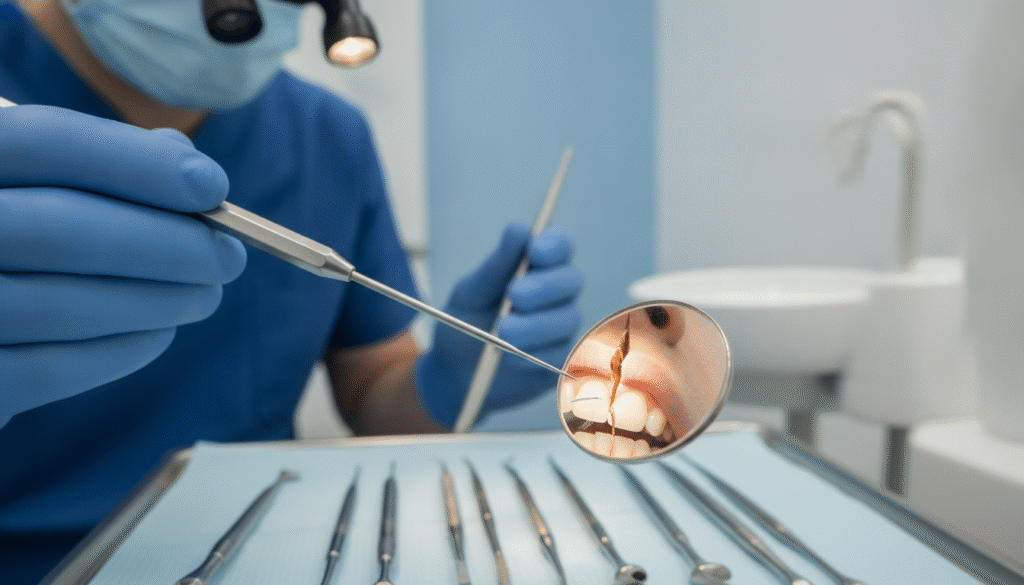
- Jagged edges: A tooth may feel rough or jagged when touched with the tongue.
- Visible cracks: Look for any noticeable lines or breaks on the tooth surface.
- Changes in translucency: A tooth may appear darker or more opaque than usual.
Symptoms to Look Out For
The symptoms of a broken tooth can vary. Here are some common ones:
- Pain when biting: Sharp pain that occurs during chewing and subsides when pressure is released.
- Thermal sensitivity: Increased sensitivity to hot or cold foods and beverages.
- Dull ache: A persistent ache may indicate deeper issues involving the tooth’s pulp.
The Role of Root Canals
Knowing about root canals is key for dental health. A root canal treats problems in the tooth’s pulp. It can save a tooth from needing to be pulled. Let’s explore what a root canal is, why it’s needed, and clear up myths.
What Is a Root Canal?
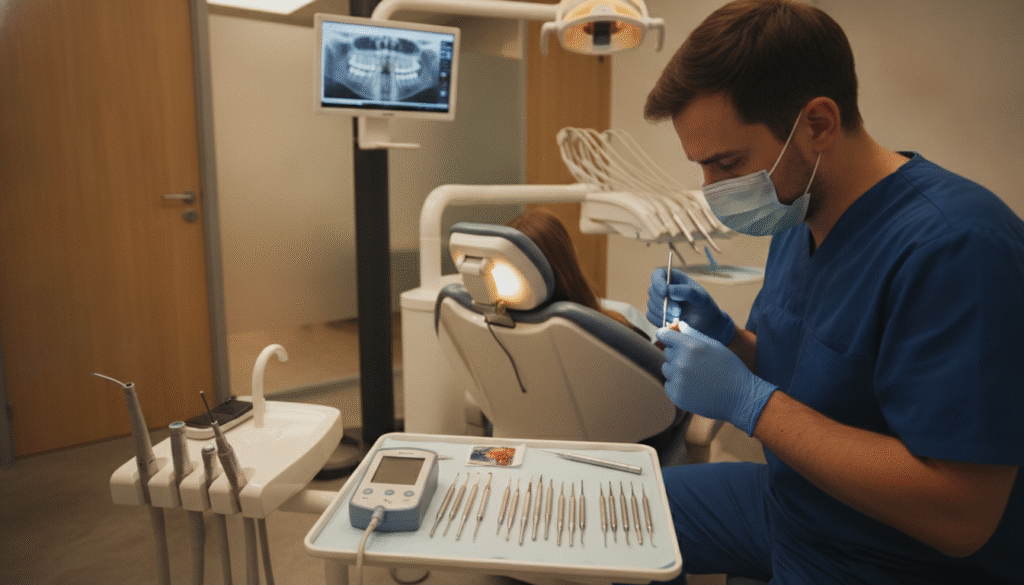
A root canal is an endodontic treatment that removes inflamed or infected pulp tissue. The dentist first accesses the pulp chamber in the tooth’s root. Then, they clean and disinfect the area.
After, they fill the space with materials like gutta-percha. This seals the tooth and stops future infections.
Why Are Root Canals Needed?
Root canals are needed when bacteria get into the pulp chamber. This can happen through a crack or deep cavity. If not treated, it can cause severe inflammation and infection.
Symptoms that mean you might need a root canal include:
- Persistent pain, often when chewing or touching the tooth.
- Sensitivity to hot or cold that lasts long after the cause is gone.
- Inflammation or tenderness in the gums around the tooth.
Antibiotics can’t fix these infections. That’s why endodontic treatment is key for dental health.
Common Myths About Root Canals
Many myths about root canals exist. Here are a few debunked:
- Myth 1: Root canals are painful. Modern anesthesia makes it as painless as a routine filling.
- Myth 2: Extraction is better than a root canal. Keeping the natural tooth is usually better for function and looks.
- Myth 3: Teeth with root canals are weak. With the right restoration, like a crown, they can stay strong for years.
Knowing these truths can help ease worries and make better dental choices.
When to Seek Dental Attention
Knowing when to see a dentist is key to saving your teeth. If your tooth cracks from injury or wear, catching symptoms early is vital. This can greatly improve treatment results.
Warning Signs of Tooth Damage
Several signs can show that your tooth is damaged. These signs mean you should see a dentist right away:
- Spontaneous pain: Pain without a clear reason can mean there’s a problem.
- Disrupted sleep: Severe tooth pain that keeps you awake is a clear sign to seek help.
- Visible fractures: Look for cracks that reach the gum line.
- Tooth mobility: If your tooth moves, it could be badly damaged.
- Signs of infection: A parulis or fistula means you might have a chronic infection.
Even if symptoms seem to go away, they can come back. Cracks can spread without warning, leading to a sudden, severe problem.
The Importance of Prompt Treatment
Getting treatment quickly is very important. Bacteria can quickly spread to other tissues if not treated fast. Waiting too long might mean you’ll need a dental emergency root canal instead of a simple fix.
The American Association of Endodontists says early treatment is best. A cracked tooth left untreated can get worse and might need to be pulled. If the crack goes below the gum, the tooth might not be savable, requiring emergency tooth repair like extraction or implants.
Diagnosis of Broken Teeth
Figuring out if a tooth is broken needs a detailed approach. Dentists use different methods to find out how bad the damage is. Knowing these methods helps patients see why going to the dentist on time is so important.
Methods Dentists Use to Diagnose
Dentists use several ways to spot broken teeth. These include:
- Clinical Examination: Dentists do a close look at the tooth and the area around it. They check for cracks or decay.
- Transillumination: This method uses light to show hidden cracks that can’t be seen easily.
- Bite Tests: Tools like the Tooth Slooth help find the problem by making the patient bite down on it.
- Periodontal Probing: This checks for cracks or bone loss that might not be seen right away.
- Pulp Vitality Testing: Tests like thermal and electric ones check if the tooth’s pulp is healthy.
Each method is key to finding out if a tooth is cracked or broken. But, finding cracked tooth syndrome can be hard. This is because cracks might not show up on X-rays, and it’s hard for patients to describe the pain.
Importance of X-rays in Assessment
X-rays are very important for checking broken teeth. They let dentists see inside the tooth and the bone around it. The main types of X-rays used are:
- Periapical Radiographs: These show if there’s any problem at the root of the tooth.
- Bitewing Radiographs: These X-rays look at the top part of the tooth to find decay or cracks.
- Cone-Beam Computed Tomography (CBCT): This gives a 3D view of the tooth and its roots, helping with complex cases.
Getting the diagnosis right is key to treating the tooth properly. If a tooth is not diagnosed correctly, it might get treated too much or not enough. An endodontist is often the best person to make sure the diagnosis is right.
Treatment Options for Broken Teeth
Understanding the damage to a broken tooth is key. Each case is different, needing its own solution. We’ll look at various treatments based on the break’s type and severity.
Minor Breaks: What to Expect
Minor breaks, like craze lines or small fractures, often need little treatment. Craze lines are tiny cracks in the enamel, common and usually painless. They might only be a cosmetic issue.
Small fractured cusps, near existing fillings, can be fixed easily. A new filling or crown can restore the tooth’s look and function. These fixes are quick, allowing patients to get back to their daily lives with little hassle.
Major Breaks: Root Canal vs. Extraction
Major breaks, reaching the pulp chamber, require a big decision: root canal or extraction. A cracked tooth needing a root canal has the pulp removed and sealed. This prevents further problems.
But, if the tooth is badly split or the fracture is too deep, extraction might be the only choice.
“The best treatment is always the one that preserves natural tooth structure whenever possible.”
Decisions depend on the fracture’s depth, the tooth’s restorability, and its role in your dental health.
Other Treatments for Broken Teeth
There are other treatments for specific cases. For teeth close to pulp exposure, direct pulp capping might be used. It aims to protect the pulp and help it heal.
For young teeth, partial pulpotomy can save the tooth while it continues to grow. Intentional replantation is an option for some vertical root fractures, where the tooth is removed and then replanted.
In emergency tooth repair, saving the natural tooth is always the priority. No artificial tooth can fully replace a natural one.
What Happens During a Root Canal?
Learning about root canals can help ease worries about this common dental procedure. This part will walk you through the main steps of treating a broken tooth with endodontic treatment.
Step-by-Step Process of a Root Canal
The root canal process includes several important steps:
- Examination: First, the dentist takes an X-ray to see how bad the damage is.
- Numbing: Then, local anesthesia is given to keep you comfortable during the procedure.
- Access: Next, a small hole is made in the tooth to get to the pulp.
- Cleaning: The diseased or injured pulp is then carefully removed from inside the tooth.
- Sealing: After that, the cleaned root canals are filled with a rubber-like substance called gutta-percha.
- Restoration: Lastly, a crown is placed on the tooth to protect it and help it function normally again.
This whole process usually takes one or two visits, depending on how complex the case is.
Recovery Time After the Procedure
Recovering after a root canal is usually easy. You might feel some mild to moderate pain, which can be managed with over-the-counter pain relievers for 24 to 72 hours. As the swelling goes down, the pain should also lessen.
It’s important to remember that even after the root canal, the tooth can break again until a crown is put on. This usually happens in two to four weeks after the root canal.
Thanks to modern endodontic techniques, success rates are over 90% for the right cases. This means patients can feel confident and go back to their normal lives.
Risks of Not Treating a Broken Tooth
Ignoring a broken tooth can lead to serious health issues. It’s not just about dental pain. If not treated, the problems can get worse fast. Knowing these risks is key to keeping your teeth and health in check.
At first, a cracked tooth might just hurt a bit. But, if ignored, it can cause more pain. This can even lead to nerve damage and infections.
Potential Complications
Waiting too long to fix a broken tooth can cause big problems:
- Irreversible pulpitis: This means constant and severe pain.
- Pulp necrosis: The pulp can die, causing abscesses.
- Cellulitis: This can lead to serious infections that might block your airway.
- Crack propagation: A small crack can grow, making the tooth hard to save.
Long-Term Consequences of Ignoring Symptoms
Ignoring a broken tooth for too long can cause serious problems:
| Condition | Description | Potential Treatment |
|---|---|---|
| Periapical granuloma | A localized area of inflammation at the root tip. | Root canal therapy or extraction. |
| External inflammatory root resorption | Loss of tooth structure due to inflammation. | Root canal therapy. |
| Loss of alveolar bone support | Bone loss surrounding the tooth. | Bone grafting or extraction. |
| Need for extraction | Inability to save the tooth. | Prosthetic replacement options. |
Ignoring tooth problems can also harm your overall health. It can lead to heart disease and diabetes. So, it’s very important to see a dentist right away if you think you have a broken tooth.
Cost Considerations
Knowing the cost of a dental emergency root canal is key to making smart choices. The price can change a lot based on different things. People often think about the benefits of the treatment and how much it costs.
Several things affect the cost of root canals:
- Geographic Location: Prices can vary a lot from one place to another.
- Type of Tooth: Fixing front teeth is simpler and cheaper than fixing back molars.
- Practitioner’s Specialization: Endodontists, who specialize, might charge more than regular dentists.
- Practice Setting: Costs can be different in private offices versus academic settings.
Average Cost of Root Canals
The cost of a dental emergency root canal can be between $700 and $1,500. This depends on the factors mentioned earlier. Here’s a table showing typical costs for root canal treatment:
| Tooth Type | Average Cost | Complexity Level |
|---|---|---|
| Anterior Tooth | $700 – $900 | Low |
| Premolar | $800 – $1,200 | Medium |
| Molar | $1,000 – $1,500 | High |
Even though the cost of endodontic treatment seems high, it’s often cheaper than other options. Saving the natural tooth can avoid more costs and problems later.
Insurance and Payment Options
Understanding dental insurance can be tough, but it’s important. Most dental plans cover a part of endodontic treatments, usually between 50% and 80%. Here are some important points:
- Annual Maximums: Know your plan’s yearly limit, which can affect what you pay out of pocket.
- Waiting Periods: Some plans have waiting times before they start covering certain treatments.
- Alternative Financing: Options like dental savings plans, CareCredit, and in-office payment plans can help with costs.
- Treatment at Dental Schools: Getting treatment at dental schools might be cheaper because of lower fees.
In summary, while the cost of a dental emergency root canal can be scary, knowing about costs and options can help patients make better choices for their teeth.
Aftercare: Caring for Your Tooth Post-Treatment
To get the most out of your root canal, it’s key to follow aftercare tips. Good care helps your tooth heal well and lowers the chance of problems. This part will cover how to keep your mouth clean and what foods to avoid to protect your tooth.
Best Practices for Oral Hygiene
Keeping your mouth clean after a root canal is vital. It stops infections and keeps your tooth healthy. Here are some tips:
- Gentle Brushing: Use a soft toothbrush to gently clean around the treated area for a few days.
- Warm Saline Rinses: Use warm saline solution to help reduce gum inflammation.
- Flossing: Keep flossing daily, but be gentle around the temporary filling to avoid dislodging it.
- Antibiotics: Take all antibiotics as directed to prevent infection.
These steps are important. They help the inside of your tooth heal and protect the outside and gums.
Also, getting a permanent crown as soon as you can is a good idea. It stops leaks and keeps your tooth from breaking under stress.
Foods to Avoid After a Root Canal
Your diet is important for healing. Here are foods to skip:
| Food Type | Reason to Avoid |
|---|---|
| Hard Foods | Can fracture the compromised tooth structure. |
| Crispy or Crunchy Foods | May dislodge the temporary restoration. |
| Sticky Foods | Can pull on the tooth and cause damage. |
| Extremely Hot or Cold Items | May cause discomfort if sensitivity persists. |
Chew on the other side of your mouth until your tooth is fixed. Sticking to these food tips is key for lasting tooth pain relief and treatment success.
The Importance of Regular Dental Checkups
Going to the dentist regularly is key for catching and stopping oral health problems early. These visits help find issues before they get worse. They also keep your teeth and mouth healthy. Regular dental exams can spot cavities, gum disease, and even tooth fractures early.
Preventive care is key to keeping your teeth strong for a long time. Here’s how regular dental visits help:
- Early Detection of Caries: Dentists can spot cavities before they damage your teeth.
- Monitoring Existing Conditions: Regular visits help track any dental problems you already have.
- Management of Bruxism: Dentists can tell if you grind your teeth and suggest mouthguards.
- Preventive Education: Dentists teach you how to protect your teeth, like avoiding hard candies and wearing mouthguards in sports.
Knowing when you need a dental checkup is important for your teeth. Here are some signs you should see a dentist:
- New or changing sensitivity to hot or cold.
- Discomfort when biting down.
- A sensation that a tooth feels “different” or “high” in occlusion.
- Visible changes in tooth color.
- Localized swelling or lesions in the gums.
“An ounce of prevention is worth a pound of cure.”
By making dental care a priority, you improve your oral health. You also avoid future pain and expensive treatments. Taking care of your teeth today means a healthier smile tomorrow.
Alternatives to Root Canal Treatment
When root canal therapy isn’t an option, there are other ways to fix a tooth. You can choose from several alternatives that help restore your tooth’s function and look.
Dental Implants as an Option
Dental implants are the top choice for replacing a lost tooth. They involve a titanium fixture placed in the jawbone. This allows the bone to bond with the implant over three to six months.
After healing, an abutment and crown are attached. This completes the tooth replacement.
Advantages of Dental Implants:
- They don’t harm nearby teeth, unlike bridges.
- They help keep the jawbone healthy.
- They last a long time, over 95% in good candidates.
- They look and work like natural teeth.
Limitations:
- They require surgery.
- The process takes longer.
- They cost more than root canals at first.
- Not everyone can get them.
Veneers and Crowns Explained
Veneers and crowns are both used to fix teeth, but in different ways. Veneers are thin layers of porcelain for the front of teeth, mainly for looks. They’re good for small issues like chips or stains.
Crowns cover the whole tooth, giving it strength and protection. They’re better for bigger problems.
But, veneers and crowns don’t fix tooth infections. If the tooth is infected, you’ll need a root canal first.
In the end, choosing to save a tooth or replace it is a team decision. The dentist and patient must consider many factors together.
| Restoration Type | Indications | Advantages | Limitations |
|---|---|---|---|
| Dental Implants | Tooth loss | Natural function, high success rate | Surgical procedure, cost |
| Veneers | Minor chips, discoloration | Aesthetic enhancement | Does not address pulp issues |
| Crowns | Significant damage | Structural support | More invasive than veneers |
Psychological Impact of Dental Issues
Dental problems can have a big emotional impact. Many people feel anxious or scared about going to the dentist. It’s important for both patients and dentists to understand these effects.
Anxiety Related to Dental Procedures
About 36% of people have dental anxiety. This fear can come from many things, like:
- Fear of pain
- Loss of control during treatment
- Negative past experiences
- Anticipatory anxiety leading up to appointments
For those needing root canals, these fears can be even stronger. It’s key to acknowledge these feelings, as they are real and common.
Today’s dentistry is working hard to ease these fears. New dental anesthesia and sedation, along with better communication, make visits more comfortable. Patients can now feel safer and more at ease.
Coping Mechanisms for Dental Fears
There are many ways to deal with dental anxiety. These include:
- Cognitive-behavioral techniques: Techniques like guided imagery and progressive muscle relaxation can help calm nerves.
- Communication strategies: Having a stop-signal system with the dentist lets patients say when they’re uncomfortable.
- Pharmacological approaches: Nitrous oxide inhalation sedation or oral anxiolytics can help those with severe anxiety.
- Environmental modifications: Using noise-canceling headphones or weighted blankets can make the environment more calming.
It’s vital to address the emotional side of dental care for tooth pain relief. When patients feel safe, they’re more likely to get the care they need. This leads to better results.
Common Questions About Broken Teeth
Many questions come up when you have a broken tooth. Knowing the answers can help you make good choices for your teeth.
FAQ: Do All Broken Teeth Need Root Canals?
Not every broken tooth needs a root canal. It depends on a few things:
- The depth of the fracture in relation to the pulp chamber.
- Whether the pulp is exposed or infected.
- The vitality of the pulp, assessed through thermal and electric testing.
- The presence of any periapical pathology.
For example, a small chip might not need treatment. But, a bigger crack that reaches the pulp might need a root canal. Cracks that go below the gum line might need to be pulled out.
FAQ: How Can I Prevent a Broken Tooth?
To avoid a broken tooth, try these tips:
- Avoid chewing on hard candies, ice, or non-food objects.
- Use protective equipment, such as custom-fitted mouthguards during contact sports.
- Timely restoration of carious lesions to maintain cuspal support.
- Replace failing amalgam restorations that could weaken the tooth structure.
- Manage occlusal discrepancies that create excessive forces on teeth.
Changing your diet can also help. Drinking less acidic drinks can protect your enamel. Also, keep your mouth moist to help your teeth stay healthy.
While you can’t prevent all tooth fractures, being careful can lower your risk.
Choosing the Right Dental Professional
Finding the right dentist is key when you have a broken tooth. You’ll want someone who knows how to handle tough dental problems. This is even more important if you might need a root canal.
Here are some things to look for in a dentist:
- Credentials and Continuing Education: Make sure the dentist is well-qualified and keeps up with the latest dental techniques.
- Access to Advanced Diagnostic Technology: A good dentist will have tools like Cone Beam Computed Tomography (CBCT) imaging and operating microscopes. These help them make accurate diagnoses.
- Experience with Complex Cases: A dentist who often deals with cracked teeth will know the best ways to treat them.
- Patient Reviews and Testimonials: Reading what other patients say can give you a good idea of the dentist’s skills and approach.
- Communication Style: Pick a dentist who listens to you and explains things clearly. They should work with you to make decisions.
General dentists can do root canals, but for really tricky cases, you might need a specialist. An endodontist is often the best choice for cracked teeth.
Importance of Specialization in Endodontics
Endodontists get extra training after dental school. They spend two to three years learning about pulp biology and advanced techniques. This extra education helps them do a better job:
| Specialization Advantage | Description |
|---|---|
| Proficiency with Microscopes | Endodontists use dental operating microscopes to find and fix tiny cracks and complex problems. |
| Advanced Imaging Skills | They know how to read CBCT images, which helps them see the tooth and root canal in 3D. |
| Emergency Management | Endodontists are good at handling dental emergencies and injuries. |
| Higher Success Rates | Because of their training, endodontists often have better results, even with tough cases. |
“Going to see an endodontist at the first sign of a cracked tooth can help save your tooth.”
In short, picking the right dentist is very important when you have a broken tooth that might need a root canal. An endodontist can give you the specialized care you need for the best dental health.
Conclusion: Key Takeaways on Broken Teeth and Root Canals
Knowing about broken teeth is key for good oral health. A broken tooth might make you wonder, “Will a broken tooth need a root canal?” The answer varies. It’s important to see a dentist right away.
Symptoms like pain when biting, sensitivity to hot or cold, and visible cracks mean you might need treatment.
Summary of Symptoms and Treatments
Spotting signs of a damaged tooth is the first step. Common signs include:
- Persistent pain during chewing
- Lingering thermal sensitivity
- Spontaneous pain without a clear cause
- Visible fracture lines
- Swelling of the gums
Treatment options range from simple fixes to root canals or even pulling the tooth. Quick action can save the tooth and avoid bigger problems.
Final Thoughts on Dental Health and Maintenance
Preventive dental care is essential. A broken tooth is a chance to check your dental habits. Regular dental visits and quick action to symptoms can lead to better results.
Emergency dental care is part of a bigger plan for dental health. Modern dentistry offers solutions for damaged teeth. Acting fast and getting expert help can keep your natural teeth for years.