Will a Denture Look Obvious or Fake for One Missing Tooth?
Did you know that nearly 36 million Americans are missing all their teeth? This is a big dental problem many face. Many wonder: how natural will their new teeth look?
Good news: dental tech has improved a lot. Modern tooth replacements, made by skilled dentists, look very natural. Many patients are happy to find out their new teeth can look just like their old ones.
Oldly, fake teeth were seen as obvious and unnatural. But now, thanks to new materials and methods, they can look just like real teeth. A single-tooth replacement can fit in perfectly with your other teeth, looking and feeling great.
In this article, we’ll look at what makes tooth replacements look natural. We’ll talk about materials, custom fits, and the importance of a dentist’s skill. Knowing these things can help you feel better about your smile.
Key Takeaways
- Modern replacements can look very natural when done correctly.
- High-quality materials play a big role in how they look.
- Customization ensures a better fit and appearance.
- Professional expertise is key for the best results.
- Understanding the science behind replacements can ease concerns.
Understanding Dentures: An Overview
Dentures come in many types to fit different dental needs. They replace missing teeth, improving both how you eat and look. A denture for one missing tooth is called a partial denture. It fills the gap and keeps the rest of your teeth strong.
Types of Dentures
There are several types of dentures, each with its own purpose:
- Full Dentures: These are for when you lose all teeth in your upper or lower jaw.
- Partial Dentures: These are for people with some teeth left. They replace one or a few missing teeth.
- Implant-Supported Dentures: These are attached to implants. They offer more stability and comfort.
When to Consider Dentures
Think about dentures if you’ve lost a lot of teeth. This can make eating, speaking, and smiling hard. Look out for these signs:
- It’s hard to eat or chew food.
- You notice gaps in your smile.
- Your face looks different because of missing teeth.
Benefits of Dentures
Dentures do more than just make you look good. They’re key for:
- Preventing Malocclusion: Dentures keep your teeth in line.
- Maintaining Facial Structure: They help your cheeks and lips stay firm.
- Restoring Masticatory Function: Dentures let you eat a variety of foods.
“Partial dentures are a cost-effective choice that can help with eating and drinking.”
Factors Influencing Appearance
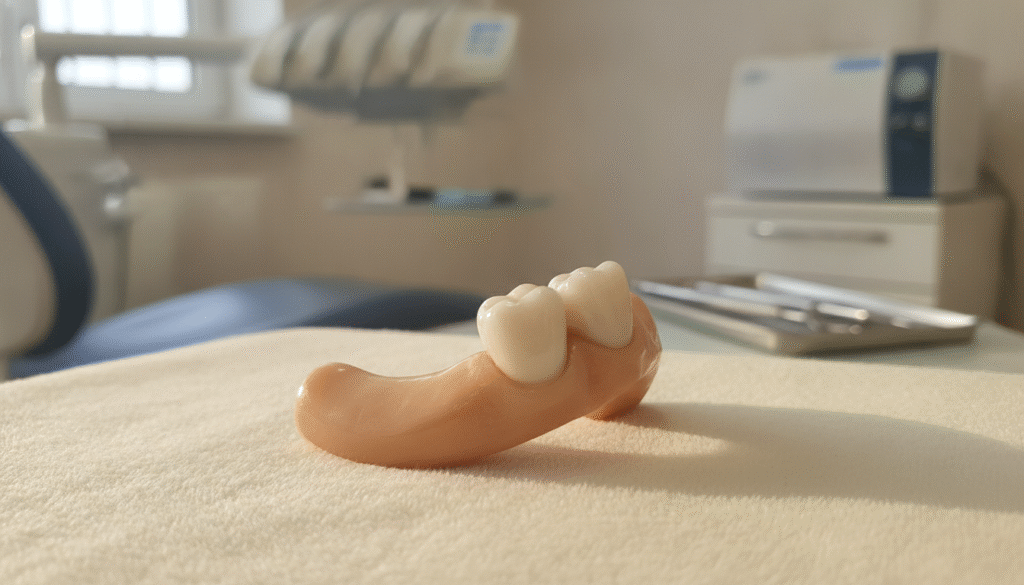
Getting dentures to look natural is all about understanding key factors. These elements decide if a denture looks real or like a fake denture for missing tooth. We’ll look at three main things that affect how dentures look.
Material Quality
The materials used in making dentures greatly affect their look. High-quality materials are key for a natural appearance. Dentures are usually made from porcelain or acrylic resin. Each has its own benefits:
- Porcelain: It’s very durable and looks very natural, like real teeth.
- Acrylic Resin: It’s cheaper and can last five to eight years, but it doesn’t look as natural as porcelain.
- Flexible Thermoplastics: These materials look great and are perfect for partial dentures.
Customization Options
Customization is more than just matching the color. It’s about making the dentures look like real teeth. Important customization options include:
- Translucency: This means the dentures reflect light like real teeth do.
- Surface Texture: This makes the dentures look worn, like real teeth.
- Characterization: Small imperfections that make the dentures look more real.
Denture Attaching Methods
How dentures are attached can also affect how visible they are. There are different ways to attach dentures, including:
- Visible Metal Clasps: These can make dentures look more obvious and artificial.
- Hidden Precision Attachments: These make dentures look more natural and seamless.
- Flexible Gingival Extensions: These help dentures blend with the gumline, making them less noticeable.
| Material | Durability | Aesthetic Appeal |
|---|---|---|
| Porcelain | High | Excellent |
| Acrylic Resin | Moderate | Good |
| Flexible Thermoplastics | Moderate | Very Good |
How Dentures Work for a Single Tooth
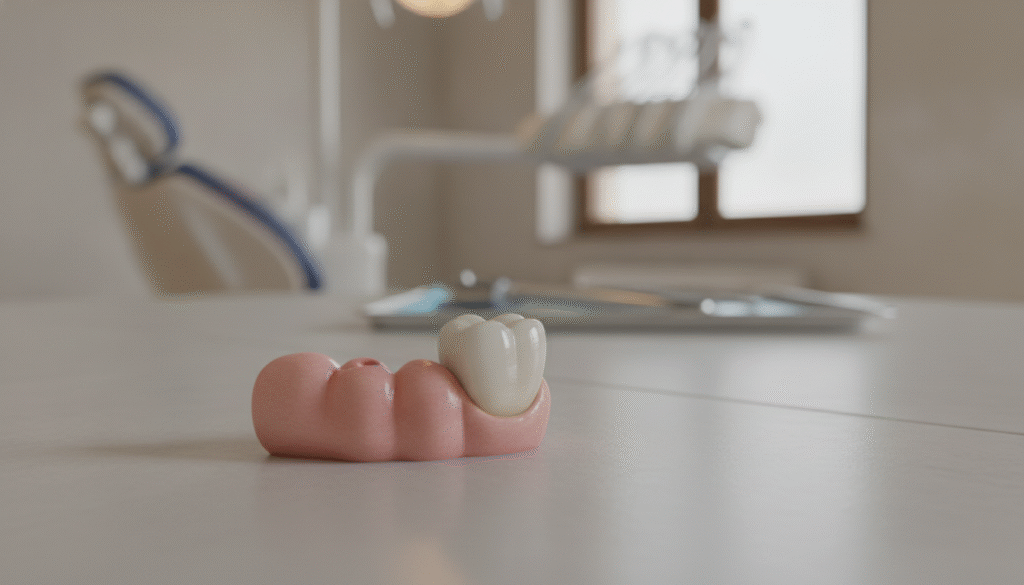
Single-tooth dentures, also known as dental flippers, are a removable dental prosthesis. They replace a single missing tooth. These dentures have a plastic base that looks like gums and have artificial teeth to fix your smile.
Single Tooth Replacement Dentures
A single tooth partial denture is great for those who lost one tooth but want to keep their teeth. It uses the teeth next to the gap and the bone underneath for support. This design fits well and spreads out the chewing force, so it doesn’t harm other teeth.
- Restores functionality for chewing and speaking.
- Prevents adjacent teeth from shifting position.
- Offers a non-invasive solution compared to other options.
Comparison with Other Options
When looking at tooth replacement options, it’s key to compare single tooth partial dentures with fixed bridges and dental implants. Fixed options are more stable but need big surgeries and cost more. On the other hand, removable dentures are easier to get and cheaper, making them a good choice for many.
- Fixed Bridges: Require adjacent teeth to be altered.
- Dental Implants: Involve surgical placement and higher costs.
- Removable Partial Dentures: Easy to maintain and adjust.
The Fit and Comfort Factor
How well a denture fits and feels is very important. A good removable dental prosthesis should not rub and stay in place when you talk or eat. This is key for a natural look and for patients to feel good about their smile.
Importance of Dental Aesthetics
The look of dentures is key to how well they work and how people feel about them. When making a denture for one missing tooth, the goal is to make it look like a real tooth. This section talks about what makes a denture look natural.
Natural Look vs. Artificial Appearance
Patients often worry if their dentures will look real or fake. A good denture should look like your own teeth. This means matching the color, texture, and shape of your teeth. If it doesn’t, you might feel self-conscious or unhappy.
The Role of Color Matching
Matching the color of your denture is very important. Natural teeth don’t all look the same. Dentists use the Munsell color system to get the color right. This system looks at hue, chroma, and value to match your teeth or the color you want.
Here’s why color matching matters:
| Color Parameter | Description | Impact on Appearance |
|---|---|---|
| Hue | The color family (e.g., red, yellow) | Determines the overall color tone of the denture |
| Chroma | The intensity or saturation of the color | Affects how vibrant or muted the denture appears |
| Value | The lightness or darkness of the color | Influences how well the denture blends with natural teeth |
Influence of Gumline and Shape
The shape of your gumline and teeth is also important. A gumline that doesn’t look right can make your denture look fake. But, a gumline that looks like your own can make your denture look real.
Teeth that are the right size are also key. Teeth that are too big or too small can change how your face looks. Finding the right size is important for a natural smile.
Benefits of Immediate Dentures
Immediate dentures have many advantages, mainly for those who have had a tooth pulled. They are made to be put in right after the tooth is removed. This gives people an immediate look that’s better.
One big plus is how quickly they make you look good again. This means you don’t have to deal with the awkwardness of being without a tooth for long.
Quick Restoration of Appearance
Immediate dentures let you smile again almost right away. This is key for keeping your self-esteem up when things are tough. The visible denture for one missing tooth hides the gap left by the tooth removal. This helps you feel less self-conscious about how you look.
Also, these dentures help keep your face from changing too much while you heal. Without a tooth, your jawline and face shape can change. But, immediate dentures act as a placeholder. They keep your face looking natural while your body heals.
Adjustment Period Considerations
Even though immediate dentures offer quick benefits, there’s a time to adjust to them. After a tooth is pulled, you might feel swollen and sore. This can make the dentures feel bulky at first.
This feeling of bulkiness is normal and will pass. You might need some tweaks or relines to get them to fit right as your body heals. This is all part of making sure you’re comfortable and look good in the long run. The bulkiness is just a temporary thing that will go away.
| Benefit | Description | Considerations |
|---|---|---|
| Immediate Aesthetic Restoration | Quickly fills the gap of a missing tooth. | May require adjustments as swelling decreases. |
| Facial Structure Preservation | Helps maintain natural facial contours. | Temporary bulkiness may occur. |
| Enhanced Confidence | Reduces self-consciousness during healing. | Adjustment period is necessary for comfort. |
In summary, immediate dentures are a great option for those who’ve lost a tooth. They offer an immediate fix for how you look and allow for adjustments as you heal. Knowing these benefits can help you make better choices for your dental health.
The Role of a Professional Fitting
Getting seamless dentures starts with a prosthodontist’s skilled hands. It’s key to pick the right dentist for a natural look. A pro with denture fitting expertise can greatly improve comfort and looks.
Choosing the Right Dentist
When picking a dentist, look at their experience and focus on prosthodontics. A prosthodontist can give you a clear idea of what to expect. Choose someone who knows a lot about facial anatomy and materials for dentures.
The Fitting Process Explained
The denture fitting process has many detailed steps:
- Initial Consultation: Talk about what you want and expect with the prosthodontist.
- Impressions: The dentist will take impressions to make a precise cast.
- Jaw Relation Records: This step is key to avoid jaw pain.
- Try-In Appointment: This is when you check if the dentures look and feel right before they’re made final.
- Denture Delivery: After all adjustments, you get your dentures.
Follow-Up Adjustments
After getting your dentures, you’ll need follow-up adjustments. These are not failures but part of the care. They help with pressure and make sure your dentures fit well in your mouth. Regular visits can also make your dentures more comfortable and last longer.
| Step | Description | Importance |
|---|---|---|
| Initial Consultation | Discuss expectations and treatment plan | Sets the foundation for success |
| Impressions | Creating a master cast | Ensures accurate fit |
| Try-In Appointment | Verifying aesthetics and comfort | Critical for final adjustments |
| Follow-Up Adjustments | Fine-tuning the fit | Enhances comfort and function |
Maintenance and Care for Dentures
Keeping dentures in good shape is key for their look and function. A well-cared-for denture looks natural and works well. To do this, you need to clean them regularly, store them right, and avoid damage.
Daily Cleaning Routines
It’s important to clean dentures every day. This stops plaque and stains from building up. Use a gentle cleaner, not regular toothpaste, to avoid scratches.
Here’s how to clean them daily:
- Rinse dentures under warm water to remove food particles.
- Apply a non-abrasive cleaner and gently brush using a soft-bristle brush.
- Rinse thoroughly again to ensure no cleaner residue remains.
Storage Practices
When not wearing dentures, store them right to keep them fitting well. Use water or a denture solution to keep them from warping. This keeps them looking and feeling good.
Here are some storage tips:
- Always store dentures in a container filled with water or a denture solution.
- Avoid using hot water, as it can distort the shape of the denture.
- Keep dentures out of reach of pets and small children to prevent accidental damage.
Avoiding Damage
To keep your denture in top shape, avoid damage. Dentures are fragile and can break if dropped or exposed to extreme temperatures. Also, don’t use harsh cleaners that can damage the surface.
Here are some tips to avoid damage:
- Handle dentures with care when cleaning or inserting them.
- Do not use sharp objects to remove debris.
- Regularly check for any signs of wear or damage and consult your dentist if necessary.
| Maintenance Aspect | Recommended Action | Benefits |
|---|---|---|
| Daily Cleaning | Use non-abrasive cleaners | Prevents plaque buildup |
| Storage | Store in water or solution | Maintains shape and fit |
| Avoiding Damage | Handle with care | Preserves denture integrity |
Cost Considerations
Knowing the cost of single tooth dentures is key for making smart choices. The price of partial dentures changes based on materials and design. People want to know the financial side before choosing this tooth replacement.
Average Price Range for Single Tooth Dentures
The cost of single tooth dentures usually ranges from $300 to $2,500. Several things can affect this price:
- Material Quality: Cheaper acrylic dentures are more affordable. But, flexible or cast-metal frameworks cost more.
- Customization: Dentures made just for you might cost extra.
- Laboratory Fees: The denture’s design can also raise the price.
Insurance Coverage Options
Understanding dental insurance for prosthetics is vital. Most plans see dentures as major procedures. This means:
- Patients might have to pay more out of pocket.
- Annual limits can cap how much insurance covers.
- Some plans only pay for a part of the cost.
Comparing Costs with Other Solutions
Looking at the cost of partial dentures versus other options is important. Dental implants, for example, are more expensive but last longer. They cost between $3,000 and $4,500 per tooth.
In summary, choosing between partial dentures and other options requires weighing short-term costs against long-term benefits. Talking to a dentist can help find the best option for you.
Common Myths About Dentures
It’s important to know the truth about dentures. Many people believe false things that make them scared or hesitant. We will clear up three big myths about dentures, showing how they’ve improved and how to take care of them.
Dentures Look Fake
Many think dentures look fake. But, modern denture aesthetics have really improved. Today’s dentures look like real teeth thanks to new techniques.
- They use special stains to look like real enamel.
- They have a special shine to look real.
- They feel and look like real gums.
These changes make dentures not only work well but also look great with your smile.
Dentures Are Uncomfortable
Some think dentures are uncomfortable. But, dentures have gotten much better. They are now made to fit perfectly and feel natural.
- They are made to fit your mouth just right.
- They are designed to be comfortable.
These updates help people get used to dentures easily, making them feel like their own teeth.
Dentures Require Extensive Care
Some think dentures need a lot of care. But, taking care of dentures is simple. It’s like brushing your teeth.
- Clean them every day with a soft brush and special cleaner.
- Soak them in a cleaning solution to keep them clean.
- See your dentist regularly to keep them in good shape.
This easy care routine proves that dentures don’t need a lot of work to stay in great shape.
Real Patient Experiences
Learning from real patient stories makes the journey of getting dentures clearer. These tales show how well dental solutions work. They also reveal the emotional and social benefits of a restored smile.
Case Studies of Replacement Dentures
A marketing pro lost a premolar and chose a flexible partial denture. After the fitting, no one noticed the change. The patient felt more confident in social situations.
An elderly patient was shy about a missing tooth for years. A custom-made denture brought them relief and joy. They could smile without fear of judgment. These stories highlight the deep psychosocial benefits of dental restorations.
Testimonials on Appearance and Comfort
Many patients are very happy with their dentures. One patient said,
“I never thought I could feel this confident again. My denture feels like my own tooth!”
Many others share similar feelings.
Comfort is another key point.
“I can eat my favorite foods again without worrying about my denture slipping. It’s been a game-changer for me.”
This feedback shows how important a good fit and customization are for the best results.
| Patient | Experience | Outcome |
|---|---|---|
| Marketing Professional | Received a flexible partial denture | Colleagues unaware of restoration; regained confidence |
| Elderly Patient | Custom-made denture fitting | Freely smiles; reduced self-consciousness |
| Active Adult | Traditional denture | Comfortable eating; improved social interactions |
The Psychological Impact of Tooth Loss
Loosing a tooth can deeply affect a person’s mental health. It’s not just about the physical change. It can change how you see yourself and how you interact with others. This part talks about how dentures can help regain confidence and change how people see missing teeth.
Boosting Confidence with Dentures
Many people feel more confident with dental prosthetics. A good denture makes your smile look great and boosts your self-esteem. With a beautiful smile, you’re more likely to be social and feel better mentally.
Also, losing a tooth can make you feel self-conscious. You might worry about what others think, leading to staying away from social events. But, dentures can help you feel more comfortable smiling again.
Social Perceptions of Missing Teeth
People often think less of someone with missing teeth. They might see it as a sign of lower status or poor care. But, a denture that looks natural can change these views, letting you feel confident.
There’s also a fear of not being good enough, known as “dysmorphic” concern. This can make you too focused on your looks, like your teeth. Dentures can help with this, letting you connect better with others.
In short, tooth loss affects more than just your mouth. Dentures help bring back your smile, confidence, and how others see you. For more on getting a great smile, check out teeth straightening options.
Alternatives to Dentures
It’s important to know the options for replacing missing teeth. There are several ways to do this, each with its own benefits and drawbacks. These choices can affect how well you can eat and how your smile looks.
Dental Implants
Dental implants are seen as the top choice for tooth replacement. A single tooth implant is a titanium post placed in the jawbone. It acts like a tooth root, keeping the jawbone healthy.
But, implants need surgery and time to heal. They also cost more. Some health issues might make implants not possible.
Bridges
A dental bridge is another good option. It’s a fixed solution for missing teeth. Crowns on the teeth next to the gap hold a fake tooth in place. This option is stable and doesn’t need to be taken out for cleaning.
But, making the teeth next to the gap into crowns can harm them. It’s best for those who want a permanent fix without surgery.
Composite Bonding
Composite bonding is a simpler way to fix small gaps. It uses a tooth-colored resin to fill the gap. It’s quicker and cheaper, but not as long-lasting as implants or bridges.
This method is great for a quick fix or for those who can’t have bigger procedures.
In short, dental implants, bridges, and composite bonding each have their own pros and cons. Talking to a dentist can help find the best choice for you.
Future of Denture Technology
The future of dentures is looking bright. New advancements are making them both better to use and look at. New materials and ways to make them are changing dental prosthetics. These changes are making dentures better and meeting what patients want.
Biocompatible denture materials are a big step forward. Materials like PEEK are strong but light. They look like real teeth and gums, making dentures more comfortable and nice to look at.
3D printing is also changing denture making. It makes the digital denture workflow possible. This includes:
- Intraoral scanning for precise measurements
- Algorithmic design to create customized prosthetics
- Additive manufacturing that reduces human error in casting
This makes dentures fit perfectly and work better. It also makes the process faster and more accurate. Using CAD/CAM prosthetics helps too, making things quicker and more precise.
As technology keeps getting better, dentures will keep improving. Soon, dentures will not only look natural but also work great. This will help people’s oral health and make them feel more confident.
When to Seek Professional Advice
It’s important to know when to see a dentist about dentures for your oral health. There are signs that show it’s time for a dental check-up for a missing tooth. Spotting these signs early can help prevent bigger problems later.
Signs It’s Time for a Denture Consultation
Look out for these signs that mean you should see a dentist:
- Drifting of Adjacent Teeth: If your teeth next to the gap start moving, it might be time for a new tooth.
- Supra-eruption of the Opposing Tooth: If the tooth in front of the gap grows too long, it can cause problems.
- Difficulty in Mastication: Trouble chewing food could mean you need a tooth replacement.
- Onset of Temporomandibular Joint Discomfort: Jaw pain might mean your bite is off because of missing teeth.
Questions to Ask Your Dentist
When you see a prosthodontist, ask them questions. Here are some key ones:
- What material do you recommend for my specific case and why?
- Can I see a mock-up of the final aesthetic before processing?
- What is your protocol for managing post-insertion occlusal discrepancies?
Asking these questions helps you understand your options. It ensures you get care that fits your needs.
Summary: Making the Right Decision
Choosing the right tooth replacement is a big decision. It affects how you look and how well you can eat. This section will help you make a choice that works best for you.
When thinking about dental treatments, look at the good and bad of dentures, bridges, and implants. Dentures are easy to get but might need to be adjusted often. Implants are more permanent but cost more. Knowing these differences helps you choose wisely.
Weighing Options
Think about these things when deciding:
- Aesthetics: How your replacement looks is very important. Good dentures can look almost like real teeth.
- Cost: Price matters, but the cheapest might not be the best. Spending more on quality can make you happier.
- Longevity: Some options, like implants, last longer than dentures. Dentures need to be replaced every few years.
Choosing a skilled dentist and a good dental lab is more important than just finding the cheapest price. A bad denture can be uncomfortable and look unnatural. This shows how important a good consultation is.
Recommendations for Best Results
For the best results, do this:
- Get a personalized consultation with a qualified dentist.
- Talk about what you want and any worries you have.
- Find out about the materials and options for a perfect fit.
A bad look is often because of mistakes in making the denture, not because of dentures themselves. By choosing wisely and working with experts, you can get a smile that boosts your confidence.
Conclusion: Your Smile Matters
Getting a missing tooth back is more than just a dental fix. It’s a big step towards feeling more confident. A natural-looking denture can change how you see yourself and how others see you.
It’s a big deal to have a smile that feels like your own. You can talk to people and smile without feeling shy. This is a huge win for your mental health.
Choosing dental prosthetics is a smart move. Many people feel free and proud with their dentures. It shows you care about your health and look.
Investing in good dentures is smart. It’s about looking good and feeling good. It’s a way to take care of yourself.
Thinking about dentures? The right info and support can make your smile perfect. Today’s dental tech makes natural-looking dentures easy to get. A great smile can make you feel unstoppable.