Will Invisalign Change My Face Shape or Jawline Explained
Did you know nearly 70% of adults are unhappy with their smile? This shows how much our teeth affect our self-confidence and how we interact with others. Many think orthodontic treatments only fix crooked teeth. But, these treatments can do more than that.
Looking into whether clear aligners can change our facial shape is key. It’s important to see how our teeth and face are connected. Clear aligners are mainly for straightening teeth. But, they can also make our face look more balanced and our jawline more defined.
Can clear aligners really change our face’s shape? This article will look into how moving teeth can affect our smile and face. Knowing this can help people choose the right treatment for them.
Key Takeaways
- Clear aligners can enhance facial symmetry and jawline definition.
- Improved dental alignment may lead to a more confident smile.
- Subtle changes in facial aesthetics can occur with orthodontic treatment.
- Understanding the relationship between teeth and facial structure is key.
- Invisalign is not a surgical solution but can influence facial appearance.
Understanding Invisalign and Its Functionality
Invisalign is a modern orthodontic solution. It uses clear aligners to move teeth slowly. This method is less noticeable than traditional braces.
What is Invisalign?
Invisalign uses clear, BPA-free aligners for teeth straightening. These are made with 3D scans and computer design. Each aligner fits your teeth perfectly, making treatment comfortable and effective.
How Does Invisalign Work?
Invisalign works by applying precise forces to teeth. This encourages teeth to move slowly. 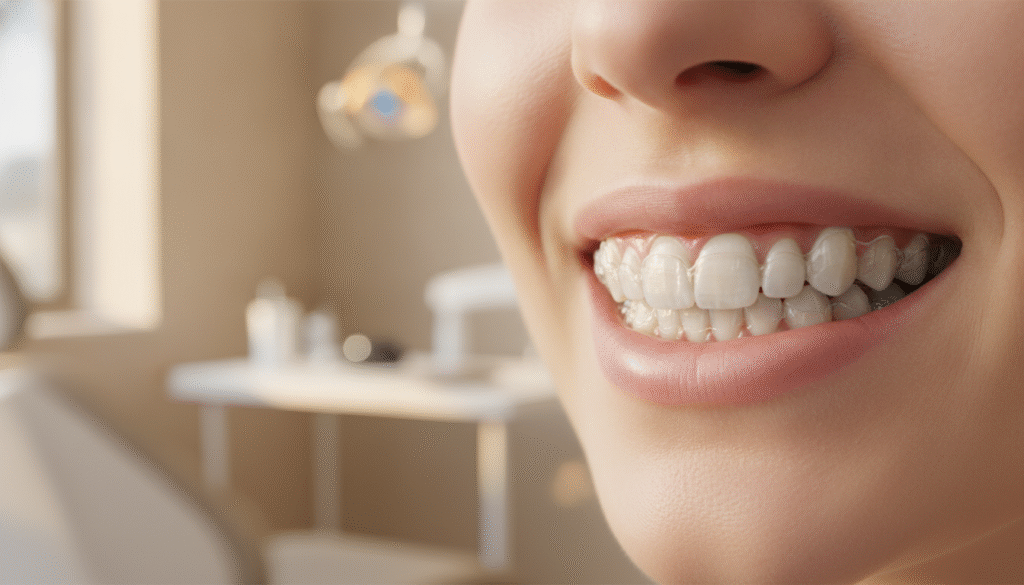
Benefits of Using Invisalign
Invisalign has many benefits. Here are some:
- Improved Oral Hygiene: You can brush and floss as usual because the aligners come off.
- Reduced Soft Tissue Irritation: Invisalign’s smooth design doesn’t irritate gums and cheeks like braces do.
- Effective for Various Malocclusions: It can fix overbites, underbites, and crossbites, making it a flexible option.
| Benefit | Description | Impact on Treatment |
|---|---|---|
| Improved Oral Hygiene | Removable aligners allow for easier cleaning of teeth. | Leads to better dental health during treatment. |
| Comfort | Smooth aligners reduce irritation. | Enhances patient compliance and satisfaction. |
| Versatility | Effective for various dental misalignments. | Broadens the patient base for orthodontic treatment. |
The Connection Between Orthodontics and Facial Structure
How our teeth and jaws line up greatly affects our face’s shape and balance. This is key to understanding how treatments like Invisalign can change how we look. When our teeth don’t line up right, it can throw off the balance of our facial features, making our appearance less even.
How Teeth Alignment Affects Facial Aesthetics
Teeth that don’t align properly can make our cheeks look sunken or uneven. But when we straighten our teeth, it can make our cheekbones look higher and improve the balance of our face. Here are some ways teeth alignment affects how we look:
- Proclined Incisors: These can make our lips look fuller.
- Retroclined Teeth: These can make our lips look thinner, changing how our face looks.
- Crowding or Spacing: This can change how wide our smile looks and how our cheeks rest.
The Impact of Jaw Alignment on Face Shape
The way our jaws align is very important for the lower part of our face. Problems like overbites can make our chin look smaller, while underbites can make our jaw look too big. Fixing these issues with orthodontics can make our face look more balanced and beautiful.
Orthodontic treatments do more than just fix our bite. They also make our face look better. Research shows that even non-surgical orthodontics can change how our face looks. This includes making our nasolabial angle and mentolabial sulcus look better, which are important for beauty.
Can Invisalign Alter Your Face Shape?
Many people wonder if Invisalign can change their face shape. It’s important to know what to expect. This section will look at both short-term and long-term effects of Invisalign on your face.
Short-Term Changes: What to Expect
At first, you might notice small changes in your face. These can include:
- Mild facial muscle soreness: Your muscles might feel a bit sore as your teeth move.
- Temporary alterations in lip posture: The aligners might change how your lips look.
- Visual effects of teeth movement: Your face might look different each week as your teeth move.
These changes are normal and usually go away. They show that the aligners are working well.
Long-Term Effects on Facial Structure
Over time, Invisalign can make bigger changes to how you look. It doesn’t change your bones, but it can make your face look more balanced. Some long-term effects are:
- Improved chin projection: Fixing deep bites or recessed jaws can make your lower face look better.
- Restoration of dental arch form: Fixing crowding can help support your lips better, making your face look more even.
- Enhanced facial symmetry: Aligning your teeth can make your face look more balanced.
People often say their jawline or cheekbones look more defined after treatment. Areas that were once prominent might look softer, making your face look better overall.
Factors Influencing Jaw Shape Changes
The way our jaw changes with Invisalign depends on several biological factors. It’s important for those thinking about this treatment to know about these factors.
Age is a big factor. In teens and young adults, the jaw and face bones are growing. This growth lets orthodontic treatment make bigger changes in jaw position. Younger people’s bones are more flexible, making orthodontic effects stronger.
Adults, on the other hand, have bones that are fully grown and less flexible. This means Invisalign can only make small changes in adults. These changes mostly affect the teeth and gums, not the jaw itself.
Age and Its Role in Facial Changes
Age is key in how Invisalign can change your face. Younger people can see bigger changes because their bones are growing. As the jaw grows, Invisalign can make noticeable changes in the face.
The Importance of Bone Structure
The bone structure under your jaw is also important. Things like the jaw angle and chin shape are mostly set by genes. Invisalign can improve teeth alignment but can’t change the bone structure.
For those with big jaw issues, like an underbite or overbite, surgery might be needed. Invisalign can make teeth look better, leading to a more defined jawline. But, it’s important to know its limits. How well it works depends on your body’s growth and unique facial structure.
Typical Outcomes of Invisalign Treatment
Invisalign treatment often leads to many cosmetic changes. These changes can make a person look better overall. The main reason is the alignment of teeth and jaw, which makes the face look more balanced.
Patients often see:
- More Defined Jawline: A sharper jawline is common, thanks to fixing overbites.
- Higher Cheekbones: Better arch support can make cheeks look fuller and lifted.
- Improved Facial Symmetry: Teeth and jaw alignment can make the face look more balanced.
- Enhanced Smile: Straighter teeth can make the smile wider and more radiant.
- Relaxed Facial Muscles: Less muscle strain from misaligned teeth can make the face look more relaxed.
Patient Experiences and Testimonials
Many patients are happy with the looks of their teeth after Invisalign. They say it boosted their self-confidence. For example, one patient said,
“I never realized how much my smile affected my confidence until I saw the transformation. My jawline looks sharper, and I feel more comfortable in my skin.”
Another patient mentioned,
“The best part was not just straightening my teeth but also seeing how my face appeared more relaxed and youthful.”
Before and After Comparisons
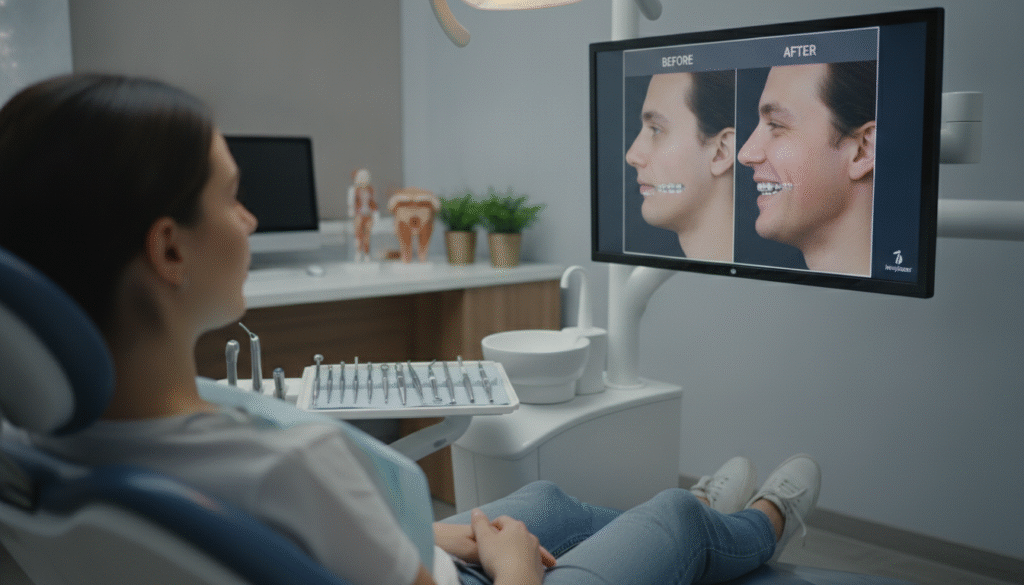
Before-and-after photos are key to seeing Invisalign’s effects. They show changes in facial features like lips and jawline. These photos help understand the cosmetic benefits of orthodontic treatment.
But, things like lighting and aging can affect how we see these changes. Yet, most photos show clear improvements in facial features.
| Feature | Before Treatment | After Treatment | Change Observed |
|---|---|---|---|
| Jawline Definition | Soft, rounded | Sharp, defined | Significant improvement |
| Cheekbone Height | Flat | Lifted | Noticeable enhancement |
| Facial Symmetry | Asymmetrical | Symmetrical | Marked improvement |
| Smile Width | Narrow | Wider | Significant enhancement |
| Muscle Tension | High | Reduced | Relaxed appearance |
In summary, Invisalign not only fixes teeth but also changes how a person looks. These changes make the face look more balanced and attractive. This boosts self-esteem and overall happiness.
The Role of Orthodontic Treatment Duration
The time it takes for orthodontic treatment is key to getting the best jaw alignment results. Knowing how long Invisalign treatment usually lasts helps patients understand the process. It shows how orthodontic changes happen slowly over time.
Average Treatment Times for Invisalign
Invisalign treatment time can vary a lot, depending on the case. Here are some general time frames:
| Case Type | Average Duration | Complexity Level |
|---|---|---|
| Mild Cases (e.g., minor crowding) | 6-12 months | Low |
| Moderate Cases (e.g., moderate spacing) | 12-18 months | Medium |
| Complex Cases (e.g., significant bite correction) | 18-24 months or longer | High |
Patients get new aligners every few weeks. This slow process is key for moving teeth the right way. It helps teeth fit together better and keeps the bone healthy.
How Duration Affects Results
How long treatment lasts affects how well the changes stick. Longer treatments mean better, more lasting changes. Rushing can cause the teeth to move back, so patience is important.
Sticking to the treatment plan is also key. Wearing aligners for 20-22 hours a day is needed for the best results. The way teeth move is tied to how fast the bone around them changes, making commitment to the treatment plan essential.
In short, knowing how long Invisalign treatment takes is important. It helps not just for straight teeth but for a balanced face too. The journey to better jaw alignment is slow and needs patience and dedication to the treatment plan.
Comparing Invisalign with Traditional Braces
When looking at orthodontic treatments, it’s key to compare Invisalign and traditional braces. Each has its own features that can affect how well the treatment works and how it looks on your face.
Both Invisalign and traditional braces aim to fix dental misalignments and improve how your teeth bite together. They use gentle forces to move teeth into the right spots. They can also change the look of your face, making it more appealing.
Similarities and Differences
Even though they share the same goals, Invisalign and traditional braces work in different ways. Braces use fixed brackets and wires for precise control over tooth movement. This is great for complex cases, often seen in younger patients. On the other hand, Invisalign uses custom-made aligners that slowly move teeth. It’s less noticeable and easier to wear, but you must wear it as directed to get the best results.
Braces can make bigger changes because they’re fixed in place. They can affect jaw growth more than Invisalign, which is good for growing patients. Invisalign is effective but might not work for all movements, like severe rotations or extrusions.
Which Option is Better for Facial Changes?
The choice between Invisalign and traditional braces depends on your situation. Younger patients with certain jaw issues might need braces and functional appliances for better jaw growth. Adults with dental problems can see big improvements in lip support and jawline with Invisalign.
It’s important to think about “orthodontic camouflage” versus “orthopedic correction”. Invisalign can make your teeth look better, but braces might be needed for more serious jaw issues. The right choice depends on a detailed diagnosis and what you need.
“The choice between Invisalign and traditional braces should be individualized, considering the patient’s unique orthodontic needs.”
Professional Opinions on Invisalign’s Effects
Orthodontists share important views on Invisalign’s impact on facial looks. They say Invisalign can make faces look more balanced by fixing teeth and jaw alignment. But, they warn it’s not enough for serious jaw problems.
What Orthodontists Say
Orthodontists stress the need for a thorough check before starting treatment. They say Invisalign can make a weak chin look better by fixing teeth. This can make the face look more even.
“In my practice, I’ve observed that when we correct a deep bite, the lower face often appears more balanced.”
Tools like ClinCheck software help plan treatments. They show what changes to expect in soft tissues. But, they’re not always exact. So, getting advice from a pro is key to good results.
Influences of Professional Guidance
Choosing the right cases, placing attachments correctly, and using extra techniques can improve looks. An expert orthodontist can use Invisalign to subtly improve lips, smiles, and chin. This helps set realistic hopes for patients.
In short, orthodontists agree: Invisalign is great for changing facial looks, but it needs a skilled orthodontist to work well.
Lifestyle Factors That Affect Outcomes
The success of Invisalign treatment depends a lot on your lifestyle. Knowing how diet and habits impact results is key for a great Invisalign jawline transformation.
Eating well is important during treatment. Invisalign lets you eat freely when you take out the aligners. But, eating foods rich in calcium, vitamin D, and phosphorus is vital. These nutrients help your bones and teeth move properly.
On the other hand, too much sugar and acidic foods can harm your teeth. This can also make your aligners less effective. Also, eating hard foods can be uncomfortable when your teeth are moving. So, it’s best to stick to softer foods.
Diet and Nutrition
- Calcium, Vitamin D, and Phosphorus: These nutrients are essential for healthy bone structure.
- Limit Sugary Foods: Reducing sugar intake can help prevent enamel damage.
- Soft Foods: Opt for softer foods to minimize discomfort during treatment.
How you live your life also affects your treatment. Smoking can harm your gums and slow down tooth movement. Keeping your mouth clean is also critical. Poor care of your aligners can cause gum disease, which can ruin your results.
Wearing your aligners as directed is also key. Not wearing them enough can mean your jaw won’t align properly. After treatment, wearing retainers is important to keep your jaw in place. This helps keep any improvements you’ve made.
Personal Habits and Oral Care
- Avoid Smoking: It can slow down tooth movement and affect gum health.
- Maintain Oral Hygiene: Proper care of aligners prevents gingivitis.
- Consistent Aligner Use: Follow the prescribed wear schedule for best results.
In summary, getting the most out of Invisalign is not just about the treatment itself. Your daily choices, like what you eat and how you take care of your mouth, play a big role. By making smart choices, you can increase your chances of a successful Invisalign jawline transformation.
Managing Expectations During Treatment
When thinking about Invisalign for facial enhancements, managing your expectations is key. Many people dream of big changes to their jawline or face shape. But, it’s important to know what Invisalign can really do.
There are often wrong ideas about how Invisalign works. Some think it can change your jaw like surgery does. But, “Invisalign does not surgically alter bone structure; improvements are typically subtle.” Soft tissue changes can happen, but they’re mostly about dental movement, not bone changes.
Can Invisalign really change your jawline? The answer is a bit complex. While Invisalign’s effects are small, they can make a big difference in how you look. You might get a better smile, lips that work better, and a slightly stronger chin, if you have an overbite. You could also see better facial symmetry.
To set the right expectations, think about what Invisalign can really do. It’s not about a huge change, but more about improving your dental health and looks. The changes you see will be small but can make your face look more balanced.
Post-Treatment Care and Its Importance
After getting Invisalign, it’s key to take good care of your teeth. This is called the retention phase. It’s important to keep your teeth in their new spots. If you don’t, they might move back to where they were before.
The reason for this is the way our gums and teeth fibers work. They tend to go back to their old shape. To stop this, you need to wear retainers. Your orthodontist will tell you if you should wear fixed or removable ones.
Retainers and Their Role
Retainers help keep your teeth in place. They stop them from moving. Here’s how you usually wear them:
- Wear them all the time for a few months after treatment.
- Then, wear them only at night forever.
If you don’t wear them as told, your teeth might move back. This means you won’t keep the look you got from Invisalign. Always listen to your orthodontist about wearing retainers.
Monitoring Facial Changes After Treatment
After treatment, it’s also important to watch for changes in your face. As your face adjusts to your new teeth, it might look a bit different. Going back to your orthodontist for check-ups helps them see if everything is staying in place.
Remember, your face can change for reasons like weight gain or getting older. These changes can affect how your teeth look. So, knowing that Invisalign is a long-term investment is important for keeping your smile looking great.
| Retention Phase | Duration | Type of Retainer |
|---|---|---|
| Initial Phase | Full-time for 6 months | Removable |
| Transition Phase | Nighttime indefinitely | Fixed or Removable |
| Long-term Maintenance | As advised by orthodontist | Removable |
Choosing the Right Orthodontist for Your Needs
Finding the right orthodontist is key to a good Invisalign experience. A qualified provider is vital for the best jaw alignment results. When you first meet with them, ask important questions to make a smart choice.
Questions to Ask Before Starting
- What is your experience with complex malocclusions using Invisalign?
- Can you show me before-and-after cases similar to mine?
- How will you address my specific bite issue to improve facial balance?
- What adjunctive techniques might be necessary?
These questions help you understand the orthodontist’s skills and approach. It’s best to choose a board-certified orthodontist for complex bite corrections.
Importance of Experience and Specialization
Experience is critical for Invisalign success. An orthodontist with advanced training can predict soft tissue responses better. They use special tools like mandibular advancement wings to improve jaw and facial looks.
The National Library of Medicine shows Invisalign works well for mild to moderate movements, with success rates of 80% to 90%. But complex cases need expert planning for the best results. So, your orthodontist’s skill is very important for your dental and facial health.
By carefully choosing your orthodontist, you set yourself up for the best Invisalign results. Remember, your journey to better jaw alignment and facial beauty starts with this choice.
Conclusion: Understanding Your Journey with Invisalign
Invisalign is a new way to fix teeth problems that can change how your face looks. We looked into if Invisalign can change your face shape or jawline. It mainly moves your teeth, which can help your lips and jaw work better together.
Changes in your face might be small and depend on many things. This includes the type of teeth problem, your age, and how well you follow the treatment. Invisalign can help make your face look more balanced, but it’s not a fix for all problems.
Having straight teeth can do more than just look good. People often feel more confident and look younger after treatment. It’s important to know what to expect. Talking to an experienced orthodontist can give you a better idea of how Invisalign might change your face.
As orthodontics gets better, making teeth and face look good together is a big goal. Knowing what Invisalign can do helps patients choose the best treatment for them.