
Can a cracked molar be saved without a crown? Find out.
Did you know nearly 20% of adults have dental cracks? This shows how common it is. But, not every cracked tooth needs a crown.
How you treat a tooth depends on the crack’s size. Small cracks might just need watching or bonding. But, bigger cracks might need a crown to stop more damage.
Dr. Mimi Long from Star City Dental wants to keep as much tooth as possible. “We aim to stop small cracks from getting worse,” she says. This is about using the least invasive treatments for each case.
We’ll look into if a cracked tooth can be fixed without a crown. We’ll cover how doctors diagnose and treat these issues. Knowing these options helps patients make better choices for their teeth.
Key Takeaways
- Not all dental cracks require crowns; treatment depends on the crack’s severity.
- Minor surface cracks may only need monitoring or bonding.
- Preserving healthy tooth structure is a priority in dental care.
- Conservative dentistry offers various treatment options for cracked teeth.
- Consulting a dental professional is essential for proper diagnosis and treatment.
- Explore more about cracked tooth solutions.
Understanding Cracked Molars
A cracked molar can be a big problem for your teeth. It’s important to know about these cracks to treat and prevent them. Cracked molars can be different in how bad they are and what type they are. If not treated, they can cause more problems.
What is a cracked molar?
A cracked molar is a break in a molar tooth. These breaks can be small or go all the way to the root. Some are so small you can’t see them or find them on X-rays. This is often called Cracked Tooth Syndrome (CTS), where you feel pain without seeing any damage.
Causes of cracked molars
There are many reasons why molars crack. These include:
- Malocclusion: Teeth that don’t line up right can put too much pressure on some molars.
- Bruxism: Grinding or clenching your teeth, often when you’re asleep, can hurt your molars.
- Thermal Stress: Eating hot and cold foods quickly can weaken your tooth enamel.
- Large Fillings: Big fillings can make your tooth weak.
- Root Canal Treatment: Teeth that have had a root canal might crack more easily.
Types of cracks in molars
Knowing the different types of cracks helps figure out how to fix them. The main types are:
- Craze Lines: These are tiny cracks in the enamel that usually don’t hurt.
- Fractured Cusps: When a piece of the tooth breaks off, often because of pressure or trauma.
- Cracks into Dentin: These go deeper into the tooth and can affect its health.
- Split Tooth: The worst kind, where the crack goes through both sides of the tooth.
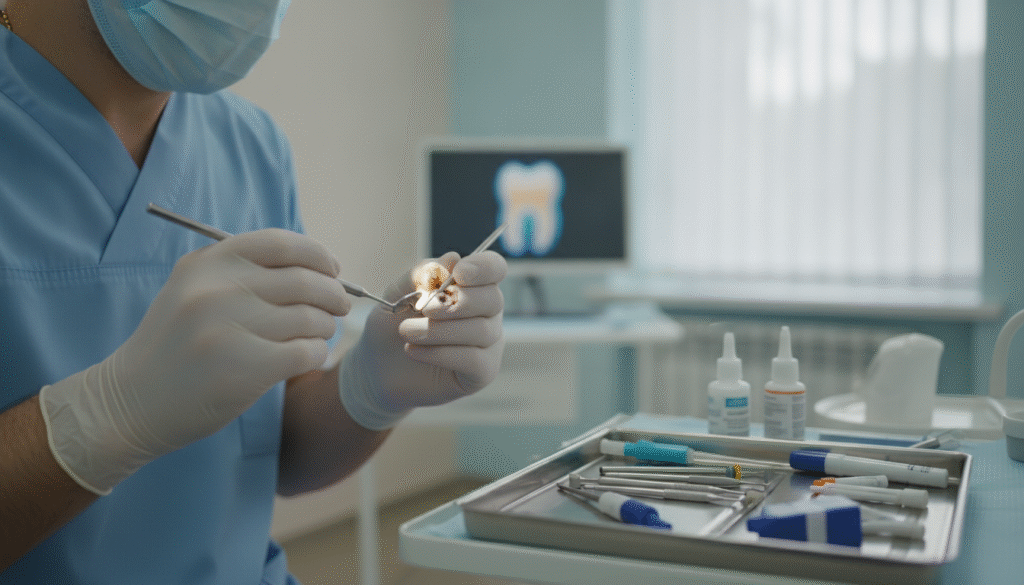
Knowing the differences is key to deciding if you can fix a cracked molar without a crown or if you need something more. Understanding cracked molars helps you make better choices for your teeth.
Symptoms of a Cracked Molar
It’s important to know the signs of a cracked molar early. This can help avoid bigger problems. Different cracks show different symptoms, but some common ones can warn you.
Common signs to look for
Here are some common symptoms of a cracked molar:
- Pain when biting or chewing: You might feel pain when you press on your teeth.
- Sensitivity to cold or sweets: Some foods can make your tooth hurt more.
- Intermittent discomfort: Pain that comes and goes, unlike the steady pain of cavities.
- A tooth that feels “off”: You might feel like your tooth is unstable, even if it looks fine.
- Pain upon release of pressure: You might feel pain when you stop pressing on your teeth.
Other signs might include:
- A small bump on the gum line, which could suggest an infection.
- Localized gingival swelling, indicating possible vertical root fractures.
- Increased thermal sensitivity that lingers after exposure to hot or cold stimuli.
When to seek dental help
Seeing a dentist early is key. If you notice any of these symptoms, go see a dentist. Waiting too long can limit your treatment options.
Recognizing and acting on symptoms early can save your tooth. It might prevent more serious treatments.
| Symptom | Description | Action |
|---|---|---|
| Pain when biting | Discomfort during pressure application | Seek dental evaluation |
| Sensitivity to temperature | Increased sensitivity to hot/cold | Monitor and consult if persistent |
| Intermittent discomfort | Pain that comes and goes | Schedule a dental check-up |
| Feeling of instability | Tooth feels different during chewing | Contact a dentist immediately |
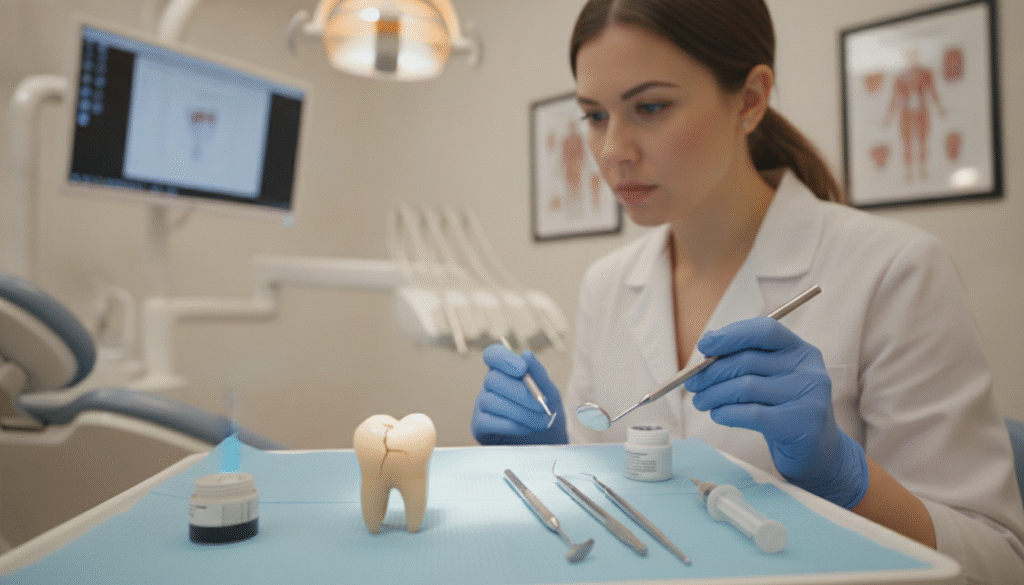
Possible Treatment Options
Looking into treatment options for cracked molars can help keep your teeth healthy. Many people don’t know that a cracked tooth can often be treated without needing a crown right away. At our office, we use advanced techniques to keep your natural tooth intact.
Our approach focuses on:
- Preserving as much natural tooth structure as possible
- Stabilizing and sealing the crack
- Reinforcing the tooth using advanced bonding techniques
We don’t rush to prepare the tooth for a crown. Instead, we check if a more gentle restoration is possible. This method is called biomimetic dentistry. It aims to make the tooth strong and functional like it was before.
Bonding as an alternative
Dental bonding is a gentle option for small cracks and minor breaks. It uses a special material to seal the crack and make the tooth look good again. This way, we avoid taking away too much of the healthy tooth.
Dental fillings and their effectiveness
If the crack is small and only exposes a little dentin, a filling might work. Fillings are effective because they bond well with the tooth. This makes them strong and stable.
Root canal therapy
If the crack goes deep into the tooth and hurts the pulp, a root canal is needed. Thanks to new dental techniques, this procedure is not very painful. With good care, teeth that have had root canals can last for many years.
| Treatment Option | Indications | Benefits | Limitations |
|---|---|---|---|
| Bonding | Small enamel cracks | Minimally invasive, aesthetic restoration | Not suitable for extensive damage |
| Fillings | Minor dentin exposure | Durable, effective sealing | May not address deeper cracks |
| Root Canal | Pulp involvement | Preserves tooth structure, long-lasting | Requires more extensive treatment |
Each treatment has its own use, limits, and how long it lasts. Knowing this helps patients talk to their dentist about saving their tooth without a crown.
The Role of Crowns
Crowns are a key solution for cracked molars. They are custom-made caps that cover the whole tooth. They restore the tooth’s shape, size, and strength, and also improve its look. Crowns are made from materials like porcelain, metal, or a mix of both, ensuring they last long and look good.
Crowns are often recommended for several reasons. They provide essential support when a tooth’s structure is weakened by deep cracks. Here are some key signs that a cracked tooth might need a crown:
- Pain When Biting Down: Pain while biting down can mean the crack goes into the dentin, needing a crown for stability.
- Visible or Deep Cracks: Deep or visible cracks can cause more damage if not covered by a crown.
- Decay Around the Crack: Bacteria in a crack can cause decay, making a crown necessary to stop further problems.
- Large Existing Fillings: Teeth with big fillings may not have enough structure, making crowns a better choice for support.
But crowns aren’t the only option for cracked molars. Alternatives like ceramic onlays and partial-coverage restorations can save more of the natural tooth. These options are great when you want a less invasive method.
Biomimetic restorations are another innovative approach. This method uses advanced adhesives and stress-reducing materials. It can sometimes match the results of crowns while keeping more of the healthy tooth.
| Restoration Method | Material | Coverage | Preservation of Tooth Structure |
|---|---|---|---|
| Crown | Porcelain/Metal | Full Coverage | Low |
| Ceramic Onlay | Ceramic | Partial Coverage | Moderate |
| Biomimetic Restoration | Composite | Targeted Coverage | High |
In conclusion, while crowns are vital for fixing cracked molars, it’s important to look at all options. Knowing the pros and cons of each treatment helps patients make better choices for their dental health.
Factors Influencing Treatment Decisions
Deciding to save a cracked molar without a crown depends on several key factors. It’s important for both patients and dentists to understand these. Each factor helps decide the best treatment for a cracked tooth.
One major factor is the extent of the crack. Cracks above the gumline are usually easier to handle. If the crack doesn’t go below the gumline, the tooth might be treated without a crown. But, if it’s deep or splits the tooth, more serious steps might be needed.
Extent of the crack
Dentists check the crack’s size to decide on treatment. A small fracture might just need bonding or a filling. But, a severe crack could need a root canal or even removal. Catching the problem early can help save the tooth.
Location of the cracked molar
The location of the cracked molar also matters. Back teeth take more pressure from chewing. So, they often need stronger protection than front teeth. If a back molar cracks, it might need a crown to prevent more damage.
Patient’s overall dental health
The patient’s overall dental health is also key. Issues like gum disease, bruxism, or past dental problems can impact the tooth’s future. For example, someone with bruxism might need a guard to protect the tooth from wear.
Dentists use many tools to check the crack and plan the best treatment. They use exams, X-rays, and cameras. By looking at all these factors, dentists can create a treatment plan that tries to save the tooth without a crown.
Professional Evaluation
Getting a professional evaluation is key when you have a cracked molar. The right diagnosis can open up many treatment options, including those that don’t involve crowns. Teeth cracks can be hard to spot, often not seen on regular X-rays. So, getting an expert’s opinion is very important.
At your dental visit, the dentist will do a full check-up. It starts with asking about your symptoms and any pain you’ve felt. This helps guide the dentist’s diagnosis.
Importance of an accurate diagnosis
Finding out if you have a cracked tooth is tough. Symptoms can be vague and may last for months. Catching it early is key to saving your tooth.
To figure out if you have a cracked tooth, dentists use different methods. These include:
- Clinical Examination: A detailed look at your tooth and the area around it.
- Digital X-rays: Digital images can sometimes show cracks that regular X-rays miss.
- Bite Testing: Tools like Tooth Slooth apply pressure to find pain sources.
- Transillumination: Lights show cracks by changing how light passes through.
- Methylene Blue Dye: This dye stains cracks, making them easier to see.
What to expect during your dental visit
At your appointment, you’ll see a mix of these diagnostic methods. Your dentist might use cameras and magnification tools to look closely at your molar. Sometimes, they might use CBCT scans to see complex fractures not seen on regular X-rays.
This detailed process is why you might need several steps to diagnose your tooth. It’s all about finding the best treatment for you, without crowns if possible.
| Diagnostic Method | Description | Advantages |
|---|---|---|
| Clinical Examination | Visual inspection of the tooth and gums. | Quick and straightforward; initial assessment. |
| Digital X-rays | Advanced imaging technique for better visualization. | Higher resolution and quicker results. |
| Bite Testing | Applying pressure to specific cusps of the tooth. | Helps pinpoint the exact location of pain. |
| Transillumination | Using light to detect cracks. | Non-invasive and effective for subtle fractures. |
| Methylene Blue Dye | Stains fracture lines for better visibility. | Enhances detection of cracks. |
Pros and Cons of Skipping a Crown
Choosing not to get a crown for a cracked molar has its ups and downs. Knowing these can help you decide what’s best for your teeth.
Benefits of avoiding a crown include:
- Preservation of natural tooth structure: Skipping a crown keeps more of your original tooth.
- Reduced biological cost: You avoid losing healthy enamel and dentin.
- Financial savings: You can save money with less invasive treatments.
- Shorter treatment time: You’ll have quicker dental visits without a crown.
- Maintaining natural appearance: Your tooth’s look and feel stay natural.
But, there are big risks with untreated cracks. These include:
- Progressive crack worsening: Cracks can get worse, causing more pain.
- Need for more extensive treatment: Untreated cracks might need root canal or extraction later.
- Bacterial microleakage: This can cause cavities and infections.
- Sudden catastrophic fractures: A cracked tooth can break suddenly, making it hard to fix.
- Vertical root fractures: These might need extraction if they happen.
It’s key to remember that while treatments like bonding or watching closely can help, they should be based on what the dentist finds. Regular check-ups and clear rules for when to recheck are important when you choose not to get a crown.
If you’re thinking about what to do, talking to a dentist can help you figure out the best way to handle your cracked molar.
Home Remedies for Minor Cracks
Many people try home remedies for a cracked molar. But, it’s key to know these fixes offer only temporary relief. They don’t replace the need for a dentist. Teeth can’t heal on their own because enamel can’t grow back. Seeing a dentist early can stop the crack from getting worse.
Here are some cracked molar care tips for minor cracks until you can see a dentist:
Temporary solutions
- Avoid chewing on the affected side: This reduces stress on the cracked tooth and minimizes discomfort.
- Eat soft foods: Choose foods that require minimal chewing, such as yogurt, mashed potatoes, or smoothies, to avoid aggravating the crack.
- Use over-the-counter pain relievers: Non-prescription analgesics can help manage pain effectively. Always follow the recommended dosage.
- Apply temporary dental cement: Available at pharmacies, this can act as a short-term barrier to protect the crack. But, remember, it’s not a permanent fix.
While these methods can offer relief, they’re not a replacement for dental care. Keep an eye on your symptoms.
When home remedies are insufficient
Some signs mean you need dental care right away. Look out for:
- Spontaneous pain: Pain that occurs without any stimulus can indicate a more serious issue.
- Prolonged thermal sensitivity: If you experience sensitivity to hot or cold that lasts longer than 30 seconds, it may be a sign of nerve involvement.
- Visible swelling: Any swelling or the formation of a fistula around the tooth may indicate an infection.
- Mobility of the tooth: If the cracked tooth feels loose, this requires urgent dental attention.
In summary, while temporary fixes can ease discomfort, they don’t replace the need for dental care. Regular dental visits are key to catching and treating dental problems early.
Preventive Measures for Molars
To keep your molars safe from cracks, it’s key to use prevention methods. It’s hard to avoid cracks completely, but changing how you act can help a lot. Knowing these tips is important for keeping your teeth healthy.
Tips to avoid cracked molars
Here are some easy ways to stop cracked molars:
- Avoid hard objects: Don’t chew on ice, hard candies, or things not meant for eating like pens and fingernails.
- Use a mouthguard: If you grind your teeth, a custom nightguard can protect your molars from too much stress.
- Protect during sports: Wear a mouthguard in sports to avoid dental injuries.
- Manage temperature extremes: Don’t eat foods that are too hot or cold, as they can stress your teeth.
Importance of regular dental check-ups
Going to the dentist regularly is key to avoiding cracked molars. At these visits, dentists can:
- Identify risk factors: They can spot problems like old fillings or grinding teeth early, helping to prevent issues.
- Provide tailored advice: Your dentist can give advice based on your teeth and how you take care of them.
- Monitor overall oral health: Regular visits help catch problems early, keeping your teeth healthy.
By using these cracked molar prevention strategies and going to the dentist often, you can greatly improve your oral health. This can also lower the chance of needing big fixes for your teeth.
Lifestyle Adjustments
To keep your teeth healthy after fixing a cracked molar, making some lifestyle changes is key. These adjustments help your dental work last longer and prevent more problems.
What you eat is very important for your teeth. Eating foods rich in calcium and vitamin D helps your teeth stay strong. But, eating too many acidic foods can weaken your enamel and make your teeth more likely to crack.
Drinking enough water is also important. Water helps keep your mouth moist, which fights tooth decay. Your saliva helps protect your teeth by keeping them strong.
Keeping your teeth clean is essential for protecting them. Here are some important tips:
- Use a soft-bristled toothbrush to avoid wearing down your enamel.
- Use floss carefully to avoid pushing too hard on weak teeth.
- Try using fluoride mouthwash to strengthen your teeth around cracks.
It’s also important to stay mentally alert to any tooth pain. If you notice any pain, see your dentist right away. Having a regular dentist who knows your history helps catch problems early.
By following these cracked molar care tips, you can greatly improve your oral health. This ensures your dental treatments work well.
Treatment Success Stories
Cracked molars can often be saved without crowns. Many patients have seen success with early treatment. This shows that saving cracked molars without crowns is possible.
Below are real-life examples of how cracked molars were treated:
Real-life examples of cracked molar treatments
| Case Description | Treatment Approach | Outcome |
|---|---|---|
| Mandibular first molar with a mesial-distal crack | Crack removal, immediate dentin sealing, and composite resin restoration | Asymptomatic and functional at five-year follow-up |
| Maxillary molar with a fractured mesiolingual cusp | Bonded ceramic onlay for cuspal coverage | Successful retention without full crown placement |
| Multiple craze lines with bruxism | Occlusal equilibration and custom nightguard fabrication | No restorative intervention needed; regular monitoring maintained |
Outcomes without crowns
These cases show that some cracked molars can be saved without crowns. This is when treatment is carefully planned. It highlights the need to keep natural tooth structure and use advanced adhesives.
At our office, we provide top-notch dental care in Summit, Millburn, Berkeley Heights, Chatham, and New Jersey. We aim to put your dental health first and explore all treatment options.
The Cost Factor
It’s important to know the costs of fixing a cracked molar. Prices can change based on the crack’s size and the treatment. Knowing this helps you make smart choices for your teeth.
For small cracks, you might just need to watch it, bond it, or fill it. These are cheaper and work well for surface problems. But, if the crack is deep or hurts, you might need a crown. Crowns cost more but protect your tooth better.
Here’s a quick look at what different treatments cost:
- Monitoring: This is very cheap, just a check-up.
- Bonding: This costs a bit more but is cheaper than crowns.
- Fillings: Like bonding, it depends on the material.
- Crowns: These are more expensive because they’re more durable.
- Root Canal Therapy: This is the most expensive, needed for serious cases.
Insurance can also play a big role in costs. Plans often cover basic and major treatments differently. For example, bonding might be covered, but crowns might not be as easily covered.
Also, some insurance rules might not cover the cheapest options. This could mean you have to pay more for treatments you thought were covered.
To deal with costs, look into these options:
- Dental savings plans for discounts.
- Third-party financing for payment plans.
- Flexible payment plans from your dentist.
Choosing the right treatment is about finding value. It’s not just about the cheapest option. It’s about what’s best for you in the long run.
Impact on Overall Oral Health
A cracked molar doesn’t just affect the tooth itself. It can also upset the balance of your whole dental structure. If not treated, it can harm other teeth and even cause health problems elsewhere in the body.
Cracked molars can also harm nearby teeth. People might start chewing differently to avoid pain. This can wear down other teeth and cause more damage over time.
If the crack reaches the pulp, it can kill the tissue inside the tooth. This can lead to infections spreading through the body. In serious cases, this can cause bigger health problems.
Ignoring a cracked molar can have serious long-term effects. It can cause:
- Supraeruption of opposing teeth, causing misalignment.
- Tipping and rotation of adjacent teeth into the empty space.
- Occlusal interferences that predispose remaining teeth to fractures.
What might start with simple fixes like bonding can turn into more serious treatments. This could include root canals or even tooth removal. The need for tooth replacements, like implants or bridges, adds to the problem.
In short, acting quickly on cracked molars is very important. It helps save the tooth and keeps the rest of your teeth healthy. Catching it early can stop a lot of problems from happening.
Finding a Qualified Dentist
Finding the right dentist is key for fixing cracked molars. A good dentist will know how to handle your case and suggest the best treatments. They should be skilled in both traditional and modern treatments.
Look for a dentist who is up-to-date with the latest technology and training. They should use tools like dental microscopes and 3D scans for better diagnosis. It’s also important they keep learning about new dental techniques.
When you meet with a dentist, ask them important questions. Find out if they can fix a cracked tooth without a crown. Knowing when a crown is needed is important.
Also, ask how they check the depth of cracks and how they keep an eye on teeth they’ve treated. This shows they care about your long-term dental health.
Talk about how they handle problems that cause cracks. Taking care of your teeth early can save them from needing crowns. Being involved in your dental care means you can choose the best treatment for you.
