
Can a missing tooth affect my bite or jaw health?
Did you know losing one tooth can start a chain reaction in your mouth? It’s true! When a tooth is missing, it can cause many problems. These problems affect not just your smile but also how you chew and speak.
When a tooth is gone, the teeth next to it might start to move. This can lead to misalignment. Misalignment can cause TMJ disorders, which are painful. Also, the jawbone might lose density, causing bone resorption. This can even lead to facial collapse over time.
It’s important to act fast. Replacing lost teeth with implants or bridges can help keep your mouth working right. Even teeth that aren’t seen when you smile are important for your oral health.
Key Takeaways
- Tooth loss can disrupt chewing and speaking abilities.
- Shifting teeth may lead to misalignment and TMJ disorders.
- Bone resorption can occur, risking facial collapse.
- Early replacement with implants or bridges is vital.
- Even non-visible teeth are essential for oral health.
Understanding the Importance of Teeth in Bite Function
Teeth do more than just look good. They play a big role in how we chew and speak. Each tooth has a special job that helps us eat and talk clearly. Knowing this helps us see how losing teeth can cause dental bite problems.
Role of Teeth in Chewing
Teeth are made for different tasks. Incisors cut, canines tear, and premolars and molars grind. This teamwork makes eating food efficient for digestion.
For example, when you bite into an apple, incisors start the cut. Then, molars grind it down. If you lose a tooth, this balance is upset. This can make chewing less effective and lead to digestion problems.
The table below shows how different teeth help us chew:
| Tooth Type | Function | Impact of Loss |
|---|---|---|
| Incisors | Cutting food | Difficulty biting into hard foods |
| Canines | Tearing food | Impaired lateral movement during chewing |
| Premolars | Crushing food | Reduced efficiency in food breakdown |
| Molars | Grinding food | Increased strain on remaining teeth |
Impact on Speaking
Teeth are also key for speaking. They help guide the tongue for clear speech. Without front teeth, for example, it’s hard to make some sounds right. This can mess up how we talk and how we feel about ourselves.
“Teeth are not just for eating; they are essential for clear speech and proper pronunciation.”
In short, teeth are important for chewing and speaking. Losing teeth can cause dental bite problems that mess with digestion and talking.
How Missing Teeth Change Bite Dynamics
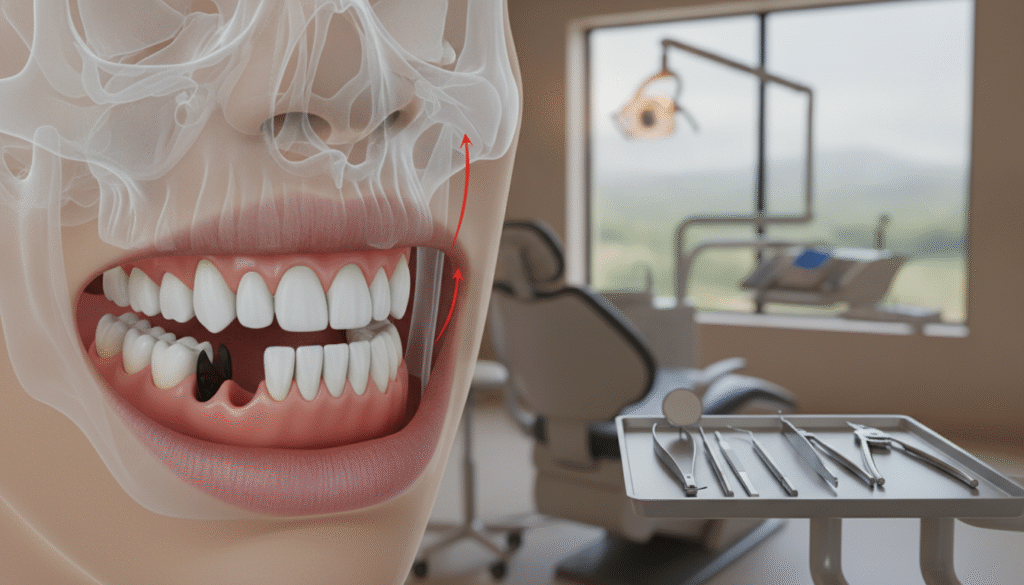
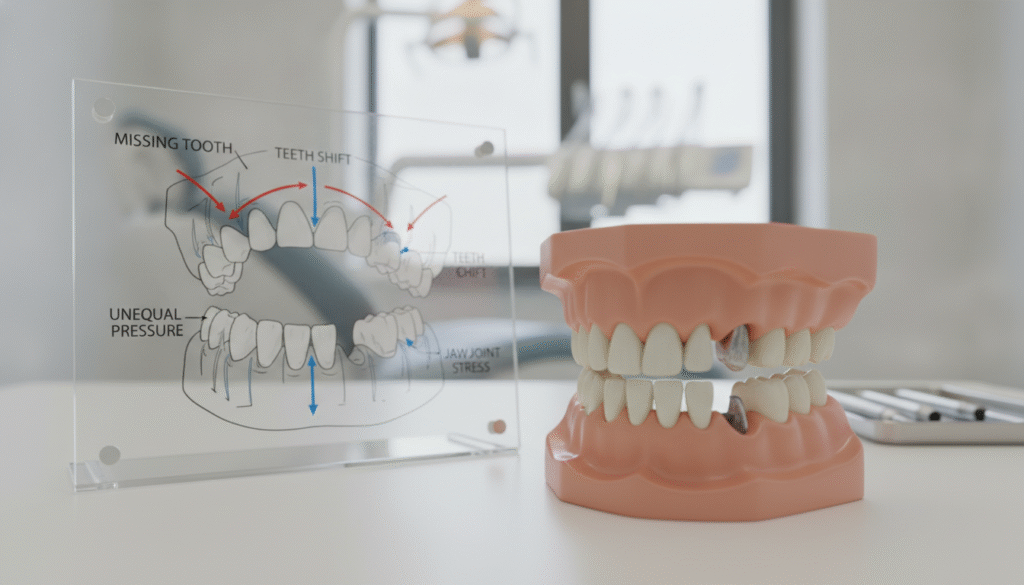
When a tooth is missing, it throws off the balance of the teeth and jaw. The teeth around the gap and the ones on the opposite side feel different forces. This imbalance makes each tooth lean on its neighbors and the teeth on the other side for support.
The empty space from a missing tooth causes the teeth next to it to move. This is called mesial drift. The tooth on the other side might grow too long, a problem known as vertical overeruption. It’s like taking a book off a shelf; the books start to fall over.
Altered Pressure Distribution
Teeth moving because of a missing tooth changes how pressure is spread across the mouth. This change can lead to:
- Cracks in teeth from too much stress.
- Wear on teeth from being out of line.
- Pain in the jaw muscles from trying to fix the bite.
Open Space and Its Effects
The empty space from a missing tooth affects not just the teeth next to it but the whole mouth. The effects include:
| Effect | Description | Potential Consequences |
|---|---|---|
| Mesial Migration | Teeth next to the gap lean into the space. | Higher chance of cavities and gum disease. |
| Supra-eruption | The tooth on the other side grows too long. | Spaces for food to get stuck and more tooth loss. |
| Malocclusion | The bite doesn’t line up right. | Pain in the jaw and TMJ problems. |
In short, knowing how missing teeth change the bite is key to keeping the mouth healthy. Fixing these issues early can stop more problems and keep the bite balanced.
The Consequences of an Imbalanced Bite
An uneven bite can cause more than just pain. It affects your dental health in big ways. When a tooth is missing, the bite balance is off. This leads to jaw pain and wear on other teeth.
Jaw pain and discomfort often come from an imbalanced bite. The muscles in your jaw work harder because of the missing tooth. This can cause headaches, jaw strain, and pain in the TMJ.
People might feel:
- Chronic headaches, often called tension headaches.
- Facial pain, mainly around the jaw and temples.
- Difficulty in fully opening or closing the mouth.
The teeth that are left have to carry more weight. This can cause them to wear down faster. This can lead to:
- Attrition, where teeth wear down from grinding against each other.
- Abfraction, causing non-carious cervical lesions from tensile stress.
- Increased risk of fractures in weakened teeth.
“An imbalanced bite not only causes discomfort but also accelerates wear on adjacent teeth.”
People might change how they chew to avoid pain. But this can make the muscles even more tired. It’s key to fix missing teeth quickly to stop things from getting worse. This helps keep your jaw and teeth healthy.
Neighboring Teeth and Tooth Migration
A gap from a missing tooth can make nearby teeth move, upsetting dental balance. This movement, called pathological tooth migration, happens due to biological and mechanical reasons. When a tooth is lost, the fibers around it push the next teeth forward.
This push is usually balanced by the teeth touching each other. But without a tooth, this push keeps going, making the back teeth move forward.
As teeth move, they might turn or tilt into the empty space. This changes how teeth touch each other, making it hard to clean between them. This can lead to more cavities and gum disease.
Over time, the whole row of teeth can start to collapse. This can make the teeth lean forward or backward, causing bad bites.
Teeth that turn or have gaps in between them are hard to keep clean. These spots can hold onto plaque, making it tough to brush and floss. This can make dental problems worse and cause teeth to crowd together.
Think of teeth like a zipper; without one tooth, the whole line can come undone. This shows how connected our teeth are. Even if teeth were once straight, they can start to move again. Knowing how this works is key to keeping teeth healthy.
The Role of the Jaw Joint in Bite Health
The temporomandibular joint (TMJ) is key to a healthy bite. It connects the jaw to the skull, enabling us to chew and speak. Its health depends on how our teeth fit together. Missing teeth can upset this balance, causing problems.
Knowing how the TMJ works is important. It’s a complex joint that allows for many movements. But, it can get out of balance if our bite changes.
Understanding the Temporomandibular Joint (TMJ)
The TMJ works best when our teeth fit right. But, without some teeth, it can get out of place. This can cause pain and other issues.
Studies show that losing teeth in the back can hurt the TMJ. This can lead to joint problems. Symptoms include clicking sounds, trouble opening the mouth, and jaw that moves off-center.
TMJ Disorders Linked to Missing Teeth
TMJ disorders can cause a lot of pain. They can make eating and talking hard. Losing teeth can mess with how our muscles work, leading to more pain.
To fix these problems, we need to get our bite right again. This can help our TMJ and improve our jaw health. It’s all about keeping our jaw working well.
| TMJ Disorder | Symptoms | Potential Causes |
|---|---|---|
| Capsulitis | Pain, swelling, limited movement | Joint inflammation, trauma |
| Synovitis | Joint swelling, tenderness | Injury, overuse |
| Osteoarthritis | Joint pain, stiffness | Wear and tear, aging |
Short-Term Effects of Missing Teeth
Losing a tooth can change how you eat and chew. Chewing on the affected side becomes hard. This makes you prefer softer foods and chew mostly on one side.
This can make your bite feel off. You might find your tongue checking out the gap left by the tooth. Within weeks, teeth next to the gap may start to move. This changes how your teeth fit together and can cause discomfort.
Initial Changes in Bite Configuration
Without a tooth, chewing in that area becomes hard. This can weaken the jaw muscles on that side. It makes it harder to keep the bite balanced.
Adaptation of Eating Habits
People often change how they eat after losing a tooth. They might:
- Eat softer foods like soups and smoothies.
- Avoid hard or chewy foods.
- Chew only on one side, which can harm jaw health.
These changes help with comfort but can harm jaw health. The tongue’s constant awareness of the gap can also lead to bad habits like tongue thrusting.
It’s important to act fast to stop these changes. Early action can prevent more problems.
| Effect | Description | Potential Consequences |
|---|---|---|
| Difficulty Chewing | Chewing becomes challenging on the affected side. | Preference for softer foods. |
| Altered Bite Dynamics | Shift in occlusal contacts due to adjacent teeth drifting. | Potential jaw discomfort. |
| Muscle Deconditioning | Avoidance of chewing on one side leads to weakened muscles. | Further bite imbalance. |
Long-Term Implications of Tooth Loss
When a tooth is lost, it can deeply affect dental health and facial structure. It’s important to understand these effects to keep overall health in check. Without a tooth, the jawbone starts to shrink. This happens because the bone needs chewing forces to stay strong.
Without these forces, the bone changes a lot:
- Up to 25% of bone width can be lost within the first year.
- Vertical height diminishes over time, leading to a sunken appearance.
As the bone shrinks, it changes how we look. This can make us feel less confident and affect our self-image. These changes can lead to:
- Sunken facial appearance, which contributes to the development of deepened nasolabial folds.
- Loss of lip support, leading to a protruding chin and a condition often referred to as a “witch’s chin” deformity.
These changes are not just about looks; they’re serious dental health concerns. The jaw’s structure weakens, causing more problems. These can include:
- Increased risk of nutritional deficiencies due to difficulty in chewing.
- Potential cognitive decline linked to poor nutrition and overall health.
“Bone remodels in response to stress; without the forces generated during mastication, osteoclastic activity outpaces osteoblastic activity.”
Dental implants can help by providing the needed forces to keep the bone healthy. They help keep the jaw’s structure intact, preventing the bad effects of tooth loss. Getting dental implants is a key step to protect dental health and keep our faces looking good.
Preventative Measures for Bite Health
Keeping our teeth clean is key to a healthy bite. Good dental care helps keep our teeth in line and our mouth healthy. Regular dental visits help spot problems early.
Dentists check our bite and look for habits that could harm it. Tools like study casts and occlusal analysis help them understand our teeth. This early check can stop tooth loss and keep our bite balanced.
Importance of Regular Dental Check-Ups
Dental exams catch problems like unstable bites and cavities early. These visits let dentists keep an eye on our teeth. They can fix issues before they get worse.
Possible Use of Dental Prosthetics
Lost teeth need quick replacement to avoid bone loss. Options like implants, bridges, or dentures help keep the space and force balance. They help us keep our natural teeth, but replace them if needed.
Teaching patients about oral care and bite health is important. Knowing how to care for dental prosthetics and maintain a healthy bite improves our life. Taking care of our teeth is a shared responsibility.
Types of Dental Prosthetics for Missing Teeth
Learning about dental prosthetics can guide you in choosing the right tooth replacement. Each choice has its own benefits and things to consider. We’ll look at two main types: dental implants and bridges/partials.
Dental Implants
Dental implants are titanium posts that are surgically placed in the jawbone. They serve as artificial roots for missing teeth. They offer many advantages:
- Bone Preservation: Implants help keep the jawbone strong by preventing bone loss.
- Independent Support: They support teeth without harming nearby teeth.
- Longevity: With good care, implants can last for many years.
The process of osseointegration makes the implant strong. The bone grows around it, creating a solid base. This method not only fixes the tooth but also keeps the face looking right.
Bridges and Partials
Bridges and partial dentures are also used to replace missing teeth. They need support from nearby teeth, which means these teeth need to be prepared. Important points include:
- Bridge Procedure: It requires preparing the teeth for the bridge, which might lead to tooth decay if not cleaned well.
- Partial Dentures: These are easier to put in but can cause bone loss because they don’t stimulate the roots.
Both bridges and partials can make your smile look better and work better. But, they need regular cleaning to last long.
Choosing the right option depends on a detailed check-up and X-rays. Talking to a dentist can help find the best fit for you.
Maintaining Jaw Health After Tooth Loss
Keeping your jaw healthy after losing a tooth is key for good oral function. There are many ways to support your jaw and dental health. This section will cover exercises and diet tips to help your jaw heal and stay healthy.
Exercises to Strengthen Jaw Muscles
Doing jaw exercises can make your muscles stronger and reduce pain. Here are some exercises you can try:
- Controlled Opening and Closing: Slowly open and close your mouth, focusing on smooth movements.
- Lateral Excursions: Gently move your jaw side to side to improve flexibility.
- Resistance Training: Place your thumb under your chin and apply gentle pressure while opening your mouth. This strengthens the suprahyoid muscles.
These exercises help improve the TMJ and reduce muscle tension. This leads to better jaw function.
Importance of a Balanced Diet
Eating a balanced diet is important for jaw health. It helps with bone strength and healing. Here are some dietary tips:
| Food Group | Benefits | Examples |
|---|---|---|
| Dairy Products | Rich in calcium and vitamin D for bone strength | Milk, yogurt, cheese |
| Leafy Greens | Provide essential vitamins and minerals | Spinach, kale, collard greens |
| Lean Proteins | Support tissue repair and muscle health | Chicken, fish, beans |
It’s also good to avoid habits that can harm your jaw, like nail-biting or chewing ice. These habits can stress your jaw and slow healing.
By doing jaw exercises and eating a balanced diet, you can improve your recovery. This helps keep your teeth and jaw healthy for a long time.
Understanding Tooth Replacement Options
Choosing to replace a missing tooth means looking at different options. Dental implants are a top choice because of their many benefits. They feel natural and help keep the jawbone healthy.
Advantages of Dental Implants
Dental implants have many advantages:
- Longevity: With the right care, implants can last a lifetime.
- Bone Preservation: They help keep the jawbone strong by preventing bone loss.
- Natural Feel: Implants work like real teeth, giving you almost full chewing power back.
- No Impact on Adjacent Teeth: Unlike bridges, implants don’t harm the teeth next to them.
- No Need for Adhesives: You won’t need messy adhesives or clasps with implants.
These benefits make dental implants a top pick for those wanting to fix their smile and chewing ability.
Cost Considerations
Dental implants might cost more upfront than bridges or dentures. But they’re often more cost-effective in the long run. This is because they last longer and need less maintenance. Here are some key points about cost:
- Insurance coverage for dental implants varies, so it’s important to check with your provider.
- Many dental practices offer financing plans to help with the initial costs.
- Choosing implants can save money over time by avoiding costly repairs on other teeth.
It’s vital for patients to talk about all options and payment plans with their dentist. This ensures they make choices that fit their health needs and budget.
Psychological Effects of Missing Teeth
Not having a tooth can really affect how you feel and how you interact with others. When you can’t see your teeth, you might feel embarrassed or ashamed. This can make you want to stay away from social events, which can really lower your quality of life.
People might start to hide their smiles or avoid talking to others. Even a missing tooth in the back can make you nervous about eating in public. This fear can stop you from joining in on meals or parties, making you feel lonely.
Impact on Self-Esteem
Studies show that losing teeth can make you feel less confident and even sad. Your face is a big part of who you are and how you communicate. A missing tooth can change how others see you right away.
One study found that people with missing teeth often feel less attractive and less confident when they’re out. This can really affect how you feel about yourself.
Social Interactions and Communication
Being worried about food getting stuck or not being able to speak clearly can make you anxious. This anxiety can make you shy away from talking to others. Getting your teeth fixed can help you feel better physically and mentally.
It’s really important to deal with the emotional side of missing teeth. Getting your teeth fixed can help you feel more confident and social again. It shows how important your teeth are for your mental health.
| Psychological Effects | Impact on Self-Esteem | Social Interaction Challenges |
|---|---|---|
| Embarrassment | Lower self-confidence | Avoidance of social situations |
| Anxiety | Increased feelings of depression | Fear of negative judgment |
| Isolation | Negative self-image | Limited communication |
Varying Solutions Based on Tooth Location
The location of a missing tooth greatly affects the options for fixing it. Each tooth has its own role in how we eat and smile. So, we need to choose the best way to replace it.
For teeth in the front, like incisors and canines, looks are key. These teeth help with our smile and how we speak. So, we use materials that look and feel like real teeth. Options like ceramic crowns or bridges are often chosen.
Custom colors and temporary teeth can help get the look just right. Shaping the gums around the tooth can also make it look better.
But, back teeth need to be strong because they bear a lot of weight. Molars, for example, can handle over 200 pounds of force. So, we use strong materials like zirconia or metal-ceramic for these teeth.
It’s also important to think about how the teeth fit together. This ensures they work well and last a long time.
When replacing a molar, we avoid using a partial denture. This prevents the denture from putting too much strain on the teeth. It helps keep the teeth stable and the jaw healthy.
| Tooth Location | Primary Considerations | Common Materials |
|---|---|---|
| Front Teeth | Aesthetics, phonetics, lip support | All-ceramic crowns, bridges |
| Back Teeth | Strength, occlusal load resistance | Zirconia, metal-ceramic restorations |
Age and Tooth Loss
It’s important to know how aging affects our teeth. As we get older, our mouths change in ways that can hurt our dental health. It’s key to adjust our dental care as we age.
Older people often have less saliva, leading to dry mouth. This makes teeth more prone to decay and loss. Gum recession and wear also harm teeth. Age-related changes like dentin sclerosis and smaller pulp volumes add to these problems.
Many seniors face dental challenges due to health issues or medicines. For example, taking too many medicines can dry out the mouth more. Diseases like diabetes and osteoporosis can slow down healing after dental work.
But, age shouldn’t stop older adults from getting dental implants. Research shows that implants can work well in people in their 70s and 80s if they’re healthy. This proves that age isn’t a barrier to implants.
To keep teeth strong and healthy, seniors need special dental care. This includes:
- Fluoride varnishes to strengthen enamel
- Saliva substitutes to alleviate dry mouth
- More frequent recall intervals for dental check-ups
Dental professionals can help seniors keep their teeth healthy. Age is less important than overall health when it comes to dental care.
| Physiological Change | Impact on Dental Health | Recommended Care |
|---|---|---|
| Reduced Salivary Flow | Increased risk of caries | Use saliva substitutes |
| Gum Recession | Exposure of tooth roots | Regular dental check-ups |
| Dentin Sclerosis | Decreased sensitivity | Fluoride treatments |
The Importance of Patient Education
Knowing about dental health is key for good treatment and care. Patients who understand their dental needs are more likely to stick to their dental plans. Dentists use many tools to help patients grasp the importance of tooth loss.
For example, dentists might use:
- Articulated study models: These show how missing teeth affect our bite.
- CBCT scans: These give a 3D view of our bone, showing the effects of tooth loss.
- Digital smile design: This helps plan for looks and shows why replacing teeth is important.
Dentists use these tools to create a space where patients feel they can ask questions. Knowing about their dental health and the risks of not treating it is very important.
Discussing Options with Your Dentist
It’s important for patients to talk about their treatment options. They should ask about:
- The good and bad of different treatments.
- How each option will change their bite.
- What to expect and how to keep things in good shape.
Talking about these things helps patients understand their treatment better. This partnership is key to good dental health.
Understanding Bite Mechanics
It’s important for patients to understand bite mechanics. For example, mutually protected occlusion means our front teeth protect our back teeth. Losing a canine can upset this balance and cause more problems.
Knowing about these mechanics helps patients see why replacing teeth on time is important. It also shows why taking care of restorations is vital. This knowledge helps patients make smart choices about their dental health.
In short, a good relationship between dentist and patient, based on education, is the foundation of successful dental care. When patients are informed, they can better take care of their teeth.
Conclusion: Maintaining Overall Oral Health
Oral health is key to feeling good overall. Going to the dentist regularly helps stop tooth loss and catches problems early. A full dental check-up lets experts check your bite and jaw.
When you lose a tooth, acting fast is important. Waiting too long can cause problems like teeth not fitting right and jaw pain. Dental fixes like implants or bridges help fix these issues and keep your smile looking good.
Seeing tooth replacement as a must, not just for looks, is important. Talk to your dentist to find the best solution for you. Knowing about your bite helps you make better choices for your teeth.
Improving oral health through learning and new dental fixes is what good dentists do. Taking care of your teeth now can avoid big problems later. Make sure to take care of your teeth and book your next dentist visit.
