
Will my other teeth shift if I leave a gap for too long?
Did you know that nearly 70% of adults will lose at least one permanent tooth by the age of 44? This is a surprising fact that shows how common tooth loss is. When a tooth is lost, changes start happening right away, affecting your oral health.
The mouth is a dynamic system where each part depends on the others for stability. If a tooth is missing, the teeth next to it might lean into the gap. The teeth on the opposite side can also move into the empty space. This happens because teeth need their neighbors to stay in line. Waiting too long to replace a lost tooth can cause not just misalignment but also bone loss in the jaw.
It’s important to understand how tooth loss works. This article will look at how teeth move, what happens if you ignore a gap, and ways to keep your teeth healthy.
Key Takeaways
- Tooth loss can lead to immediate and long-term changes in your mouth.
- Adjacent teeth will likely tilt toward the gap, affecting alignment.
- Opposing teeth may drift into the empty space, causing further issues.
- Delaying tooth replacement can result in jawbone deterioration.
- Understanding these effects is essential for maintaining oral health.
Understanding Teeth Alignment
Teeth alignment is key to good oral health, not just looks. It’s about how each tooth fits in the mouth and works with others. This balance is vital for a healthy bite and even chewing forces.
When a tooth is missing, others start to move. This can cause many dental problems.
The mouth is a system where each tooth helps the others. Forces from nearby teeth and structures affect how your teeth line up. The tongue pushes out, while lips and cheeks pull in, keeping teeth in place.
What is Teeth Alignment?
Teeth alignment means how teeth fit together in the mouth. It’s not just about looks; it’s about function too. When teeth are aligned right, they work well together for chewing and speaking.
Why is Teeth Position Important?
The position of your teeth matters for many reasons:
- Efficient Mastication: Aligned teeth spread chewing forces evenly, avoiding damage.
- Clear Phonetics: Good alignment helps make sounds clear, improving speech.
- Protection of TMJ: Proper alignment keeps the TMJ healthy, reducing pain and dysfunction.
In short, knowing about teeth alignment is key for good oral health. Properly aligned teeth help with function and overall health. Ignoring this can cause many dental problems, affecting your smile and health.
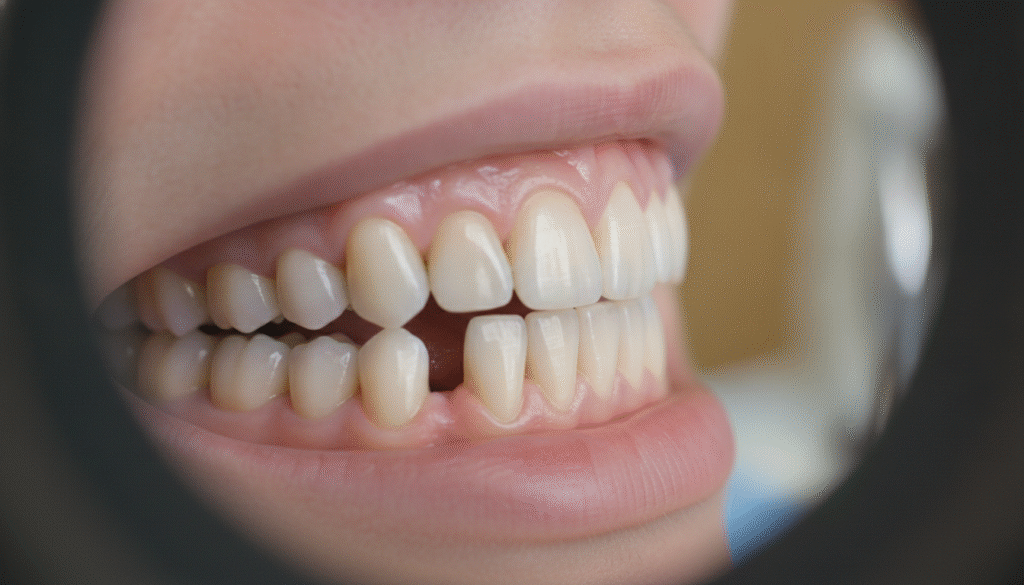
Consequences of Leaving a Gap
Leaving a gap in your teeth can cause many problems. It’s important to know these issues to keep your mouth healthy. A missing tooth affects more than just how you look; it can also change how your teeth fit together and how you chew.
Impact on Surrounding Teeth
When a tooth is gone, the teeth next to it start to move. This is called mesial drift. They lose their anchor and can tilt or turn, making your teeth uneven.
The tooth above or below the gap can also move up or down. This is called super-eruption. It can make your teeth alignment worse and create more gaps.
Changes in Bite and Chewing Function
Teeth moving can mess up how your teeth fit together when you bite. This uneven pressure can wear down certain teeth faster. It can also cause jaw pain and headaches.
People might start chewing on one side more. This can strain the jaw and TMJ. It can lead to myofascial pain and even disc problems.
| Consequences | Effects on Teeth | Functional Changes |
|---|---|---|
| Mesial Drift | Adjacent teeth shift into the gap | Misalignment of bite |
| Super-Eruption | Opposing tooth extrudes | Increased wear on specific teeth |
| Occlusal Interferences | Uneven pressure on teeth | Jaw discomfort and headaches |
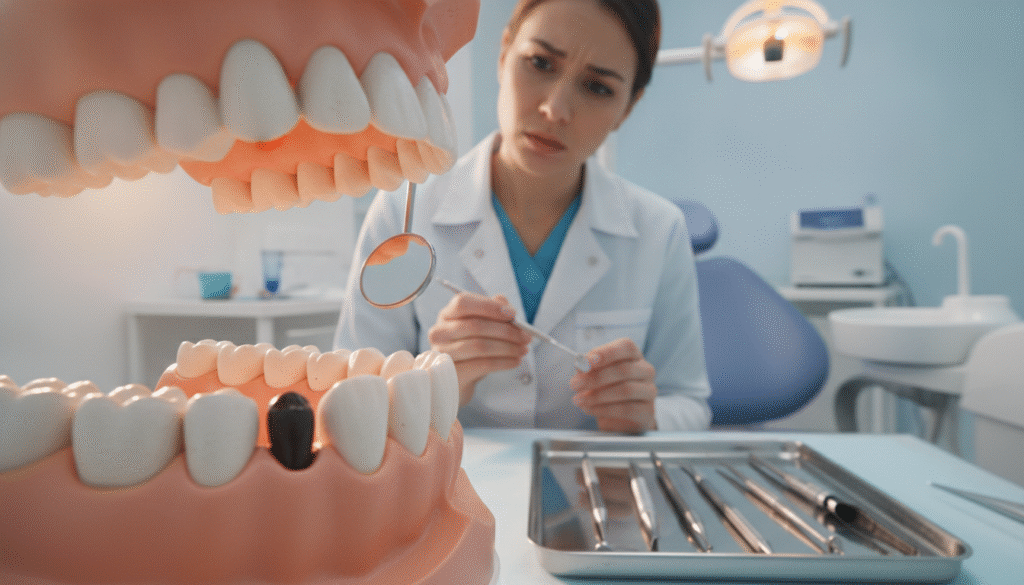
Factors Influencing Tooth Movement
Tooth shifting is influenced by several biological factors. These factors can greatly affect how teeth move after a tooth is lost. Key influences include age and bone density, as well as gum health and support.
Age and Bone Density
Age is a big factor in how fast teeth move. Young people tend to have faster bone turnover, leading to quicker tooth shifting. This helps their bodies adjust quickly to tooth loss.
Older people, on the other hand, have lower bone density. Even though their bones change slower, it’s important. This slower change can cause teeth to move, but only if the bone around them is strong enough.
Gum Health and Support
The health of your gums and periodontal ligaments is key to tooth stability. Healthy gums and strong ligaments help keep teeth in place. But, if you’ve had periodontitis, your gums and ligaments might not work as well.
Weak gums and ligaments mean teeth can move more easily. Without a tooth, nearby teeth might move faster. This can make dental health even harder to manage.
| Factor | Impact on Tooth Movement | Age Group |
|---|---|---|
| Bone Density | Higher turnover leads to faster shifting | Young Adults |
| Bone Density | Slower remodeling, but significant shifts can occur | Older Adults |
| Gum Health | Healthy gums stabilize teeth | All Ages |
| Gum Health | Compromised health leads to increased mobility | Individuals with Periodontitis |
Orthodontic Insights
Orthodontic treatments are key in managing tooth movement and keeping teeth aligned. They use different appliances to apply forces that guide teeth to their correct spots. Knowing how these appliances work helps patients see their role in keeping teeth healthy.
Appliances like braces and clear aligners fix teeth that have shifted. They apply gentle forces to move teeth into place. This not only makes teeth look better but also improves how they function. Also, fixing teeth alignment is often needed before doing other dental work, like implants.
How Orthodontics Address Shifting
When a tooth gap is not filled, nearby teeth may move into it. This can cause teeth to become misaligned and affect how we bite. Orthodontics fixes this by aligning teeth with specific forces. This stops further problems and keeps the dental arch strong.
Retainers and Their Role
After orthodontic treatment, retainers are key in keeping teeth straight. They hold teeth in place while the gums and bones adjust. Not wearing retainers as told can let teeth move back to their old spots.
The gums and bones remember the old tooth position. A gap from a missing tooth makes it easy for teeth to move back. Wearing retainers as directed is vital to keep teeth straight after orthodontic treatment.
| Orthodontic Appliance | Function | Duration of Use |
|---|---|---|
| Braces | Realign teeth using brackets and wires | 1-3 years |
| Clear Aligners | Gradually shift teeth with removable trays | 6 months – 2 years |
| Retainers | Maintain teeth position post-treatment | Indefinitely, as directed |
The Role of Missing Teeth
When a tooth is missing, it creates a gap. This gap can make the teeth next to it move. This movement can cause many dental problems. It’s important to know why teeth go missing and how long it takes for them to shift.
Types of Tooth Loss
Tooth loss can happen for many reasons, including:
- Trauma: Accidents or injuries can cause teeth to fall out suddenly.
- Congenital Absence: Some people are born without certain teeth.
- Extraction: Teeth may be removed because of decay or gum disease.
The environment after a tooth is pulled out affects how the other teeth move. For example, losing a tooth because of decay heals differently than losing one due to an injury.
Timeframe for Possible Shifting
Right after a tooth is lost, tiny changes start happening. The biggest movement of nearby teeth usually happens in the first three to six months. During this time, the balance of forces in the mouth changes, leading to:
- Initial shifting of adjacent teeth to fill the gap.
- Changes in bite alignment that can affect chewing function.
Studies show that in the first year after a tooth is pulled, up to 25% of the bone width in the area can be lost. This loss makes fixing problems later harder, so getting dental care quickly is key.
Oral Health and Bone Structure
Tooth loss starts a chain reaction that harms the jawbone’s health. The jawbone needs constant pressure from tooth roots to stay strong. Without teeth, this pressure is lost, causing jawbone resorption.
Jawbone resorption happens when bone tissue breaks down without stimulation. This starts quickly after tooth loss and can cause big bone loss in months. Without stimulation, osteoclasts start breaking down the bone. This makes the jawbone shrink, changing the face’s structure.
Jawbone Resorption Risks
The risks of jawbone resorption go beyond looks. As the bone shrinks, dental health risks increase, including:
- Teeth next to the missing ones are more likely to break because of less bone support.
- Periodontal defects can get worse, making oral health problems worse.
- The face can look sunken, affecting how we look.
Long-term Oral Health Effects
Long-term jawbone resorption effects can badly hurt oral health. Less bone density affects tooth alignment and leads to:
- A lower face, making us look older.
- Deeper nasolabial folds and thinner lips, hurting self-esteem.
- Problems with chewing and speaking, causing more issues.
In summary, keeping dental health up is key to jawbone health. Tooth loss has big effects on looks and function. Quick action can lessen the risks of missing teeth.
Preventative Measures
Acting early can greatly lower the risks of dental gaps. Regular dental visits and monitoring are key. They help keep your mouth healthy and stop problems before they start.
Dental Check-ups and Monitoring
Going to the dentist regularly is very important. Dentists can spot issues early. They can:
- Watch for teeth moving
- Check how teeth fit together
- Look at bone health with X-rays
This careful watching lets dentists act fast. They can fix small problems before they get big. Your dentist can also give tips on keeping your teeth clean and suggest ways to close gaps, like dental implants.
Temporary Solutions for Gaps
While waiting for a lasting fix, there are short-term options. They help keep your teeth in line and working right:
- Removable Partial Dentures: These “flippers” fill gaps and keep teeth from moving.
- Bonded Bridges: They stop teeth from moving and look good too.
Using these short-term fixes helps keep your teeth and smile looking good. They are important for taking care of your teeth until a permanent solution is found.
| Temporary Solution | Benefits | Considerations |
|---|---|---|
| Removable Partial Dentures | Maintains tooth position, aesthetic restoration | May require adjustments, less stability |
| Bonded Bridges | Prevents super-eruption, fixed solution | Requires alteration of adjacent teeth |
| Dental Implants | Permanent solution, maintains bone density | Higher cost, longer treatment time |
The Psychological Impact
A tooth gap can affect more than just how you look. It can change how you see yourself. This can make you feel embarrassed and shy away from smiling.
Having a gap in your front teeth can make you feel bad about yourself. This feeling is linked to how you view your body. It can make you nervous in social situations, where smiling is hard because of fear of what others might think.
Effects on Self-Esteem and Confidence
Missing teeth can really affect your life. People might stay away from social events, like eating out, because they’re uncomfortable with how they look. Smiling, which should be a sign of joy, becomes something that worries them.
How Gaps Can Influence Social Interactions
Having a gap can change how you act in social situations. You might hide your mouth when you talk or avoid talking close to people. This can make you miss out on connecting with others and feeling alone.
Not going to social events can make you feel even more lonely. The fear of what others might think can make you less likely to be social. This can hurt your emotional health.
| Impact Area | Effects | Long-term Consequences |
|---|---|---|
| Self-Esteem | Increased embarrassment | Lowered confidence |
| Social Interactions | Avoidance of gatherings | Increased feelings of isolation |
| Quality of Life | Reduced happiness | Long-term emotional distress |
The effects of not fixing a tooth gap go beyond just looks. They touch on your emotional health and how you connect with others. This shows why it’s key to deal with dental problems quickly.
Treatment Options
Knowing about the treatments for tooth loss is key to your dental health. There are several ways to fix missing teeth, like dental implants, bridges, and partial dentures. Each option has its own benefits for both looks and function.
Dental Implants
Dental implants are the top choice for tooth replacement. They involve placing a titanium post in the jawbone, a process called osseointegration. This post acts like a tooth root, keeping the bone healthy.
Here are some benefits of dental implants:
- They help keep the bone healthy
- They don’t need support from other teeth
- They last a long time and work well
Bridges and Partial Dentures
If implants aren’t an option, bridges and partial dentures are good alternatives. A bridge fills the gap by attaching to the teeth next to the missing one. There are two main types:
- Conventional bridges: Need to alter the teeth next to the gap.
- Maryland bridges: A gentler option that bonds to the back of the teeth.
Partial dentures, on the other hand, replace missing teeth while keeping some natural ones. They use metal clasps or attachments to stay in place.
| Treatment Type | Pros | Cons |
|---|---|---|
| Dental Implants | Durable, preserves bone, no support needed from adjacent teeth | Higher initial cost, requires surgery |
| Bridges | Cost-effective, quicker to place | May require alteration of adjacent teeth, does not prevent bone loss |
| Partial Dentures | Removable, less invasive | May be less stable, requires maintenance |
When to See a Dentist
It’s important to notice early signs of teeth shifting to keep your mouth healthy. Spotting these signs early can lead to quick dental visits. This can stop bigger problems from happening.
Here are some signs to watch for:
- Changes in occlusal feel: If your teeth don’t fit right when you bite, they might be shifting.
- Food impaction: If food gets stuck between teeth that used to fit together, it could mean they’re moving.
- Ill-fitting oral appliances: If your retainer or night guard doesn’t fit anymore, your teeth might have shifted.
- Phonetic difficulties: Trouble making certain sounds could mean your teeth aren’t aligned right.
- TMJ dysfunction: Don’t ignore jaw pain, clicking, or popping when you move your mouth.
Seeing a dentist for these signs is key. Catching tooth shifting early is easier and cheaper than fixing it later. It’s less painful and quicker too.
Seeing a dentist early is a smart move. It saves your teeth and money in the long run. Acting fast can greatly improve your mouth’s health.
Expert Opinions on Gaps
Dental experts offer valuable insights on managing gaps. General dentists and orthodontists share their views on the effects of gaps. They stress the need for early action to avoid more problems.
Dentists’ Perspectives
General dentists are often the first to spot dental issues. They know gaps can cause teeth to shift and harm oral health. Restoring function is key, along with stopping tooth decay and gum disease.
Dentists often suggest dental implants as a solution. But, the cost and complexity might scare some. For others, dentists might recommend different treatments based on their dental health.
Orthodontists’ Recommendations
Orthodontists focus on the mechanics of bad bites. They say it’s important to fix the bite before any final fixes. This might involve working with other specialists to straighten teeth and space them right.
Orthodontists believe fixing teeth before implants or bridges is best. They say proper alignment is vital for lasting results. They suggest using orthodontic appliances as part of treatment.
“Timely intervention is key to preventing further complications in dental health.”
| Perspective | Focus Area | Recommendations |
|---|---|---|
| Dentists | Restoring function and preventing disease | Implants or tailored restorative options |
| Orthodontists | Mechanics of malocclusion | Orthodontic treatment before restoration |
Lifestyle Considerations
Many people don’t realize how lifestyle affects dental health. Daily habits, like what we eat and our behaviors, play a big role. This is true, even more so if you have a gap from a missing tooth.
Keeping your diet healthy is key for good oral health. Eating foods rich in nutrients helps your gums and bones stay strong. Cutting down on foods that can harm your teeth is also important.
Dietary Habits Affecting Dental Health
If you have trouble with teeth shifting, try eating softer foods. This lets your jaw muscles relax and protects your teeth. Here are some tips for what to eat:
| Food Type | Recommended | Avoid |
|---|---|---|
| Soft Fruits | Bananas, Avocados | Hard Candies |
| Dairy Products | Yogurt, Soft Cheese | Ice |
| Cooked Vegetables | Steamed Carrots, Mashed Potatoes | Raw Vegetables |
It’s also important to watch out for habits that can hurt your teeth. Grinding your teeth, or bruxism, is one such habit. It can make your teeth move more and cause other problems.
Habits to Avoid
To avoid problems from bruxism, use a professionally made night guard. It keeps your teeth stable and protects any dental work you have.
Advanced Treatments Available
Today, advanced treatments have changed how we deal with tooth loss. Modern tech offers new ways to fix teeth that look and work better. These new options are great for people who have lost teeth for a long time.
Modern dentistry uses new tools for better diagnosis and planning. For example, Cone Beam Computed Tomography (CBCT) gives a 3D view of bones. This helps dentists plan treatments that fit each patient perfectly. Digital smile design also helps, making sure the results look good.
Current Technologies in Dentistry
Dentistry keeps getting better with new tools and software. These tools help dentists see what treatments will work best. This leads to better results and happier patients. Here are some key technologies:
| Technology | Function | Benefits |
|---|---|---|
| CBCT | 3D imaging for bone assessment | Enhanced treatment planning |
| CAD/CAM | Precision restoration fabrication | Faster turnaround and improved fit |
| Digital Smile Design | Aesthetic treatment planning | Predictable and personalized results |
Innovations in Tooth Replacement
New surgical methods help with tooth loss. Guided bone regeneration (GBR) and bone grafting rebuild lost bone. This makes it possible to place implants even after a lot of bone loss.
Also, zygomatic implants help those with very little bone. The All-on-4 method gives a fixed solution for missing teeth. Experts say these new methods make it possible to fix complex cases.
“The integration of these advanced techniques allows us to offer patients solutions that were once thought impossible.”
Long-term Planning for Dental Health
Keeping your teeth healthy is key, even after losing some. A plan tailored to your needs is essential. Start by brushing your teeth twice a day with a soft brush.
Use special floss for implants to keep them clean. A water flosser is great for spots you can’t reach. Don’t forget to see your dentist every six months. With the right care, implants can last up to 20 years.
Working with your dentist is important for keeping your teeth healthy. They’ll create a care plan just for you. They might suggest more visits if needed. Listening to your dentist helps catch problems early.
Learning about your teeth is the first step to better health. Knowing how to care for your teeth helps you stay healthy for life. Taking care of your teeth is a big part of staying healthy overall.
