
Can an Orthodontic Solution (Braces) Close a Gap Instead of a Prosthetic Tooth?
Did you know nearly 70% of adults have at least one missing tooth? This is a big dental problem many face. People often look for ways to replace missing teeth, like dental implants and bridges. But, there’s another option that’s not as well-known: using your own teeth to fill the gap.
Many wonder if braces can replace the need for a prosthetic tooth. Orthodontic space closure moves teeth to fill gaps. It’s a good choice because it avoids surgery and uses your own teeth. It works well for kids with missing teeth at birth or adults after tooth removal.
Even though dental implants are often suggested, braces are a less common but effective option. The success of braces depends on where the tooth is missing, your age, and your bone health. We’ll look into how this innovative method works in the next sections.
Key Takeaways
- Braces can shift teeth to fill gaps left by missing teeth.
- This method avoids surgical interventions and artificial replacements.
- It is suitable for children and adults with recent extractions.
- Factors like age and bone health influence candidacy for this treatment.
- Orthodontic space closure is a proven alternative to dental implants.
Understanding Orthodontic Solutions
Orthodontic solutions are key in fixing dental misalignments and boosting oral health. Braces are a common method used in orthodontics. They improve looks and ensure teeth function well. Knowing about different braces and their uses can greatly affect treatment results.
What Are Braces?
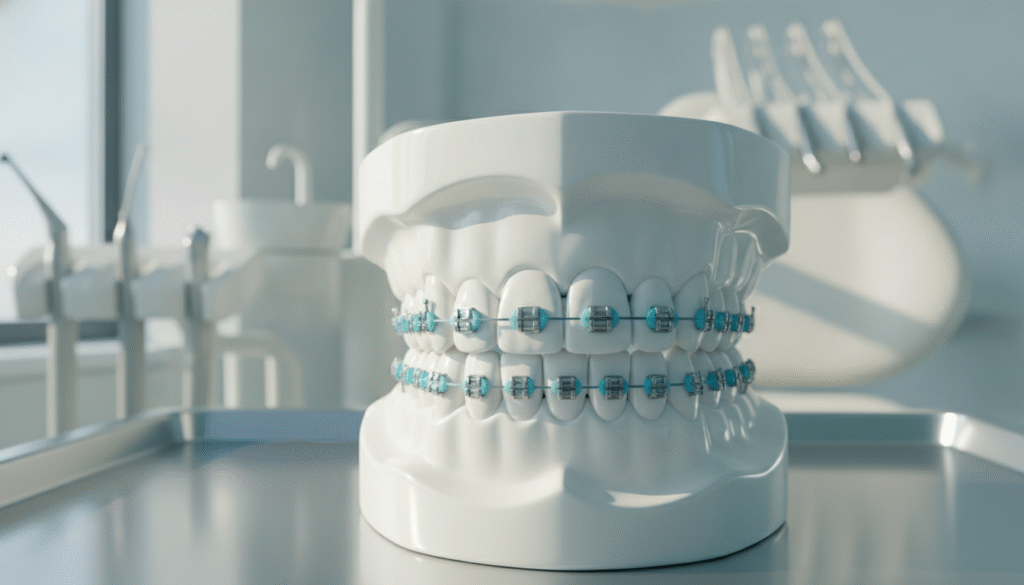
Braces are devices used to align teeth. They have brackets, archwires, and elastic ligatures. These parts work together to apply pressure on teeth, slowly moving them into place.
The biomechanics of braces involve:
- Brackets: These are attached to each tooth and serve as anchors for the archwire.
- Archwires: These wires connect the brackets and guide the movement of the teeth.
- Elastic Ligatures: These small rubber bands hold the archwire in place and can be customized in various colors.
As Dr. John Smith, an orthodontist, states,
“Braces provide a reliable method for achieving optimal tooth alignment, which is vital for both looks and function.”
Types of Braces Available
There are many types of braces, each suited for different needs and preferences:
- Traditional Metal Braces: These are the most common and use metal brackets and wires. They work well for big tooth movements.
- Ceramic Braces: Made from tooth-colored materials, these braces are more aesthetic but effective too.
- Lingual Braces: These are placed behind the teeth, making them almost invisible. They’re great for those who want a discreet option.
- Clear Aligners: Systems like Invisalign are popular for their looks. But they’re usually for small adjustments, not big movements.
Clear aligners are good for small changes, but traditional braces are better for big movements. They can apply precise forces needed for big changes.

In conclusion, knowing about orthodontic solutions, like braces, is key for making good dental treatment choices. Each type of brace has its own benefits. Talking to an orthodontist can help find the best one for you.
The Role of Braces in Tooth Alignment
Braces are key in aligning teeth for better oral health. It’s important to know how they work to understand their role in fixing dental problems. They apply constant pressure to teeth, which starts a process that moves and aligns them.
How Braces Work
Braces apply pressure to teeth, which starts bone remodeling. This process involves two main types of cells:
- Osteoclasts: These cells break down bone tissue on the side of the tooth under pressure.
- Osteoblasts: These cells build new bone on the opposite side, where tension is applied.
This interaction allows teeth to move into their new positions over time. The remodeling of the periodontal ligament and alveolar bone is key for effective alignment.
Moving Teeth into Proper Position
The main goal of orthodontic treatment is to move teeth into their correct positions. Orthodontists plan carefully to determine the force needed for movement. They aim to move the roots of the teeth along with the crowns, a process called translation.
Proper alignment not only improves looks but also helps with chewing. It spreads out chewing forces evenly, reducing tooth wear and improving oral function. It also helps prevent TMJ disorders caused by misaligned teeth.
| Aspect | Importance | Outcome |
|---|---|---|
| Bone Remodeling | Essential for tooth movement | Facilitates alignment |
| Cellular Activity | Involves osteoclasts and osteoblasts | Supports healthy tooth positioning |
| Force Vector Planning | Guides movement direction | Ensures stable results |
Common Causes of Gaps in Teeth
Gaps in teeth, also known as diastemas, can come from different reasons. Knowing these reasons helps find the best ways to fix them. The main causes are genetics, dental trauma, and teeth that are not the right size.
Genetic Factors
Genetics play a big part in tooth gaps. A common issue is hypodontia, when some teeth are missing from birth. This often affects the upper lateral incisors and second premolars, causing gaps. People with a family history of missing teeth are more likely to have gaps too.
Dental Trauma
Dental trauma is another common reason for gaps. Accidents can knock out teeth or damage them so badly they need to be removed. This can suddenly create gaps that need orthodontic help to close.
Tooth Size Discrepancy
A tooth size discrepancy, or Bolton discrepancy, happens when teeth don’t fit the jawbone right. This can cause spacing problems, mainly if teeth are too small. Some people just have smaller teeth in a normal-sized jaw, leading to gaps everywhere.
Knowing why gaps happen is key. It helps decide if closing them with orthodontics is a good long-term choice. Dental experts can then create treatment plans that fit each person’s needs.
Benefits of Closing Gaps with Braces
Orthodontic treatment has many benefits, like closing gaps in teeth. It makes your smile better and helps your oral health. Plus, it’s often cheaper than using prosthetics.
Improved Aesthetics
Braces can make your smile look much better. They move a tooth into the gap, sometimes needing a little cosmetic touch-up. This makes your teeth look natural and balanced, keeping you looking young and fresh.
Enhanced Oral Health
Orthodontic treatment also boosts your oral health. It stops food and plaque from getting stuck, which lowers the chance of cavities and gum disease. It also keeps your teeth stable by preventing other teeth from moving out of place.
Cost-Effectiveness Compared to Prosthetics
Braces are a smart choice for saving money in the long run. A 2023 study showed that braces and an implant cost less over 12 years than other options. This makes braces a better financial choice than implants or bridges, which need to be replaced every 10-15 years.
| Benefit | Braces | Prosthetics |
|---|---|---|
| Aesthetics | Natural look, harmonizes with facial growth | May require adjustments to match natural teeth |
| Oral Health | Reduces risk of cavities and gum disease | Potential for food traps and plaque accumulation |
| Cost | Lower long-term costs | Higher initial and replacement costs |
Limitations of Orthodontic Treatment
Orthodontic solutions, like braces, work well for many. But, they’re not for everyone. Knowing their limits helps in choosing the right dental care.
The alveolar bone’s condition is key. If a tooth is missing for a long time, the bone shrinks. This makes moving teeth into the gap hard or impossible. Other factors include the gap size, bite relationship, and periodontal health.
When Braces May Not Be Enough
Braces might not work for everyone. For example, if a tooth is gone for years, the bone shrinks. This leaves little bone to move a tooth into the space safely. Also, if the jaw’s shape is off, braces might not fix it.
Specific Cases Requiring Prosthetics
In some cases, a prosthetic tooth is better. This is true when:
- The space is too big for one tooth.
- The jaw’s shape would get worse with tooth closure.
- The gums are not healthy enough for braces.
Getting a detailed check-up and scans is key. This helps pick the best treatment for each person’s needs.
| Condition | Orthodontic Treatment | Prosthetic Solution |
|---|---|---|
| Bone Atrophy | Limited effectiveness | Recommended |
| Large Edentulous Space | May cause malocclusion | Preferred option |
| Compromised Periodontal Health | Higher risk of failure | Safer alternative |
| Skeletal Discrepancy | Potential worsening | Better outcome |
Comparing Braces and Prosthetic Solutions
Tooth replacement options are many and varied. Comparing braces with prosthetic solutions helps make informed choices. Each has its own benefits and drawbacks, making it key to know the differences before deciding.
Pros and Cons of Each Option
When looking at braces and prosthetic solutions, consider these points:
- Braces:
- Pros: They are non-invasive, keep nearby teeth safe, and offer lasting stability.
- Cons: They take longer to work (usually 2-3 years) and might need more orthodontic work.
- Dental Implants:
- Pros: They look and feel like real teeth, don’t harm nearby teeth, and are very stable.
- Cons: They require surgery, take longer to heal, and might appear to sink over time.
- Bridges:
- Pros: They are a quick fix for missing teeth.
- Cons: They need to shave down healthy teeth, which can weaken them.
- Partial Dentures:
- Pros: They are easy to remove and less invasive.
- Cons: They are less stable and might not look as good as other options.
Treatment Duration for Braces vs. Implants
Braces and implants have different treatment times. Braces take 2-3 years to close spaces, which is a long time. On the other hand, dental implants can be done in 6-12 months, depending on healing. But, orthodontic prep might be needed before implants, mainly for teens whose teeth are growing.
Choosing between braces and implants depends on many things. These include personal preference, dental health, and future goals. Talking to a dentist can help find the best option for you.
Choosing the Right Treatment
Choosing dental treatment needs careful thought. The path to closing tooth gaps is complex. It’s key to talk to an experienced orthodontist. They have special training to understand tooth movement.
At a consultation, you’ll get a full check-up. This includes:
- A clinical exam to check your mouth
- Panoramic and cephalometric X-rays for detailed images
- An intraoral scan to see your teeth’s layout
Consulting an Orthodontist
Getting an orthodontist’s help is vital. They look at your age, growth, and bone health. This helps decide if braces or prosthetics are best.
Factors to Consider for Treatment Choice
Think about these when picking a treatment:
| Factor Type | Considerations |
|---|---|
| Biological Factors | Age, growth, bone size |
| Functional Factors | Bite now and in the future |
| Aesthetic Factors | Tooth shape, size, gum position |
| Personal Factors | How long you can wait, surgery fear, cost |
Knowing what to ask your provider can make treatment better. Think about the pros and cons of orthodontics and what you prefer.
The Treatment Process for Braces
Getting straighter teeth starts with a first visit. This visit is key to figuring out what each patient needs. It helps create a plan just for them.
Initial Consultation and Assessment
At the first visit, the orthodontist takes important records. This includes:
- Panoramic Radiographs: These X-rays check the roots and bone levels.
- Lateral Cephalometric X-ray: This image looks at the teeth and bones.
- Intraoral Scanner: A 3D model of the teeth is made for planning.
After the records are taken, if the patient wants to go ahead, a more detailed visit is set up.
Fitting and Adjustment Schedule
When braces are put on, the real work starts. Brackets are attached to the teeth, and the first archwire is put in. Sometimes, small titanium screws called TADs are used. They help move teeth without moving others.
Patients then see the orthodontist every 4-8 weeks. The orthodontist checks how things are going, changes wires, and adjusts the treatment. This keeps teeth moving right and helps keep the mouth healthy.
“The journey of orthodontic treatment is not just about aesthetics; it’s about achieving a healthier smile.”
| Appointment Type | Frequency | Purpose |
|---|---|---|
| Initial Consultation | Once | Assessment and Planning |
| Records Appointment | Once | Detailed Analysis |
| Fitting Appointment | Once | Braces Fitting |
| Adjustment Appointments | Every 4-8 weeks | Progress Monitoring |
Aftercare for Braces
Proper care for braces is key to a successful orthodontic journey. It’s not just about regular dental visits. It also means sticking to good oral hygiene and making lifestyle changes. This part will show why these steps are important for effective treatment.
Importance of Oral Hygiene
Keeping your mouth clean is very important when you have braces. Braces can make it harder to avoid:
- Decalcification: This can cause white spots around your brackets.
- Caries: Cavities can form if you don’t clean your teeth well.
- Gingivitis: Gum inflammation can happen if plaque builds up.
To keep your mouth healthy, use these tools and methods:
- Interdental Brushes: Great for cleaning between brackets and wires.
- Floss Threaders: Needed for flossing around braces.
- Water Flossers: Good for removing food particles.
- Fluoride Mouthwash: Helps strengthen enamel and prevent decay.
Brushing correctly is also very important. You should:
- Use a soft-bristled toothbrush.
- Brush at a 45-degree angle to your gum line.
- Brush gently around each bracket and under the archwire.
Adjusting to Life with Braces
Getting used to life with braces can be tough, at first. You might feel a bit of pain after each wire change. You can take over-the-counter pain relievers and eat soft foods to help.
You also need to change your diet to avoid damaging your braces. Try to avoid:
- Hard foods (like nuts, popcorn)
- Sticky foods (such as caramel, taffy)
- Whole apples or other hard fruits
Orthodontic wax can also help with any irritation from brackets. It makes you more comfortable and helps you stick to your treatment plan for 2-3 years.
Alternatives to Braces for Gap Closure
Looking beyond braces, we find other ways to close gaps. Traditional braces are top-notch, but other tools can help too. We’ll look at clear aligners and retainers as alternatives.
Clear Aligners
Clear aligners are a popular choice for a less visible fix. They work well for small gaps, like single-tooth gaps. But, they’re not as strong for bigger gaps.
Aligners are good for small gaps, but they can’t move teeth as much as braces. Braces, with the help of TADs, can move teeth more, even in big gaps.
Retainers and Their Role
Retainers are key for keeping teeth in place after treatment. They don’t close gaps but keep teeth from moving back. This is vital for keeping the gap closed.
Wearing retainers for life is often needed to keep the gap closed. Without them, teeth can move back, undoing the work done before.
| Orthodontic Appliance | Effectiveness for Gap Closure | Best Use Case | Limitations |
|---|---|---|---|
| Braces | High | Large gaps requiring significant movement | Visible and may require longer treatment time |
| Clear Aligners | Moderate | Small gaps or single-tooth diastemas | Less effective for large gaps |
| Retainers | N/A | Post-treatment maintenance | Cannot close gaps |
Thinking about your options? Talk to an orthodontist for the best advice. They can guide you based on your needs. For more on straightening teeth, check this page.
Understanding the Costs Involved
Knowing the costs of orthodontic treatment is key to making smart choices. The prices of braces and prosthetic teeth can greatly affect your decision. People want to know what they’ll pay before making a choice.
Cost of Braces vs. Prosthetic Teeth
The cost of using braces to close gaps is usually a single price. This price includes:
- Initial records and assessments
- Appliance placement
- All necessary adjustments
- Temporary Anchorage Devices (TADs) placement and removal
- Retention procedures
On the other hand, getting a prosthetic tooth can cost more in parts. You might pay for:
- Surgical extraction (if needed)
- Bone graft (if needed)
- Implant fixture surgery
- Abutment and crown
- Long-term maintenance and possible crown replacement
Many find that the single fee for braces is cheaper than the total cost of prosthetic teeth.
Insurance Coverage Options
Dealing with insurance can be tricky. Medical insurance usually doesn’t cover orthodontics, but dental insurance might. It often has a lifetime benefit for orthodontics. But, TADs are often not covered by dental plans.
To get a clear picture of what you’ll pay, talk to the practice’s financial coordinator. They can explain:
- Insurance benefits
- Out-of-pocket costs
- Flexible spending account (FSA) or health savings account (HSA) eligibility
By looking into these financial details, you can make a better choice for your orthodontic treatment.
Impact of Gaps on Oral Health
Leaving a gap in teeth unaddressed can lead to big oral health problems. An untreated gap can cause a chain of dental issues. It affects not just the teeth around it but the whole mouth’s health.
When a tooth is missing, the teeth next to it may move. This movement can mess up the natural alignment. It also creates new spots for food to get stuck, raising the chance of cavities and gum disease.
Also, the tooth on the other side might grow longer. This can change how the teeth fit together. It might even cause jaw problems.
Potential Dental Problems
As teeth move, the spaces between them change. This makes it harder for teeth to clean properly. It also makes it easier for food to get stuck, leading to more plaque and cavities.
The tooth that grows longer can make it harder to fix teeth later. This makes it tough to get a good smile back.
Psychological Impact of Gaps in Teeth
Gaps in teeth can affect more than just your mouth. They can make you feel self-conscious and anxious. This can make you not want to smile or be around people.
Fixing gaps in teeth is important for your health and how you feel. Getting orthodontic treatment early can help you feel better about yourself.
Success Rates of Gap Closure with Braces
Orthodontic space closure is a well-documented procedure with impressive success rates. Research shows that braces can effectively close gaps and provide lasting results. This section explores the statistical evidence and real-life patient experiences that show the satisfaction from this treatment.
Studies and Statistics
Many studies have shown the long-term success of orthodontic space closure. For example, research over decades has followed patients who got gap closure with braces. The results show a high rate of stability, mainly in growing patients whose teeth continue to erupt naturally.
Braces have clear advantages over prosthetic solutions. They allow for the natural movement of teeth and preserve the proprioceptive ligaments. This is important for overall oral health. Dental implants, on the other hand, may introduce biological and technical complications over time.
| Study | Year | Success Rate | Follow-Up Duration |
|---|---|---|---|
| Smith et al. | 2010 | 92% | 10 years |
| Johnson & Lee | 2015 | 89% | 15 years |
| Brown Research Group | 2020 | 95% | 20 years |
Patient Testimonials
Patient experiences often highlight the emotional and practical benefits of choosing braces. Many express relief at avoiding surgical procedures. They also mention the joy of achieving a natural appearance.
Patients also appreciate the long-term benefits of completing orthodontic treatment during adolescence. This proactive approach often eliminates the need for further major dental work in adulthood. This leads to greater overall satisfaction with their oral health.
In summary, the evidence supporting the success of braces in closing gaps is compelling. With both statistical data and heartfelt patient testimonials, it’s clear that braces offer a viable and effective solution for those seeking to enhance their smiles naturally.
Conclusion: Braces as a Viable Option
Orthodontic space closure is a great choice for many people instead of fake teeth. It uses your own teeth to close gaps, making your smile look better and work better. Braces are known to move teeth into the right spots, which is why they’re popular in cosmetic dentistry.
Braces work by using special mechanics to move teeth. They’re best for kids who are growing and for adults who have lost teeth recently. Compared to implants and bridges, braces can save money and improve health in the long run. But, it’s important to choose the right treatment and wear retainers after it’s done.
If you’re thinking about braces, talk to a professional orthodontist first. They can give you advice based on your dental health and what you want. Getting a good evaluation can help you make a choice that’s both healthy and looks good. Don’t just take one person’s advice. Take action to get a smile that makes you feel confident and healthy.
