How does replacing a missing tooth help prevent bone loss?
Did you know that nearly 70% of adults aged 35 to 44 have lost at least one permanent tooth? This is a big problem that goes beyond looks. When a tooth is gone, the jawbone under the gums starts to weaken.
This happens because the jawbone needs the stimulation from tooth roots to stay strong. Without it, the bone starts to break down. This is called bone resorption, and it’s bad for your teeth and mouth.
Dental implants are a key solution for tooth loss. They work like natural roots, keeping the jawbone strong. This isn’t just about looks; it’s about keeping your whole body healthy.
Key Takeaways
- Tooth loss can lead to significant bone deterioration over time.
- Jawbone health is dependent on stimulation from natural tooth roots.
- Bone resorption is a natural process triggered by missing teeth.
- Dental implants offer a solution that mimics natural tooth function.
- Timely tooth replacement is essential for long-term oral health.
Understanding Bone Loss After Tooth Loss
Tooth loss changes the jawbone’s structure and strength. The jawbone needs stimulation from teeth to stay healthy. Without teeth, it starts to break down.
The Role of the Jawbone
The alveolar bone supports teeth. It needs regular stimulation to stay strong. Without it, the body starts to break down the bone.
Impact on Facial Structure
Not replacing a tooth affects more than just your mouth. Bone loss can make your face look different. Your lips and cheeks may look sunken.
Long-term Consequences
Bone loss gets worse over time. Teeth can move and cause problems with your bite. It also raises the risk of losing more teeth.
| Consequences | Description | Timeframe |
|---|---|---|
| Bone Resorption | Loss of bone density in the jaw | Begins within months |
| Facial Collapse | Changes in facial aesthetics | Progressive over years |
| Tooth Drift | Shifting of adjacent teeth | Months to years |
| Increased Periodontal Disease Risk | Higher likelihood of gum disease | Long-term consequence |
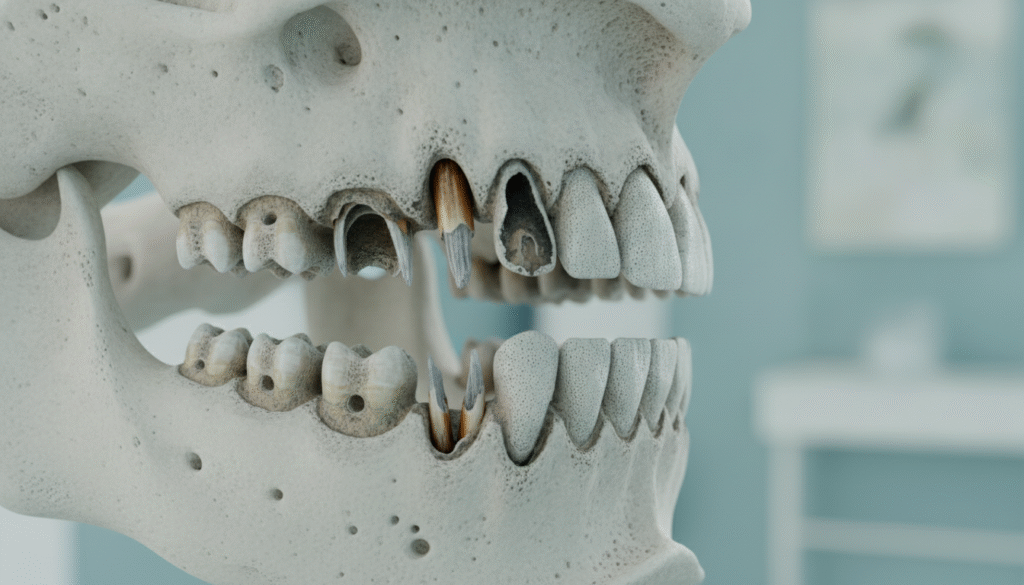
Mechanisms of Bone Loss
The jawbone is always changing, thanks to a process called remodeling. This keeps it strong and healthy. But when a tooth is lost, the bone’s health can suffer. It’s important to understand how bone loss happens to prevent more problems after a tooth is pulled.
Bone Resorption Process
Bone resorption is when bone cells break down more than they build up. This happens because the tooth root is gone. The tooth root helps keep the jawbone strong by sending signals to the body.
Without the tooth, the jawbone starts to lose density. In the first few months, the bone can shrink significantly. This is because the body doesn’t get the signals it needs to keep the bone healthy.
Relationship Between Teeth and Jawbone
The periodontal ligament is key to how teeth and jawbone work together. It helps the jawbone stay strong by sending signals when we chew. Without these signals, the jawbone can weaken and shrink.
Factors Influencing Bone Density
Many things can affect how fast bone loss happens after a tooth is pulled. These include:
- Age: Older people might lose bone faster because their bones are less dense.
- Systemic Health Conditions: Diseases like osteoporosis and diabetes can make it harder for bones to heal.
- Nutritional Status: Not eating enough of the right foods can hurt bone health.
- Smoking Habits: Smoking can reduce blood flow and slow healing.
- Duration of Edentulism: The longer a tooth is missing, the more bone loss can occur.
Knowing these factors helps us find ways to stop bone loss after a tooth is pulled. Replacing the tooth quickly can help keep the jawbone strong and healthy.
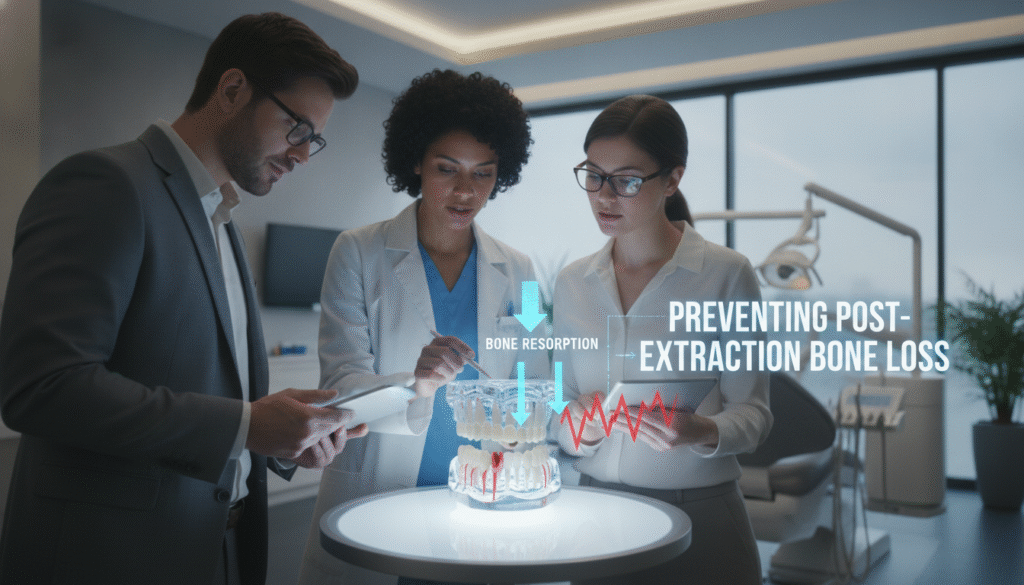
“Preventing bone loss after tooth extraction is not just about aesthetics; it’s essential for maintaining the health of the jawbone and surrounding structures.”
The Importance of Tooth Replacement
Replacing a missing tooth is more than just about looks. It’s key to keeping your mouth healthy and working right. Without a tooth, you might face serious problems that affect how you feel and act. Knowing why tooth replacement is important can help you take better care of your teeth.
Restoration of Functionality
Without a tooth, eating can become a big challenge. It’s harder to chew food well, which can hurt your health. Also, missing a tooth can make it tough to speak clearly. Getting a new tooth helps you chew and speak better, avoiding problems like TMJ disorders.
Aesthetic Considerations
The look of your smile matters a lot too. A missing tooth can change how your face looks and make your smile uneven. Getting a new tooth helps keep your smile balanced and prevents your face from looking sunken. A full smile makes you look and feel better.
Emotional and Psychological Benefits
Not having a tooth can really affect how you feel about yourself. It can make you feel less confident and anxious in public. Getting a tooth replaced can make you feel more confident and happy. Having a complete smile can make you feel more like yourself and improve your mood.
Different Tooth Replacement Options
Looking into ways to stop bone loss after tooth loss, it’s key to check out the different tooth replacement choices. Each one has its own benefits and drawbacks for both looks and bone health. We’ll look at dental implants, dentures, and bridges.
Dental Implants
Dental implants are the top choice for tooth replacement. They don’t just replace the tooth but also the root in the jawbone. This helps keep the jawbone strong by giving it the needed stimulation.
To get an implant, a titanium post is put into the jawbone. Over time, it becomes part of the bone. This makes implants strong and stable, unlike other options.
Dentures
Dentures are a common fix for missing teeth, making smiles look complete again. But they don’t stop bone loss. They sit on the gums and don’t really help the jawbone, leading to bone loss.
Dentures help with eating and talking, but they don’t do much for the jawbone. This makes them not the best choice for keeping the jawbone healthy in the long run.
Bridges
Bridges are another way to fill in gaps from missing teeth. They attach to nearby teeth, closing the gap. But, like dentures, they don’t help the jawbone.
The teeth next to the gap don’t get enough stimulation, causing bone loss. Bridges can make teeth look good and work better, but they don’t help keep the jawbone healthy.
To wrap it up, while dentures and bridges can make smiles look good, dental implants are the best for keeping bone healthy. Implants replace the root, keeping the jawbone strong. They’re a better choice for keeping your mouth healthy over time.
How Dental Implants Work
Dental implants are key to keeping our teeth and bones healthy. They are made of titanium and are placed in the jawbone. This starts a process called osseointegration, where the bone and implant bond strongly.
During this bonding, bone cells grow around the implant. This makes it stable, like a natural tooth root. When we chew, the implant sends signals to the bone, helping it stay strong.
Integration with Jawbone
The bond between dental implants and the jawbone is complex. It’s a direct connection between living bone and the titanium implant. Titanium is chosen because it’s safe for the body.
For the implant to bond well, it needs to be stable and the surgery site must be clean. This ensures a strong bond.
Stimulation of Bone Growth
Many think dental implants grow new bone. But, they actually keep the bone we have healthy. They give the bone the signal it needs to stay strong.
This helps prevent bone loss that happens after teeth are gone. So, implants are key in keeping our bones healthy.
Longevity and Durability
Dental implants last a long time because they bond well with the bone. Studies show they work for over 95% of people for decades. This is thanks to good care and hygiene.
This shows how important implants are for our teeth and bones in the long run.
| Feature | Dental Implants | Other Tooth Replacement Options |
|---|---|---|
| Integration with Bone | Direct integration (osseointegration) | No integration |
| Bone Preservation | Yes, stimulates bone maintenance | No, may lead to bone loss |
| Longevity | Over 95% success rate | Variable, often less durable |
| Functionality | Restores full chewing ability | Limited functionality |
Benefits of Preventing Bone Loss
Keeping bone density healthy has many benefits. It’s not just about your teeth. It affects your overall health and well-being. Knowing these benefits can make you want to take care of your bones more.
Improved Oral Health
Having enough bone is key to keeping your teeth in place. Without it, teeth can move and cause problems. A strong jaw also helps prevent gum disease, making it easier to keep your mouth clean.
Enhanced Quality of Life
A healthy jawbone makes eating and talking easier. It lets you eat a wide range of foods and speak clearly. Plus, it keeps your face looking young, boosting your self-confidence.
Cost-Effectiveness
While dental implants may cost a lot upfront, they save money in the long run. They prevent the need for expensive treatments like bone grafts. By taking care of your bones, you avoid costly dental problems later on.
| Benefit | Description | Long-term Impact |
|---|---|---|
| Improved Oral Health | Prevents teeth migration and periodontal issues | Stable dental environment |
| Enhanced Quality of Life | Supports nutrition, speech, and self-esteem | Overall well-being and confidence |
| Cost-Effectiveness | Reduces future dental treatment costs | Financial savings and reduced complexity |
The Role of a Dentist
A dentist’s knowledge is key for replacing missing teeth well. The first step is a detailed check-up by a dental expert. This check-up is important to know what each patient needs for a good result.
During the professional assessment, the dentist looks at many things, including:
- The number and location of missing teeth
- Gum health
- Bite alignment
- Bone support
- Existing restorations
- Medical and dental history
- Your goals for appearance, comfort, and function
Tools like Cone Beam Computed Tomography (CBCT) might be used. They give a detailed look at the jawbone and around it. This helps the dentist plan the treatment better.
After the check-up, the dentist makes personalized treatment plans. These plans are made just for you, considering your health and what you want. They might include steps like removing teeth or bone grafting.
Lastly, follow-up care is very important. Regular visits, cleanings, and checks on the bone around the implant are key. They help keep the bone healthy and show how dental care is a team effort.
Patient Experiences and Testimonials
Patient stories about dental implants show big changes in how they eat and feel about themselves. Many people have shared how implants have made their lives better. They talk about the physical and emotional benefits of having a full smile again.
Success Stories with Implants
One patient had trouble with dentures for years. But after getting implants, they could eat all kinds of food again. This not only helped their health but also made them feel better about themselves. Stories like this show how implants can really change someone’s life.
Challenges Faced by Patients
But, getting implants isn’t easy. Some people get nervous before surgery. The healing time, called osseointegration, takes patience. Patients also have to make some lifestyle changes to get used to their new teeth.
Importance of Support Networks
Having a good support system is key. A caring dental team, like at iHeart Dental, helps a lot. Family support is also important, keeping patients motivated and informed. Learning about dental health helps people make smart choices for their teeth.
Surgery and Recovery
Learning about dental implant surgery can make patients feel less nervous. Many people worry about dental treatments, but knowing what to expect helps. Our office is designed to be cozy and welcoming. We provide earplugs, sunglasses, pillows, and blankets for comfort.
Sedation options like oral sedation and nitrous oxide are available. They help make the experience more relaxed.
What to Expect During Implant Surgery
During the surgery, patients get anesthesia to stay comfortable. Then, a small hole is made in the jawbone. The implant is placed very carefully.
Most people find the procedure less painful than they thought. This is because of the latest dental techniques.
Aftercare and Healing
After the surgery, following a good recovery plan is key. It usually takes 3 to 6 months for the implant to integrate with the bone. During this time, it’s important to stick to a special diet and manage any pain with the medicine given.
Keeping your mouth clean is also very important. Brushing, flossing, and using the right cleaning tools help keep the gums and bone healthy.
Common Concerns and FAQs
Patients often have questions about the surgery and recovery. Here are some common ones:
- Is the surgery painful? Most patients say it’s not very painful because of the anesthesia.
- How long does it take to heal? Healing times vary, but it usually takes 3 to 6 months for the bone to integrate with the implant.
- What is the success rate? Dental implants are very successful, with a success rate over 95% if they are well taken care of.
We try to answer these questions to help patients feel more confident and prepared for their recovery.
Preventive Measures
Keeping your teeth clean and visiting the dentist regularly is key to bone health. It’s important to take care of your bones after getting implants. By doing so, you can lower the chance of bone loss problems.
Regular Dental Check-ups
Dental visits help track the health of your implants and bones. Dentists use X-rays and special tools to spot bone loss early. Catching problems early can stop them from getting worse.
Importance of Good Oral Hygiene
Good oral care is critical for implant health. Use special brushes, water flossers, and gentle toothpaste. This keeps your implants and gums healthy by removing tough plaque.
Nutrition and Bone Health
Eating foods rich in calcium and vitamin D is important for bones. These nutrients help keep bones strong. Also, quitting smoking is key because it can harm bone healing and lead to loss.
By following these steps, dental implants can last for years. It’s important for patients to take charge of their oral health. This way, they can make choices that help their overall health.
Costs Involved
Thinking about the money needed for tooth replacement is key. Knowing the costs of dental implants, dentures, and bridges helps patients choose wisely. Each choice has its own price tag, which can change based on your situation and treatment plan.
Understanding the Financial Investment
The cost of tooth replacement includes several parts. This includes the surgery, the abutment, and the crown. Also, any extra steps like bone grafting or tooth removal add to the total cost.
Dental implants are a big investment because of their advanced tech and materials. But, they last long and help keep your jawbone healthy.
Insurance Coverage for Tooth Replacement
It’s important to know how insurance can help with tooth replacement costs. Many plans cover bridges or dentures, but implant coverage varies. It depends on your insurance provider.
Getting a pre-treatment estimate is key. It shows what your insurance will pay and what you’ll need to cover yourself.
Long-term Value of Solutions
Dental implants might seem pricey at first, but they’re a smart long-term choice. They last a long time and keep your jawbone strong, avoiding future costs.
On the other hand, bridges and dentures might need to be replaced or adjusted often. This can lead to more expenses over time. Dental implants offer a cost-effective way to improve your life and oral health.
Advances in Dental Technology
Dentistry is always changing, thanks to new technology. This tech helps doctors care for patients better and get better results. New ways to replace teeth are making treatments faster and more effective.
Innovations in Implant Materials
Today’s dental implants are much better than they used to be. They’re not just made of titanium anymore. Now, they use titanium alloys and zirconia ceramics too.
These new materials are stronger and look better. They’re also gentler on the body. This is great for people with thin skin or metal allergies.
These advanced implants work better and look more natural. Patients are happier with their new teeth.
Minimally Invasive Techniques
New methods are making dental implants less painful. 3D imaging and computer guides help doctors place implants without cutting too much. This makes recovery faster and less painful.
These new ways are kinder to the body. Patients heal quicker and feel better sooner. It shows dentistry’s focus on caring for patients.
Future Trends in Tooth Replacement
The future of tooth replacement looks bright. New tech could grow back lost bone and tissue. Research on growth factors and stem cells is very promising.
These advances will make treatments better and healthier. Dentistry is always getting better at making teeth look and feel natural.
Conclusion
Replacing a missing tooth is key for keeping your jawbone healthy. Without a tooth root, bone loss happens, affecting your face and mouth. Dental implants are a good fix, as they keep the jawbone strong.
Knowing how bone loss works and the benefits of dental implants shows why replacing teeth is important. Dentures and bridges don’t help as much with bone health. Getting a professional’s opinion is the best way to pick the right choice for you.
Don’t wait if you’re losing teeth. See a dentist right away. This can help keep your bone healthy and open up more treatment options.
iHeart Dental in Rincon, GA, is here to help. Our team will check your bone health and suggest a treatment plan just for you. Book your dental implant consultation today. Start on the path to feeling better and more confident.