Can face PRP go wrong?
Can Face PRP Go Wrong? Risks & Safety Guide
What are the main PRP facial risks? Most are minor and short-lived: pain at the needle sites, swelling, redness and bruising. Serious problems such as infection or scarring are rare and are less likely when an experienced provider uses sterile technique.
Below we cover what can go wrong, how to lower your risk and when to call your provider.

What is face PRP?
It’s a minimally invasive treatment that uses platelet-rich plasma from your own blood.
How is PRP made?
A small blood sample is spun in a centrifuge to separate the platelet-rich plasma.
How does it work?
Growth factors in the platelets may encourage collagen and skin repair when PRP is injected or applied with microneedling.
What can go wrong?
What are the common side effects?
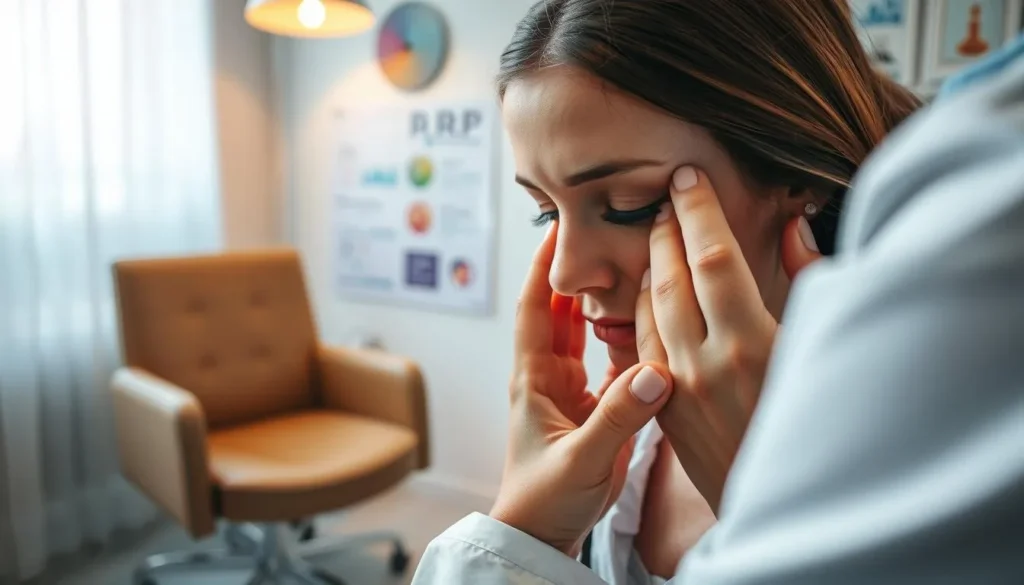
Mild pain, swelling, redness and bruising at the treatment sites are common.
These usually fade within a few days, especially if you follow aftercare instructions.
What serious complications are possible?
Infection, scarring or lumps are uncommon. Very rarely, injecting into a blood vessel has caused serious problems, including vision loss, in case reports.
An experienced provider who uses sterile technique and knows facial anatomy greatly lowers these risks.
What affects your results and safety?
Does provider experience matter?
Yes. A skilled provider prepares and places the PRP carefully and knows how to handle problems.
Does the PRP preparation matter?
The equipment and process used to prepare the PRP affect its quality, so ask how it’s done.
How can you make PRP safer?
Choose a licensed provider with training and experience in PRP.
The treatment should be done in a clean setting with sterile, single-use supplies.
Here’s what to look for:
| Safety Measure | Details |
|---|---|
| Choosing a Certified Provider | Providers must be certified, trained, and comply with industry standards. |
| Sterility in PRP Process | Use of sterilized equipment and maintaining aseptic technique throughout the procedure. |
What does a good result look like?
You may notice a slight glow soon after, once any swelling settles.
Over several weeks to months, skin can look smoother and firmer, especially after a series of treatments.
What else do people ask?
Is it safe? For most healthy people, yes. Because PRP comes from your own blood, allergic reactions are unlikely.
How should you prepare for the consultation?
Bring your medical history and a list of medications, and be clear about your goals.
Your provider may ask you to stop anti-inflammatory pain relievers for a few days beforehand, since they can affect platelets.
What are the alternatives?
If you’d rather try injectables, fillers add volume and wrinkle relaxers smooth lines.
No needles? Lasers, microdermabrasion and ultrasound or radiofrequency devices are options.
Your provider can help you sort out which fits.
What aftercare helps?
Avoid touching the area, skip makeup until the next day, stay out of the sun and avoid hard exercise for a day or two.
When should you call your provider?
Call if swelling or pain gets worse after the first couple of days, or if you notice warmth, discharge, fever or any change in vision.
Are you a good candidate?
Good candidates are generally healthy adults with early signs of aging, such as fine lines and dull skin.
Who should avoid it?
Skip it, or ask your doctor first, if you have a bleeding or clotting problem, take blood thinners, have a skin infection or have an autoimmune disease.
What does it cost?
It depends on where you go, and you’ll usually need a few sessions.
Insurance won’t pay for it, since it’s cosmetic.
Is face PRP worth the risk?
For most healthy people, the risks are small and short-lived. Choosing a qualified provider and following aftercare make serious problems unlikely.