
Can I Use Whitening Products While I Have Invisalign Explained
Did you know nearly 70% of people with orthodontic treatment want a brighter smile? This shows many people with Invisalign also want to whiten their teeth. They want to look good while straightening their teeth.
Yes, you can get a whiter smile with Invisalign. But, when and what products you use are key. This is to avoid problems like uneven whitening around attachments. This article will look into how safe and effective whitening is during Invisalign.
We’ll talk about the best ways to whiten your teeth during treatment. This way, you can keep a bright smile without messing up your Invisalign. Knowing these details can help you plan your treatment better. It lets you get the smile you want.
Key Takeaways
- Patients often seek teeth whitening alongside Invisalign treatment.
- Timing and product choice are essential for effective whitening.
- Uneven whitening can occur if not done correctly.
- Understanding compatibility can enhance treatment results.
- Optimal methodologies exist for integrating whitening safely.
Understanding Invisalign Treatment
Invisalign is changing orthodontic treatment with its clear, removable option instead of traditional braces. It uses custom-made aligners to move teeth slowly. These aligners are made from SmartTrack material, which helps teeth move better.
What is Invisalign?
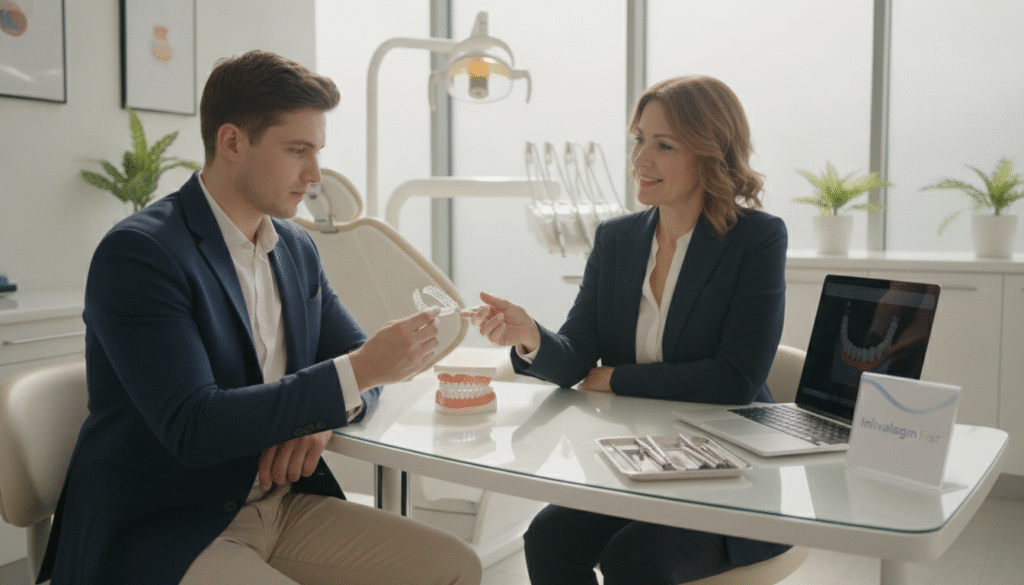
Invisalign aligners are clear trays that fit over your teeth. They are different from braces because they cover the whole tooth surface. This makes them look better. Plus, you can take them out to clean your teeth.
How Does Invisalign Work?
The first step is a consultation with a dentist. They use 3D imaging to make a plan just for you. You wear each set of aligners for two weeks. Then, you go back for check-ups to make sure everything is on track.
Benefits of Using Invisalign
Choosing Invisalign has many advantages:
- Aesthetic Appeal: The clear aligners are almost invisible, great for adults and teens.
- Comfort: Without metal parts, they are less likely to cause mouth irritation.
- Removability: You can take them out for meals, brushing, and flossing, which is good for your teeth.
In summary, Invisalign is a modern way to fix teeth. It’s effective and easy to use. This makes it a good choice for many people.
The Role of Teeth Whitening
Whitening products can make your smile brighter. But, they must be used carefully with Invisalign. Knowing about different whitening products and how they work is key to a good result during orthodontic treatment.
What Are Whitening Products?
Whitening products aim to make teeth lighter. They usually have hydrogen peroxide or carbamide peroxide. These ingredients get into the enamel and break down stains.
Common Types of Whitening Products
There are two main types of whitening products.
- Professional-Grade Products: Dentists provide these. They include in-office treatments and custom kits. These products have stronger agents for faster results.
- Over-the-Counter Products: You can buy these easily. They include strips, pens, and toothpaste. They work slower but are cheaper.
How Do Whitening Products Work?
How well whitening products work depends on their strength and how you use them. For example, strips apply gel to teeth for a long time. This makes the teeth lighter where the gel touches.
The science behind these products is important too. Stronger agents can whiten teeth faster. But, they need to be used carefully, even with Invisalign. It’s important to know how they might affect your treatment.
Considerations Before Using Whitening Products
It’s key to know how whitening products affect your Invisalign treatment for the best results. Many people want a whiter smile. But, it’s vital to understand how these products might affect your aligners.
Effects on Invisalign Trays
Whitening gels can affect Invisalign trays differently. Even though the aligners are made to last, some strong whitening products might damage them. This damage could make the aligners not fit right and not work as well.
Potential Risks of Whitening with Invisalign
Using whitening products with Invisalign can lead to uneven whitening. This happens because of composite attachments that block the gel. So, you might see a “two-tone” effect when you take out your aligners.
To avoid these problems, experts say to use weaker whitening products, like 10% or 15%. Also, using whitening products from your dentist can help get even results and avoid spots.
Expert Opinions on Whitening During Treatment
Dentists stress the need to talk to an orthodontist before whitening with Invisalign. They say getting professional advice is important for safe and effective whitening.
| Whitening Product Type | Concentration Level | Safety with Invisalign |
|---|---|---|
| Professional Whitening Gel | 10%-15% | Recommended |
| Over-the-Counter Whitening Strips | Variable | Use with Caution |
| Whitening Toothpaste | Low | Generally Safe |
Whitening Product Compatibility with Invisalign
Choosing the right teeth whitening products with Invisalign is key. Not all products are safe or effective. This guide helps you pick the best options and avoid those that might harm your treatment.
Safe Whitening Options
The Invisalign™ Professional Whitening System is made by Opalescence™. It’s the only system approved by Align for use with Invisalign® and Vivera™ retainers. It’s designed to work with your aligners for the best results.
Opalescence PF is our top pick. It can be used in your Invisalign aligners. This gel whitens teeth well, is gentle on your gums, and fits seamlessly into your Invisalign routine.
Products to Avoid While Using Invisalign
Some over-the-counter whitening products might look good but can be risky with Invisalign. Whitening strips, for example, might not fit right, causing uneven whitening and gum problems.
Stay away from products with too much peroxide or abrasive ingredients like charcoal. They can damage your aligners and reduce their effectiveness. Always check with your orthodontist before trying new whitening products.
“Choosing the right whitening products while using Invisalign is key for a bright smile without harming your treatment.”
Timing Your Whitening Treatment
The timing of your whitening treatments is key to a great smile. It’s best to start whitening 4 to 6 weeks before finishing your Invisalign. This timing helps your teeth look their best.
By the end of your Invisalign, your teeth are almost perfectly aligned. This is the perfect time to whiten them. It makes sure all your teeth are the same shade, giving you a uniform smile.
When to Whiten Your Teeth with Invisalign
Whitening your teeth in the last weeks of Invisalign is best. Your teeth are almost in their final shape. This makes it easier to get the best whitening results.
Optimal Duration Between Whitening and Invisalign
To get the most out of whitening with Invisalign, follow these steps:
- Start whitening 4 to 6 weeks before finishing Invisalign.
- Use whitening gel in your aligners for 30 to 60 minutes a day.
- Keep an eye on the results and adjust as needed.
This approach ensures your teeth are perfectly whitened when they’re straight. It maximizes the beauty of your smile.
| Timing Stage | Recommended Action | Expected Outcome |
|---|---|---|
| Weeks 1-4 | Complete Invisalign adjustments | Teeth alignment near completion |
| Weeks 5-6 | Begin whitening treatments | Uniformly whitened teeth |
| Post-treatment | Final adjustments and maintenance | Bright, straight smile |
“The key to a successful whitening experience with Invisalign lies in the timing of the treatment.”
Following these guidelines ensures your whitening and Invisalign work together. You’ll get a smile that’s both bright and confident.
Oral Hygiene with Invisalign and Whitening
Keeping your mouth clean is key when you’re using Invisalign, even with whitening products. A clean mouth makes whitening work better and keeps your teeth healthy. Brushing and flossing are important, but there are special steps for Invisalign users to take.
Importance of Maintaining Oral Hygiene
Good oral hygiene is essential for the best Invisalign results. If aligners aren’t cleaned right, bacteria can build up. This can lead to cavities or gum disease. Also, a clean mouth helps whitening treatments work better, as stains won’t stay if your teeth are clean.
Best Practices for Cleaning Invisalign Trays
Cleaning your Invisalign trays is easy but needs careful attention. Here are some tips:
- Use a soft toothbrush and mild soap or non-abrasive crystals to clean your aligners.
- Avoid hot water, as it can warp the plastic of the trays.
- Rinse the aligners thoroughly after cleaning to remove any soap residue.
By following these steps, you can keep your aligners clear and effective throughout treatment.
How to Incorporate Whitening into Your Routine
Adding whitening to your daily routine with Invisalign can be good if done right. Here’s how:
- Brush and floss your teeth after every meal before putting in your aligners.
- Apply whitening gel during a set time each day, either in the morning or at night.
- Make sure to clean your aligners well after using whitening products to avoid buildup.
This routine can make your smile brighter and keep your gums and enamel healthy. Remember, whitening should add to, not replace, good oral hygiene.
| Hygiene Practice | Frequency | Purpose |
|---|---|---|
| Brushing Teeth | After every meal | Removes food particles and plaque |
| Flossing | Daily | Prevents gum disease and cavities |
| Cleaning Aligners | Daily | Maintains clarity and hygiene of trays |
| Using Whitening Gel | As recommended | Enhances tooth brightness |
Choosing the Best Whitening Method
Whitening treatments vary in effectiveness based on the method. Patients often wonder if to go for professional services or at-home products. Each choice has its pros and cons, more so for those with Invisalign aligners.
Invisalign aligners are easy to use for whitening. Yet, they might not work as well as custom trays. This is because the gel can move around, reducing the treatment’s impact.
Professional vs. At-Home Whitening Products
Professional whitening is often stronger and faster. Dentists use more potent agents, ensuring better results. It’s great for those wanting quick, even whitening.
At-home products are cheaper and easier to get. They work well, like Opalescence PF, which is good with Invisalign. They might need more use, though.
Reviews of Top Whitening Brands
Choosing at-home products means picking well-known brands. Here are some top ones:
| Brand | Type | Effectiveness | Price Range |
|---|---|---|---|
| Opalescence PF | Gel | High | $30 – $50 |
| Whitestrips | Strips | Moderate | $25 – $45 |
| Colgate Optic White | Toothpaste | Low to Moderate | $5 – $10 |
In summary, Invisalign is good for keeping teeth white, but professional treatments or custom trays might be better. For at-home options, picking well-known brands is key. Knowing these differences helps in choosing the right option for your dental goals.
Informing Your Orthodontist
Talking to your orthodontist about whitening products is key for safe dental care with Invisalign. Open talks can spot problems early. This way, you get a treatment plan that fits your dental health perfectly.
Before whitening, share your dental history and current health with your orthodontist. They check if you’re okay for whitening. This includes looking for cavities or gum issues that could cause sensitivity or harm.
Why Communication is Important
Talking well with your orthodontist keeps your treatment on track. They check your teeth to decide when and what whitening products to use. They also help with attachments to avoid uneven whitening.
Questions to Ask Your Orthodontist
When you meet your orthodontist, ask these questions:
| Question | Purpose |
|---|---|
| Is it safe to use whitening products during my Invisalign treatment? | To understand the safety of whitening with your current dental condition. |
| What is the recommended timing for starting whitening? | To determine the best phase of your treatment for whitening. |
| What gel concentration do you recommend? | To ensure the effectiveness and safety of the whitening process. |
| How should I manage attachments to avoid uneven whitening? | To learn techniques for maintaining an even shade during treatment. |
Answering these questions helps you safely add whitening to your Invisalign journey. Your orthodontist is your top guide for the best results and dental health.
Alternatives to Whitening While Using Invisalign
If you’re getting Invisalign, you have other ways to brighten your smile. Many people don’t want to use harsh chemicals during treatment. Luckily, there are natural ways and tips to keep your smile shining.
Natural Whitening Methods
Natural whitening is a gentle way to keep your teeth bright. Oil pulling is a popular method. It involves swishing oil in your mouth to clean the surface.
Using whitening toothpaste is another good option. These toothpastes gently remove stains without harming your Invisalign. An electric toothbrush can make it even better. It’s more effective at cleaning than a manual toothbrush.
Tips for Maintaining Natural Teeth Color
To keep your teeth color natural with Invisalign, change your diet. Avoid foods and drinks that stain, like coffee and red wine.
Good oral hygiene is also key. Brush and floss regularly and use a whitening mouthwash. These steps help keep your teeth white while wearing Invisalign.
By trying these natural methods and tips, you can take care of your smile without hurting your Invisalign treatment.
Long-Term Effects of Whitening while Using Invisalign
Looking into the lasting effects of teeth whitening with Invisalign is key for patients. Whitening products during orthodontic treatment can cause both biological and aesthetic changes. Knowing these effects helps patients make better choices for their oral health.
Will Whitening Affect Tooth Sensitivity?
One big worry with whitening products is tooth sensitivity. Whitening agents, like peroxide, can reach the pulp, causing reversible pulpitis. This can be painful, more so for those already sensitive from Invisalign.
Whitening and Invisalign together can make sensitivity worse. It’s important for patients to watch for signs and talk to their orthodontist if they’re in pain.
Potential for Uneven Whitening
Another concern is uneven whitening, or the “halo” effect. This happens when brackets or attachments leave areas darker than the rest. The covered areas stay the same color, while the exposed ones get lighter.
This issue is more common with Invisalign. Using whitening gels that cover the whole aligner can help. This way, the whitening agent can reach all areas, including under attachments.
| Aspect | Impact of Whitening | Recommendations |
|---|---|---|
| Tooth Sensitivity | Increased sensitivity may occur | Consult with an orthodontist if sensitivity persists |
| Uneven Whitening | Risk of “halo” effect around attachments | Use gels that cover the entire aligner |
| Overall Aesthetic | Can lead to a more uniform appearance | Consider timing of whitening treatment |
In conclusion, whitening with Invisalign can improve looks but comes with long-term effects. It’s vital to talk to an orthodontist about whitening options. This way, patients can get the best results safely and effectively.
Post-Invisalign Whitening Treatment
Finishing your Invisalign treatment is just the start of getting a brighter smile. After taking out your aligners, let your teeth adjust for a bit. This break helps any sensitivity fade before you start whitening.
Most people wait one to two weeks before whitening. This time lets any tooth sensitivity lessen. It makes whitening more comfortable.
What to Do After Completing Invisalign
After your teeth have adjusted, you can start whitening. Here are some steps to follow:
- Consult with your orthodontist: Talk to your orthodontist about your whitening plans to make sure they’re good for your teeth.
- Choose the right products: Find the best whitening products for Invisalign that work well and are safe.
- Use Vivera retainers: These can also be used for whitening, making them a handy choice after treatment.
Continue Whitening After Invisalign
When you start whitening, keep it up. Here are some Invisalign teeth whitening tips for the best results:
- Follow the product instructions: Use whitening products as directed for the best results.
- Monitor sensitivity: If you feel pain, try using the product less often.
- Maintain good oral hygiene: Keep brushing and flossing to keep your teeth healthy while whitening.
With the right steps, you can get a uniform, bright smile. Now that all enamel surfaces are exposed, your smile journey is just starting.
Conclusion
Using Invisalign and whitening together can give you amazing results if done right. This article has shown how these dental practices work together. It’s all about getting the right advice and timing.
Here are some important points to keep in mind:
- Consultation with a dental professional: Always talk to your orthodontist before whitening your teeth.
- Timing your whitening treatment: Wait until the end of your Invisalign treatment for the best results.
- Choosing compatible products: Pick low-concentration whitening products, like Opalescence PF, to avoid risks.
Following these tips will not only make your whitening more effective. It also helps keep your Invisalign oral hygiene in check. With the right knowledge, you can get a beautiful smile and keep your teeth healthy.
Final Thoughts on Whitening and Invisalign
Starting your journey to a brighter smile? Remember, using orthodontic treatment and whitening together can make your smile makeover complete. With the right education and following dental advice, you can get the smile you want.
| Key Considerations | Details |
|---|---|
| Professional Consultation | Discuss whitening options with your orthodontist. |
| Timing | Consider whitening towards the end of your treatment. |
| Product Compatibility | Use low-concentration products for safety. |
FAQs about Whitening Products and Invisalign
Many patients wonder if they can use whitening products with Invisalign. Knowing the answers can help keep your teeth clean and your aligners in good shape.
Can I Use Whitening Toothpaste with Invisalign?
Yes, whitening toothpaste is okay to use with Invisalign. It has mild abrasives that gently remove stains. But remember, it won’t change the color of your teeth inside.
Are There Any Non-Whitening Products Recommended?
If you’re feeling pain or sensitivity, there are special products for you. These include:
- Fluoride rinses: They help strengthen your enamel and fight cavities.
- Sensitivity toothpastes: Made with potassium nitrate, they can ease pain from orthodontic treatments.
Adding these to your routine can improve your oral health while you’re wearing Invisalign. Here’s a quick guide to the recommended products:
| Product Type | Purpose | Compatibility with Invisalign |
|---|---|---|
| Whitening Toothpaste | Removes surface stains | Safe to use |
| Fluoride Rinse | Rebuilds enamel | Safe to use |
| Sensitivity Toothpaste | Reduces discomfort | Safe to use |
User Experiences and Testimonials
People have different experiences with whitening teeth while wearing Invisalign aligners. Some see great results, while others face challenges. It’s key to look at both the good and the bad.
Real Stories from Invisalign Users
One person used Opalescence 10% in their aligners for the last six weeks. They got a uniform shade and felt more confident. This shows that whitening with Invisalign can work well if done right.
But, another user felt temporary sensitivity. They used a desensitizing gel to ease the pain. This shows it’s good to have solutions for any issues that come up.
Effectiveness of Whitening During Treatment
How well whitening works with Invisalign can vary. It might need more uses than custom trays. This helps set clear expectations for those wanting to keep their teeth white.
| Patient Experience | Outcome | Management Strategies |
|---|---|---|
| Using Opalescence 10% | Uniform shade achieved | N/A |
| Temporary sensitivity | Managed with desensitizing gel | Use desensitizing gel |
These stories show that everyone’s experience is different. Knowing what to expect can help others make better choices for their teeth.
Professional Insight: Orthodontists’ Recommendations
Orthodontists are key in guiding patients through Invisalign. They suggest using the Invisalign Professional Whitening System. This is the only whitening system approved by Align for safe use with Invisalign aligners and Vivera retainers. It lets patients get a brighter smile without harming their aligners.
Many think whitening products can damage Invisalign aligners or give uneven results. But, these myths are not true. The best whitening products for Invisalign are safe and work well when used right. Orthodontists stress the need to follow their advice to avoid problems.
Talking to your orthodontist is very important. They can give you advice tailored to your needs and treatment plan. This way, you can safely add whitening to your routine without messing up your progress.
In short, getting a bright smile with Invisalign is doable with the right steps. Knowing how to safely whiten teeth with Invisalign is important for success. Always listen to your orthodontist’s advice to do it right.
