Does Invisalign Work on Both Upper and Lower Teeth? Explained
Did you know over 5 million people have chosen clear aligners for their orthodontic treatment? This number shows how popular these solutions are for a perfect smile. Many wonder if these aligners can work on both dental arches at the same time.
Invisalign aligners can fix many dental problems. They are good for people aged six and older. Treatment can last as short as six months, with changes seen in just a few weeks. Unlike traditional braces, these aligners can be taken out for sports and eating, yet they give similar results.
But, treating one arch versus both is more complicated than it seems. It’s possible to focus on just the upper or lower teeth. Yet, the dental arches work together, making a full treatment better. This part will look into the details of orthodontic treatment, including how well aligners work, who they’re for, and why treating both arches is best.
Key Takeaways
- Clear aligners are suitable for various age groups, starting from age six.
- Treatment duration can be as short as six months, with quick visible results.
- Aligners offer the advantage of removability for convenience.
- Focusing treatment on one arch may overlook important biomechanical interactions.
- A full approach is often recommended for the best results.
Understanding Invisalign Treatment
Invisalign treatment is a big step in orthodontics. It uses clear aligners to move teeth into place. This method is different from traditional braces because it’s more discreet and comfortable.
What is Invisalign?
Invisalign uses custom-made clear plastic trays to move teeth. These trays are made from a special material that’s both strong and flexible. Each tray is made just for you, making treatment more personal.
How Does Invisalign Work?
The journey starts with a 3D scan of your teeth. This scan helps create a plan for your treatment. You’ll wear your aligners for 20 to 22 hours a day to get the best results.
You’ll see your orthodontist often to check on your progress. They might add small bumps on your teeth to help with tricky movements. This makes sure your teeth move as planned.
Benefits of Choosing Invisalign
Invisalign has many perks. For one, you can take out your aligners to brush and floss. This is great for athletes or people with special diets.
Also, Invisalign works faster than traditional braces. The aligners are smooth, which means they’re kinder to your mouth. This makes treatment more comfortable.
Another plus is that Invisalign helps keep your teeth and gums healthy. Studies show it can work as well as fixed braces for some problems. This means you can keep your teeth clean and healthy while straightening them.
Invisalign for Upper Teeth
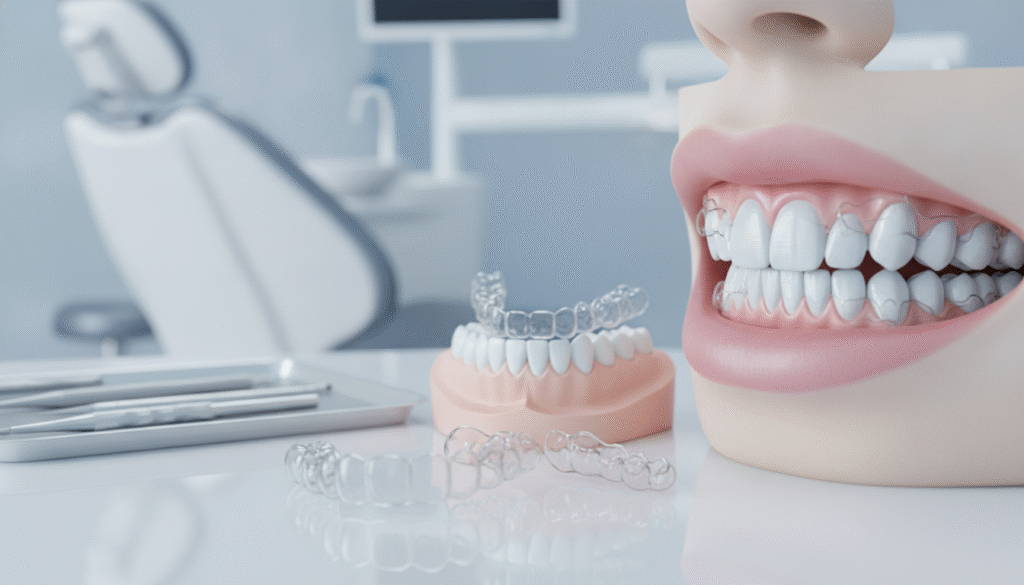
Invisalign is a modern orthodontic solution for upper teeth alignment issues. It’s great for fixing problems like crowding, spacing, overjet, and deep bites. Knowing what Invisalign can fix helps patients make better choices for their teeth.
Common Issues Addressed
Invisalign tackles several common upper teeth alignment problems:
- Crowding: When teeth don’t fit right because there’s not enough space, leading to rotated or displaced teeth.
- Spacing: Too much space between teeth can look bad and harm oral health.
- Overjet: When the upper front teeth stick out too far over the lower teeth.
- Deep Bite: When the upper teeth cover too much of the lower teeth, causing wear and discomfort.
Treatment Process for Upper Teeth
The Invisalign process for upper teeth has several steps:
- Initial Diagnostic Records: This includes X-rays and detailed dental analysis to understand the patient’s teeth.
- Digital Treatment Planning: Orthodontists use special software to create a personalized plan for tooth movement.
- Attachment Placement: Small attachments might be added to teeth for more complex movements.
- Progressive Aligner Changes: Patients switch to new aligners every one to two weeks to move teeth slowly.
For some, Invisalign can even expand the upper arch without needing palatal expanders. This is true for adults with mild to moderate arch width issues.
Patient Experiences and Results
Many patients see big improvements in their smile after Invisalign. The treatment is very noticeable, making it great for those who want to improve their smile. Following the treatment plan and wearing aligners for 20-22 hours a day is key to success.
Fixing the upper teeth can also improve the lower teeth’s position. This leads to better alignment, health, and confidence in one’s smile.

| Common Issues | Invisalign Solutions | Expected Results |
|---|---|---|
| Crowding | Custom aligners to gradually shift teeth | Improved spacing and alignment |
| Spacing | Aligners designed to close gaps | More uniform smile |
| Overjet | Targeted aligner adjustments | Balanced bite |
| Deep Bite | Comprehensive treatment plan | Enhanced bite function |
Invisalign for Lower Teeth
Understanding the specific concerns of lower teeth is key for successful Invisalign results. The lower arch has unique challenges, like limited bone space and constant tongue pressure. These factors can make treatment harder.
Issues with lower teeth alignment often come from late growth, teeth moving together, or relapse after treatment. Each patient’s situation is different. For mild to moderate problems, single-arch treatment might work if the upper teeth are straight and the bite is stable.
Specific Concerns for Lower Teeth
The mandibular arch has special anatomical and biomechanical needs. The bone space is smaller than in the upper jaw, which limits tooth movement. This can risk gum recession or tooth exposure if not managed carefully.
The tongue also puts constant pressure that can fight against the aligners’ forces. The muscles around the mouth create a balance that must be considered during treatment planning. So, it’s important to understand these dynamics for effective treatment.
How Lower Teeth Are Treated with Invisalign
Invisalign for lower teeth often uses interproximal reduction (IPR) to make space. Attachments help control the rotation of lower incisors, making the aligners more effective.
Passive upper aligners may also be used to keep the bite stable during lower-only treatment. This approach ensures the overall bite remains correct while fixing lower teeth alignment issues.
Success Stories: Lower Teeth Transformations
Many patients have seen great improvements in their lower teeth alignment with Invisalign. These stories show how Invisalign can fix lower teeth problems without affecting the overall bite.
While lower-only treatment is possible in some cases, it needs careful evaluation of the bite. Patients can get good results when their needs are matched with a custom treatment plan.
The Dual Treatment Approach with Invisalign
Invisalign’s dual treatment approach offers a complete solution for those seeking orthodontic care. It treats both upper and lower teeth at the same time. This way, patients can get a balanced and harmonious smile faster.
By treating both arches together, orthodontists manage how the teeth fit together. This is key for chewing, speaking, and swallowing. Treating both arches improves both looks and function of the mouth.
Treating Both Upper and Lower at Once
Invisalign’s dual-arch treatment is a must, not just a choice. The upper and lower teeth work together, so treating them together is necessary. This ensures proper alignment and function of the teeth.
Advantages of Dual Treatment
Dual treatment has many benefits. It often makes treatment faster than treating one arch at a time. Patients see results quicker because both arches move together. Plus, the cost difference is small, as the initial steps and monitoring are the same.
Case Studies: Comprehensive Success
Many case studies show the success of treating both arches at once. Patients with complex issues have seen big improvements. These stories show better looks and function, and lasting results.
In conclusion, Invisalign’s dual treatment is a big step forward in orthodontics. One happy patient said,
“The difference in my smile and confidence has been life-changing. I wish I had started this journey sooner.”
By focusing on both upper and lower teeth, patients get a better, faster, and more harmonious treatment.
Factors Influencing Treatment Success
Invisalign treatment success depends on many factors. Knowing these can make the treatment more effective. Biological, mechanical, and behavioral factors all play a role in each patient’s journey.
It’s key to set clear goals at the start. This helps decide if the treatment is for full correction or just to look better. Knowing this shapes the treatment plan and how long it will take.
Alignment Needs and Goals
Setting realistic goals is important. Patients should think about:
- Comprehensive Correction: This means aligning both upper and lower teeth fully.
- Aesthetic Improvements: Some want Invisalign just to look better.
- Duration of Treatment: Knowing how goals affect time is important for satisfaction.
Next, how well patients follow the treatment is key. Studies show that wearing aligners 20 to 22 hours a day is best. Wearing them less can lead to:
- Tracking errors
- Prolonged treatment
- Less than ideal results
Patient Compliance and Responsibilities
Patients have important roles in treatment success:
- Oral Hygiene: Good oral care stops problems around attachments.
- Aligner Change Schedule: Following the schedule is key for success.
- Reporting Issues: Telling the dentist about problems quickly is important.
The Role of Professional Guidance
Professional guidance is very important. Orthodontists have the skills in:
- Choosing the right case
- Planning the treatment
- Designing attachments
- Doing interproximal reductions
Acting fast when things don’t go as planned is critical. A skilled dentist makes Invisalign work best. With good guidance, patients can get the best results from their treatment.
Age Considerations for Invisalign
Age plays a big role in how well Invisalign works for teens and adults. Knowing how age affects treatment can lead to better results for both upper and lower teeth. This section will look at the differences in Invisalign for teens and adults, how it affects teeth, and success rates by age.
Invisalign for Teens vs. Adults
Invisalign has special options for different ages. For teens, there’s Invisalign Teen with features like wear indicators. It also has eruption tabs for growing teeth. Adults, on the other hand, might face challenges like complex dental histories.
Impact on Treatment for Upper and Lower Teeth
Younger patients tend to move teeth faster because of their active cells and bones. Adults might need longer treatments but often wear aligners more consistently.
Age-Related Success Rates
Studies show that Invisalign success rates are similar for all ages if everyone wears the aligners as directed. Here’s a table showing success rates by age:
| Age Group | Success Rate (%) | Average Treatment Duration (Months) |
|---|---|---|
| Teens (6-17 years) | 85% | 12-18 |
| Adults (18-34 years) | 90% | 18-24 |
| Seniors (35+ years) | 80% | 24-30 |
About one in four orthodontic patients in the U.S. is an adult. Thanks to new technology and more people knowing about Invisalign, both teens and adults can get great results.
Duration of Treatment for Both Sets of Teeth
The time it takes for Invisalign treatment varies. It depends on several factors. Knowing the average time helps patients get ready for their orthodontic journey. Treatment can be as short as six months for simple cases, with visible changes in a few weeks. But, more complex cases usually take 12 to 18 months.
Average Treatment Time Overview
It’s important for Invisalign patients to understand how long treatment takes. The length depends on how complex their case is. Here’s a table showing average times for different scenarios:
| Treatment Type | Average Duration | Typical Cases |
|---|---|---|
| Mild Cases | 6 – 8 months | Minor crowding or spacing issues |
| Moderate Cases | 12 – 18 months | Moderate crowding, spacing, or alignment issues |
| Complex Cases | 18 – 24 months | Severe misalignment or multiple dental corrections |
Factors That Affect Treatment Duration
Several things can change how long Invisalign treatment lasts:
- Case Complexity: The more teeth that need to move and the type of movement, the longer it takes.
- Patient Compliance: Wearing the aligners for 20-22 hours a day is key for progress.
- Biological Response: How fast teeth move can vary based on bone density and gum health.
- Refinement Aligners: Sometimes, more aligners are needed if progress doesn’t match the plan.
Setting Realistic Expectations
It’s important to have realistic expectations for Invisalign. Many see improvements in weeks, but full correction takes time and consistent wear. The Invisalign effectiveness improves when patients understand it’s a journey. Commitment is essential for the Invisalign results they want.
Cost of Invisalign for Upper and Lower Teeth
It’s important to know the costs of Invisalign for upper and lower teeth before starting treatment. The price can change a lot based on how complex the treatment is and where you live.
General Pricing Overview
In the United States, Invisalign can cost between $3,500 to $8,000. This price depends on what you need and how hard your case is. Traditional braces usually cost between $3,000 and $7,000.
Single-arch treatments are often cheaper than treatments for both arches. But, the difference in cost isn’t always the same. This is because the work needed, like lab fees and doctor time, is similar for both.
Insurance Coverage and Financial Plans
Many people ask about insurance for Invisalign. Insurance might cover up to $3,000 of orthodontic costs. The amount covered can change based on your insurance plan and if you’re in-network or out-of-network.
There are also other ways to pay, like flexible spending accounts (FSAs) and health savings accounts (HSAs). Plus, there are financing plans available. These include:
- Interest-free in-office financing with extended payment terms
- Third-party healthcare credit products
- Coordination of insurance benefits with FSA reimbursements
Understanding Cost Variations
Costs can vary based on the type of Invisalign you need. There are Express, Lite, Moderate, and Comprehensive options. Each one is for different levels of treatment, which affects the price.
In summary, figuring out the cost of Invisalign for upper and lower teeth involves looking at prices, insurance, and payment options. By understanding these, you can make a good choice for your orthodontic care.
Comparing Invisalign to Traditional Braces
It’s important to know the differences between Invisalign and traditional braces. Both can fix dental problems, but in different ways. This section will look at the main differences, benefits, and who’s best for each.
Key Differences Between Treatments
Traditional braces and Invisalign work differently. Braces have brackets and wires that push teeth into place.
Invisalign uses clear, removable aligners. Each one is made to push teeth in a specific way. This makes Invisalign better for some problems and worse for others.
Pros and Cons of Each Method
Both options have good and bad points:
- Invisalign:
- It looks good because the aligners are almost invisible.
- They’re easy to take out for cleaning and you can eat anything.
- People say it’s more comfortable because there are no brackets or wires.
- Traditional Braces:
- They work well for tough cases that need precise changes.
- They apply steady pressure, which is good for some fixes.
- But, they can hurt and are harder to keep clean.
Ideal Candidates for Each Option
Choosing between Invisalign and braces depends on your needs. Invisalign is great for adults with mild to moderate problems who want something discreet. They need to wear the aligners as directed.
Braces might be better for kids and teens with bigger issues. They’re also good for those needing a lot of tooth movement or who have trouble following treatment plans.
Maintenance and Care During Invisalign Treatment
Getting the most out of Invisalign treatment means taking good care of it. This guide will show you how to keep your teeth healthy and your smile bright.
Proper Care for Aligners
It’s important to clean your aligners every day. Use a soft toothbrush and clear liquid soap or special cleaning crystals. Don’t use toothpaste, as it can scratch the plastic and cause stains.
Wash your aligners twice a day to keep them clear and clean. You can also use chemical cleaners like hydrogen peroxide or special tablets to help.
Maintaining Oral Health with Aligners
Aligners can trap food and bacteria if you don’t brush and floss well. Brush and floss after every meal or snack before putting your aligners back on. This stops food and bacteria from sticking to your teeth.
Using mouthwash with fluoride can help prevent cavities. If you have tight teeth or crowding, use water flossers and proximal brushes to clean between your teeth.
Importance of Regular Check-Ups
See your orthodontist every 6-8 weeks to check on your progress. They can check how well your aligners fit and if everything is working right.
At these visits, your orthodontist can make any needed changes. They can also answer any questions you have. Remember, good care and professional help are essential for a great smile.
For more tips on keeping your mouth healthy during treatment, visit this link.
Post-Treatment Considerations
The journey to a perfect smile doesn’t end with Invisalign. After treatment, it’s important to keep up with care. This ensures your smile stays aligned. The key is the retainer, like Vivera retainers, made just for you by Invisalign.
Retainers: Keeping Your Smile in Place
Vivera retainers help keep your smile perfect. They’re made with the same tech as Invisalign aligners for a perfect fit. Here’s how to use them:
- Wear them full-time (20-22 hours daily) for 3-6 months.
- Then, wear them only at night forever.
This method helps your teeth and gums adjust. It also helps you get used to your new smile.
Long-Term Care After Invisalign
It’s important to take care of your retainers. Here’s how:
- Clean them regularly to keep them hygienic.
- Replace them every 12-18 months to keep them working well.
- Keep your final scan ready for new retainers if needed.
These steps help your retainers last longer. They also keep your smile stable.
Common Post-Treatment Challenges
Even with the best care, challenges can arise:
- Getting tired of wearing them all the time.
- Accidentally losing or damaging them.
- Worrying about the cost of new ones.
- Seeing some teeth movement despite wearing retainers.
Understanding these challenges is key. It helps you keep your smile perfect. Regular check-ups and proactive care can make a big difference.
| Retention Strategy | Duration | Notes |
|---|---|---|
| Full-time Wear | 3-6 months | 20-22 hours daily |
| Nighttime Wear | Indefinitely | Essential for long-term stability |
| Retainer Replacement | Every 12-18 months | Ensure optimal fit and function |
Common Myths about Invisalign
Many myths about Invisalign can make it hard to make informed choices. It’s important to know the truth about this treatment. Misunderstandings often come from marketing or personal stories, making it hard to know what Invisalign can really do.
Debunking Misconceptions
One big myth is that Invisalign only fixes small problems. But, studies show it can handle big issues too, like Class II and Class III problems. It’s not just for small teeth issues, as some think.
Another myth is that Invisalign works for just one set of teeth. But, changing just one set can cause problems. It might lead to bad bites or teeth not fitting right, making it hard to keep the teeth straight.
Realities of the Treatment Process
Wearing new Invisalign aligners can hurt a bit at first. This is because the teeth and gums are adjusting. Also, the attachments used might be seen if you look closely, which can affect how invisible the aligners seem.
Also, treatment might take longer than expected. You’ll need to change your eating habits a lot. You can only drink water with the aligners in, which is key to getting good results.
Clarifying Expectations
It’s important to see Invisalign as a serious orthodontic treatment. Success needs commitment, patience, and working closely with a good dentist. It’s not a quick fix, but a serious plan that requires your active involvement.
| Myth | Reality |
|---|---|
| Invisalign is only for minor corrections | Can treat complex malocclusions |
| Single-arch treatment is always effective | Unilateral changes can affect occlusion |
| Treatment is painless | Initial discomfort is common |
| Results are permanent without retention | Retention is necessary to maintain results |
“Understanding the realities of Invisalign treatment is essential for achieving optimal results.”
Potential Issues with Invisalign
Knowing about the possible problems with Invisalign can make the treatment easier. Many people have a smooth experience, but some might face discomfort or side effects. Spotting these issues early can help manage them better.
Discomfort and Other Side Effects
Side effects of Invisalign include temporary discomfort when changing aligners. This discomfort is due to the aligners pushing on the teeth. It usually gets worse in 24 to 48 hours and goes away in three to four days.
Other side effects might include:
- Altered speech patterns, often characterized by a slight lisp as the tongue adjusts to the aligners.
- Increased salivation or dry mouth, as the body reacts to the aligners.
- Soft tissue irritation from the edges of the aligners, which can be alleviated with orthodontic wax or careful trimming.
Addressing Alignment Complications
More serious problems can happen, such as:
- Posterior open bite development, where anterior teeth contact prevents proper occlusion of posterior teeth.
- Tracking errors, indicated by gaps between the aligner and tooth surface, suggesting that the intended movements are not occurring.
- Root resorption, a rare but serious risk for certain individuals.
These serious issues need quick attention. If aligners don’t fit right, if pain lasts too long, or if chewing changes, see a professional.
When to Seek Professional Help
Seek help if:
- Aligners rock or don’t fit well after a few days.
- Severe or ongoing pain doesn’t get better.
- Changes in how teeth fit together affect chewing.
- Signs of gum problems, like gums pulling away from teeth.
Being aware of these possible problems can help prepare for Invisalign. This way, the treatment can be smoother for everyone.
Success Rates of Invisalign Treatments
Invisalign is a popular choice for orthodontic treatment, known for being discreet and effective. Studies show it works as well as traditional braces for some issues. This section looks at how well Invisalign works, based on research and what patients say.
Evidence from Clinical Studies
Studies show Invisalign works for over 90% of cases, when chosen correctly. Journals have published research on its success in treating crowding, spacing, and mild to moderate Class II malocclusions. Reviews and meta-analyses confirm it’s as good as fixed appliances for many problems, when done by skilled orthodontists.
Important results include:
- Alignment of teeth
- Marginal ridges
- Buccolingual inclination
- Occlusal relationships
- Overjet and interproximal contacts
These areas have seen improvement as Invisalign technology and methods have gotten better.
Factors Influencing Patient Success
Several things affect how well Invisalign works:
- Case Selection: Choosing the right cases is key. Some movements, like extrusion, are harder to achieve with aligners.
- Patient Compliance: Following the wear schedule is important for success.
- Provider Experience: The orthodontist’s skill in digital planning makes a big difference.
- Biological Variables: Health of the gums and bone density can affect how teeth move.
Testimonials from Invisalign Users
Many patients are happy with Invisalign. They like the look of their smile, the comfort, and the whole experience. Getting the smile they want boosts their self-esteem and confidence.
In summary, Invisalign is a good choice for orthodontic treatment. With careful selection and the right orthodontist, patients can get great results.
| Factor | Impact on Success Rate | Notes |
|---|---|---|
| Case Selection | High | Critical for predictability |
| Patient Compliance | Moderate | Adherence is essential |
| Provider Experience | High | Expertise matters |
| Biological Variables | Variable | Influences tooth movement |
Comprehensive Care with Orthodontic Professionals
Choosing the right orthodontic provider is key to a successful Invisalign treatment. It’s important to pick a knowledgeable and experienced orthodontist. This ensures you get the best care possible. We’ll look at why choosing the right provider matters, the role of orthodontists, and how to work together on your treatment plan.
The Importance of Choosing the Right Provider
Not all providers are the same when it comes to orthodontic treatment. While general dentists may offer Invisalign, orthodontists have more training. They spend 2-3 years in residency learning about dentofacial orthopedics and more. This training helps them:
- Know when single-arch treatment won’t work.
- Manage occlusal complications well.
- Use aligner therapy with other treatments when needed.
Role of Orthodontists in Your Treatment
Orthodontists are key in making treatment decisions. They use their knowledge from the start to the end of your treatment. They look at:
- Cephalometric data
- Photographic records
- Intraoral scans
By analyzing these, orthodontists can adjust your treatment plan. This ensures your teeth move as planned and attachments work right.
Building a Treatment Plan Together
Today, orthodontic care is all about working together. Orthodontists share their findings and explain why they recommend certain treatments. This way, patients understand:
- Why they might need dual-arch treatment.
- What to expect and any possible limits.
Keeping in touch during treatment makes sure patients stay informed. This makes their experience better.
| Provider Type | Training Duration | Specialization | Complex Cases Management |
|---|---|---|---|
| General Dentist | 4 years Dental School | General Dentistry | Limited |
| Orthodontist | 4 years Dental School + 2-3 years Residency | Dentofacial Orthopedics | Comprehensive |
Conclusion: Making the Right Choice
Choosing Invisalign treatment requires careful thought. It’s important to weigh your options to get the best results for your smile. Many people ask, does Invisalign work on both upper and lower teeth? Yes, it does. With the right professionals, Invisalign can fix issues in both arches, making your smile balanced and functional.
Getting a professional opinion is key. Orthodontists can check your dental needs and decide if single-arch or dual-arch treatment is best. This choice is important because it makes your treatment fit your looks and health needs. Many orthodontic offices offer free consultations, so you can get expert advice without worrying about the cost.
Invisalign has been proven to work well for many dental problems. But, it needs the right case, patient cooperation, and careful management by orthodontists. Choosing this treatment can make your smile better and boost your confidence and oral health.
Choosing the right treatment should be based on expert advice and your goals. Working with an experienced orthodontist will guide you. This ensures your investment will pay off for years to come.