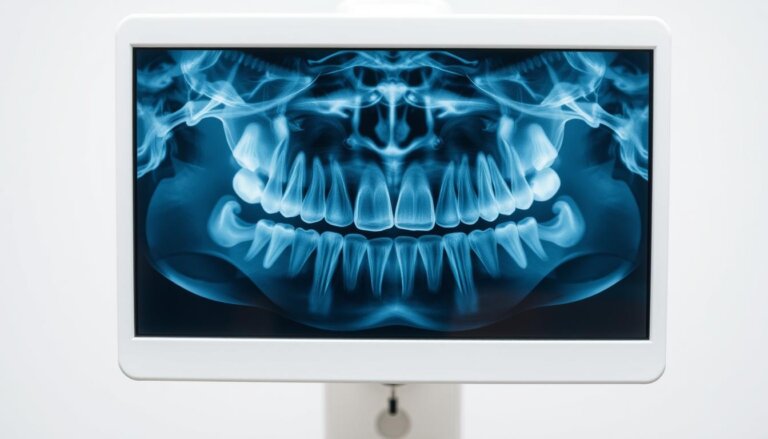
Dental Implants vs. Dentures or Bridges: Key Advantages
Did you know that about 69 percent of adults between 35 and 44 have lost at least one tooth? This shows a big health problem many people face. Picking the right tooth replacement is key, not just for looks but for health too.
In today’s dentistry, there are three main ways to replace lost teeth: dental implants, dentures, and bridges. But, it’s important to know they’re not all the same. Dental implants are special because they bond directly with the jawbone through a process called osseointegration.
This article will compare these options, highlighting dental implants’ main benefits. Knowing these differences helps people make choices that fit their health and lifestyle.
Key Takeaways
- Tooth loss affects a significant portion of adults.
- Dental implants offer unique benefits through osseointegration.
- Choosing the right replacement option impacts long-term health.
- Implants differ from dentures and bridges in key ways.
- Understanding these differences aids in making informed choices.
Introduction to Dental Solutions
It’s important to know about different dental solutions for good oral health. These options help fix missing teeth, improving both looks and function. We’ll look at dental implants, dentures, and dental bridges.
Overview of Dental Implants
Dental implants are titanium posts that go into the jawbone. They act as artificial roots. This setup lets them bond with the jawbone, a process called osseointegration.
On top of the implant, an abutment and crown are placed. This makes implants the only solution that replaces the whole tooth. They’re stable and good for long-term health.
Overview of Dentures
Dentures are removable and replace many missing teeth. They come in full and partial types. Full dentures are for when all teeth are gone, and partial dentures fill gaps with some teeth left.
They sit on the alveolar ridge for support. Dentures can be immediate, conventional, or partial with metal clasps.
Overview of Dental Bridges
Dental bridges fill gaps left by missing teeth. They’re fixed and have crowns on nearby teeth. These teeth need to be filed down for the bridge.
There are different types, like the three-unit bridge and the Maryland bonded bridge. But, they require changing healthy teeth, which is a big deal for patients.
| Dental Solution | Structure | Type | Key Feature |
|---|---|---|---|
| Dental Implants | Titanium post with crown | Permanent | Replaces tooth root |
| Dentures | Removable prosthetic | Full/Partial | Non-invasive |
| Dental Bridges | Crowns on adjacent teeth | Fixed | Bridges gaps |
Durability and Longevity of Dental Implants
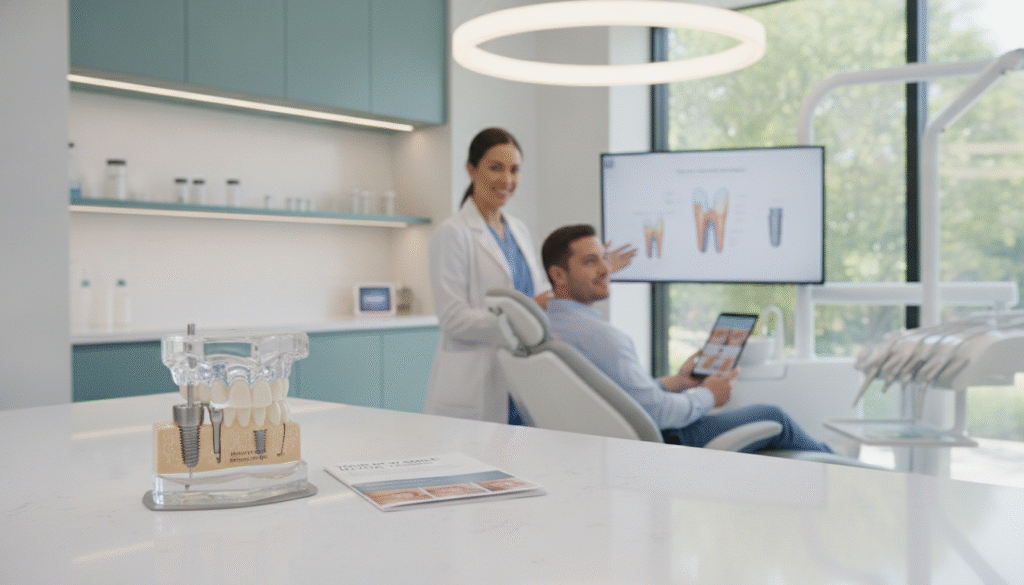
Dental implants are renowned for their remarkable durability, often outlasting other dental solutions. This makes them a top choice for replacing lost teeth. With the right care, they can last from 25 years to a lifetime. This makes them a solid investment in your oral health.
The lifespan of dental implants is quite impressive. Studies show that the titanium implant post has a success rate of about 95-98% over 10 years. This success is due to titanium’s ability to bond with bone, creating a strong and lasting foundation.
Expected Lifespan of Implants
Dental implants need little upkeep compared to other options. But, the crown on the implant might need to be replaced every 15-25 years. This is much longer than the life of dental bridges and dentures, which often need to be replaced more often.
Comparison with Dentures and Bridges
Looking at the lifespan of dental implants versus dentures and bridges, the contrast is clear:
| Dental Solution | Expected Lifespan | Replacement Frequency |
|---|---|---|
| Dental Implants | 25 years to a lifetime | Crown every 15-25 years |
| Dental Bridges | 5-15 years | Every 5-15 years |
| Dentures | 5-8 years | Every 5-8 years |
The table shows that dental bridges last 5-15 years, and dentures need to be replaced every 5-8 years. This underlines the advantages of dental implants as a more durable and lasting option.
“Investing in dental implants is investing in your long-term oral health.”
In summary, dental implants are a great choice for those looking for a reliable and durable solution for tooth loss. Their long-term benefits are significant, making them a better option than dentures and bridges.
Aesthetic Benefits of Dental Implants
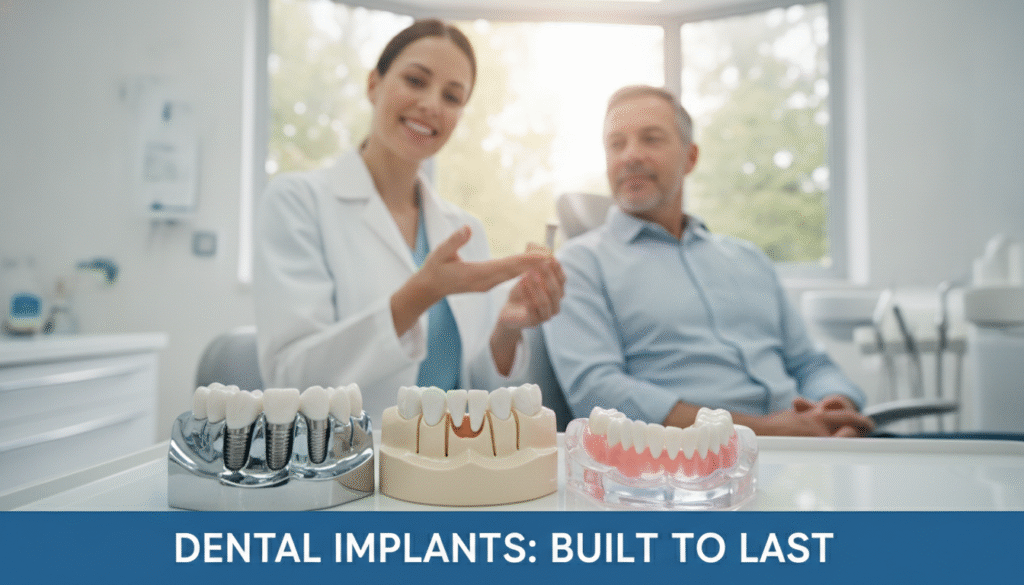
Dental implants look and feel like real teeth. They don’t have the gaps or artificial look of dentures or bridges. This makes your smile better and keeps your face looking full.
Implants can be made to match your teeth perfectly. Dental tech makes crowns that match your teeth’s color and shape. This makes implants almost invisible.
Natural Appearance
Implants are better than other dental options for looks. Bridges can show gaps, and dentures have metal parts. Implants keep your jawbone strong, making your face look younger.
Customizability
Implants can be made just for you. They match your teeth’s color and shape perfectly. This makes them look very natural.
“Dental implants not only restore function but also significantly enhance the aesthetic appeal of a patient’s smile.”
| Feature | Dental Implants | Dentures | Bridges |
|---|---|---|---|
| Natural Appearance | Highly natural, mimics real teeth | Can appear artificial | May leave visible gaps |
| Customizability | Tailored to match existing teeth | Limited customization | Moderate customization |
| Facial Structure Support | Preserves jawbone and facial integrity | Can lead to bone loss | May not support bone health |
Functional Advantages
Dental implants bring many benefits that make life better for patients. They help restore eating and chewing efficiency. Unlike dentures, implants don’t limit your diet because they provide a strong chewing base.
Eating and Chewing Efficiency
Dental implants can support a bite force as strong as natural teeth, up to 250 pounds per square inch (PSI). This means you can eat all kinds of foods without pain. Dentures, on the other hand, only support about 20-25% of the natural bite force, limiting your diet.
Dentures can also slip, causing discomfort and embarrassment. This makes eating and socializing harder. Dental implants, through osseointegration, create a strong connection with the jawbone, just like natural teeth.
Speaking Comfort
Dental implants also improve speaking comfort. Denture users often struggle with sounds like “s” and “th,” leading to slippage and mispronunciation. This is a big problem for those who need clear speech, like professionals and public speakers.
Implants, on the other hand, offer a stable solution for confident speech. They ensure that words are pronounced correctly without worry of slipping, boosting communication and self-confidence.
| Feature | Dental Implants | Dentures | Bridges |
|---|---|---|---|
| Bite Force | Up to 250 PSI | 20-25% of natural | Moderate, varies |
| Dietary Restrictions | None | Significant | Some adjustments |
| Speech Clarity | High | Often compromised | Better than dentures |
In summary, dental implants do more than just look good. They restore essential functions like eating and speaking. This leads to a better life, with more confidence and enjoyment in daily activities.
Bone Health and Dental Implants
Dental implants help keep the jawbone strong after tooth loss. This is key for keeping the mouth and face healthy. Without a tooth, the jawbone starts to shrink because it misses the stimulation.
Dental implants act like the tooth root, giving the jawbone the support it needs. This stops the bone from shrinking.
Wolff’s Law explains how bone reacts to stress. Dental implants send forces to the bone, making it stronger. Dentures and bridges don’t do this, leading to bone loss.
Prevention of Bone Resorption
One big advantage of implants over dentures is stopping bone loss. Dental implants keep the jawbone healthy. This is important for keeping the face looking right and teeth in place.
Long-Term Oral Health Benefits
Dental implants also help keep the mouth healthy for a long time. Unlike bridges, implants don’t harm nearby teeth. This helps prevent teeth from moving or not fitting right.
Healthy jawbones also make eating and talking easier. Dental implants improve life quality and encourage better mouth care.
Comfort and Convenience Features
Dental implants bring comfort and convenience benefits that traditional dentures and bridges can’t match. They seamlessly fit into daily life, making messy adhesives and complex cleaning routines a thing of the past. This ease is a big reason why dental implants are becoming more popular.
Dentures often need adhesives to stay in place, but implants are anchored in the jawbone. This means no worries about adhesives failing at the wrong time. Patients with implants don’t have to deal with the taste and fear of dentures slipping.
“With implants, I can eat, laugh, and talk without the fear of my teeth moving or coming loose.”
Another big plus of dental implants is how easy they are to keep clean. Patients can brush and floss like they do with natural teeth. This is a big difference from dentures, which need to be removed, soaked, and cleaned with special products. Bridges also require special floss threaders, making daily care more complicated.
With dental implants, keeping things simple is key. Just regular brushing and flossing are needed to keep the implant and gums healthy. This not only saves time but also lowers the risk of problems like peri-implant mucositis.
In short, the dental implants benefits go beyond looks and function. They make daily life more comfortable and convenient, letting patients enjoy meals and conversations without the hassle of removable dentures.
Cost Considerations
It’s important to know the costs of dental implants versus other options. Dental implants can cost between $3,000 to $4,500 each. Dental bridges might cost between $500 and $1,200 per tooth, plus any crown fees. Dentures are cheaper at first but can cost more over time.
Here’s a quick look at the costs:
- Dental Implants: They cost more upfront but rarely need to be replaced.
- Bridges: They’re cheaper at first but might need to be replaced every 10-15 years.
- Dentures: They’re the cheapest at first but need to be replaced every 5-8 years. You’ll also have ongoing costs for relines and adhesives.
Looking at the long-term, dental implants can be more cost-effective over 25 years. The initial cost is high, but implants save money compared to bridges and dentures over time.
Insurance coverage is also key. Many U.S. dental plans don’t cover implants well. But, some plans are starting to see implants as medically necessary. This could lead to better coverage. You can also use FSAs and HSAs to help pay for implants.
In summary, dental implants have a high initial cost. But, their long-term benefits and value often make them a better choice. Knowing the financial side is key to making a good decision.
The Procedure for Getting Implants
Getting dental implants involves several steps. Knowing these steps can ease worries and set clear expectations. The process is both surgical and requires careful planning and patience.
First, patients have an initial consultation with dental experts. They check the patient’s oral health. This includes 3D cone-beam computed tomography (CBCT) imaging for planning. Sometimes, an atraumatic extraction and ridge preservation grafting are needed to prepare the jawbone.
Surgical Process Overview
The actual implant placement happens under local anesthesia or sedation. A titanium post is inserted into the jawbone. This post is the base for the artificial tooth.
After placement, the patient enters the critical osseointegration phase. This lasts from 2 to 6 months. During this time, the bone heals around the implant, making it secure.
Recovery Timeline and Expectations
After surgery, patients might feel some swelling and discomfort. This is usually managed with NSAIDs. Eating soft foods is advised to aid in recovery.
The whole process of getting dental implants can take 3 to 6 months or more. This is much longer than bridges, which need no surgery and take only 2-3 weeks.
Knowing these stages helps patients understand the biological rationale behind the longer time needed. By learning about the dental implant process, patients can feel more confident and clear about their treatment.
Comparing Maintenance of Implants, Dentures, and Bridges
It’s important to know how to take care of dental implants, dentures, and bridges for good oral health. Each one needs its own care routine to work well and stay clean. We’ll look at what daily care is needed and why regular dental visits are important for each option.
Daily Care Requirements
Dental implants, dentures, and bridges all need special care every day. Dental implants are like natural teeth in how they’re maintained, but they also need careful attention to avoid problems.
- Dental Implants: Brush twice a day, floss often, and get your teeth cleaned every six months. Even though the implant crown can’t get cavities, the soft tissue around it can get infected if not cleaned well.
- Dentures: Take them out at night, brush them gently with a soft cleaner, and soak them in a solution. This keeps them clean and prevents fungal infections.
- Bridges: Clean under the bridge with floss or a water flosser to stop tooth decay on the teeth it’s attached to.
Follow-Up Visits
Seeing your dentist regularly is key for all three options. It helps keep an eye on how they’re doing and fixes any problems early on.
| Dental Solution | Follow-Up Requirements | Frequency |
|---|---|---|
| Dental Implants | Annual radiographs to check marginal bone levels | Yearly |
| Dentures | Periodic relines to compensate for ridge resorption | Every 1-2 years |
| Bridges | Check for marginal leakage and recurrent caries | Every 6-12 months |
In summary, dental implants, dentures, and bridges each need their own care plan. Implants are often easier to care for, but all need dental check-ups to stay healthy and functional.
Potential Risks and Complications
Dental implants offer many benefits but also come with risks. It’s important for patients to know these risks to make good choices for their teeth. We’ll look at common problems with implants and compare them to dentures and bridges.
Common Complications of Implants
One big risk with dental implants is surgical problems. These can include:
- Failed Osseointegration: This happens when the implant doesn’t bond with the jawbone. It’s often due to smoking or diabetes.
- Peri-implantitis: This is an infection that can cause inflammation and bone loss around the implant.
- Damage to Surrounding Structures: Surgery can harm nearby teeth or nerves.
These issues can make the implant fail, needing more treatment.
Risks Associated with Dentures and Bridges
Dentures and bridges are other options but have their own risks:
- Dentures: Wearing them long can cause bone loss, gum problems, and a bad fit, making them less effective over time.
- Bridges: Preparing teeth for bridges can lead to tooth decay, needing root canals or bridge failure.
Knowing these risks helps patients decide between dental implants advantages and disadvantages. Each choice has its own problems. Talking to a dentist can help choose the best option.
Age and Candidacy Factors
Knowing what makes someone a good candidate for dental implants is key. It’s not just about how old you are. It’s about checking your overall health and how your body works.
A good candidate for dental implants usually has:
- Adequate bone density and volume to support the implant.
- Healthy gums that can heal properly.
- Good health, without conditions that could slow healing.
Some things can make it harder to get dental implants. For example, uncontrolled diabetes can slow down healing. Also, people taking bisphosphonates for osteoporosis might face risks of jaw problems.
There’s no age limit for dental implants, but age matters. Kids and teens can’t get implants because their jaws are growing. Older adults, on the other hand, need to show they can keep their teeth clean and are healthy, not just because of their age. Even older adults can get implants and enjoy them.
| Factor | Good Candidate | Considerations |
|---|---|---|
| Bone Density | Yes | Assessed via CBCT |
| Healthy Gums | Yes | Necessary for healing |
| Chronic Conditions | No | Uncontrolled diabetes affects healing |
| Age | Varies | Focus on health, not just age |
Success Rates of Dental Implants
Dental implants are very effective, with a success rate of 95% to 98% over 10 years. This makes them the top choice for replacing teeth. They are stable, work well, and don’t hurt or get infected.
Studies show dental implants last more than a decade with over 95% success. This proves they are better than other tooth replacement options.
Statistical Outcomes
Dental implants do well in many situations. They meet strict criteria like not moving, no bone loss, and no infection. This makes them the best choice for dental fixes.
Factors Affecting Success
Several things can affect how well dental implants work. Patient factors include:
- Smoking: It can slow healing.
- Oral Hygiene: Bad hygiene can cause problems.
- Bone Quality: Good bone density is key for stability.
Doctors also play a big part. They need to do surgery carefully and place the implant right. Choosing the right implant system helps too.
Innovations in Implant Technology
New advancements in implant technology are changing dental care. These changes make dental implants better and make patients feel more comfortable. They also help patients recover faster.
One big change is the use of advanced implant surfaces. For example, SLActive® surfaces help healing happen faster. This means patients can get back to normal in weeks, not months.
Zirconia implants are another exciting new thing. They are made of a material that looks like teeth and doesn’t react with metal allergies. This makes them great for people who want implants that look natural.
Digital tools are also playing a big role in dental implants. Guided surgery lets doctors place implants more accurately. This reduces problems and makes implants work better.
The future of dental implants looks even brighter. Scientists are working on using stem cells to grow new teeth. This could mean growing whole teeth instead of just implants.
Smart implants are also on the way. These implants will have tiny sensors that check on health in real time. This could help doctors catch problems early and treat them fast.
In short, new implant technology is making dental care better. It’s improving how implants work and making patients happier. As these new ideas keep coming, they will change dental care even more.
Psychological and Social Benefits
Dental implants do more than fix teeth. They boost self-esteem and help people connect with others. The implants look and feel like real teeth, making people feel more confident. They no longer worry about dentures slipping or gaps showing.
Many patients say they feel better about smiling and eating in public. They enjoy social activities without feeling embarrassed. This change can greatly improve mental health, helping people overcome feelings of sadness and low self-worth.
Implants fit right into how people see themselves. Unlike dentures, they don’t remind people of lost teeth. This lets patients feel more confident, allowing them to enjoy life more fully. They can eat steak at dinner or laugh without worrying about their teeth.
“Dental implants have changed my life; I can smile and speak without worrying about my teeth.”
Studies show that people are very happy with dental implants. The benefits go beyond just fixing teeth. They help people feel better about themselves and improve their social lives, making life richer.
Conclusion: Making the Right Choice
Choosing between dental implants and bridges is a big decision. Each option has its own good and bad points. You need to think about your bone health, budget, and how many teeth are missing. Your overall health and what you prefer also matter a lot.
When deciding between dental implants and bridges, think about these key points:
- Biological Cost: Think about the possible loss of tooth structure with bridges.
- Financial Cost: Look at the long-term costs of each choice.
- Treatment Time: Decide how fast you need a solution.
- Intangible Value: Think about the confidence boost from a more permanent fix.
Talking to a skilled dentist is very important. They will use a CBCT scan to check your bone structure. They will also look at your medical history to make a plan just for you.
Knowing the differences between dental implants and bridges helps you make a smart choice. Talking to a dental expert ensures you pick the best option for your health and lifestyle.